Author: Addiction Blog

  • Alcohol and Depression

    Alcohol and Depression

    ARTICLE SUMMARY: Depression and alcohol have a causal relationship, and one condition doubles that you’ll develop the other. In this article, we review the connection and treatment options.

    ESTIMATED READING TIME: 10 minutes

    TABLE OF CONTENTS:

    Depression is a mood disorder.

    What Depression Is

    Depression is a disorder of the brain that affects your mood. This mental issue causes distressing symptoms that affect how you feel, think, and how can you handle daily activities.

    In the U.S. more than 20 million people can be diagnosed with depression.

    Accorind to the American Psychiatric Association, depression affects 1 in 15 adults in any given year, while 1 in 6 people will experience depression at some time in their life.[1] Depression is more than feeling ‘blue’ or ‘under the weather’. Instead, it is a constant sadnessthat just doesn’t go away.

    But, how can you get diagnosed?

    To be diagnosed with depression…. symptoms must be present most of the day, nearly every day at least 2 weeks.There are some common forms of depression. These include:

    1. Major depression: The symptoms of depression will last most of the day, almost every day for at least 2 weeks. These symptoms will affect your daily activities, and you will not able to enjoy life. This episode may occur once in a lifetime, but most of the people have several episodes.

    2. Persistent Depressive Disorder:The symptoms of depression can last at least 2 years. A person with this diagnose may experience episodes of major depression along with less severe symptoms.

    3. Other Forms of Depression: Still, there are other forms of depression that may develop under certain circumstances. These types of depression include:

    Perinatal Depression or Postpartum Depression:Women with this type of depression experience full-blown major depression during pregnancy and/or after giving birth. The reasons for this depression is the overwhelming of hormonal and psychical changes, and the responsibility of caring for a baby. About 10% to 15% of women experience postpartum depression after delivery.

    Psychotic Depression: The person with this diagnosis has severe depression and some form of psychosis such as delusions or hallucinations.

    Seasonal Affective Disorder: This type of depression comes and goes with seasons. The onset of SAD occurs during winter months, when there is less sunlight. Usually, it starts in the late fall or early winter, and it diminishes during spring and summer. SAD is typically accompanied by increased sleep, weight gain, and social withdrawal.

    Disruptive Mood Dysregulation Disorder: This type of depression is diagnosed in children and adolescents. Depression can also be one phase of bipolar disorder.

    The Alcohol-Depression Cycle

    There is a huge correlation between alcohol and depression. Drinking can cause depression, and depression can cause alcohol abuse. Moreover, you can get caught in a constant cycle of going back and forth. In these cases, professional help is a must to help you deal with this viscous circle of co-occurring disorders.

    What does the Alcohol-Depression Cycle look like?

    On one hand, people who suffer from depression may turn to drinking as a way of coping. About one-third of people with depression have drinking problems.They drink alcohol to ‘drown their sorrows’, and hope for better feelings. The effects of alcohol changes their sad mood into a happy one.

    On the other hand, people diagnosed with alcohol use disorder (AUD) may develop depression. The National Institute on Alcohol Abuse and Alcoholism (NIAAA) reports that depression is more likely to develop during alcoholism treatment. Some patients may even increase their drinking in order to deal with the mood swings. [2] NOTE HERE: If depression occurs as a symptom of alcohol withdrawal, it’s likely that it will vanish after you stop drinking.

    But, having undiagnosed depression in combination with alcohol consummationputs us at risk of developing a drinking problem. In fact, a study published in the medical journal BioMed Central estimated that more than 25% of people with major depression can develop a drinking problem. [3] Finally, a study called ‘Alcohol and Depression’ reports that the presence of a drinking problem doubles the risk of developing depression, and vice versa. One condition doubles the risk of the other condition. [4]

    Alcohol abuse and depression have a causal relationship. One can cause the other.

    Can Alcohol Make Depression Worse?

    YES!

    It is important to understand that drinking alcohol worsens any mental health disorder.

    Alcohol is a nervous system depressant. It blocks stress hormones, and if you are dealing with depression you may become increasingly irritable when drunk. Moreover, alcohol lowers serotonin and norepinephrine, mood-regulating chemicals in the brain. So, when you’re under the influence, the body struggles to achieve balance, which results in depressed mood.

    On top of it, if you are depressed, you may have sleep disorders. Drinking also interferes with sleep, so you may worsen your sleep disorders if you consume alcohol.Finally, drinking too much can increase your anxiety.

    In sum, drinking makes depression much worse.

    Symptoms of Depression

    Depression affects people differently. Not everyone will experience every symptom: some may experience few, while others may experience different and more symptoms. Plus, symptoms will vary depending from the stage of the illness.

    The most common signs of depression include:

    • Appetite changes
    • Anxiety
    • Decreased energy
    • Concentration problems
    • Fatigue
    • Feelings of hopelessness
    • Feelings of guilt
    • Feelings of worthlessness
    • Irritability
    • Loss of interest for hobbies and activities
    • Problems with making decisions
    • Restlessness
    • Sadness
    • Sleep disorders
    • Suicidal thoughts

    Moreover, depression is characterized with a set of physical symptoms that occur without a clear physical cause and/or they do not set up or ease even with treatment. These physical symptoms include:

    • Aches
    • Headaches
    • Cramps
    • Digestive problems

    To be diagnosed with depression, in addition to ‘blue’ mood, several persistent symptoms should be present for at least two weeks for nearly every day.

    Alcohol is NOT the answer for depression. Drinking makes things worse.

    Does Alcohol Depression Go Away?

    Many people wonder if depression will go away on its own.

    The answer is: NO.

    In this case, time won’t heal all wounds. In fact, waiting may worsen your depression. The longer you wait, the worse it may become. If you are drinking to ease your depression hoping that you will get better, you couldn’t be more wrong. Alcohol will only make your depression feel even more hopeless.

    Proper treatment for alcohol use disorder and depression is the key to getting better. Treatment is effective. So stop thinking that drinking and depression will go away. Take your destiny in your hands, and make the call: reach out for help.

    Call us to talk through depression and drinking. Our confidential hotline operators are waiting for your call.

    Alcohol Dependence, Detox, and Depression

    Alcohol dependence is a serious drinking condition that may cause serious harm to your health. The study Neurobiology of Alcohol Dependence published in the journal Alcohol Research: Current Reviews reported that,

    Alcohol dependence…is progressive and has serious detrimental health outcomes.[5]

    But, how can you know that you are alcohol dependent?

    Dependence occurs when the brain adapts to alcohol. When you are alcohol dependent and stop quitting, you go through withdrawal. But it doesn’t have to be that bad to be a problem. The Diagnostic and Statistical Manual of Mental Disorders (DSM–5) lists 11 criteria that an individual needs to have in order to be diagnosed with a drinking problem.

    If you are an alcohol dependent who has depression issues, the rehab process may be hard. But do not worry… every condition is treatable!Don’t risk it, just make the first step of treatment.

    Go to a medical detox clinic when you are alcohol dependent.

    Detox is a process of removing alcohol from the body under 24-hour medical supervision. Any good alcohol detox can help:

    • Ease withdrawal symptoms.
    • Manage any serious medical condition that may occur.
    • Prevent the development of more serious symptoms.
    • Provide the safest path for every patients to deal with their difficult period of discomfort.

    Since alcohol withdrawal can be very unpredictable and uncomfortable, and even worse for people who deal with depression, the safest way to start treatment is in inpatient setting with constant medical care. Moreover, seizures occur in about 25% of all alcohol withdrawal cases [6], and if these symptoms are not treated on time, not only they can put your general health in danger, but they also can worsen your depression.

    Don’t wait when you need to detox, reach out for help!

    Alcohol and Depression Medication

    Even though antidepressants are considered to be safe medications, it is never recommended that you drink alcohol while using them. The chances for worsening the symptoms of depression when mixing them with alcohol are enormous. Some of the negative effects when you mix these two substances include:

    • Dizziness
    • Drowsiness
    • Elevated blood pressure
    • Higher chance of overdose
    • Increased depression
    • Impaired motor functioning
    • Liver damage
    • Memory complications
    • Slowed breathing
    • Strange conduct

    Remember never to stop taking antidepressants just so you can have a drink. Sudden cessation of antidepressants may cause you to experience withdrawal symptoms. So, always consult with your doctor before stopping antidepressants.

    Depression Treatment Options

    Even the most severe depression can be treated. So, don’t lose hope! There is always a way to deal with it. The earlier you start with treatment, the better and more effective it is. Medications, psychotherapy or a combination of the two are the most effective therapies for depression.

    TREATMENT OPTION 1: Medications

    Medications that are used to treat depression are called antidepressants. Antidepressants help improve the way your brain uses certain chemicals that control mood. It takes time about 2 to 4 weeks for the medication to start working. There are several types of antidepressants:

    • Selective serotonin reuptake inhibitors (SSRI)
    • Serotonin and norepinephrine reuptake inhibitors (SNRI)
    • Tricyclic antidepressants (TCA)
    • Monoamine oxidase inhibitors (MAOI)

    Moreover, there are other antidepressants such as Mirtazapine and Bupropion that don’t fall into these categories.

    TREATMENT OPTION 2: Psychotherapy

    Psychotherapy or ‘talk therapy’ helps a lot in treatment for depression. The most used psychotherapies include:

    • Cognitive-Behavioral Therapy (CBT)
    • Interpersonal Therapy (IPT)
    • Problem-Solving Therapy (PST)

    Moreover, there are many apps that can help you manage your situation once you completed treatment.However, if these treatments don’t help, you may consider brain stimulation therapies. Speak with a qualified medical professional to learn more. Or, call our hotline to speak with an operator about rehab.

    Get Help Now

    Drinking and depression can make you feel like you are stuck in a maze and you cannot find the way out. But, there is a way… the only thing you need to do is to reach out for help.

    Call our helpline to learn about your rehab options.

    Dual diagnosis treatment is effective! And a combination of medicine and talk therapy can get you on your way to a healthy, happy live. Learn more about how professionals treat alcohol addiction and depression together. You’ll need to address both at the same time.

    Still have questions about alcohol use and depression? Don’t hesitate to post them below. We are eager to hear from our readers. And we try to answer all real-life questions personally and promptly.

    Reference Sources:
    1. APA: What Is Depression?
    2. NIAAA: Alcoholism and Co-occurring Disorders
    3. NCBI: The prevalence and significance of substance use disorders in bipolar type I and II disorder
    4. Research Gate: Alcohol and Depression
    5. NCBI: Neurobiology of Alcohol Dependence
    6. NIAAA: Treatment of Alcohol Withdrawal
    NIH: Depression: What You Need To Know

    View the original article at addictionblog.org

  • Drug Detox Clinics in Florida

    Drug Detox Clinics in Florida

    ARTICLE OVERVIEW: Florida detox clinics are special because they have to follow state laws about how to operate. Learn how to find a safe and reputable detox center in Florida here.

    ESTIMATED READING TIME: 10 minutes.

    TABLE OF CONTENTS:

    What is Medical Detox?

    Medical detox is a medically supervised process of removing drugs or alcohol from the body. During detox, a physician will oversee the entire withdrawal process. This way, s/he can address withdrawal symptoms as they occur. This type of medical support includes:
    • Medical supervision and intervention
    • Observation
    • Emotional support

    Typically, medical detox helps a lot. In fact, a good detox rehab center can increase your chances of successful treatment. How? A reputable center will create a personalized withdrawal plan for you. The goal is to minimize the side effects of withdrawal. This way, you can lower or eliminate the intensity of symptoms.

    Detox is the first step to addiction recovery.

    Detoxing in Florida

    If you’re ready to detox, there are a few things that you should know. In Florida, laws have been set up to make sure that the clinic is safe.* Most detox clinics are safe and comfortable. However, if you are not satisfied with an inpatient or outpatient detox center, you can submit a complaint to the SAMH website.

    The basics on Florida detox:

    1. First, a detox clinic needs to be licensed to operate in the state. You can find a list of licensed inpatient and outpatient detox centers below [1]. Or, you can check license verification with the Florida State Department of Health here: FL Health License Verification
    2. Second, the detox clinic needs to be operating using standard procedures. For example, a detox facility must have a physician on call at all times to address medical problems and to provide emergency medical services. You can find a complete list of operational standards in the 65D-30.006 Standards for Detoxification F.A.C.
    3. Third, detox clinics must maintain a patient-staff ratio. There need to be at least one nurse and one nursing support staff member in each facility that treat 1-15 patients at a time.

    Call us to talk about your detox options in Florida today.

    How Does Detox in Florida Work?

     A good detox program in Florida begins with assessment. Reputable clinics will work with you to establish levels of drug/alcohol dependence. The assessment will determine the treatment and care required. Assessment should include:
    • A drug screen, usually a urine sample
    • An intake questionnaire
    • Interviews
    • Family history
    • Medical history

    A registered nurse or other qualified nursing specialist should be present to administer an initial assessment. And a physician should be available to assess you within 24 hours of admission or sooner, if medically necessary. Then, physicians should provide onsite monitoring of care and further evaluation on a daily basis.

    A good detox clinic will create a custom plan for withdrawal.

    Once you completed assessment, the detox program should outline a treatment plan. This includes details on how long the detox will last, dosage and tapering protocols, and other medicines. The medical team will also addresses common withdrawal side effects, such as dehydration and nutrition imbalances. Nutrition support, rest, medical monitoring, psychological therapy, and drug tapering give patients a more comfortable experience as they stop using a substance.

    REMEMBER: Detox and withdrawal are different for everyone!

    For this reason, medical help and customized care is absolutely crucial.

    Inpatient Florida Detox Centers

    When should you stay in a clinic overnight? You should choose drug detox Florida inpatient care anytime you are drug or alcohol dependent. If quitting creates withdrawal symptoms, you’ll benefit from medical help.

    Inpatient detoxification provides 24-hour support for people who are going through drug or alcohol withdrawal. In Florida, clinics need to offer standard services such as:

    1. Stabilization
    2. Supportive counseling
    3. Daily activities
    4. Involuntary assessment and disposition

    The primary goal of inpatient detox is to ensure that you are medically stable. At this level of care, physicians are available 24 hours per day by telephone. A nurse will be responsible for overseeing and monitoring your progress, as well as medication administration on an hourly basis, if needed. Constant care and support is key!

    Quick intervention is possible when you are in a Florida inpatient detox. So, if symptoms become complicated, staff can act immediately. This is why inpatient clinics are staffed by nurses, physician assistants, and staff who are in contact with a supervising doctor around-the-clock. In this way, doctors can prescribe you medications to address withdrawal symptoms AND set up tapering guidelines that are supervised over time.

    However, inpatient detox is just the beginning of treatment. Once you become bio-psycho-socially stable, a good center will link you to other appropriate inpatient and outpatient services.

    Inpatient detox includes medical guidance and emotional support.

    Outpatient Florida Detox Centers

    Outpatient services for detoxification are usually provided in regularly scheduled sessions and delivered under a defined set of policies and procedures or medical protocol. This type of detoxification is considered when you meet specific conditions. These include:

    1. Your overall medical condition is good.
    2. Your overall stability and behavioral condition is good.
    3. You have a family support system who can help during the detoxification process. Your family will also monitor your compliance with the medical protocol.
    4. You understand the importance of managing withdrawal utilizing medications and will comply with the medical protocol.

    In this level of care, services aim to:

    • Achieve safe and comfortable withdrawal from mood-altering drugs.
    • Effectively facilitate your transition into treatment and recovery.
    • Treat your specific level of clinical severity.

    In Florida, outpatient detox programs require random drug screening at least once weekly. And you may be referred to inpatient detox if necessary. Plus, counseling services once weekly are also required if you choose this level of care.

    Outpatient settings include your doctor’s office, a treatment center, or even in your own home. If you attend a clinic, a physician, or an ARNP or a PA working under the supervision of a physician, must be available and on-call during operating hours. Plus an RN, (or an LPN working under the supervision of an RN) as well as a counselor must be on-site during operating hours. These members of staff may help monitor you over a period of several hours each day of service in order to provide help when neeed.

    State Sponsored Detox in Florida

    The Florida State Department of Children and Families provides treatment for substance abuse through a community-based provider system. So, people in need of medical assistance to withdraw from drugs and alcohol can get help with detoxification in many communities throughout Florida.

    The Substance Abuse and Mental Health (SAMH) Program is the single state authority on substance abuse and mental health as designated by the federal Substance Abuse and Mental Health Services Administration (SAMHSA). The program is governed by Chapters 394 and 397 of the Florida Statutes and is responsible for the oversight of a statewide system of care for the prevention, treatment, and recovery of children and adults with serious mental illnesses or substance abuse disorders.

    The following programs offer detoxification, treatment and recovery support for adolescents and adults affected by substance misuse, abuse, or dependence: Florida State Addiction Providers

    Detox for Veterans in Florida

    Florida has the third largest veteran population in the nation. With more than 1.5 million veterans, Florida is very veteran-friendly. But if you’re facing a drug or alcohol problem…what can you do?

    The U.S. Department of Veterans Affairs (VA) provide services for Veterans with substance use problems. The services depend on your specific needs. These include medically managed detoxification to stop substance use safely as well as services to get stable. To access these services, first apply for VA health care. Apply for VA health care.

    If you have never been seen in a VA hospital or clinic (or don’t have a VA primary care provider)…

    If you have a VA doctor, talk with your primary care provide about substance use. S/He can help you get screened for addiction.

    If you served in recent operations, call your local VA medical center, and ask to speak to the OEF/OIF/OND coordinator.

    If you have an immediate need, you are NOT alone! For 24-hour counseling or advice, you can call a hotline. Hotlines will connect your confidentially to emotional support and community resources, 24 hours a day.

    • Just dial: 2-1-1
    • Florida Veterans Support Line: 1-844-693-5838
    • National Veteran Crisis Hotline: 1-800-273-8255

    Help is available regardless of discharge status. When you call any of these hotlines, you will speak with someone who is trained to provide immediate emotional support. Calls are answered by a network of local, non-profit organizations throughout Florida. You’ll be referred to both VA and non-VA resources, including non-profit organizations, community programs and local government services.

    Forced Detox in Florida

    Q: Can the authorities force you in detox in Florida?
    A: Yes, you can be required to be assessed for treatment or treated involuntarily when substance abuse is reported and deemed to be a threat to yourself or others.

    The Marchman Act: Florida Statutes Ann. § 397.301 to 397.998

    Florida’s Substance Abuse Impairment Act governs the voluntary and involuntary commitment and treatment for substance abuse. The Marchman Act permits a person to be admitted for assessment or treatment for substance abuse against his or her will in various ways, according to specified procedures and criteria. Protective custody lasts up to 72 hours and can be extended once assessment or treatment begins.

    For example, a police officer can have you placed in protective custody if you exhibit a need for addiction treatment:

    1. In a public place.
    2. In a way that attracts the officer’s attention.

    Additionally, any responsible person with knowledge of a person’s substance abuse may apply to have that person admitted in an emergency if the person is likely to harm himself or herself or others or is so impaired that he or she cannot recognize the need for treatment. A spouse, relative, guardian, or three adults with knowledge of the person’s substance abuse may petition the court for involuntary treatment.

    Detox Can Save Lives

    Q: So, does detox help?

    A: Yes, detox can help a lot. It can even save your life.

    A typical detox involves tapering protocols, medications, and emotional support. And while most cases of detox are NOT life-threatening, some are. Each case is different. You cannot underestimate the possibility of complications with mood or thoughts.

    So, the safest way to get off a substance comfortably is under medical care. Whether someone is addicted to alcohol or heroin or methamphetamine (or a combination), a good clinic uses specific medical treatments to minimize the risk of complications and maximize comfort levels.

    Why attempt detox on your own? It’s just too risky.

    Instead, reach out and give us a call today. We can talk you through the process and explain what to expect. Just remember that you are not alone. One step at a time…and you can live a life without drugs or alcohol!

    Reference Sources: * The Substance Abuse and Mental Health Program Office of the Florida Department of Children and Families is responsible for oversight of the licensure and regulation of all detox clinics and substance abuse providers in the state. The licensure process is governed and regulated by Chapter 397 of the Florida Statutes and Chapter 65D-30 of the Florida Administrative Code.
    [1] Department of Children and Families: The Substance Abuse and Mental Health Program Office: Licensed Providers by City
    Department of Children and Families: Licensure and Regulation of SAMH
    Department of Children and Families: Treatment for Substance Abuse
    The 2017 Florida Statutes, Title XXIX, Chapter 397
     Florida Administrative Code: Rule Chapter: 65D-30, SUBSTANCE ABUSE SERVICES OFFICE
     Florida Administrative Code: 65D-30.006 Standards for Detoxification.
     OLR Research Report: FLORIDA LAW ON SUBSTANCE ABUSE TREATMENT
    Florida Department of Veteran’s Affairs
    Florida Veteran’s Support Line
    Center for Substance Abuse Treatment. Detoxification and Substance Abuse Treatment, Treatment Improvement Protocol (TIP) Series, No. 45.) 2 Settings, Levels of Care, and Patient Placement.


    View the original article at addictionblog.org

  • Alcohol Poisoning

    Alcohol Poisoning

    ARTICLE OVERVIEW:Alcohol poisoning usually occurs with binge drinking. It is a very serious and potentially fatal condition. We review symptoms and what to do in an emergency here.

    ESTIMATED READING TIME: 7 minutes.

    TABLE OF CONTENTS

    What Is Alcohol Poisoning?

    Alcohol poisoning, or “alcohol overdose”, is a serious and sometimes fatal consequence of drinking too much alcohol in a short period of time. When there is too much alcohol in the bloodstream, your system shuts down. Involuntary actions like

    • Breathing
    • Heart rate
    • Temperature control

    and the gag reflex that prevents choking are impaired.When someone is poisoned by alcohol, s/he will eventually stop breathing or choke on their own vomit…leading to coma or death. Even if you survive the poisoning, you can suffer long-lasting brain damage.

    What Causes Alcohol Poisoning?

    One of the mains causes of alcohol poisoning is binge drinking. The National Institute on Alcohol Abuse and Alcoholism (NIAAA) defines binge drinking as a pattern of heavy drinking that brings blood alcohol concentration (BAC) levels to 0.08 g/dl or above. This happens when:

    Men consume 5 or more drinks in 2 hours or less.

    Women consume 4 or more drinks in 2 hour or less.

    According to the Centers for Disease Control, on average there are six alcohol poisoning deaths every day or approximately 2,200 a year. Drinking on empty stomach increases your risk for poisoning, as the rate of alcohol absorption is faster. Mixing drugs and alcohol also increases the risk of poisoning. Butcertain groups of people also have an increased risk of alcohol poisoning. These include:

    Young people: Teens and adolescents are more likely to binge drink and are not experienced enough to know when to stop. Drinking games also put this group at risk.

    Females: Women are usually smaller, have more body fat, and lower total body water content than men. Also, their ability to metabolize alcohol can be affected by menstrual cycle and higher levels of estrogen.

    People in poor health: People with poor health are more vulnerable to the damaging effects of alcohol.

    People with low height to weight: In this group of people, alcohol can enter the bloodstream faster.

    Symptoms of Alcohol Poisoning

    Knowing the signs and symptoms of alcohol poisoning might save someone’s life.The usual symptoms include:

    • Bluish skin color or paleness
    • Dulled senses
    • Impaired coordination
    • Low body temperature
    • Mental confusion
    • Seizures
    • Slow heart rate
    • Slow or irregular breathing
    • Sweaty skin
    • Unconsciousness or difficulty staying conscious
    • Vomiting

    Keep in mind that a person experiencing alcohol poisoning may not have all of the symptoms listed here, and don’t forget that alcohol poisoning can lead to long- lasting brain damage or death.

    Always seek medical help when someone passes out.

    Alcohol Poisoning BAC

    The risk of alcohol poisoning is measured by Blood Alcohol Concentration (BAC). BAC measures the percent of alcohol in your bloodstream, breath or urine. It expresses the weight of ethanol in grams, in 100 milliliters of blood, or 210 liters of breath. In most states, a BAC of .08 is considered legally intoxicated.

    As BAC increases, the risk of alcohol poisoning increases as well.

    Age, weight, gender, metabolism, and alcohol tolerance are factors that can determine how quickly the body processes alcohol and the amount it can tolerate. That is why two people who have consumed the same amount of alcohol may have different BAC levels.

    You can use tools like this to estimate your BAC.

    As BAC increases, the risk of alcohol poisoning increases as well.

    Alcohol Poisoning Levels

    There are predictable stages of alcohol poisoning, buthow fast an individual will reach each stage and what symptoms will it manifest, depends on metabolism and the factors listed above in the article.

    An unconscious person who has been drinking is at risk of dying.

    When to Call 911

    Deciding if someone has an alcohol poisoning can be tricky. Err on the side of caution instead of risking serious consequences.

    If you suspect that someone has alcoholpoisoning, call 911 or the Poison Control Center at 1-800-222-1222 for immediate medical assistance. Also, be prepared to give relevant information about the kind of alcohol and the amount the person drank.

    So, what can you do while waiting for help to come?

    Check their breathing.

    If conscious, try keeping them awake.

    If possible, try keeping them hydrated.

    Keep them in a sitting position.The person’s gag reflex may be impaired so it is important to try keeping the victim in a sitting position in order to avoid choking on his/her vomit and breathing problems.If, however the person lies down turn his/her head on the side to prevent choking. Never lie them on the back.

    Never assume that the person will get better if it get some sleep. Be aware that even if someone has stopped drinking, there is risk of alcohol poisoning for some time afterward. That is because the heart keeps pumping and alcohol continues to enter the bloodstream and circulate in the body.
    Act immediately!

    Don’t hesitate to call 911 or the Poison Control Center.

    Poisoning or Hangover?

    There is a big difference between alcohol poisoning and a hangover. A hangover occurs when you drink too much and the body responds. It’s like a big, “OUCH!” or a group of unpleasant signs and symptoms to remind you not to do it again. Typically, hangovers after a single night’s drinking go away on their own…but alcohol poisoning requires immediate medical assistance.

    Alcohol poisoning is dangerously drinking too much. Binge drinking 4 or more drinks for women or 5 or more drinks for men in a short period of time typically leads to high blood alcohol concentration. Then, alcohol depresses nerves that control involuntary actions such as breathing and the gag reflex. Large doses of alcohol will eventually stop these functions.

    As a general rule, the more alcohol you drink, the higher your risk of a problem.

    Q: How can you tell the difference between a hangover and poisoning?

    A: Count your drinks. What tips the balance from drinking that produces impairment to drinking that puts one’s life in jeopardy varies among individuals. Age, sensitivity to alcohol, gender, speed of drinking, medications you are taking, and amount of food eaten can all be factors.

    How Long Does Alcohol Poisoning Last?

    Acute poisoning effects can last for as long as you continue drinking, and can be fatal if left untreated. Full recovery may take days, or even weeks, depending on the severity of the case. After being released from hospital, some people can take up to a month to start feeling normal again.

    In general, the effects of alcohol are usually felt within 10 minutes and then peak at maximum an hour after consumption. If you binge drink and start experiencing alcohol poisoning symptoms your BAC will continue increasing for 30 – 40 minutes after the last drink. That is because the liver is still processing the alcohol.

    But alcohol poisoning can last from hours to several days.The only thing that reverses the effects of alcohol is time…something you may not have if you are suffering from an alcohol overdose.

    How to Treat Alcohol Poisoning

    Call 911 when you suspect alcohol poisoning. The condition requires advanced treatment techniques. This person is in a life or death situation and needs immediate medical care.Possible interventions can include:

    • Give activated charcoal.
    • Give oxygen therapy or use a respirator.
    • Give vitamins and glucose to prevent further complications.
    • Monitor vital signs.
    • Prevent breathing or choking.
    • Prevent dehydration.
    • Pump the stomach to minimize the body’s alcohol absorption.

    Again, alcohol poisoning is typically treated in an emergency department. Prompt medical treatment is very important in cases of overdose, and doctors have to recognize and treat the dangerous condition. Do not attempt to wake a person up, give them a shower, or have them drink coffee.

    Call 911 in any case of suspected alcohol poisoning.

    As you’re waiting for medical help, you can:

    • Monitor airway and breathing.If you know CPR, use it as needed.
    • Stay with the person at all times.
    • Turn the person on the side to prevent inhaling of vomit.
    • Watch for seizures.

    Treatment and observation will last until the vital signs return to normal. Full recovery may take days, or even weeks, depending on the severity of the case. During this period, the person may feel depressed, loss of appetite, discomfort, and memory problems.

    Can Alcohol Poisoning Kill You?

    Yes, alcohol poisoning can be fatal.Very high levels of alcohol in the body can shutdown critical areas of the brain that control breathing, heart rate, and body temperature, resulting in death. The following may happen if alcohol poisoning is ignored and/or goes untreated:

    • Breathing slows, becomes irregular, or stops.
    • Dehydration can cause seizures, permanent brain damage, or death.
    • Low body temperature or hypothermia.
    • Too little blood sugar can lead to seizures.
    • The heart beats irregularly or stops.
    • You can chokes on your own vomit.

    According to the Centers for Disease Control, an average of 6 people die of alcohol poisoning each day in the U.S. Alcohol poisoning deaths affect people of all ages but are most common among middle-aged adults and men. For example, 3 of 4 of those (76%) of alcohol poisoning deaths are among adults ages 35 to 64. Likewise, about 76% of those who die from alcohol poisoning are men.

    How to Prevent Alcohol Poisoning

    The best way to prevent alcohol poisoning is to drink moderately. Smart drinking can also help prevent problems. Take responsibility and educate yourself about the dangers it encompasses. Implement the following strategies to reduce the chances of overdose:

    • Don’t accept drinks from stranger or from suspicious sources.
    • Don’t indulge in rapid binge drinking.
    • Eat before you drink.
    • Never mix alcohol with drugs or medication.
    • Stay hydrated. Drink water in between alcohol.
    • Stop drinking altogether.

    If you crave alcohol and can’t stop drinking, you may need help. Give us a call to learn about rehab.

    Don’t Let Alcohol Poisoning Happen

    You can prevent alcohol poisoning 100%. Only you can keep your alcohol intake within the safe limits. Monitor what you drink how much you drink and how fast you drink.Know your tolerance and avoid extremes.

    If you or a loved one exhibits risky drinking habits, it can be a cry for help. There is always a way out. Recovery is possible. Seeking treatment is sometimes the best option because it helps people to learn to say, “No,” and get their life in control.

    Don’t wait, ask for help today.

    Our compassionate hotline operators are waiting for your call.

    If you need help, feel free to call us. OR, leave us a message in the comments section below. We love to hear from our readers. And we try to answer all real-life comments with a personal and prompt reply.

    Reference Sources: University of Oklahoma Department of Medicine: Stages of acute alcoholic influence/ intoxication
    Addiction Blog: How long does alcohol last in the body?
    Texas Alcoholic Beverage Commission: Alcohol Poisoning
    Mayo Clinic: Hangovers
    College Drinking: Facts About Alcohol Overdose (or Alcohol Poisoning)
    NIAAA Facts and Brochures: Understanding the Dangers of Alcohol Overdose
    Pennsylvania Department of Drug and Alcohol Programs: Alcohol Poisoning or Overdose
    Princeton University: First Aider’s Guide to Alcohol


    View the original article at addictionblog.org

  • Why Get Sober? Top 10 Benefits of Being Drug and Alcohol-Free

    Why Get Sober? Top 10 Benefits of Being Drug and Alcohol-Free

    ARTICLE OVERVIEW: This article reviews common consequences of addiction. Then, we take a look at some motivating reasons to quit drinking or using. Need inspiration? Dive in!

    ESTIMATED READING TIME: 7 minutes.

    TABLE OF CONTENTS

    Consequences: Addiction Takes a Toll

    People who drink or use pay heavily. Those of us who suffer from substance use disorders often have one or more accompanying medical issues. For me, alcohol and marijuana ate away at my immune system. And I was starting to have trouble sleeping.

    You see, these issues can be psychological as well as physical. So not only do we inflict harm to our bodies….but addiction messes up our minds, too.

    Addiction takes its toll on many aspect of your life. So, what are the possible risks and damages of prolonged alcohol and drug consumption? And, more importantly, what will you gain when you become substance free?

    We take a look here. Then, we invite you to review your current priorities as you read. Give us a call if you want to make a change now. Hotline staff are waiting to talk with you confidentially. Finally, we invite your questions in the designated section at the end of the page. Please leave us a question in the comments section. I’ll try to get back with you personally and promptly!

    Physical Consequences of Addiction

    Usually, the first physical health issues caused by chronic alcohol or drug abuse include stress on the cardiovascular and respiratory system. However, substance abuse can lead to even more adverse physical effects, such as:
    • Cancer
    • Cardiovascular Disease
    • Hepatitis B And C
    • HIV and AIDS
    • Lung Disease
    • Stroke

    Psychological Consequences of Addiction

    Drug or alcohol abuse and mental illness often co-exist. In some cases, mental disorders such as anxiety, depression, or schizophrenia may precede addiction; in other cases, drug abuse may trigger or exacerbate those mental disorders, particularly in people with specific vulnerabilities. Psychological side effects of addiction include:
    • Anxiety
    • Compulsion Issues
    • Confusion
    • Decreased pleasure in everyday life
    • Depression
    • Engagement in risky behaviors
    • Mood swings
    • Psychological turmoil

    Financial Consequences of Addiction

    Addiction drains your finances. The cost of obtaining substances can be in the range of thousands per week. In terms of lost wages, job opportunities, health costs, and relationship…the costs are even higher. On a broader level, society is also negatively affected by addiction, including the costs for:
    • Drug-related law enforcement efforts
    • Health care expenses
    • Lost productivity
    • Housing drug offenders in jails and prisons

    Emotional Consequences of Addiction

    As time passes, we begin to spend more time thinking, planning, obtaining, and using our drug-of-choice than anything else. Soon, anxiety may become a serious problem. Depression is another effect and can occur as a result of chemical depletion in the brain. Depression is usually made worse during the “crash” that follows a “high”.

    Addiction often leaves people feeling:

    • Dissapointed in themselves
    • Easily irritable
    • Helpless
    • Low self-worth and self-esteem
    • Pessimistic
    • Stressed
    • Unloved and unloving

    Relationship Consequences of Addiction

    Our drinking and drug use has a clear effect on our relationships with family members, friends, and loved ones. When substance abuse reaches more critical and damaging stages, it can create emotional distance between you and your partner or family. If fights become violent, you should seriously consider asking for help.

    When the substance use eventually becomes one of the main reasons for fighting or arguing, a vicious cycle begins in which substance use causes conflict, and the conflict leads to more substance use as a way of reducing tension. So, as conflicts about the substance use escalate – more drinking or drug use occurs, and so on.

    Legal Consequences of Addiction

    • Arrest and probation records (make it difficult to find a job)
    • Being sentenced to jail
    • Community service requirements
    • Driver’s license suspension
    • Large fines you have to pay

    10 Reasons to Be Sober! Drug and Alcohol FREE

    #1: You’ll Avoid Arrest and Imprisonment.

    Every time you buy or use drugs, you put yourself in danger. Possessing or distributing illegal drugs is a crime in all states of the U.S. Many government sources report that drug abuse violations have the highest number of arrests. But it’s not just illicit or Rx drugs.

    Driving under the influence (DUI) should also raise your eyebrows. If you are driving drunk or high, a state attorney general will go after you. In these cases, it is not only about your life, but the lives of many others around you. Some of us need tangible motivation. In this case, the first reason to quit using is to avoid punishment.

    #2: You Can Be Useful to Society.

    It is really important to understand that YOUR well-being is one of the most significant acts for improving the world. When you get into treatment, you are not only helping yourself; you are also helping your spouse, children, friends, family, colleagues, and other people in your life. We are all connected. So, if you’re sick…others feel it.

    Once you are substance free, you can contribute to other people’s well-being. You might consider helping a community center or volunteering as a motivational speaker in group sessions. So, the second reason to get sober is that you’ll become socially responsible. You’ll stop being a burden to society, and start contributing to it. Seek help and find a way to get sober today.

    #3: You’ll Become Emotionally Independent.

    There is no better way to feel satisfaction and happiness in life than through meeting responsibility head on. Finding pleasure in taking drugs, alcohol, overeating, or having too much sex…well, it’s for the emotionally stunted. Instead, emotional balance is built on the foundations of healthy patterns.

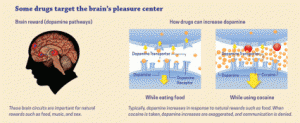
    In the long run, drug-enhanced release of dopamine in the brain will have a negative effect on your life. Just ask anyone in recovery. Your brain will increase its tolerance for your drug, and you’ll need more to get high. Plus, you cannot rely on getting high in order to feel happy for long. Eventually, there’s a crash.

    In recovery, you will need to learn how to face situations in life that bring you stress, anxiety, and depression. Ignoring these issues will not help you overcome or accept them. Instead, support groups and treatment providers will help you establish new healthy habits in your life and feel good without abusing drugs.

    #4: You Can Realize Big Dreams.

    Everyone wants to achieve something in life. We all have dreams that are based in an inner desire. Realizing those dreams is on the path of development. To illustrate, there is one golden rule that says: “Where your focus goes – energy flows”. Why continue to focus on your problems when you can start to manifest success?

    We can invest time and money in our personal growth or we can waste them in taking drugs or drinking alcohol. Once we overcome our addiction we can focus on the things we want to achieve. Then, we can fulfill our desires step by step. I’m not joking here. This year, I realized a lifelong dream of writing a book. It was published by an academic publishing house! Check it out here: The Definitive Guide to Addiction Interventions.

    Substance abuse can kill our dreams. But recovery can bring us back to life.

    #5: You’ll Save Money By Eliminating Unnecessary Costs.

    The use of drugs or alcohol is not only a tax on your health, but it is also a fine to your piggy bank. Think about the large portion of your monthly income that you spend on substances, and what else you’d rather do with that money in the long run.

    For me, I just kept increasing my credit card debt. Once I cut out the spending, I was able to consolidate and budget. Gaining financial freedom from these unhealthy habits is one of the important benefits of being drug and/or alcohol free. Increasing your wealth will allow you to accomplish your goals even faster.

    #6: You’ll Find True Friends.

    Very often, we attract people that share the same interests as us. In moments when we use drugs or alcohol, we tend to attract losers. Or people who take pity on us.

    By being sober, you can learn that responsibility and reliability are the foundations for real friendships. You can also meet new friends while in addiction recovery and they can have a real understanding of what you’re going through (which may only bring you closer). Not only that, but the ability to discriminate comes back; you’ll be better able to decide what “healthy” and “unhealthy” look like…and avoid painful relationships when you see them coming.

    #7: You’ll Can Enjoy Career Growth.

    Finding a better job or keeping up with tasks in your current work place is another advantage of being drug and alcohol free. When you’re under the influence, it can be more difficult for you to keep consistent and focused on what you do. For me, I would repeat tasks, or get lost in the middle of one. Especially when I came to work high.

    Keeping yourself away from psychoactive drugs, on the other hand, can help you become a better employee. The characteristics you present to others will lead you to improve your career path in many ways. Maybe you’ll be offered a better salary or a new position. Or perhaps the value you hold in the company will increase. Whatever the effect, it will be positive. And you can grow!

    #8: You’ll Be a Better Parent.

    We just started writing a series on child welfare. So, I’m absolutely certain that quitting drinking makes you a better parent. Drugs increase aggressivity and decrease inhibition. Now, add a child.

    Using around your kids is child abuse.

    For parents, the most important benefit of being drug and alcohol free is becoming a better parent. Addiction can seriously affect families, and all relations in the family may be exposed to danger. You may neglect your responsibilities as a parent because getting high became more important.

    In cases of legal battles over a childrens’ custody, people who use substances are prohibited to interact with their children until they become clean and sober. Once you’ve made a clean break, begin to talk with your children about how they feel, how your behavior influenced them, and affected their lives. Honest conversations can help you rebuild the relationship that has been broken. It will take time, but the only way forward is … forward.

    #9: You’ll Overcome Physical Dependence.

    None of us like to be a slave to anything in this world. But drug or alcohol dependence is a physiological state of adaptation to a substance that makes your drug-of-choice the master. When dependence is formed, the neurotransmitters in the brain which regulate our mood and behavior tweak out. So do the parts of our brains that supervise learning, memory, and cognition. But this can be reversed.

    When your body becomes dependent on a substance, you will experience symptoms of withdrawal when regular use is lowered or discontinued. Detox is only temporary. And let’s face it. If you were man/woman enough to get high…you should be man/woman enough to go through withdrawal. Chins up!

    Your physical health can be greatly improved when you get clean and get your brain function in balance again. As a result, you are free! You are no longer dependent – in any way – on something outside of your own creation. Sometimes, this is the one thought that can prevent a relapse!

    #10: You’ll Get Perspective on Your Real Struggles

    If you are reading this article, you may just be beginning to think about recovery. Know this: when you get clean and sober, you get insight. You realize that you’re the originator of your problems. When you own the maladaptive pattern as your own, it because MUCH, MUCH easier to change it.

    Got a Question?

    By cleaning your conscience, you can repair yourself. The past is nothing to regret. But the future is in your hands! If you want to change your mind and find motivation to get off drugs….give us a call. We’ll talk you through your treatment options and discuss what rehab requires.

    Or, leave us a question!

    Please share your opinions and questions regarding the benefits and the effects of being drug and alcohol free. We will try to respond personally and promptly to all legitimate inquiries.

    Reference Sources: NIH: Drugs, Brains, and Behavior: The Science of Addiction
    AAMFT: Substance Abuse and Intimate Relationships

    View the original article at addictionblog.org

  • Top 10 Largest Pharmaceutical Companies

    Top 10 Largest Pharmaceutical Companies

    ____________________________________________________________________

    ARTICLE OVERVIEW: We’ve listed the top ten largest pharmaceutical companies in the world and listed their annual growth. Your questions or comments are welcomed at the end.
    ____________________________________________________________________

    ESTIMATED READING TIME: Less than 10 minutes.
    ____________________________________________________________________

    Table of Contents:

    How Do We Measure the Largest Pharmaceutical Companies?

    In our modern age, we’re extremely lucky that we’ve developed cures for diseases that were previously untreated. But we’re also in an age of Big Business…and pharmaceuticals called “Big Pharma” tend to operate not from altruism, but are motivated by the bottom line.

    In 2017, the pharmaceutical industry hit its most profitable mark in history at $1.11 trillion. These profits are estimated to rise further in the coming years. This is partly due to the fact that medicines are continuously evolving.  Yet, another reason for this large profit has to do with the ever-growing problem with addiction.

    It’s no coincidence that the Opioid Crisis hit its peak in 2017. Further, the CDC reported that more than 191 million opioid prescriptions were dispensed to American patients in 2017. With around 25% of people prescribed Rx pain killer misusing their opioid prescriptions, there’s a rising demand for these drugs. Not only within pharmaceutical companies but also on the illicit market.

    The CDC WONDER Report estimates that, on average, 115 Americans die every day from an opioid overdose.

    With this in mind, you may be wondering, “What role does Big Pharma play in trends like the Opioid Epidemic?” and “How can we identify the ‘largest’ pharmaceutical companies?”

    The easy answer is that we can look first to profit. Those who make more money must experience a measure of business success. Yet, there are certain cases related to sales growth and offshore competition that broaden the net. A large reason for this is the demand for medications isn’t solely in the U.S. We’re noticing countries within Eastern Asia, Eastern Europe, and South America developing an increasing demand for pharmaceuticals. It’s possible that ROI is higher offshore. It’s also possible that costs are lower.

    It should be noted that not every company on this list solely manufactures prescriptions which have fueled drug addiction. There are plenty of companies whose sole aim is to find cures for specific diseases and their medications don’t always cause a “high”.

    As of October 2018, here are the top ten largest pharmaceutical companies in the world.

    #10 – Amgen

    Unlike most of the companies on this list, Amgen only recently became one of the largest pharmaceutical companies. The reason for this has to do with its recent innovations in developing medications which are primarily focused on cardiovascular diseases such as:

    • Bone health
    • Inflammation
    • Nephrology
    • Neurosciences

    Within recent years, Amgen has found much success in their products and is considered one of the most admired companies in the pharmaceutical industry. Last year, the company profited with $22.85 billion.

    #9 – GlaxoSmithKline (GSK)

    Located in the United Kingdom, GlaxoSmithKline has been one of the leading pharmaceutical companies for years now. Particularly, due to how it consistently comes up with advanced and original medications.

    Though the company offers a variety of different medicinal therapies for various diseases, its primary focus is within:

    • HIV/AIDS
    • Respiratory
    • Vaccines

    Their rise in the economy has much to do with the rise in asthma and their sales with inhalers. With that, GSK has also put much focus towards research in three specific areas of medication which have been approved:

    • A daily HIV pill.
    • Shingrix – medication to treat the shingles virus.
    • Trelegy Ellipta inhaler – to treat COPD and Juluca

    With these approvals, GlaxoSmithKline’s profit is expected to rise from the $24 billion it made in 2017.

    #8 – Gilead Sciences

    The range of medications Gilead Sciences has been able to develop the proper treatment for is astounding:

    • Hepatitis infections
    • HIV/Aids
    • Inflammation
    • Oncology
    • Respiratory
    • Virology

    Though it holds similarity to what it treats in comparison to GlaxoSmithKline, the notable difference is its location in California and, therefore, offering easier access to the American public. In 2017, the companies best-selling drug was Harvonis which is used to treat Hepatitis C. They also found success in their medications Truvada to treat and avert HIV and Epclusa, another drug to treat Hepatitis C.

    Through gaining approval of further medications being researched, it’s expected their 2017’s $25.65 billion will increase.

    #7 – AbbVie

    With a recent spike in revenue, the American company, AbbVie, has made this top ten list only in the last two years. The reason for their success has to do with their high research-driven work ethic. Test after test, AbbVie has produced a drug expected to treat atopic dermatitis through their product upadacitinib.

    However, their research goes even further with other medications they hope to impact the following fields with:

    • Dermatology
    • Gastroenterology
    • Neurology
    • Oncology

    Currently, AbbVie’s most popular medications are Humira and Imbruvica, both of which are top picks for doctors trying to treat cancer. With that in mind, it comes to no surprise AbbVie made $28.22 billion back in 2017.

    #6 – Novartis

    Novartis has made much recent headway but has a strong hold on Switzerland’s pharmaceutical history. It’s one of the top companies which focuses on the following fields:

    • Dermatology
    • Neuroscience
    • Oncology
    • Respiratory

    The main reason they’ve reached this high on the list is due to their pharmaceutical sales staying strong. Medications such as Gleevec have been used for numerous oncology diseases whereas the drug Gilenya has helped with a variety of sclerosis complications.

    The most notable medication is Cosenty x, a top pick amongst dermatologists, which had an 82% increase in sales according to Novartis’s website. They totaled $33 billion in 2017.

    #5 – Merck & Co. (MSD)

    Merck can be compared to Novartis in the sense that it has a place in history when it comes to pharmaceuticals. Though the company didn’t boost profits to a great extent these past years, it’s their already developed drugs which keep them in the top 5. These include treatments for the following areas:

    • Cardiovascular
    • Endocrinology
    • Infectious diseases
    • Oncology

    The medications of which they’ve had the most success are Keytruda – a cancer immunotherapy – the HPV vaccine Gardasil, and Januvia – a pill for diabetes. Overall, the company earned $35.4 billion in 2017. For a time, Merck’s was the largest pharmaceutical company in the world.

    #4 – Johnson & Johnson

    Johnson & Johnson may just be the most recognizable company name on this list and it’s due to their 130-year history in American households. Their most popular products are:

    • Aveeno
    • Listerine
    • Neutrogena

    Due to their history of success, Johnson & Johnson will be on this list for years to come. However, they may even climb higher considering their sales increased this past year by 8.3%. Leaving them a $36.3 billion company.

    #3 – Sanofi

    There are three reasons Sanofi is the third top pharmaceutical company:

    1. Aubagio – a pill which treats multiple sclerosis.
    2. Lantus – a diabetes insulin injection.
    3. Lovenox – an anticoagulant to avert blood clots.

    These three medications were not only their best-selling drugs but also gives the company a quarter of its total profit at $36.66 billion.

    #2 – Roche

    The innovation at Roche is just what puts it near the top of this list. Thanks to Roche, there’s been great progress in the following areas:

    • Immunology
    • Infectious disease
    • Neuroscience
    • Oncology

    Even more so, the company is looking to submit further researched drugs to help with a variety of diseases such as rheumatoid arthritis and various cancers. Roche totaled in at $44.36 billion in 2017.

    #1 – Pfizer

    Just as with Johnson & Johnson, Pfizer has a strong place in pharmaceutical history. Though their revenue growth from 2017 wasn’t huge, it’s thanks to their research towards a wide span of therapies that makes them the largest pharmaceutical company in the world. These therapies include:

    • Immunology
    • Neurosciences
    • Oncology

    In 2017, Pfizer had great success in their FDA approval of a variety of products. Likewise, there were certain products which grew heavily in revenue including:

    • Eliquis
    • Ibrance
    • Xelanz

    Overall, Pfizer earned a total of $52.54 billion in 2017.

    What Pharmaceutical Medications Should You Be Aware Of?

    Pharmaceuticals are vital for us to understand and treat both physical and mental health. Thanks to the companies above, modern medicine has progressed in a way which seemed unfathomable years ago. Yet, where there’s an upside, there’s also a bad.

    Not all pharmaceutical medication is safe. In fact, there are many out there was hold high probability for causing a drug addiction. This is when an individual retracts a chronic diseased in which they seek out drugs compulsively and find it difficult to control themselves despite negative consequences. Though not everyone is prone to addiction, it’s important to be aware of the pharmaceutical medications which can cause one.

    These include, but aren’t limited to:

    Central nervous system (CNS) depressants such as:

    Opioids used for pain treatment such as:

    Stimulants (amphetamines) such as:

    • Adderall
    • Concerta
    • Daytrana
    • Methylin
    • Ritalin

    If you or someone you love is prescribed these drugs, it’s vital you only take the dosage the doctor recommends. People who misuse prescriptions often take more than this dosage at more frequent intervals.

    Your Questions

    If you have any further questions pertaining to pharmaceutical companies, we invite you to ask them in the comments section below. If you have any further knowledge on this topic, we’d also love to hear from you. We try to reply to each comment in a prompt and personal manner.

    View the original article at addictionblog.org

  • Get Rid Of Benzodiazepines Once And For All

    Get Rid Of Benzodiazepines Once And For All

    Despite the fact that benzodiazepines are taken by illicit drug users, many people became dependent on them as a result of medical treatment. When trying to discontinue benzodiazepines the most important thing to have into consideration are the withdrawal difficulties. Benzodiazepine withdrawal can be quite dangerous mainly because of the shock to the nervous system through inappropriate and dangerous tapering methods such as detox and abrupt discontinuation.

    Considering to free yourself from taking benzodiazepine, but don’t know how? In this article, we review the safe ways to get rid of benzodiazepines once and for all. Then, your questions are welcomed at the end of the page.

    Is Benzodiazepine Addiction Normal?

    Regardless of recommendations to limit benzodiazepines to short-term use, in the timeline of 2 (two) to 4 (four) weeks, doctors are still prescribing these medications long term, for months or years. The over-prescribing benzodiazepine trend has resulted in large populations of long-term users who have become dependent and has also led to the increase of illicit benzodiazepine drug traffic.

    Anyone can become dependent and/or addicted to benzodiazepines. Individuals who take bezos more than several weeks risk to develop tolerance and physical dependence. After repeated use for months users and/or abusers develop benzodiazepine addiction. Coming off benzodiazepines can be challenging resulting with feelings of losses, isolation. Most benzodiazepine abusers feel misunderstood and unsupported when they decide to quit these medication. The extremely uncomfortable and dangerous withdrawal is what leads so many people to the emergency rooms.

    If you want to get rid of benzodiazepines once and for all, it’s best to go through a medically supervised detox to ensure your life and health safety.

    What Are The Characteristics Of Benzodiazepine Dependence?

    Benzodiazepines are medications with high level of dependency. Medical practice has shown that 50-80% of people who regularly take low doses of benzodiazepines for longer than a few months will develop a physical tolerance and become dependent. As the lack of recognition of benzodiazepine dependency is common, it often goes undetected or is misdiagnosed. Be alert for dependency, even though it may not be initially identified as a problem. Benzodiazepine dependence is usually visible through physical and psychological signs. Individuals with benzodiazepines dependency usually have the following symptoms:

    • Experience withdrawal symptoms when they try to quit
    • Find it extremely difficult to stop taking benzodiazepines
    • Have cravings for their benzodiazepines
    • Lose their ability to respond to the effects from benzodiazepine, so they increase their dose to be able to achieve
    • The same effect
    • Need benzodiazepines to function normally
    • Unable to cope without their benzodiazepine pills

    Unless users are well informed about the risks associated with long term benzodiazepine use, they are likely to continue to use them and end up developing dependency. In the short-term, benzodiazepines are very effective in relieving the symptoms of anxiety and promoting sleep. People who use them will feel much better and will often choose to continue using them because they have not been warned about the risks.

    What Do The Experts Say About Benzodiazepines?

    Dr. Jennifer Leigh, Psy.D. says that Benzo withdrawal can take years and they can kill you. Benzodiazepines kill people. They can totally obliterate people’s lives when they try to stop taking them. Granted, not every benzo user will experience extreme benzo withdrawal, but a good proportion will. Benzos are dangerous at any dose and even when used for a few days. Poll a group of benzo survivors and you’ll hear horror stories from people who took them for a handful of days, and then took years to heal.

    Benzodiazepines destroy lives. That’s the bottom line. For those of us in the trenches healing from their damage, we are busy trying to put our lives back together again from the debilitating emotional and physical symptoms benzo withdrawal causes. Add in the bankruptcy, abandonment, divorce, and homelessness that withdrawal can cause, and you understand our grumbling when the media doesn’t portray the real reasons why benzos are dangerous.

    Jillian Jesser talks about hope in the treatment of benzodiazepines. The new data did confirm impaired cognitive abilities persist six months after the detox/withdrawal period of chronic benzo use. However, there is an important “but” to that statement. Some of the specific cognitive skills need a longer period of recovery to improve, so six months should not be used a benchmark for “full recovery.”

    Another important area of hope in treating the thinking, reasoning and other impairment issues that result from long-term benzo use is the new area of neuroplasticity. This means that the brain can be retrained and that the brain can actually change in structure resulting in cognitive improvement.

    How Can You Get Rid Of Benzodiazepines?

    Addiction counselors and doctors treat benzodiazepine dependence with gradual reduction of the doses people usually take.

    Doctor’s advice is that benzodiazepine dosage should be tapered gradually in cases where the individual was a long time users/abuser. Abrupt withdrawal, especially from high doses, can cause convulsions, acute psychotic states and panic reactions. Even with slow withdrawal from smaller doses, psychiatric symptoms sometimes appear and anxiety can be severe.

    Withdrawal from Benzos is different in every dependent individual, but it usually last from 6-8 weeks to a few months and some for some people it may last even up to a year. Addiction professionals advise that very slow rates of withdrawal might prolong the agony, and that although symptoms may be more severe with more rapid withdrawal, they do not last so long. But the tapering dynamics should be in accordance with the individual case of the person.

    The size of each dosage reduction depends on the starting dose. Individuals who used higher doses can usually tolerate larger dose reduction than those on lower doses. The reduction would of course vary according to the type of the abused benzodiazepine. But the scariest thing for addicts is stopping the last few milligrams. This is so mainly because of fears about how they will cope without their Bezos at all. However, doctors and addiction counselors constantly provide psychological support and encouragement to addicts reminding about the new sense of freedom when you completely come off Benzos.

    Guide on best practices and psychotherapy treatment for benzodiazepine treatment. What are the exact ways that counselors or mental health professionals treat benzodiazepine dependence? Describe the steps and/or treatments.

    Residential Vs Counselling Treatment: What Works Best?

    There are divided opinions on the matter of should you choose residential setting or home setting for benzodiazepine withdrawal. Some favour treating people in a counselling setting rather than treating them in hospital or a residential withdrawal facility. Benzodiazepine addiction treatment results show slow reduction of as the safest, most cost effective and most successful way for people to become pill-free. Slow reduction is best achieved in a counselling or home based withdrawal setting.

    Residential withdrawal is recommended only in the following cases:

    • Cases of more severe medical problems
    • History of withdrawal seizures
    • Psychiatric disorder as well as benzodiazepine dependency
    • If the person is a high dose user
    • In case the individual feels that they will be able to reduce their dose more successfully in residential setting
    • If the individual is a polydrug user

    Who Can Help You With Benzodiazepine Dependence?

    When facing benzodiazepine dependence and looking for help, you can always trust this issue into the hands of:

    • Addiction counselors
    • Doctors
    • Licensed psychiatrist
    • Physicians
    Reference sources: Benzo: The diagnosis and management of benzodiazepine dependence
    Benzo: Beyond Benzodiazepines
    Benzo: The Treatment of Benzodiazepine Dependence

    View the original article at

  • Gratitude Activities for Addiction: A Meditation on Abundance and Gratitude

    Gratitude Activities for Addiction: A Meditation on Abundance and Gratitude

    Reflecting on Past Experience

    As I contemplate my seventy second year, I recall the many lives I have lived, the trials and tribulations, the loves, losses, the successes and failures I have experienced. I know that I have brought joy to some and consternation to others.

    Since I have moved, I have stepped up the number of 12 step meetings I am going to and have been working on my character defects as well as making amends to those I have harmed knowing full well their responses are in god’s hands, not mine. For me, the first step is so important because I surrender to being powerless over people, places, thoughts, feelings and actions.

    Today, I am privileged to work with folks all over the globe, helping them rise to their best selves and often in the process I forget to take care of myself.

    So, How Do You Manifest Abundance?

    My understanding for the key to manifesting abundance is focusing and giving all your attention to the things you want. Then, you give zero energy to the things you do not want. 

    That is the key.

    To manifest even further goodness, you need to be grateful for the things that you have. Then, you keep being grateful as the things you have will just get better and better because you are focusing on all that goodness. That goodness grows exponentially and that’s a big part of how you shift your energy.

    How It Looks in Practice

    Today, I want to share ways in which I am working to manifest abundance in my life. In other words, I am working hard on discovering things about myself and not letting distractions (rumblings in my head, social media getting the best of me, etc.) get in the way.

    This morning, I realized I wanted to create a morning meditation which helps focus on manifesting what I want and what I am thankful for. I share it here with you as a way that you can carry a similar practice into your life.

     A Meditation on Abundance and Gratitude

    REPEAT TO YOURSELF: May I always believe something wonderful is about to happen.

    That is one I have to truly concentrate on to manifest. Growing up in a home full of confusion and tragedy, my natural inclination is to see the world through dark lenses, so I must consciously and vigilantly believe something wonderful is going to happen and look beneath, inside and above  the surface to unearth it.

    REPEAT TO YOURSELF: May I discover what I want in this next decade of life.

    As the 12-Step teaches, act courageously one day at a time. For today I am kind, honest, working a program, transparent and manifesting abundance for myself and others.

    REPEAT TO YOURSELF: May I manifest and practice gratitude daily by writing down each morning what I am grateful for.

    These are just a few things I’m grateful for:

    • Traveling up high and seeing the desert from 8900 feet
    • My husband John for always creating magical moments
    • Seeing the Big Dipper
    • Learning new ways of being
    • Hearing from friends far and near
    • My clients, who are my teachers
    • Crying and laughing

    REPEAT TO YOURSELF: May I manifest good health and exercise.

    Moving to a new city has switched my daily routine so today I am vigilant in finding new ways to move my body.

    REPEAT TO YOURSELF: May I manifest kindness and gentleness with myself and others.

    Be kind to everyone you meet, for everyone is fighting some sort of battle.

    REPEAT TO YOURSELF: May I manifest big ideas – so big that they grow wings.

    Concentrate on where I want to go not what I fear. For instance, I want to speak with Oprah. I want to do a TED Talk. I want to climb Machu Picchu and I want to take my husband to Norway. I want to be of service to others. I want to write with purpose.

    REPEAT TO YOURSELF: May I manifest money and work. “I love money, I love work. Work and money love me.”

    Other Ways You Can Call on Abundance

    Here are some other ways that I call on abundance. I repeat:

    May I watch my grandchildren grow and soar. May I laugh and take them to places near and far, to even Chuck-E-Cheese and play with them.

    May I laugh, love, work, be of service to others, forgive myself if I have harmed another, and embrace those who are my enemies and those who are my friends.

    May I be gentle with my soul, meaning strive to not live in a dark lonely place of “you’re not good enough” – rather, that I am enough. Always.

    May my phone ring with work and clients that I can serve. May I train and learn from others.

    May I love more and worry less. I want to do the next right thing. I don’t always know what results may come from my actions, but if I do nothing there will be no result.

    May I embrace the epic changes that I have made for GREAT OPPORTUNITIES ARE ALWAYS worth the risk.

    May I have the courage TO DIG DEEP, to look inside and out and find grace.

    MAY I BE PROUD OF THE WORK I DO, THE PERSON I AM, AND THE DIFFERENCE I MAKE IN THIS WORLD.

    May I learn to recognize all the dazzling important things that my eyes cannot see.

    May I have the patience and courage to do what is right.

    May I find laughter, silliness and play for I am often way too serious.

    May I cultivate deep gratitude for all that life offers me.

    MAY I REALIZE I AM RESILIENT. “WHEN THERE IS NO ENEMY WITHIN THE ENEMIES OUTSIDE CANNOT HURT YOU “AFRICAN PROVERB

    May my difficulties only serve to help me discover who I am.

    May I find a home for my talents in this world.

    May I surround myself with people who help me grow and be a better me.

    May I find a world that is kinder than I knew and often on my side.

    “May I live the kind of life I imagine for myself – for this is my one time to be me. I want to experience ever good things.” -Maya Angelou

    May I thank outside the box, thank people who least expect a thank you. Those that may have fired me or turned away. Or thank the grocery clerk, the mail person, etc.

    May I show myself deep kindness for the world and, hence, deep kindness for myself.

    May I always remember: “Gratitude can transform a common day into Thanksgiving, turn routine jobs into joy, and change ordinary opportunities into blessings.” -William Arthur Ward

    What Do You Do to Cultivate Gratitude?

    Let’s keep the conversation going.

    Please share your thoughts in the comments section below. We’ll do our best to respond to you personally and promptly.

    View the original article at

  • Here’s What Parents Should Know About Teen Crack Cocaine Use

    Here’s What Parents Should Know About Teen Crack Cocaine Use

    Causes of Teen Crack Cocaine Use

    As teens slowly approach adulthood, most of them are exploring and learning more about themselves. While there are many teens who choose to cultivate a sense of self in healthy ways, others decide to experiment and test their boundaries by engaging in risky activities, such as crack cocaine use.

    Along with satisfying their curiosity and showing their independence, many teens choose to use crack cocaine to belong in a specific group, experience feelings of euphoria, gain more self-confidence, and be completely comfortable in social settings. These are the primary reasons why teens use crack cocaine.

    REASON 1: Peer Pressure

    One of the primary reasons why teens use crack cocaine is because of peer pressure. In most cases, teens feel extreme pressure to fit in. Because of this intense pressure, some insecure teens will make decisions based on what their friends and peers want them to do.

    According to a study performed by the National Institute of Drug Abuse, teens are more prone to engage in risky behavior if their peers are watching. While some teens are able to consider rewards and risks before making a dangerous decision, other teens are not mature enough to control impulse behaviors such as using drugs. Before giving in to peer pressure, teens should make themselves aware of the dangerous side effects of crack cocaine, which could negatively impact their lives.

    REASON 2: Euphoria

    After teens are pressured into trying cocaine, many become addicted to this drug due to the main high effect called euphoria. Also known as a special kind of extreme pleasure, euphoria is the same feeling associated with a real accomplishment or reward. When teens repeatedly use cocaine, the brain is stimulated to produce these pleasurable feelings over and over again.

    REASON 3: Self Confidence

    Most teenagers struggle with self-confidence, which is why many teens are drawn toward crack cocaine. While teens are high on cocaine, they will usually feel better about themselves. Often times, teens may even feel superior to their peers when using this dangerous drug. Unfortunately, once teens come down from this cocaine high, they will probably feel worse about themselves than they did before using this drug. As a result, many teens continue using the drug to try to experience greater self-confidence again.

    REASON 4: Sociability

    Almost every teen wants to feel accepted and valued in social situations. In order to relax and be more comfortable around their peers, some teens use drugs like cocaine. During a cocaine high, many teens can become more talkative and gregarious in social settings.

    The fact that cocaine can make users feel more energetic and sociable is another reason why teens prefer crack over other types of drugs. Teens who struggle with social anxieties, extreme shyness, and/or depression are especially attractive to this cocaine effect.

    Major Side Effects of Cocaine

    Although the cocaine high can make teens feel really good, they should remember that there are severe side effects associated with using this dangerous drug. Depending on the person and the amount of usage, teens may experience any of these effects when using this drug:

    • Angry outbursts
    • Anxiety
    • Extremely hot body temperatures
    • Full-body stimulation
    • Hallucinations
    • Heart problems
    • Hyperactivity
    • Intense sadness
    • Muscle weakness
    • Nausea
    • Paranoia
    • Seizures

    Other side effects?

    Addiction – Withdrawal – Death.

    Such unpleasant side effects can be particularly frustrating to teens who use crack cocaine to make friends with popular peers, experience increased happiness, gain more confidence, and become more sociable.

    Risk Factors

    There are many factors that influence a teen’s likelihood to use crack cocaine. The more risk factors that are present, the more likely a teen will experiment with the drug to achieve the desired results. The most common risk factors for cocaine drug use are:

    • Low self-esteem
    • Poor grades
    • Permissive parenting
    • Victim of extreme bullying
    • Parent/sibling drug use

    In addition, teens who attend a school without strict rules for drugs or live in a community with a high tolerance for crack cocaine use are more prone to engage in this dangerous drug.

    Protective Factors

    On the other hand, there are many protective factors that have been shown to significantly decrease the risk of drug use among teens. These include:

    • Being extremely close with a parent or caregiver
    • Maintaining high self-esteem
    • Living in a community with many youth programs
    • Spending time with positive role models
    • Attending a school with a strict no drug policy
    • Participating in regular discussions with a parent about the risks of drug use

    The good news is that parents can greatly control many of the risk and protective factors in their homes. Always remember that successful drug prevention is when the risk factors are significantly reduced and the protective factors are greatly increased.

    Struggling Teens Should Seek Help

    While these common side effects can be extremely unpleasant, with repeated crack use, the brain can begin to associate these symptoms with the enjoyable effects of a cocaine high. The inability of the brain to distinguish between the unpleasant and pleasurable side effects is the main reason why teens become addicted to this substance.

    Of course, the best way to prevent cocaine addiction is to avoid drug use completely. Because of its intense pleasurable effect, teens may need a great amount of support from parents, friends, and other loved ones to stop using this drug. Regardless of the circumstances, there is always hope for teens who would like to overcome cocaine addiction for good. Don’t be afraid to seek professional help for your teen if you notice symptoms of crack cocaine use. With drug abuse treatment, your teen can go on to live a happy, healthy, and successful life.

    View the original article at

  • 3 Substances You Should Never Detox from Alone

    3 Substances You Should Never Detox from Alone

    By Amy Sedgwick, LADC, AADC, CCDP, SCPG
    Director of Clinical Operations

    ARTICLE OVERVIEW: You should never try to detox from alcohol, benzos, or opioids on your own. This article reviews the dangerous side effects of withdrawal from these substances. Then, we invite your questions at the end.

    ESTIMATED READING TIME: 7 minutes.

    TABLE OF CONTENTS:

    The Definition of Detox

    Detoxification is the process of removing any hazardous chemicals from the body. It is an essential first step if you are looking to rid yourself of addiction and begin a healthy, substance-free life. During this stage, you may feel extremely sick and uneasy as toxins leave your body. Often, medical detox can help address symptoms to help minimize discomfort. But in other cases, detox may be necessary.

    If you are trying to overcome alcohol, opioid, or benzodiazepine addiction, detox can dangerous – sometimes even fatal – without medical assistance.

    In particular, if you are dependent on alcohol, opioids, or benzodiazepines, you should aim to address your addiction in the safest way possible. When you detox from these substances, withdrawal symptoms can be severe and difficult to manage at home. Likewise, detoxing alone is risky because it increases the likelihood of an overdose.

    Plus, detoxing alone is not a suitable replacement for valuable forms of treatment such as medication assisted treatment (MAT), which can reduce your risk of relapse. In sum, clinical detox is the safest option for addressing addiction, and for many, it is a step that serves as the foundation for a lasting recovery.

    Let’s look at each type of detox, its risks, and common side effects here.

    Alcohol Detox

    With its legal status and wide availability, alcohol is the most frequently used addictive substance in the United States. Because quitting alcohol when dependent can induce severe side effects like seizures and heart failure, you should not attempt to overcome alcohol dependence alone, especially during the detox phase.

    Why?

    Individuals who become addicted to alcohol and drugs encounter neurological changes, making their brains trick them into thinking that they need their substance of choice to survive. If you have a history of alcoholism and decide to drastically cut back or stop altogether, your body will react accordingly to the change. While detoxing from alcohol, you are likely to experience particularly uncomfortable physical withdrawal symptoms such as:

    • Fever
    • High blood pressure
    • Nausea
    • Seizures
    • Heart failure

    In addition to physical symptoms, you may undergo noticeable behavioral changes because of alcohol withdrawal. These psychological symptoms can include:

    • Anxiety
    • Depression
    • Mood swings
    • Fatigue
    • Hallucinations

    These many potential side effects can make the detox process excruciating for some. Alcohol withdrawal symptoms can begin eight hours after you stop drinking. Discomfort is especially prominent within the first few days of detoxing from alcohol, and mental health symptoms can take weeks to subside.

    If you drink heavily and suddenly stop, you may contend with a more intense form of withdrawal known as acute alcohol withdrawal syndrome (AWS). High blood pressure, tremors, and seizures are some of the major indicators of AWS.

    This condition is often accompanied by a complication known as delirium tremens (DT), which significantly alters your mind and nervous system. Both AWS and DT can cause more severe health problems, such as difficulty breathing, heart attack, and coma. These risks can be minimized with the help of a medical professional, who can alleviate painful withdrawal symptoms and examine your vital signs to ensure your well-being. A professional may also administer addiction medications designed to lessen alcohol withdrawal symptoms, such as Vivitrol.

    Detox from Opioids

    Opioids are a class of extremely addictive legal and illegal drugs that provide pain relief. Well-known opioids include:

    Though prescription opioids can help manage moderate to severe physical discomfort, they can be dangerous when taken for longer periods or in higher doses than medically recommended. Fentanyl — which is up to one hundred times more potent than morphine — often factors into deadly overdoses, as users frequently do not realize that the opioids they have been taking, such as heroin, have been laced with fentanyl. In 2016, opioid misuse caused over 42,000 fatal overdoses across the country.

    Because you can easily build a tolerance to opioids, you will likely experience severe cravings during the detox process that can tempt you to use again. When you detox alone, you have access to drugs, making it even easier for you to relapse. Relapsing after attempting to detox from opioids at home can be life-threatening because your body’s tolerance for the drug may not be the same, potentially leading to a fatal overdose.

    Detoxing in a medical setting, however, offers you the safety of a drug-free environment, removed from temptations. It gives you the opportunity to focus entirely on your recovery because you will encounter fewer triggers that could jeopardize sobriety. You will also have a support system to monitor your well-being, putting your mind more at ease. Undergoing medically monitored detox can relieve physical withdrawal symptoms you may incur during opioid withdrawal, such as:

    • Nausea
    • Abdominal cramps
    • Fever
    • High blood pressure
    • Intense cravings

    While detoxing from opioids, you may also experience psychological symptoms such as:

    • Irritation
    • Anxiety
    • Depression
    • Mood swings
    • Insomnia

    Though not all of these symptoms are deadly, they can cause immense discomfort and may last for weeks. Opioid withdrawal symptoms also impact the mind and the body quickly, depending on the type of opioid used. Heroin withdrawal symptoms, for example, may appear within only 12 hours of your last use.

    Detoxing at a treatment center can make all the difference in your recovery from opioid addiction. In addition to counseling and support, a professional can also address painful withdrawal symptoms through the use of addiction medications, if appropriate. Options for addressing opioid addiction through medication-assisted treatment in a rehab facility can include prescription medications such as Suboxone, Sublocade, and Vivitrol.

    Benzos

    Benzodiazepines, or benzos, are a class of depressants that are typically prescribed to treat anxiety and are only intended for short-term use. They include drugs such as:
    • Ativan
    • Klonopin
    • Valium
    • Xanax

    Because they are prescription drugs, benzos are often considered harmless. Lulled into this false sense of security, some users abuse benzos and develop a tolerance after using them for more than two to four weeks. In an attempt to experience the same sedative effects, many end up overdosing on benzos, which contribute to about 30 percent of fatal opioid overdoses. When combined with alcohol or opioids, benzo use can be life-threatening because each of these substances can limit breathing and inhibit brain function.

    If you suffer from benzodiazepine addiction, detoxing within a clinical setting is highly recommended to avoid health complications. Just like with alcohol and opioid addiction, those looking to detox from benzos may face a range of physical and psychological symptoms, including:

    • Anxiety
    • Panic attacks
    • Restlessness
    • Distorted perception
    • Itching
    • Difficulty walking

    Detoxing from benzos without medical supervision presents many dangers, including an increased risk of seizures. The detox process for benzodiazepine addiction can be complex to navigate because some of the withdrawal symptoms that may appear, like panic attacks and anxiety, may have been the reason users started self-medicating in the first place. As a result, if you are accustomed to taking benzodiazepines for medical reasons, you may find discontinuing use particularly daunting.

    Withdrawal symptoms typically start within a day of discontinuing use and may persist for months. Even in a medical setting, detoxing from benzodiazepines can take 10 days, whereas detoxing from alcohol or opioid addiction under similar conditions may take 5 days. If you suffer from benzodiazepine addiction, attempting to detox alone could have devastating consequences.

    When to Seek Medically Monitored Detox

    As the first step on your road to recovery, detox is a crucial stage that lets the body heal from toxic substances. Medically monitored detox offers the best chance for your body to recover from any harm caused by substance abuse, but it can help you in other ways as well.

    1. It provides you with an environment that is more conducive to a sustainable recovery.

    Medical detox introduces you to a team of addiction treatment and mental health experts who can not only address your physical and psychological withdrawal symptoms but also help you determine the next steps in treatment. Attending clinical detox removes you from any triggers connected to your current environment, and distancing yourself from toxic elements in your life can eliminate stress that may have been driving your addiction. Detoxing in a medical setting, therefore, helps you to focus on your health and makes you less likely to relapse.

    2. It gives you the opportunity to test for other medical conditions.

    Through medical detox, individuals also have the option to undergo testing for HIV and hepatitis C, conditions that may have been spurred by their substance use. A medical team can help you uncover any underlying medical conditions that you may not have realized otherwise, giving you the option to seek treatment and live a longer, healthier life.

    3. It encourages healthy lifestyle choices.

    Because proper nourishment is essential for helping the body recover from addiction, nutrition is a central component of some clinical detox programs. During active addiction, many individuals experience changes in appetite or weight. Learning the basics about nutrition and how to practice mindful eating in early recovery can help restore physical well-being and build a strong foundation for your sobriety. Some clinical detox programs also offer sleep education classes that teach you healthy resting habits, which can help your body and mind feel even more rejuvenated in the long term.

    Your Questions

    We hope that have encouraged you to get medical help anytime you’re considering getting off these 3 types of drugs. You don’t need go through the process of recovery alone. There are people who can help you with the struggles you’re facing. Get in touch with one today.

    If you or a loved one suffers, contact us today. Or, if you have a question…reach out. You can feel free to leave a comment below. We try to respond to all comments personally and promptly.

    —–
    About the Author: Amy Sedgwick is the Director of Clinical Operations for Mountainside Treatment Center. She is a Licensed Alcohol and Drug Counselor as well as a Nationally and Internationally Certified Advanced Alcohol and Drug Counselor. At Mountainside, she oversees Residential, Outpatient Services and Family Wellness programs, ensuring each team provides best in class service and care to every client. Amy is also on the Board of Directors for the Connecticut Certification Board (CCB) which provides nationwide training and addiction counseling certification.

    View the original article at

  • Get Rid of Drug Cravings Once and for All

    Get Rid of Drug Cravings Once and for All

    ARTICLE SUMMARY: There is no way to completely eliminate drug cravings. However, you can learn to live with them…and get through them. This article reviews why cravings occur and offers three practical ideas on how to cope.

    ESTIMATED READING TIME: 5-10 minutes.

    TABLE OF CONTENTS:

    Drugs and Pleasure

    To start to understand a craving, we need to look first at how drugs work in the brain. According to the National Institute on Drug Abuse (NIDA), experts used to think that a specific chemical neurotransmitter (dopamine) produced by drugs creates an extreme feeling of well-being. However, the reality is that the way drugs work in the brain is a little more complicated than that.

    Today, scientists now think dopamine has more to do with getting us to repeat pleasurable activities (reinforcement) than with producing pleasure directly. Large surges of dopamine “teach” the brain to seek drugs … while other, healthier activities such as exercise, creative pursuits, relationships, or even sex, get sidelined.

    The Definition of  a Craving

    So, what is a craving, exactly?

    Well, take away the drug-of-choice…and the need to feel pleasure still exists.  Our natural ability to feel pleasure can take some time to return as the brain returns to normal function. This is why people often feel the following in the first few months of addiction recovery:

    • depressed
    • flat
    • lacking motivation
    • lifeless

    The technical term for this is “anhedonia”. For some drugs – like meth, cocaine, heroin, or painkillers – it can take months or years for the brain’s chemistry to return to normal. And the amount of time it takes for the brain to return to homeostasis after a period of addiction will vary by individual.

    What’s important to know is that most of us are physically unable to enjoy things that were previously pleasurable. And naturally, we consciously and subconsciously seek out pleasure…to make life fun! This is why drug craving is natural outcome of drug use: it is a physical or psychological urge for your drug-of-choice.

    A craving is a deep yearning for the effect of your drug-of-choice.

    Triggers

    A craving can come out of the blue. It can also be”triggered”. Indeed, most cravings are usually prompted by a trigger. Triggers include external stimuli such as:

    • Certain people
    • Places
    • Situations
    • Smells
    • Other external stimuli

    Triggering situations affect the area of the brain called “amygdala”. When a triggering situation occurs, the amygdala sends signals to the other parts of the brain reminding you of your drug-of-choice. The amygdala regulates functions such as memory and learning, so you are in the company of a person, or in a certain situation that somehow reminds you of your previous addictive behavior… reaching for drugs again is a program running in your brain. The trigger sets of a pattern of decision making that can spiral you into an unconscious decision to use.

    During this process, you may even experience sensations such as shaking, cramps, anxiety attacks, nervousness… etc. A craving sensation can literally nearly take control over a person. However, you can stay in control by knowing the brain science behind them.

    Cravings occur as the result of powerful memories linked to substance abuse. When a trigger occurs, the amygdala lights up and in a moment, you can nearly feel the pleasure of your drug-of-choice. But cravings come and go. They do not last.

    They key to coping with cravings is to anticipate triggers and learn to avoid them. A craving may never go away compltely…the learned “reflex” can last a long time, even in people who haven’t used drugs in many years. Like riding a bike, the brain remembers. Cues that are linked with drug use can trigger uncontrollable cravings whenever you experience the cue, even if the drug itself is not available. However, you can stay in control of a craving and learn to ride it like a wave.

    Are Cravings Normal in Recovery?

    Yes.

    Almost every addict in recovery experiences craving. In fact, cravings are a very common and normal part of addiction recovery. The urge to take your drug-of-choice is rooted in brain chemistry.

    Again, they key is to be aware that they happen. When cravings appear out of nowhere they tend to take us by suprise. And if they come out of the blue, a craving can be sudden and very unpleasant. Indeed, the sudden and impulsive nature of cravings are one of the key factors for relapse.

    Therefore, it’s highly recommended that you ask for help when they strike. This because you’re working with long term memory association in the brain. A trigger can not be “deleted” as easily as people think. So, because cravings act as “automatic” and unconcious desire,s it’s best that you seek help from mental health professionals in order to manage them.

    A counselor, psychotherapist, social worker, or addiction doctor can help you to plan for cravings and teach you tools and strategies for managing them.

    Experiencing cravings and looking for ways to get rid of them? The next section offers you ideas aabout how to manage a craving and what to do when they appear.

    • Are your thoughts preoccupied with your drug-of-choice?
    • Can you literally taste your drug-of-choice on your tongue?
    • Do you experience a strong desire to see old friends?

    Do not worry, these are all normal.

    What you do next is key!

    What Do The Experts Say?

    Ph.D. Adi Jaffe defines cravings as programmed responses to environmental signals that have been connected to drug use through experience. His advice is that when you have a craving, recognize it for what it is. If the experience is overwhelming, make sure there’s someone you can talk to about it (a therapist, partner, parent, or 12 step sponsor). As time passes your cravings will become less and less frequent, though without specific treatment, their intensity will likely not go away. Like he says, cravings are a part of the reality of addiction – knowing what to do with them is a key to success.

    Randy Lindel, Facilitator at SMART Recovery says:

    “Everyone who’s engaged in addictive behavior will experience uncomfortable cravings (“I want it badly”) and urges (“I have to do it now”).”

    Again, this experts notes tha they are normal. And fortunately, h reminds us, they always pass with time. At the outset of recovery, they can be pretty intense, but each one will subside if you can wait it out and have a plan for relapse prevention. Cravings and urges will decrease in strength and frequency over time. You can make this happen by adopting some coping strategies that work best for you.

    3 Ways to Cope: How To Work with Cravings

    1. Learn your personal triggers.

    Being aware about the things that are associated with your addiction past is the first step towards learning how to take control of them. Most people are not aware about which things signal a craving. This is one of the main tricks of cravings. If they are not consciously recognized and registered they tend to act as automatic occurrences forcing your attention on using.

    Cravings may present themselves in any form, but the key thing is learning to recognize your personal triggers. When you are able to detect your personal triggers, you can avoid them. In fact, many professional recommend that you list alternatives to avoid certain people, places, smells or situations which can bring up old, unhealthy habits.

    2. Find a new brain circuit to reinforce pleasure. Or, occupy your mind.

    It’s vital as you identify triggers, you also look for other activities to replace drug use. The brain is re-programmable. So, here are some ideas for what you can do when cravings strike:

    • Ask for guidance and help from a trained treatment professional.
    • Change your routine.
    • Distract yourself: Read a book, see a movie, or talk to a friend.
    • Do something spontaneously from your bucket list.
    • Go out for a walk or exercise for 20 minutes.
    • Practice mindfulness meditation.

    3. Actively create a safe, healthy and drug-free environment.

    We are creatures that hunt for reward. The need to satisfy your cravings and/or desires is based on availability. When a drug-of-choice is completely unavailable, we are forced to shift our attention elsewhere. Know this about your own human nature and bring health into your environment.

    In sum, eliminate all the possible triggers from the place you live and the places you go and the people you hang out will at least make you feel safe. Take responsibility for what you surround yourself in. Then, adjust your lifestyle accordingly.

    Professional Help

    There are many professionals and treatment methods developed to help people deal with cravings and prevent relapse . You can seek professional help from the following:

    • Addiction counselors or psychotherapists (APA find a counselor)
    • Addiction specialist doctors, or MD (ABAM find a doctor)
    • Licensed clinical social workers
    • Hotlines such as SAMHSA’s National Helpline – 1-800-662-HELP.

    Mental health providers can engage you in the following treatment modalities:

    • 12-Step meeting facilitation
    • Cognitive Behavioral Therapy (CBT)
    • Individual Therapy or Group Counseling
    • Mindfulness techniques

    Your Questions

    We hope this article offers practical guidance and some useful ideas about how to get through cravings in addiction recovery. In case you still have a question or want to share a personal experience… please feel free to use the comments section below. We try to answer all real-life comments personally and promptly, or refer you to an expert in case we do not know the answer.

    Reference Sources: Alternatives In Treatment: What Are Drug Cravings and How Do They Impact an Addict’s Life?
    Psychology Today: Craving: When the brain remembers drug use
    Addiction Blog: How does a heroin craving feel?
    Recovery: Cravings Symptoms, Treatments and Relapse Prevention
    A Road To Recovery Rehab: Understanding Cravings and How it Helps Recovery
    Addiction Blog: Coping with urges and cravings
    Addiction Blog: Coping with drug and alcohol cravings: A skills list

    View the original article at