Author: Addiction Blog

  • Help for Opiate Withdrawal

    Help for Opiate Withdrawal

    ARTICLE OVERVIEW: Opiate drugs are some of the most addictive out there and, likewise, some of the hardest to quit. Yet, with the right kind of help, it’s entirely possible. This article reviews how withdrawal is hard and the reason behind it, describes symptoms occurring along the basic timeline, and informs on directions for help.

    ESTIMATED READING TIME: Less than 5 minutes.

    Table of Contents:

    Is Opiate Withdrawal Hard?

    The short answer is, yes. Opiates are some of the most addictive drugs available. Therefore, they’re also some of the hardest to quit.

    But why is opiate withdrawal so hard?

    The main reason opiate withdrawal is so hard is because of the severely uncomfortable symptoms, such as restlessness, anxiety, headache, sweating…. If you’ve ever had a period of time without “your fix”, then you’ve most likely already experienced the initial stages of withdrawal. So, the answer has to do with the way the brain adapts to opiates over time.

    Opiates and the Brain

    Natural opiates come from the dried “milk” of the poppy plant and include opium, morphine, heroin, Demerol, and codeine. These drugs trigger a strong high, euphoria, or sense of well-being. However, over time, the high becomes habit forming. Even within a few weeks, the brain and body start to interpret the chemical presence of the opiates as normal, leading to drug dependence and tolerance.

    What happens in the brain, exactly?

    When you take an opiate, the chemical enters the brain and attaches to a variety of opioid receptors. Particularly, those involved with pain and pleasure, such as the reward system. These receptors are located in different areas of the brain. From these opioid receptors, the opioid triggers neurotransmitters throughout other areas of the brain and body.

    This transmission leads to euphoria. It also leads to pain relief. Due to an opiate’s chemical effects of the body, users may also feel the following:

    • Dry mouth
    • Flushing of the skin
    • Heaviness
    • Itching
    • Nausea/Vomiting

    When you stop taking an opiate – even just for a short period of time – withdrawal symptoms occur primarily due to your physical dependence. Once you’re drug dependent, the body and brain adapt to the drug as “normal”. The brain counterbalances the depressant effects of opiates by triggering stimulant chemicals and functions. But take away the drug, and your brain and body are left with the unnatural stimulant effects until they balance out again in detox. This usually takes between 7 to 10 days.

    Is Opiate Withdrawal Dangerous?

    Not necessarily. Rarely does opiate withdrawal have fatal implications, though it can be extremely uncomfortable. As you’re going to face cravings, dehydration, and mood swings it’s vital you seek medical supervision in order to assure your recovery.

    Can you undertake detox and withdrawal from an opiate drug on your own?

    You might assume so, but the problem with this assumption is that probably you’re NOT a medical professional. Treatment facilities have a way of treating withdrawal to:

    1. Ease withdrawal symptoms.
    2. Offer a medically supervised and controlled environment.
    3. Give you an opportunity to process your thoughts and understand emotions.

    Attempting to quit on your own terms IS dangerous because you have no idea how your body and brain react. And when symptoms become overwhelming, you won’t know what to do. Furthermore, without a supportive environment, relapse becomes more likely. Studies show that between 40% and 60% of people addicted to opioid drugs end up relapsing.

    The safest way to withdraw from opiates is at a medical detox. Give yourself the gift of successful recovery and seek treatment.

    A List of Withdrawal Symptoms

    Opiate substances cause physical dependence, meaning that the body adapts to the drugs as a way to survive. The body perceives opiate chemicals as “normal” after frequent use of the drug of three weeks or more. This means you are physically dependent on using it in order to prevent withdrawal symptoms.

    So, once you decide you want to quit, you need to prepare. Your body and brain will need time to readjust back to its native, original chemical balance, a state known as homeostasis. This time of adjustment is called withdrawal; withdrawal manifests as a specific set of symptoms.

    Have you ever gone a day or two without getting your fix?

    Have you noticed your body beginning to feel highly uncomfortable?

    These were the early stages of withdrawal. These symptoms include:

    • Agitation
    • Anxiety
    • Increased tearing
    • Insomnia
    • Muscle aches
    • Runny nose
    • Sweating
    • Yawning

    As opiate withdrawal progresses, the above symptoms become more intense and the following symptoms kick in:

    • Abdominal cramping
    • Diarrhea
    • Dilated pupils
    • Goosebumps
    • Nausea
    • Vomiting

    Symptoms usually begin about 12 hours after your last exposure to an opiate drug.

    DURATION

    How long does opiate withdrawal last?

    Detox generally lasts around 7 days and begins between 6 to 12 hours after your last dose. For the following 1 to 3 days, your withdrawal symptoms will peak. Then, over the course of 5 to 7 days, symptoms will gradually die down.

    Still, there is no clear answer. The amount of time an opiate detox takes depends on:

    • Your age.
    • Your personal metabolism.
    • Usage amount.
    • Length of use.

    For example, older individuals who’ve been using for a longer period of time are much more likely to experience more intense and longer withdrawals than those who’ve been using only a few weeks at smaller doses.

    There are two different types of withdrawals that will persist during detox:

    1. Acute Withdrawal – Begins with feelings of anxiety and cravings, climaxes around 36 to 72 hours, and decreases heavily within the following 5 days.

    2. Protracted Withdrawal Symptoms (PAWS) – Will follow acute withdrawals and can last up to months.

    The Basic Timeline

    Here is a more detailed timeline of what to expect day by day during withdrawal.

    Day 1 to 2 – Usually the most difficult to get through, as the harshest withdrawal symptoms manifest during this time. You can expect to feel light symptoms of discomfort around 12 hours after your last use. The most notable symptoms you’ll experience are muscle aches and pains.

    You will also have some combination of dilated pupils, sweats, chills, nasal stuffiness, watery eyes, irritability and possibly stomach cramps and diarrhea. Depending on how much your body depends on opiate drugs, you may experience extreme muscle pain during this time. Along with this, you’re also likely to feel the following symptoms:

    • Anxiety or panic attacks
    • Chills
    • Diarrhea
    • Loss of appetite
    • Trouble sleeping

    Day 3 to 4 – You can expect the worst of your discomfort to pass during this time, but it’s not entirely over. As the medical professionals supervising you will remind you, it’s important to stay hydrated. The most uncomfortable withdrawal symptoms to be expected are those you experience in the first days, plus:

    • Abdominal cramps
    • Increased blood pressure
    • Increased heart and breathing rates
    • Nausea
    • Shivers
    • Sweating
    • Vomiting

    Day 6 and Beyond. During this time, the withdrawal symptoms usually ease down. The body is getting back into homeostasis. There are some factors of withdrawal which may persist, such as trouble sleeping and/or eating as well as nausea and anxiety. However, for the most part, the body has finished detoxing and the mind is ready to undergo psychotherapies – a treatment which sets out to reduce cravings and change an individual’s conduct based around their prior drug use.

    Since psychotherapies play a role in the withdrawal timeline, there’s no accurate way to tell how long you’ll have to undergo treatment. Generally speaking, most people who want to address an problems with opiate drugs do well with medical supervision for the following 3 to 6 months. Medication assisted treatment and talk therapy are key to a full recovery. However, some people remain in some form of a treatment program for months to years as they find a support system keeping them from relapse.

    Medicines that Help

    Medication is often given to address intensely uncomfortable symptoms as they occur. Every individual is treated according to their own need. Generally, you may be offered some of the following medications from a prescribing doctor:
    • Buprenorphine – A partial opioid agonist, which binds itself to opioid receptors, just not to the extent of a full opioid agonist. In turn, this reduces withdrawal symptoms and cravings, giving individuals a better chance to prevent relapse.
    • LoxifidineApproved by the Federal Drug Administration’s (FDA), loxifidine has been known to greatly reduce withdrawal symptoms. Though it can’t treat drug addiction in and of itself, it’s one of the most popular medications when treating opiate addiction.
    • Methadone – Since the 1960’s, methadone has had great success in reducing withdrawal symptoms and, in some cases, even delaying them. Methadone attaches itself to opioid receptors, similarly to other opiate drugs. This effectively makes the user craves less and gives them a better chance to prevent relapse. It should be noted, most people are only on methadone for a short period, as it can be an addictive medication if misused.
    • Naltrexone – A blocking action against opioids which isn’t addictive nor sedative. Taking this blocker medication is an option once you’ve gone through withdrawal and begin psychotherapy. It will make it impossible for you to fell euphoric if you do take opioids.

    In order to better understand which medication(s) is right for you, you’ll want to consult your doctor.

    Experts find that medication in combo with psychotherapy are the most beneficial form of treatment. The idea is that you stabilize your physical state and then address your mental state. Reducing compulsive urges helps you focus on deeper aspects of healing.

    Natural Remedies that Help

    Assessment is crucial during withdrawal. You use opiates for one of many reasons including chronic pain, anxiety, misdiagnosed depression, trauma and much more. That means that once the opiates are removed, you have to look at your medical and mental issues and assess the best plan for the underlying condition. So, the best natural remedy we can think of is talk therapy.

    However, you’ll want to address specific symptoms.

    Since many withdrawal symptoms are similar to the flu, there are natural remedies out there to ease discomfort. For example, traditional herbal preparations of China and India have anti-addiction effects with less adverse effects than alpha2-adrenergic or opioid agonists. If we take a look at individual symptoms, we can figure out how to treat them.

    Chills. A flu-like symptoms many people experience during detox are chills or cold-sweats. Constant shivering is usually a major factor of this. In order to warm yourself up, it’s suggested you wear extra layers such as sweatshirts or cardigans. Hot pads and warm, long showers or baths can also help. Kratom (Mitragynia speciosa korth) is recognized increasingly as a remedy for opioid withdrawal by individuals who self-treat chronic pain.

    Nausea. Since symptoms of nausea have much to do with the food and liquids you intake, you can eat and drink certain things as a means of reducing the discomfort. These include, but aren’t limited to:

    • Bland foods, such as bananas, rice, or toast.
    • Eating several small portions of food throughout the day rather than a few large meals.
    • Avoiding foods that are high in fat and grease.
    • Taking small sips of water often. Dehydration is a huge concern when it comes to withdrawal and it’s vital you intake lots of water. Instead of drinking a large amount all at once, it’s suggested – for nausea’s sake – you take a little at a time.

    Shaking. In a study done by Pharmaceutical Biology, rats were tested on to see if the herb Hypericum perforatum (or St. John’s wort) could reduce the shaking involved in opiate withdrawal. Not only did the shaking cease but researchers also found the rats’ diarrhea to reduce. Another way people reduce shaking is by quitting caffeine when they quit opiates. Caffeinated drinks are known to aggravate shaking and trembling tendencies.

    Trouble Sleeping. Though it’ll be difficult to hop right back into a healthy sleep schedule, you want your body to have a clock of its own. This means you’ll want to develop a schedule for when you fall asleep and when you wake up. So, lying in bed at the same time every night helps. Furthermore, you might want to consider where you’re sleeping. Many people enter an inpatient program, where sleep environment cannot be controlled. Still, if you sleep better in a cooler or warmer temperature, this is something you can ask for.

    Where to Go for Help

    In order to find help, you must fully admit you want it. By admitting you’re defeated, you’re allowing something new to happen. Then, you can seek medical help.

    But where to look?

    You’ll also want talk to your family and friends. The reason for this is throughout your journey to recovery, they’re going to be your support system. The people you can always turn back to when things get too difficult. Furthermore, they can help guide you along the rest of the recovery process. If you’re a family member or friend of someone who’s addicted to crack there are a variety of options for you to seek help for your loved one.

    And when you want to find the right treatment facility, give us a call. We’re happy to help.

    Your Questions

    If you have any further questions about opiate withdrawal, we invite you to ask them below. If you have any advice to give for people going through withdrawal, we’d also love to hear from you. We try to provide a personal response to each comment and get back with you promptly.
    Reference Sources:
    NIDA: Understanding Drug Use and Addiction
    NIDA: Heroin
    NIDA: HEROIN: What Effects Does Heroin Have on the Body
    NIDA: What are the Long-Term-Effects of Heroin Use?
    NCBI: Clinical Guidelines for Withdrawal Management and Treatment of Drug Dependence in Closed Settings
    NIDA: Drugs, Brains, and Behavior: The Science of Addiction
    Medline Plus: Substance Use Disorder
    Addiction Blog: What is rapid opiate detox? Does it work and is it safe?
    U.S. Pharmacist: Acute Opioid Withdrawal: Identification and Treatment Strategies
    SAMHSA: Protracted Withdrawal
    NCBI: Opioid Dependence Treatment: Options in Pharmacotherapy
    NIDA: Effective Treatments for Opioid Addiction
    Medical News Today: Can You Treat Opiate Withdrawal Symptoms at Home?
    Taylor Francis Online: Journal – Pharmaceutical Biology: Nature Cures Nature: Hypericum perforatum Attenuates Physical Withdrawal Signs In Opium Dependent Rats
    Centers for Medicare & Medicals Services: Inpatient Rehabilitation Facilities
    Addiction Science and Clinical Practice: The Neurobiology of Opioid Dependence: Implications for Treatment
    Medicine Plus: Opiate and Opioid Withdrawal
    View the original article at

  • Detox From Spice

    Detox From Spice

    ARTICLE OVERVIEW: The actual effects can be unpredictable and, in some cases, severe or cause death. We review more about Spice and how to detox from synthetic cannibinoids, including medical protocols and where to find help.

    ESTIMATED READING TIME: 10 minutes

    TABLE OF CONTENTS:

    What Is Spice?

    Spice is just one name of the many trade names or brands for synthetic designer drugs that are intended to mimic THC, the main active ingredient of marijuana. It’s typically a mix of herbs (shredded plant material) and manmade chemicals with mind-altering effects. These chemicals are called cannabinoids because they are similar to chemicals found in the marijuana plant. Because of this similarity, synthetic cannabinoids are sometimes misleadingly called “synthetic marijuana” or “fake weed”.

    Synthetic cannibinoids found in Spice are illegal. These substances have no accepted medical use in the United States and have been reported to produce adverse health effects. Currently, 26 substances are specifically listed as Schedule I substances under the Controlled Substances Act either through legislation or regulatory action.

    In fact, Spice is not safe and may affect the brain much more powerfully than marijuana; the actual effects can be unpredictable and, in some cases, more dangerous or even life-threatening. Still, Spice is most often labeled “Not for Human Consumption” and disguised as incense. Sellers of the drug try to lead people to believe they are “natural” and therefore harmless, but they are neither.

    How Spice is Made

    Synthetic cannabinoids are part of a group of drugs called “new psychoactive substances”. They are unregulated mind-altering substances that have become newly available on the market and are intended to produce the same effects as illegal drugs. Some of these substances may have been around for years but have reentered the market in altered chemical forms, or due to renewed popularity.

    Synthetic cannabinoids are human-made mind-altering chemicals that are either sprayed on dried, shredded plant material so they can be smoked. They are made in labs all over the world, and are constantly evolving. Synthetic cannabinoids were initially developed for research purposes. As such, the methods for synthesizing the compounds are published in scientific literature. Today, these formulas are used by clandestine chemists to produce compounds for commercial synthetic cannabinoids products.

    Once synthesized, synthetic cannabinoids are dissolved in ethanol or acetone and sprayed on plant material, which is then sold in packets as incense, herbal blends, or potpourri, and usually labeled with a disclaimer indicating that the contents are not for human consumption.

    Additionally, there are many chemicals that remain unidentified in products sold as Spice and it is therefore not clear how they may affect the user. Moreover, these chemicals are often being changed as the makers of Spice alter them to avoid the products being illegal.

    What Happens To Your Brain?

    Spice has only been around a few years, and research is only just beginning to measure how it affects the brain. So far, there have been few scientific studies of the effects of synthetic cannabinoids on the human brain, but researchers do know that some of them bind more strongly than marijuana to the cell receptors affected by THC, and can produce much stronger effects. The resulting health effects can be unpredictable and dangerous.

    Because the chemical composition of many synthetic cannabinoid products is unknown and may change from batch to batch, these products are likely to contain substances that cause dramatically different effects than the user might expect.

    The mental health consequences can be even more severe. There are reports of extreme depression with suicidal thoughts that can endanger the safety of the person abusing synthetic cannabinoids. In other recent cases, some users overdoses resemble opioid overdoses, including lethargy and suppression of breathing; in other cases they have exhibited agitated and violent behavior.

    What Happens To Your Body?

    We still do not know all the ways Spice may affect a person’s health or how toxic it may be, but it is possible that there may be harmful heavy metal residues in Spice mixtures. If you or someone you love experience these symptoms, seek for help right away, before is too late.

    As use increases in frequency and duration, there are greater risks of ill effects of synthetic marijuana abuse including:

    • Death.
    • Heart attacks.
    • Injuries due to erratic or violent behaviors.
    • Kidney damage.
    • Onset or exacerbation of mental health disorders.
    • Respiratory issues similar to those seen in tobacco smokers.
    • Seizures.

    Dependence

    Your body adjusts to Spice over time. In fact, you can become physically dependent on it. Detox is similar to symptoms experienced during cannabis withdrawal, including lack of appetite, irritability, and sleep disruptions.

    People who have used synthetic cannabinoids for long periods and abruptly stop have reported withdrawal-like symptoms, suggesting that the substances are addictive. Commonly reported symptoms from some heavy users of synthetic cannabinoids include:

    • Headache
    • Nausea and vomiting
    • Severe anxiety
    • Sweating
    • Trouble sleeping

    Some people who suddenly stop using synthetic cannabinoids after frequent use have reported severe symptoms such as:

    • Chest pain
    • Difficulty breathing
    • Palpitations
    • Rapid heart rate
    • Seizures

    The severity of these withdrawal-like symptoms may be related to how much and how long someone has used synthetic cannabinoids. Spice withdrawal symptoms can be quite unpleasant and for some, even dangerous. If you stop using Spice, you may experience following symptoms:

    • Cravings.
    • Depression.
    • Diarrea.
    • Extreme sweating.
    • Insomnia.
    • Nausea.
    • Paranoia.
    • Psychosis.
    • Seizures.
    • Suicidal thoughts.
    • Vomiting.

    Detox Duration

    Withdrawal has been reported to occur shortly after smoking, with one person reporting that she would wake up every 45 min throughout the night to smoke in order to alleviate withdrawal symptoms.

    Still, the amount of time it takes to detox from Spice varies from person to person. In fact, the time between synthetic cannabinoid use, symptom onset, and the time to recovery depends on several factors, such as the specific synthetic cannabinoid(s) used, the route of exposure (inhalation, ingestion), and the amount consumed.

    Withdrawal symptoms may not begin for 1-3 days after last use when smoking reali marijuana, while synthetic marijuana withdrawal symptoms may begin just 15 minutes after last use.

    Timeline

    With many types of substances available and limited research in this area, exact duration and course of synthetic marijuana detoxes are currently unknown.

    Dangers

    Death is a rare but serious risk associated with the use of Spice. Since the chemicals found in the synthetic cannabinoid vary from one package to another, and the potency can differ even within a package, the effects are unpredictable, turning it into a dangerous Pandora’s Box.

    Can You Do It Yourself?

    No. We don´t recommend trying to detox from Spice on your own, it´s not safe. Detox, done in a safe and controlled way, is a great way to manage withdrawal, transition into addiction treatment, and achieve long-term abstinence.

    Where To Detox?

    Detox clinics share the same goal of helping you end physical dependence in a safe way. However, programs will differ in their range of services, intensity of services, and treatment setting.

    Broader substance abuse rehabilitation occurs in either an inpatient or outpatient care setting; your decision to begin treatment at one or the other may depend on how severe your use is.

    Inpatient/residential treatment require that the person lives at the center during treatment. These are more intense services and provide 24-hour staffing and care. Some inpatient/ residential options last just a few weeks while others are a year in length.

    Outpatient treatment is reserved for people with lower needs. These programs allow you to live at home, continue working, and care for other responsibilities while attending treatment during the day. Outpatient treatment varies with some programs involving 30 hours per week (partial hospitalization programs), 9 hours per week (intensive outpatient programs), and 1-2 hours per week (standard outpatient).

    Medications That Can Help

    The FDA still does not approve any medication to treat dependence on synthetic cannibinoids. The medications that can help are only to treat the effects and symptoms of abstinence that Spice abuse leads to. Some possible treatments follow:
    • Symptom management for acute intoxication is frequently treated with supportive care and intravenous fluids to treat electrolyte and fluid disturbances.
    • Although not always effective, antiemetics have been administered for vomiting during Spice detox.
    • Chest pain has been reported in adolescents abusing Spice. Treatment options have included aspirin, nitroglycerin and benzodiazepines.
    • Naltrexone has been prescribed to one person and appeared to reduce Spice cravings associated with detoxification.
    • People who present with profuse sweating, tremors, palpitations, insomnia, headache, depression, diarrhea, nausea, and vomiting; associated with intoxication or withdrawal are generally administered benzodiazepines as a first-line treatment. Quetiapine was effective in treating withdrawal symptoms in persons who failed to respond to benzodiazepines
    • Neuroleptics are also administered for acute psychosis and agitation and mania with psychotic symptoms.

    Some persons are polysubstance users and have co-occurring psychiatric disorders. As such, symptoms that appear to be related to Spice withdrawal may in fact be due to underlying issues exacerbated by synthetic cannabinoid use and not necessarily a direct reflection of Spice withdrawal.

    Facts & Statistics About Spice

    FACT #1: Spice is a 21st Century Drug. It became available in the US around 2004 via internet and many “head shops.” Synthetic cannabinoids are the second-most widely used illicit drug in high school seniors in the United States. [1]

    FACT #2: Teens are using it. In a 2012 national survey of 8th, 10th and 12th grade students, 4.4% of the 8th graders, 8.8% of the 10th graders and 11.3% of the 12th graders admitted using synthetic marijuana. The rise in use of Spice among younger persons is particularly alarming. [1]

    A nationally representative sample of nearly 12000 high school seniors revealed 10% of students reported using synthetic cannabinoids in the previous 12 months, and 3.2% reported “frequent use” (at least 6 times). Females were significantly less likely than males to use Spice in this study. [1]

    The odds of using Spice was significantly increased if the teenagers endorsed a history of using alcohol, cannabis, or cigarettes and was directly related to the number of evenings per week the teenagers went out “for fun”. [1]

    In a study of college students, eight to 14% of participants in the study reported the use of synthetic cannabinoids, starting at an average age of 18 years. The attractiveness of these synthetic cannabinoids for young people include the lack of readily available methods of detection, the perception that these drugs are legal or “harmless,” and availability in shops that sell paraphernalia for marijuana and tobacco users (head shops), in gas stations or convenience stores, or sometimes over the internet. Studies have demonstrated that the motivation for use of these products were not only to “get high” but also to avoid detection. [1]

    FACT #3: Spice is causing extremely serious side effects. According to the American Association of Poison Control Centers (AAPCC), there were 13 calls to poison centers in 2009 regarding exposure to synthetic cannabinoids, but in 2010 there were 2,915 documented calls. As of May 31, 2011, there were already 2,476 calls to poison centers regarding synthetic cannabinoid exposure. The widespread availability of the drug is one of the most concerning aspects in this new drug of abuse. In 2011, Spice was mentioned by persons in the emergency room 28,531 times. This is a dramatic increase over the 11,406 mentions in 2010.

    FACT #4: Distributors mask the dangers of Spice through lies in labeling. Spice distributors often market Spice as natural herbs or harmless incense using colorful, attractive packaging and the allure of a safe experience. Spice also attracts teens because it is not easily detectable in urine and blood samples. This encourages both traditional marijuana users as well as those with no prior experience with illegal substances.

    Do You Have Questions?

    Do you have questions about Spice detox? Would you like to know more? Please ask any questions you may have here in the comments section and we will get back to you personally and promptly.
    Reference Sources:
    [1] Synthetic cannabinoids 2015: An update for pediatricians in clinical practice
    Additional Reference Sources:
    CDC: Synthetic cannabinoids: An overview for healthcare providers
    DEA: K2-Spice
    DEA: Spice-K2 fact sheet
    NCBI: Adverse effects of synthetic cannabinoids: Management of acute toxicity and withdrawal
    NIDA: Synthetic cannabinoids
    NIDA FOR TEENS: Spice
    TOXNET: Cannabicyclohexanol

    View the original article at

  • Help for Ambien Withdrawal

    Help for Ambien Withdrawal

    ARTICLE OVERVIEW: Ambien is pretty addictive. Users can develop a dependence within just a couple of weeks of daily dosing. Withdrawal can be difficult. This article outlines what to expect during withdrawal and ways to treat symptoms medically.

    ESTIMATED READ TIME: Less than 10 minutes.

    Table of Contents:

    Ambien and the Brain

    Zolpidem is the main active ingredient in Ambien. Its chemical structure is very similar to the benzodiazepine class of drugs, but zolpidem is officially called a “hypnotic”. Benzodiazepines are prescribed for a variety of reasons and attach to neurons within our brain responsible for sensations, emotions, muscle movements, and cognition.

    Though Zolpidem and benzodiazepines are different in a few ways, Zolpidem has the ability to attach itself to the very same neurons responsible for sedation. 

    Because of this, zolpidem causes its user to become sedated without experiencing the other qualities of benzodiazepines. However, after regular or daily use, you can become physically dependent on zolpidem. This makes quitting Ambien both hard and potentially dangerous.

    Is Ambien Withdrawal Hard?

    Yes, quitting Ambien isn’t going to be easy.

    To begin, you need to take the following facts about yourself into account:

    •  Dosage
    •  Metabolism
    •  Overall health state
    •  Time length and frequency of use

    In general, the long you’ve been using Ambien … the harder detox will be.  If you’ve been using it for a longer time and taking high doses, then you can expect to experience a longer withdrawal process with more possible difficulties.

    Still, it is difficult to know how long withdrawal will last or how difficult it be. Why? Because we are individuals. We each use drugs for different reasons. Likewise, use patterns and dependency differ.

    Is Ambien Withdrawal Dangerous?

    Again, people with higher levels of dependence are more likely to experience dangerous withdrawal symptoms. Severe seizures might occur and even be fatal. People with certain mental health issues are also at risk. For these reasons, Ambien withdrawals should always be carried out under medical supervision. 

    You should never quit cold turkey. Doctors will taper your dose, thereby your body can gradually resume normal functioning.

    A List of Withdrawal Symptoms

    Withdrawal symptoms begin within approximately 48 hours after your last Ambien dose. Some people have experienced symptoms as early as a few hours later.

    Withdrawal symptoms may include:

    •  Abdominal cramps and discomfort.
    •  Anxiety.
    •  Cravings for Ambien.
    •  Delirium.
    •  Depression.
    •  Fatigue.
    •  Flushing.
    •  Irritability.
    •  Mood swings.
    •  Nausea and/or vomiting.
    •  Panic attacks.
    •  Rapid heart rate and breathing.
    •  Rebound insomnia.
    •  Seizures.
    •  Sweating.
    •  Tremoring.
    •  Uncontrollable crying.

    The Basic Timeline

     The timeline after your last dose of Ambien can be divided into five stages.:

    1. The First 24 to 72 Hours. During this period, your symptoms begin their peak and are most uncomfortable. Usually, you can expect to feel both physical and psychological symptoms.

    ◦ Physical Withdrawal Symptoms:
    ▪ Shaking
    ▪ Vomiting

    ◦ Psychological Withdrawal Symptoms:
    ▪ Anxiety
    ▪ Confusion
    ▪ Fearfulness
    ▪ Hallucinations
    ▪ Memory loss
    ▪ Mood swings
    ▪ Psychosis
    ▪ Sleeping disorder

    2. Week 1. After the first week, acute withdrawal tends to resolve. Symptoms have lessened to a great extent, but not the cravings. Also, many people find themselves experiencing depression and paranoia during this period. A tendency to experience trouble sleeping, or nightmares, is still present; in particular, for those experiencing mental trauma (in general or due to the withdrawal). So, it’s important to undergo psychotherapy treatment in order to get help for coping with this situation.

    3. Week 2. Cravings, depression and paranoia are not as strong as they were the week before. During this week you might feel foggy as though you can’t think straight. For this reason, it’s possible to experience mood swings. However, your sleep begins to stabilize.

    4. Week 3. Your cravings have further decreased. You might still experience sleeping disorders.

    5. Week 4. You definitely begin feeling better, though there may be still some traces of anxiety and/or irritability. Your sleep starts becoming really stable. Your body and brain are noticeably getting back to their normal functioning.

    After the first month of Ambien withdrawal, heavier users possibly may experience post acute withdrawal syndrome (PAWS). This is when withdrawal symptoms last for a much longer period of time, about six months after cessation.

    The most common PAWS symptoms associated with Ambien are:

    •  Anxiety
    •  Cravings
    •  Depression
    •  Insomnia
    •  Nightmares

    When planning to quit Ambien, always seek medical consultation with a doctor who is experienced in tapering doses of zolpidem in order to get a customized plan. 

    Medicines that Help

    Usually doctors don’t prescribe other medications during Ambien withdrawal. Instead, they taper Ambien doses to fully resolve dependence and address insomnia simultaneously. In these cases, it can take weeks to months for a gentle taper. You can find benzo equivalent dosing schedule on Dr. Heather Ashton’s website. However, if insomnia is severe and a lack of Ambien causes it to come back, you may be prescribed a medication solely for that reason.

    To date, there are very few medications available for Ambien withdrawals. Doctors don’t want to risk further addiction, so they tend to prescribe short term therapies for the instances of anxiety and depression as mental withdrawal symptoms.

    Natural Remedies that Help

    What can you do to get a better night sleep without the drug?

    Since chronic insomnia is probably an issue for some of you, a few different natural remedies are offered below that not only help with withdrawals but also with sleep.

    Acupuncture. While this is still being researched, a more recent study found that  acupuncture had positive effects on reducing withdrawal symptoms, in particular for those dealing with great discomfort from withdrawal.

    Distractions. When you’re going through withdrawal – particularly, psychological withdrawal – you’ll want to keep your mind occupied to outwit cravings. There are a variety of ways to do this and it all depends on who you are as an individual. Some find help in the arts (such as playing music, drawing, or writing in a journal) while others find new habits to be very beneficial (such as cooking or gardening). Don’t be afraid to experiment around while you’re in treatment. You might just learn something new about yourself.

    Exercise. At most medical detox clinics, exercise is highly recommended to those going through detox because it promotes natural dopamine and endorphins. In case of Ambien withdrawal, exercise has been shown to help people get a better night’s rest. Though this isn’t true for everyone, it may just be the secret you’ve been missing out on.

    Meditation and Yoga. Withdrawal can bring a lot of stress . Meditation and yoga not only mitigate withdrawal symptoms, but also help reducing cravings. These types of alternative therapies are also beneficial for those dealing with mental illness alongside their addiction, such as anxiety and depression.

    Nutrition. While not the case for everyone, some drug users find themselves with a poor diet. However, an even bigger issue is that many drugs have the effect of absorbing much of what people eat. Drugs like Ambien can also cause loss of appetite. While in recovery, it’s vital to get your body back on track with water and healthy foods.

    All of the above have potential to promote better sleep. Of course, people with chronic insomnia might need more than a natural remedy to benefit them. If this is your case, the best thing to do is to consult your doctor. Chances are they will figure out the solution right for you.

    Where to Go for Help

    If you need help for Ambien dependence, you are not alone.In 2015, the estimated number of Ambien and other sedatives users was 446,000. So where can you start?Dr. Heather Ashton wrote the book, “The Ashton Manual” that outlined withdrawal procedure and protocols for benzodiazepines. While Ambien IS NOT A BENZO, it can be helpful to read the book and to adapt some if its principles in your own case.Where else can you look?

    You’ll also want to reach out to family and friends. As you try to quit Ambien, you’re going to be in need of a support system. The people you can always turn back to when things get difficult. Furthermore, even after treatment when recovery is still ongoing, you’ll have people there when need be. If you’re a family member or friend of someone who’s addicted to Ambien there are a variety of options for you to seek help for your loved one.

    When you do find the right treatment, you can give us a call. We’re always happy to help.

    Where to Find Local Help

    To find where you find local help during Ambien withdrawal, start with your family doctor and work your way out to other connections. Seek information from:

    While you may be concerned about anonymity, also know that Americans are increasingly destigmatizing issues with prescription medications, especially through advocacy groups like Facing Addiction. In fact, an estimated one in three American families experiences a problem with drugs or alcohol through one close family member. So, your friends and family can also be a source of help.

    Your Questions

    If you have any further questions pertaining to Ambien withdrawal, we invite you to ask them in the comments section below. If you have any advice to give for people currently withdrawing, we’d also love to hear from you. We try to provide a personal response to each comment and get back to you promptly.
    REFERENCE SOURCES:

    View the original article at

  • Risks of Drug Abuse in Developing Asia | Can We Help?

    Risks of Drug Abuse in Developing Asia | Can We Help?

    TABLE OF CONTENTS:

    A Lack of Funding or Geopolitics?

    Understanding drug abuse in developing Asian countries is a more complex task than you might think. Between the realities of a geopolitically divided world and the many challenges unique to Asia itself, the interrelated problems of drug abuse and the spread of communicable disease have lingered past the point of reason in developing countries such as:
    • The Republic of Korea
    • Myanmar
    • Indonesia
    • Cambodia

    …and elsewhere.

    However, no matter how you measure it, the situation ends up looking like a referendum on austerity. A lack of public funding is the proximate cause of these nations’ struggles with drug abuse and the risks it represents. But a lot of the blame lies with Western leaders, who for generations have preferred exporting conflict instead of practical knowledge and cooperation.

    Before the rest of the world can understand the requirements, we need to take an honest look at some of the factors that contribute to this ongoing problem in the first place. Nobody should believe the proximate cause is a lack of self-control or a lapse in individual morals, as we’re often meant to think about drug users.

    Rather, drug abuse is both a social and practical problem.

    Drug use in developing countries is a problem with a clear solution. In fact, the problem has steps worth taking, for both Asian nations and for those looking on in interest and concern from other shores.

    Understanding the Risk Factors

    The developing parts of Asia are not, in the grand scheme of things, “uniquely” at risk of abusing drugs. But there are some factors here which make drug use uniquely interrelated with the spread of highly infectious and dangerous diseases such as HIV/AIDS.

    One challenge health care workers and world institutions face is the sheer size and diversity of Asia’s population. Another challenge is that, in parts of the continent, a working knowledge of modern medicine has not permeated yet. The use of heroin, cannabis and hashish is common throughout Asia — and not exclusively for recreational use, either. Depending on the region, people have used some of these substances for traditional and medicinal purposes for generations unnumbered, according to the WHO.

    Furthermore, injection is the preferred method for administering some of these “medicines.” In the 1990s, for example, the use of amphetamine-style drugs began to dramatically rise in popularity throughout the developed and developing parts of Asia, including the Republic of Korea, Thailand, Indonesia, China, Japan, Myanmar, the Philippines and elsewhere. And at locations where a local doctor or religious leader administers ostensibly “medicinal” drugs, it’s not uncommon for up to 50 “patients” to share a single needle.

    Another condition that has shaped Asia’s relationships with illicit drugs also include the overlap between what experts call “IDUs” — injecting drug users — and sex work. In the parts of the world where sex work is most common, drug abuse seems to follow.

    So, it quickly becomes apparent that risk of disease is high. Add to this the lack of authoritative, accessible health care systems and an inclusive educational system…and we can begin to understand the complexity of regional issues. Each of these factors contribute to the likelihood of drug abuse and exposure to its many risks.

    Although men abuse a majority of opium and other drugs in Asia, the WHO has observed upticks in the number of female and child drug users in developing regions.

    Profiles of Drug Users in Asia

    Reports have disagreed for years about the rate at which women abuse drugs in Asian countries. Smoking opium, in particular, was historically a male pursuit. But authorities worry we’ve been underreporting the rate at which women use injectable drugs. They are also concerned we’ll see current numbers rise even further — perhaps to as high as 25 percent of the drug-using population — as we study these trends and better understand these “hidden” populations in Asia.

    The portraits of at-risk communities in portions of Vietnam, Cambodia and even parts of China include higher-than-average percentages of homeless children and high rates of both male and female sex workers, all of which has known ties to drug abuse. Educational levels vary among Asia’s drug-using population, but unemployment and underemployment are also major drivers and sustainers of drug use in Asian communities.

    What Asia Needs from the Rest of the World

    In their most recent tussles over tariffs and the exportation of goods and knowledge, most wealthier nations haven’t worried themselves too much about exporting the materials and personnel necessary for up-and-coming countries to invest in their education and health care systems. Indeed, wealthy governments don’t usually concern themselves with ensuring the prosperity of other peoples of the world, especially those in developing nations.

    Suffice it to say, evidence-based drug abuse and HIV prevention measures are not common in middle-income and impoverished countries in Asia. If there’s a public health budget at all, rather little of it tends to be earmarked for prevention and educational/outreach purposes.

    This general lack of institutional health resources — plus the public tendency toward avoidance of topics about the relationships between promiscuous sex, the spread of STDs and the use of injectable drugs — trap developing countries in cycles of poverty that leave people lacking essential resources and a livable degree of dignity for generations at a time.

    The main point is this: Living life in poverty further fuels drug use in at-risk communities in Asia and beyond.

    But it’s not just care for, and education of, the drug user or patient that matters. We must also make efforts to help these countries better educate their police forces. There is a balance to be found between approaches that emphasize harm reduction and those that focus on occupational safety for police officers. There is, appropriately, concern among law enforcement that drug users might have dangerous paraphernalia on them, such as used needles. And accidents can happen.

    Efforts to better educate members of the law enforcement community can yield better, and more compassionate, results. In Kyrgyzstan, officers who received education about what daily life is like for drug users came to employ more compassionate means to keep the peace in their communities, including referring patients to public health facilities, instead of confiscating their property or condemning them to criminal proceedings.

    Supervised Injection Sites

    In Europe, and even certain areas in the United States, one type of public health investment that’s resulted in positive returns is called a “supervised injection site.” Citing successes in Europe, cities like Seattle, Washington provide drug users with safe places where they can gradually wean themselves off chemical dependencies. Supervised injection sites are motivated by harm reduction ideologies, without the need to use on the street and risk using a contaminated syringe or needle.

    The idea is not to encourage “moderate” drug use. It’s to provide community-based aid and practical, compassionate next steps for people suffering from the effects of drug dependency. Beyond that, supervised injection sites help slow the spread of infectious diseases among drug-using communities that might otherwise be sharing needles.

    Still, safe injection facilities are uncommon even in the developed world due to social stigmas and a lack of funding — and that makes them even rarer in developing countries. In Kazakhstan, for example, political controversy derailed a national opioid substitution therapy program. And in Uzbekistan, a similar federal-level pilot program for weaning patients off opioids got rejected before the first trials had finished.

    General Takeaways

    There is now plenty of evidence linking the abuse of drugs in developing nations with incidences of HIV/AIDS and STD transmission, among other forms of social harm. But what tends to be missing is serious attention and follow-through from the countries who have the resources to do something.

    The institutions whose job it is to study trends like these and draw up actionable conclusions, such as the WHO and Family Health International, agree reducing drug abuse and its many ancillary types of harm in the developing areas of Asia comes down to three major components of a long-overdue consciousness-raising campaign:

    1. Syringe exchange programs are a proven success that can save lives and tens of millions of dollars. If the developing world adopts them in higher numbers, they can save lives there, too, and help prevent the spread of infection.

    2. Residents of these nations need better access to biomedical and behavioral preventive medicine. Behavioral prevention might take the form of educational mission trips, which can help deliver some of the practical, and potentially life-saving, knowledge these citizens need to understand their health better.

    3. Developed nations must share their resources for HIV/AIDS treatment strategies, including making testing protocols more widely available and sharing plans for education and early detection.

    Still, economic austerity plays a hugely detrimental role in the health of world citizens. In Greece, following that country’s economic meltdown in 2007, some of the following years saw roughly 15-fold increases in rates of HIV infection. As a country’s tax revenue falls — or, rather, gets siphoned off to fund privately owned enterprises — that country’s investments in public health and medicine must also fall, and the health and “health literacy” of its citizens necessarily suffers.

    It’s possible to measure a country’s greatness by how willing it is to help vulnerable people turn their lives around. Because of this, Asia’s struggle with drugs is everybody’s struggle.

    Your Comments

    Like what you’ve read here?

    Have an opinion yourself?

    Please leave your comments in the section at the end of the page. We’d love to hear from you! We will try to respond to all comments and questions personally and promptly.

    View the original article at

  • The Genetics of Alcoholism

    The Genetics of Alcoholism

    ARTICLE OVERVIEW: Scientists still have not identified the combination of genes thought to increase risk of alcohol problems. In this article, we outline the possible risk factors and share some tips on how to protect yourself if you are genetically predisposed to becoming an alcoholic. Then, we welcome your questions at the end.

    ESTIMATED READING TIME: 10 minutes.

    TABLE OF CONTENTS:

    Alcohol Addiction and Genetics

    Alcohol is the #1 drug in the world. It’s consumed everywhere, from places of work to places of worship. But what can be causing alcoholism? And do your genes have something to do with it?

    Maybe.

    Genes are passed on by our parents, and some of those genes contain predisposition towards alcohol use disorder (AUD) and alcoholism. But just how much those genes influence us is still up for debate. According to the study Genetics and Alcoholism alcoholism is a complex genetic disease, with variations in a large number of genes affecting risk. So, what puts some people more at risk than others?

    Most of us can see that alcohol use disorder run in some families. For example, if you have a drinking problem and create a Family Map, you can probably identify multiple people across many generations that also struggle with alcohol. Further, among people who drink too much, those who are genetically predisposed have a higher risk of developing alcohol use disorder.

    However, even though people can have ‘the alcoholic gene’, it doesn’t mean that they will become alcohol dependent. Social and environmental factors play a huge role in becoming an addict.

    In sum, it is true that our genetic structure determines human traits such as physical characteristics (eye and hair color) and behavioral characteristics, including aggression and depression. But the truth is that there are many factors that create the perfect environment for alcohol problems. And our genes DO NOT INFLUENCE US AS MUCH AS WE THINK.

    Main Genetic Studies

    It ihas been established that genetics is responsible for alcohol use disorder about 50% of the time. However, genetic expression is more complex field then we think. How genetic material can influence the ‘final product’ of one person is still unknown. So, what landmark studies back this up?

    There are numerous studies that work on identifying the genes that can lead to alcoholism. The DRD2 gene was the first gene that showed promise of revealing the connection of alcoholism and genetics. Also, researchers at  the University of California in San Francisco UCSF are studying the fruit flies to find the genetic traits of alcoholism claiming that drunken fruit flies behave in the same way humans do when they drink.

    According to this study funded by the National Institute on Alcohol Abuse and Alcoholism (NIAAA), Genetic Research: Who Is At Risk for Alcoholism? researchers concluded that many twin, adoption, and family studies conclusively demonstrated that genetic factors account for 50 to 60 percent of the variance in risk for developing alcoholism.

    And to move the field forward, the NIAAA started the Collaborative Studies on Genetics of Alcoholism (COGA), a large–scale family study designed to identify genes that affect the risk for alcoholism and alcohol–related characteristics and behavior. COGA holds data on more than 2,255 extended families and more than 17,702 individuals that struggle with alcoholism.

    If you like to learn more about the main studies that contributed to this topic check out this collection of studies: A Brief History Of Research on the Genetics of Alcohol and Other Drug Use Disorders. 

    Certain combinations of genes that hold alcohol dependency material may increase your risk of developing alcoholism. 

    The “Alcoholic Gene”

    Do you believe that only one gene is responsible for inheriting alcoholism?

    You are wrong!

    There are hundreds of genes in one’s DNA that can increase the risk of developing an alcohol use disorder. Each gene plays a different role in your personal traits, and certain combinations of these genes may hold the key of alcoholism. The study Genes Contributed to The Development of Alcoholism claims that the genes most strongly implicated are those encoding the key enzymes of alcohol metabolism: ADHs and ALDHs.

    Moreover, COGA lists several genes that are connected to the development of alcoholism. These can include:

    DNA Regions with Susceptibility Genes. Genetic analysis has provided evidence that regions on 3 chromosomes contain genes that increase the risk for alcohol use disorder. Regions on chromosomes 1 and 7 have the strongest evidence, while regions on chromosome 2 have more modest evidence.

    DNA Regions with Protective Genes. In cases where one sibling is dealing with alcoholism while the other is nonalcoholic, there is an evidence of a protective gene found in the region of chromosome 4. This means that variants of a gene or genes in this region may reduce risk of becoming alcohol dependent.

    DNA Regions Related to Symptoms of Alcoholism. Signs and symptoms that are used to diagnose alcohol use disorder are very diverse, and range from biological symptoms to social symptoms. However, each individual who deals with AUD holds a unique set of symptoms. Therefore, a diagnose for AUD does not have a strict uniform phenotype. This fact complicates genetic analyses, but COGA researchers have created more defined phenotypes that are focused on the level of severity of alcoholism. These data provide evidence of DNA regions on chromosome 16 associated with higher risk for more severe drinking problems.

    DNA Regions Associated with Co–Occurring Disorders. Many people diagnosed with depression also develop alcoholism. Depression and alcoholism are linked to a gene/or genes found in the region of chromosome 1.

    DNA Regions Linked with Electrophysiological Measures. Reduced electrophysiological variables, such as EEGs (that measure brain activity) and ERPs (are brain waves elicited as a response to specific stimuli) seem to be a heritable phenotypes found in many cases of alcohol use disorder.

    Candidate Genes. Some genes encode components of various brain chemicals such as dopamine and serotonin that allow communication among cells. If some of these routes of communications are disturbed, the person may be prone to using substances.

    You can find more information on genes that put you at risk of becoming alcohol dependent here:

    Main Findings

    Just to clarify, there is still no clear evidence of what genes you need to have to be prone to becoming alcohol dependent. Specialists create theories that need to be more thoroughlt tested and elaborated upon. Additional work is required.

    All theories and studies into the genetics of alcoholism share a common finding: alcohol changes in an addict’s brain activity.

    Many substances affect the ‘reward circuit’ of the brain by releasing larger amounts of dopamine. This circuit regulates the ability to feel pleasure, and encourages a person to repeat the action that cause pleasure. If a person repeats the action over and over again, the brain starts to change, adopting the action as a normal and losing the ability to resist intense impulses (cravings).

    And it is this change in brain function that makes it difficult to quit drinking. Here’s an explanation from the National Institute on Drug Abuse (NIDA) about how the brain responds to drugs like alcohol.

    Genetics are only 50% responsible for the development of an alcohol use disorder.

    Environment vs. DNA

    Only 10% of people who consume alcoholwill go one to develop physical or mental dependency on alcohol.

    So, how do genes affects alcohol addiction?

    Genetics only make up half of the whole alcohol problem. Environment plays a huge role in becoming dependent. For instance, some people cannot deal with stress, and are unable to cope with hard relationships or work. So, as a coping mechanism they choose drinking. Also, people who are exposed to substances for longer time, are more likelyto become dependent. Moreover, a traumatic event may be the cause for one individual to turn to alcohol.

    Some of the numerous environmental factors can include:

    • Attitudes and beliefs.
    • Bad parenting.
    • Culture background.
    • Financial status.
    • Life qualities.
    • Physical abuse.
    • Peer pressure.
    • School factors.
    • Sexual abuse.

    … and many more.

    The SAMHSA’s National Survey on Drug Use and Health report of 2016 estimated that 15.1 million people aged 12 or older had alcohol use disorder in the previous year. This means that 1 in 18 Americans had drinking problems. But, can we blame genetics for all these cases?

    Of course not.

    If you are genetically prone to developing alcohol use disorder, it doesn’t necessarily mean that you will become an alcoholic. As you begin to understand the genetics of addiction … you need to know that alcoholism is not an inevitability. Having genetic predisposition to alcohol problems simply means that you are at higher risk of a problem. And while drinking begins as a choice, many studies suggest that alcoholism is largely connected with an individual’s control.

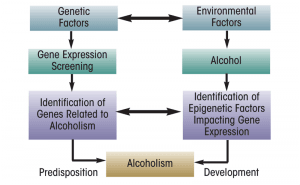
    So, the choice to raise a glass is yours. You make the decision to try alcohol, or not. Even though you may hold a high genetic risk of AUD, most people are first driven to try alcohol by a nonhereditary factor, which is usually environmental in nature. Here’s a diagram of the relationship between genes and environment that might provide you with a visual aid to understand the interplay:

    Alcoholism Genetic Risk Factors

    Many factors play a role in developing a drinking problem. These factors interact differently for different people. So, the same factors might lead to alcoholism in some, and not in others. The risk factors are divided into two categories:

    External factors:

    • Age
    • Cultural norms
    • Education
    • Employment status
    • Environment
    • Family
    • Social norms
    • Religion

    Internal factors:

    • Drinking history
    • Genetics
    • Personality
    • Personal choice
    • Psychological conditions

    For example, findings published by the NIAAA show that children of alcoholics are about four times more likely to develop alcoholism than the general population. These children are also at high risk for many other behavioral and emotional problems. Genes are not the only factor in these cases, how alcoholic parents act and treat their children play a huge role in developing drinking problems. Some aspects that may increase the risk for alcoholism include:

    • An alcoholic parent is depressed or has other psychological issues.
    • Both parents drink alcohol and/or use other substances.
    • Conflicts because of alcohol use lead to aggression and violence in the family.
    • Parent’s alcohol use is severe.

    To repeat, a combination of these risk factors may be the cause of alcohol use disorder for some, but not for others. This fact makes it difficult to predict who might become alcoholic, and who will not.

    Avoiding a Problem

    So, how can you protect yourself from a drinking problem? How can you avoid alcoholism if it runs in your family? The first thing you need to do in order to protect yourself is to learn your family history regarding alcoholism. Make a Family Map with an addiction counselor or other behavioral health professional…or you can learn how to make a family map here.

    If you are among millions of people who have a parent, grandparent, or other close relative with drinking problems, there is a way to protect yourself by lowering these risks:

    Avoid underage drinking. Underage drinking is illegal at the first place. Second, studies show that the risk of developing alcohol use disorder is higher among people who started drinking at early age.

    Drink in moderation. Adults who choose to drink should drink in moderation. Not only because of the risk of alcoholism, but also because alcohol may cause many health problems.

    Consult with a health care professional. Never hesitate to ask for help! Discuss your issues with professionals. They can help you find a suitable treatment or groups that can help you manage your alcohol problems.

    The good news? Many children of alcoholics do not develop drinking problems. Awareness and action are key!

    What’s Your Risk of Alcoholism?

    Do you think that you may be at risk of developing alcohol use disorder? How can you be sure? The National Institute on Alcohol Abuse and Alcoholism outlines general guidelines.

    For women, problem drinking is:

    • Drinking more that 1 standard drink daily.
    • Drinking more than 7 drinks weekly.
    • Drinking more than 3 drinks on any single day.

    For men, problem drinking is::

    • Drinking more than 2 drinks daily.
    • Drinking more than 14 drinks weekly.
    • Drinking more than 4 drinks on any single day.

    Moreover, there are also two ‘at-risk’ drinking patterns that can lead to alcohol use disorders:

    1. Binge drinking – It is a drinking pattern that levels up the blood alcohol concentration (BAC) to 0.8 g/dl or above, which is usually happening after 4 drinks for women, and 5 drinks for men in a one drinking session of about 2 hours.

    2. Heavy drinking is a binge drinking on 5 or more days in one month period.

    Did you find yourself in some of these patterns?

    Don’t wait until it’s too late, reach out for help!

    Top 10 Alcohol and Genetics Facts

    If drinking problems run in you family, don’t worry… It doesn’t mean that you will become addicted to alcohol. After all, even though you may have the ‘alcoholic gene’, alcoholism does not need to be your destiny. You are just at risk.

    Below is a list of 10 facts about alcohol and genetics:

    1. Genetics is about 50% responsible for developing alcohol use disorder.
    2. One gene is not responsible for causing alcohol problems. A certain combination of hundreds of genes in individual’s DNA can increase the risk of developing alcoholism.
    3. Having the ‘alcohol gene’ doesn’t mean that you will become an alcoholic.
    4. Children with an alcoholic parent are four times more likely to develop alcohol use disorder.
    5. Only 10% of people who drink become alcoholics.
    6. Even though you may begenetically predisposed to alcoholism,your choice to try alcohol in the first place is usually triggered by envinronmental factors.
    7. A combination of external and internal factors may lead to drinking problems.
    8. Environmental factors play a huge role in developing alcoholism.
    9. Drinking excessively over a long period of time puts you at higher risk of a drinking problem, even if you are not genetically predisposed to alcohol use disorder.
    10. Scientists still haven’t identified which genes are responsible for increasing the risk of developing alcohol use disorder.

    Reference sourses: NIAAA: Genetics of Alcohol Use Disorder
    NIAAA: A Family History of Alcoholism
    NIAAA: Collaborative Studies on Genetics of Alcoholism – Study
    NCBI: Genetics and Alcoholism 
    NCBI: Genetic factors influencing alcohol dependence

    View the original article at

  • These Deadly Drugs are Sold as Molly

    These Deadly Drugs are Sold as Molly

    ARTICLE OVERVIEW: Molly can be cut with: anesthetics like dextromethorphan or ketamine, psychoactive substances such as “Bath Salts” or methylenedioxyamphetamine, and stimulants such as amphetamine, caffeine, cocaine, methamphetamine. What dangers do these pose? We review here. Then, we invite your questions at the end.

    ESTIMATED READING TIME: Less than 10 minutes.

    Table of Contents:

    What is Molly?

    Molly is an extremely popular drug whose use is synonymous with the club scene. People use it to fuel their club experience with euphoric sensations. However, due to the popular demand, dealers have been selling other drugs as Molly for the sake of making a quick buck. These drugs are much more dangerous in terms of what they can do to your health… and increased possibilities for addiction.

    So, what is Molly…in its pure form?

    3,4-methylenedioxy-methamphetamine (MDMA) is the primary chemical found in Molly. It’s a synthetic substance known to change one’s perception and state of mind. People who take Molly find that its effects are comparable to stimulants (such as cocaine) and hallucinogens (such as LSD). When you’re high on Molly, you can expect to feel:

    • Change in perception (awareness of environment and condition)
    • Distorted auditory and visuals
    • Emotional warmth
    • Heightened energy
    • Strong sensations of pleasure

    People generally take Molly at clubs and dance parties (a.k.a. raves). It’s usually taken through a capsule or tablet, but some people take it in its liquid form, or snort it. Sometimes people will also take it with other drugs to further promote the effects.

    But how does Molly affect the brain? And where are the risks for health and addiction involved?

    How It Affects the Brain

    When someone takes Molly, the chemical structure of the drug boosts the activity of three different neurotransmitters. These are chemical messengers that send signals from the brain throughout the rest of the body and back to the brain. The three main neurotransmitters stimulated by MDMA are:
    • Dopamine
    • Norepinephrine
    • Serotonin

    Since Molly increases the activity of these neurotransmitters, it also blocks off their natural reproduction. Without the drug, the body experiences a deficit and difficulty producing these chemicals on its own. During this “crash” period, the brain and body will experience withdrawal. If repeated frequently, this is the cycle of addiction.

    The big difference between MDMA and other drugs is it creates more of a psychological and emotional addiction rather than a physical one. This means that some people can depend on Molly in order to cope with certain emotions or to handle various forms of mental health. With that in mind, let’s take a look at other drugs that people claim to be Molly…but that have even higher addiction potential.

    What Drugs Are Sold as Molly?

    According to the Drug Policy Alliance, there are actually a variety of drugs being sold as Molly. The prime reason for this is Molly is often laced. The purity of MDMA within Molly all depends on a number of inconsistent factors such as the location of the drug manufacturer, the time period it’s been created, and the people behind distribution. The different chemicals which Molly may be mixed with are:
    • Anesthetics

    ◦ Dextromethorphan (DXM – can be found in cough medicines)

    Ketamine (“Special K”)

    •    Psychoactive Substances

    ◦ “Bath Salts” (a synthetic cathinone

    ◦ Methylenedioxyamphetamine (MDA)

    •    Stimulants

    ◦ Amphetamine

    ◦ Caffeine

    Cocaine

    ◦ Methamphetamine

    All of these drugs not only augment the effects of the Molly but can also increase harm to your health. In fact, the biggest risk is that you can’t 100% know what’s in the drug you’re taking. And many of the drugs listed above hold great potential for harm.

    For example, let’s take a look at “Bath Salts”. These are human-made chemicals known as synthetic cathinones. Usually appearing in the form of white or brown transparent powder, this psychoactive drug is relatively new to the public. It’s created in a home laboratory using a variety of ingredients and techniques which change over time. On the streets, “Bath Salts” are advertised as a cheaper alternative to drugs such as Molly.

    It’s important to understand that the effects of “Bath Salts” on the brain and body aren’t entirely known since not enough research has been done as of this time. What we do know is the effects are very similar to that of other amphetamines. Like Molly, there’s a rise in certain neurotransmitters such as dopamine. Furthermore, “Bath Salts” also produce hallucinations similar to MDMA. However, instead of leaving the user with a sense of euphoria, “Bath Salts” are known to cause extreme delirium which, in turn, leads to other health complications such as:

    • Ability to put oneself in dangerous situations
    • Breakdown of skeletal muscle tissue
    • Dehydration
    • Kidney failure

    Even more so, people will cut “Bath Salts” with other substances. So, if a drug dealer gets their hands on these synthetic cathinones and wants to cut it with their Molly, there’s risk of the “Bath Salt” already containing other chemicals.

    This is where taking Molly becomes extremely dangerous and, in some cases, deadly. When someone enters a club with the intention of getting high on Molly, chances are they aren’t getting pure Molly. The person distributing at these clubs could also hand out other drugs and label them as Molly to bring in more customers.

    Dangers of Molly

    The primary danger in taking Molly is that most of the time the drug you’re taking isn’t pure MDMA. However, Molly can be dangerous in and of itself. Health harms can be categorized into the short-term effects and the long-term effects.

    The short-term effects are what will happen while on the drug or within a small period after the drug’s high is over. Often the “crash” to follow is so intense, people take a second dose in order to avoid these negative effects. The short-term health problems involved in MDMA are:

    • Blurred vision
    • Chills
    • Involuntary teeth clenching
    • Muscle cramps
    • Nausea
    • Seizures
    • Sweating
    • Vomiting

    The long-term effects are what will happen if Molly is abused over a period of time. For one, the body can become used to the chemical structure of the drug and, therefore, need it as a means of feeling normal. Without the drug, you can expect to experience:

    • Aggression
    • Anxiety
    • Compulsivity
    • Decreased appetite
    • Decreased sexual desire
    • Depression
    • Irritability
    • Memory and attention complications
    • Regulation of body’s temperature (which can result in heart, kidney, or liver failure).
    • Sleep problems

    As you can see, the health problems caused by MDMA are primarily psychological. This is due to the fact that Molly causes a psychological addiction more so than a physical one. Signs of a Molly addiction include:

    • Compulsivity to use the drug on a daily basis.
    • Putting oneself in dangerous positions just to obtain or use Molly.
    • Give up prior interests for the sake of getting high.
    • Failing to meet responsibilities (i.e. school, work) due to Molly use.
    • Developing a tolerance to Molly.

    Danger of Molly Substitutes

    The National Institute on Drug Abuse (NIDA) has reported that from a sample bunch of Molly tablets, only 30-40% of the drug was MDMA. The rest was cut with another substance. Therefore, the health risks involved with Molly go beyond the harm in Molly itself.

    Since there are so many other substances which Molly can be cut with, it’s impossible to identify all the health risks involved in each particular Molly batch.

    The following information is what NIDA has reported as the most common health harms caused by Molly or Molly substitute use. This information is based on both MDMA and potential cutting agents associated with the drug.

    • Cardiovascular System

    When people use Molly for a long period of time, there have been many instances of cardiovascular issues  including:

    ◦ Abnormal heartbeat

    ◦ High blood pressure

    ◦ Increased chance of stroke or heart attack

    •  Changes in the Brain

    As mentioned, Molly primarily affects a user’s psychology. With that in mind, people can develop a variety of mental complications due to using too much of the drug. These include mental health disorders, such as depression or anxiety, and difficulty with attention, memory, or problem-solving.

    • Heightened Body Temperature

    Almost immediately after taking Molly, your sympathetic nervous system is affected. This system is responsible for a variety of bodily functions and, therefore, dangers aren’t simply attached to the sympathetic nervous system itself. Some of the complications involved are:

    ◦ Dehydration

    ◦ Hyperthermia

    ◦ Seizures

    • Kidney Damage
    • Liver Damage
    • Mood Swings

    Along with changes to the brain, heavy Molly users will most likely have mood swings due to the lack of natural neurotransmitters the drug has produced. Without the drug, their brain’s wiring won’t allow for “good feelings” unless one is under the influence. Therefore, people struggling with a Molly dependence can expect to feel a euphoric openness while high, only to face an intense depression with lingering hopelessness while not high. As time goes on and abuse continues, the mood swings hold a strong potential to worsen and become an even bigger problem.

    • Physical Dependence

    It’s mentioned above that physical dependences due to use of Molly aren’t as likely as a psychological one. However, they’re still possible. Since a tolerance is built in long-term users, there are ways in which the body is affected. Primarily, through the way in which Molly affects the mind. For example, if the brain becomes depressed due to a lack of Molly, the body might become fatigued. Again, physical dependence is much less when comparing Molly to other drugs, but it’s still a factor.

    • Substance Abuse Disorder

    According to Substance Abuse and Mental Health Services Administration (SAMHSA), a substance abuse disorder is when a person recurrently uses drugs which, in turn, cause significant impairment to functionality and one’s health.

    Basics to Treatment

    If you think that you have a problem with Molly…it’s possible that you do. But have hope! Treatment for drug problems works. A combination of talk therapy and medications is usually best … and can get you back on your feet, drug-free. Generally, there are five main steps to treating drug addiction.

           1. A Medical Assessment

    Within a reputable treatment facility, a doctor will test you and ask a variety of questions as a means of collecting information on your current condition. Through this, he/she will have the ability to offer you the best treatment path for your needs.

    2. A Medical Detox

    During detox, you’re going to experience Molly withdrawals. This is the body and brain removing the chemical structure of MDMA from your system as a means of redeveloping your natural, organic chemical structure – a state known as homeostasis. When it comes to Molly, it usually only takes around 2-4 days to withdraw. However, duration of withdrawal also depends on the severity of your addiction. People who use a higher dose and have been for a longer period of time are more likely to experience longer withdrawals. Common Molly withdrawal symptoms include:

    ◦ Anxiety
    ◦ Confusion
    ◦ Constipation
    ◦ Dehydration
    ◦ Depression
    ◦ Diarrhea
    ◦ Fatigue
    ◦ Hallucinations
    ◦ Irritability
    ◦ Lack of motivation
    ◦ Lethargy
    Loss of appetite
    ◦ Physical exhaustion
    ◦ Trouble concentrating

    3. Psychotherapies

    After detox, your mind will still consist of cravings and have trouble functioning without the sake of Molly. Though this happens with every addiction, it can be more prominent in MDMA due to the fact that it’s such a psychologically addictive substance. The purpose of psychotherapies is to teach you how to handle everyday emotions and life stressors without needing Molly. You’ll also be educated on techniques to reduce cravings.

    Furthermore, talk therapies hold great importance because, as mentioned, people who struggle with an MDMA addiction often develop mental health issues as well. If you’re experiencing any kind of disorder due to your Molly abuse, it will be addressed during this stage and afterward. These therapies come in a variety of forms, including:

    Family therapy
    ◦ Group therapy
    ◦ Individual Counseling

            4. Pharmacotherapy (Medications)

    People who enter treatment are sometimes offered medication as a means of easing withdrawal symptoms and reducing cravings. Though, it should be noted there are currently no known medications to properly treat Molly addiction. In order to find out if any medications can benefit you, you’ll want to consult a doctor. For example, short-term use of antidepressants may be appropriate. Or, in some cases, anti-psychotics may be required. This is why full assessment is crucial before treatment begins.

    5. Educational Sessions

    Addiction treatment often includes formal and informal meetings where you’ll be informed about the dangers of MDMA addiction and how to prevent relapse. Both inpatient and outpatient treatment centers should educate you on how your brain responds to certain drugs. This helps you avoid the chemical high in the future.

    Where to Find Help

    When trying to find treatment for a drug problem with Molly, it can be difficult to know where to turn. Luckily, there are a variety of places to turn to. The first person you’ll want to ask is your doctor or physician. S/He will have the references for the best addiction treatment centers within your area.

    From there, you can begin researching different types of treatment programs and their requirements. Through this, you can figure out which one is best for you. If you want a more precise search in terms of psychotherapist and counselors, you have these internet searches at your disposal:

    Furthermore, keep an eye out for support groups either outside or within your treatment program. The people involved in these will help you along the recovery process and make sure you stay sober.

    If you need to reach out to someone immediately, here are some hotline numbers to contact:

    • Drug Hotline: 877-736-9802
    • National Clearinghouse for Alcohol and Drug Information (NCADI): 800-729-6686
    • National Council on Alcoholism and Drug Dependence Hope Line: 800-475-HOPE (4673)
    • National Drug and Alcohol Treatment Referral Service 800-622-4357
    • National Suicide Prevention Helpline: 800-273-TALK (8255) or 800-SUICIDE (784-2433)
    • Substance Abuse Helpline (available 24/7): 800-923-4327
    • Relapse Prevention Hotline: 800-RELAPSE (735-2773)

    When you’re ready to look for treatment, we’re always glad to help! Feel free to give us a call.

    Your Questions

    If you have any questions pertaining to deadly drugs sold as Molly or MDMA, we invite you to ask them below. If you have any advice to give to those struggling with addiction or wondering more about these potentially dangerous drugs, we’d also love to hear from you. We try to reply to each comment in a prompt and personal manner.

    View the original article at

  • Top 8 Most Dangerous Drugs

    Top 8 Most Dangerous Drugs

    ARTICLE OVERVIEW: No psychoactive drug is 100% safe. Yes, under medical supervision, some drugs can be beneficial to people in certain situations. However, EVERY drug holds potential for abuse. This article seeks to explore which drugs are the most dangerous and the threats involved in taking them. At the end, we invite you to ask questions.

    ESTIMATED READING TIME: Less than 10 minutes.

    Table of Contents:

    How Do We Define the Most Dangerous Drug?

    There are two primary factors which allow us to better understand what makes a drug so dangerous:

    1. How much harm it causes to the body and mind.
    2. Its risk of addiction.

    We can further separate harms to the body and mind into short-term and long-term effects. Short-term effects of drug use are the immediate consequences that work against your health. These effects vary depending on the drug. For example, when someone takes heroin, a large amount of dopamine is released into the system. As the high begins to come down, the dopamine leaves your system and the brain needs time to refuel itself with natural dopamine. During this time, the user feels symptoms that are very similar to the flu (such as diarrhea, nausea, or vomiting).

    Long-term effects are the health consequences which appear overtime after continuous use of drugs. This is a prime concern for people who struggle with addiction. Again, the exact effects depend on the drug of choice and how often/much you use. Common long-term symptoms of drug use include, but aren’t limited to:

    • Anxiety
    • Depression
    • Hear complications
    • Kidney problems
    • Liver problems
    • Lung complications
    • Paranoia

    For the most part, health problems and addiction go hand-in-hand. People who experience addiction usually have one or more associated health complications. Four common health issues due to drug addiction include:

    • Cancer
    • Heart or lung disease
    • Mental health conditions
    • Stroke

    If you’re using any of the following drugs, you’re not only at great risk of forming an addiction quickly…you also risk adverse health complications. The following list is a compilation of the most dangerous drugs our current market has to offer.

    #8 – Heroin

    At one point in history, heroin was prescribed as a painkiller for chronic pain. But because so many people could not control their use, the drug became illegal. Since its discovery in 1874, it’s been one of the most destructively abused drugs people have gotten their hands on. This is namely due to its intense euphoric effects which are highly addictive.

    When heroin metabolizes in the body, the brain reacts by flooding the system with neurotransmitters. This triggers pain relief and a sense of euphoria, the basis of a person’s addiction. But when someone stops taking heroin, their body and brain reacts with almost opposite effects. Dysphoria and depression are common, accompanied by very uncomfortable withdrawal.

    #7 – Cocaine/Crack

    Since crack is cocaine with additives (such as baking soda), the additional chemicals make it a more dangerous drug than cocaine itself. Sometimes dealers cut crack with toxic ingredients. However, both have hazardous effects on the individual for both long and short term.

    The following are long-term effects of crack and cocaine use:

    • Angina, a pain in the chest due to tightening vessels.
    • Arrhythmia, an irregular heart rate.
    • Blood clots which could lead to a heart attack, deep vein thrombosis, pulmonary embolism, or a stroke.
    • Brain damage.
    • Damage to the nose and mouth due to cocaine being either snorted or smoked.
    • Gastrointestinal damage.
    • Infectious diseases.
    • Kidney damage.
    • Liver damage.
    • Myocardial infarction, due to a lack of oxygen from poor blood flow, a heart muscle can die.
    • Permanently increased blood pressure.
    • Respiratory problems and pulmonary damage.
    • Tachycardia.

    Furthermore, since cocaine is a stimulant, the heart pumps faster when someone is high on it. This can lead to a heart attack or other overdose complications which hold potential to be fatal. Crack and cocaine are very dangerous and people develop addictive habits to them quickly due to the intensity of the high and the immediate effects it has on the body. It’s important to seek help if you or a loved one is currently addicted to crack or cocaine.

    #6 – Crystal Meth

    Crystal meth is one of the most devastating drugs you can get your hands on. Short-term effects include being anxious and sleep deprived. Long-term effect include brain damage, damage of blood vessels, and sinking of the flesh.

    Since the high of the drug starts almost immediately, and fades after 10-12 hours, people tend to continuously dose in order to keep the high going. This kind of behavior is known as a “binge and crash” pattern and is very dangerous considering how consistently drugs are being put into the body.

    Furthermore, crystal meth affects your brain chemistry. Naturally, neurons recycle dopamine. But when you put crystal meth in the brain, it releases lots of dopamine itself, causing neurons to not have to work. When you stop taking dopamine, the neurons must learn to naturally recycle again and the body goes through crystal meth withdrawal.

    #5 – AH-7921

    Since AH-7921 isn’t very common, there’s a likely chance you won’t come across it. However, that doesn’t take away from the fact that it’s highly addictive and dangerous. AH-7921 is a synthetic opioid which has around 80% of the potency of morphine.

    The health complications are very similar to heroin, but since it’s also a synthetic, there’s risk of causing respiratory arrest and gangrene.

    #4 – Flakka

    This is a newer drug which recently hit Florida’s Fort Lauderdale area. Also known as alpha-PVP, Flakka is a stimulant which has similar chemical structuring to amphetamines found in bath salts. The effects it has on the user are similar to cocaine, but 10 times stronger. These include:
    • Extreme agitation and violent behavior
    • Hallucinations
    • Increased friendliness
    • Increased sex drive
    • Panic attacks
    • Paranoia

    Not only is Flakka extremely addictive, it also has serious risks to your harm. Unfortunately, since these drugs have only recently hit the market, there’s only so much known about how the amount of impairment it can do to the brain and body. However, researchers are aware that the consequences of Flakka are similar to the next drug on our list.

    #3 – Bath Salts

    This drug was originally sold online and used the term “bath salts” to disguise what it really is: cathiones. There isn’t enough research conducted for bath salts to fully understand the effects it has on the body for short-term and long-term use. However, clinicians at U.S. poison centers have discovered that some of the consequences to taking bath salts are:
    • Agitation
    • Chest pains
    • Delusions
    • Extreme paranoia
    • Increased blood pressure
    • Increased heart rate

    Furthermore, there’s been an alarming rate of ER visits due to bath salts. Though this drug is dangerous in itself, due to the fact that there’s so little known about it, people who take it are putting themselves at greater risks which may be unknown. If you or someone you know is taking bath salts, it’s important to seek treatment immediately.

    #2 – Whoonga

    Whoonga is one of a kind in the sense that it’s unlike most drugs in the illicit market. It’s a combination of antiretroviral drugs – which were created for the sake of treating HIV – and cut with other substances such as poisons and detergents. It’s not common in the United States, but has found prominent popularity in South Africa due to the high rate of HIV in South Africa.

    Whoonga is highly dangerous towards your health and can cause:

    • Death
    • Internal bleeding
    • Stomach ulcers

    Again, since this is a relatively new drug, little is known about the drug.

    #1 – Krokodil

    A recent drug which has been trending in Russia, Krokodil has affected over a million people. The problem with it is people have supplemented it for heroin due to its price – about a third of the price. The danger with Krokodil is it’s often homemade which can be very unsanitary and hosts a variety of ingredients including, but not limited to:
    • Gasoline
    • Industrial cleaning agents
    • Iodine
    • Lighter fluid
    • Painkillers
    • Paint thinners

    Most people who take these toxic chemicals usually do so through injection. In turn, this has caused some of the following reactions to happen very soon after getting hooked on the drug:

    • Gangrene
    • Phlebitis, injury to the veins
    • Severe tissue damage
    • Spread of HIV

    Krokodil hasn’t been seen widely in the United States yet, but is spreading through Europe rapidly.

    Am I Addicted?

    Health problems can be directly caused by an addiction. But what is an addiction? Addiction defined as:

    Compulsive behavior during which the user has the inability to stop taking drugs despite the negative consequences it has had on their life.

    It’s important to note that addiction isn’t a choice, but rather, a disease which is very hard to control. No one seeks to become addicted to drugs.

    You may wonder whether you or someone you know is addicted to drugs. In order to find out, you can ask the following questions:

    • Are you unable to keep up responsibilities due to your drug use?
    • Has use of drugs affected previous activities you used to enjoy?
    • Have you continued to use drugs despite it causing problems in your relationships?
    • Have you ever tried to quit drugs without having success?
    • Do you find yourself craving to use drugs?
    • Do you spend a large amount of time thinking about, obtaining, or using drugs?
    • Do you find yourself engaging in risky sex or high-risk situations because of drugs?

    If you or your loved one answered yes to any of the above questions, you’re most likely facing an addiction. It’s important consult a doctor as you don’t want to fall victim to certain health problems due to your addiction.

    Basics to Drug Addiction Treatment

    Though treatment works differently, depending on the drug you take, there are a variety of common patterns found in treating addiction. What usually differs is the amount of time a person undergoes treatment and the exact effects they’ll feel while being treated. Upon entering a treatment facility, you can expect the following:

    1. A medical assessment in which you’ll be tested for a variety of things and asked an assortment of questions. The purpose of all this is to collect information of your current condition as a means of pursuing the best treatment options.

    2. A medical detox in which your body will rid itself of the drug’s chemical structure and reform back to its homeostasis – withdrawals. It’s very important you’re under medical supervision during this time there are dangers when withdrawing from certain drugs.

    3. Psychotherapies which are meant for treating underlying issues that are brought upon by drug use. These therapies are designed to teach you how to handle everyday emotions and life stressors without drugs being a factor in your life. You’ll also be educated in how to reduce drug cravings. Psychotherapies include:

    Family therapy
    ◦ Group therapy
    ◦ Individual counseling

    4. Pharmacotherapy (medication) is meant for the sake of easing withdrawals and reducing cravings. The medication you receive all depends on the drug of addiction and how severe your addiction is.

    5. Education sessions which are designed to inform you of the dangers in drug use and how to prevent relapse.

    6. Aftercare services which provide additional support in order to maintain sobriety.

    Your Questions

    If you have any questions pertaining to the most dangerous drugs or how to treat drug addiction, we invite you to ask them below. If you have any advice to those struggling with addiction or wondering more about the most dangerous drugs, we’d also love to hear from you. We try to reply to each comment in a prompt and personal manner.

    View the original article at

  • Did You Know Carfentanil Is 5000 Times Stronger Than Heroin?

    Did You Know Carfentanil Is 5000 Times Stronger Than Heroin?

    ARTICLE OVERVIEW: Recently, drug dealers have been cutting heroin with carfentanil to increase profit. However, this medicine is not meant for human use. In fact, carfentanil was originally designed to tranquilize large mammals. This article reviews what you need to know about carfentanil, the dangers associated with it, and tips for finding treatment if you’re struggling with an addiction. At the end, we invite you to ask questions. We try to respond personally and promptly to all real-life questions.

    ESTIMATED READING TIME: Less than 10 minutes.

    Table of Contents:

    What is Carfentanil?

    Carfentanil is very similar to the synthetic opioid analgesic, fentanyl. To date, it’s not only one of the most potent opioids available, it’s the most potent opioid on the streets. In fact, it’s estimated to be 100 times stronger than fentanyl. And fentanyl is already 50 times stronger than heroin!

    Carfentanil is estimated to be 10,000 times stronger than morphine.

    However, carfentanil wasn’t created for people to use. Back in 1986, the chemical was labeled under the brand name “Wildnil”. It was used in tranquilizer darts designed for large mammals such as elephants. Carfentanil was the perfect drug for this task, as the overdose risk is similar to that of its cousin, fentanyl, but still contains much higher opioid activity.

    The risks involved with human consumption of carfentanil are HUGE. Overdose risk is extremely high. All it takes is 1 microgram to provoke psychoactive effects. With that in mind, it’s understandable why drug dealers are cutting it with heroin. Even the smallest amounts of the opioid cause dosing reaction, and in this way, a small supply of the drug can cause heroin profits to soar.

    But how does such a powerful drug affect the brain?

    How Does it Affect the Brain?

    Effects of carfentanil are similar to other opioids. The chemical components of these drugs attach themselves to opioid receptors within the brain which are responsible for:
    • Dopamine
    • Norepinephrine
    • Serotonin

    These receptors are attached to neurotransmitters which then carry chemical signals throughout the rest of the body. This can be highly effective if you’re experiencing severe pain in a particular area, as these neurotransmitters travel to where a pain is most intense and change the way that we perceive pain. Opioids can also case euphoric effect, the feeling of being high.

    The effects of opioids are strong and very addictive. Short-term effects from taking an opioid drug like carfentanil include:

    • Drowsiness
    • Feelings of euphoria
    • Pain relief
    • Sedation

    People develop an addiction to opioids through a chemical change in the brain and body. Over time, the body becomes drug-dependent; we chemically develop a necessity for the drug as a means of feeling normal. Without the drug, the body goes through withdrawal.

    Though this happens over a period of time, it should be noted that it doesn’t take long to develop dependence on opioids: usually, drug dependence can occur with about 3 weeks of regular use. When use persists, a person is unable to stop despite the negative effects the drug has on her/his life. In these cases, an addiction can begin.

    Why Overdose Happens

    Opioids are already dangerous in and of themselves. A synthetic opioid like carfentanil that is thousands of times stronger is even more dangerous. As mentioned above, it only takes 1 microgram of carfentanil to trigger activity within a human brain. However, at 20 micrograms, the dose becomes lethal.

    In fact, it’s been determined that of all the dangers of carfentanil, overdose is most likely. Cincinnati, Ohio experienced these consequences in just one weekend where 30 people overdosed because the drug was added to heroin. In the same area, the following weekend, another 78 overdosed.

    An overdose occurs when you take too much of a drug. It literally overwhelms the body. In particular, opioids affect the regulation of breathing and heart rate. When you take too much of an opioid drug, your respiratory and cardiovascular systems slow until they stop. How can you prevent an overdose?

    There are signs to be aware of when someone is experiencing an overdose:

    • Body goes limp.
    • Breathing or heartbeat slows or stops.
    • Face grows very pale and/or seems clammy upon touch.
    • Lips or fingernails turn a purple or blue color.
    • Seizure.
    • Unable to be awakened or cannot speak.
    • Vomiting or making gurgling sounds.

    Overdose Precautions

    So, what should you do if someone overdoses?

    IT’S VITAL YOU CALL 911 IMMEDIATELY!

    A fatal overdose can be prevented under the right medical attention. Calling emergency services needs to be your first priority. However, there are a few steps you can take in order to administer immediate action:

    • If naloxone is available, administrate it. Most likely, the medical professionals who arrive will use it as a means of stopping the overdose. Naloxone quickly blocks the effects of opioids within the body. You can either inject it into the muscle or spray it into the nose.
    • Attempt to keep the person awake by talking to him/her and try to keep them breathing, through CPR if necessary.
    • Make sure the person is placed on their side. This prevents them from choking on bodily fluids.
    • Stay by the person’s side until emergency services arrive. When it comes to an overdose, there’s no telling what can happen within just seconds.

    When it comes to opioid overdoses, most can be prevented through careful steps. When it comes to carfentanil, the story is a little different as it’s so powerful of a drug. Since so little can cause an overdose – and most don’t know whether or not or how much of their drugs are cut with carfentanil – there are GREAT risks involved.

    And these risks go beyond an overdose.

    Carfentanil Health Risks

    Synthetic opioids cause rapid depression within your central nervous system as well as immediate effects including:
    • Drowsiness
    • Increase in blood pressure (particularly, in the brain)
    • Lethargy
    • Muscle spasms
    • Nausea
    • Paranoia
    • Postponed or decreased respiratory function
    • Respiratory arrest
    • Tightening of chest muscles

    However, just as with other opioids, there are also long-term problems which can occur from a prolonged period of use. These include:

    • Abdominal distention and bloating
    • Addiction
    • Brain damage
    • Constipation
    • Development of mental health issues, such as depression or anxiety
    • Development of tolerance
    • Heart complications
    • Liver damage
    • Nausea and vomiting

    Furthermore, since carfentanil can be laced with heroin, there are health risks involved for people who inject as a means to get high including:

    • Gangrene
    • Hepatitis B (HBV)
    • Hepatitis C (HCV)
    • Human Immunodeficiency Virus (HIV)

    According to medical examiners and coroners, the number of deaths due to carfentanil increased by 94% from the second half of 2016 (421 deaths) to the first half of 2017 (815 deaths).

    Carfentanil Trends and Statistics

    The Center for Disease Control and Prevention analyzes opioid death through death certificates from 32 states and the District of Colombia. Of their analysis of fatal opioid doses between July 2016 and June 2017, it was discovered that – of 11,045 opioid overdose deaths – 1,236 (11.2%) had positive test results for carfentanil.

    Furthermore, the trends of overdose have been found to be area specific.

    • Within 2016 and 2017, Ohio had the largest number of carfentanil laced opioid deaths with September of 2016 being the peak month at 86 deaths.
    • Opioid overdose deaths where Carfentanil was present increased across the world in the second half of 2016, from 54 countries affected to 77.

    These trends are able to give us insight into how Carfentanil has only recently made its way into the illicit market. For the most current drug-related trends, including where synthetic opioids are making an appearance, you can follow the National Institute on Drug Abuse’s Emerging Trends and Alerts for all the latest information.

    Basic to Treatment

    If you or someone you love is currently struggling with an opioid addiction, it’s vital to seek help. The risks are too great. You are literally playing with your life. From experience, we promise you:

    You or your loved one has the ability to stop and start a new life!

    Addiction treatment typically works like this:

    1. First, a Medical Assessment

    Medical assessment forms the basis of any treatment plan. When you’re ready to get help, a team of doctors, nurses, and therapists will perform physical and mental exams. You can expect to go through a full medical exam, provide blood and/or urine samples, and go through interviews. This first assessment is crucial to your treatment plan. A good medical assessment should take from 1-2 hours to complete.

    2. Then, Medical Detox

    In order to get past physical dependence, your body must undergo withdrawal. This is the process of removing an opioid from your system and getting back to your natural body chemistry – a state known as “homeostasis”.

    Since opioid withdrawal has some risks such as dehydration and relapse, it’s important you find a detox facility. This will allow you to be in a controlled and safe environment while medical treatment to ease withdrawal symptoms. You can expect to be in detox for about a week, with symptoms peaking 72 hours after your last dose of opium. These symptoms include:

    ◦ Abdominal cramping
    ◦ Agitation
    ◦ Anxiety
    ◦ Diarrhea
    ◦ Dilated pupils
    ◦ Goosebumps
    ◦ Increased tearing
    ◦ Insomnia
    ◦ Muscle aches
    ◦ Nausea
    ◦ Runny nose
    ◦ Sweating
    ◦ Vomiting
    ◦ Yawning

    3. Psychotherapies

    Once an opioid is out of your system, you’re going to experience strong. This is due to the fact that your brain has been dependent on opiates and must readjust back into day-to-day life without it.

    Typically, psychotherapies are designed to teach you how to handle everyday emotions and life stressors. They are highly effective not only in showing you how to live a sober life but also in helping with any mental health conditions which may have arisen due to your opiate use. Furthermore, psychotherapies will reduce cravings. Typical therapies include:

    ◦ Behavioral Therapy
    Cognitive-Behavioral Therapy (CBT)
    ◦ Community Reinforcement and Family Training (CRAFT)
    ◦ Contingency Management
    ◦ Dialectical Behavior Therapy
    ◦ Group Therapy
    Family Therapy
    ◦ Individual Counseling
    ◦ Integrative Approach
    ◦ Motivational Interviewing
    ◦ Multidimensional Family Therapy
    ◦ Narcotics Anonymous (NAA)

    4. Pharmacotherapy (Medication)

    Medications can help to reduce withdrawal symptoms and cravings. When it comes to opioid withdrawal or longer term maintenance, typical medications prescribed are:

    Buprenorphine
    ◦ Loxifidine
    Methadone
    ◦ Naltrexone

    5. Education and Aftercare Services

    Once you begin to learn enough to get back into your day-to-day routine, you’ll have the option learn more. Addiction treatment programs should educate you about how drugs affect your brain … and how to cope without them. You may also be invited to go to meetings to connect with others who are going through the same thing. A support system helps maintain sobriety and stops you from isolating. Other aftercare services include ongoing counseling, sober living houses, and alumni programs.

    Where to Find Help

    When trying to find treatment, it can be difficult to know where to turn. Luckily, addiction treatment is more understood and accepted as a medical condition within the healthcare system. Medicare and Medicaid are being updated to include reiumbursements for addiction treatment. Likewise, state and federal grants aim to increase your access to needed medications and treatment.

    So, where do you go first? The first point of contact can be your general doctor or family physician. S/He can perform a brief assessment and then refer you to treatment centers within your area. From there, you can begin researching different types of treatment programs and their requirements. You can also find help through specialists like:

    Furthermore, keep an eye out for support groups either outside or within your treatment program.
    The people involved in these will help you along the recovery process. If you need to reach out to someone immediately, here are some hotline numbers to contact:

    • Drug Hotline: 877-736-9802
    • National Clearinghouse for Alcohol and Drug Information (NCADI): 800-729-6686
    • National Council on Alcoholism and Drug Dependence Hope Line: 800-475-HOPE (4673)
    • National Drug and Alcohol Treatment Referral Service 800-622-4357
    • National Suicide Prevention Helpline: 800-273-TALK (8255) or 800-SUICIDE (784-2433)
    • Substance Abuse Helpline (available 24/7): 800-923-4327
    • Relapse Prevention Hotline: 800-RELAPSE (735-2773)

    When you’re ready to look for treatment, we’re always glad to help! Feel free to give us a call. Or, you can leave us a personal question in the comment section below.

    Your Questions

    Still have a question about carfentanil? If you have any questions, we invite you to ask them below. If you’d like to share information about carfentanil or offer some advice about opioid addiction, we’d also love to hear from you.

    We try to reply to each comment in a prompt and personal manner.

    View the original article at

  • Help for Ecstasy Withdrawal

    Help for Ecstasy Withdrawal

    ARTICLE OVERVIEW: Regular ecstasy users mostly underestimate the potential of ecstasy for abuse and addiction. This drug does not cause a great physical dependence, yet the psychological addiction can be both destructive and dangerous. This article provides information on how difficult the withdrawal from ecstasy is, what symptoms to expect, and what kind of help you need during it.

    ESTIMATED READING TIME: Around 5 minutes.

    Table of Contents:

    How Ecstasy Affects Brain and Body

    Ecstasy (also known as MDMA/Molly) primarily causes a psychological dependence rather than physical dependence. This means the body doesn’t typically need the chemical in order to feel “normal”, like heroin users.

    However, the brain reacts to ecstasy in a very particular way. When ecstasy is ingested, it disrupts proper communication between neurons by altering the chemical response of neurotransmitters. This causes many users to experience enhanced sensations of stimulation, which is the reason for its popularity on the drug scene. This drug can even cause oxytocin release, the very hormone released during a sexual orgasm.

    And though the body is affected by these brain reactions, it is actually the brain that craves for more ‘ecstatic’ feelings, such as the following:

    • Calmness and relaxation
    • Empathy for others
    • Euphoria
    • Heightened senses
    • Long-lasting energy
    • Lowered inhibitions

    Furthermore, people can feel ecstasy withdrawal symptoms even after just taking it once. People become addicted to the above feelings for a variety of different reasons, showing that addiction is a very personal experience. And most often, the reasons lying behind it are revealed much later through the treatment.

    Is Ecstasy Withdrawal Hard?

     Well, basically the difficulty you’ll experience during ecstasy detox depends on a few different factors:
    • Age
    • Dosing amounts
    • Overall physical and mental health
    • Usage frequency

    For example, those who have been using ecstasy more often and taking higher doses are more likely to experience a harder withdrawal than those who have been using it occasionally and in smaller doses. Also, chances are that withdrawal can be harder for those already struggling with mental health.

    Is Ecstasy Withdrawal Dangerous?

    Ecstasy causes primarily a psychological dependence. Still, it is possible that some mental complications due to withdrawal lead to fatal acts, as in the cases of:

    Anxiety, which becomes a risk since many individuals find it helpful to self-medicate with other drugs.

    Decreased appetite, as it possibly leads to nutritional deficiencies and detrimental weight loss.

    Depression, sometimes even extreme, that may lead to suicidal ideation.

    Insomnia, pertaining to the risk of getting oneself in accidents which could lead to injury.

    As ecstasy releases a large amount of serotonin, when it is taken away it can make the brain feel depleted. This depletion may not only be the cause for above mentioned symptoms to occur, but also for a relapse as some individuals don’t entirely understand how to manage their behavior and emotions without ecstasy.

    The bottom line is, even though ecstasy withdrawal manifests little harm to the body, there are dangers involved when it comes to the mental state.

    A List of Withdrawal Symptoms

    Although primary withdrawal symptoms are psychological, some symptoms of ecstasy withdrawal can lead to mild uncomfortable physical feelings. The exact withdrawal symptoms you can expect to feel will vary. What you experience generally will depend on the severity of your addiction and your overall mental state.

    Ecstasy withdrawal symptoms may include:

    • Anxiety
    • Agitation
    • Changes in self-perception
    • Confusion
    • Cravings
    • Depression
    • Difficulty concentrating
    • Fatigue
    • Insomnia
    • Loss of appetite
    • Memory problems

    It should be noted that it’s common for users to quit ecstasy with other drugs, meaning not only ecstasy is in the system. In fact, people often take ecstasy along with other substances, such as LSD or alcohol. In these instances, withdrawal symptoms can become complicated.

    Some people can even experience an MDMA-induced psychotic disorder, which means they’ll be withdrawing and coping with symptoms for a long period of time. Though this doesn’t occur for everyone, it’s one reason you should ALWAYS SEEK MEDICAL SUPERVISION WHEN COMING OFF ECSTASY.

    The Basic Timeline

    Below is a more detailed analysis of the timeline following your last ecstasy dose:

    0-72 Hours. During this period, your mind is still very aware of the recent presence of MDMA. Even though you experience fatigue and/or physical exhaustion, you could also still hallucinate. Some people feel physical withdrawal symptoms at this time, such as the following:

    • Constipation
    • Dehydration
    • Diarrhea

    It is within these first 72 hours when you’re mostly at risk for relapse. Therefore, it’s critical that you’re under medical supervision at this time, especially if cravings are strong. A supportive medical environment can help prevent you from going back to using and provide you with medications and therapies, which ease withdrawal symptoms.

    4 -7 Days. The body has completely got rid of ecstasy’s toxins, but the mind is still aware of the euphoric effects it felt from using. Therefore, it craves and feels a strong sense of lowness. These low feelings can be any of the following:

    • Anxiety
    • Confusion
    • Depression
    • Irritability
    • Lack of motivation
    • Lethargy
    • Loss of appetite
    • Trouble concentrating

    Week 2. In general, it is much the same as week one, except for the cravings that may or may not be more apparent. With proper psychotherapy, your mind will begin to get better and you’ll find yourself in the beginning stages of easing off withdrawal symptoms.

    Week 3. Your mind starts really feeling better. It gains a sense of confidence again and you can begin to feel yourself coming back to reality. However, cravings may still be persistent. Under proper treatment, these cravings will be reduced during this time.

    Week 4. The mind has passed through and resolved acute ecstasy withdrawal effects. By this time your appetite is usually back and you feel optimistic about an ecstasy-free future.

    Medicines that Help

    Currently, there are no approved medications for ecstasy withdrawal treatment. Still, there are some pharmaceutical treatments that doctors can prescribe. Here are some examples of what can be helpful when addressing following withdrawal symptoms:

    Decreased Appetite. Being under medical supervision might be beneficial to help nutrients level out with supplements, vitamins, or minerals.

    Depression and anxiety. Antidepressants help replenishing serotonin and dopamine levels needed for managing the depression and anxiety.

    Insomnia. Those who suffer from insomnia due to the withdrawal might benefit from learning how to relax and set up health sleep routines. A good night rest can be essential for the body to resume its normal chemical functioning.

    Psychotherapies

    It’s been shown that people get much better with talk therapies, because there professionals teach you how to handle your emotions and behaviors without using drugs, how to set your goals and how to balance your brain’s chemical structure through natural means. Psychotherapies include, but aren’t limited to:
    • Family therapy
    • Group therapy (such as Narcotics Anonymous)
    • Individual counseling
    • Talk therapy

    Natural Remedies that Help

    As ecstasy is primarily a psychological dependence, there are a variety of things you can undertake to ease the mental distress during the withdrawal, including:
    • Acupuncture. Though this is still being researched, a more recent study found that acupuncture had positive effects on reducing withdrawal symptoms. In particular, those dealing with great discomfort from withdrawal can benefit from it.
    • Distractions. As you advance through your withdrawal, your brain longs for more ecstasy in order to feel good. Finding the right kind of distraction is primarily to avoid cravings. Some find help in the arts (such as playing music, drawing, or writing in a journal) while other find new habits to be beneficial (such as cooking or gardening). Don’t be afraid to experiment around while you’re in treatment. You might just learn something new about yourself.
    • Exercise. Most treatment facilities highly recommend exercise to those undergoing detox as exercise promotes natural dopamine and endorphins. Also, it has been shown that exercise promotes a better night sleep for those who experience insomnia.
    • Meditation and Yoga. Withdrawal can bring a lot of stress upon individuals. Meditation and yoga not only ease withdrawal symptoms, but also help reducing cravings. These types of alternative therapies are also beneficial for those dealing with mental illness alongside their addiction, such as anxiety and depression.

    Where to Go For Help

    In order to find help, you must first want it. By admitting you’re defeated, you’re allowing something new to happen. And you’re on your path to seeking medical help.

    But where do you look?

    First, speak with you family doctor. S/He can help refer you to local clinics or specialists. Then, call Substance Abuse and Mental Health Service Administration’s (SAMHSA) National Helpline – 1-800-622-HELP (4357). You’ll be connected with a government worker who will talk you through next steps for finding a detox clinic or treatment center.

    Search for local results for the following:

    You’ll also want to reach out to family and friends. As you go about your recovery, you’re going to be in need of a support system. The people you can always reach out to when things get difficult. Furthermore, even after treatment, when recovery is still ongoing, you’ll have people there when necessary. If you’re a family member or friend of someone who’s addicted to crack there are a variety of options for you to seek help for your loved one.

    Your Questions

    Still have questions?

    If you have any further questions pertaining to ecstasy withdrawal, we invite you to ask them in the comments section below. If you have any advice to give to people currently withdrawing, we’d also love to hear from you. We try to provide a personal response to each comment and get back to you promptly.

    REFERENCE SOURCES:
    NIDA: MDMA (Ecstasy) Abuse
    DRUG FACTS: MDMA (Ecstasy/Molly)
    NCBI: Is Ecstasy a Drug of Dependence?
    NIDA: Understanding Drug Use and Addiction
    THE DEA: MDMA Addiction and Other Mental Health Issues
    NIDA: Commonly Abused Drugs Charts
    Healthdirect: MDMA (Ecstasy) AND Mental Health
    NCBI: Persistent Psychosis After a Single Ingestion of “Ecstasy” (MDMA)
    NIH: MEET MOLLY: The Truth About MDMA
    NIDA: The Neurobiology of Ecstasy (MDMA)
    NCBI: Journal of Psychopharmacology (Oxford, England): The Safety and Efficacy Of ±3,4-Methylenedioxymethamphetamine-Assisted Psychotherapy in Subjects with Chronic, Treatment-Resistant Posttraumatic Stress Disorder: The First Randomized Controlled Pilot Study
    BMJ Journals: Acupuncture in Medicine: Trials of Acupuncture for Drug Dependence: A Recommendation for Hypotheses Based on the Literature
    NCBI: Exercise as a Potential Treatment for Drug Abuse: Evidence from Preclinical Studies
    NCBI: Exercise Effects on Sleep Physiology
    NIDA: Drugs, Brains, and Behavior: The Science of Addiction

    View the original article at

  • Alcoholism Causes and Risk Factors

    Alcoholism Causes and Risk Factors

    ARTICLE OVERVIEW: Many risk factors contribute to a drinking problem. We review the major ones, starting with psychological and then looking at genetic and cultural factors.

    ESTIMATED READING TIME: 5-10 minutes

    TABLE OF CONTENTS:

    Causes of Alcoholism

    Alcoholism is also known as “alcohol use disorder” (AUD). It is a chronic brain disease that can impact anyone no matter the gender, age, ethnicity, personality, nor body type. Everyone is at risk. But how does alcoholism begin?

    A drinking problem doesn’t usually happen over night. Most cases develop gradually over a period of time. While it can sometimes develop quickly and aggressively, an AUD usually takes a longer period to develop. According to SAMHSA’s national survey on drug use and health,over 15 million Americans aged 12 or older had an alcohol use disorder in 2016. What are the causes for this difficult disease?

    There is no fixed formula for the onset of an AUD. Many studies has shown that alcoholism is influenced by a variety of factors. These factors interact differently in each person causing alcohol disorder in some, and not in others. The risk factors can be divided into two categories:

    External factors:

    • Age
    • Cultural norms
    • Education
    • Employment status
    • Environment
    • Family
    • Social norms
    • Religion

    Internal factors:

    • Drinking history
    • Genetics
    • Personality
    • Personal choice
    • Psychological conditions

    The numerous risk factors make it impossible to predict whether any person will develop alcohol use disorder. They just increase the chance that a person will develop this disorder. Even if you have some of the risks factors it doesn’t mean that you will become an alcoholic.

    But, regardless of when the drinking problems start or what caused them, there are many options for treatment that can help you get back your life on track. Do not waste time, reach out for help as soon as possible.

    Psychological Factors

    People with certain psychological conditions are at higher risk of developing alcohol use disorder. Many people with psychological disorders turn to alcohol as a coping mechanism for their disorder. For instance, individuals with depression claim that alcohol elevates their mood, while those with schizophrenia claim that drinking quiets down the voice in their head. One study published in the journal BioMed Central estimated that:

    • More than 40% of people with bipolar disorder can develop a drinking problem.
    • More than 45% of people diagnosed with schizophrenia can develop a drinking problem.
    • More than 25% of people with major depression can develop a drinking problem.
    • More than 80% of people with anti-social personality disorder can develop a drinking problem.

    Personality Factors

    Person’s personality is clearly associated with drinking patterns. There are many theoretical models showing connection between effects of personality on alcohol use and its problems.

    Indeed, some personalities are more prone to developing alcohol use disorder than others. Numerous studies show links between specific personality traits and alcohol abuse. Some of the most common traits related to alcohol abuse include a person’s impulsiveness/ disinhibition and these five traits:

    • Agreeableness.
    • Conscientiousness.
    • Extraversion.
    • Neuroticism.
    • Openness to experience.

    Still, a recent meta-analysis suggests that among the five-factor traits only low conscientiousness, low agreeableness, and high neuroticism are significantly linked to alcohol use disorder.

    In sum, there are numerous theoretical models with varying degrees of empirical support whose goal is to answer the question how and why certain personality develop drinking problems. Keep in mind that these models are neither all-inclusive nor mutually exclusive. Check out this illustration of multiple pathways related to personality that show alcohol use disorder might develop:

    Personal Choice Factors

    The personal choice to start drinking is a risk factor of developing alcohol dependence. For example, an individual who has decided that they will never have a drink, can obviously not develop an AUD. Also, people who choose to avoid social situations where drinking occurs heavily, are less likely to develop dependence.

    On the contrary, people who love to socialize with few drinks, are more prone to developing alcoholism.

    Whether you are at risk of developing alcohol use disorder or not, the choice to try alcohol is yours. You make the decision to try it or not.

    Drinking History Factors

    An individual’s drinking history plays an important part of developing alcohol use disorder. People who started drinking at early age, and continue into their adulthood are at high risk of becoming alcohol dependent.

    Also, the National Institute on Alcohol Abuse and Alcoholism lists few drinking patterns that show drinking problems:

    For women, problem drinking is:

    • Drinking more that 1 standard drink daily.
    • Drinking more than 7 drinks weekly.
    • Drinking more than 3 drinks on any single day.

    For men, problem drinking is:

    • Drinking more than 2 drinks daily.
    • Drinking more than 14 drinks weekly.
    • Drinking more than 4 drinks on any single day.

    Binge drinking, by definition is a drinking pattern that builds up the blood alcohol concentration (BAC) to 0.8 g/dL or more. This usually happens after 4 drinks for women, and 5 for men in one drinking session. Heavy drinking is a binge drinking on 5+ days in a period of one month.

    Even though a person may have a genetic predisposition to developing alcohol use disorder, it doesn’t mean that they will become alcoholic.

    Genetic Factors

    NIAAA’s genetic research shows that genetic factors account for 50 to 60 percent of the variance in risk for developing alcohol use disorder. Moreover, children of alcoholic parents have an approximately four times greater risk of becoming alcoholic themselves.

    Still, there is no empirical data that identifies what genes are responsible for increasing the risk of becoming alcohol dependent.  However, there are many genes in person’s DNA that can increase the risk of becoming alcohol dependent. A combination of these genes with personality traits, and various environmental factors may have the key of alcoholism. Check out this diagram to help you see the relationship between genes and environment of developing AUD:

    Familial Factors

    If alcoholism runs in your family, the risk of developing alcohol use disorder is higher that for someone who does not have a family history of AUD. Growing up around a parent who struggles with alcohol problems may change your perspective: you may see drinking as normal, and fall victim to bad habits, or learn the negative effects of alcohol, and never touch it.

    Even though genetics and familial (heredity) are closely linked, there is a difference when discussing genetic versus familial diseases:

    • A person with genetic disease has abnormality in their genome.
    • A person with a familial disease has received a genetic mutation from their parents’ DNA.

    Environmental Factors

    Environment has a huge impact on becoming alcohol dependent. How? For example, if a person cannot cope with stress, they might choose drinking as a way to deal with the stress. Moreover, if an individual has experienced a traumatic event, the chances to turn to drinking are enormous.

    Some of the many environmental factors related to alcoholism include:

    • Attitudes.
    • Bad parenting.
    • Beliefs.
    • Culture.
    • Financial power.
    • Lifestyle.
    • Physical abuse.
    • Peer pressure.
    • Sexual abuse.

    Religious Factors

    Every religion has a different view towards alcohol use. Islam promotes total abstinence, while Catholicism have integrated alcohol use into some religious ceremonies. One study published in the journal Drug and Alcohol Dependency showed that individuals who viewed their religion as promoting abstinence were less likely to develop alcohol dependence. Also, drinking was highly associated with person’s religious commitment: if the religion promoted abstinence the percentage of reduced drinking was higher.

    Moreover, the U.S. National Alcohol Survey showed diverse patterns of abstention and drinking that shows that religion is important for drinking behaviors.

    Social and Cultural Factors

    Alcohol use varies across gender and ethnicity. Worldwide, men drink more than women. According to the 2013 National Survey on Drug Use and Health, American men drink more than women:

    • Regular drinking: 56% vs. 47%
    • Binge drinking: 30% vs. 16%
    • Heavy drinking: 9% vs. 3%.

    Among ethnic and racial groups, Caucasians report the highest rate of alcohol use among people aged 12+, while American Indian/Alaska Natives report the highest rate of binge drinking. Moreover, this SAMHSA’s report shows the following rate on demographics and addiction rates:

    • American Indian/Alaska Native: 14.9%
    • Native Hawaiian and Other Pacific Islander: 11.3%
    • Hispanic: 8.6%
    • Caucasian: 8.4%
    • African American: 7.4%
    • Asian: 4.6%

    Additionally, this analysis show that there are many underlying social and cultural factors contributing to the numbers above. For instance, people with high socioeconomic status tend to drink more frequently than others, while people with low socioeconomic status tend to drink in larger quantities of alcohol.

    On the other hand, cultural norms play a huge role in developing AUD. African Americans and Latinos report more conservative claims towards alcohol use compared with Whites. However, some studies have found out that drinking problems differ across Latino subgroups, such as higher rates of alcohol use disorder among Mexican-American and Puerto Rican men compared with Cuban Americans and Central and South Americans. As a cultural norm, machismo, which is a cultural influence for many generations of Latino male identity, suggest that Latino men attempt to appear strong and masculine because of cultural values, and drinking huge amounts of alcohol is one of the ways to show masculinity. On the contrary, Asians are believed to have higher abstention rates.

    Also, alcohol consumption can be linked to a complex array of factors overlapping with each other, ranging from individual to cultural and societal factors. High social status suggest that social networks and connection influence overall health. For example, people who have higher levels of social support are thought to be healthier because they have better links and access to health services, and greater financial support.

    Finally, this NIAAA pamphlet shows that the Native American population have a 60 percent lifetime prevalence rate for the development of alcohol use disorders and alcohol dependence.

    Read this study Social and Cultural Contexts of Alcohol Use published in the journal Alcohol Research: Current Reviews to find more social and cultural risk factors including:

    • Discrimination factors.
    • Immigration factors.
    • Community factors.
    • Societal Influences (advertising, marketing, and social media).

    Age Factors

    One of the important risk factors for developing alcoholism is the age when you start drinking. The earlier a person starts to drink, the bigger the chances are they continue to drink in future. Also, regular drinking increases the risk of developing alcohol use disorder.

    Even though it is illegal to drink before 21, many teenagers consume alcohol around 13 to 15 years old. According to this survey:

    • 26% of 8th graders reported drinking in the past month.
    • 40% of 10th graders reported drinking in the past month.
    • 51% of the 12th graders reported drinking in the past month.

    Moreover, binge drinking is a popular pattern among youngsters.

    Drinking at an early age increase the risk of alcohol abuse, but alcoholism as a disease doesn’t spare anyone. It can affect anyone at any age.

    Educational Factors

    According to this study, education levels affect your risk of a drinking problem. Individuals who dropped out from high school were about 6 times more to develop alcohol problems, while college dropouts were 3 times more to become alcohol dependent.

    Career Factors

    Careers can be exhausting, and many individuals seek coping mechanism in drinking. High levels of stress, long working hours, and strenuous tasks are only few factors that may produce negative effect on the person.

    According to this CBHSQ Report, 8.7 % of full-time workers aged 18 to 64 drank heavily in the past month. The highest rate of drinking was noticed in mining (17.5%) and construction industry (16.5%).

    How Alcoholism Risk Factors Affect Treatment and Relapse

    All risk factors for developing alcohol dependence affect the treatment on many levels. For example,

    • This study published in the Journal of Ethnicity in Substance Abuse found that Spanish speaking individuals are less likely to perceive a need for treatment and seek treatment services than the general public. Also, women face more barriers to access substance abuse treatment, and are less likely to seek help.
    • According to NIAAA, women tend to seek help in mental health or primary care settings rather than in specialized programs.
    • People with stressful and high-end professions may consider addiction as shame and stigma, while people that are uninsured or have low income may have troubles finding treatment to their standard.
    • Moreover, depression is a major trigger for relapse. But, relapsing does not mean that you have failed. Relapse means that you need to reevaluate your treatment, and find the one that fits your needs. Also relapse makes you aware of the triggers around you.

    However, treatment works!

    Evidence-based treatment that is customized by the needs of the patient is overwlehmingly successful. NIAAA has found that about one-third of people who are treated for alcohol problems have no further symptoms a year later, while many others have reduced their drinking habits.

    So, don’t put life on hold. Gelp help! Or, seek help for a loved one.

    The time to act is now.

    Reference sources: NCBI: The Multiple, Distinct Ways that Personality Contributes to Alcohol Use Disorders
    NCBI: Genetic factors influencing alcohol dependence
    NCBI: Religion and alcohol in the U.S. National Alcohol Survey

    View the original article at