Author: The Fix

  • Disturbed’s "A Reason To Fight" Video Puts Spotlight On Depression

    Disturbed’s "A Reason To Fight" Video Puts Spotlight On Depression

    The touching music video features fans of the band sharing their personal experiences with mental health issues and addiction. 

    Heavy metal group Disturbed recently released a music video for their single “A Reason To Fight” which addresses mental health and the stigma surrounding it. 

    According to Blabbermouth, guitarist Dan Donegan told Columbus, Ohio station 99.7 The Blitz that the tragic suicide of Robin Williams was one of the inspirations for the song.

    “I think the first time it really hit me was when Robin Williams died, I used to always get angry and think that [suicide] is very selfish, and I’d get angry and think, ‘How could somebody do this?’ Then you look at somebody like Williams, and you’re, like, ‘This guys makes everybody in the world laugh. Everybody loves him. He has family, money, success.’ Then it dawned on me that this is a disease.”

    Donegan talked to Disturbed’s lead singer David Draiman about what kinds of subjects they wanted to cover in their Evolution album. “I suggested to David, ‘I’d really like to try and find a song that can touch on depression and addiction because we’ve all had either family, friends, or people close to us that have had their struggles, or continue to struggle.”

    Stigma was another major issue that Donegan wanted to tackle with the song.

    “I thought it was important for us to try to address the issue to let people know that it’s nothing to be ashamed of. It’s nothing to be embarrassed by. It’s a disease, and you’re not alone,” he said. “We’re not trying to claim that we’re saving the world—we’re just trying to shed light on a dark subject, and trying to encourage people that when you see the signs, jump in and do what you can to try to offer a hand.”

    In the video for “A Reason to Fight,” a number of people speak out about their struggles with depression, and Draiman tells a sold-out arena, “We keep losing soldiers in this war, and I’m tired of losing so many people that are so talented, so many people that I care so deeply about to the demons of addiction and depression.”

    The arena lights go up, and Draiman tells the audience, “To prove to you that this is not an affliction that is exclusive to the world of entertainment, by a show of hands, how many of you have dealt with the demons of depression yourselves, or know someone who has?” As countless people raise their hands, along with the members of Disturbed, Draiman says, “You are not alone. We’re in this together my brothers, my sisters, my blood.”

    View the original article at thefix.com

  • Kanye West Talks Mental Health With David Letterman

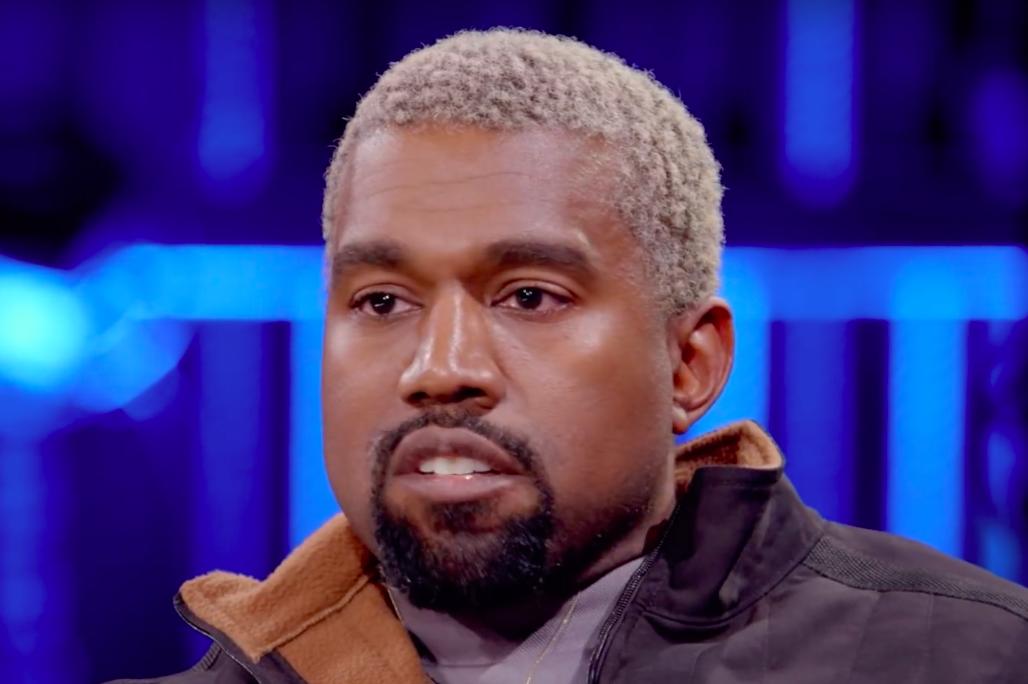
    Kanye West Talks Mental Health With David Letterman

    “It’s a health issue that has a strong stigma on it and people are allowed to say anything about it and discriminate in any way,” West told Letterman.

    Kanye West is featured in the second season of My Next Guest Needs No Introduction with David Letterman, where he discusses mental health in a wide-ranging interview.

    The rapper and artist is no stranger to this subject. In the last three years, West has been hospitalized for “temporary psychosis,” battled painkiller abuse after cosmetic surgery and revealed a bipolar diagnosis—only to later walk back on his claim, saying he “wasn’t actually bipolar” but suffered from sleep deprivation. He also stunned many by suggesting that slavery was “a choice” and openly embracing Donald Trump.

    In his new interview with David Letterman, which will be available on Netflix on May 31, West continues to share his views on mental health.

    “It’s a health issue that has a strong stigma on it and people are allowed to say anything about it and discriminate in any way,” he said. “This is like a sprained brain, like having a sprained ankle. And if someone has a sprained ankle, you’re not going to push on him more.”

    West said that because of the stigma surrounding mental health, it is treated differently from any other ailment, with little compassion. “With us, once our brain gets to a point of spraining, people do everything to make it worse. They do everything possible. They got us to that point and they do everything to make it worse.”

    He described the moment he was handcuffed and brought to treatment. “They have this moment where they put you—they handcuff you, they drug you, they put you on the bed, and they separate you from everyone you know,” he said. “That’s something that I am so happy that I experienced myself so I can start by changing that moment.”

    West said that maintaining a medication regimen keeps him from losing control. “If you don’t take medication every day to keep you at a certain state, you have a potential to ramp up and it can take you to a point where you can even end up in the hospital. And you start acting erratic, as TMZ would put it.”

    He continued, “When you ramp up, it expresses your personality more. You can become almost adolescent in your expression. This is my specific experience that I’ve had over the past two years, because I’ve only been diagnosed for two years now.”

    View the original article at thefix.com

  • Purdue Pharma Accused Of “Corrupting” WHO To Sell More Opioids

    Purdue Pharma Accused Of “Corrupting” WHO To Sell More Opioids

    Officials say the World Health Organization helped Purdue “traffic dangerous misinformation” about opioids.

    Members of Congress released a report last week alleging that the World Health Organization (WHO) has been “corrupted” by the leaders of the opioid industry, particularly Purdue Pharma and Mundipharma International, both of which are owned by members of the Sackler family.

    U.S. Representatives Katherine Clark and Hal Rogers accuse WHO of essentially replicating claims made by these companies’ marketing materials, some of which have been found in court to be inaccurate and misleading.

    “The web of influence we uncovered paints a picture of a public health organization that has been corrupted by the opioid industry,” said Clark according to the Guardian. “The WHO appears to be lending the opioid industry its voice and credibility, and as a result, a trusted public health organization is trafficking dangerous misinformation that could lead to a global opioid epidemic.”

    The report claims that current WHO guidelines, implemented several years ago, still “mirror Purdue’s marketing strategies to increase prescriptions and expand sales.” This includes statistics and statements that have been contradicted by multiple studies, such as the assertion that less than one percent of patients who are prescribed opioids develop a dependence on the drug.

    Additionally, the WHO removed guidelines recommending that pain patients be started on a combination of low-dose opioids and non-opioid pain relievers to instead recommend that highly potent opioids, such as Purdue’s OxyContin, can be given immediately.

    To make matters worse, the WHO did not change its pro-opioid guidelines even after several members of Congress sent a letter to the organization in 2017 warning that Purdue was attempting to take its business worldwide after allegedly causing or heavily contributing to the opioid epidemic in the U.S.

    The WHO did not respond to the letter, which led Clark and Rogers to launch their investigation.

    In addition to mirroring Purdue marketing materials, the report alleges that the WHO was influenced by “industry-funded” advocacy groups such as the American Pain Society and the International Association for the Study of Pain (IASP).

    The American Pain Society recently announced that it may cease operation due to legal costs related to accusations that the organization is little more than a front for opioid industry interests. 

    “While the findings in this report are tragic and alarming, they are unsurprising given this company’s unscrupulous history,” said Rogers. “The WHO must take action now to right the ship and protect patients around the world, especially children, from the dangers associated with chronic opioid use.”

    Clark and Rogers are calling on the WHO to withdraw its current guidelines related to opioid prescription. The WHO has said it is currently studying the report, and as usual, Purdue Pharma issued a statement denying all allegations of wrongdoing.

    View the original article at thefix.com

  • Brazil To Pass Legislation To Allow Involuntary Commitment Of Drug Users

    Brazil To Pass Legislation To Allow Involuntary Commitment Of Drug Users

    The law would allow the involuntary commitment of drug users by the recommendation of a relative or a public health official.

    Brazil is on track to pass national legislation that would allow drug users to undergo forced rehabilitation, the Washington Post reports.

    On May 15, after passing Brazil’s lower chamber of congress, the Chamber of Deputies, the legislation was approved in the Senate as well. It now requires the signature of President Jair Bolsonaro to become law. Bolsonaro has indicated his support for the legislation.

    The law would allow the involuntary commitment of drug users by the recommendation of a relative or a public health official, according to the Post. The individual would need the approval of medical professionals if they are to be released.

    Drug policy reformers say this provision of the legislation is especially concerning—calling it a “perfect example of how this government seeks to resolve complex issues with simple and wrong solutions.”

    Approaches “of this kind have failed and damaged the credibility of health professionals, with drug users wanting to run away from them,” said Leon Ribeiro, a public health psychiatrist and former member of Brazil’s National Secretariat for Drug Policy. “They’re trying to use punishment and the loss of freedom as a solution for those who consume drugs.”

    Brazil’s Supreme Court is expected to decide whether to decriminalize marijuana possession and consumption on June 5. The Post noted that the government is hoping to “influence” the ruling by passing the controversial legislation.

    Similarly, in the United States, dozens of states allow the involuntary commitment of drug users. The Daily Beast reported in 2017 that in light of the opioid crisis, more states were considering allowing it or expanding existing policies.

    At the time, the Daily Beast cited figures by the National Alliance for Model State Drug Laws, which counted 37 states with existing statutes allowing for “substance abusers who have not committed a crime to be briefly detained against their will.”

    This year, NPR reported on Massachusetts’ unusually “aggressive” use of its involuntary commitment law.

    In the last fiscal year, more than 6,500 residents were ordered to treatment via involuntary commitment. It is still legal for men who are committed to involuntary addiction treatment to be sent to prisons and jails. Understandably, this has the potential to yield tragic results. The practice was outlawed for women in 2016.

    View the original article at thefix.com

  • Oakland Could Be Next City To Decriminalize Psilocybin, Other Entheogenic Plants

    Oakland Could Be Next City To Decriminalize Psilocybin, Other Entheogenic Plants

    Earlier this month, Denver became the first US city to decriminalize psilocybin.

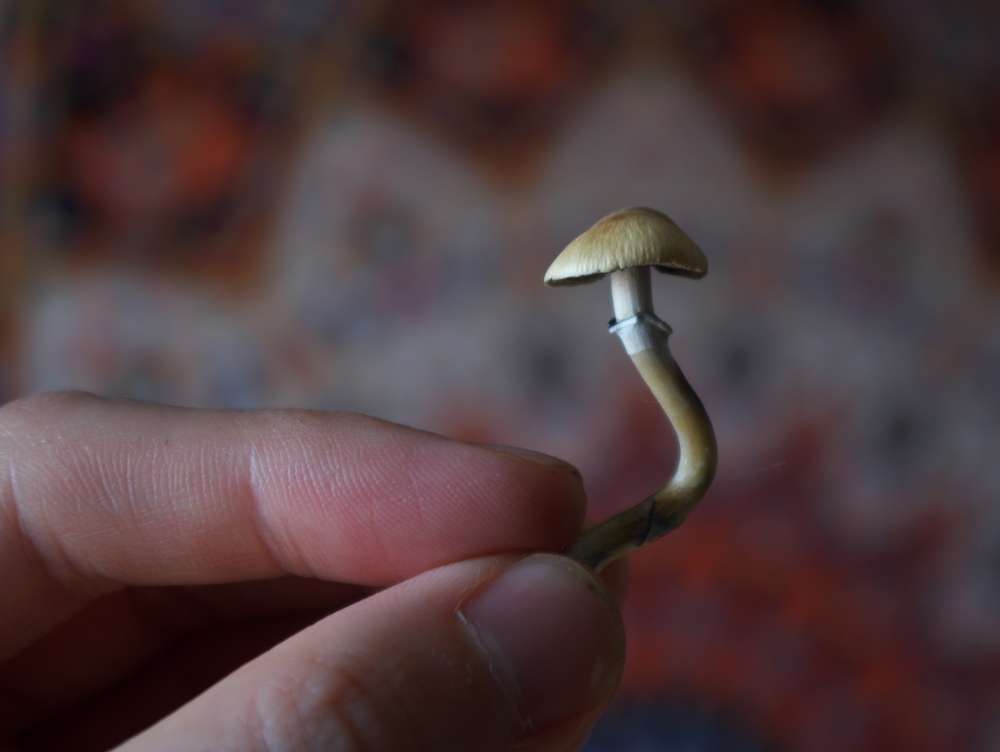
    The city of Oakland, California may become the second city in the United States to decriminalize psilocybin mushrooms (i.e. magic mushrooms), following the recent example of Denver.

    Early May, voters in Denver, Colorado approved a ballot initiative to decriminalize psilocybin mushrooms by a narrow margin, with 50.64% voting in favor of Ordinance 301. The measure does not legalize magic mushrooms, but effectively prohibits the city from prosecuting or arresting adults for possession.

    Now, Oakland city officials are considering doing the same.

    Oakland’s resolution, provided by Decriminalize Nature Oakland, specifically refers to the decriminalization of “entheogenic plants,” which in addition to psilocybin include ayahuasca, cacti (mescaline) and iboga—i.e. “the full spectrum of plants, fungi, and natural materials… that can inspire personal and spiritual well-being, can benefit psychological and physical wellness, and can reestablish human’s inalienable and direct relationship to nature.”

    The federal government has long classified psilocybin mushrooms under Schedule I—the category of drugs that are defined as having no medical value and a high potential for abuse. Drug policy reform advocates disagree with the federal government’s decision to classify drugs like psilocybin and cannabis under Schedule I, where heroin also resides.

    NBC Bay Area reported that Oakland officials planned to discuss the issue on Tuesday (May 28) at a public hearing before the City Council’s public safety committee. The issue could go before the full council as early as June 4, according to the San Francisco Chronicle.

    Councilman Noel Gallo introduced the resolution after being approached by Decriminalize Nature Oakland. Gallo told the Chronicle that the city’s mental health problem may benefit from the decriminalized use of psilocybin mushrooms, which has been studied for its medical properties.

    “We need all the help we can get to deal with the mental health issues that we have. If I can bring it publicly and talk about the benefit and talk about (how it can) deal with the mental illnesses that we have in the city, why not?” said Gallo.

    Researcher Matthew Johnson of Johns Hopkins University says there is reason to be optimistic about psilocybin’s abilities to have a positive impact on mental health issues such as PTSD, depression, addiction and more. “The data are really impressive,” he told the Chronicle. “We should be cautiously but enthusiastically pursuing these threads.”

    The Oakland measure also has the support of Council President Rebecca Kaplan. “I believe we need to continue to support efforts to help end mass incarceration and I recognize that the war on drugs has been a racist, expensive, wasteful failure. I also believe there are strong public health reasons to support this change,” she told the Chronicle.

    View the original article at thefix.com

  • Lamar Odom: I Didn’t Overdose, Brothel Owner Tried To Kill Me

    Lamar Odom: I Didn’t Overdose, Brothel Owner Tried To Kill Me

    “I think Dennis Hof… I don’t know what he had against me, but I didn’t do drugs that night, to be honest with you,” Odom said on The View this week.

    Former NBA star Lamar Odom said that he did not overdose on drugs back in 2015 during a trip to a legal brothel in Nevada, but that the brothel owner Dennis Hof tried to kill him. 

    “I think Dennis Hof… I don’t know what he had against me, but I didn’t do drugs that night, to be honest with you,” Odom, 39, said on The View this week. “So I don’t know if he tried to poison me, or… I don’t know what he had against me. He tried to kill me.”

    Odom said that his lawyer had found workers at the brothel who agreed this was the case. He said that he hasn’t pressed the issue, despite the media frenzy over his apparent near-fatal overdose.  

    “He almost succeeded [in killing me], though. I didn’t [take drugs that night],” Odom said. “I’ve been at odds with my daughter [Destiny] about this. She’s like, ‘Leave it alone.’ I would like to clear my name.”

    Hof died of a heart attack last year at the age of 72, so he is unable to respond to the allegations. When he was asked by TMZ what Hof’s motive might have been, Odom had no explanation. “I would like to ask him that question, too. I don’t know,” Odom said. “That’s a question I asked myself when I was waking up.”

    Odom was going through a divorce with reality television star Khloe Kardashian at the time of the overdose. Kardashian paused their divorce proceedings and supported him through his recovery. 

    “He OD’s during the divorce and I was his next of kin, even though it was still—the divorce was still—it was on the judge’s desk. It was like two years, or like a year or two, of us trying to get the divorce going and then this happened,” Kardashian said on the podcast Divorce Sucks With Laura Wasser earlier this month. “We paused the divorce, not for any romantic reasons but I wanted to be able to take care of him and make sure that he would be okay again.”

    Odom recently wrote a book in which he seems to take more responsibility for his behavior during that period. 

    “I could not handle the lethal cocktail of the spotlight, addiction, a diminishing career and infidelity,” he wrote in his memoir. “Oh, did I mention the anxiety, depression… I couldn’t keep my dick in my pants or the coke out of my nose. Drug addicts are incredibly skilled at hiding their habit.”

    View the original article at thefix.com

  • "Even Stevens" Star Christy Carlson Romano Opens Up About Depression, Self Harm

    "Even Stevens" Star Christy Carlson Romano Opens Up About Depression, Self Harm

     “During a period of time in my life, I grappled with depression, drinking, and more, desperate to find fixes for how I felt.” 

    As a star on the Disney Channel hit shows Even Stevens and Kim Possible, Christy Carlson Romano came across as poised and polished—but really she was struggling with depression and tendencies toward self-harm. 

    “I am not a victim, but I have never been perfect or pulled together as my reputation or the successes of my young adulthood might suggest,” Romano wrote in an essay for Teen Vogue. “During a period of time in my life, I grappled with depression, drinking, and more, desperate to find fixes for how I felt.”

    Although Romano had career success at a very young age, she wasn’t able to experience a normal childhood, she wrote. That loss affected her social and emotional development, she said. 

    “While I was adept at change and very driven in my art form, I was delayed in some developmental milestones that one often has in their preteen years that adequately inform their early adulthood and help them make the right decisions during hard times,” she said. “I only learned to ride a bike at 12 years old because I had a callback for a cereal commercial. I had very few friends my own age and lacked the ability to communicate my emotions effectively due to my insecurities with being different. Needing to be liked was my full-time job and constant concern of mine.”

    After leaving Disney, Romano tried her hand at New York theater, where her mental health began to slip. 

    “I became a bit harder-edged, binge-drank more at loud nightclubs, and started to accept the transient natures of love, sex, and friendship,” she said. “Then I began to flirt with other methods of self-destruction. I tried to scratch my skin with my fingernail because I was too scared to use a knife. I chickened out and honestly felt like I had failed some important race to win the trophy for ‘most tragic, beautiful girl.’”

    When a so-called psychic approach Romano, the star formed a relationship with her, eventually paying $40,000 for a crystal that the psychic promised would change her life. 

    “I felt marked, used, and violated so I started to blame myself for everything instead of learning from my past mistakes and growing as a person,” she said. 

    After ten years, Romano said she got her life on track when she met her husband, with whom she now has two daughters. Today she is sober and has a more robust sense of purpose. 

    “I haven’t had a drink since before my first pregnancy and am going to continue to abstain from alcohol so that I can continue to make clear-headed decisions that keep me on the right path,” she wrote. 

    She’s now able to look back on her life and see where she went wrong, and she has some advice to share with others.  

    “Having a clear understanding of your personal value helps to positively shape everything you do. If you don’t, if you aren’t careful, you just might end up getting what everyone else wishes for but wondering what you want yourself.”

    View the original article at thefix.com

  • Video Game Addiction Is Officially Classified As A Mental Disorder

    Video Game Addiction Is Officially Classified As A Mental Disorder

    WHO’s decision has been met with opposition from the gaming industry and other critics. 

    The World Health Organization (WHO) announced that “gaming disorder” will be included in an upcoming revision of its International Statistical Classification of Diseases and Related Health Problems (ICD-11).

    The disorder is defined as a “pattern of persistent or recurrent gaming behavior” which manifests itself in a variety of symptoms, including “impaired control over gaming.” The decision has garnered controversy from both the entertainment software community and some mental health professionals, who have described the decision as a “junk diagnosis.”

    Gaming disorder will be listed in ICD-11 as part of its chapter on “mental, behavioral or neurodevelopmental disorders.”

    As Polygon noted, the language for the disorder – which was finalized in 2018 and formally adopted May 25, 2019 – is nearly identical to ICD-11’s description of “gambling disorder,” which precedes it in the chapter. 

    Gaming disorder applies to behavior exhibited during “digital gaming” or “video-gaming” which may be online or via gaming systems. Those diagnosed with “gaming disorder” may exhibit “impaired control over gaming,” as well as “increased priority” to gaming “to the extent that gaming takes precedence over other life interests and daily activities.”

    The revision that will include gaming disorder will take effect on January 1, 2022.

    Response from the gaming industry has been largely negative; a joint statement issued by European industry members and seven other nations noted that the disorder “is not based on sufficiently robust evidence to justify its inclusion in one of the WHO’s most important norm-setting tools.”

    The Entertainment Software Association also voiced its opposition in 2018, writing that the inclusion in ICD-11 “recklessly trivializes real mental health issues like depression and social anxiety disorder.”

    Some mental health providers have also voiced opposition to the WHO’s decision. “It’s really a junk diagnosis,” said Christopher J. Ferguson, Ph.D to Polygon 2018. Ferguson co-authored a journal article, which was published in Professional Psychology: Research and Practice, which said that the organization’s definition of gaming disorder showed “little clarity… regarding diagnostic criteria and appropriate symptoms.

    Ferguson’s co-author, Anthony M. Bean, also suggested to Polygon in 2017 that the WHO was pressured into adding gaming disorder to ICD-11 by Asian member states, where gaming addiction is widely considered to be a serious problem to be dealt with through strict, often draconian measures. The WHO responded to the article by noting that their decision was based “entirely on the available scientific evidence and experiences with such health conditions in different countries, not limited to Asian countries.”

    View the original article at thefix.com

  • How It Feels to Be the Reality Show Villain: An Interview with Kari Ann Peniche

    How It Feels to Be the Reality Show Villain: An Interview with Kari Ann Peniche

    Those shows continue to haunt me and do me damage in my personal life. I was portrayed as this crazy person, and that portrayal is something I find myself having to fight against on a regular basis.

    Kari Ann Peniche was thrust into more scandals before the age of 30 than most fictional Hollywood starlets. She was crowned Miss Teen USA 2002 before her 17th birthday, then in 2004 the title was taken from her after she appeared nude in a celebrity pictorial for Playboy magazine. Then, from 2009 to 2010, Kari Ann appeared in succession on the reality shows Sex Rehab with Dr. Drew, Celebrity Rehab with Dr. Drew, and Sober House. Set up as the troubled bad girl by the producers, Kari Ann received little help and lots of negative press. She was also the subject of tabloid celebrity stories covering her volatile engagement to Aaron Carter in 2006, a nasty public quarrel with the late singer Mindy McCready in 2009, and the leak of a controversial nude home video that included married actors Eric “McSteamy” Dane and Rebecca Gayheart in 2009.

    With hard work, Kari Ann moved on from that chapter and today she is happily married with two children. She found her true calling as an interior designer and creative director, and in 2017 she launched DAF House, a “luxury design, fashion and art firm.” 

    The Fix recently had the pleasure of speaking with Kari Ann about her journey. 

    After appearing nude in the November 2004 issue of Playboy magazine, you were stripped of your crown. Why did you decide to appear in Playboy? Since Hugh Hefner was still alive at this point, I imagine you spent time at the Playboy mansion.

    When Playboy was introduced to me, I didn’t really know how I felt about the idea. All I knew was that it was a nude magazine that my Dad had kept hidden in a drawer when I was growing up. I thought it was weird to even consider the idea at first. Then, the agent went on to tell me about all these iconic women who had posed for the magazine in the past: Marilyn Monroe, Madonna, Farrah Fawcett, Sharon Stone, Shannen Doherty, Drew Barrymore, and many more. I thought, “If they posed for the magazine, then I definitely want to pose for the magazine and do a celebrity pictorial because I will be in such good company.”

    So, I agreed to do it, and I did spend time at the mansion. I lived there for a couple of months, and Hef was always very nice. He taught me how to play backgammon, and he let me stay in the guest house. I don’t think it was too much for me, but it definitely opened my eyes to a world that I hadn’t been exposed to before.

    In an interview with Steppin’ Out magazine, you revealed that you had been raped twice before you turned 18, first by a neighbor when you were 13 and later by a U.S. military officer when you were modeling in South Korea. You also had a series of abusive boyfriends that took advantage of you and introduced you to hard drugs. How difficult was it to be in the national spotlight while dealing with such extreme trauma?

    I know now that being busy with modeling and Playboy and all the attention that I was getting at that time really helped to distract me from that trauma. At the same time, I never really dealt with what happened. I just pushed everything aside because I was too busy to stop and really think about it. I would tell myself that I was fine, I’m not a victim, and those things aren’t about me. The ones that did those things to me, they’re the ones that need help and they’re the sick ones. They should deal with it, and I don’t need to deal with it because I’m just fine. That was my attitude about all that back then.

    When I did the Steppin’ Out interview, I was starting to kind of crumble, and I was reaching out for help. Everything had slowed down, and suddenly I had a lot of time to myself. Finally, being with myself allowed me to reflect on what had happened. I realize now that I shared stuff that they didn’t even really ask me questions about. The interview really captured where I was emotionally and mentally. I was breaking down, and it felt like everything was falling apart. It happened to be the same time that I got the calls to do the reality shows. I knew I needed something so I thought it made sense: I would help my career and help myself at the same time, but that’s not what ended up happening.

    You went on Sex Rehab with Dr. Drew because your manager thought it was a good idea. Today, you say that you were never a sex addict. Instead, would you describe yourself back then as a love addict or a relationship addict?

    I like to say that I had more of a shopping problem, I mean, I didn’t even know what sex addiction was and I didn’t know why I was going on that show. I was the first person cast for that show, and I had only been intimate with a handful of people. Never had I ever had a one-night stand or hooked up with people I didn’t know. I was never promiscuous in that way, but I knew how to play that part in a weird sense.

    I do know that I used sex as a kind of protection. I would use sex as a way to ward off guys that I thought were trying to make moves on me. I thought that being graphic or explicit would intimidate my guy friends and keep them in line. I always had people over at my apartments and my houses. I would buy sex toys and bondage stuff that I would have in my bedroom and on my bed, but I had never even used these things before. It was all like some kind of strange decoration, and it was my way of protecting myself. I don’t know if that makes sense, and I know it sounds kind of confusing, but it actually worked really well. Rather than use sex toys and bondage equipment, I really just shopped for them and displayed them, and that’s why I like to refer to it as more of a shopping problem. My goal was to make guys think, “I’m not even going to try to hit on her because I am inadequate. I won’t be able to keep up with a girl like her.” In truth, it was all one big illusion. I had been through so many bad things in the past, and I needed to have a way to protect myself.

    When you were on Celebrity Rehab with Dr. Drew and Sober House, it seemed like the producers cast you as “the villainess.” Did you feel unfairly portrayed on these shows?

    When I did those shows, I had really bad management, and I was coached to be a certain way by the producers. I was told that VH1 was looking for a new starlet to come out of these reality shows, and the cast was going to include Tom Sizemore and Dennis Rodman. We had big names on the show, so I thought it made sense to be a part of that group; I thought it would help my career.

    I do feel unfairly portrayed because the producers did a lot of things to provoke negative behaviors. I could have behaved differently, but so much of what happened wasn’t shown. You saw the reactions but never the provocations. We’re being filmed 24 hours a day for 21 days, and all that’s aired is 47 minutes once a week for ten weeks. Obviously, a lot of the story is edited out. They never showed the full story of what led to my outbursts on the show.

    I also felt like they were digging things up and putting words into my mouth that weren’t true about my drug use and past trauma. At first, I would just say whatever they wanted me to say. I didn’t really know the answers to the questions they were asking.

    As time passed, I knew I wasn’t being true to myself. It really started to bother me, and I started regretting a lot of the things we had filmed earlier. I didn’t want to be there anymore, and I knew that doing the show wasn’t right for me. At the same time, I also knew that I needed some kind of intervention because I was going down a bad path in my life. I really wanted to be helped, and it was a struggle to try to get something positive out of the experience when I also felt manipulated and not properly cared for.

    At the end of the day, we were just a cast, and our pain didn’t matter. All that mattered was them getting the material that they wanted. They were creating characters, and I hated the character that they created for me. Rather than help me get well, it felt like it was designed to do just the opposite.

    If you could sit down and talk to the producers of those reality shows today, what would you say? Should behavioral addictions like love addiction, relationship addiction, and sex addiction be used as fuel for the engine of the entertainment machine?

    I would first thank them for the experience because I did learn a lot. However, I don’t think they were fair or considerate. Rather than manipulate those experiences, they should have let things unfold naturally. If they had done it naturally, I believe they would have had great content anyways. There already are enough things that unfold in rehab anyhow. I don’t understand why their focus wasn’t helping the patients as opposed to doing things to provoke the drama.

    The producers and people on the show used our addictions and our traumas in these therapy sessions as entertainment, but they didn’t provide any follow-up care. It was a bad idea, and it caused a lot of hurt for my family and for me because they opened wounds without trying to heal them. It was like pulling off psychic scabs, and they would be blaming my mom or my dad for what had happened to me when I wasn’t even blaming them. I have never blamed them for anything. I was an adult, and I made those choices on my own. I knew better, and I knew I shouldn’t have put myself in those situations or done those things. Rather than help, they made me more confused.

    After those shows, I left each one of them feeling worse than I had before I went on them. They had ripped off those scabs, and I left filming with all these open wounds and no one to help heal them. Even today, those shows continue to haunt me and do me damage in my personal life. I was portrayed as this crazy person, and that portrayal is something I find myself having to fight against on a regular basis.

    I don’t think those settings should be televised. Everyone comes off poorly, and it’s not a good message. It does more harm than good.

    On the DAF House team page, you are quoted as saying, “Change is possible no matter who you are, what you’ve done or where you’ve been. It starts with creativity.” How did your creativity help you overcome the trauma you experienced as a girl and young woman? When did you realize that it was time to change and how did you change?

    I believe we are all artists in our own way, and we are all here to create, whether we are creating art or music, writing or designing, building or financing, marketing or selling. It all depends on our identity, but everything can be done creatively. For me, the quote on the DAF House website refers to that chapter in my life. There has been so much said about me that’s honestly not true, and I had spent four or five years honestly embarrassed about who I was or even who I am. I was afraid of anyone Googling me and finding out about what had happened because the reality had been so twisted. I was scared about what was going to happen.

    I recently went through a tough time in my marriage where my husband and I spent almost two years divorcing. It was really ugly and crazy in retrospect because we never got divorced, and we are still together. During that time, everything from my past before I was even married and before I was ever a mom was being brought up in court. I was being portrayed as a bad mother because I was an addict, and I had been on those celebrity rehab shows. It was all in the past and completely irrelevant to my being a mother or being married at that point in time. It was so in the past, but still, the judge ordered me to do random drug testing where they go in the bathroom with you and watch you pee three times a week. It was awful, and during that period, I did over 80 drug tests in a six-month period, and every one of them came back negative.

    Look, I was happy to do those drug tests because I knew I had nothing to hide, but never did any of that get publicized. Only the negative headlines are focused on by the eyes of the world. My husband’s lawyer brought forth a torrent of allegations against me, all this bad stuff that had happened long before we were married and all this bad stuff that was untrue. What was so disturbing is that the false picture that lawyer tried to paint of me kept coming out in the press and being published as truth. I cannot tell you how hard it was to go through something so awful.

    My husband and I did manage to reconcile, and we have done our best to repair our marriage. He was going through his own crisis mentally at the time, and the divorce had little to do with me and our relationship. However, given my celebrity and the scandals in my past, I became the punching bag of that process. He was influenced by a lot of outside people, and he let those people dominate his perspective. For a long time, all I could do was love him from far away and do my best to let him know that I wasn’t playing games. I wouldn’t say anything mean about him because I knew it was all going to be public record. I didn’t say anything about him being a bad father because it wasn’t true. He’s always been a good father, and I would never say such things about the man I love.

    We have been married for nine years, and we have put that behind us. For me, that quote is about focusing on the present and the future, leaving the past behind. I am trying to create a new picture of who I am for the public so I can be seen for who I really am.

    This interview was edited for length and clarity.

    View the original article at thefix.com

  • Instagram Co-Launches Mental Health Awareness Campaign

    Instagram Co-Launches Mental Health Awareness Campaign

    The American Foundation for Suicide Prevention and Instagram have partnered up to start #RealConvos about mental health.

    A new public awareness campaign is working to shed light on the conversation about mental health. 

    According to the Washington Post, the American Foundation for Suicide Prevention and Instagram have teamed up for the campaign in hopes that it will lead to more conversation around the topic. 

    The idea is that Instagram users will tag content with #RealConvo when a post discusses mental health. 

    As a kickoff to the campaign, the American Foundation for Suicide Prevention’s Instagram account featured what they called a “grid takeover” in which the organization shared video stories of nine individuals who spoke candidly about mental health and the importance of sharing one’s struggles on social media (in addition to victories).  

    Some well-known names participated in the campaign, including Pretty Little Liars actress Sasha Pieterse.

    “I think a lot of people are scared of the term mental health,” Pieterse wrote in one post. “Why is it so taboo to talk about? We as a society seem to be way too concerned about what people think. We are all guilty of it. We are all guilty of comparing ourselves to others, feeling like we aren’t valuable, like we don’t deserve or aren’t worthy of the things we hope for in life.”

    Pieterse also touched on the campaign specifically, pointing others to use the hashtag and encouraging them to learn more about the efforts. 

    “Everybody should be doing their best to keep their mental health in check, and that means we should be having #realconvo’s about the way we feel and why,” she added. “Don’t be afraid to ask questions. Don’t be afraid to be raw. That’s where we find the diamonds within us.”

    Even if someone is not comfortable sharing their own story, others tagging posts allows them to search the hashtag as well and realize they are not the only ones struggling.  

    According to the Washington Post, searching #RealConvo “reveals graphics, photos and personal stories aimed to inspire, reduce stigma, reframe how people think of mental health, and help people get help if they need it. Candid personal stories give difficult ­issues—such as anxiety, self-criticism, grief and post-traumatic stress disorder—faces and names.”

    As always, social media is not a replacement for real help. If you or someone you know is in crisis, you can call the National Suicide Prevention Lifeline at 800-273-TALK (8255) or text TALK to 741741 to the Crisis Text Line.

    View the original article at thefix.com