Author: The Fix

  • The Opioid Crisis Is Our Greatest Opportunity

    The Opioid Crisis Is Our Greatest Opportunity

    Overdose survivors need more than a second (or third) chance: they need a parachute. When you’re in free fall, a little more time isn’t much help.

    Perhaps everything that is terrible is,
    in the deepest sense, something
    that wants our love.

    Rilke

    The overdose epidemic in the U.S. has been called “the greatest public health crisis of our time.” It’s also our greatest opportunity.

    The opioid crisis is an identity crisis: it’s a challenge to how we see ourselves. Do we truly believe that we are all in this together? One answer leads us deeper into despair. The other, into a hopeful future.

    It’s been said that “doing more things faster is no substitute for doing the right things.” What are the “right things,” the measures that can resolve the crisis, not just postpone it? The right actions come from the right thoughts. Those thoughts come from feelings, and feelings are never right or wrong. But there are some feelings we are born with. They are our birthright. And one of them is love.

    The Kindness of Strangers

    Hatred never ceases by hatred, but by love alone is healed.

    The Buddha

    Behind the opioid epidemic is a prevailing lack of compassion, of caring about everyone equally. At the heart (or lack of it) of this societal disease is rampant inequality. The social determinants of health: stress, unemployment, lack of support, poor health care, etc. are major drivers of addiction. Many authors promote this view, including Gabor MateBruce AlexanderSam QuinonesRobert Putnam, and Harry Nelson.

    Our increasing fragmentation affects everyone, poor or rich.

    Drug overdose is the leading cause of death for Americans under the age of fifty…

    Our material lives may be outwardly prosperous, but our psychological and spiritual lives are in freefall. What is driving us to self-destruction? There are many factors, all with one unifying theme: we are no longer living in community with one another and, consequently, we are lonely.

    Francie Hart Broghammer

    We all hunger for the same thing. The question is this: do we love our neighbor as ourselves? That’s not just a commandment; it’s a requirement. How do we rebuild community? First, by taking full responsibility for the fallout of not being one.

    For Whom the Boom Tolls

    Compassion is not a relationship between the healer and the wounded. It’s a relationship between equals. Compassion becomes real when we recognize our shared humanity.

    Pema Chodron

    I live in Asheville, a city that has recently, like the opioid crisis, exploded. Tourism is at an all-time high, and Asheville has appeared in dozens of destination top ten lists. It has also been ranked second in the country in gentrification.

    Asheville sits in the heart of Appalachia, where the opioid crisis is at its worst. In 2017, North Carolina had the second highest increase in opioid deaths in the country. The Blue Ridge Parkway runs through town and I spend a lot of time there, mostly foraging. That’s where last summer, for the first time, I found not mushrooms, but needles.

    Despite the crisis, the city just spent six months trying to shut down the local syringe exchange. The same thing is happening in other cities. In Asheville, the exchange had been operating without incident for over two years — until the houseless (a.k.a., homeless) in adjacent areas were kicked out to make way for new development.

    Addiction depends on denial. What if development is the real addiction? Will we face up to the dark side of gentrification or just try to make it “go away?”

    If a canary dies in a coal mine, you don’t blame the canary. Yet blaming the victim is exactly what we’ve been doing.


    Blue Ridge Parkway, 8/20/18 

    License to Ill

    A man came to the Rabbi and said, “Rebbe, my son has turned against me. What should I do?” The rabbi said, “love him even more.”

    Hasidic story

    Most people by now have heard that naloxone (Narcan) can prevent a deadly overdose. So many Americans are dying — often from a mix of drugs, but mainly due to opioids — that naloxone should be as ubiquitous as aspirin. Everyone using a drug that may contain opioids should carry it like an EPI pen. And with the increasing prevalence of fentanyl, a single dose may not be enough. Everyone should know how to tell how much naloxone to give someone in the midst of an overdose. This should be basic, universal knowledge.

    But keeping someone alive is just the beginning. In fact, while naloxone may be physically safe, it does have one significant side effect: precipitated withdrawal. And not helping someone through it is like catching them from falling only to drop them from higher up.

    A Devil’s Bargain

    Be kind, for everyone you meet is fighting a hard battle.

    Ian Maclaren

    As one response coordinator describes it, precipitated withdrawal is like “the worst flu you’ve had… times 100.” For some, the feeling is so bad that they find themselves dying, so to speak, to use again.

    To the uninformed, it is inconceivable that someone who nearly died from a drug would run out that very same day and buy more of it. Narcan works by binding to opioid receptors, blocking the effect of narcotics like heroin. In drug users with a physical dependency, it also has the effect of causing severe withdrawal symptoms. This all but guarantees that the first thing a user will think of after their overdose is reversed is getting another fix

    Christopher Moraff

    Naloxone is not just a “bandaid on a bullet hole.” It can feel like ripping open a wound. For “withdrawal is the very situation that [users] are seeking to avoid in the first place.”

    “A dose of naloxone,” according to the Chief Medical Officer for a Connecticut health agency, “is a chance. But if it’s not coupled with immediate offers of treatment, it may be a slim chance that leaves the revived individual running back to the same dealer who sold them their last lethal dose.”

    Overdose survivors need more than a second (or third) chance: they need a parachute. When you’re in free fall, a little more time isn’t much help.

    Back on the Chain Gang

    Without forgiveness, our lives are chained, forced to carry the sufferings of the past and repeat them with no release.

    Jack Kornfield

    “They’re usually very angry when we bring them around,” says one responder. “One kid yelled at me, ‘You think this will make me stop doing drugs?’” Indeed, one substance abuse specialist in Ohio says that 67% of people revived with naloxone in her area use again within 24 hours. NPR reports that “about 30 percent of those revived with Narcan at Boston Medical Center have been revived there more than once… and about 10 percent of patients more than three times. Those statistics are in line with what’s seen in ERs elsewhere, public health officials say.”

    According to a former agent for the DEA, one woman in Ohio, within 24 hours of being revived for the the sixth time, was using again. In the first half of 2017, one man in North Carolina was revived fourteen times.

    To be clear, I am not saying naloxone provides a safety net that encourages people to take bigger chances. Studies have shown that naloxone does not increase drug use any more than free condoms increase sex. Nor am I saying we should place limits on the number of times we revive people.

    What I am saying is that naloxone is no miracle drug. When you “come to,” the problem remains. Overdose survivors are 24 times more likely than the general population to die in the following year. One study found that for those revived with naloxone, nearly one in ten are dead within a year, the majority within the first month. Follow up is critical. But even that is not enough.

    Not by Locks Alone

    Few things can help an individual more than to place responsibility on him, and to let him know that you trust him.

    Booker T. Washington

    In June of 2019, New Jersey became the first state to allow paramedics to administer buprenorphine along with naloxone to ease the pain of withdrawal. Buprenorphine is the drug that, like methadone, is used in opioid replacement therapy. But this measure will, according to one expert, “make a meaningful difference only if rescued individuals are linked immediately to ongoing treatment and agree to participate in that treatment.”

    “Immediate” is key. And at least one hospital in New Jersey has been making that link, through state-paid recovery coaches, since 2017. A coach might work with someone “for weeks or months.” And the cost to taxpayers of helping people in this way is surely far less than the cost of leaving them on their own.

    Unfortunately, however, getting people into treatment is not enough. Not all treatment is good treatment. In fact, much of it is worse than doing nothing at all.

    Under the Rug

    Beware of all enterprises that require new clothes, and not rather a new wearer of clothes.

    Thoreau

    People usually go to rehab for 28 days, maybe a month and a half. In most cases, the treatment fails, if you regard failure as return to use. A study reported in the Irish Medical Journal found that 91% of people who go through rehab are using again within a year; 80% in the first month.

    “Most honest program directors,” says veteran addiction expert Julia Ross, “will admit to 90% relapse rates, and I assume that if they admit to 90%, it’s probably worse.” Drug courts are no better. A national study of seventy-six drug courts found a reduction in the rate of rearrest of only 10 percent.

    Moreover, when people come out of abstinence-based rehab, their tolerance has gone way down, so they are more likely to overdose. This is a common reason why fentanyl is killing people: it’s much stronger than they are expecting, especially in an opioid-naïve state. Making fentanyl test strips available can help prevent overdose, but that still doesn’t deal with the basic issue of why they’re using in the first place. What pain are they killing?

    Zero Tolerance

    Winning isn’t everything; it’s the only thing.

    Henry “Red” Sanders

    I watched my grandmother die a very slow death. At 90 years old, after three cancers, open heart surgery, and several strokes, she still fought tooth and nail. Christopher Ryan, author of Civilized to Death, compares our approach to death to the final minutes of an NBA basketball game. We drag it out. We go for quantity instead of quality. Is that also our approach to addiction? As long as they don’t die, we’re OK. This is similar to abstinence-based approaches to addiction treatment: As long as you don’t use, you’re OK. This amounts to saying, “it’s more important to look good than to feel good.”

    To be clear: I’m not saying we should just let our neighbors die. I’m saying we need to do more than just keep people alive; not less. We need to treat the cause, not just the symptom.

    Spare the Prod

    If you want to be heard, whisper.

    Author Unknown

    The overdose crisis is part of a larger epidemic of despair. The facade of America as the “land of opportunity” is failing. Asheville today is “booming.” For whom? Are we saving lives or just saving face?

    Fortunately, Asheville has begun to address its weak spots, and we now have three needle exchanges. We all need to look in the mirror and face where we — as a community, as a country — are really at. Because not doing so is killing us. Whether we die quickly from overdose or slowly from alcoholism, cancer, or depression, we are ALL canaries in a coal mine. And you can’t just rake the canary over the coals.

    It’s one thing to save lives. But throwing someone into withdrawal without providing detox support or throwing them out of treatment because they’ve relapsed is like hitting a child to make them stop hitting other children. Such heavy-handed measures only perpetuate a cycle of abuse. Even a magic bullet leaves a wound.

    Sticks and Phones

    Can you love people and lead them
    without imposing your will?

    …leading and not trying to control:
    this is the supreme virtue.

    The Tao Te Ching

    There’s a reason our greatest leaders practice nonviolence. If all we do is arm people with naloxone, if we fight firearms with firearms, the conflict will only escalate. Stronger opioids are already requiring stronger antidotes.

    With this approach, we may win a few battles, but we will lose the war. You can’t win when you see this as a war to begin with. Because you can’t force someone out of addiction any more than you can force them to stay alive. Force is what causes addiction.

    In 2015, Victoria Siegel, 18, died of a methadone overdose precipitated by cyberbullying. We worry about bullying in schools. What about parental bullying — or governmental? Some of us are aware of the alarming incidence of domestic violence. How many of us recognize how our culture is inherently abusive, our very way of life?

    Sometimes we forget that we are treating people, not diseases. We are bio-psycho-social beings. We have feelings. If addiction comes from pain, and pain comes from hurt, then we need to reduce hurt, not just harm.

    A Dying Shame

    You cannot be lonely if you like the person you’re alone with.

    Wayne Dyer

    We will not end drug abuse until we end human abuse. We will not end human abuse until we end abusive thinking, because violence starts with what you think. A saying often attributed to Martin Luther King Jr. is that “you can have no influence over those for whom you have underlying contempt.” As long as I think, “you’re not good enough; this is all your fault,” or I say that to myself, addiction has a foothold.

    The blame game has no winners. “We’ve lost what it means to just be ourselves and for that to be ok and for that to be enough. So we find ways to self-medicate,” says Rev. Shannon Spencer. People will use painkillers as long as the pain is killing them, for there are few emotions more agonizing than shame.

    We Are Faminy

    I don’t remember now how many days we stayed—long enough to hear David sing often and tease us about white people’s music, which, according to him, is only about “love.” He observed that the Hopi have many songs about water, which they consider the rarest and most precious of resources, and then asked, with feigned innocence, if white people sang so often about love because it was equally rare in our world.

    Peter Coyote

    To many, opioids feel like the opposite of shame. One user describes the feeling as “like being hugged by Jesus.” Indeed, “the very essence of the opiate high,” according to Gabor Mate, is that it feels “like a warm soft hug.” This is the feeling of unconditional acceptance and support, or love.

    We live in a culture where love is the one thing we sorely lack. Millions of people are starving for just a few drops of it. If only for a few moments, we desperately need to feel like we’re OK, that someone wants us to be here, as we truly are. Like they say, it is rain that grows flowers, not thunder.

    Inside, we know we’re not just here to feed The System. We know it should be feeding us. We should not be starving. We should not have to be forced, or force ourselves, to do anything. People need to be supported to decide for themselves what healing looks like for them and to approach it in their own time.

    The Emperor in the Room

    Opioids are like guns handed out in a suicide ward; they have certainly made the total epidemic much worse, but they are not the cause of the underlying depression.

    Anne Case and Angus Deaton

    To solve the drug problem, we need to focus on more than drugs. Otherwise, we are shooting the messenger. Drugs are like the emperor’s clothes; it’s time to look at who’s wearing them.

    Like Dr. Jekyll and Mr. Hyde, opioids and their antagonists are two sides of the same coin. Focusing on either is like looking for your keys under the streetlamp when you know you dropped them further up the street. There is an “upstream” issue here. That issue is our domination-based, “have to” culture. If we stick to our guns, if we continue to be violent, inside and out, we will continue to die.

    Whether we kill another person, the planet, or ourselves, we are a culture committing suicide. We are overdosing on “progress.” We are addicted to things far more insidious than opioids; you’re looking at one.

    Progress isn’t progress when it’s in the wrong direction. The direction we’re going is apart. The direction we need to go is back together.

    Only the Lonely

    Humanity’s current crisis may not, at its root, be an economic crisis or an environmental crisis. It may well be a crisis of consciousness, a crisis in how see ourselves and the world around.

    Peter Russell

    If you’re in the right place at the right time, armed with enough naloxone, you can save a life. But what about an hour later, or the next day? You might get someone into treatment, but what about after that? A person that susceptible to overdose can scarcely be left alone. And that aloneness is the real problem. In fact, it’s how addiction starts.

    The connection between social isolation and addiction shows up on many levels, from treatment to prevention. The most obvious is that you can get naloxone into the hands of every drug user, but it will do them no good if they overdose alone.

    Human beings may be the most social animals on earth. Social isolation can drive us to despair, addiction, and even suicide. Loneliness is self-reinforcing and can lead to shame, for it can mean “I don’t deserve to be loved.” This can be the underlying emotional pain that comes back during withdrawal, whether from an opioid or from someone withholding their affection. And that lack of affection could be the primary cause of addiction.

    Fatal Attraction

    If one has a friend, what need has one of medicines?

    Bhartrihari

    There can be no healing without community. “This unique American moment asks not for a call to arms, but for a call to neighborliness.” (Francie Hart Broghammer)

    No amount of “care” can substitute for the watchful eye of loving family, friends, or neighbors. No amount of “treatment” can make up for how we treat each other. It truly takes a village.

    Ultimately, it’s not drugs that are killing us; they are just finishing us off. Whether or not we beat the horse, we’re already practically dead. Something has weakened us enough to succumb to drugs. It’s the same thing that allows dealers to intentionally make some of their merchandise deadly, or if it’s naloxone, to jack up their prices.

    What our culture is most addicted to is exploitation. It’s what the system is set up for. It compels us not to care. As Ken Eisold says, “The loss of community is not a problem that can be dealt with through psychotherapy,” for what needs rehabilitation is our society. There’s something wrong “with the village.”

    The greatest tool I know for rebuilding community is Nonviolent Communication (NVC). The best approach I’ve encountered for addressing the disconnection inherent in addiction is SeekHealing.

    We are the Medicine

    At the root of the opioid epidemic are deeper questions that we have to ask about society. What kind of society do we want to live in? Do we want to live in a society where we believe every life truly matters? Do we want to live in a society where we all chip in, recognizing that we are vulnerable in some way, whether it’s to addiction or loneliness or other conditions, and that we are stronger when we come together, when we recognize our interdependence, and when we help each other?

    As tragic as the opioid epidemic is, if it can move us in a direction of shared understanding about our interdependence, if it can help us address these deeper social roots of disease, then I believe that we will have used it ultimately to improve ourselves to become stronger as a country.

    Vivek Murthy

    To make it out of this crisis, we need to look at the big picture. As writer David Dobbs puts it, “trying to understand mental illness without accounting for the power of social connection is like studying planetary motion without accounting for gravity.” If we only look at addiction on an individual level, we are missing the forest for the trees. If you don’t heal the forest, it gets harder and harder to heal each tree.

    It’s especially hard to heal when you’re continually cut down. In this culture of mutual exploitation, we treat each other like truffula trees. We factory-farm humans and clear-cut them for fuel. We do it to each other and we do it to ourselves. All to feed the machine, the matrix. To race into space, we’re melting our wings.

    Saving lives, then, is only the beginning. It’s the tip of the iceberg. Because it is we, not “they,” who have an addiction. This isn’t about how we use drugs; it’s about how we use each other. Because ultimately, there are no others. We are not just a bunch of individuals. We are one, interdependent whole. Our greatest public health crisis is that we’ve forgotten who we are.

    The Opposite of Addiction

    Sometimes out of really horrible things come really beautiful things.

    Anthony Kiedis

    This crisis is an opportunity, a wake-up call. If we take responsibility for it, there’s no limit to what we can do. It’s said that anything is possible if it doesn’t matter who gets credit for it. The same is true of blame.

    We are all in this together. That’s the bottom line. There is but one answer to this crisis, and we each carry it at the bottom of our heart.

    View the original article at thefix.com

  • Whitney Houston First Tried Cocaine At 14, Best Friend Says

    Whitney Houston First Tried Cocaine At 14, Best Friend Says

    “She admired that I could stop. She said, ‘I’m going to stop but I’m just not ready yet.’”

    There has been much speculation about the inception of Whitney Houston’s drug use. Many blame her husband pop star Bobby Brown for introducing her to drugs but the “Every Little Step” singer emphatically denies introducing his wife of 14 years to drugs. 

    “It wasn’t me that started her [on drugs],” he told Robin Roberts in an emotional 20/20 interview in 2016.

    Houston’s best friend and alleged lover Robyn Crawford appears to back-up Brown’s denial in her recently released a memoir titled A Song For You: My Life with Whitney Houston which details their relationship as well as Whitney’s turbulent and prolific relationship with cocaine.

    Romantic Rumors

    In the book, Crawford says the “I Will Always Love You” singer admitted that she had first tried cocaine when she was 14 years old. Crawford first met Houston when they were teens and they became fast friends…and then more.

    For years, romantic rumors swirled around the duo but were often kiboshed by those in Whitney’s camp, including her mother, Cissy Houston. In A Song For You, Crawford laid those tumors to rest by confirming that the two were romantically involved. 

    “Whitney told me her mother said it wasn’t natural for two women to be that close,” Crawford wrote, “but we were that close.”

    According to Crawford the pair “never talked about labels, like lesbian or gay. We just lived our lives and I hoped it could go on that way forever.”

    When Whitney began pursuing her music career, Crawford was by her side as her personal assistant though they had to end the physical aspects of their relationship due to pressure from Whitney’s team about how their queer relationship could possibly derail her budding career.

    Cocaine In The Spotlight

    As the singer’s career began to take off in the 80s, she noted that the drug use could be a problem as she ascended the heights of stardom.

    “Whitney would often say ‘Cocaine can’t go where we’re going.’ [But] we weren’t ready to give it up quite yet,” Crawford wrote.

    Success came in waves for the talented singer but she continued to use. Crawford says she warned Whitney, “I’d say, ‘Nip [Whitney’s nickname]  we’re here already. And it’s [cocaine] still here. It shouldn’t be.’ And she’d say ‘I know, I’m going to stop.’”

    But Houston didn’t stop.

    “She admired that I could stop. She said, ‘I’m going to stop but I’m just not ready yet.’”

    And the drug use continued and escalated. Crawford put an end to her imbibing but the pressures of fame helped push Houston deeper into addiction

    After being the legendary singer’s personal assistant throughout her career, Crawford decided it was time to hang up her hat and extricate herself from the situation in 2000. 

    “I had done all I could do,” she wrote, according to People.“and for the first time I realized that I needed to save myself.”

    After Houston’s death, Crawford confronted the late singer’s agent about sending her out on tour while she was in the midst of a harrowing addiction to cocaine.

    “She said to me, ‘Because she and her daughter would have been out on the street. And my response was, ‘Is that what you guys have been telling her?’”

    Crawford assumed that there would be time for them to reunite after her departure but in 2012, Houston passed away from an accidental drowning at 48.

    “I thought we had time but in an odd way, Whitney was waiting for me and I was waiting for her,” she noted. “I owe it to my friend to share her story, my story. Our story. And I hope that in doing so, I can set us both free.”

    View the original article at thefix.com

  • CDC May Have Found Possible Cause Of Deadly Vaping Illness

    CDC May Have Found Possible Cause Of Deadly Vaping Illness

    Many believe that the product featuring the deadly thickening agent are only from counterfeit seller and wouldn’t be found in a legal dispensary.

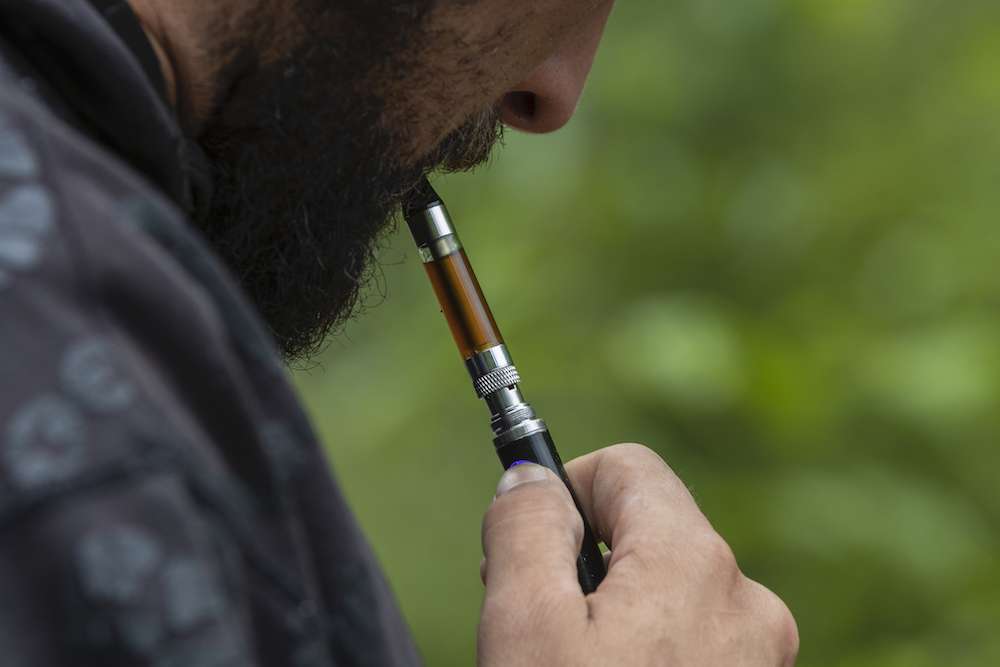
    It’s been a few months since the Illinois Department of Public Health reported the first death from vaping-related causes and now the CDC is reporting that it may have found one of the potential causes of the mysterious illnesses and deaths: Vitamin E acetate.

    In an update posted on Friday November 8th, the CDC reported:

    Recent CDC laboratory testing of bronchoalveolar lavage (BAL) fluid samples (or samples of fluid collected from the lungs) from 29 patients with EVALI submitted to CDC from 10 states found vitamin E acetate in all of the BAL fluid samples. Vitamin E acetate is used as an additive in the production of e-cigarette, or vaping, products. This is the first time that we have detected a potential chemical of concern in biologic samples from patients with these lung injuries.

    As of November 5th, there have been 39 deaths and 2,051 reported cases of e-cigarette, or vaping, product use associated lung injury (EVALI). Health officials believe it is possible that there are other causes and their focus is now on getting confirmation that it is causing the illnesses.

    Leafly detailed the various uses of Vitamin E acetate, most of which are topical, and spoke to medical experts about its potential toxicity.

    You Shouldn’t Be Inhaling Vitamin E Acetate

    “Just the lack of toxicity data for inhaled Vitamin E acetate should raise red flags,” said Dr. Sven-Eric Jordt of Duke University School of Medicine.

    “No vitamin E should be vaped regardless of its chemical structure,” said Eliana Golberstein Rubashkyn, a pharmaceutical chemist.

    Many believe that the product causing the illnesses are counterfeit and wouldn’t be found in your local dispensary. Dumas de Rauly, chair of the ISO Committee on Vaping Standards and CEN Vaping Standards Committee who also runs a vaporizer company, minced no words when discussing the inhalation of Vitamin E acetate and where he thinks the tainted vapes are coming from.

    “In no case is this a product that you should be inhaling,” de Rauly told Marijuana Business Daily. “When you add products like vitamin E … when you add different kinds of lipid solvents to the mix, you’re making all of that oil stickier, and that stickiness is going to create these lung illnesses we’re seeing.”

    Cracking Down On Black Market Product

    de Rauly maintains that the vape oil made with Vitamin E acetate is from the black market.

    “All of the patients are saying they bought it off the street. They didn’t buy it in legal, regulated environments,” Dumas de Rauly said.“This is just basic math. … We have substantial data that shows that these products and these vaping illnesses come from the black market.”

    Dispensary owners are warning customers about buying unregulated vape oils off the street.

    “We inform all of our customers to steer clear from the black market completely and trust the licensed, reputable facilities that are springing up all over now,” a dispensary manager told Fox17

    Will there be a crackdown on the vaping black market? Michael Elias, the CEO of Marshall-based Michigan Pure Med, sure hopes so.

    “There have been more than 2,000 vaping-related lung injuries and more than three dozen deaths because of harmful cutting-agents found in illicit vape products, and this is unacceptable, which is why we need stronger enforcement of the illicit cannabis market.”

    View the original article at thefix.com

  • Shia LaBeouf and Alma Har'el's Almost-True "Honey Boy" Tackles Family Alcoholism and PTSD

    Shia LaBeouf and Alma Har'el's Almost-True "Honey Boy" Tackles Family Alcoholism and PTSD

    In rehab, LaBeouf used a flashlight under the covers to write what he was learning about mental illness and alcoholism. These notes evolved into the screenplay for “Honey Boy.”

    Actor Shia LaBeouf, now 33, wrote Honey Boy during his 10-week lockdown in court-ordered treatment, which he nicknamed “head camp.” That was the sentence for his highly-publicized 2017 felony arrest for public drunkenness, obstruction, and disorderly conduct—a charge that could’ve landed him seven years in prison. Since then, much has changed for LaBeouf.

    “I want to thank the police officer who arrested me in Georgia for changing my life”

    This week, only two years post-rehab, the Hollywood Film Awards honored LaBeouf with its Breakthrough Screenwriter prize. Now sober, his acceptance speech was all gratitude, with the first shoutout going to Savannah cop Arthur Bryant:

    “I want to thank the police officer who arrested me in Georgia for changing my life. I want to thank my therapist and my sponsor for saving my life. I want to thank my team for being part of my life and my parents for giving me life.”

    LaBeouf’s mother Shayna Saide, who accompanied her son to the ceremony, teared up during the award speech. Honey Boy is based on a thinly-veiled story about a child actor named Otis Lort—played by Noah Jupe—and his bitter ex-rodeo clown father James Lort, played by LaBeouf. Before LaBeouf’s stay in rehab, he had been estranged from his father Jeffrey for seven years. LaBeouf gives a powerful performance as the elder Lort, a deeply disturbed, bitter alcoholic whose drinking destroyed his marriage, his career, and scarred the psyche of his young son. Yet, these complex characters display an obvious love for each other.

    The screenplay is a slice of LaBeouf’s life. The movie begins with Otis as a preteen, so it doesn’t include earlier scenes such as his parents divorcing when he was only three, nor the violence he witnessed at age nine—overhearing a man raping his mother in another room. In LaBeouf’s last rehab stay (his third), he learned about his PTSD.

    The daring, vulnerable script originated with email correspondence between two close friends. The actor, holed up in a treatment facility, used a flashlight under the covers to write what he was learning about mental illness and the family disease of alcoholism. He shared his innermost thoughts with Alma Har’el, an award-winning Israeli filmmaker he’d first met in 2011 after seeing Har’el’s Bombay Beach, which won Best Documentary at Tribeca Film Festival (TFF) that year.

    Alcoholic Fathers, Jewish Mothers, and Deep Emotional Scars

    They met for dinner and soon found much in common: Both had alcoholic fathers, Jewish mothers, and deep emotional scars. LaBeouf produced Har’el’s second doc, LoveTrue (2016), which also premiered at TFF.

    While LaBeouf was writing about his experiences in treatment, he described painful memories that were surfacing. Har’el recognized the seeds of a cinematic story and encouraged him to keep writing.

    The process of revising the script was a group effort with director Har’el at the helm. The moviemaking team included 12-year-old Jupe, Lucas Hedges as Otis in his 20s, and Byron Bowers as Percy, a kindred spirit for Otis during his rehab stay. LaBeouf and Har’el were open to everyone’s input.

    We reached out to Alma Har’el to find out more.

    How did making your first feature film compare to documentaries?

    AH: This film felt like a documentary even though a large part of Honey Boy was scripted. It was a combination of Shia’s real-life story, his dreams, and adding fiction. Regarding the documentary part, it was very important for me to find out as much as I could about where real events in Shia’s life took place. I spoke with both of his parents to understand as much as I could. His mother Shayna Saide provided so many photos. We used as many as we could in the credit sequence. It was to help bring the story to life as much as was possible.

    How true to Shia LaBeouf’s life was it?

    We were making a film about [the fictional] Otis—not about Shia. Much of the movie was inspired by real-life events and whenever [possible], I wanted to rely on those truths. It was a big help that Shayna, Shia’s mother, was on set with us every day, all day.

    Was his father offended by the portrayal of him?

    I don’t want to speak for him, so I don’t want to say what he felt, but I could say that he sent me a very warm message after he read the script. Then he sent me messages on Facebook almost every day. I think that [brought] good luck on the shoot. When he saw the final film, he was extremely happy for Shia.

    Was it like an AA living amends for him?

    It was. I think it was exactly that in so many ways.

    How do you feel about the use of the word “god” in 12-step programs?

    Yeah, it’s very challenging, but it is, as they say, your higher power, so it’s up to you to define what it is. I think that’s the power of these programs. It is the power of the people that support each other and come back to share things together and find …their own higher power. Much [of it] is a personal journey. [Everyone] has their own terms. But, yeah, I have my challenges with that. That’s been one of my biggest challenges—to find what those destinations are outside of religion. I think gods can be real even if it’s not the god everybody else is praying to. It is certainly about figuring that out for yourself—a personal journey.

    Can you add anything to that?

    Well, it’s like, what is that thing that makes you present? What makes you have faith in something bigger than yourself? Also, the part of Percy was written much more religious at first. It spoke about god-related steps in rehab….When Byron Bowers [was cast] in the role, he rewrote that part for himself so it was based on his own experiences.

    What was it like when you said something but didn’t realize it was a trigger. Did Shia have to take care of himself by taking a walk or was it smoother than that?

    It was a lot more intense than that! We had to deal with very, very intense situations, often on set, but we did it with privacy when we could. We always made sure that Noah, and all of us were feeling safe. I’m very happy that we were all able to … be present.

    Do you mean present for the difficult topics in the script?

    Yes. We all went through these deep feelings and learned so much.

    About each other?

    Yes, and about PTSD. I also feel like our movie could help children of alcoholics [who may be] struggling. We didn’t want to [shy away] or disregard anything.

    Was it cathartic for Shia?

    An exorcism! And not just for him. We let demons come up.

    Noah Jupe said he went into this movie as a child but left as a teenager. Did you see that metamorphosis taking place?

    I’m not a mother so I was really glad his mother was on set with us every day, and Shia’s mother too. They became close allies of mine in directing. We were all very intimate on set, having … intimate discussions about everything. I loved watching Noah’s perceptions and his ability to express himself emotionally and see things in a deeper way. It was happening, but I hadn’t really seen how much he’s grown until we took a break after Sundance. It was obvious then that he’s now a teenager just by the way he walked. He has physically and emotionally grown up so much. It’s so funny when we were sitting together doing the Q&A, some of us teared up when he was talking…from how much he’d grown up and what an amazing young man we were seeing.

    Honey Boy is now in theaters.

    View the original article at thefix.com

  • Lady Gaga Talks To Oprah About PTSD, Working Through Trauma & Self-Harm

    Lady Gaga Talks To Oprah About PTSD, Working Through Trauma & Self-Harm

    “I have PTSD. I have chronic pain. Neuropathic pain trauma response is a weekly part of my life. I’m on medication; I have several doctors. This is how I survive,” Gaga said.

    Lady Gaga and Oprah Winfrey dove deep into mental health, healing from deep-rooted trauma and the benefits of getting treatment on a recent episode of Oprah’s SuperSoul Conversations podcast. The power duo have both been outspoken mental health advocates throughout their careers.

    Living With Trauma

    The Bad Romance singer has long been a champion of inclusivity and owning your truth and her sitdown with her mogul hero was exceptionally open and honest. The founder of the Born This Way Foundation discussed her past trauma and how she manages it.

    “I have PTSD. I have chronic pain. Neuropathic pain trauma response is a weekly part of my life. I’m on medication; I have several doctors. This is how I survive,” Gaga said. “I would also beckon to anyone to try, when they feel ready, to ask for help. And I would beckon to others that if they see someone suffering, to approach them and say, ‘Hey, I see you. I see that you’re suffering, and I’m here. Tell me your story.’”

    Then the singer revealed that she self-injured for a number of years in the hopes of helping another person who self-harm see that they’re are not alone.

    “I was a cutter for a long time, and the only way that I was able to stop cutting and self-harming myself was to realize that what I was doing was trying to show people that I was in pain instead of telling them and asking for help. When I realized that telling someone, ‘Hey, I am having an urge to hurt myself,’ that defused it. I then had someone next to me saying, ‘You don’t have to show me. Just tell me: What are you feeling right now?’ And then I could just tell my story.”

    Using Dialectical Behavioral Therapy To Heal

    The Grammy award-winning singer no longer self-harms – she also clarified that her admission is not meant to glamorize it any way.

    “One thing that I would suggest to people who struggle with trauma response or self-harm issues or suicidal ideation is actually ice. If you put your hands in a bowl of ice-cold water, it shocks the nervous system, and it brings you back to reality.”

    Gaga went on to rave about her experience with dialectical behavioral therapy (DBT). With DBT, patients are encouraged to explore the emotions surrounding their trauma so they begin the path to accceptance.  

    “I think that DBT is a wonderful, wonderful way to deal with mental health issues,” Gaga pined. “It’s a really strong way of learning how to live, and it’s a guide to understanding your emotions.” And for Gaga understanding and acceptance are important keys to life.

    “I believe life is asking of us to accept the challenge. Accept the challenge of kindness. It’s hard in a world the way that we are; we have a very, very grave history. We’re in trouble, and we have been before. But I think life asks us amid these challenges, this hatred, this tragedy, this famine, this war, this cruelty: Can you be kind and can you survive?”

    View the original article at thefix.com

  • Vaping Deaths Reach New High; Officials Still In The Dark

    Vaping Deaths Reach New High; Officials Still In The Dark

    Two more deaths and 163 new cases of vaping-related lung illnesses were reported this week.

    On Thursday, November 7, the CDC released the Latest Outbreak Information report for vaping-related illnesses and fatalities and the news was grim.

    With an additional 163 new cases reported this week, there are now 2,051 cases of e-cigarette, or vaping, product use associated lung injury (EVALI) in the US. California, Texas and Illinois have the highest number of reported cases while Alaska is the only state without a single reported case. 

    Vaping Deaths Rise Again

    The CDC update also revealed that there have been 39 EVALI deaths—up from 37 deaths last week. The average age of the deceased was 53 and ranged from 17 to 75.

    Officials remain unsure of the exact cause of EVALI though they speculate there may be multiple factors involved. 

    “The only commonality among all cases is that patients report the use of e-cigarette, or vaping, products,” the CDC noted. “No one compound or ingredient has emerged as the cause of these illnesses to date; and it may be that there is more than one cause of this outbreak. Many different substances and product sources are still under investigation.”

    Statewide Bans

    A number of states have taken action against vaping in 2019. In September, Massachusetts issued a temporary ban against the sale of vaping products in a bid to stave off mounting cases of EVALI. The ban is set to last for four months but due to a recent ruling by a Superior Court Judge, the state will not be able to prohibit medical marijuana users from vaping THC, according to NPR.

    Vaping has also been in the spotlight due to its rise in underage users. Teen vaping has become a public health issue as e-cig companies like Juul have been hit hard by allegations that they’re marketing their flavored products to underage consumers.

    The Trump administration is reportedly finalizing plans to ban the sale of flavored vape products with the exception of mint and tobacco-flavors. Mint, according to a new study by the National Institutes on Health, is a favorite flavor among underage vapers. 

    “These findings underscore why the Trump Administration must stand strong and implement its plan to clear the market of all flavored e-cigarettes,” said Matthew Myers, president of the Campaign for Tobacco-Free Kids. 

    View the original article at thefix.com

  • Truth or Consequences: How I'm Learning to Practice Rigorous Honesty in Recovery

    Truth or Consequences: How I'm Learning to Practice Rigorous Honesty in Recovery

    Hard to overlook taking a can of black beans from a church pantry on the same day I spend $74 on hair care, when I bother writing out my nightly inventory. 

    Riding on the back of my dad’s Honda in western New York when I was a teen, we stopped by a cornfield and stole a few ears for supper. The kernels were tough (actually inedible). Turns out it was feed corn. That memory stuck, along with its moral: stealing ain’t worth it. It never turns out like you’d hoped, and you never get off scot-free… 

    In my first year of recovery I pilfered fistfuls of Sugar in the Raw packets from Starbucks (I don’t take sugar in my coffee). This bad behavior went into my nightly inventory for months, but I still stole those sweet square pillows any chance I got. I wrote about it, talked it over with my sponsor, but it didn’t stop. 

    Eventually, as a newly single head-of-household, I connected thieving to my fear of not being able to provide for myself and my two sons. And this awareness helped me to see I had a choice: fear or faith. I could stay in scared survivor mode, working those sticky fingers at Starbucks, or instead, start shelling out for sugar at the supermarket for William’s breakfast strawberries, while still believing I’d manage to pay the July/August combined electric bill on an apartment climate that artificially supports both cool and warm zones (for humans and equatorial pet lizards respectively.) And while I still sometimes make the un-sober choice at the cream and sugar station, I’ve gotten my haul down to two packets; the amount, I reason, every customer is entitled to, whether or not they use sweetener. 

    While some of the promises outlined in the chapter “Into Action”in the Big Book of Alcoholics Anonymous are, indeed, starting to materialize (I AM “intuitively” able to “handle situations” that previously “baffled” the hell out of me), others remain misty. I won’t say I’m panicky, but “fear of economic insecurity” does remain a vaporous dread…

    Absolute Honesty – Aiming for The “Great Ideal”

    Originally, the third tradition went like this: “The only requirement for membership is an honest desire to stop drinking.” That’s how it was written, until Bill Wilson was persuaded to axe the “honest” by other sober drunks, concerned that word might scare some rummies away. I agree, it’s a tricky adjective. In a letter from 1966, the co-founder of Alcoholics Anonymous writes:

    “Only God can know what absolute honesty is. Therefore, each of us has to conceive what this great ideal may be—to the best of our ability.”

    Hmm… leave it up to each delusional drunk to define the term, know right from wrong, truth from fiction? Problematic. But Bill knew that alcoholics–maybe more than normies–need regular reality checks. That’s why accountability to other sober alcoholics is embedded in the steps, and it’s why fellowship with others, also aiming for this “great ideal,” is important, if not critical, to long-term sobriety. And the fourth and fifth steps, taken in tandem, are two flea bombs to the infested sofa of the dishonest alcoholic mind. At least they worked this way for me, driving to the surface a teeming nest of selfish, self-serving behavior, driven by false beliefs of incompetence and unlovability. 

    Writing for The Grapevine, Bill W. admits: 

    “Fallible as we all are, and will be in this life, it would be presumption to suppose that we could ever really achieve absolute honesty. The best we can do is strive for a better quality of honesty.” 

    Yes, it’s “Progress, not Perfection,” an overworked AA cliché that still works for me. 

    Tenth Step…

    As I just celebrated my sixth sober anniversary, I’m self-assessing, looking for evidence of change. For 2,229 days now, I’ve been striving for this “better quality of honesty.” But am I any less of an opportunist, a conniving cheapskate looking to get over? After all, I am still wheeling over to the express check-out line with well over ten items. I do still abuse mascara testers at Sephora with no intention to buy, slather hand cream samplers up past my elbows, and spritz enough cologne to reek as bad as that OKC coffee date who pinched my calf and finished my almond pastry. Last time I was at the dermatologist’s, I scooped all the free ointments for scaly skin conditions I don’t have, and just last week in the health food store, I sampled the salsa and chips, both coming and going. I justified that snacking by lying to myself that someday, I would actually buy that breaking-bank bag of corn chips. I even tethered my teenager to the tasting station to graze while I shoveled spicy cashews in the bulk section. A few missed my baggie and met my palm instead. For as long as I’ve been around the rooms, I haven’t gained as much ground as I’d hoped on “rigorous” honesty. I’m less afraid, yes, but I’m still a tightwad. What’s been sorta acceptable ‘til now is finally starting to really bother me, six years later; little acts of looting are getting under my sober skin.

    So tonight I put this question to the cleansed face in the mirror: What does recovery from shifty and self-serving look like, entering year seven?

    “Well for one thing,” my reflection replies through toothpaste paw prints, “you can pay better attention to what you’re actually doing, and the results you’re getting from these actions. Are you still boxing fellow commuters into tight parking spots and returning to your bumper the next morning to find profane love notes under your wiper? How about cutting the line at the Lincoln Tunnel? You are definitely still guilty there…”

    My mirror image is not getting off her soap box. “What about those five dead minutes between applying your serum and moisturizer? Wouldn’t it be a good look to jot a 10th step review then? Remember those?” I do. Hard to overlook taking a can of black beans from a church pantry on the same day I spend $74 on hair care, when I bother writing out my nightly inventory. 

    “Then there’s meditation,” my two-dimensional me adds. And she’s right. Sanity is somewhat restored when I light incense, hit the gong, and sit for ten minutes. Sometimes I fall asleep. Doesn’t matter, still helps. 

    “Oh and call your sponsor.” Because my spiritual growth is inversely proportional to my enthusiasm towards any particular action, the single best move I can make is to remain accountable to another sober alcoholic: to recommit to running anything eyebrow-raising by my sponsor.

    Today it’s less about how many sobriety coins I’ve collected, and more about whether or not I’m dropping the suggested donation in the collection plate. (I can damn well afford the two bucks). I tell myself that “tasting” 12 grapes in the produce section before deciding on red over green is old behavior that won’t ever again find sea legs on this sober ship. Same goes for wheedling out of traffic violations or fighting late fees. But I’m lying. Only today, the Con Ed customer support chick waived all late fees for one lame reason: I’d somehow “overlooked” the whopping summer billing summaries to my inbox. 

    And five years ago, my son reached 44 inches, the legal height to pay full fare on New York City public transit. Yet I still make the seventh-grader duck the turnstile while I glide my MetroCard just once. I won’t say “no, never,” but I don’t see this behavior resolving until William sprouts facial hair. Why? Because I’m cheap and manipulative—always angling to get something for nothing. AA is a program of change, but some defects die hard.

    Recognizing Progress

    It has gotten better in other important ways though. Post-divorce romantic relations are above board and approaching sane. And thanks in part to my sponsor, who flagged flaws in my interactions with others that serve no one, my wuzband and I now communicate, commiserate, and reciprocate in rearing adolescent males under separate cover; our co-parenting game is tight. 

    These are the payoffs for continuously striving for this “better quality of honesty” —better relations with others when I keep my inner-cheater, the little girl who collected loose change from her mother’s purse to buy cola slushies from the corner store, and who grew to collect new boyfriends before losing old ones, in check; a conscience that’s becoming clearer than the bathroom mirror. That feels good.

    But here’s why rigorous honesty is life-or-death to my long-term sobriety—and it’s not the petty larceny— because sure, I can probably carry on for a while stashing stray Oreos in my overalls after the 5:30 meeting instead of leaving them for the 7:30 drunks. It’s because these minor infractions lead to major ramifications. It’s the excessive texting on company time that leads to the O’Douls, that leads to the oyster stout, or the laughing gas for the routine filling that leads to the first bloody Mary—light on Absolut—that leads, absolutely, to the first drunk. Because this is what it’s really about, right? Tricking myself straight into the insanity of the first drink. 

    My BS detector needs its batteries changed more than just when Daylight Savings Time rolls around… 

    The most honest and most important action I can take on a daily basis is to follow through on my primary purpose: to stay honest, to stay sober, and to help another alcoholic. 

    View the original article at thefix.com

  • Drug Cartels Flooding US With Fentanyl-Laced Prescription Drug Fakes

    Drug Cartels Flooding US With Fentanyl-Laced Prescription Drug Fakes

    About 27% of the fake pills seized by the DEA earlier this year were found to contain fentanyl.

    Are Mexican drug cartels targeting Americans with counterfeit prescription drugs? Yes, according to the Drug Enforcement Administration.

    “They can make those pills look like almost anything. So, if they’re making those pills and manufacturing them to look like an Adderall or Xanax, they are targeting our children,” DEA Special Agent DeLena told Boston25 News.

    Fentanyl-Laced Fakes

    The agency issued a press release warning the public that fake prescription pills laced with fentanyl are making its way across the border. About 27% of the fake pills seized earlier this year were found to contain fentanyl, the potentially deadly synthetic opioid that has exacerbated the opioid epidemic.

    “Capitalizing on the opioid epidemic and prescription drug abuse in the United States, drug trafficking organizations are now sending counterfeit pills made with fentanyl in bulk to the United States for distribution,” said Uttam Dhillon, the Acting DEA Administrator. “Counterfeit pills that contain fentanyl and fentanyl-laced heroin are responsible for thousands of opioid-related deaths in the United States each year.”

    How The Pills Gets Into The Country

    According to the DEA, cartels use a number of creative means to get the fake pills into the country including hiding them in gas tanks, tractor trailers and most notably sending them in through the postal sevice. Legally, only drug manufacturers and pharmacists can use the mail to send drugs to consumers.The government has failed to hold the US Postal Service to the standards which it holds delivery services like FedEx and UPS, IDS News notes. The lack of oversight is one of the reasons why drug dealers feel confident to use the USPS to send thousands of dollars in product into the country.

    In some cases, postal service workers are in on the trafficking. Last November, 16 USPS employees in Atlanta were convicted of taking bribes (some as low as $250) from the cartel to distribute cocaine on their routes. 

    “US Postal Service workers are typically valuable members of the community, entrusted to deliver the mail every day to our homes,” said US Attorney Byung J. “BJay” Pak.  “This important operation identified and prosecuted 16 corrupt individuals who chose to abuse that trust and instead used their positions to bring what they thought were large amounts of dangerous drugs into those same communities for a quick payoff.”

    View the original article at thefix.com

  • Danny Trejo Talks Long-Term Recovery: I Surround Myself With People Who Are Sober

    Danny Trejo Talks Long-Term Recovery: I Surround Myself With People Who Are Sober

    The prolific actor discussed sobriety, prison and AA in Variety’s recovery issue. 

    Danny Trejo was 24 years old when he began his recovery journey. Now at 75, the prolific Machete actor and restaurant owner has more than 50 years of sobriety under his belt, something he got candid about for Variety‘s first issue dedicated to recovery.

    The Trejo’s Tacos owner is a proud member of Alcoholics Anonymous – a program he believes kept him out of jail and alive.

    “They tell you if you leave [Alcoholics Anonymous or Narcotics Anonymous], you will die, go insane or go to jail,” Trejo said. “And I proved that right. Every time I left, I went to jail.”

    Decades ago, while Trejo was serving time at San Quentin, he reached a turning point when a speaker (and former inmate) named Johnny Harris returned to share his story of recovery.

    “What Do You Have To Lose?”

    “That guy saved my life,” Trejo revealed. “He said, ‘Why don’t you join us? Before you do anything, just join us. Give it a try. What do you have to lose?’ It was kind of like an awakening. So when I got out of the joint, I went back to meetings.”

    So Trejo buckled down and did the work. He attended meetings and kept himself busy with various gigs, including working as a drug counselor. Then, 16 years into his recovery, Trejo’s life would take another life-changing turn when he got hired as an extra in the 1985 movie Runaway Train – the movie would mark the beginning of a long, successful Hollywood career. 

    “Everything good that has happened to me has happened as a direct result of helping someone else — everything,” Trejo said. “That’s the way I live my life.”

    And Trejo practices what he preaches. He has been a passionate recovery advocate who is vocal about the benefits of sobriety and the work it takes to maintain it.

    It’s All About Your Support System

    “I honestly believe this sobriety and being clean depends on your support system,” Trejo explained to Variety. “You’ve got this system of people around you that want you to stay clean and sober. If I’m driving down the street and I’m with somebody clean and sober and I say, ‘God, man, I sure could go for a joint right now or a beer,’ this guy will say, ‘Hey, wait a minute. … Let’s go to a meeting.’ … I surround myself with people that are clean and sober.”

    Trejo, who has appeared in nearly 400 film and TV projects, maintains his sobriety by attending meetings and keeping in mind where he was in his life when he was using.  

    “When I think about drugs … I think about having to shower with 50 men in prison. I don’t want to do that anymore. I don’t want somebody saying, ‘Hey, bend over and spread ’em.’ That’s what drugs mean to me.” Trejo said.

    View the original article at thefix.com

  • Demi Lovato Gets Candid In First Interview Since Hospitalization

    Demi Lovato Gets Candid In First Interview Since Hospitalization

    “I think it’s been a very introspective year for me. I’ve learned a lot, been through a lot,” she shared. 

    Last weekend during the Teen Vogue Summit pop star Demi Lovato spoke out for the first-time since her highly-publicized hospitalization in 2018 for a reported overdose. The 27-year-old has kept a low-profile over the past year opting to focus on personal reflection and learning to accept herself physically. 

    “I think it’s been a very introspective year for me. I’ve learned a lot, been through a lot,” she shared

    Body Positivity

    “We hear the term body positivity all the time. To be honest, I don’t always feel positive about my body. Sometimes I do not like what I see. I don’t sit there and dwell on it. I also don’t lie to myself. I used to look in the mirror if I was having a bad body image day and say ‘I love my body, you’re beautifully and wonderfully made.’ But I didn’t believe it. I don’t have to lie to myself and tell myself I have an amazing body. All I have to say is ‘I’m healthy.’ In that statement, I express gratitude. I am grateful for my strength and things I can do with my body. I am saying I’m healthy and I accept the way my body is today without changing anything.” 

    Lovato has been very open about her battle with bulimia and disordered eating. Her personal views on her body and the public’s reaction to it have sometimes led the star to an unhealthy place but now Lovato is all about practicing body acceptance. Instead of pushing herself to maintain a daily gym grind, she stops and listens to what her body needs.

    “For so many years I dealt with an eating disorder. What I wasn’t ever open with myself about was, whenever I was in the gym I was doing it to an unhealthy extreme,” Demi said. “I think that’s what led me down a darker path — I was still engaging in these behaviors. Embracing my body as it is naturally is why I took the month of October off the gym.”

    The former Camp Rocker is currently working on new music which she says she’ll release when the “time is right.”

    In the meantime, she’s grateful to have made it out of the other side alive and strong.

    Radical Self-Love

    “What I see in the mirror [is] someone that’s overcome a lot. I’ve been through a lot and I genuinely see a fighter. I don’t see a championship winner, but I see a fighter and someone who is going to continue to fight no matter what is thrown their way. I have a lot of confidence now because I have said the things I believe in. I know I can hold my own on a first date with someone, in a conversation with someone. That’s what I see when I look in the mirror — a strong woman.”

    View the original article at thefix.com