Author: The Fix

  • Soulja Boy Denies Drug Use After Fan Accusation

    Soulja Boy Denies Drug Use After Fan Accusation

    The “Crank That” rapper shot back at a Twitter user who accused him of using crack cocaine

    People across social media are comparing their photos today with pictures from 10 years ago as part of the viral “how hard did aging hit you” challenge. After a fan used the challenge to compare two photos of Soulja Boy and suggest he was using drugs, the rapper reacted angrily this week. 

    The mashup included an old headshot of the rapper alongside a more recent selfie where Soulja Boy was looking haggard. 

    “I said Soulja Boy looking mad cracky now,” the fan wrote on Twitter. “DIS IS CRACK.”

    Soulja Boy wasted no time responding to the allegations, saying that he is not doing cocaine and that he looked rough in the picture because he was recently in a serious car accident, Vibe reported.  

    “First of all, I want to say, for everybody that’s saying, ‘Soulja Boy look like he’s on drugs. Soulja Boy look bad. Soulja Boy look like he’s on crack, on powder.’ Bitch, don’t play with me like that!” the rapper said in a live video posted to social media. “I ain’t never did crack in my life, bitch. I’m worth muthafucking $30 million… I never did cocaine in my life.”

    He seemed personally offended by the suggestion that he might be doing drugs. 

    “Don’t be making fun of my fucking appearance and my fucking looks,” he said. “I’m worth 30 million, google that shit. Y’all got me fucked up.” 

    Soulja Boy posted on January 6 that he had been in a car accident during mudslides in California and said that could explain the difference between the two pictures that the fan posted. 

    “I was just in a bad car accident two days ago, bitch, I almost lost my life,” he said. “I hit my fucking face on the fucking dashboard on the car, bitch, and my shit swollen and my teeth, I need surgery and shit.”

    Soulja Boy, who is 28, became a household name back in 2007 when his song “Crank That (Soulja Boy)” topped the charts. Although his name was out of the press for years, he claimed on Twitter that he was the biggest comeback story of 2018, Billboard reported

    “I had the biggest come back of 2018 big facts,” Soulja Boy tweeted. “Signed a record deal. Did four new tv shows and signed an endorsement deal with Fashion Nova release my own smart watch and video game console n—az thought it was over for me after all that beef shit. Never count a real one out!”

    View the original article at thefix.com

  • Attorney General Nom William Barr Says He Won’t Go After Legal Pot

    Attorney General Nom William Barr Says He Won’t Go After Legal Pot

    Despite the fact that Barr would respect state laws in regards to marijuana, some drug policy advocates argued that he should not be made attorney general.

    As the Senate conducted confirmation hearings with President Trump’s nominee for attorney general, most questions were focused on how William Barr would steer investigations into possible collusion between the administration and Russia.

    However, during the confirmation hearings, Barr discussed the need for changing marijuana laws and said that he would not go after states that allow the legal sale of cannabis, a marked change in policy from that of previous Attorney General Jeff Sessions. 

    “I’m not going to go after companies that have relied on the Cole memoranda,” Barr said during the hearings, according to Rolling Stone. “My approach to this would be not to upset settled expectations.”

    The Cole Memorandum was signed in 2013 under President Obama. In it, United States Deputy Attorney General James M. Cole directed federal attorneys not to prosecute marijuana crimes in states that had legalized use. In essence, the memo meant that the federal ban on marijuana would not be enforced in states that had laws legalizing cannabis. However, the memo was rescinded last year by Sessions, who took a hardline stance on cannabis and wanted to stop recreational use in the states. 

    During his hearing, Barr said that it is time for the country to have a more consistent marijuana policy. 

    “I think the current situation is untenable,” he said. It’s almost like a “backdoor nullification of federal law. . . . We should either have a federal law that prohibits marijuana, everywhere, which I would support, myself. . . . If we want states to have their own laws, then let’s get there. And lets get there the right way.”

    Despite the fact that Barr would respect state laws in regards to marijuana, some drug policy advocates argued that he should not be made attorney general. Barr, in the past, has made statements against criminal justice reform and in favor of mandatory minimums that can hurt people with substance use disorder, the Drug Policy Alliance said in a press release

    “Trump is appointing someone who has long been a cheerleader for mass incarceration and the war on drugs. It shows the Administration’s true colors and undermines any recent criminal justice reforms,” Michael Collins, director of national affairs for the Drug Policy Alliance, said. “Senators from both parties should take Barr to task for his appalling views on drug policy and criminal justice, instead of giving him an easy ride like they did with Jeff Sessions.”  

    During the hearings, Barr did acknowledge that strict enforcement of policies, like those he previously supported, “harmed the black community,” according to USA Today

    No matter what the outcome of the confirmation hearings, it seems likely that Barr’s policy on drug enforcement and cannabis will be overshadowed by his perspectives on the Mueller investigation, however. 

    View the original article at thefix.com

  • Meth Resurgence Highlights The Limits Of Addiction Meds

    Meth Resurgence Highlights The Limits Of Addiction Meds

    As the rates of use for methamphetamine and other street drugs rise, providers are realizing the limitations of medication-assisted treatment. 

    Medication-assisted treatment has been heralded as the most effective way to treat opioid use disorder, and the opioid-overdose reversal drug naloxone has been credited with helping to control the rate of fatal overdoses in the country.

    However, while public health officials praise the importance of the pharmaceutical response to the opioid crisis, they are also calling attention to the lack of medical options for treating other types of addiction. 

    Psychiatrist Margaret Jarvis, a distinguished fellow for the American Society of Addiction Medicine, told ABC News that as the rates of use for methamphetamine and other street drugs rise, providers are realizing the limitations of medication-assisted treatment. 

    “We’re realizing that we don’t have everything we might wish we had to address these different kinds of drugs,” she said.

    Dr. David Persse, who directs emergency medical services in Houston, said that while opioid overdose reversal drugs are an important life-saving tool, actually using them on the scene of an overdose can be complicated, since people often have more than one type of drug in their systems, all of which act differently.

    For example, an opioid overdose is characterized by slowed breathing, whereas during a meth overdose the cardiovascular system speeds up, putting people at risk for heart attack and seizures. 

    Even if there were a similar drug to naloxone that could be used to reverse meth use, emergency medical responders would struggle to know which to use, Persse said. 

    “If we had five or six miracle drugs, it’s still gonna be difficult to know which one that patient needs,” he said. 

    Researchers are working on developing medications to treat the use and abuse of drugs other than opioids.

    Last May, the National Institute on Drug Abuse noted that researchers at the Universities of Kentucky and Arkansas developed a molecule that blocks the effects of meth, in a similar fashion to how medications like Vivitrol block the brain’s opioid receptors. 

    However, without addressing the root causes of addiction, these medications can have unintended consequences. Last year, a recovery counselor in Ohio told NPR that she believes the Vivitrol program in her community was contributing to meth addiction. People who were treated with Vivitrol could no longer get high with opioids, so they turned to other means of self-medication, she said. 

    “The Vivitrol injection does not cover receptors in the brain for methamphetamines, so they can still get high on meth,” she said. “So they are using methamphetamines on top of the Vivitrol injection.”

    View the original article at thefix.com

  • Not Crazy: How I Overcame My Double Standard About Taking Psychiatric Medication

    Not Crazy: How I Overcame My Double Standard About Taking Psychiatric Medication

    Women hold themselves to this standard where we’re supposed to be perfect. We all have our own image of what that should be, and it doesn’t involve taking psychiatric medication.

    I’m walking up Lexington Avenue towards the subway on a cold Manhattan winter day from my psychiatrist’s office. It’s a route I’ve walked for five years, at varying frequencies, depending on the intensity of my mental health issues.

    My doctor is warm and nurturing with a great sense of humor, and I always walk out her door with a smile on my face. But once I hit the street, my mood can quickly shift: frustrated that I need yet another medicine to achieve some semblance of normalcy or disappointed in myself that I can’t cope. I scan the faces of the crowds in busy Midtown. Can they tell I’m crazy? Do they see some vacant look in my eyes I can’t see? Or, conversely, I wonder about them: is she, that pulled-together woman over there, also buoyed by a bevy of psychiatric meds?

    When I started an anti-depressant four years ago, I immediately started calling it my “crazy pill.” I want to say that’s just because I have a self-deprecating sense of humor, but that’s not the whole truth. Deep down, I thought it was because I was crazy.

    But this time leaving her office was different. My doctor used the words “in recovery,” (probably not the first time she used the phrase) and something inside me shifted. Of course I’m in recovery. I suffered myriad traumas last year: losing my mom, my job, needing to give up my dog, and, hey, let’s throw a summer fling breakup in there for fun. Needing to take medicine to recover from emotional trauma should be the same as if I had been in a car accident and needed painkillers…right?

    The word recovery resonated with me, and I finally internalized this: depression is a very real condition, and my doctor is treating me for it. I’ve written that depression can be like an emotional cancer—entirely pervasive and something that may go away. Or it may worsen.

    On the outside, I pen essays, like this one, where I tell others that they should treat depression and other mental illness just as if it were any other disease. That it shouldn’t hold stigma. And I meant it…for them.

    But why the double standard? Why would I be proud, even, to hear a friend was taking care of her health and taking antidepressants—but think that it made me crazy?

    “Women hold themselves to this standard where we’re supposed to be ‘perfect,’” says Dr. Carly Snyder, a Manhattan-based psychiatrist. “We all have our own image of what that should be, and it doesn’t involve taking an antidepressant.”

    In our culture, memes abound about wine being “mommy juice,” yet “there’s still stigma in trying to feel better in an appropriate way,” Snyder says. “’I’m seeking treatment for an anxiety disorder or depression’ becomes seen as ‘I couldn’t hack it on my own.’”

    For me, I see others dealing with grief or job loss “better” than me, and I wonder what’s wrong with me. I’m doing all the “right” things: I ran the NYC Marathon (my seventh marathon) last year, I picked up personal training and yoga teaching certifications this year, and I have tried every last wellness trend known to woman in hopes that crystals, or maybe hypnosis, will be my magic bullet.

    “We are in a really positive wellness kick right now [societally], and there’s a sense of ‘I didn’t do enough to help my mental health issues,’” says Snyder. Yet, “if someone were struggling with another disorder, a physical disorder, people wouldn’t say not to take care of it. Running is not going to get you out of a major depressive episode.” I constantly joke that if running a marathon isn’t enough to cure a depressive episode, maybe I just need to run an ultramarathon, but I know that’s not actually the answer.

    But while a 50K isn’t the answer, it is important to care for our bodies to care for our brains, says Snyder. (In case you forgot—your brain is a part of your body!) “It’s important to give one’s self the leeway to not feel OK and realize it’s a process to feel better.” People with depression tend to see the world in black and white, and if you wake up every day and say: “I’ll feel better today,” then as soon as you don’t, it becomes a bad day, according to both Snyder and my own experience. “There has to be room for disappointment and some gray area—and allowance for time of healing. It’s not going to happen overnight in the presence of significant illness and trauma.” She likens it to a bad bruise: it can come on quickly but take a long time to go away.

    If you’re already depressed though, that still sounds bleak. You want immediate gratification, right? Of course you do. Here’s the thing: we have control, and we’re not failures for having depression and anxiety. (Take a minute and write that down or say it out loud. Let it really sink in.)

    You don’t have to let your mood disorder dictate your self-worth or how you see the world—things I was guilty of. I identified myself as a depressed person, I threw my hands up in the air and blamed depression for my behavior. Snyder says that “when we are depressed, we deprive ourselves: I don’t deserve to feel better, I don’t need to feel better. There’s this bleakness that comes in. You know in your heart that this is not what it feels like to live in your day-to-day life, but it becomes harder to see a way out.”

    But you win, she says, by taking control—by going to therapy, by going to a psychiatrist, by not listening to that voice in your head that says you don’t deserve it.

    And although I’ve been treated for years—through therapy, medication, hospitalization and myriad holistic approaches, some legit, some snake oil—it was only on that cold day that I finally internalized it, that I really believed I deserved to feel better, and that depression was an actual diagnosis I had that needed to be treated. I saw my psychiatrist as a partner in my recovery, rather than someone who held all the power to cure me via her prescription pad.

    This realization took some of the power from the disease and allowed me to (eventually) reframe subsequent flares as just that, something that might happen to anyone with a chronic illness.

    View the original article at thefix.com

  • Opioid Overdose Deaths Surpass Vehicle Crash Deaths For First Time

    Opioid Overdose Deaths Surpass Vehicle Crash Deaths For First Time

    According to a new report from the National Safety Council, Americans are more likely to die from an opioid overdoses than a car crash.

    An opioid overdose is now a more likely cause of death than even vehicle crashes, according to a recent report

    The report on preventable deaths from the National Safety Council found that Americans have a 1 in 96 chance of death due to an opioid overdose, based on 2017 accidental death data. 

    “Drug poisoning is now the No. 1 cause of unintentional death in the United States,” the report reads. “Every day, more than 100 people die from opioid drugs –  37,814 people every year – and many of these overdoses are from prescription opioid medicine.”

    In comparison, NPR states, the chance of death in a motor vehicle crash is 1 in 103. 

    “We’ve made significant strides in overall longevity in the United States, but we are dying from things typically called accidents at rates we haven’t seen in half a century,” Ken Kolosh, manager of statistics at the National Safety Council, said, according to PR Newswire. “We cannot be complacent about 466 lives lost every day. This new analysis reinforces that we must consistently prioritize safety at work, at home and on the road to prevent these dire outcomes.”

    According to the Centers for Disease Control and Prevention, the drug at the forefront of overdose deaths is now fentanyl, which the council addressed in a statement. 

    “The nation’s opioid crisis is fueling the Council’s grim probabilities, and that crisis is worsening with an influx of illicit fentanyl,” the statement read

    Causes of death such as motor vehicle crashes and overdoses are different from heart disease and cancer deaths in that they are considered “a preventable, unintentional injury” — a statistic that has increased in the last 15 years, according to NPR. Falls also top the list of preventable causes of death, at 1 in 114, compared to 1 in 119 a year ago. 

    “It is impacting our workforce, it is impacting our fathers and mothers who are still raising their children,” Kolosh said. 

    He added that such deaths often impact people in the “core of their life.”

    “As human beings, we’re terrible at assessing our own risk,” Kolosh said. “We typically focus on the unusual or scary events … and assume that those are the riskiest.”

    Though everyone will die at some point, Kolosh says, action can still be taken to prevent unnecessary deaths. 

    “Your odds of dying are 1 in 1,” Kolosh added. “But that doesn’t mean we can’t do something. If, as a society, we put the appropriate rules and regulations in place we can prevent all accidental deaths in the future.”

    View the original article at thefix.com

  • Federal Program To Help Addiction Treatment Providers With Student Loans

    Federal Program To Help Addiction Treatment Providers With Student Loans

    The goal of the new federal program is to strengthen the workforce in the field of addiction treatment. 

    If you work in the substance use treatment field in an underserved area, you may be eligible for student loan aid, thanks to a new federal program. 

    The program, according to MassLive, was launched Dec. 27 and will help health care clinicians repay up to $75,000 in student loans. For the first year, it has been funded with $75 million and officials hope to help repay loans for 1,100 clinicians.

    Israil Ali is the director of the Division of National Health Service Corps, which is an entity of the US Department of Health and Human Services agency that is overseeing the loan payment program. He says the overall idea of the program is to strengthen the workforce in the field of treatment. 

    “The goal is to ensure that sites that provide evidence-based care have the workforce to deliver care,” Ali said, according to MassLive.

    For those working in the substance use treatment field in areas considered underserved, the agency will pay up to $75,000 as long as the individual commits to working for three years in an underserved area.

    Boston Health Care for the Homeless doctor Gabriel Wishik began working at his facility through the repayment program and tells MassLive that such a program helps to bring in qualified candidates and increases the overall number of professionals in the field. 

    According to MassLive, it’s difficult for those with substance use disorder to find available treatment. This program will not aid in the issue of low treatment reimbursement rates, which can make it difficult for facilities to stay profitable. And, according to Wishik, “there is a shortage at every single level in the treatment continuum.”

    However, Wishik adds that programs such as this could prove helpful in leading people into the career field. 

    “There are lots of competing career paths,” he adds. “It’s one way to get people into this career.”

    The new program is similar to that of another offered by the agency, in which doctors in underserved areas can also have loan repayment. There is also a program for part-time workers, and in addition to doctors it is also open to nurses, pharmacists and substance use disorder counselors.

    In Massachusetts specifically, there are 89 substance use treatment facilities where employees could potentially benefit from the program. According to MassLive, these include Spectrum Health Systems’ treatment centers in Worcester and North Adams, the opioid treatment center at Providence Behavioral Health Hospital in Holyoke, and additional programs run by Baystate and by the Springfield Public Health Department. 

    View the original article at thefix.com

  • How Pregnant Women with Substance Use Disorder Are Criminalized

    How Pregnant Women with Substance Use Disorder Are Criminalized

    “The more we double down on the idea that pregnant women who struggle with addiction are terrible people and terrible mothers, the easier it becomes for… everyone else to treat them terribly.”

    Pregnant women in at least 45 states have faced criminal charges for abusing drugs while pregnant, stemming from the idea that they are doing harm to their unborn babies, according to a New York Times investigation.

    Many addiction and recovery professionals, including Dr. Sarah Wakeman, who directs the substance use program at Massachusetts General, say that criminal charges result from and contribute to the stigma around addiction and the idea that substance use disorder is a moral failing or choice rather than a complex medical issue.

    “The more we double down on the idea that pregnant women who struggle with addiction are terrible people and terrible mothers, the easier it becomes for doctors, social workers, judges and everyone else to treat them terribly,” Wakeman told the Times, which reported on the issue as part of a series about the rights of pregnant women. “When we criminalize women, we make them scapegoats for all of these large structural forces and societal failures that create poverty and give rise to addiction in the first place.”

    At Massachusetts General, the Hope Clinic provides treatment and parenting support for pregnant women and mothers with substance use disorder. By helping women rather than criminalizing them, both mother and child fair better, Wakeman said.

    In Tennessee, a law was passed two years ago that could force pregnant women with substance use disorder into jail, essentially claiming they need protective custody. However, the law backfired, resulting in women giving birth in risky situations or leaving the state, said University of Tennessee College of Law professor Wendy Bach. Now, the law is not being renewed.

    “We started out saying we would curb drug use and promote treatment and care. We ended up deterring people from treatment while doing basically nothing to curb use,” she said.

    Even when substance use doesn’t result in criminal charges, it can cause children to be taken from their families. Kasey Dischman, of Pennsylvania, got sober when she was pregnant with her first child. She maintained her recovery for years, until her daughter was eight and Dischman reconnected with the girl’s father.

    Dischman said, “It was like we didn’t know how to be sober together.”

    Dischman relapsed. She became pregnant again and accidentally overdosed, resulting in an emergency cesarean delivery for her second daughter.

    She said that in the moment when she injected heroin, the pull of addiction was stronger than her concern for her daughters — something she believes shows the power of the illness.

    “It’s almost like I forgot about them. I know that’s awful, and that people think I don’t have a conscience,” she said. “But that’s exactly what addiction is. Once it enters your head to do that shot, you develop this tunnel vision that nothing can break.”

    Today, Dischman is sober but still facing a complex legal battle in hopes of regaining custody of her daughters, all while feeling like the system is set up against her.

    “They don’t want me to recover from this,” she said. “Because if I do, if I make it through and I do all right, then what does that say about them, and about how they trashed me?”

    Barry Lester, who specializes in opioid addiction as a professor of psychiatry and pediatrics at Brown University, said that the treatment of women like Dischman is short-sighted and hurtful.

    “We love to hate these women,” he said. “But our hatred is not accomplishing anything.”

    View the original article at thefix.com

  • "Church of Safe Injection" Hopes to Save Lives Through Needle Exchange

    "Church of Safe Injection" Hopes to Save Lives Through Needle Exchange

    A 26-year-old former drug user turned recovery coach has founded a harm-reduction-based “church” that offers clean needles, Narcan and a welcoming brand of faith-driven dialogue to drug users.

    As the viability of safe injection sites continues to be debated across the globe, a 26-year-old former drug user turned recovery coach has found a following with a harm-reduction-based “church” that offers clean needles, the overdose reversal drug Narcan and a welcoming brand of faith-driven dialogue to drug users.

    As the Huffington Post noted, the tenets of Jesse Harvey’s “Church of Safe Injection” have been taken up by others in eight states, but his efforts have been met with resistance by some law enforcement and health officials who have abided by federal law that prohibits safe injection sites.

    Since late 2018, Harvey, who has been in recovery from drug and alcohol dependency for several years, has been operating his “church” from the back of his car, which he stations near a park frequented by drug users in Lewiston, Maine.

    With the help of volunteers, he offers free needles and a gospel that emphasizes inclusion and support for those in need. That approach informs the Church’s three basic principles: helping those in need, welcoming people of all faiths, as well as atheists, and keeping drug users healthy through harm reduction-based support.

    “Our religious belief is simply that people who use drugs don’t deserve to die,” Harvey told the Huffington Post.

    That philosophy has attracted others, especially those with religious backgrounds who have been dismayed by some traditional churches, which have rejected or condemned drug users.

    To date, 18 Churches of Safe Injection have been established in eight states, and Harvey hopes to incorporate the Church as a nonprofit in order to apply for religious exemption to the Controlled Substances Act so he can open a legal safe injection site.

    However, Harvey’s goals run opposite of many state policies regarding needle exchange and safe injection sites. Maine has only six certified needle exchanges, none of which are located in Lewiston, and the state’s Center for Disease Control issued strict warnings to those exchanges about regulations after Harvey began attracting media attention.

    Eventually, Lewiston police warned him about possible misdemeanor charges for possessing more than 10 syringes at one time, which prompted Harvey to stop handing out clean needles.

    However, as the Post feature noted, he continues to offer Narcan and bags of supplies, including saline, alcohol wipes and rubber ties, to those who meet him in Lewiston. Harvey also hopes to start a drug users’ union in Maine, which would serve as a center for health and safety advocacy. In an op-ed penned for the Portland Press Herald in late 2018, Harvey summed up his goal for the church: “Politicians, law enforcement, and health care haven’t taken the lead here, so our church is.”

    View the original article at thefix.com

  • Are Pet Prescriptions Contributing To The Opioid Crisis?

    Are Pet Prescriptions Contributing To The Opioid Crisis?

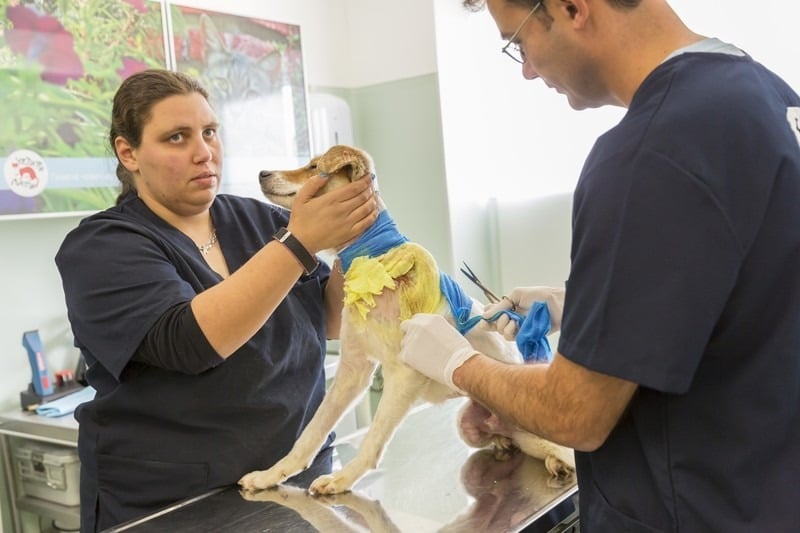
    Some wonder if people with opioid addiction are using their pet’s prescriptions to feed their own addictions instead.

    With the rise of the opioid epidemic, a phenomenon has occurred where painkiller sales for pets have increased, and some wondering if people with opioid addiction are using their pet’s prescriptions to feed their own addictions instead.

    A new study by Penn Medicine and Penn Vet has revealed that in the last 10 years, there has been a 41% increase in opioid prescriptions for pets, yet in the same period, there has only been a 13% jump in pets having to go to the hospital. This has some suspecting that people could be using these prescriptions to get opioids for themselves.

    Study author Jeanmarie Perrone, director of medical toxicology at Penn Medicine told Philly.com, “As we are seeing the opioid epidemic press on, we are identifying other avenues of possible human consumption and misuse. Even where the increase in prescribed veterinary opioids is well intended by the veterinarian, it can mean an increased chance of leftover pills being misused later by household members.”

    Penn Medicine says this is the first study they’ve done in this area, and in gathering data, they looked at pharmacy records at Penn Vet’s Ryan Hospital over a 10-year period and looked at prescription patterns with four kinds of opioids given to pets: tramadol, hydrocodone, codeine tablets, and fentanyl patches.

    An author of this study, Dana Clarke, an assistant professor at the vet school, added, “We found that the increased quantity of opioids prescribed by our hospital was not due to increased patient volume alone. It’s likely our goal of ensuring our patients are pain-free post-operatively, particularly those requiring complex and invasive procedures, has driven our increased prescribing practices during this period.” At the same time, Clarke says, “we don’t know the potential or extent of prescription diversion from animals to humans, and what impact this could have on the human opioid crisis.”

    There has already been concern about people abusing pet meds elsewhere in the country. A similar study was done through the University of Colorado, where they learned that 13% of vets who were surveyed reported that pet owners would injure their pets or make them sick on purpose to get their hands on opioids.

    Last year, the commissioner of the Food and Drug Administration also released a statement concerning possible opioid abuse through pet meds and said that it could “lead to addiction, abuse and overdose in humans who may divert them for their own use.” The FDA told vets to be responsible when prescribing opioids and recommended prescribing different meds whenever they could.

    As a result of these concerns, some veterinarians have already been putting restrictions on how many opioids can be prescribed to an animal, and some vets also perform background checks on some pet owners to look into their histories with opioid prescriptions.

    View the original article at thefix.com

  • Slipknot’s Corey Taylor Talks Social Media Addiction In New Book

    Slipknot’s Corey Taylor Talks Social Media Addiction In New Book

    The singer reveals his battle with social media and addiction in his new book.

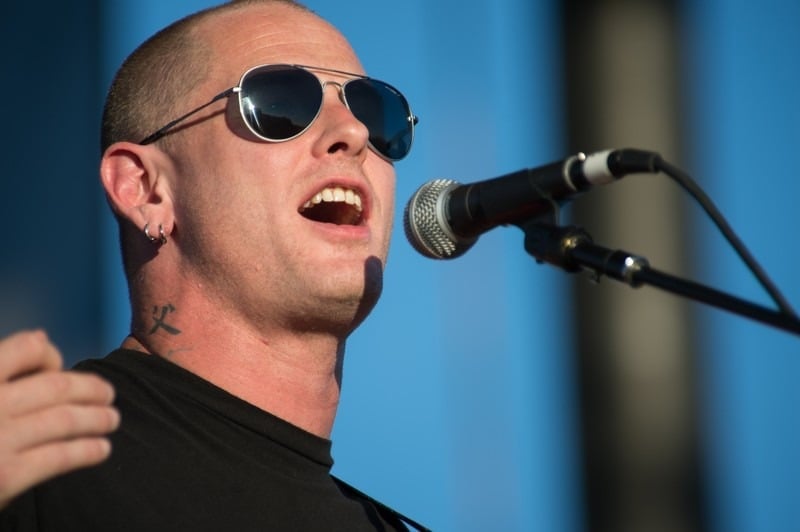
    Corey Taylor, the lead singer of Slipknot, has been very open with the public about his struggles with addiction, and in his next book, he’ll be confessing an addiction to social media.

    As Loudwire reports, Taylor will examine the link between addiction and social media in his new book, and it’s apparently something he understands firsthand.

    “There’s a flare in addiction right now and it’s one of the things I’m working on in my new book,” he explains. “There’s a correlation between that and social media – all of the shit that’s been triggered because of social media, the same kind of dopamine trigger. It’s compulsion, gratification, compulsion, gratification. It’s just a constant cycle.”

    Taylor admits he had become addicted to social media himself, adding he had “just gotten separated and I kind of went down a crazy wormhole and I was really depressed . . . I had just been through hell. Before, you’re a single guy, you go out, you play the scene, you do whatever. Now, you’ve got all this crazy shit at your fingertips. For an addict, it was fucking nuts.

    “Instagram, Twitter… it took me a while to get out of it,” Taylor continues. “For about three months solid, that’s all I did, ignoring my fucking duties and shit. The only time I would really fucking get away from it was when I was with my kids. Then the compulsion would come right back and I was like, ‘What is going in?’ It took me so long to settle that compulsion down … If I could get rid of it all, period, I would.”

    As far as Taylor’s belief that his addiction transferred to social media, there is certainly a lot of speculation these days about whether social media could be a true addiction that needs to be taken seriously. Many reports have found a link between social media and depression, and recently Marc Benioff, the CEO of Salesforce made the analogy between social media addiction and the cigarette industry.

    “It’s addictive,” Benioff told CNBC. “It’s not good for you. There’s people trying to get you to use it that even you don’t understand what’s going on. The government needs to really regulate what’s happening.”

    View the original article at thefix.com