The child was brought to the hospital after telling her mother she had put the “teeth” in her mouth.
A four-year-old in New York was taken to the hospital after inadvertently bringing cocaine home from daycare, telling her mom that she thought it was a tooth.
Sabrina Straker’s daughter Serenity said that another child at daycare had given her his “teeth,” Straker told WPIX. She showed her mother a small container with the item inside.
“Inside was something small and white, which she described as a tooth—looked like rocks or pebbles. Then I was curious,” Straker said.
The mother thought she might know what the items were, but didn’t want to believe it, she told PIX11. “This can’t be what I think it is,” Straker recalled thinking. “How did this get in the daycare?”
Serenity then showed her mom that she had even more “teeth.” “She comes back, ‘well Mommy, I have a lot of his teeth,’ so then I have a third capsule,” Straker said. She decided to call the police.
“This can’t be what I’m thinking it is, because how could that be in a preschool?” she said.
The daycare operator said that someone must have thrown the drugs onto the daycare’s property. “We did a thorough check. The children are fine. We called the parents,” Yvette Joseph said.
However, Straker said it is decidedly not fine. When police arrived they tested the items in the capsules and identified that they were cocaine. “Lo and behold whatever this test kit is, it was blue and he said, ‘this is what it is. That’s what that means. This is crack cocaine.’ I said ‘What? Come again? No, I didn’t just hear that,’” Straker recalled.
Serenity was brought to the hospital because she told her mom that she put the “teeth” in her mouth. At the hospital, she tested positive for cocaine.
“She couldn’t sit down. She was beyond bouncy, very loquacious, just all over the place, literally, talking to herself, looking in the mirror, saying she sees three of herself. Once they did the urine test it came back positive that she had cocaine in her system,” Straker said.
Although Serenity was fine, her mother said that the incident could have had a very different ending. “Had my daughter ingested the capsule and not spit it out, I would be planning a funeral,” she said. “Luckily, because she spit it out, she’s still here.”
Straker said that she wants the daycare to be shut down, since staff did not notice the children passing around the drugs.
“No one was watching the children,” she said. “There are 15 kids in the room with two teachers and two aides, where were they when this was going on?”
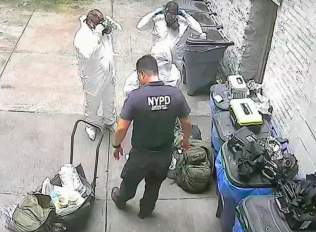
The building’s super allegedly used a vacant apartment and boiler room to manufacture and package the illicit pills.
Three men were arrested and charged in the Bronx with alleged production and distribution of black market pills. Lab tests determined that pills said to be oxycodone were actually a dangerous mixture of heroin and fentanyl, while the 50 purported ecstasy pills contained pure methamphetamine.
ABC 7 News reported that the men involved, Agustin Vasquez Chavez, Yefri Hernandez-Ozoria, and Roberto Castillo, are facing multiple drug charges after two separate arrests.
The first arrest occurred in July when undercover cops on 201st Street and Grand Concourse purchased two bags of pills for $5,000. Chavez and Ozoria allegedly sold 860 pills as oxycodone and another bag of 50 pills as ecstasy (or MDMA).
On September 11 police executed a second sting operation and arrested Chavez and Ozoria. Police confiscated approximately 3,000 purported oxycodone pills that looked to match the pills purchased on July 31.
Law enforcement is awaiting the results of DEA laboratory analysis.
Roberto Castillo is the superintendent of a five-story apartment building in the Bronx. Castillo allegedly used a vacant apartment and boiler room in this building to package and manufacture pills. Castillo worked with Chavez and Ozoria, who allegedly sold the manufactured and falsely labeled drugs in a large-scale black market pill distribution ring.
All three men were arrested and charged on September 11 in connection with an alleged conspiracy to produce and distribute black market pills containing heroin, fentanyl, and meth, officials said. Chavez and Ozoria were arrested first, after which police were granted permission to search the boiler room and vacant apartment in Castillo’s building. There, in the boiler room, police found a pill press machine.
The boiler room and apartment were being used as a pill manufacturing operation, which included a pill press machine, pill press imprints designed to create oxycodone markings, multiple surgical masks and a vacuum sealer. The apartment contained a refrigerator filled with yet-unknown substances in assorted colors, as well as drug paraphernalia such as cutting agents, grinders and containers.
According to an official, 420 grams of a heroin/fentanyl mixture were found in a suitcase, in addition to nearly 180 grams of methamphetamine and approximately 1,000 counterfeit oxycodone pills.
“Narcotics traffickers have long exploited the nation’s high demand for pain pills, a powerful gateway to addiction, but this investigation reveals an even more deviant scheme—an organization creating and distributing counterfeit pills with highly potent and lethal compounds, manufactured in an apartment right next to the boiler room,” said Special Narcotics Prosecutor Bridget Brennan in a statement.
The campaign outlines steps that governments can take to reduce problem drinking.
The World Health Organization has launched a campaign outlining high-impact strategies that can help governments address alcohol abuse, in order to work toward the organization’s goal of reducing harmful drinking by 10% worldwide by 2025.
The campaign, called SAFER, outlines steps that governments can take to reduce problem drinking. Alcohol contributes to 3 million deaths around the world each year, and is the 7th leading cause of premature death and disability according to WHO.
“The harmful use of alcohol is a major—yet often unaddressed—public health threat,” Dr. Adam Karpati, senior vice president of Public Health Programs at Vital Strategies, a global public health organization, said in a news release. “SAFER provides clear guidance to governments on how to save lives on a large scale. The greatest impact will be achieved by implementing all the SAFER interventions in full.”
Each letter in the acronym stands for a strategy that governments can implement:
The first step in the plan is to reduce the availability of alcohol. The idea is to establish restrictions to keep alcohol out of the hands of youth and other high-risk groups; this has been proven to cut back on alcohol-related issues. For example, in Brazil the decision to close bars at 11 p.m. led to a 40% reduction in homicide rates.
One of the most dangerous aspects of alcohol use is driving while intoxicated, so SAFER urges governments to take a stricter approach to combat drunk driving. This includes reducing the legal limit. Lowering the legal limit from 0.08% to 0.05% blood alcohol content could eliminate 18% of crashes caused by drunk driving that result in injury or death.
In order to reduce the negative health impacts of alcohol, healthcare providers need to screen people who may be at risk, and help people who have alcohol use disorder access treatment. Offering screenings in a primary care setting can increase access to treatment, and is especially important for pregnant women.
People around the globe are constantly exposed to marketing from alcohol companies, which often downplays the negative effects of alcohol. Governments should restrict what advertising is allowed, particularly in places where it reaches young people who should not be drinking.
The wide-ranging bipartisan legislation addresses overprescribing, overdose prevention, medication-assisted treatment and more.
New legislation intended to aid in the fight against the opioid epidemic was approved by both the House and Senate in early October, and is currently headed for signature by President Donald Trump.
The bill, known as the Substance Use Disorder Prevention That Promotes Opioid Recovery and Treatment for Patients and Communities Act (or SUPPORT), is a rare bipartisan effort, authored primarily by Senators Lamar Alexander (R-Tenn.) and Patty Murray (D-Wash.), and offers $8 billion in wide-ranging programs that intend to boost access to substance treatment, as well as methods of intervention to reduce the influx and availability of opioids.
Policymakers have expressed their support for the bill, though treatment advocates have voiced reservation about the scope and effectiveness of the legislation. Here’s what is proposed by the SUPPORT Act:
– Expansion of provisions for Medicaid programs, including expanded access to opioid addiction treatment, including secured flexibility for alternative services not permitted under a state Medicaid plan, improved data sharing between state databases, and increased screening for opioid dependency during doctor’s visits;
– Increased Medicaid coverage for opioid treatment programs that prescribe medication-assisted treatment (MAT), which is currently not recognized by Medicaid, and an increase in the number of health care specialists that are allowed to prescribe and dispense such treatment;
– A provision to expand a grant program that allows first responders to administer naloxone for opioid overdoses;
– Creation of a grant program from the Substance and Mental Health Services Administration to establish comprehensive opioid recovery centers, which will provide dependency and recovery programs for communities;
– A provision to allow the National Institutes of Health (NIH) to establish “high impact, cutting-edge research” for combating the opioid epidemic and development of non-addictive pain management medication, which will be funded through reauthorization of the Common Fund from the 21st Century Cures Act;
– Authorization for the Drug Enforcement Agency to reduce manufacturing quotas for controlled substances, including prescription opioids, when the agency suspects diversion;
– Authorization for the Department of Health and Human Services to allow doctors to remotely prescribe medication-assistant treatments to assist needy individuals in remote or rural areas;
– The “STOP Act,” which will assist the U.S. Postal System in preventing the import of fentanyl through international mail by improved digital tracking;
– Improved coordination between the Food and Drug Administration and the U.S. Customs and Border Patrol to allow greater means of detecting and halting the import of drugs at borders;
– Increased penalties for manufacturers and distributors in regard to overprescription of opioid medication.
Response from health care and dependency officials to the bill was mixed. Some, like Kelly J. Clark, the president of the American Society of Addiction Medicine, called it “an important step in ensuring that individuals with substance use disorder are able to get the help they need.”
But Keith Humphreys, a drug policy expert at Stanford University who worked with White House staff on the bill, viewed the scope of the bill as limited.
“This reflects a fundamental disagreement between the parties over whether the government should appropriate the large sums a massive response would require. Lacking that, Congress did the next best thing – which is to find agreement on all the second-tier issues as they could.”
The Austin Powers actor had been battling alcohol addiction in the limelight for over a decade.
Months after his passing in April, Verne Troyer’s cause of death has been determined.
On Wednesday (Oct. 10) the Los Angeles County coroner’s office ruled the actor’s death a suicide by “sequelae of alcohol intoxication.” (Sequelae is defined as a condition that is a result of previous disease or injury.) Troyer died of multiple organ failure on April 21, 2018. He was 49.
“Based on the history and circumstances as currently known, the manner of death is suicide,” said Deputy Medical Examiner Martina Kennedy in the coroner’s report.
The Austin Powers actor had been battling alcohol addiction in the limelight for over a decade. He had been in treatment twice by 2016, according to the Hollywood Reporter.
Troyer also appeared in the films Harry Potter and the Sorcerer’s Stone and The Love Guru.
In 2016, he said that he had cut down on his drinking. “[I’m] sober… I mean, I drink occasionally, but not to the extreme that I did.”
In April 2017, the actor released a statement after being hospitalized for alcohol addiction. “As you know, I’ve battled alcohol addiction in the past and while it’s not always been an easy fight, I’m willing to continue my fight day by day,” he posted on social media.
He said at the time that he had been receiving treatment and will “continue to get the help that I need.”
But a year later, he ended up in the hospital again with a blood alcohol content more than three times the legal limit.
“The actor called 911 himself, repeatedly saying on the call and when he arrived to the emergency room that he wanted to die,” according to the Washington Post. Again, he announced that he would enter a treatment program. Troyer died just weeks later.
“Anybody in need, he would help to any extent possible,” read a statement on his social media accounts on the day of his passing. “Verne hoped he made a positive change with the platform he had and worked towards spreading that message everyday.”
The post continued: “Verne was also a fighter when it came to his own battles. Over the years he’s struggled and won, struggled and won, struggled and fought some more, but unfortunately this time was too much.”
“A really cool expression of the family bond in the film is how the love survives everything that the disease can throw at it. Despite so much trauma, at the very end, you see that that core love never goes away.”The journey from addiction to recovery is a personal one, with details usually confined to family, friends, and maybe a therapist’s office or sobriety fellowship. But what happens when you open the doors to the public, laying bare the trials and triumphs that got you to this point? Since the publication of his father’s award-winning memoir, Beautiful Boy: A Father’s Journey Through His Son’s Addiction, his own memoir, Tweak: Growing Up on Methamphetamines, and his writing for The Fix and other publications, Nic Sheff’s experiences with addiction and his subsequent recovery have played out under the public’s gaze.
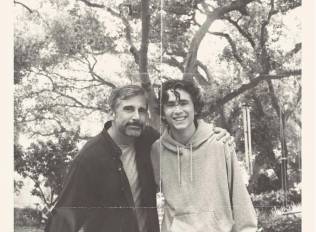
Now, with the Amazon Studios wide release of the feature film Beautiful Boyon October 12th, Nic Sheff is going to experience a whole new level of recognition and fame. Now more than ever, anonymity is a thing of the past, but he remains dedicated to his personal recovery and the principles of a healthy program. With the premiere fast approaching, The Fix is honored that Nic took time to sit down and talk to us.
The Fix: How did you and your father decide to initiate and move forward with the movie project? Was it agreed upon from the beginning that your book and his book would be turned into a combined film if successful? How did you go about deciding to combine Tweak: Growing Up on Methamphetamines with the Beautiful Boy story, or was this choice made by the filmmakers?
Nic Sheff: We always thought the best idea was to combine the two books. Right after publication, we met with Jeremy Kleiner, a producer with Plan B Productions, and this is before the company had won two Academy Awards for producing 12 Years a Slave and Moonlight. They were just starting out, but when we sat down with him over dinner, I just felt that he got what we were trying to do with the books. Also, we had a friend in common who had been a heroin addict and had died due to this disease. It gave us an immediate emotional connection.
You have to realize that there have been so many movies about addiction that show the downward spiral of a person as the drugs overtake their life. Many of these films show these people hitting bottom, then end with them dying or getting into rehab and ending on a hopeful note. Although there have been some great movies like that, our idea was to do something different. We wanted to show the effect the addiction has on the family because my Dad had written about it so amazingly in Beautiful Boy. We wanted to combine the family narrative with the addiction narrative.
Along with that combination, we wanted to show a process that so many people experience when they first try to get sober — the cycle of relapse caused by the pain of being without the drugs and having to face your feelings. When the pain comes, we reach out to the one thing that we know has kind of made us happy for so long, and we end up relapsing. As soon as we take the drugs again, they immediately take hold, and we can’t stop. I felt that process of relapsing had never been depicted in films. We wanted a movie that shows how hard it is to get out of that cycle. Ultimately, the answer, if there is an answer, is that there is a love that exists within a family, and that love never goes away. The ending of the movie doesn’t tie up the story with a bow, but it does emphasize that that love is still there. It will never go away. I know that is not true in all cases, but it was true in our story. As a result, I thought it was a really powerful way to end the story.
Nic Sheff Image Credit: UCLA Friends of the Semel Institute Open Mind Community Lecture and Film Series
In an interview with Variety, Timothée Chalamet said about first meeting you, “It was all trepidation on my part — nerves and anxiety — which was immediately settled by [the] extraordinarily warm and kind and intelligent and wise person that Nic is, that is innate to him but also through his experiences and his life.” What was it like for you to meet the actor that would play you and tell your most deeply personal story on film? What do you think stands out about his portrayal of you?
God, that is so sweet of him to say that about me. He’s such a sweet guy. I must admit that I wasn’t familiar with Timothée’s work when we first met at a coffee shop. As soon as he came in, I saw that he has this incredible energy and passion for his work. Sure, I could tell that he was nervous about meeting me, but he also was just so committed to getting it right. I immediately felt comfortable with him because I knew he was coming to the role with a very open mind. He wanted to make his portrayal of this young person struggling with addiction as honest and as authentic as possible. He was so willing to learn in an active way.
He asked me a million questions about everything from the emotions I was feeling to the physicality of what it actually looks like to be high on these drugs and what it looks like to be detoxing from these drugs. There’s something really amazing that Timothée does in the movie. It’s something I feel that I’ve not ever seen in a movie about addiction before. Even as he’s in the trenches and high and doing these unconscionable things like breaking into his parents’ house and stealing from his little brother and sister – at the very moments when he’s being volatile and angry and out of control – he conveys this self-awareness that he doesn’t want to be this person and he doesn’t want to be taking these actions. It seems like his body is almost possessed.
As a performer, Timothée was able to hold those two contradictory elements at once. He really expresses that sense of being trapped in the addiction and the behavior. At the same time, you see him fighting to hold onto who he was before the addiction took over; you can see how much guilt and shame he feels about everything he is doing, even while he is doing it. I thought that was so remarkable because it was exactly how I felt when I was out there. I saw myself doing these behaviors, and I was so horrified at myself, but I couldn’t stop. Indeed, that feeling of powerlessness is so devastating. It’s at the heart of the disease, and to see it captured so well on film I thought was truly remarkable.
At the Colorado Health Symposium in August, you talk about how watching the movie makes you feel so grateful because it’s such an amazing reminder of the miracle of recovery. Is gratitude the very heart of your recovery?
Absolutely. Although I know the film wasn’t made for this reason, I felt that the filmmakers gave me such an incredible gift by making this movie. It is such a visceral reminder of everything we went through as a family. It’s such a great help for me because I’m still very much involved in recovery. It’s a big part of my life every single day. In some ways, however, I have moved on. I write for television now, and I am doing things that aren’t necessarily connected to telling my story and writing about addiction. Seeing the movie, seeing my life reflected back to me, it hit home in a way that I hadn’t felt in a long time. I felt again on a very deep level what an incredible miracle it is that I survived and how much came back to me. My family and I have such a close relationship, and it’s beyond anything I ever thought possible. It makes me so grateful.
Every day, gratitude is such an essential part of my existence. Battling this disease, I have gone through such hell that coming out the other side is something I need to acknowledge on a daily basis. I try to be grateful and to express my gratitude. The amazing thing about being sober is how you learn to appreciate and love the simple moments of life. I am so grateful to be able to go out on a walk with my dogs or go out to dinner with my wife. The little things are so sweet like just watching a movie. Gratitude is a gift of sobriety that I keep close to me.
Like you, I first tried drugs when I was eleven years old, smoking pot. Although I didn’t develop a problem until high school, I know my eyes were opened to that feeling of escape. It felt like an answer. Did you feel this way as well? Do you believe the movie effectively highlights the real dangers of early drug use?
Yes, I felt that way exactly when I first smoked pot when I was eleven. I felt this very immediate sense of relief. Up until that point, I had felt so insecure and uncomfortable in my own skin. I just didn’t fit in anywhere. Smoking pot for the first time felt like the first real answer that I had ever found. I kept turning to drugs to cope with everything from success to failure to shyness and everything in between. Thus, when I wasn’t using, I really developed no skills to handle what life threw at me. I kept going back to the drugs because they were the only coping mechanism that I’d ever learned.
In the movie, I do think we show that relapse is not about having a good time. Most people think addicts relapse because they want to keep the party going. They think we are enamored with this fast-paced life. In my experience, I was just in a tremendous amount of pain, and I kept reaching out to the drugs to try to feel better. I really see that theme well-expressed in the movie. Every time Timothée relapses, it’s because he’s in pain. He doesn’t want to relapse, but he can’t stop himself. He does not know how to break that cycle.
For example, there’s a scene in the movie where Timothée and Steve are smoking pot together. Timothée is in high school, and he’s convinced his Dad to smoke pot with him. In the scene, you see that the Dad is trying so hard to connect with his son on a personal level. He believes that smoking pot with his son might help connect them. However, for the son, he’s already in his disease. All he can focus on is the drug. In that scene, we see how he keeps bringing the topic back to the drugs, and he wants to hear about the other drugs his Dad is doing or has done. He wants ammunition so he can feel justified about his using, and he wants to be exonerated in the process from his feelings of guilt. He doesn’t care about connecting; he cares about what his disease wants him to care about. He’s so obviously obsessed with the drug. I definitely felt like I hadn’t seen anything like that before.
Dr. Gabor Maté writes, “The question is not why the addiction, but why the pain.” What does that quote mean to you? Do you agree with him? Is treating the underlying trauma behind the addiction the key to long-term sobriety?
I think that quote is amazing. It makes me remember my last treatment center. When I got there, they asked, “Why are you here?” I replied, “Because I am an addict, and I can’t stop using meth and heroin.” They said, “That’s not the reason that you’re here. It’s not because of the drugs. It’s because of the feelings that were making you use the drugs.”
I knew right away how true that was for me. As I said, I was in a lot of pain growing up, and drugs were the one thing that I found that made that feel better. I’m sure it’s different for many people, and I am not an expert in addiction. I am just sharing my own experience. It definitely was super helpful for me to start exploring and treating that underlying pain behind the addiction. Some of it was just chemical. Going on antidepressants helped at first, then I was diagnosed as bipolar. Now I am on lithium for the bipolar disorder. All of that stuff helped to address that pain and break the cycle.
To me, recovery is like trying to put together this puzzle. There are all these different puzzle pieces. They are not the same for everyone, but for me, those puzzle pieces have been therapy, medication, fellowship, and 12-step. All of these puzzle pieces come together to allow me to stay sober, and they are all really important. However, they are different for everybody. I wish there was one solution that worked for all people, but unfortunately, that’s not the case.
In Tweak: Growing Up on Methamphetamines, you write, “There is this crazy fear I have of being rejected by anyone – even people I don’t really care about. It’s always better to leave them first, cut all ties, and disappear. They can’t hurt me that way – no one can.” Is this fear at the very core of what drives the escapism of addiction?
That’s a fascinating question. I think it definitely was a big contributor to the pain that I needed to use the drugs to help relieve. As I’ve gotten more long-term sobriety and had the opportunity to work on myself, I have found that I have developed these amazing friendships with other people. I never before had anything like the friendships I have today. Before I got sober, it was too scary for me to be vulnerable enough to have friends. Having friends means the potential of losing those friends. The lasting friendships that I’ve been able to form mean so much to me. It’s such a gift.
You have to realize that my disease wants me to be alone. It wants me to be isolated so it can take control. When I was alone, my disease would be talking to me, and it would make me feel like I wasn’t worth anything. Still, it does take courage to have friendships. Without my recovery, I don’t think it would have ever happened. My recovery and those friendships go so well together.
Worrying does not serve me at all. When I get into that negative headspace, I still have a hard time getting out of it. Luckily, I have friends that I can talk about it with, and they help me get more perspective. They help me take a step back and see again the value of my life. It’s one of the greatest gifts of authentic connection.
You know from firsthand experience how hard the disease of addiction is on families. Should families see this film together? Should parents take their teenagers? If they do, how should they prepare both themselves and their kids for the film before and what should they do afterward?
It’s hard for me to be prescriptive about anything. I really only can express things that come from my own experiences. I do believe that having conversations about this subject are really important for a family to consider. I have learned a lot by going around with the film to screenings and talking with people afterward. The main reason I’m doing it is that this film opens the door to such a great opportunity to have conversations about these issues. Watching this film raises awareness by making it easier for people to have honest talks about this disease.
Even more importantly, it is helping to not only emphasize recovery but also reduce the stigma around addiction that prevents such talk in the first place. From my perspective and beyond my personal stake, I believe the more people that see this film, the better. It will raise conversations that might not have occurred without it.
It made me proud to be connected to this film after I first saw it, and I realized there is nothing glamorous about the drug use in the movie. There is a scene in the movie where the son relapses. He does drugs with this girl, and it doesn’t look like a lot of fun. Instead of presenting it as fun or wild or on the edge like they do in a lot of movies, you really see how much guilt and shame the son has about it. There is no party period. Right after it happens when he’s alone, he breaks down and starts crying.
The power of the movie is that it really shows that the reason people use is because of this pain that they are experiencing. Relapsing tends to be a desperate attempt to escape that pain. It also shows the effect that a relapse has on the family. It was painful to watch it on the screen and kind of relive it again.
Watching the film reminded me of when I first read my Dad’s book. It was so hard to realize and see how much of a negative effect I had on him and my whole family. It was important to me that the film would capture that feeling, and it does it so well. Thus, I believe it would be amazing for families to see this film together. I think it would encourage honest conversation afterward.
The one warning I would add to that recommendation is that for people in recovery, especially early recovery, it can be really triggering to watch the explicit drug use in the film. There are some very intense scenes of IV drug use that could be triggering. I would encourage people in early recovery not to put themselves in a position where they might be triggered. If they are worried that it might be a possibility, then I would recommend that they choose caution and not take an unnecessary risk.
In Tweak: Growing Up On Methamphetamines, you write, “Sure, I buried it. I buried it and buried it and turned away from everything light and sweet and delicate and lovely and became so scared and scarred and burdened and fucked up. But that goodness is there, inside – it must be.” Do you believe this movie can help people struggling with addiction find the goodness within themselves and embrace recovery? If so, how?
Wow! That’s creepy to hear that quote again. I haven’t gone back and read Tweak in such a long time, and hearing it is such a sad reminder of how I was feeling. It amazes me how far my life has come since then, and it makes me feel so grateful.
This movie exemplifies that gratitude by showing in such a beautiful way how much love there is within a family. You really see the love within our family, and it’s a reflection of the way that families are. I am so impressed by the incredible bond between parents and children, and also between brothers and sisters. A really cool expression of that bond in the film is how the love survives everything that the disease can throw at it. Despite so much trauma, at the very end, you see that that core love never goes away.
I remember when I was out using, I had this horrible thing happen. My girlfriend OD’d, and I had to call 911 and do CPR. Thankfully, she came out of it, but she had to go to the hospital. Of course, I went with her, and it was such a wake-up call. I decided I had to do something to stop all of this. I called my Dad, and I told him, “Okay, I don’t want to go into rehab, but I want to come home and get clean on my own.”
My Dad had learned enough at that point to know that wasn’t going to be a good idea, and I wasn’t going to be able to do it on my own. He knew he couldn’t let me come home and put everyone else at risk. He said to me, “No, you can’t come home. I really hope you get help, but I can’t help you unless you’re willing to go into treatment.”
When I heard that from him, I was devastated. It was devastating to hear that from my father. All I wanted to do was come home. I was angry and hung up the phone, but even at that moment, when he said I couldn’t come home, I also recall this profound awareness of his love for me. I knew he wasn’t drawing that boundary because he didn’t care about me. Even after everything that had happened, I instinctively knew that love was still there. In the movie, the themes include that such deep love never goes away and that forgiveness is always possible. For people struggling with addiction, that’s a powerful message that they need to hear and that needs to be heard.
Nic and David Sheff Image Credit: UCLA Friends of the Semel Institute Open Mind Community Lecture and Film Series
One mental health professional estimates that almost half of colleges students who need services are not receiving them.
College is a stressful transition for many—that’s apparent from recent mental health numbers.
According to Deseret News, greater numbers of college students are facing mental health challenges such as depression and anxiety, and as such, the number of students seeking help on campuses has increased.
Ben Locke, executive director of the Center for Collegiate Mental Health at Pennsylvania State University, tells Deseret News that the demand for mental health services is growing rapidly—about five to six times faster than enrollment. He says that since enrollment numbers help fund such services, it’s difficult for some colleges to fulfill the demand.
The Center for Collegiate Mental Health has found that of the students seeking help, 70% have anxiety. Of those, 25% consider anxiety their main concern. These numbers, according to Deseret News, are based on 2017 data covering 160,014 students at 160 colleges.
Additionally, a 2017 American College Health Association Survey of 63,000 students discovered that 2 in 5 students would say they are so depressed that they “struggled to function,” and 3 in 5 had felt “overwhelming anxiety” in the previous year.
According to experts, college students may be particularly prone to such mental health struggles because of the transition from adolescence to adulthood.
And it isn’t just the volume of students that’s an issue. According to Daniel Eisenberg, professor of health management and policy at the University of Michigan and director of the Healthy Minds Network, students’ symptoms are growing more severe.
According to Eisenberg’s data, almost half of students who need services are not receiving them.
“We are seeing debilitating levels of anxiety that are more and more common—where, by the time they get to college, students are so worried about different aspects of their lives it can be a real problem. Students struggling with very severe symptoms who don’t get treatment are likely to have consequences.”
On some campuses, students are taking the matter into their own hands. At the University of Michigan, student body president Bobby Dishell and some of his peers had begun a program called the Wolverine Support Network. The idea was that students could form small groups and offer one another support.
Sam Orley, whose brother George took his own life when he was a student at the university, served as the executive director of the program. Orley said that rather than being a program for mental illness, the Wolverine Support Network is a “holistic mental health and well-being effort.”
In some cases, the struggles college students are facing may be downplayed, according to Kelly Davis, director of peer advocacy, supports and services for Mental Health America.
“There’s a lot of condescension—dismissal of how hard that period of life is,” Davis told Deseret News.
Last spring, Deseret News sat down with students to discuss their fears and worries. Topping the list were fear of missing out, fear of failure and job competition.
“The bar is just so high for everything,” one student said in conclusion.
Calvin Warren Jr. is the first person to be arrested and charged under a new Florida law.
A new Florida law regarding the prosecution of drug dealers, signed by Gov. Rick Scott in 2017, has gone into effect. The law expanded the state’s first-degree murder code to include adults who sell a lethal dose of fentanyl.
The Palm Beach Post reported that Calvin Warren Jr., 35, was arrested on first-degree murder charges in the overdose death of 36-year-old Thomas Matuseski. Warren is the first person to be arrested and charged under the new law.
Thomas Matuseski died on January 28 after ingesting fentanyl; Warren is accused of providing the deadly drug. Warren remains in the Palm Beach County Jail without the possibility of parole. The indictment against him states that he caused Matuseski’s death “unlawfully from a premeditated design.”
The Palm Beach County State Attorney’s Office announced that Warren distributed heroin, cocaine, and fentanyl. On January 28, Matuseski’s roommate found him collapsed on his bedroom floor in Boynton Beach, according to city police records. Matuseski’s friend called 911 but the Boynton rescue crews were unable to resuscitate him.
Police reported no sign of drugs or paraphernalia in Matuseski’s home on Citrus Park Lane, and it was not announced how Warren was suspected to be linked to Matuseski’s death. Police records do show that Warren was arrested in February on a case that remains open and includes multiple drug-related charges.
Greg Newburn, Florida’s state policy director for Families Against Mandatory Minimums, told TheDaily Beast, “Most deaths we’ve seen since the rise of fentanyl in Florida have been a mixture of heroin and fentanyl.”
Florida’s new law does not account for the mixture of drugs or if the dealer claims to have known they were using fentanyl. If a drug mixture containing any amount of fentanyl is involved in the drug user’s death, the dealer can be charged with first-degree murder, a charge for which “the only two sentences available are life without parole and the death penalty,” Newburn said.
“We will aggressively charge drug dealers who spread fentanyl-laced heroin into our community,” Palm Beach County State Attorney Dave Aronberg said in a statement, as reported in The Palm Beach Post. “We will use all tools provided us by the Florida Legislature to hold drug dealers accountable for causing the deaths of others.”
Thomas Matuseski was a New York native, and according to his obituary was remembered as a loving father and son who loved sports.
Retailers and makers will be allowed to sell banned products until the inventory is exhausted or until April 2019.
The Washington State Liquor and Cannabis Board took many marijuana businesses aback on October 3 when they announced that cannabis-infused products that may have appeal to children – gummy candies, lollipops and/or brightly colored products – will be prohibited from sale.
Makers and retailers alike expressed concern that they were not given adequate warning about what the board is calling a “re-evaluation” of such products; though edibles make up a relatively small portion of marijuana products sold in Washington state (9%), they are a significant revenue stream for many independent companies.
The Board will hold a webinar on October 16 to address concerns about the impending re-evaluation, and companies whose products fall under the ban will have a chance to appeal.
The Board made its announcement via an online presentation, which ascribed its decision as an attempt to address concerns from board members as well as “stakeholders and the public” in regard to infused edible candy.
A re-evaluation of such products, which were previously approved by the Board, led to the new ruling, which stated that “all production of hard candy (of any style, shape or size), tarts, fruit chews, colorful chocolates, jellies and any gummy type products should cease, as they will not qualify” under the new guidelines. The rule will take effect January 1, 2019.
Drinks, baked goods, chips and tinctures do not fall under the ban, as well as certain types of candies, such as chocolate, caramels or mints, provided that they are not presented in a manner that is “especially appealing to children,” such as certain colors, flavors, shapes or additions such as sprinkles or frosting.
Retailers and makers will be allowed to sell banned products until the inventory is exhausted or until April 3, 2019, after which they must be disposed of according to marijuana waste requirements.
Retailers and manufacturers will have to resubmit labels and products for their items to the Board prior to the January 1 activation date; if their products do not meet the new requirements, they will be informed that board approval is being rescinded. The notification will also include information on how to appeal the decision.
Response from retailers and manufacturers was immediate and deeply concerned. While many support the idea of ensuring that products do not appeal to kids, they were also worried about the impact of the ban on their business. “If we lose the ability to make these candies, we’ll be out of business,” said Craft Elixirs owner Jamie Hoffman.
Diana Isaiou, owner of American Baked Co., said that more than half of her company’s sales are edible fruit chews, which require the purchase of large and expensive amounts of ingredients and packaging prior to manufacture. “We don’t get business loans in the marijuana industry,” she said. “These are people’s personal bank rolls.”
Others expressed dismay at what they considered an arbitrary ban. “I’m concerned that whole categories of products are being tossed out categorically,” said Logan Bowers, owner of Hashtag Cannabis. “I don’t see how a chew is inherently more enticing to a child than a cookie.”
The Liquor and Cannabis Board will offer a link to register for the October 16 webinar on the site.
A study recently published in the Journal of Developmental and Behavioral Pediatrics makes the estimate that about 2 million children and adolescents in the U.S. have a diagnosable anxiety disorder.
When it comes to anxiety in children, it can be difficult to diagnose since it can present as negative behaviors.
“We tend to think of anxious children as these delicate little butterflies, but when kids are scared, they can be ferocious about trying to escape or avoid anxiety-provoking situations,” Eileen Kennedy-Moore, child psychologist and author of KidConfidence, told the Post.
Susan Newman, psychologist and author of The Book of No, explains that sometimes children can have feelings of anxiety for the first time and don’t always know how to react.
“Children today are stressed on so many fronts: challenged socially, academically, having to cope with physical changes and development, the demands and influence of social media, trying to fit in and be accepted. It’s no wonder they show evidence of anxiety,” Newman told the Post. “Parents should ask questions about anything they notice or want to understand to show their interest and love for their child. Children want to be heard and listened to, even if they tell you to stop being nosy.”
When it comes to anxiety in children, there are some warning signs, though all children differ. One, according to the Post, is psychosomatic complaints.
“Kids don’t usually come home from school saying, ‘I felt really anxious at school today,’ but they do say things like, ‘I have a terrible stomachache; I can’t go back to school tomorrow,’” the Post notes. “Frequent stomach aches, headaches and unexplained muscle aches and pains can all be symptoms of anxiety.”
Other signs include anger and irritability, sadness, isolation and avoidance, fatigue, poor concentration, school refusal and frequent questions.
Just like signs of anxiety can differ from child to child, so can triggers. Triggers can include genetics, academic pressure, bullying, big transitions, loss and violence or abuse.
Though child anxiety can sometimes take longer to diagnose, it is very treatable when that diagnosis is made, according to the Post. Through identifying triggers and learning coping skills, children and parents can learn to take control of anxiety.
“A pediatrician is a good first stop to rule out or diagnose possible medical issues and to refer a licensed mental health practitioner who specializes in working with children,” the Post reads. “Cognitive behavioral therapy and dialectical behavioral therapy can be very effective treatment options for children with anxiety.”