Author: The Fix

  • Sacklers Accused Of Concealing $1 Billion In Wire Transfers

    Sacklers Accused Of Concealing $1 Billion In Wire Transfers

    The New York Attorney General’s Office was able to identify shell companies that were used to conceal the Sacklers’ riches.

    Members of the Sackler family have been accused of trying to conceal their wealth, as they try to settle some 2,000 lawsuits alleging that the family-owned company Purdue Pharma, the manufacturer of OxyContin, contributed to the opioid crisis.

    New York Attorney General Letitia James said that her office discovered about $1 billion in wire transfers made by the Sackler family to various entities including real estate holdings.

    The wire transfers were uncovered as a result of just one of 33 subpoenas issued by James to various financial institutions, seeking information about the family’s wealth. Forbes listed the Sacklers as the 19th richest American family in 2016 with a net worth of $13 billion.

    Shell Companies

    James’ office was able to identify shell companies that were used to conceal the Sacklers’ riches.

    “While the Sacklers continue to lowball victims and skirt a responsible settlement, we refuse to allow the family to misuse the courts in an effort to shield their financial misconduct,” said James in a statement. “The limited number of documents provided to us so far underscore the necessity for compliance with every subpoena.”

    Sackler Rep Says Transfers “Were Perfectly Legal”

    A representative for Mortimer D.A. Sackler, a former Purdue Pharma board member, denied James’ suggestion that the family has been trying to protect their wealth from the barrage of lawsuits from states, counties, cities and tribal governments across the U.S.

    “There is nothing newsworthy about these decade-old transfers, which were perfectly legal and appropriate in every respect,” they stated. “This is a cynical attempt by a hostile AG’s office to generate defamatory headlines to try to torpedo a mutually beneficial settlement that is supported by so many other states and would result in billions of dollars going to communities and individuals across the country that need help.”

    A lawyer for Purdue Pharma argued in a court filing against subpoena action by the AG’s office, but a lawyer for the AG’s office said they have already helped uncover “shell companies” used by the family to hide their wealth.

    “Already, these records have allowed the State to identify previously unknown shell companies that one of the Sackler Defendants used to shift Purdue money through accounts around the world and then conceal it in at least two separate multimillion-dollar real estate investments here in New York, sanitized (until now) of any readily-detectable connections to the Sackler family,” said David E. Nachman in a letter to the court.

    On Monday, it was reported that Purdue Pharma filed for bankruptcy after reaching a tentative settlement that could be worth up to $12 billion over time, according to AP News. However, not everyone is onboard with the proposed settlement.

    View the original article at thefix.com

  • Steve-O Shares Video Of Every Drug He's Ever Done To Celebrate Sober Milestone

    Steve-O Shares Video Of Every Drug He's Ever Done To Celebrate Sober Milestone

    The jarring, NSFW footage offers a no-holds-barred look into the Jackass star’s past drug use. 

    Jackass star Steve-O offered up a catalog of cautionary tales in which he not only detailed every drug he’d ever used, but also shocking and decidedly NSFW footage of his behavior while using those substances.

    A Decade Of Sobriety

    Steve-O (born Stephen Gilchrist Glover), who celebrated a decade of sobriety in 2018, was unsparing in not only detailing but also showcasing how his dependency had impacted his life, which he described as “seriously messed up.”

    Fans reacted with an outpouring of praise for his efforts to remain honest about his path to sobriety.

    “This is probably the most embarrassing video I will ever put out,” Steve-O said as an introduction to the video, which opens with footage of what he described as his last bender in 2008, where he used ketamine shortly after being released from jail on felony drug charges. From there, Steve-O ticked off a staggering list of narcotic and illicit substances, providing recollections and jarring video footage for each.

    His Drug List

    The drug list opened with marijuana, which Steve-O said he brought across international borders—even to countries like Singapore, which imposes the death penalty for drug smuggling—in condoms he swallowed and then passed through his bowels.

    From there, viewers witnessed Steve-O kissing and licking his Jackass co-stars while under the influence of ecstasy, kissing co-star Chris Pontius on the head of his penis while drunk, and recalling to the media about being taken, unresponsive, from his apartment by first responders after ingesting five bars of Xanax.

    “If you gave me a pill, and I didn’t know what it was, I didn’t care,” said Steve-O, shortly before launching into some of the most shocking footage on the video. This included self-shot scenes in a hotel room where, after using PCP, cocaine and marijuana, he became obsessed with sending an email to rapper 50 Cent (despite lacking any means of contacting him); blowing cocaine residue congealed in nasal mucus onto a beer can and then smoking the residue; convulsing after using nitrous oxide, and recalling his experiences with ingesting household products (video head cleaner and aluminum cleaner). 

    After years of what can only be described as self-abuse, Steve-O was committed to a psychiatric ward by Johnny Knoxville and his Jackass co-stars in 2008. In 2018, he celebrated a decade of sobriety. Steve-O has remained active posting videos on his YouTube channel and touring, and has discussed the possibility of a fourth Jackass film.

    Response to the video was overwhelmingly positive, with one follower writing, “Thank you for your honesty and putting this out there. We shouldn’t be ashamed of our past, we should learn from it and celebrate how far we’ve come.”

    View the original article at thefix.com

  • Louis Tomlinson's Sister Died Of Accidental Overdose, Coroner Says

    Louis Tomlinson's Sister Died Of Accidental Overdose, Coroner Says

    Félicité Tomlinson passed away earlier this year at the age of 18.

    A coroner has determined the cause of death of Félicité Tomlinson—“a perfect storm” of drugs that triggered her fatal overdose earlier this year.

    Tomlinson, a model and social media influencer, was the sister of One Direction singer Louis Tomlinson. Coroner Shirley Radcliffe ruled that the young woman’s death on March 13 was a result of a fatal mixture of Xanax, OxyContin and cocaine, which were found at “toxic” levels in her blood.

    While Radcliffe described the combination as “a perfect storm” leading to Félicité’s death, she said there was no evidence that it was “a deliberate act to end her life.”

    On March 13, paramedics responded to a suspected cardiac arrest in Félicité’s West London home. Though her friend Zainab Mohammed called 911, she was not able to be revived and was pronounced dead at the scene. She was 18 years old.

    Mohammed told investigators that the pair had snorted cocaine on the night of March 12, but she was not aware of Félicité taking other drugs.

    Losing Their Mother

    Félicité had a recent history of drug use. The Guardian reported that she “had taken overdoses and been admitted to drug rehabilitation.”

    She had turned to drugs since she and Louis lost their mother to leukemia in 2016, according to investigators. Last summer, on a visit to her doctor, Félicité “gave a history of recreational drug use over a year and on a consistent basis since the death of her mother.”

    Louis Tomlinson addressed her passing on social media in April. “Just wanted to thank everyone for their lovely words over the past couple of weeks. Back in the studio today to vocal something I wrote a few months ago. Sending you all loads of love x.”

    Their father read a tribute to Félicité at Westminster coroner’s court. “Félicité had huge hopes and aspirations for her future, a lot of which were beginning to come to fruition at her untimely passing,” he said. “She is missed by all who knew and loved her.”

    View the original article at thefix.com

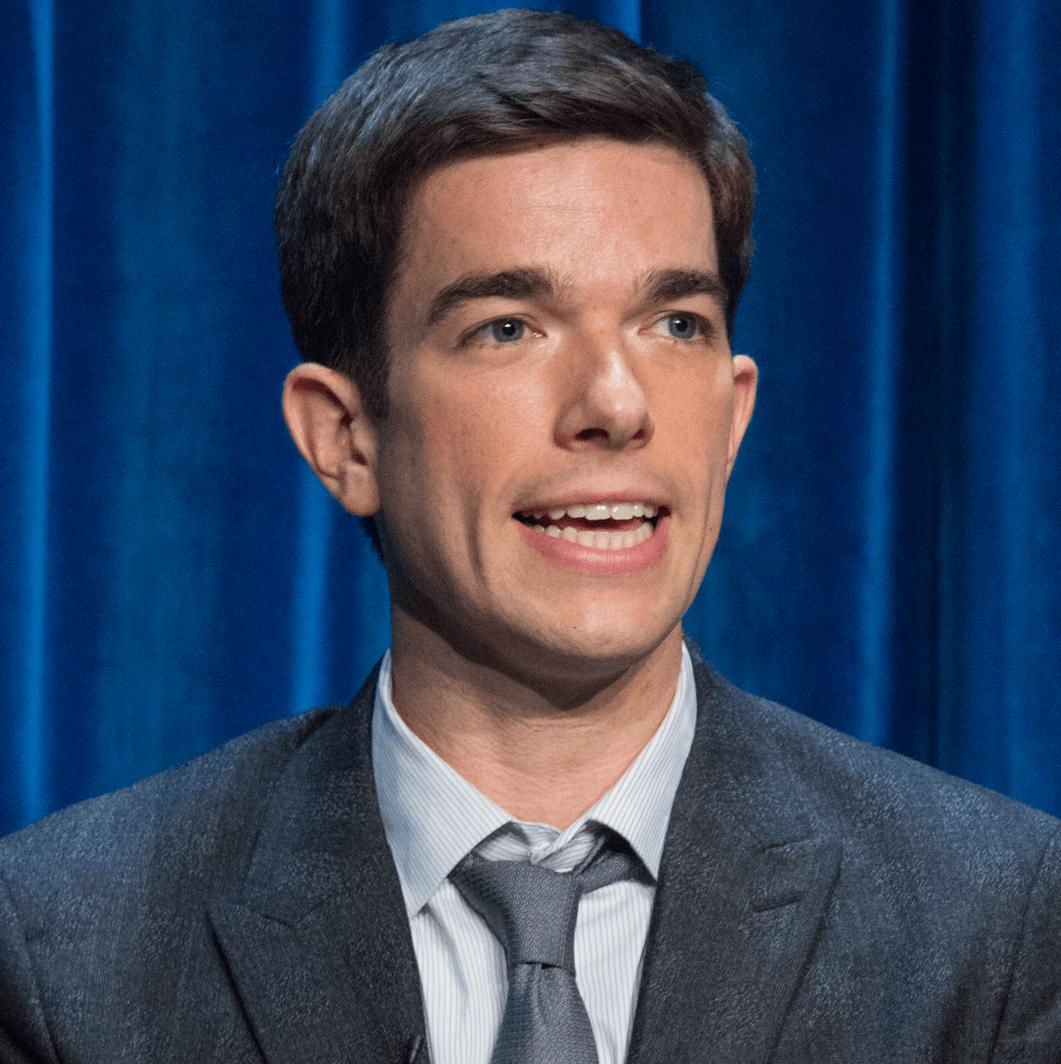
  • John Mulaney Opens Up About Past Addiction: "I Drank For Attention"

    John Mulaney Opens Up About Past Addiction: "I Drank For Attention"

    The Emmy-winning comedian was a blackout drinker but got sober early in his career.

    Celebrated comedian John Mulaney recently opened up to Esquire about how he got sober at a young age and never looked back.

    Like many comedians, Mulaney has battled substance use disorder and even used the disease as material for his routines. Mulaney first started drinking when he was 13, and as he explained to the men’s mag, “I drank for attention. I was really outgoing, then at 12, I wasn’t. I didn’t know how to act. And then I was drinking, and I was hilarious again.” 

    Booze, Cocaine & Vicodin

    Following the pattern of many when they first become addicted, his drinking then transitioned into the use of other substances. Unlike a lot of teens, Mulaney wasn’t a fan of smoking pot, but he liked to mix cocaine and prescription drugs together.

    “I wasn’t a good athlete, so maybe it was some young male thing of ‘This is the physical feat I can do. Three Vicodin and a tequila and I’m still standing. Who’s the athlete now?’”

    Mulaney suffered from blackouts, and at one point he remembers drinking perfume. Then he went through a big bender when he was 23 and the experience served as a major turning point in his young life.

    “I was like, ‘You’re fucking out of control. I said to myself, I don’t like this guy anymore. I’m not rooting for him.’” 

    Helping Pete Davidson

    When Mulaney quit alcohol and cocaine, he didn’t join a 12-step group. He says he quit cold turkey, and is sober to this day. After cleaning up his act, he’s also been trying to help troubled SNL star Pete Davidson. He explained to Davidson, “You can have a life in comedy that is not insane – a sober, domestic life.” 

    Earlier this year, Mulaney appeared on SNL with Davidson, where they joked about mental health during the “Weekend Update” segment of the show. In the segment, Mulaney confirmed that he and Davidson spent time together, “but a lot of the time it looks like I’m Pete’s lawyer.” 

    To which, Davidson retorted, “And after observing John’s life I publicly threatened suicide. I know I shouldn’t make that joke, but it’s funny.” 

    View the original article at thefix.com

  • Why Aren't There More People of Color in the Recovery Movement?

    Why Aren't There More People of Color in the Recovery Movement?

    For many white people, recovery is a redemption story, proof that they were good people all along. For people of color, a known history of drug use might be the only excuse a prospective employer needs to shut the door.

    When Art Woodard walked into his first Alcoholics Anonymous meeting in New Haven, Connecticut, a sea of white faces turned to stare at him. Some of the faces showed kindness; others hostility. Most people just watched as he took a seat in the back of the room.

    Woodard’s shoulders slumped. As a black man who had recently graduated Yale, he was used to being the only person of color in a room. Still, he thought, it would have been nice to share the recovery journey with other black folks. 

    “None of these stories are like mine”

    As his fellow AAers stood up to tell their stories, Woodard found he couldn’t concentrate. None of these stories are like mine, he thought. Many of the stories involved childhood abuse or mental health issues. For Woodard, heavy drinking didn’t start until he graduated from Yale, when he finally couldn’t take the weight of living in a white world where he constantly felt the need to prove himself, to justify his presence, to assure others he wasn’t a threat. 

    “I got drunk because I thought I had fooled an institution into giving me a degree I didn’t deserve,” he says in a phone interview. “I never really felt I had a place in the world…I embraced alcohol because I needed a release for that insecurity.”

    Woodard never returned to that AA meeting, during which not a single person approached or welcomed him. Luckily, he found a program specifically for people of color elsewhere in the city. When the program nearly folded for lack of funds, he wrote grants to keep it afloat—he was adamant about continuing his recovery journey alongside his peers.

    Over the years Woodard became more visible within the wider recovery movement. He became a public speaker and trainer, often co-leading health and recovery trainings with his friend Jim, who was white. But the specter of race was never far off.

    “I can honestly say that every position or opportunity that I was able to achieve was achievable through a Caucasian male offering me opportunities,” he says. “I was invisible in those settings if I didn’t have [a white person] to speak for me.” 

    He endured the barbs from the people who ignored Woodard if he asked a question, directing their answer to Jim, and the people who expressed astonishment at his “good English,” as they put it. And always, the experience of his first AA meeting came back; almost every recovery space was a sea of white faces. 

    Racial Bias, Recovery, and Criminal Justice

    Woodard’s experience as a person of color in the recovery movement is not unique. It’s no secret that the movement is largely dominated by Caucasians, whether in staff or leadership positions, on organizational boards, or among membership. Why do so few people of color play visible roles within the recovery community, especially given how much the effects of harsh drug policy and chaotic drug use have devastated many communities of color? To merely blame racism, though it certainly plays a role, is oversimplifying a complex problem. 

    One of the reasons we don’t see many people of color in leadership positions within the recovery movement is that it can be harder for people of color to sustain recovery at all. We all know someone who spent a good chunk of their twenties using drugs or alcohol problematically. Perhaps they went to jail once or twice. Perhaps they were even homeless for a while. But today that person is married with children, thriving at a good job, and talks about recovery to anyone who will listen. That person is also probably white.

    Sustained recovery is not as easy for a person of color. For black men, especially, once the criminal justice system sinks its teeth into you, it doesn’t let go. There is little room for mistakes in a world that expects you to fail, and we all know the statistics: Despite similar rates of drug use, people of color are more likely to be arrested for drug crimes than white people, serve longer sentences for the same crimes, and find it harder to break the cycle once it starts.

    Even for people of color who are able to find and sustain recovery despite the odds against them, they likely won’t be as quick to advertise their new status. For many white people, recovery is a redemption story, proof that they were good people all along. For people of color, a known history of drug use might be the only excuse a prospective employer needs to shut the door.

    For evidence of racial bias in recovery, one need only pick up the nearest newspaper or turn on the TV. When the story is about a white drug user, the addiction or overdose death is reported as a tragic loss of potential. But a person of color can suffer a death completely unrelated to drugs—being shot unarmed by a cop, for example—and the public will dig into his past for any evidence of drug use or criminal behavior, then use this information to justify the murder. Any drug history of any kind is enough to brand a person of color for life.

    The overdose crisis presents a conundrum. On the one hand, it provides an influx of funding and sympathy to a movement in desperate need of both. On the other hand, it exacerbates the racial divide by further entrenching the narrative of white recovery as redemptive and black or brown recovery as something else. 

    Follow the Money

    Donald McDonald, a white man from Raleigh, North Carolina with 15 years in recovery, explains, “The opioid crisis is seen as a white issue not just because of the predominantly white images we see in the news. It’s this message about the ‘worthy afflicted.’ We hear about people with legitimate pain receiving lawfully prescribed pain relief. We can then vilify the pill or the pharmaceutical company – not the person experiencing addiction. Historically this has not been the black experience in America.”

    The people whose faces are presented as sympathetic victims are almost always white. And this is no mere coincidence. The recovery movement is made up of people who have long suffered heavy stigma, but now, for the first time, thanks to the attention that the overdose crisis has sparked, the movement is experiencing more public sympathy and financial support. 

    Laurie Johnson-Wade, an African American woman who leads recovery efforts in Kensington, Pennsylvania, says that money lies at the heart of the exclusion of people of color in recovery spaces. 

    “If you show my face [as a black woman] or if you use me as the leader at a conference then you are not going to get the money that you would have if you had somebody representing a different community,” she says. “I think those in the recovery movement started out with good intentions, but if you want to win, you have to play the game…At the end of the day, it is all about dollars and cents.”

    Organizations are putting forward their most sympathetic faces to potential funders and allies—and the whiter and more connected to prescription pills (as opposed to street drugs), the better. Keeping the conversation revolving around pharmaceutical companies also makes it seem as though problematic drug use is a new phenomenon, which allows us to ignore the last few decades of harsh drug policies that have decimated communities of color. 

    Devin Reaves, Executive Director of the Pennsylvania Harm Reduction Coalition and a black man in recovery, explains, “There is hyper focus on Big Pharma creating the opioid epidemic, but [problematic drug use] has been going on in the black community for a long time.”

    These narratives and “solutions,” in which drug problems among white people are the primary focus, further drive people of color away from recovery. Too often, out of genuine desire to be colorblind and put racial strife behind us, people believe that what works for white people should work for everyone. But that is not true in most spaces, and especially not in the recovery space, where racist drug policies have created a very different environment for people of color.

    “I don’t like it when white folks tell me how black I should be” 

    Reaves, who often finds himself the lone person of color trying to shift recovery conversations towards criminal justice reform and strong economic policies, says it’s more than just uncomfortable. It can challenge a person’s very identity.

    “[The recovery movement] is a pretty white space and when you go into white spaces they want you to talk white, dress white,” says Reaves, who says he has been reprimanded many times by white people for being too outspoken about race. “I don’t like it when white folks tell me how black I should be.” 

    For a person of color, living in a predominantly white world can be exhausting. You have to watch your behavior lest someone consider your very presence a threat. You never know when you might encounter someone who will show open hostility towards you. You have to put up with constant micro-aggressions. And often you are a solitary voice trying to remind everyone not to forget about people of color, not to pursue solutions that only benefit white people, not to pretend that race doesn’t matter. 

    Woodard explains that there is a price to getting ahead. The people who “succeed” in a primarily white environment are the ones who act in a way that white people consider socially acceptable. But when someone else is dictating the terms of your behavior—sometimes literally, sometimes passive aggressively—that experience can change you. Spend enough time straddling two worlds and you may find that you no longer belong in either.

    “People of color [who spend a lot of time in a white world] get locked into these insecurities,” explains Woodard. “There is an environment we want to have success in, but that environment is changing us.”

    For many people, that is too steep a price to pay, which is why historically white spaces often remain that way. It takes a long time for enough trailblazers to change the environment to one that feels safe and welcoming to people of color. 

    How to Be More Inclusive

    So how do we start that process of change so that recovery environments become more inclusive?

    Donald McDonald says that the first step is to acknowledge that race and gender inequality exists in recovery spaces and then to take action to correct it. He admits that although there is awareness within the recovery community about the lack of space for people of color, it hasn’t yet translated into action on a large scale.

    Devin Reaves says that people of color should be represented on organization boards, in community meetings and at conferences…but not in a way that implies mere tokenism. 

    “Every movement should be trying to find the next generation of advocates and pull them up,” he says. “Give people an opportunity to excel, but also try to mitigate the harms of being a black person in an all-white space.”

    Laurie Johnson-Wade says that rather than asking for more inclusion in white spaces, people of color have to organize on their own and become a “constituency of consequence.”

    Some self-organizing is already happening. At the 2018 Harm Reduction Conference in New Orleans, leaders of color came together prior to the main conference to hammer out priority issues for their communities. They are tired of having their identities challenged by a world that continues to put their issues on the back burner, tired of the steep price of participation in a white space. And tired of asking permission to speak.

    “We have to make ourselves visible, almost like a force to be reckoned with,” says Johnson-Wade. “We have to pull our own resources together and say we are going to do this work regardless. We will not sit around and wait.”

    View the original article at thefix.com

  • Skepticism Over E-Cigarettes Growing Rapidly

    Skepticism Over E-Cigarettes Growing Rapidly

    In the midst of a mysterious wave of vaping-related illnesses, public concern over vaping is at an all-time high. 

    Concern over vaping, which is the use of battery-powered e-cigarettes, has been growing recently as more and more respiratory issues are being connected to the devices

    According to Bloomberg, vaping is “a way to ingest nicotine, the addictive alkaloid present in tobacco, without the smoke and tar that comes from burning tobacco.” Vaping devices use a battery to heat a liquid containing nicotine, and the user then inhales the vapor that is produced. 

    Some devices, such as the Juul, have received much attention for their compact and appealing design, as well as flavors. Juul has been repeatedly accused of marketing their flavored vaping products to a young audience.

    “The effects on humans of nicotine are not well-studied, although adolescents appear to be particularly vulnerable to it, with some evidence suggesting it can harm brain development,” Bloomberg reports. “A report by the U.S. National Academies of Sciences said there was substantial evidence that young vapers are more likely than nonvapers to try regular cigarettes.”

    Traditional Cigarettes Vs E-Cigarettes

    Another debate surrounding the devices is whether they are actually better for your health than smoking cigarettes. Early on, the devices were marketed as cigarette alternatives that could help smokers quit and replace the habit with something considered less harmful at the time. 

    But recently, a wave of vaping-related illnesses has led to multiple deaths and hundreds of other health issues for vapers across the U.S. 

    “Doctors have seen hundreds of cases where patients—often youthful, previously healthy adults—have shown up in the emergency room, suddenly stricken with dangerous respiratory damage,” Bloomberg notes. 

    In November 2018, the Food and Drug Administration took action to limit most sales of flavored e-cigarettes to only vaping stores and online retailers. 

    Flavor Ban

    And more recently, the Trump administration has come forward with the intention to remove flavored vaping products from the market.

    “Now, on the direction of President Donald Trump, the FDA plans to issue regulatory guidance that will force the removal from the market of all vaping products that taste like anything other than tobacco,” Bloomberg states. “Sales could resume only with FDA approval.”

    The e-cigarette industry itself has also taken steps in this direction. In 2018, Juul announced that it had stopped stocking stores with appealing flavors like mango, fruit, creme and cucumber, and instead provided only tobacco, menthol and mint flavors. The company planned to continue selling the fruity flavors on its website, but said it would be taking steps to ensure buyers were 21 or older. 

    Major e-cigarette retailers Altria, Reynolds and Juul Labs have also expressed support in raising the legal tobacco buying age from 18 to 21. 

    View the original article at thefix.com

  • Man Who Posed As Doctor Convicted Of Prescribing Thousands Of Opioids At Pill Mill

    Man Who Posed As Doctor Convicted Of Prescribing Thousands Of Opioids At Pill Mill

    The fake doctor wrote prescriptions which had been pre-signed by a registered physician for more than 200,000 doses of hydrocodone.

    A man who pretended to be a physician and issued prescriptions for hundreds of thousands of doses of opioids was found guilty after a five-day trial, the Department of Justice (DOJ) announced.

    Muhammad Arif, 61, is awaiting sentencing for one count of conspiracy to unlawfully distribute and dispense controlled substances and three counts of unlawfully distributing and dispensing controlled substances, which he carried out from late 2015 to early 2016 at an unregistered pain clinic in Rosenberg, Texas, which federal authorities described as a “pill mill.” 

    Though unlicensed to practice medicine, Arif saw patients and wrote prescriptions for hydrocodone and other drugs that were pre-signed by a registered physician. Both the doctor and the owner of the clinic were named as co-conspirators in the case.

    Patients Shell Out $250 Cash For Hydrocodone, Soma Prescriptions

    According to the DOJ release, evidence presented at the trial showed that up to 40 people a day could visit the Aster Medical Clinic, where they obtained prescriptions for over 200,000 dosage units of the opioid pain medication hydrocodone and over 145,000 dosage units of the muscle relaxant carisoprodol, a Schedule IV controlled substance which is also sold under the brand name Soma. 

    “The combination of hydrocodone and carisoprodol is a dangerous drug cocktail with no known medical benefit,” wrote the authors of the DOJ release.

    Testimony revealed that individuals were charged $250 in cash for each visit. “Crew leaders” would recruit individuals to pose as patients and paid for their visits in order to obtain the prescriptions, which were sold on the street.

    Real Doctor Pleads Guilty for His Role in Pain Med Scheme

    The co-conspirators—Baker Niazi, 48, and Waleed Khan, 47—both pled guilty for their roles in the prescription scheme at Aster Medical Clinic, and like Arif, are currently awaiting sentencing.

    The case was investigated by the Drug Enforcement Administration and was brought as part of the Medicare Fraud Strike Force, a joint initiative between the DOJ and the U.S. Department of Health and Human Services.

    Since 2007, the Strike Force, which operates in 23 districts, has charged nearly 4,000 defendants, who have billed Medicare for more than $14 billion.

    The news comes on the heels of the DOJ’s August 28th announcement regarding charges filed against 41 individuals for their alleged involvement in a pill mill network of clinics and pharmacies.

    According to the press release, the owner and pharmacist at one pharmacy allegedly dispensed the second highest amount of oxycodone 30 mg pills of all the pharmacies in Texas in 2019, and the ninth highest amount in the United States.

    View the original article at thefix.com

  • Kim Kardashian West Ditches Xanax, Ambien For CBD To Help Her Sleep

    Kim Kardashian West Ditches Xanax, Ambien For CBD To Help Her Sleep

    It’s the only way the mogul can wind down and sleep through the stress.

    Kim Kardashian West is a busy person. Between Keeping Up With the Kardashians, managing several businesses, raising four kids with musician Kanye West, and even meeting with Trump to speak on behalf of non-violent drug offenders, some may wonder how she handles all the stress.

    “How do I do it all? It is exhausting. I just say CBD. [laughs] But I do. I really that has gotten me through a lot,” Kardashian, 38, told People.

    CBD, or cannabidiol, is a chemical compound extracted from the same marijuana plants that many people smoke, eat, and vape to get high. However, CBD products lack the ingredient in marijuana that gets people high, THC (tetrahydrocannabinol), which CBD users, including Kardashian, actually don’t want to consume.

    “That’s not my thing. I got into CBD a few months ago. It’s saved my life. Even to sleep at night. I like the gummies,” confessed Kardashian. “I will just use a little bit and fall asleep [laughs].”

    In fact, she’s ditched some traditional stress management and sleep aid medications in favor of the stuff. “I don’t think I would take a Xanax or an Ambien again,” she proclaimed.

    The Rise Of CBD

    CBD has gained steam as of late, with many claiming that not only can it relax people’s weary minds, it can also help suppress cravings for people in addiction recovery. Even CVS is planning to carry CBD products in 800 locations.

    It would have been easy for Kardashian to stand by and reap the benefits of public, and government, opinion turning towards the legalization of marijuana and its extracts, but she did not. Kardashian has personally fought for the freedom of not one, but two low-level drug offenders.

    In June 2018, she personally met with Trump to commute the sentence of Alice Marie Johnson, who served time for passing messages on the phone to help drug suppliers and dealers communicate. Even Kardashian was surprised by the magnitude of her own success.

    “I spoke to the president… He let me know what was going to happen [with Johnson] and he was going to sign the papers right then and there and she could be released that day,” she recounted. “I didn’t know, does that happen right away? Is there a process? What is it? So he was going to let her go. He told me she can leave today.”

    She did it again for Jeffrey Stringer in May this year as a part of her vow to affect greater change in U.S. drug policy.

    “It started with Ms. Alice, but looking at her and seeing the faces and learning the stories of the men and women I’ve met inside prisons I knew I couldn’t stop at just one,” West wrote on a Twitter. “It’s time for REAL systemic change.”

    View the original article at thefix.com
  • Is Vitamin E Behind The Wave Of Vaping-Related Illnesses?

    Is Vitamin E Behind The Wave Of Vaping-Related Illnesses?

    The New York Department of Health is on the hunt for the cause of the recent rash of vaping-related illnesses. 

    As reports of respiratory illnesses—and at least six deaths—related to the use of electronic or e-cigarettes continue to mount, and while lawmakers work to ban flavored vaping devices, health officials in New York have found “very high” levels of vitamin E acetate, a thickening agent, in many of the cannabis vape products used by the individuals who became sick.

    The state’s Department of Health announced that the acetate is now a “key focus” of their investigation, and submitted more than 100 samples to the Food and Drug Administration (FDA) for testing.

    As Leafly noted, Vitamin E is the umbrella term given to several similar types of oils called tocopherols. They can be extracted from vegetables or made synthetically from petroleum, and are most commonly used as a dietary supplement or as an ingredient in food and/or cosmetics, such as face creams. 

    Highly Toxic When Inhaled

    Though topical application of tocopherols can lead to some skin reactions, inhaling them is highly toxic and can lead to serious health issues. When inhaled, tocopherols adhere to the fluid that lines the interior of the lungs, preventing oxygen from entering the body, and causing cellular death. That, in turn, causes an immune system reaction that resembles pneumonia, with reported symptoms including cough, chest pain, fatigue, shortness of breath, fever and forms of gastrointestinal distress.

    While testing in state-run markets can prevent additives from being used in vape cartridges, they are not specifically banned in legal adult-use markets.

    Alex Dixon, the CEO of Floraplex, which makes a chemical thickener called Uber Thick, told Leafly that tocopherols could be found in vape cartridges in “every store in downtown Los Angeles, [and] just about any online sales platform you can think of.”

    CDC director Robert Redfield said that while vitamin E acetate has been found in many of the samples used by the sickened individuals, “People need to realize that it is very probable that there are multiple causes.”

    “No one substance, including Vitamin E acetate, has been identified in all of the samples tested,” the FDA added in a statement. “Identifying any compounds that are present in the samples will be one piece of the puzzle, but will not necessarily answer questions about causality.”

    View the original article at thefix.com

  • Lake Bell Details Traumatic Home Birth To Destigmatize Psychiatric Meds

    Lake Bell Details Traumatic Home Birth To Destigmatize Psychiatric Meds

    “I barely take Advil but I was like, this is absolutely imperative in order for me to function.”

    Actress Lake Bell was a believer in the “organic f—ing kumbaya way of living,” but that did not stop her from seeking medication after a traumatic home birth in which she nearly lost her son.

    “It was like I need something, I can’t be a person. I don’t know how to be… I had never felt that before,” the Bless This Mess star said on a recent episode of The Conversation with Amanda De Cadenet. “My heart aches for those who feel that through the hardship of their life every day, like, I have felt it. I know what it is and it’s a monster. It’s a demon.”

    Bell is hoping to lessen the stigma around psychiatric medication by sharing her story. She said that turning to Zoloft after her son Ozzy’s birth in 2017 allowed her to function and feel like herself again.

    Taking Antidepressants To Feel Normal

    “I took a medication called Zoloft, a very low dose and this was again, a person who was afraid of Advil, and I begged for it for my own well-being and for my family’s well-being… and it took me to a place where I could be. I could just be,” she said. “It was rational. I needed to just be Lake and I felt finally like I could breathe the air that Lake breathes, not like some other person that I don’t recognize.”

    She was on the medication for about a year before she tapered off.

    Bell said she was overcome by guilt after insisting that she have a home birth for Ozzy. The birth of her first child in 2014 to daughter Nova was “empowering,” she told Bless This Mess co-star Dax Shepard on his podcast Armchair Expert in July, and inspired her to have a second home birth.

    Nova was born with the umbilical cord around her neck, but Bell and her husband watched as “she came to life” with the help of the midwife.

    The Trauma Of Almost Losing Her Son 

    Ozzy was also born with the cord around his neck, but did not recover as well as Nova did. The newborn was rushed to the hospital and spent 11 days in the NICU. Having been deprived of oxygen for “longer than the four minutes that is associated with being okay,” the parents were informed that “he could [have] cerebral palsy or never walk or talk. That was our reality,” Bell said.

    She struggled to cope with the guilt and trauma of almost losing her son.

    “I’ve dealt with that since,” she told Shepard. “You could blame the midwife, you could blame yourself, but ultimately the result is the only thing that matters. I’ve gone through therapy and was medicated for a year and a half. I did wean myself off but I was on antidepressants to help kind of regulate. I barely take Advil but I was like, this is absolutely imperative in order for me to function.”

    View the original article at thefix.com