Author: The Fix

  • Demi Moore: Sobriety Lets Me Experience Life

    Demi Moore: Sobriety Lets Me Experience Life

    The “Ghost” actress details her journey to sobriety and her mother’s battle with addiction in her new memoir. 

    Actress Demi Moore is able to fully experience life now that she’s sober, according to the cover story of the October issue of Harper’s Bazaar.

    In the interview, she revealed that she has struggled with substance abuse for a long time, first getting sober in her 20s, but found herself struggling again in her 40s. In 2012, a woman called EMS on behalf of Moore, who seemed to be having a seizure after smoking an unknown substance.

    “She smoked… something… It’s not marijuana but it’s similar to incense,” the panicked woman said in the 911 call.

    Now, in her 50s, she is back on the sober train.

    “In retrospect, what I realized is that when I opened the door [again], it was just giving my power away,” Moore explained. “I guess I would think of it like this: It was really important to me to have natural childbirth because I didn’t want to miss a moment. And with that I experienced pain,” she added. “So part of being sober is, I don’t want to miss a moment of life, of that texture, even if that means being in—some pain.”

    Childhood Trauma

    Moore is set to release her memoir, Inside Out, soon. In it, she writes about her traumatizing experiences growing up with her mother who struggled with her own substance abuse problems. In the book, Moore recounted a time in which she was forced into a position where she had to revive her own mother after an overdose.

    “The next thing I remember is using my fingers, the small fingers of a child, to dig the pills my mother had tried to swallow out of her mouth while my father held it open and told me what to do,” Moore wrote. “Something very deep inside me shifted then, and it never shifted back. My childhood was over.”

    Breaking The Cycle

    Now sober, she credits her three children, Rumer, Scout and Tallulah, and their father, ex-husband Bruce Willis, for helping her get her head on straight.

    “My daughters offered me an opportunity to start to change the generational pattern. To be able to break the cycles,” she revealed.

    Last year, she spoke at a Women’s Recovery House event where she was being honored.

    “Early in my career, I was spiraling down a path of real self-destruction, and no matter what successes I had, I just never felt good enough. I had absolutely no value for myself,” she said.

    “And this self-destructive path, it very quickly brought me to a real crisis point… Two people, who I barely knew, stepped up… and they presented me with an opportunity—that was more like an ultimatum—unless I was dead, that I better show up.”

    View the original article at thefix.com

  • My Methadone Pregnancy

    My Methadone Pregnancy

    I listened to what my doctor told me. I did my research and I am at peace with my decision: getting off methadone while I was pregnant just wasn’t an option.

    The last time I stuck a needle in my arm was three whole months before I conceived my son, and I’m grateful that he’s never experienced me in active addiction. I say three whole months as if it were a lifetime, but it really is to anyone in early recovery. I was fortunate, I stopped using heroin before I found out that I was pregnant. I had just turned 29 and was in a stable relationship with my now-husband.

    For many women, getting on methadone doesn’t happen until they find out they’re pregnant. Their options are to either keep using or get into treatment. I started taking methadone five months before I stopped using and faced a bit of a learning curve. It was difficult to separate myself from the lifestyle and the people who I interacted with on a daily basis. I also had a needle addiction, and there’s no maintenance medication for that.

    When I decided to stop getting high, I immediately started trying to fix everything that I had destroyed. I was in a new relationship with someone who understood that I was broken and he took me to the methadone clinic every day. We met shortly after I got clean and he never once judged me for my past actions or made me feel bad for taking methadone during my pregnancy. Every expecting mom who takes opioids knows that if you just stop taking them, there is a high risk you will miscarry. Your baby experiences the withdrawal symptoms more strongly than you and in many cases they just aren’t strong enough to withstand it.

    Making The Best Painful Choice

    I was in a heartbreaking situation, but I needed to do what was best for the baby. I can see the comments already: How could you continue to take a medication like that while pregnant?! How could you do that to a tiny human, he’s going to withdraw! I heard this from my mother and a few other opinionated individuals who believed it was appropriate to weigh in on my treatment. I listened to what my doctor told me. I did my research and I am at peace with my decision: getting off methadone while I was pregnant just wasn’t an option.

    The doctor at the treatment facility gave me a ton of information as to what to expect with my continuing treatment. She told me that as the baby grew, I would most likely need to take more methadone to accommodate the increased blood volume. I needed to pay attention to my symptoms and try to tell the difference between normal pregnancy discomfort and methadone withdrawal. I was really grateful for her kindness and advice, especially in the beginning.

    After I had my baby, I found out that there are many online support groups for pregnant women on maintenance medication. These sites provide information on symptoms, what is normal, the rights you have as someone who has struggled with opioid addiction, and more. It’s especially important to know what your hospital’s protocols are for infants going through opioid withdrawal. I know a lot more after giving birth than I ever did in my pregnancy.

    I Would Judge Me, Too

    I was afraid that Child Protective Services would be getting involved during and after my pregnancy, but I was assured by my OB-GYN and the doctor at the methadone clinic that as long as I stayed clean, I would have nothing to worry about. Still, as someone who has worked in the medical field, I knew the stigma attached to my condition. I worried at every appointment that people would look down on me and talk negatively about me after I left. I mean, I was an ex-heroin addict who was pregnant and who was continuing to put something addictive into my body. I would judge me, too.

    My apprehension was unnecessary, my OB-GYN was very supportive. She referred me to a high risk maternal/fetal medicine doctor who I also saw regularly. I went to every appointment, took my methadone as prescribed, and continued to go to therapy.

    When I was about 10 weeks along, I told my parents I was pregnant. I wish I waited a little longer, but I was so excited to be a mom. Their reaction was concern that once my baby was born, he would go through withdrawal from the methadone. I tried not to take it as criticism and judgement, because their concerns were valid. I felt very guilty and scared that this little soul was going to suffer and it was all my fault.

    My stepmother threw me the biggest, most elaborate baby shower that I had ever been to. She invited all of her friends and they brought me nice gifts and things I didn’t know I needed. I remember eating the cherry cake she’d ordered especially for me and starting to cry. This party was thrown for me by a woman who I’d lied to and stolen from during my addiction but none of that seemed to matter to her. She invited her friends because I only had one or two left. I’d cut contact with everyone from my previous life when I stopped using.

    I chose to not go to meetings or participate in any 12-step activities because I did not want to be around other people who were struggling in the same way I was. I know that NA is a great support system and helps many people stay clean, but it wasn’t the right fit for me. Of all the resources available to me, I was the most successful with just the support of my husband, my parents, and our church.

    Induction

    At my 37-week appointment, the doctor found that I was low on amniotic fluid and decided I should be induced that day. I was ready, even though I was afraid of the pain and even more afraid that the painkillers wouldn’t work due to the methadone.

    My husband and I hustled over to the labor and delivery wing of the hospital, excited and nervous. As expected, when I got there, I was drug tested. It was mandatory since I had a recorded history of heroin use but it still made me sad.

    The induction process was incredibly painful. I remember not wanting to ask for anything to help with the pain because I didn’t want to be judged, but as soon as I felt my cervix start to stretch, I stopped caring what anyone thought. It was brutal. After 18 hours of agony, I received an epidural. I was exhausted and excited and running on encouragement from my husband.

    Before I knew it, I was 10 centimeters dilated and surrounded by doctors who were telling me to push with each contraction. A few minutes after they set up their delivery equipment, he was here! I have never cried harder than the moment they handed me this pink, messy, angry little person. He was gooey and gross and perfect. I felt so much at once; it’s hard to explain those first few moments. He was on my chest for about 45 minutes before they cleaned him up and took him to the NICU because his blood sugar was low.

    Because I had methadone in my system during my pregnancy, we had to stay for an extra five days so they could monitor my baby for withdrawal symptoms. I spent that time trying to breastfeed, learning to hold a baby properly, and getting sleep.

    My New Baby, in Opioid Withdrawal

    I would like to end this by saying that we went home after the five days and lived happily ever after, but that’s not the whole story. My husband and I went home but our little boy had to stay for an extra two weeks. He started to show signs of methadone withdrawal around day five.

    There are lots of myths about babies in withdrawal and what they look like. Yes, some are inconsolable and have tremors, but that isn’t always the case. I wasn’t able to recognize the symptoms in my baby because he didn’t match the picture in my head of a baby in withdrawal.

    He had a high-pitched cry; I held him against me and nursed him constantly. Sometimes it calmed him down, sometimes it wouldn’t.

    In the hospital, they use a chart called the Finnegan Scale to assess the severity of withdrawal and determine if the infant needs medication, and my son’s symptoms indicated that he needed to be medicated. The doctor in the NICU told us they were going to start my baby on a small amount of morphine to calm him down and make him more comfortable. I didn’t want them to give him morphine, but I felt more strongly that I didn’t want him to suffer.

    Seeing my baby for the first time after he was medicated gave me some peace. I knew that was best for him, just like taking my methadone was best for him during my pregnancy. It’s hard to convince someone unfamiliar to the world of maintenance medications and opioid addiction that I did what was right for my baby, but I know I did.

    He started getting better immediately and every day he received a little less morphine. My husband and I were lucky enough to have a private room in the NICU and be able to be with him 24-7. The most important things I did for his recovery were keeping him close to me (skin to skin contact), keeping the lights low, and the noises to a minimum. They recommended that I breastfeed as often as possible and my baby had an amazing nurse who taught me how to do this. She constantly encouraged me and kept me informed about his treatment.

    A Healthy, Happy Boy

    Per hospital protocol, my husband and I were interviewed by social services. I had to be completely transparent with them and give my doctor at the methadone clinic permission to speak with them. They even came to look at my home to make sure that it was a safe place for my baby to be. I went through a variety of emotions during this time. I felt violated, angry, insulted, and even confused. I had passed every drug test for the past year and my ability to be a good mom was being questioned. The whole process lasted about a week and then we never heard from them again. I was told that the only reason that social services (CPS or DYFS depending on your state) were contacted was because there were traces of methadone in his meconium.

    Our baby boy has been growing and thriving ever since we brought him home. I still have guilt about his first few weeks in the world, but that’s okay. I try to tell myself that he wouldn’t even be here if I didn’t get on methadone in the first place, but that might just be me justifying it. I now have a smart, healthy, beautiful two-year-old little boy who never stops smiling. When he gets older, I will have to explain to him why he got sick right after he was born. I hope he understands and forgives me.

    View the original article at thefix.com

  • Feds Try To Block Philly Safe Injection Site

    Feds Try To Block Philly Safe Injection Site

    Advocates and opponents of a proposed safe injection site pled their case during a recent federal hearing. 

    In Philadelphia, drug addiction is rampant. The city has struggled to clean up homeless encampments riddled with drug use and disease, but that just pushed the problem elsewhere.

    Now, the city’s mayor and other officials support a controversial plan: opening America’s first supervised injection site. 

    The federal government, however, is fighting to stop that. The Trump administration filed a lawsuit in February, and on Thursday (Sept. 5) during a federal hearing, William M. McSwain, United States Attorney for the Eastern District of Pennsylvania, personally argued that the proposed safe injection site is illegal. 

    Crack House Statute

    “If this opens up, the whole point of it existing is for addicts to come and use drugs,” McSwain said, according to the Philly Voice. That would violate the so-called “crack house statute,” a portion of the Controlled Substances Act introduced in the 1980s that makes it illegal to “manage any site for the purpose of unlawfully using a controlled substance,” the Voice reported. 

    In court, advocates and opponents debated the purpose of a safe injection site. McSwain and his team argued that the purpose is for people to use drugs, making the site illegal. But attorneys for Safehouse, a nonprofit that plans to open the proposed site, said that the purpose is to save lives and connect people with treatment. 

    Saving Lives, Offering Treatment

    “I dispute the idea that we’re inviting people for drug use. We’re inviting people to stay to be proximal to medical support,” said Ilana Eisenstein, chief attorney for Safehouse. 

    Ronda Goldfein, vice president of Safehouse, said that although the idea seems radical, it is not inherently different from the work that’s already being done with needle exchanges and Narcan programs. 

    She said, “If the law allows for the provision of clean equipment, and the law allows for the provision of naloxone to save your life, does the law really not allow you to provide support in that thin sliver in between those federal permissible activities?”

    However, McSwain argued that the seemingly small difference is a big deal. 

    “If Safehouse pulled an emergency truck up to the park where people are shooting up, I don’t think [the statute] would reach that,” he said. “If they had people come into the unit, that would be different.”

    The judge in the case could make a ruling at this point, or could request more hearings to decide whether or not the plans for the safe injection site can move forward. Safehouse and many people around Philly are holding out hope for another tool in the fight against overdose deaths. 

    “We recognize there’s a crisis here,” Goldfein said. “The goal would be to open as soon as possible.”

    View the original article at thefix.com

  • Trump Administration To Ban Flavored E-Cigarettes

    Trump Administration To Ban Flavored E-Cigarettes

    There are currently more than 450 reported possible cases of lung illness associated with vaping in the US.

    The Trump administration is moving toward a ban of flavored e-cigarette products as reports of vaping-related illness and even a handful of fatalities have surfaced across the United States.

    “The Trump administration is making it clear that we intend to clear the market of flavored e-cigarettes to reverse the deeply concerning epidemic of youth e-cigarette use that is impacting children, families, schools and communities,” said Health and Human Services Secretary Alex Azar in a statement.

    18 With The Lungs Of A 70-Year-Old

    Increasingly, new cases of severe lung damage and lung disease related to vaping have emerged. The symptoms are severe. One 17-year-old woman in Texas came down with a fever and “pneumonia in both lungs,” forcing her on life support. She had vaped for two years in lieu of smoking cigarettes, her mother told Fox4News.com.

    Another 18-year-old man from Illinois was hospitalized in late August after falling ill with “nonstop” vomiting. A review of his lungs revealed “the full damage.” Now his lungs resemble those of a 70-year-old person, he was told. He had vaped both nicotine and THC cartridges for more than a year and a half.

    These are just two examples of the slew of reports coming in.

    Tobacco-Flavored Products Are Okay…For Now

    Azar said that the Food and Drug Administration (FDA) is currently finalizing a compliance policy to remove flavored e-cigarettes, including mint and menthol, from the market. Tobacco-flavored products will not be affected, unless “we find that children start surging into tobacco-flavored e-cigarettes or if we find marketing practices that target children and try to attract them into tobacco-flavored e-cigarettes,” said Azar. In that case, “we will engage in enforcement actions there also.”

    This month, Michigan became the first state to ban flavored e-cigarette products. Boulder, Colorado did the same this summer as well as San Francisco, which became the first city in the U.S. to ban the sale and distribution of all e-cigarette products.

    As of Thursday morning, CNN reported a sixth person dead, a woman from Kansas, from lung disease related to vaping. The other fatalities were reported in California, Illinois, Indiana, Minnesota and Oregon.

    As of last Friday, there were more than 450 reported possible cases of lung illness associated with vaping across 33 states and the U.S. Virgin Islands.

    “The tremendous progress we’ve made in reducing youth tobacco use in the U.S. is jeopardized by this onslaught of e-cigarette use,” said Acting FDA Commissioner Ned Sharpless, MD. “Nobody wants to see children becoming addicted to nicotine, and we will continue to use the full scope of our regulatory authority thoughtfully and thoroughly to tackle this mounting public health crisis.”

    View the original article at thefix.com

  • Kansas Prisoner To Get Medication-Assisted Treatment, But Others Won’t  

    Kansas Prisoner To Get Medication-Assisted Treatment, But Others Won’t  

    The ACLU was able to reach a settlement on the prisoner’s behalf but were unable to garner widespread policy change.

    A man serving a three-year sentence in a Kansas federal prison will be able to continue his medication-assisted treatment (MAT) program with buprenorphine thanks to a recent court ruling, but other inmates will not have the same option. 

    The American Civil Liberties Union took up the case of Leaman Crews, 45, who has used buprenorphine for 14 months to manage his opioid use disorder. 

    “It is a rare feat for that long a period,” Lauren Bonds, legal director of the ACLU of Kansas, told The New York Times by email. “It was kind of a success story.”

    Tylenol With Codeine For Withdrawal Symptoms

    However, when Crews reported to federal prison in Leavenworth, Kansas last week to serve a three-year sentence, the prison refused to give him buprenorphine. Instead, he was given Tylenol with codeine, an opioid, to help control his withdrawal symptoms. 

    Michael V. Pantalon, a senior research scientist in the Yale School of Medicine, said using codeine was likely to make Crews’ condition worse. 

    “He will have codeine to reinforce his opioid addiction rather than the medications that would treat it,” Pantalon said. 

    The ACLU Takes The Case

    The ACLU took Crews’ case, arguing that he would “inevitably suffer and possibly die” without access to buprenorphine. The organization reached a settlement that will allow Crews to get his medication-assisted treatment. However, the settlement applies only to this case, and will not result in widespread policy changes to allow federal prisoners to receive medication-assisted treatment. 

    Many prisons do not allow inmates to be treated with buprenorphine, arguing that because it is an opioid with potential for abuse it can be diverted to other inmates. However, Bonds pointed out that this is not applied universally—some inmates, including pregnant women, are allowed to have medication-assisted treatment using buprenorphine.

    “We do know that in Leavenworth they offer buprenorphine for inmates in certain situations, usually to help people detox, as opposed to maintaining sobriety,” she said. 

    Taking inmates like Crews off their treatment regimen increases their risk for relapse and overdose, both within prison and when they are released, Pantalon said. 

    “It is not life or death, like you take him off and he dies. It is life or death mainly when he comes out,” he said. 

    Although Crews’ case will not impact inmates more widely, Nadine Johnson, the executive director of ACLU of Kansas, said that more work needs to be done to increase access to medication-assisted treatment in jails and prisons. 

    “We don’t want others to endure the same or similar situations,” she said. “We look forward to seeing a Bureau of Prisons policy that respects what doctors are recommending in these cases.”

    Pantalon said that the government needs to change its thinking about addiction and medication-assisted treatment. 

    “People who stay on it for one consecutive year or longer do far, far better and stay abstinent for longer,” he said. “It is a chronic disease, so it needs chronic treatment just like people with asthma or hypertension,” he added. “We don’t ask people with hypertension, ‘When are you coming off the hypertension medication?’”

    View the original article at thefix.com

  • Starbucks Set To Improve Mental Health Benefits For Employees 

    Starbucks Set To Improve Mental Health Benefits For Employees 

    The company is encouraging employees to “break the stigma and really normalize that your mental health is just as important as your physical health.”

    Starbuckshas announced that it will focus on improving access to mental health benefits for its workers. 

    Starbucks CEO Kevin Johnson told CNN Business that mental health of employees—called “partners” by Starbucks—is essential to the company’s culture. It also makes good business sense, since employees who are in good health are more productive and engaging, Johnson said in a letter that announced the new focus. 

    “The more thoughtful we are about creating a range of benefits that matter to our partners—that helps us attract new partners,” Johnson said. “Over this past year, one of the things that partners have highlighted is the need for increased focus on mental health.”

    Employee Assistance Program

    Starbucks employees already have decent access to mental health care. Their insurance covers inpatient and outpatient mental health stays, and the company’s Employee Assistance Program offers six free counseling visits a year. John Kelly, senior vice president of global public affairs and social impact for Starbucks, said that the plan is “very comprehensive,” but less than 5% of employees take advantage of it, he said. 

    The company plans to work with employees to design a mental health benefits plan that will be better utilized. This might include coverage of telemedicine or digital appointments with healthcare providers. 

    Training Managers

    In addition to updating its mental health plan, Starbucks is training managers on how to spot employees who are struggling with mental health issues and connect them with support. The “mental health matters” training kicked off at a recent Chicago conference hosted by the company, and will be integrated throughout the chain in the future. 

    Kelly said that in addition to benefiting the company and employees, the focus on mental health will challenge the social stigma against mental illness, especially in the workplace. 

    The company is encouraging employees to “break the stigma and really normalize that your mental health is just as important as your physical health,” Kelly said. 

    Tracie Sponenberg, chief people officer for The Granite Group, said that more companies are speaking openly about their mental health benefits as a way to attract employees. 

    “This is an area that, as HR professionals, we weren’t talking about quite as much until recent years,” Sponenberg said. 

    A recent survey found that most American workers are afraid to take a mental health day. Discussing the importance of mental health more openly allows people to prioritize their well-being without fearing repercussions at work. 

    View the original article at thefix.com
  • Aaron Carter Talks To "The Doctors" About Psych Meds: "This Is My Reality"

    Aaron Carter Talks To "The Doctors" About Psych Meds: "This Is My Reality"

    Carter will appear on a two-part episode of the syndicated show to discuss his personal life, addiction and his familial relationships.

    After earning headlines—and concern from fans—for a blistering Twitter rant in which he called out his brother, Nick Carter of the Backstreet Boys, for allegedly preventing him from seeing his nephew, singer Aaron Carter will appear on the syndicated talk show The Doctors to discuss his current state, including entering treatment for various mental health issues. 

    TMZ posted a clip of the two-part episode, which will air on September 12 and 13, in which Carter shows a bag of prescription medication, which he says is for “multiple personality disorder, schizophrenia, acute anxiety,” and manic depression.

    “This is my reality,” the singer says in the clip.

    Rehab Stint

    The clip also features Carter commenting on recent and extensive dental work, which required him to take the opiate hydrocodone for pain management. Carter spent two months in rehab in 2017 to treat a dependency on painkillers.

    Carter, 31, who previously appeared on The Doctors in 2017 to discuss health issues and personal problems, including a DUI arrest, is seen in the clip hoisting a bag of prescription medication containers, which he says includes the anxiety drug Xanax, Seroquel—which is used to treat schizophrenia and bipolar disorder—the anticonvulsant gabapentin and the antihistamine Hydroxyzine, both of which can be used to treat anxiety, and the antidepressant Trazodone.

    Carter also mentions “omazeprazole,” which may be omeprazole, a prescription medication for heartburn, which has been cited in some studies as also exacerbating depression and/or anxiety symptoms.

    Carter explains that the medications are used to treat his array of conditions, which include schizophrenia, multiple personality disorder and bipolar disorder, as well as manic depression and acute anxiety. “This is my reality,” Carter says to a silent studio audience in the clip. “Hi. I have nothing to hide.”

    The TMZ clip also shows Carter addressing his sobriety by noting that he has not taken any opiates, before correcting himself and stating that he took hydrocodone for dental work. “I got six crowns. Okay?” Carter says, before displaying the results of the dental procedures to the audience. According to TMZ and Pop Culture, Carter will take a drug test as part of his appearance on the show.

    His Mother’s Alcoholism Battle

    In addition to Carter’s appearance, The Doctors episode will also feature his mother, Elizabeth, who will discuss her own struggles with alcohol dependency. Aaron Carter describes his mother’s present condition as “the craziest, most toxic, unhealthy place in the world” in another clip.

    View the original article at thefix.com

  • Artie Lange Is Seven Months Sober & Home From Rehab

    Artie Lange Is Seven Months Sober & Home From Rehab

    Lange took to Twitter to announce his return home and his intention to start touring again.

    Comedian Artie Lange is home from rehab, sober and ready to begin touring again, he announced on Twitter. 

    Lange posted a photo on Tuesday (Sept. 10) that showed him looking healthier than he did earlier in the year. 

    “Great to be home!” Lange wrote. “7 months 14 days sober but one day at a time. Lots of new stories to tell.  Will announce some new tour dates on Friday. Thanks for the support. Love you all.”

    Lange, who was a fixture on The Howard Stern Show, has had a long-time battle with addiction. Lange was arrested in February for violating his parole by testing positive for cocaine and morphine. The parole was the result of 2017 possession charges. 

    Sober Living Home

    At the time, Lange’s representative said that he would be entering treatment. “It’s time,” the rep said. In March, it was reported that Lange was in a sober living home in New Jersey. In April, a friend posted a video of Lange working on a garbage truck to Lange’s twitter account. 

    “We heard from Artie this morning, HA! -> “It’s true i’m working to satisfy my drug court program. I work with great people. Nothing wrong with a little hard work. Love you all and can’t wait to be back on stage,” the accompanying post read. 

    In May, Lange posted a video of himself pumping gas at a New Jersey station. 

    “I gotta pump gas for 10 more days and then I’m satisfying the program I think. If this gets back to Howard, tell him I love him. I love him to death and I miss him,” Lange said. “I gotta pump gas! I’ll be back onstage soon, though. I promise.”

    Violating Parole

    However, later that month Lange was arrested for again violating the term of his parole. 

    “Lange is non-compliant. Consequently, he will be taken into custody by officers from the Essex County Sheriff’s Office. He will be returned to the Essex County Correctional Facility in Newark,” an official said at the time

    Initial reports were that Lange would be in treatment throughout the summer. However, in late August a source told Radar Online that Lange would be in rehab indefinitely. 

    “Artie is doing well and staying sober,” the source said. 

    Radar reported that Lange could still face charges in relation to drug possession or his parole violations. 

    Lange’s former co-host Howard Stern opened up in May about how difficult it has been to watch his friend grapple with drug addiction. 

    “What’s happening with Artie makes me very sad. We’ve lost touch, and that’s my doing,” he said. “I got my fingers crossed for the guy. And it wasn’t a clean break. It was many years of wanting Artie to get help. I know that a lot of fans want me to talk about Artie and feel it’s a cop-out for me not to. I’ll take that. I don’t want to do anything that would rock his boat.”

    View the original article at thefix.com

  • On Ascension: Finding the Courage to Heal and Grow

    On Ascension: Finding the Courage to Heal and Grow

    My optimism was the reason I had stayed in abusive situations as well as my catalyst for leaving.

    The first garden I ever really tended to, I planted with an ex-partner. We’d spent several weekend mornings tilling and nurturing a small plot in my backyard, transforming the soil from arid and unkempt to rich and fecund. Upon harvesting, we filled a large basket with robust vegetables: chards, bright magenta-colored beets, green-leaf lettuce, cherry tomatoes, Anaheim peppers. I was most excited with the constant supply of tomatoes, amazed we’d started the produce from seeds and yielded such healthy plants. 

    Months later it became obvious that the garden was flourishing but the relationship was ending. I realized that after years of single motherhood, I’d allowed myself to attach to an emotionally abusive person out of loneliness.

    When the relationship ended, I was bedridden for three months, falling deep into a clinical depression. Whenever I’d get up, my head felt dizzy, my thinking dulled and lagging. I was unable to keep up with my full-time job and just let it fade away, hoping my savings was enough until I was well again. In the mornings, I would struggle to get my daughter ready for school and I’d return from the bus stop exhausted. 

    The Shame of Mourning

    The garden was forgotten. I couldn’t bear to weed or water, and every plant became shriveled and dry. Winter was approaching and as the cold settled in, I’d look out into the backyard from the window and watch the dead plants swaying with the freezing winds. As painful as it was, I felt stronger letting something we’d tended together die, as if in that letting go I was reminding myself that it had been only temporary, the needing anyone so badly.

    “You need to let go of him and focus on your daughter.” This was the constant advice I received from well-meaning friends. As a single mother, I always found it strange how policed my emotions were by others when it came to any romantic endeavors, how shamed I would be for mourning anyone at all. 

    I’d already known heartbreak, had mothered alone when my baby was only one. I didn’t need the reminder; single moms know well how to mitigate their sadness and still nourish their babies. Although I’d known it before, the depression had never taken hold of me so fiercely. I realized I was mourning more than losing a partner, or the aftermath of emotional abuse; I was also far away from the writing career I’d always imagined I’d have. And I was finally feeling the deep pain I had buried when my relationship with my daughter’s father ended. Even then, I’d been shamed for my sadness and advised to focus on my child. 

    It was a difficult winter, alone in my thoughts. I remember wishing there was a way someone could crawl into my mind and cradle it, almost like holding my hand to lead me out of my sadness. I didn’t even know what clinical depression was, though I realized I had experienced episodes over the years. I remember sitting blankly, staring at the grimy walls of a community mental health clinic where I was finally prescribed antidepressants. 

    Renewal

    A month after that, I was taking regular runs again, a practice I used to love. My stamina returned and the body that had shriveled up all winter grew robust and strong. 

    The following spring, I finally gathered enough intention to walk down the deck and face the garden. Pulling out the shriveled roots, I felt ashamed at my neglect. When I’d finished clearing the space, I watered and turned the soil, taken with how rich it had become. I sat in silence and thought about how that reflected inward, as well. The pain and solitude had alchemized me and what had sat inside that whole winter was now made anew.

    Years later, I’m sitting in my therapist’s office. She’s white, Midwest-born and raised. I hadn’t planned on having a white therapist, but when I’d filled out the preference form I only checked off “woman.” She had an optimism I appreciated, and I didn’t feel especially inclined to inquire whether she was aware just how much of that optimism came from her privilege. I saw parts of myself reflected in her personality. One of the more painful aspects of my internal calcination was accepting how hopeful I’ve always tended to be, even despite the harm I would seek out. My optimism was the reason I had stayed in abusive situations as well as my catalyst for leaving. I’d hope it would get better and once I saw it wouldn’t, I’d hope a doorway would appear. 

    My career was now in motion. I was dumbfounded by the task of negotiating a book contract without an agent and didn’t know how to proceed. I’d written and performed largely for free for my entire career and was realizing that I was afraid to ask for a substantial sum because I still struggled with my own self-worth. 

    A Reluctant Astronaut

    “Did you send the email?” 

    “I didn’t. Not yet, I just, don’t want to seem off-putting, you know? What if I ask for too much and they rescind their offer?” 

    “I don’t think that’s going to happen,” she said. “They approached you.”

    I cradled my head in my hands. “I don’t know how to do this. No one taught me about money. All of this is new. I’m navigating this alone and there’s no map, no manual.”

    “You know what you are?”

    I looked up.

    “You’re a reluctant astronaut. That’s what my mom called me and my sisters when we were afraid. You have the ability to travel through the universe, and you’re afraid to get in the captain’s seat. You’ve trained, you’re ready. You’ve got to get out there for all those who didn’t get the chance, and more so for those who will.”

    I blinked back tears. A reluctant astronaut. In all my life, no one had ever said anything even remotely close to those words, that concept. 

    “You’ve got to send that email.” 

    I realized how much her words had struck me. The queer daughter of first-generation parents, I was told that I would not be allowed to leave home for college. My older brothers were encouraged to exercise their freedom while I stayed in my hometown and worked while I went to school. I could only move out when I found a husband. I wasn’t taught I was a reluctant astronaut. Instead, I was tethered to the ground from birth. 

    I wondered what would have been of me had I been encouraged to fly. 

    ***

    There are times when I have to leave my daughter, now ten years old. Sometimes she’ll watch me pack, her eyes heavy.

    “Mommy, don’t go. I get scared when you’re far away, scared you won’t return.” 

    I don’t tell her I’m afraid, too. I’m not afraid that I won’t return, but that I won’t get to leave at all.

    I need her to be brave for both of us. She’s now old enough to understand she’s a reluctant astronaut, too. I want to make this natural for us, how sometimes I’ll have to go sit in the captain’s chair and close the hatch, home becoming small as a pin before fading out.

    View the original article at thefix.com

  • Gardening Trainer Teaches Skill To Those In Recovery, Living With Mental Illness

    Gardening Trainer Teaches Skill To Those In Recovery, Living With Mental Illness

    The Putting Down Roots initiative uses “ecotherapy” to support recovery and improve physical and mental health.

    Being of service is a powerful way to bolster recovery. We know this.

    A gardening trainer working with one of London’s largest homeless non-profits found this out for herself.

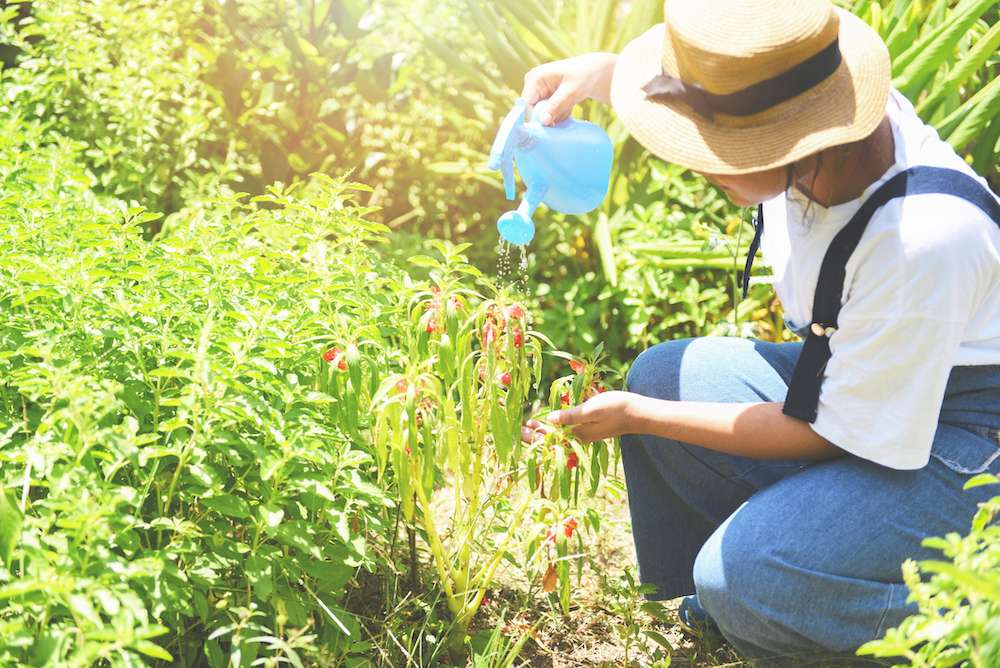
    Victoria O’Dwyer told her story in The Guardian. “I’d always had gardens growing up. Actually, my garden was always a good indication of where I was with my well-being—if I felt good, it was buoyant and green. If I was partying hard, my garden was full of weeds and uncared for,” she wrote.

    O’Dwyer went to school, got a degree, and worked. But it wasn’t until later that she would face her substance use.

    After graduating from university with an arts degree, she worked in the hospitality industry for 13 years. “It suited my lifestyle at the time. But under the radar, I was using substances. Nobody noticed during all those late nights as everyone was drinking.”

    Changing Her Lifestyle

    She grew tired of the same old routine and decided to try something different. “When I was in my mid-thirties, I realized I needed to change my lifestyle,” she wrote. She studied psychodynamic counseling, leaving the hospitality industry for a job at a tennis center. “I thought hanging around healthy people might help me, but actually it didn’t work.”

    After seven years at the tennis center, O’Dwyer enrolled in a treatment program to address her substance use. “I gave up my job and entered rehab. It was there that I was encouraged to try garden therapy.”

    Putting Down Roots

    O’Dwyer, 42, has now been in her role as a gardening trainer for 18 months with Putting Down Roots, an initiative run by the non-profit organization St. Mungo’s Broadway. The program teaches gardening skills to homeless people, using “ecotherapy” to support recovery and improve physical and mental health.

    “I enjoy helping others who have found themselves in a less preferable situation, and being an example of that you can actually pull yourself out,” wrote O’Dwyer.

    A review of Putting Down Roots found that the program helped boost motivation, increase physical activity, improve concentration, energy levels and sleep, and rekindled hope and empowered participants. An impressive 37% of participants either gained a qualification (i.e. certification) and/or went on to pursue volunteering opportunities, education or employment.

    The program has helped O’Dwyer, too, by helping her build a stable life and become confident in herself and her work.

    “I feel more responsible now. Before I rarely slept and was often hanging on by a thread,” she wrote. “I didn’t have much confidence. Now I work really hard and my confidence is real confidence.”

    View the original article at thefix.com