Author: The Fix

  • Music and Emotion: How Songs Help Us Grieve and Heal

    Music and Emotion: How Songs Help Us Grieve and Heal

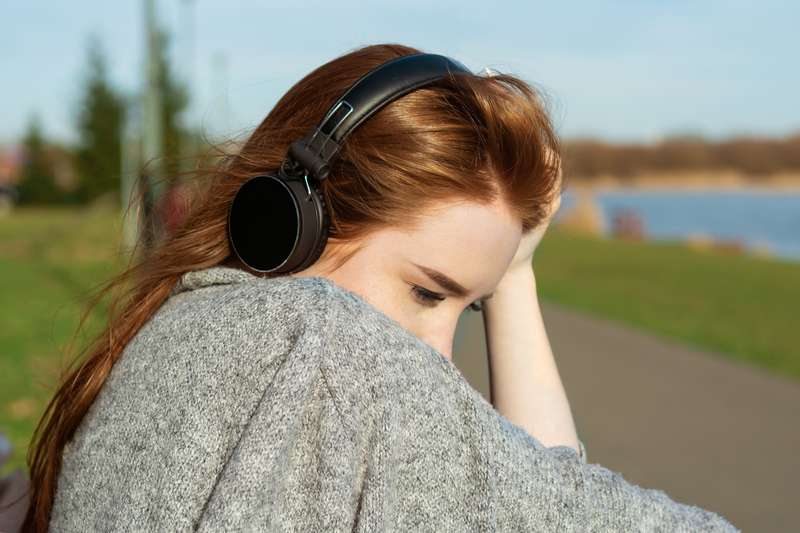
    Music can express how we feel when our grief renders us speechless.

    After my father’s death from suicide 16 years ago, I was always looking for signs—the flickering of a lightbulb, a bird flying overhead, anything that would let me know he was still with me. But in all those years, there was just an empty feeling, a giant black hole where those signs should be. 

    Then, a couple years ago, on the way home from lunch on my birthday, I heard Rod Stewart’s “Forever Young” on the radio, and I knew. I just knew it. That was the message from my father.

    Before and After

    Like many people who have lost loved ones to suicide, I tend to view my life in terms of Before and After; there was my life before he died and then there was my life after he died. I also tend to categorize music in much the same way. There are the songs that evoke the memories of my childhood, like the oldies from the ‘60s and ‘70s that we listened to on family car trips. I can’t listen to Simon & Garfunkel or Gordon Lightfoot without memories flooding back –like when my father introduced my sister and me to his record collection. We played those records for hours until we had all the words memorized.

    Then there are also the songs that remind me of the dark days and months just after he died. A month before his death, I bought Norah Jones’ debut album on a whim and it sort of became the soundtrack of his death. My mother and I listened to it constantly, so every time I hear “Come Away with Me” I’m immediately transported back to that time. Suddenly I’m that scared, confused 21-year-old who can’t believe she’ll never see her father again.

    These songs make me so sad, and yet I can’t stop listening. It’s almost like I’m drawn to the pain that those songs evoke, as if listening to them will somehow help me continue to process my grief.

    How Music and Grief Are Processed in the Brain

    As it turns out, there’s some validity in my yearning to listen to these songs. Listening to music actually lights up the brain’s visual cortex, which processes visual information and stores important memories.

    “Music has been found to have a nostalgic effect, allowing individuals to recall memories, feelings and emotions from the past, so as an individual listens to music, they will start associating it with memories and feelings,” says Aaron Sternlicht, a New York-based psychotherapist. “Musical nostalgia can be helpful in the grieving process to help resolve emotions that a grieving individual may have previously been suppressing.”

    After that birthday message, I started listening to “Forever Young” on repeat. I listened to it when I was writing. I listened to it when I was responding to email. I even listened to it when I was just surfing the web on a random Sunday afternoon. And then I heard it again one morning in March as I was browsing the aisles of Walgreens. At first, it felt completely random and I didn’t think much of it. Then I started putting the pieces together: Shopping together was one of our favorite things to do together, and it was March, the month in which my father died. The coincidences seemed too serendipitous, albeit bittersweet, and the words of the song just cut me like a knife.

    It felt like a message from him, filled with all the things he wanted to tell me. I was relatively young when he died, and there is so much we missed, so many conversations we never got to have, so much life advice he never got to give me. 

    For so long, I’d thought about all the things I’d say to him if I had the chance, but I never gave much thought to all the things he might want to tell me. There’s just so much I want to chat with him about — so many questions about life and what to do and hoping he’d be proud of me. Hearing the lyrics, I pictured my father giving me all sorts of advice, just like he used to. He was always fond of telling stories and imparting wisdom, and I miss his presence so much, looking over my shoulder and encouraging me onward. He was the ultimate cheerleader.

    It’s Not Just Me

    The more I thought about the powerful connection between music and grief, the more I wondered if others felt the same way I did. Did music also make them feel close to their loved ones? Did it help them in their own grieving process? And what is it about certain songs, albums, and artists that connect us to loved ones we’ve lost?

    To get some answers, I opened up the conversation on Twitter and Facebook. Before long, the stories started pouring in, full of love and memories. People were incredibly open and willing to share their stories as a way to honor their loved ones while at the same time acknowledging their grief. Here’s a sampling of some of the powerful experiences they shared with me:

    When I was in high school, my best friend and I made the world’s stupidest music video (with my parent’s massive camcorder) to Avril Lavigne’s “Complicated.” She tragically died of a bad reaction to pain killers/anti-depressants (we never quite got a clear explanation) about eight years ago. Every time I hear that song, I laugh thinking of that ridiculous day, but also want to cry.Catherine Smith, Philadelphia

    My grandpa was a Johnny Cash lookalike. He would even be hired to do impersonations at conferences! Cash is one of my favorite artists because he reminds me of my grandpa (whose name was actually JC, haha!) Last year I went to the Johnny Cash Museum for the first time and cried when I walked in—it was like seeing his face everywhere.Syd Wachs, New Zealand

    Neil Diamond’s “Sweet Caroline” reminds me of my dad, who passed away in September. That was his favorite song. The song has definitely taken on new meaning since his death.Melissa Cronin, Vermont

    When my grandfather died (quite a bit ago), I listened only to country music for about a month straight during my grieving period, as country was his favorite genre. I never listened to country before then, and I can only think of him now when I listen.Isabelle Lichtenstein, Boston

    When I was 16, my beloved Cairn terrier was attacked and killed by another dog. I can’t stop crying whenever I hear “Somewhere over the Rainbow” because Toto in the Wizard of Oz is played by a Cairn.Julia Métraux, New York

    My grandparents, especially my grandmother, loved Elvis, so I walked down the aisle to an Elvis song and it really helped me feel like they were there. —​​​​​​​Abbie Mood, Colorado

    [My mom] died three days before my 32nd birthday. I’d always wanted to take her to Hawaii because she’d always wanted to go and she’d never been anywhere. During my second trip traveling alone in 2012, I was standing in a McDonald’s restroom and heard “I Hope You Dance.” I’d never listened to the lyrics before, but I felt she’d sent me a long-distance dedication, Casey Kasem-style. I started bawling. —​​​​​​​​​​​​​​Miranda Miller, Cleveland

    My Dad’s Message to Me

    Just like Miller, I like to think that the words in “Forever Young” are a message from my father. My favorite line is: 

    But whatever road you choose, I’m right behind you win or lose.

    What a comforting, gentle reminder from him. Just hearing those words makes me feel like I’m still close to him, as if there’s part of him still here with me, right behind me, always, just like the song says.

    Music can be a comfort when everything around us is confusing. Music has the power to begin to heal our soul, even if only a little bit at a time. And, music can express how we feel when our grief renders us speechless, says psychotherapist Ana Jovanovic.

    “It can help us cry, verbalize our feelings and also, feel connected to others,” she says. “When you’re listening to music, you may be able to better recall some of the most significant moments in the life you’ve shared. It’s a piece of experience that helps us stay connected to a memory of a person, even when they’re gone.”


    What songs are meaningful to you and why? Let us know in the comments.

    View the original article at thefix.com

  • Luxury Rehab Guide for Halcion Addiction

    Luxury Rehab Guide for Halcion Addiction

    Use this guide to find answers to your questions about Halcion addiction and how to find a rehab that suits your needs.

    1. Uses of Halcion
    2. Halcion Addiction
    3. Symptoms of Halcion Addiction
    4. Side Effects of Halcion
    5. Addiction and Abuse
    6. Halcion Drug Rehab
    7. Inpatient Rehab Centers, Outpatient Clinics and Residential Programs
    8. Privacy and Confidentiality
    9. Treatment Procedure
    10. Payment Options
    11. Conclusion

    Halcion – also referred to as Triazolam- is a short-acting depressant that affects the central nervous system and is generally used as a sedative to treat severe insomnia and patients with sleep deprivation. Halcion is mostly used as a relaxant to treat patients; it possesses pharmaceutical properties similar to the ‘benzodiazepines’ class. 

    Halcion possesses the pronounced properties of being hypnotic – its primary function is to induce sleep and drowsiness. Other properties include:

    • Amnesic – Deficit in memory caused by using sedatives and psychotic drugs.
    • Sedative – Central nervous depressants that act with the chemicals in the brain to decelerate brain activity.
    • Anticonvulsant – Acting as mood stabilizers and muscle relaxants, they’re used to alleviate spasms and tone muscle.

    Uses of Halcion

    Halcion medication is used to treat patients who have insomnia. This property is due to a sedative-hypnotic effect caused due to an impact on the brain and central nervous system. The medication is frequently prescribed as an aid for passengers suffering from jet lag or sleep disorders. The success of the drug is due to its fast onset without many side effects or drowsiness post waking up. It’s also coupled with anesthesia before medical procedures to reduce the anxiety level in patients. The treatment periods using the Halcion drug is usually limited to short spans of less than two weeks. Halcion is generally ingested by mouth or as part of food intake, and the dosage depends on medical condition, age, and treatment response rate. However, prior testing for side effects caused by the consumption of the drug varies for every individual. Thereby, testing is recommended before usage. 

    Halcion Addiction

    Halcion, also known as Triazolam, is usually prescribed to treat mental and mood disorders, which include insomnia, anxiety, aggression, suicidal behavior, and schizophrenia. Being a controlled substance with limited treatment periods, it’s often misused due to to the ‘high’ produced similar to alcohol intoxication. Overuse of Halcion due to the ease of availability leads to physical addiction and dependency of the medication. Withdrawal symptoms arise when abusers of Halcion stop taking the drug, which is demonstrated by the helplessness felt by most while quitting. This augments itself as a significant indication of addiction to Halcion.

    Symptoms of Halcion Addiction

    Significant signs of Halcion addiction can be showcased through:

    • Repeated attempts to quit (mostly unsuccessful)
    • Time spent in recovering from Halcion side effects
    • Cravings of Halcion drug
    • Increased use of Halcion drug for better comprehension of effects

    Side Effects of Halcion

    The reactions caused by the usage of Halcion drug can be expressed as below:

    >1% of patients have reactions like dizziness, problems with coordination, and feeling of lightness. This is the most commonly felt side effect 0.5% to 0.9% of patients have reactions like tiredness, confused state of memory, depression, visual disturbances, and feeling of cramps. These symptoms are less familiar to the side effects felt by patients.

    <0.5% of patients have side effects like constipation, taste alteration, dryness of mouth, nightmares, lack of sleep, weakness, and indigestion. These side effects are infrequent as side effects for most patients.

    Using Halcion can also cause impairment that can go on to the next day. This is extensively researched and has been demonstrated by hangover effects after intake of Halcion. 

    This is signified by effects like sleepiness, impairment of motor skills, diminished cognitive functions, resulting in a confused state of being. Immediate attention should be paid by consulting the doctor if the dizziness persists. Further, taking Halcion medication might also cause people to feel drowsy during the day. Due to the inherent property of inducing sleep, the after-effects of diminished cognitive functions and motor skill impairment may result from administering the drug in the following day. 

    People have also sleepwalked, made phone calls, and eaten food to which they have no clue about the next day. Additional intake of alcohol while on Halcion results in increased after-effects. Reports have suggested that severe allergic reactions to this drug have been rare. However, it’s widely advised to consult a general physician immediately if some allergic reaction is seen due to a Halcion intake.

    Addiction and Abuse

    Both the terms – Abuse and Addiction- are separate and distinct from each other. Abuse generally refers to the misuse of the drug for mostly recreational purposes sometimes in addition to other substances. On the other hand, the physical dependence to a particular drug is characterized by specific withdrawal symptoms experienced by dosage reduction or stoppage of intake. Tolerance to a specific drug arises over a period when the exposure is slowly increased. Addiction is mostly a chronic disease that is highly influenced by factors like environmental conditions and genetics, which affect its development. Addiction is also characterized by showcased behavior like excessive usage, continued use despite the harm caused, control impairment over drug usage, and increased cravings. However, the silver lining points to the temporary nature of addiction – through a controlled approach of reduction of consumption and other disciplinary functions. 

    Halcion Drug Rehab

    Halcion is a drug that induces sleep. Due to the soothing and calming effect produced by Halcion intake, it leads to abuse. These effects are mostly due to the Halcion drug affecting the central nervous system- basically, slowing down cognitive functions and causing a relaxed demeanor. The mood enhancement factor creates a euphoric feeling. This exact tendency causes addiction and abuse of the drug. Aided by the rapid action and potency, Halcion is a popular drug for recreational use. Signs of overdose of Halcion include vision impairment, slurred speech, difficulty in breathing, drowsiness, and impaired body functions. 

    Often combined with other drugs like alcohol leading to an increased ‘high,’ Halcion drug abuse is one serious addiction threat. Add to it the self-medication techniques followed by abusers of narcotic painkillers or heroin who end up mixing Halcion with opioids and seriously endanger their bodily functions. Halcion addiction treatment is pretty similar to benzodiazepine withdrawal and treatment since they belong to the same class of drugs. Most symptoms are taken through a detox process with a gradual decrease in the dosage and possibly using drug replacement therapy. This process is highly effective due to the gradual removal of drugs from the body while correcting the chemical imbalance created due to substance abuse. The drug replacement therapy also helps in the prevention of withdrawal symptoms during the entire detox process. 

    Inpatient Rehab Centers, Outpatient Clinics and Residential Programs

    Inpatient rehab centers typically offer more structure and intensive support than outpatient clinics. With outpatient clinics, a person may visit a counselor weekly and attend community-based support groups throughout the week. On the contrary, an inpatient treatment facility offers more hands-on support to the victims through daily meetups with a counselor and through a combination of group and individual therapy sessions. Inpatient treatment facilities also facilitate strict medication monitoring in a controlled environment, which makes it difficult for abusers to obtain and utilize drugs without prescription. This is the most primary benefit of inpatient treatment since prescription drugs are widely available outside. 

    On completion of the inpatient treatment program, the patient can continue to receive support through an outpatient clinic or residential treatment program. A residential rehab facility is recommended for patients who need assistance with psychological or medical conditions and to also support their dependency on a particular drug. Residential rehab programs offer monitoring and daily support concerning the medication provided, but unlike inpatient programs, these programs also accentuate the patients with the freedom to work, go to school, visit relatives and homes of neighbors, and spend time in the community. Tolerance of the drug Halcion can be built up as a result of prolonged usage, and withdrawal symptoms usually characterize the physical dependence. 

    Privacy and Confidentiality

    Privacy is one of the major concerns a person may have before entering a rehabilitation program. This is coupled by fears of public knowledge of an addiction that disrupts a person’s private and professional life. However, strict codes of conduct are followed at these inpatient treatment facilities and rehab centers, coupled with adherence to confidentiality agreements. During the intake process, patients declare emergency contacts, family members, and other treatment professionals who can be informed of personal information when needed. Some treatment facilities also have the option of private rooms, although standard industry practice of sharing rooms with another patient is the most prevalent. This also serves as a blessing in disguise and proves helpful to patients to interact more with each other between counseling sessions and rehab activities.

    Rehab centers offer programs of different lengths. A 28 to the 30-day program is sufficient for detox and the initial stages of recovery, but continued outpatient services are necessary and recommended to help the patient recover fully. Some facilities offer a forty-five or two to three-month program, whereas others may need treatment ranging between six months to a full year. The length of the approach depends on the severity of the drug use of the patient and the types of support available to the patient outside the inpatient facility. Physicians and social workers can provide recommendations based on all the factors. Long term rehab programs – that take 120 to 180 days or longer, help in treating chronic addiction cases by providing intensive and structured treatments, coupled with helping the addicted patient sustain from the drug and resume a healthy life.

    Treatment Procedure

    The first step in the inpatient rehab facility is the intake appointment. This is the step to sign a document signifying consent to the entire treatment procedure. Post-consent, a physical checkup is done to determine the patient’s medical condition. Most facilities have an interview process to determine the extent of damage and customize the proper treatment plan following circumstances showcased. The next step in the process is detox. Treatment plans vary as per the length and severity of the addiction. Once the detox process concludes, the next stage is to provide patients with addiction therapy.

    Addiction therapy is essential and comes in various forms. The most beneficial among all is the peer to peer group therapy, where peer support helps one be in terms with his/her addiction and feel less alone. Individual therapy is also offered to help patients understand themselves better, to reciprocate on circumstances leading to the addiction and hence, provide support and strength for patients to stay sober. Once the addiction therapy has started, patients are usually sent into specialized care. This is unique to each patient – due to their individual needs. Concurrent mood disorders for each patient need to be addressed for successful addiction recovery. This is the primary factor for the customized and tailor-made specialized care for each patient. Inpatient rehab centers also provide extended care as part of their aftercare regimen. This can take the form of ongoing group and individual therapy and continued support either by phone or treatment centers.

    Payment Options

    The price of Halcion rehab treatments varies on the length of stay, the severity of the condition, type of treatment needed, and the treatment facility chosen to enroll. Most treatment centers accept health insurance while many others offer private financing to aid patients to afford the rehab program. The decision of where to receive treatment also depends on the location of the rehab facility. Usually, the best choices are across the country, where enrollment in rehab centers do not affect life in the residing community. On the contrary, a treatment facility nearby will make aftercare more affordable and readily acceptable in an environment patients are familiar with. However, in all these cases, a necessary condition is to get the treatment and detox that is needed.

    Conclusion

    Halcion drug abuse is an increasing problem. However, with the right facilities in place, addiction is entirely curable. As always, health is wealth. Staying sober and leading a life in sound health should ideal. For more information on the above, you can always conduct a search online.

    View the original article at thefix.com

  • Macklemore: Sobriety Brought Me Closer To My Mother-In-Law

    Macklemore: Sobriety Brought Me Closer To My Mother-In-Law

    Macklemore took to Instagram to celebrate his improved relationship with his mother-in-law. 

    Rapper Macklemore has seen an improvement in his relationship with his mother-in-law ever since getting sober, as chronicled in an Instagram post of the pair hanging out in Paris together.

    “Out here in Paris with my mama in law. Glowed up. Grown up. She used to not trust my ass at all, as I’d sneak in and out of her house to visit @baba_g on the late night,” he wrote in the caption of his post. “Now we in Paris eating appetizers, shopping, walking the city and looking out the window at the Eiffel Tower. Life is good. Change is good. I love her beyond words. And I think she likes me now.”

    The musician was referring to his spouse, Tricia Davis, who goes by the handle @baba_g on Instagram.

    Cynical voices descended on Macklemore’s post, pointing out how convenient it was that his mother-in-law seemed to get along now that he’s dropping tons of cash on her on an expensive trip to France.

    “Amazing what a few million dollars can do,” wrote one such commenter.

    It Wasn’t About The Money

    However, the “Thrift Shop” singer insisted it wasn’t the money that changed things.

    “Although money is nice, it unfortunately can’t keep you sober. And when I got sober that’s when our relationship changed. Money had nothing to do with it,” he clarified on the post. “(But yet, Paris is hella expensive and these euros adding up)”

    Macklemore has spoken openly about his troubled relationship with drugs, which began as early as 14 years old and only got worse as he became more famous. “There was a rapid transition and to have the world’s eye on me all at once with back-to-back number ones, and all the accolades that came with it—I didn’t know how to deal with it,” Macklemore said in an interview last year. “I didn’t know how to adjust, so I escaped.”

    Since then, the singer has become sober and has advocated for the recovery community, including headlining the first ever Recovery Fest 2018 as well as earning a MusiCares award in recognition of his advocacy work.

    View the original article at thefix.com

  • Model Jessica Hart Speaks On Why She Embraced Sobriety

    Model Jessica Hart Speaks On Why She Embraced Sobriety

    “I wanted to look after myself. ‘My body is a temple’ is a saying I once would have laughed at, but I wanted to respect this vessel that is taking me through life,” Hart said.

    Australian model Jessica Hart recently celebrated her one-year sober anniversary, and to commemorate the occasion she wrote an essay for Harper’s BAZAAR about why she decided to quit drinking and treat her body like a temple.

    “One morning, when I was in my early thirties, I finally pulled the plug,” she wrote. “I just woke up one morning and said, This is it. I wanted to look after myself. ‘My body is a temple’ is a saying I once would have laughed at, but I wanted to respect this vessel that is taking me through life. I’d put it through so much and it was time to give back.”

    Though Hart says she never got to the point where she had to drink daily, she held the philosophy of “go hard or go home” when it came to consuming alcohol. She took pride in the fact that she could “drink most people under the table and come home as the sun was rising.”

    Thinking About The Future

    Now, at age 33, she worries about hurting herself, her career and her future with too much partying, and admires the people in her life who are sober and happy.

    “I looked at friends who live sober lives and have great families and successful businesses. I often thought, I want that. That other path—the one I was on—was simply unfulfilling.”

    Hart started her modeling career at age 14, one year after she first started drinking. She left school to fully devote herself to her work at age 15, traveling the world until she purchased a home in New York a few years later. She signed on with Victoria’s Secret in 2009 and has appeared on the covers of several of the most famous fashion magazines, including BAZAAR

    Unlike some models and celebrities, Hart’s life and career have been relatively free of drama in spite of her heavy drinking. She suffered a broken ankle and some nerve damage due to a serious cut on her foot in 2012, leading to a temporary hiatus from modeling. However, she was back for the Victoria’s Secret Fashion Show a few months later.

    Hart also broke her wrist two weeks into her self-imposed sobriety, but that ended up helping.

    “With a broken wrist for the summer, I had to cancel any travel plans and stay home, chill and heal,” she said. “The universe was telling me it was on my side.”

    She also attended AA meetings and The Landmark Forum, a personal development course, to help her transition into sobriety. Additionally, she learned to meditate and practices the skill when she feels anxious. To others looking to go sober, she recommends taking small steps.

    “I would encourage you to take small steps and see how they connect to make a huge impact on who you truly are. Once you put to the universe that you’re going to do this for yourself, the universe gives back. I promise you that.”

    View the original article at thefix.com

  • Illegal Marijuana Growers Are Damaging The Environment

    Illegal Marijuana Growers Are Damaging The Environment

    The use of toxic pesticides on public land has increased dramatically over the past several years—exposing surrounding wildlife and people to their harmful effects.

    Illegal marijuana growers are inflicting a significant amount of damage on the environment. So far, 160 toxic illegal grow sites have been reclaimed (cleaned) in California. But 830 more are on a waiting list.

    Part of the reason why this process is so taxing is the health hazard posed to authorities and cleanup crews who encounter these sites. According to a recent feature in Playboy, the use of toxic pesticides has “increased dramatically over the past several years”—exposing surrounding wildlife and people to their harmful effects.

    Federal officials in California have shifted their focus from regulating the legal marijuana industry to cracking down on these toxic illegal grow sites established on public land, according to U.S. Attorney McGregor Scott of the Eastern District of California. “This isn’t about the marijuana, it’s about the damage that’s being done,” said Scott. “What is happening here is illegal under anybody’s law.”

    Hurting Wildlife

    The threat to the environment, wildlife and public health is concerning. One pesticide of particular concern is carbofuran, said to be so powerful that a quarter-teaspoon can kill a 300-pound bear, according to researcher Mourad Gabriel.

    Aside from the chemical contamination of the soil, water, plants and wildlife, illegal growers leave behind thousands of tons of trash that require a helicopter to be airlifted away. Water theft and diversion and land erosion from irrigation are also hurting the natural ecosystem.

    Playboy met with Gabriel, fellow Integral Ecology Research Center (IERC) researcher Greta Wengert, and law enforcement officials as they examined one illegal grow site near Plummer Peak in Northern California.

    In 2012, carbofuran was detected in 15% of illegal grow sites visited by the IERC. In 2018, that number reached almost 85%. That year, 89% of illegal grow sites were confirmed or strongly suspected to be contaminated with “highly deadly toxic chemicals,” according to the IERC. According to the Environmental Protection Agency, there is no amount of carbofuran that is safe for people.

    Illegal marijuana growers are using the highly toxic chemical, and ones like it, to not only deter wildlife from the plants, but authorities as well. A suspect arrested during the 2018 growing season in an illegal grow site in Trinity County “strongly implied that illicit growers are increasing carbofuran use in part to deter enforcement actions, and some have adopted the practice of leaving carbofuran containers and other signs of use in plain view so teams will leave the sites without eradicating the plants,” according to a safety notice issued last September.

    This speaks to the significant hazard the pesticide poses to human health. Carbofuran and other toxic pesticide exposure has landed environmental and law enforcement officials in the hospital.

    Side Effects From Toxic Pesticides

    Studies on the effects of smoking marijuana tainted by toxic pesticides is lacking, as Planet Natural noted. And because marijuana is still illegal at the federal level, pesticide use on marijuana is not regulated by the EPA.

    Symptoms of exposure to these pesticides include “nausea, vomiting, diarrhea, labored breathing, cyanosis, convulsions, and unconsciousness” according to one public health alert.

    Illegal marijuana grows exist outside of California as well. The presence of illegal drug traffickers has been found in 72 national forests in 21 states. It’s a “major national problem,” said U.S. Forest Service Chief Forester Vicki Christiansen.

    View the original article at thefix.com

  • Colorado Still Struggling With Marijuana Field Sobriety Tests

    Colorado Still Struggling With Marijuana Field Sobriety Tests

    Traffic fatalities involving drivers with marijuana in their system have risen as proper impairment testing continues to be an issue in the state.

    As Colorado marks the fifth anniversary of legalizing recreational marijuana, the problem of impaired driving—and how to properly test for impairment—remains as elusive as it was in 2014.

    As an article in the Routt County daily newspaper Steamboat Pilot & Today noted, according to state law an individual is under the influence if more than five nanograms of THC is present in their bloodstream. But how to properly and legally test drivers remains out of the reach of police in the Centennial State, and users have expressed concern that if a method is discovered, they could test over the limit even if they are not legally impaired.

    As a 2016-2017 report from the Substance Abuse and Mental Health Services Administration (SAMHSA) found, twice as many Coloradans smoke marijuana than residents of other states, and the number of adults in that demographic has risen since 2014.

    Traffic fatalities involving drivers with marijuana in their system have also risen from 75 in 2014 to 139 in 2017. Statistics like these fuel the call for impairment testing, but the facts behind the latter data also underscore the challenges inherent to such a test.

    The problem arises from the fact that the number of Colorado drivers involved in a traffic fatality who tested above the legal limit for THC has actually dropped, from 52 in 2016 to 35 the following year.

    As Reason noted, this may be due to the fact that THC remains detectable in a user’s system for up to 30 days, and drivers who test positive at the time of a crash may not, in fact, be legally impaired.

    THC Lingers

    As the Pilot & Today article stated, police are aware of this conflict. While field sobriety tests for alcohol impairment can be accurate at a rate between 91 and 94%, detecting marijuana impairment depends largely on blood tests.

    “There is no go-to tool that is considered reliable across the board to determine if someone is impaired by marijuana,” said former assistant district attorney of Routt County Matt Karzen in the article, who noted that most cases stem from a plea deal in which drivers plead guilty to driving while impaired, a traffic infraction which usually results in a fine and revoked driving privileges for 90 days—far less than a DUI conviction.

    Marijuana advocates and law enforcement alike see this information as proof positive for more accurate means of measuring marijuana impairment, but efforts by lawmakers in Colorado have come up short; a bill proposed in 2019 would have empowered officers with the full right to determine impairment through a combination of field sobriety tests—observation and coordination tests—and blood testing. The bill was met with opposition and currently remains postponed until a February 2020 review.

    5-Nanogram Limit

    Legal representatives like Karzen and police officers have been encouraged to pursue impairment cases in which the individual is both clearly impaired—as the Pilot & Today noted, those exhibiting memory loss, poor driving or if marijuana smoke is evident. These signs, along with a blood test above the legal limit, are the best possible indicators at the moment for driving impairment.

    “I’m very uncomfortable proceeding with a criminal prosecution on impaired driving based only on the five-nanogram limit,” said Karzen.

    View the original article at thefix.com

  • Autoworkers Union Pushes For Better Opioid Treatment 

    Autoworkers Union Pushes For Better Opioid Treatment 

    “The issue demands that we get involved, and it demands that we set an example of combating it in a positive way,” said the union’s VP.

    The United Automobile Workers union (UAW), which has nearly 400,000 active members, is making access to addiction treatment a priority in negotiations with the major automotive companies this year. 

    “The issue demands that we get involved, and it demands that we set an example of combating it in a positive way—the union and the company,” the union’s Vice President Rory Gamble told Automotive News. “We have to grab this thing and address it now.”

    Like many people in the industry, Gamble has been touched by addiction. His granddaughter died in January of an opioid overdose. For other workers the connection is even more personal, as long days and assembly-line work lead to injuries that are often treated with opioids. 

    Working With The Union

    Scott Masi lost his automotive job after he was found sleeping on the job, a complication from opioid use disorder. Now in recovery, Masi works with the union and employers to help them better integrate employees who need treatment. 

    “If I was struggling with diabetes and I wasn’t getting my medication, and I was sleeping because of that, do you think they would have fired me? No,” he said. “I had no recourse to save my job, get the help that I needed or utilize the insurance that I had worked for.”

    Consultant Pamela Feinberg-Rivkin would like to see automakers be proactive to increase access to treatment for employees. 

    “If one or all three of [the automakers] would invest—not only in recovery; they need to have treatment first—but invest in the detox treatment and then a recovery community where they can live and work and receive that long-term care—that’s a model that should be created in the state,” she said. “Many workers that we have could benefit from having that whole continuum of care.”

    Ford’s Pilot Program

    Ford is leading the way, with an initiative to provide a point-stimulation therapy device that helps people overcome the pain of withdrawal. As part of a pilot program, more than 200 employees and family members will have access to the device. 

    “This device is not a miracle, but it is the next best thing,” said Todd Dunn, president of a local UAW chapter. “It’s a positive, disruptive solution to opioid treatment. I think you’re going to see GM, Chrysler, a lot of companies and organizations look at this device as a game changer.” 

    Jeremy Milloy, a researcher who has studied American workplaces, said that it’s important that employer health plans offered by automotive makers cover devices like this and other medication-assisted treatment. For too long, he said, the companies’ generous health plans contributed to people having easy access to opioids. 

    “It’s a really obvious time for them to say that policies based on surveillance and stigmatization have failed,” he said. “They can’t work in a system where the No. 1 most-abused drug is a licit one being prescribed through company health plans.”

    Gamble, the union’s vice president, said that the union, employers and employees are all willing to work together to help improve access to treatment. However, it’s a matter of finding an option that works for all parties. 

    “I am not against any type of solution that makes sense,” he said. “But when you sit down with a company, you have to craft that where it makes economic sense.”

    View the original article at thefix.com

  • Texas College Aims To Help Every Student With Mental Health, Trauma

    Texas College Aims To Help Every Student With Mental Health, Trauma

    Paul Quinn College is taking a progressive approach to mental health that leaves no student behind. 

    With stress, anxiety and depression a common struggle among college students, there is more focus now on mental health in higher education than ever before. Now Paul Quinn College in Texas is working hard to make sure that their students have their mental health needs covered.

    As Dallas News reports, every student who comes into Paul Quinn College is encouraged to meet with a counselor for a mental health assessment, and the school has a free mental health clinic that students can visit as well.

    Dr. Stacia Alexander is the director of Paul Quinn’s mental health clinic, and she tells new students at the school, “We’re here for you. For whatever feelings you struggle with—with whatever you hide from everybody else that you think means nothing, that you think makes you out of your mind. We are here to talk to you about these feelings.”

    Setting Students Up For Success

    Paul Quinn College often takes in a lot of students who come from underprivileged backgrounds and are trying to find their place in the world. Several years back, the school’s president, Michael Sorrell, tried to figure out why the school’s graduation rate was so low. “It took us a while to understand that that was a product of trauma,” Sorrell says.

    The first years of college can be especially stressful. You’re on your own for the first time, you want to succeed, and it can be hard to balance your scholastic, professional and personal workload.

    Dr. Jessica Moore, a mental health professional who works at Paul Quinn, recalled that the subject of mental health didn’t come up much when she was in college. But today, “the students are good at letting us know the things that they need. They are quick to say, ‘OK, we need to talk about trauma or peer relationships or stress management.’ And then we all work on an event or program to address that.”

    Dr. Alexander has freely given out her cell phone number for students to reach out and contact her, and with this new openness about mental health at Paul Quinn, her phone has been buzzing frequently from students looking for help.

    “The thing we’re trying to get students to understand is that [their] traumas are real. And they do impair or affect how you process daily information. And if you continue to ignore that, you’re going to continue to be impaired and not reach your full potential.”

    View the original article at thefix.com

  • Guide to Top Rehabs for Oxaydo Addiction

    Guide to Top Rehabs for Oxaydo Addiction

    Looking for information about Oxaydo addiction and some tips on finding the right luxury rehab? Use this helpful guide to find answers.

    1. What is Oxaydo and How is it Used?
    2. How Oxaydo Addiction Develops 
    3. The Effects of Oxaydo on the Brain
    4. Street Names for Oxaydo
    5. Signs of Oxaydo Addiction
    6. The Hazards of Oxaydo Overdose
    7. Diagnosing Oxaydo Addiction
    8. Oxaydo Addiction and Its Co-occurring Disorders
    9. Oxaydo Withdrawal and Detox
    10. Getting Treatment for Oxaydo Addiction
    11. Finding the Right Oxaydo Rehab Facility for Your Recovery

    Oxaydo is a potent painkiller. When it is prescribed, it should help relieve your suffering. But if you misuse this drug, Oxaydo addiction can quickly develop. Should this happen, you’ll need to get help right away, before your Oxaydo dependence wreaks havoc on your life.

    Addiction treatment will offer you the best opportunity to conquer your problem. High-quality Oxaydo rehab facilities can make all the difference, as long as you make the right decision and choose the best Oxaydo rehab for you.

    What is Oxaydo and How is it Used?

    Oxaydo is an instant-release prescription pain medication that contains oxycodone, an opioid analgesic known for its powerful effects. Like other forms of oxycodone, Oxaydo is prescribed for the treatment of moderate to severe pain, which may be chronic or temporary depending on its cause. 

    Oxaydo tablets dissolve in the stomach and can provide effective pain relief for a period of four to six hours. Typical doses range from five to 15 mg, and patients should limit their consumption to no more than four doses every 24 hours.

    Oxycodone has been sold for years in large quantities under the brand name OxyContin. But there have long been concerns about the abuse of this particular drug. Public health authorities have been calling for safer alternatives, and that is what Egalet Corporation (the makers of Oxaydo) have tried to provide.

    In addition to its painkilling effects, oxycodone can also cause feelings of euphoria, especially in a concentrated dose. That’s why people who abuse the drug often inhale or inject it after first dissolving or crushing the tablets. 

    With Oxaydo, none of this will work. Thanks to its special abuse-deterrent formula, if users try to dissolve it for injection Oxaydo will turn into a gel that is too thick to insert into a syringe. If crushed and inhaled, it will cause an unpleasant burning sensation in the nasal passages. Chewing it will destroy its intoxicating capacities completely. 

    The only way to consume Oxaydo successfully is to take it in the normal way, with liquid, after which it will dissolve at a gradual pace and not cause any kind of significant rush.

    With its advanced abuse-deterrent formula, Oxaydo does represent something of a breakthrough. It presents certain challenges to those who would try to abuse it that earlier versions of oxycodone lacked. 

    But while Oxaydo’s formula does represent something of a breakthrough, its ingenious design does not make it totally abuse-proof. Users can simply take extra tablets if they want to increase concentrations in their bloodstream, and that is exactly what many people who’ve developed Oxaydo addiction have been doing. 

    How Oxaydo Addiction Develops

    Many men and women start out with a legitimate prescription for Oxaydo. They find it helpful for their severe or chronic pain. But over time, they start violating the terms of their prescription, thinking that more of a good thing must be better. Their prescriptions weren’t quite enough to completely vanquish their pain, so they increase their dosages progressively in a search for complete relief.

    Unfortunately, what these individuals fail to realize is that doctors limit their dosages to protect them from addiction. Growing tolerance for Oxaydo will develop as consumption increases, and that is why they have to boost their dosages repeatedly to keep the pain away.

    The same pattern often occurs among people who obtain their Oxaydo illicitly. They try to self-medicate for their pain, but don’t really know how to do it and quickly start taking more than they should. Without the guidance of a trained medical authority, they don’t limit themselves and end up falling into drug dependency.

    Another way people slip into Oxaydo addiction is through recreational use. The aim is not to reduce pain but to get high, using a drug that many believe is safer because it is available with a prescription. 

    In reality, recreational use of Oxaydo is always a form of Oxaydo abuse and is therefore dangerous. This is especially true if you find yourself mixing Oxaydo with other intoxicating or mind-altering substances. This will increase your risk of addiction and could even lead to an Oxaydo overdose. 

    Regardless of your reason for misusing Oxaydo, if you aren’t taking it as prescribed your behavior could put your health at risk.

    The Effects of Oxaydo on the Brain

    When oxycodone reaches the brain, it can bind with opioid receptors to reduce or eliminate your feelings of pain. It will also stimulate those receptors to release the neurochemical dopamine, a so-called “pleasure molecule” that is responsible for the feelings of euphoria Oxaydo can produce.

    As long as your Oxaydo use is carefully controlled, there should be no danger. But when you abuse an opioid medication, the opioid receptors in your brain will gradually lose sensitivity. They won’t react as strongly to the presence of Oxaydo and won’t release enough dopamine to meet your growing dependence on its uplifting effects. This means you’ll have to take more and more Oxaydo to kill your pain and experience the feelings of joy you’ve come to crave.

    Growing tolerance for Oxaydo is what leads to addiction. When you’ve been abusing the drug for a while you’ll no longer be able to get by without it—or more specifically, without a lot of it. 

    Street Names for Oxaydo

    People who are determined to abuse Oxaydo will be able to find supplies. Opioids are so widely prescribed that friends, family members and neighbors often have bottles around the house. They are also available on the black market, from dealers who sell prescription drugs alongside illicit substances like cocaine, methamphetamine and heroin

    When purchased illegally, Oxaydo (or oxycodone in general) may be referred to by a number of slang names or street names, including:

    • Oxy
    • Oxycat
    • Hillbilly heroin
    • Juice
    • Dillies
    • Apache
    • Goodfella
    • Loads
    • White stuff
    • China white
    • Jackpot
    • Dummies
    • TNT

    If you’re getting your Oxaydo from sources where such terminology is frequently used, you should take that as a warning sign that you’re headed for a fall.

    Signs of Oxaydo Addiction

    Oxaydo addiction can develop faster than you might expect. In the early stages, you might confuse Oxaydo addiction symptoms with normal Oxaydo side effects. But Oxaydo addiction symptoms are more severe, debilitating and chronic. 

    Some of the symptoms of Oxaydo abuse and addiction include:

    • Constant drowsiness
    • Sluggishness
    • Slow heart rate
    • Suppression of appetite
    • Mental confusion and memory problems
    • Lack of balance and coordination
    • Low blood pressure
    • Dry mouth
    • Constipation
    • Sleep disruptions
    • Nausea and vomiting
    • Mood swings
    • Respiratory difficulties

    Each of these Oxaydo addiction symptoms is a sign of distress. They happen because you’ve been taking more opioids than you can handle and your brain and body are struggling to adjust. 

    The ultimate result of this type of drug abuse is addiction. If you don’t seek treatment, your symptoms will only worsen over time.

    The Hazards of Oxaydo Overdose

    Few Oxaydo addiction symptoms are more troubling than an Oxaydo overdose. 

    Opioid overdoses are responsible for tens of thousands of deaths in the United States each year. Even if you manage to survive an overdose, you’ll remain in danger unless you seek treatment at an Oxaydo rehab facility immediately. 

    The symptoms that let you know you’ve overdose on Oxaydo may include:

    • Disorientation
    • Weakness
    • Loss of coordination
    • Slow heartbeat
    • Low blood pressure
    • Dilation of the pupils
    • Bluish tint to lips and/or fingernails
    • Nausea and vomiting
    • Respiratory difficulties
    • Loss of consciousness

    Respiratory failure is the usual cause of death from Oxaydo overdose. The risk can be especially acute if you’ve mixed Oxaydo with other substances that further suppress central nervous system activity, such as alcohol or benzodiazepines (Xanax, Klonopin, Valium, etc.). 

    When the first Oxaydo overdose symptoms become apparent, it is vital to seek medical attention right away. Emergency medical personnel can stop an opioid overdose in its tracks, by injecting you with a drug called naloxone, which is sold under the brand name Narcan. But this will only work if you haven’t let your overdose progress too far.

    Surviving an Oxaydo overdose is a clear indication that you need Oxaydo rehab services right away. If you wait any longer, tragedy will get a second chance to strike. 

    Diagnosing Oxaydo Addiction

    Changes in your behavior combined with certain physical manifestations of drug dependency will allow psychiatrists, psychologists and addiction specialists to identify the true nature of your condition.

    There are 11 symptoms classified as diagnostic criteria for opioid addiction, according to the Diagnostic and Statistical Manual of Mental Disorders (DSM-5). Two or more must be registered before your Oxaydo use disorder is confirmed.

    These symptoms include:

    1. A pattern of taking more Oxaydo than planned or expected
    2. The experience of powerful cravings for Oxaydo
    3. Spending an inordinate amount of time using and acquiring Oxaydo, or recovering from its misuse
    4. Encountering relationship troubles related to Oxaydo abuse
    5. Neglecting important duties at home, on the job, in school or elsewhere because of Oxaydo abuse 
    6. Developing physical or mental health problems related to ongoing Oxaydo use
    7. Abandoning previous hobbies or favored activities as a result of Oxaydo abuse 
    8. Incidents of risky, hazardous or reckless behavior occurred while Oxaydo was being abused
    9. Multiple attempts to stop using Oxaydo have failed
    10. An increase in tolerance for the effects of Oxaydo has developed, leading to escalating consumption
    11. The experience of Oxaydo withdrawal symptoms when use of the drug was interrupted

    If you report six or more of these symptoms, your Oxaydo use disorder will be classified as severe, because that signifies that your consumption of the drug is out of control.

    Oxaydo Addiction and Its Co-occurring Disorders

    Oxaydo abuse is often accompanied by co-occurring mental health disorders, which may be an underlying reason why your use of the drug has spiraled out of control. 

    Having a pre-existing mental health condition like depression or an anxiety disorder is a significant risk factor for chemical dependency. Many people turn to drugs and alcohol to help them escape their psychological discomfort and emotional pain. 

    In fact, about half of all people who develop Oxaydo addiction will have a previous history of mental health issues. This is why mental and behavioral health professionals screen for such conditions at the same time they evaluate you for a substance use disorder. When you go into treatment, it is essential that you receive help for all your existing conditions, simultaneously and with equal emphasis. 

    If you’ve been abusing multiple drugs at the same time, that is another complication that must be dealt with in your Oxaydo rehab program. Great Oxaydo rehab services are always customized to meet your specific needs as an individual, with full sobriety and lasting wellness of mind and body being the ultimate priority.

    Oxaydo Withdrawal and Detox

    The goal of oxycodone addiction treatment is to get you off Oxaydo completely. But if you try to stop using opioids all at once, you’ll experience powerful opioid withdrawal symptoms that can quickly undermine your resolve to stay clean and sober. 

    The onset of Oxaydo withdrawal symptoms may occur within the space of a few hours. These symptoms will be debilitating and unpleasant, and may take 48-72 hours to peak. They would eventually subside in strength, but only after 10-14 days and likely not soon enough to prevent a relapse.

    The most common Oxaydo withdrawal side effects include:

    • Agitation and anxiety
    • Poor appetite
    • Muscle aches
    • Severe nausea
    • Runny nose
    • Tremors
    • Sweating
    • Headaches
    • Diarrhea
    • Insomnia
    • Fatigue

    Obviously, you’d like to avoid the worst of Oxaydo withdrawal symptoms. Therefore, your best course of action is to start your rehabilitation in a medical detox program administered by an Oxaydo rehab center. 

    In detox, you’ll receive round-the-clock medical care in a fully-staffed and supplied clinical setting. This is to make sure you’re kept as comfortable as possible in the early stages of your recovery. Physical and mental healthcare services will be provided on an as-needed basis, assuring you receive appropriate quality care at a time when you’re at your most vulnerable.

    All of this can help ease your transition into an Oxaydo-free lifestyle. But to ensure your sobriety is sustainable, you must be introduced to it gradually. Rather than discontinuing opioid use suddenly, your dosages will be steadily decreased over a period of several months (or possibly weeks if you have a mild to moderate substance use disorder). 

    While you may detox from Oxaydo, it’s more likely that you’ll be given buprenorphine (Suboxone, Subutex, Buprenex) as a maintenance medication. This opioid can bind with the same receptors as Oxaydo, but without causing the same mind-altering effects. You won’t experience a rush of dopamine with buprenorphine, which means as you continue to take this drug euphoria will be no factor at all. This will help you break the hold of your addiction, so that when you finally get off buprenorphine for good you won’t miss it. 

    Methadone is another opioid medication sometimes prescribed in medication-assisted treatment (MAT) programs. Two other medications, lofexidine and clonodine, are non-opioid substances that can reduce the intensity of any withdrawal symptoms you might experience.

    Although such medications may be needed for months, they will first be provided in detox, which normally lasts for seven to 10 days. When your detox team is convinced your condition has stabilized, and that you’re physically and emotionally ready for addiction treatment, they will authorize your release and your formal Oxaydo rehabilitation program can begin.

    Getting Treatment for Oxaydo Addiction

    Overcoming Oxaydo addiction will require all your resources and determination. When you enter Oxaydo rehab, you’ll be challenged in ways you’ve never been challenged before. 

    But your addiction recovery team will equip you with the tools you need to successfully engage your opioid dependency. If you have co-occurring mental health disorders, they will be addressed in your treatment plan as well, with the same emphasis on developing your self-help skills.

    The core of your Oxaydo addiction recovery program will be individual therapy, with sessions likely made available on a daily basis. The idea is to create positive momentum by building a constructive relationship with your therapist, who will help you confront your past while beginning to imagine a much brighter future.

    In addition to individual therapy, group therapy and family therapy will also be included in your recovery plan. To facilitate good emotional health, you need to create a strong support network, both inside and outside the treatment facility. Peer group meetings and family therapy sessions will make you feel welcomed and accepted, and in the latter case loved. This type of support will increase your motivation to get better by letting you know that you aren’t alone in your struggle, and by letting you learn from others who are going through the same experience. 

    Complementary or alternative treatments are now a regular part of most Oxaydo addiction treatment programs. In many rehabs, you’ll have the option of enrolling in life skills or coping skills classes. This type of specialized coursework will show you how to avoid relapse and teach you how to make better decisions in your life in general. 

    Holistic healing methodologies are another staple in most of the top Oxaydo rehabs. Wellness practices like yoga, biofeedback, massage therapy, meditation, acupuncture and arts or music therapy can help you learn you how to respond more calmly and effectively to stress and anxiety. Such feelings are potent triggers for substance abuse and can interfere with your sobriety if you don’t know how to manage them.

    Addiction treatment plans in top Oxaydo rehab centers are comprehensive, multidimensional and transformative. Programs generally last for 30-90 days, depending on your personal needs, and are offered in both inpatient and outpatient formats. 

    Your treatment and recovery will continue in aftercare. Medication use will be managed, and therapy sessions of different types will be made available to help you stay on the path to sobriety.

    Finding the Right Oxaydo Rehab Facility for Your Recovery

    You may need to visit several Oxaydo rehab centers before you discover the best one for you. But the good news is that excellent Oxaydo rehab facilities are everywhere, and as long as you know what you’re looking for you should be able to uncover some appealing options.

    What you should be searching for is a rehab center that is fully licensed, has good reviews and hires therapists and addiction specialists who are highly trained and experienced. When you pay them a visit, administrators and staff alike should be ready, willing and able to answer all your questions (and the questions of your loved ones). They should provide you with detailed information about their menu of Oxaydo addiction recovery services and give you clear explanations about what you can expect if you seek treatment at their facility.

    From the very first meeting, the people you speak with should inspire you and fill you with confidence. They should make you feel hopeful and optimistic that you can overcome your substance use issues, no matter how long they’ve been affecting you. For the first time in a long time, you should see a clear path to a healthier and more productive life. 

    That’s what a great Oxaydo rehab center can accomplish, if you give it a chance. When you find a place that puts you in the best frame of mind to support recovery, your choice will become obvious.

    View the original article at thefix.com
  • Addiction and Poverty, Dignity and Friendship: An Interview with Chris Arnade

    Addiction and Poverty, Dignity and Friendship: An Interview with Chris Arnade

    Even in harsh situations people can find dignity, and create these beautiful things. Even in the crack houses, even in the drug spots there is beauty. It’s not just all down and out.

    In 2011, Chris Arnade was a successful bond trader, working on Wall Street and experiencing a level of success most Americans only dream of. He seemed to have it all – a degree from a prestigious university, a nice home, and family. And yet just a year later, he began a project that would eventually morph from distraction to obsession: photographing and documenting the lives of the drug addicts who were then denizens of Hunts Point, thought at the time to be one of the roughest neighborhoods in New York’s South Bronx. 

    Arnade had become disillusioned with the financial industry during the mid-2000s financial crisis, and he left Wall Street for good in 2012. In 2013, he published a series of photographs titled “Faces of Addiction” on the image hosting site Flickr.

    In 2014, Arnade began taking long road trips across America, documenting “the back row” – his term for the people who had fallen through the cracks of the Great American Success Story, those who are routinely ignored, marginalized, and demonized. At oases of calm, like local McDonald’s restaurants which often serve as places of refuge for the down-and-out, Arnade found unexpected resilience, dignity, and even humor in the lives of America’s forgotten.

    Photographs, interviews, and observations from these journeys comprise Arnade’s latest book, Dignity: Seeking Respect in Back Row America. I once again had the opportunity to talk with Arnade about how he went from being a cog in the finance industry machine to the lens that strives to expose the worth in people so many think of as worthless.

    The Fix: You’re a scientist, you worked on Wall Street, where you had a very successful career. What made you decide to make the transition from Wall Street to becoming a documentarian? Actually, you’re more than a documentarian. As I recall, you were very much involved in the lives of the people that you met in Hunts Point. What was the catalyst for that transition?

    Chris Arnade: A combination of curiosity and frustration. Frustration with Wall Street and how, especially after the financial crisis, how the industry was, and how much damage it had done, and how closed-minded people on Wall Street were to the fact that they had done damage. So, I kind of, in some way, blew off my job and just starting walking around the town, and that’s kind of what led me to Hunts Point. Not just Hunts Point, but other neighborhoods like Hunts Point where people tell you not to go to.

    Then it became somewhat political, where I was seeing things that are very different to what people had said I would see. Neighborhoods [where] there’s a lot more sense of community. It wasn’t as dangerous as people said it was, it was far more inviting, friendly, than people said it would be. But also people were screwed over, and so the neighborhood had been kind of unfairly stigmatized. And it made me kind of frustrated that people here weren’t necessarily any different that the people on the Upper East Side, but they were treated a lot different.

    It was an area that people judged quite harshly, but you saw another level, you saw the community, you saw other pieces.

    Right. And also…it was the first time I was really spending a large amount of time around hard-core addicts, and so the stereotypes for addicts were all wrong. They were no less intelligent, no less hard working, no less decent than any other people. Here they were, being in this awful situation, and being treated like shit. So, some of that was going on, just being kind of like, “Oh my God, this is so wrong.”

    Did your experience in Hunts Point change your thoughts about and viewpoints of addiction?

    Yeah, I became a lot more sympathetic. I certainly understood a lot better how stigmatized the community is. This is, I guess, seven years ago now. A lot has changed in the seven years, for the better. I think seven years ago, you’d regularly hear people saying, “Addicts deserve this.” I don’t think you hear many people say that anymore, thankfully…The biggest change I saw was, if you had asked me before, I would’ve thought it would’ve been pretty easy to get clean, to get sober. Life sucks for them and this is unfair, but why don’t they just get clean? When I was in Hunts Point, I realized just how hard that is, it’s impossible sometimes.

    Did you have a sense of addiction from the medical model?

    Yeah. From that perspective, I’m in the minority I think. I don’t want to get people angry and say it’s not a medical condition, [but] I don’t see it that way. I see it as more of a cultural issue, in the sense that you’re surrounded by it. You grew up in these neighborhoods. I see it as a response to basically being either traumatized, or stigmatized. The sense of being cast aside, and feeling like you don’t really fit in anywhere, and that life is kind of meaningless. 

    So, one of the things I write about in the book is: I talk about how— and people don’t want to admit it— there’s a strong community in the drug houses. You walk into a crack house or drug trap, or you crawl underneath a bridge and hang out with people shooting up, it’s a real community. Friends, there’s people, it’s a place where you fit in. And, I think there’s a lot of people who don’t feel like they fit in, or are not accepted in other clubs. Nobody wants to let them in their club, so why not go to the club underneath the bridge?

    McDonald’s became almost a symbol while you were in Hunts Point. Why McDonald’s?

    I think there’s two reasons. One is, well, it’s been the place addicts go. It’s often the only place that is opened to all people, when you’re really pushed to the margins. That’s where the addicts were, that’s where my friends were. People who would spend all day there. They’d go pick up a newspaper out of the garbage can and maybe a soda cup, and refill the soda, sit in the corner, and maybe shoot up in the bathroom, clean up, and just otherwise get lost alone for maybe four or five hours, and no one bothering them. No one telling them “move,” nobody telling them to get out; do this, do that. As I say, a place to regain a sense of dignity, where people don’t stare at you. 

    And the second one, it’s one of the few places that worked. I think Hunts Point’s doing better now. I don’t know, haven’t been there in a while, but I think back then [McDonald’s] was one of the few places that actually was functional, that you could just go to. It was open, and had a bathroom.

    And McDonald’s remained a touchpoint for you in your travels across the country.

    I didn’t really want it to necessarily, but it was for the same reasons as I found myself at McDonald’s in Hunts Point. I found myself in McDonald’s in Portsmouth, I found myself in McDonald’s in other places, because that’s the place where, if your goal was to write about people who were living in the margins, you go to McDonald’s. That’s where they were. I also wanted to be there because I could charge my phone, charge my computer, and I could use the bathroom, and I could clean up. And also, I like the coffee there. You had free WiFi, all those things that people want.

    You also visited many community churches across the country, how did that affect your experience with faith?

    I’m not an atheist anymore, but I’m certainly not religious. I write a lot in my book about how I grappled with thinking about the role of faith, and what I believed before that. I’m a lot more open minded about people. I certainly have a lot more respect for religion, for faith, than I did before.

    It’s interesting, because very often science seems to be at odds with religion and you are a scientist. 

    I’m not doubting that the science community is extraordinarily well-intentioned and does great things, and wants to help the people, the homeless, and they want to help the addicts. Certainly, doctors do and certainly, people do. The average scientist doesn’t understand how, on the street it doesn’t feel like you’re being helped by science. Even a lot of readers won’t understand this. Detoxes, certainly ones that serve the poorest of people, are not necessarily accepting places. They can be sterile cold places, not very welcoming. Hospitals are the same way.

    The places you would think would be the least judgmental, very often are the most.

    The thing is, it’s just a matter of legwork too. If you’re in the worst neighborhood, worst stigmatized, worst drugs, worst crime…the groups that go in there and talk to them on their level and don’t treat them like things they don’t understand are churches. They really go into these communities and do outreach. Some people might be upset with that outreach, but I think the reality is they’re there, they’re boots on the ground.

    And I noticed, in the book, it wasn’t like you visited homeless shelters or spent much time in treatment programs.

    No. I think McDonald’s are the homeless shelters during the day, the day shelter. When people can’t be in the shelter, they walk over to the McDonald’s and hang out there. There are certain McDonald’s that were open 24 hours, especially ones in the inner states. That’s where they hang out. They try to hang out all night there.

    Was your experience of this kind of journey different than what you expected it was going to be? Did you have a sense of what you were going to see or what you might encounter? 

    I didn’t think I would see as much pain as or as much frustration as I saw. Every town has a neighborhood, or multiple neighborhoods that are like – this isn’t a blue-state, red-state or urban thing, it’s everywhere. You go into any town, and there’s going to be a problem, a place where there’re drugs, and where there’s frustration, and where there’s poverty. I guess, what I found, what kind of shocked me or disappointed me in some ways, is just how easy it is to find. You don’t have to go searching for it. And how out of touch politicians are, with what’s going on in their own country. 

    So, the magnitude was greater than you expected yet, it seems like you have hope. In your book, that sense of hope comes across, despite the fact that as you said, the problem was greater, the magnitude larger, but there’s hope, still.

    People are resilient. So, even faced with these awful structural problems that are kind of put on them, they do their best. It’s like in Hunts Point. 

    The things I worried about that didn’t get a lot of attention are like the pigeon keepers, right? People who take pigeons and make beauty out it. A lot of people think it’s nothing, they’re just rats with wings, but if you go up on a roof and watch the pigeons fly, they’re gorgeous. The same with the guys who fix up Schwinn bicycles, which are literally being tossed out by wealthy people, or ignored, they turn them into these really cool things. 

    So, I think what I appreciated is the resilience. Even in harsh situations people can find dignity, and create these beautiful things. Even in the crack houses, even in the drug spots there is beauty. Where there’s people putting together small works of art, and there’s humor. It’s not just all down and out. There are funny moments, people have fun. It’s not just all evil.

    The tragedy of the streets means few can delude themselves into thinking they have it under control. You cannot ignore death there, and you cannot ignore human fallibility. It is easier to see that everyone is a sinner, everyone is fallible, and everyone is mortal. It is easier to see that there are things just too deep, too important, or too great for us to know. It is far easier to recognize that one must come to peace with the idea that “we don’t and never will have this under control.” It is far easier to see religion not just as useful but true.

    From Dignity: Seeking Respect in Back Row America

    View the original article at thefix.com