Author: The Fix

  • Halle Berry Shares Message About Her Late Father's Addiction Battle

    Halle Berry Shares Message About Her Late Father's Addiction Battle

    Berry opened up about her late father in a recent Instagram post. 

    Oscar-winning actress Halle Berry posted a heartfelt message about her late father on Instagram, which outlined the difficulties in their relationship due to his alcoholism, as well as her understanding of those challenges.

    Berry, who currently stars in the box office hit John Wick: Chapter 3 – Parabellum, was estranged from her father, Jerome Jesse Berry, from an early age, and has detailed his abusive behavior towards her mother and sister in previous interviews. But Berry appeared to strike a note of forgiveness in her recent post, in which she noted, “I now understand how much he loved me and how vital he was and is to my life.”

    Berry has described herself in the past as a “victim of domestic violence” who witnessed the physical abuse meted out to her mother, Judith Ann Hawkins, and older sister, Heidi, by her father.

    At a 2015 event for unite4:humanity, where she was presented with an award for her volunteer work with the Jenesse Center, a domestic violence intervention program, Berry said that at five years of age, she witnessed her mother beaten “day after day after day,” which included being kicked down stairs and hit on the head with a wine bottle.

    Berry also spoke about her guilt in regard to the beatings on a 2007 episode of the Bravo series Inside the Actors Studio. “The hard part for me was he never abused me,” she told host James Lipton. “I was dealing with a lot of guilt because I saw my sister go through terrible beatings. I felt helpless and like a coward because I didn’t do anything and couldn’t do anything. I spent many of the early years of my life trying to make sense of all that and recover and find my self-esteem.”

    These experiences spurred Berry to give back to programs like the Jenesse Center. “I understand the good that it does and the lives that it changes and the impact it has on women and the children in our community,” she said in 2015.

    Berry was estranged from her father after her parents divorced, and said in 1992 that she “[hadn’t] heard from him since. Maybe he’s not alive.” Jerome Berry passed away in 2003. 

    In her Instagram post, Berry noted that “While I didn’t have much of a relationship with him while he was here, as he was alcohol addicted and that addiction robbed us of the relationship we were meant to have, I now understand how much he loved me and how vital he was and is to my life (sic)!”

    She continued by writing, “I miss you today daddy and wherever you are, I know you’re smiling down on me because I feel your love (sic).” The post included an image of a photograph of her father, which Berry noted was one of only two pictures she had of him, and which “has become family gold!” 

    View the original article at thefix.com

  • Relapse for Cash: How Patient Brokers and Unscrupulous Rehabs Prey on Addicts Looking for Help

    Relapse for Cash: How Patient Brokers and Unscrupulous Rehabs Prey on Addicts Looking for Help

    Patient brokers know there’s more money in relapse than in getting people sober.

    If you think patient brokering, also known as “body brokering,” is just about “professionals” getting kickbacks for referring a client to a certain rehab, you are wrong. It’s much more complicated and sinister than that. I did a deep dive and interviewed the head of a watchdog group, a rehab counselor, a rehab business development guy, and the head of an ethics association to try to get the full picture. And despite patient brokering being officially illegal in California and Florida since January, it’s still terrifyingly prevalent.

    I was first prompted to write this piece after an experience with a sponsee. She was in a sober living and was offered money by another client at the house to relapse and then check into an upscale rehab. Because you must test dirty for your insurance to start over and cover treatment, she got loaded and was shipped off to a fancy Malibu rehab for a week. She was ecstatic. 

    Recovering Addicts Preying on Other Recovering Addicts

    Of course, soon she was sent to a shitty sober living which she described as a “flop house.” Thankfully she didn’t die during the relapse, and she didn’t get her money either. The “body brokers” in this case, recovering addicts preying on other recovering addicts, ran off with the kickback money they got from the rehab as well as the money they were supposed to give my sponsee. If this sounds bad, it gets worse. 

    I spoke with David Skonezny, the admin for the closed Facebook group “It’s Time for Ethics in Addiction Treatment.” As Skonezny moved through the ranks of drug and alcohol counseling, eventually becoming the COO of a treatment center, “body brokering,” an open secret in the business, came to his attention. He started the group to “separate the wheat from the chaff” and to identify the people he wanted to work with to create a solution for the myriad problems plaguing the profession; however, he underestimated how pissed off and hurt people were. 

    “It quickly ended up being a referendum of sorts on addiction treatment as people started posting snapshots of text messages, naming names… It got really deep really fast.” As a result, one of the moderators of the group set up a site that provided a comprehensive list of agencies for the reporting of illegal and unethical activity, including credentialing and accreditation bodies, law enforcement, state agencies, and insurance investigators. People can now report the facilities as well as the brokers engaging in this illegal and unethical behavior. That site is: Ethics in Treatment (www.EthicsInTreatment.com).

    “Body Brokers” Buy and Sell Patients

    As Skonezny explained to me, in the referral game it’s about buying clients. Initially a treatment center might pay perhaps $10,000 for a client (that figure has dropped substantially as a result of immense competition), but it was worth it because you could bill the insurance for six figures over the course of a treatment episode. As it became harder to acquire clients this way, body brokers and rehabs started to offer other inducements such as air travel to treatment, clothes, cell phones, and cigarettes. And because people with these premium insurance policies are hard to find, brokers would find a prospect and then buy the policy for them. The rehab pays the first month’s premium, and then once the insurance is active, bingo. 

    Once the benefits are exhausted, however, the client gets kicked out, usually with nowhere to go and no return ticket home, and ends up homeless and desperate. But now they know the drill. They realize if they get loaded, they’re eligible for treatment again and can go back into rehab. This revolving door, “going on tour,” as Skonezny calls it, became a common strategy for both the brokers and the clients in order to maintain free housing, food, and other perks. 

    “This has created an artificial recovery community in Southern California, particularly in Orange County where kids are getting flown in and then kicked out. At one point it created a massive homeless population of young addicts, especially in Costa Mesa,” Skonezny told me. Some of those kids die on the streets, some go home, some keep cycling through treatment. 

    How did we get to this place? I asked. Well, when the Affordable Care Act went into effect, behavioral health issues, including mental health and addiction, became essential medical services. 

    “This created an unprecedented availability for people to get insurance coverage, and people who wouldn’t have otherwise had an opportunity to go to treatment now could,” Skonezny explained. “This should have been a good thing, except that with addicts flooding addiction centers, the owners and others began to realize that there was a lot of money to be made.”

    There are two types of insurance policies: an HMO, where you need a referral from a primary doctor and must go to a place in network, and a PPO, where there’s no referral necessary and because it’s out of network, there are no contracted or set rates. Rehabs want the PPOs. They can charge whatever they want, and they do. They can bill the insurance for ridiculous amounts for daily services ($2,500 for a daily session from a PPO vs. $300 from an HMO) including huge charges for urine tests.

    Alumni Get Kickbacks for Bringing in New Patients 

    Soon insurance companies got wise to the game and began reducing the financial reimbursement to rehabs, as well as the length and level of care they would allow. As a result, the rehabs were making less money and thus needed to up their referral game even more, so they got their alumni involved. Newly sober addicts who have been in a 12-step program have access to a network of possible patients: newcomers in meetings. These newly sober ex-clients start getting kickbacks from rehabs to bring in new clients. And then those clients do the same once they get out of treatment. Now you have a new cycle: predators creating predators. 

    Eventually, those people who were cycling through treatment stopped getting authorized for the higher levels of care, but they were still being okayed for intensive outpatient treatment (IOP). So IOPs began to get swarmed with clients, but these clients needed a place to live. To fill that need, sober living residences started popping up all over the place. Therein lay the beginning of kickbacks between IOPs and sober livings. 

    “So now we have this massive infrastructure that needs to be fed. With less clients at higher levels of care, rehabs start charging for urine testing they’re not doing and getting kickbacks from labs. Even sober livings who have no right to bill insurance for testing clients start hooking up with labs and getting kickbacks,” Skonezny said.

    The people engaging in these practices are not necessarily predators by nature, Skonezny says. They are typically new to recovery and still fighting old demons and dealing with underlying trauma or other psychiatric conditions. “I think initially most people (with the exception of some of the more predatory ones) that get into this profession are well intentioned, but then greed takes over, or perhaps fear, and they begin to cut corners and engage in unhealthy, unethical, illegal behaviors.”

    There’s More Money in Relapse Than Getting People Sober

    Skonezny pointed out that all of it—treatment, sober livings, urine testing—has roots in legitimacy, but here’s the ugly truth: there’s more money in treatment than there is in recovery. There’s more money in relapse than in getting people sober. 

    Chuk Davis has 21 years in recovery and has been working in this business for over a decade. He is currently a counselor at Wavelengths Recovery and he has seen patient brokering first-hand and from the inside.

    Davis explained to me the phenomenon of “client advocates.” The “advocate” calls a treatment center and says, “We have somebody who’s a really good fit for your program.” They then charge a “finder’s fee,” which was outlawed in January. “Unless you are part of the organization, you cannot be a paid recruit for the organization.” he said.

    “These client advocates are really entrepreneurs: 25-year-old kids driving $50,000 cars,” Davis clarified. “Turns out they were bribing the client to come to treatment with money and a $500 gift card… The idea was they were doing some sort of vetting, but they weren’t. They were getting a fee from the center and then bribing the clients to go to treatment.”

    Prior to this practice, treatment centers would contract with call centers, which would take leads and then charge the facility a certain amount of money for any lead they took. That too is now illegal.

    “I’ve seen people come into treatment who say they are drug addicts but they test clean immediately. They give us some bullshit story that they already got clean but need help maintaining their sobriety. Soon enough they are paying a bunch of clients to leave and go to some other treatment center that they’re probably getting a kickback from,” Davis said. “Unfortunately, two of the people that were pulled out of treatment like this ended up getting loaded and dying.”

    If Treatment Centers Don’t Pay for Patients, There’s No More Patient Brokering

    Davis is hopeful that the new laws regarding patient brokering will thin the herd, and the super shady people will get pushed out. “I mean they have people talking to the local homeless and offering them $1,500 to go to some place in Long Beach for ten days. Of course those guys are going to go. In the end it’s the kids that really want help that are getting fucked.”

    I next spoke with Zach Snitzer, the co-founder and director of business development at Maryland Addiction Recovery Center

    His take on patient brokering was a little different. “Patient brokering goes further than simply paying for patients. In my mind, it includes things like waiving insurance deductibles, website and call aggregates, free sober living thanks to the high payment for lab tests; not simply paying someone $1,500 to go to treatment.”

    Snitzer’s answer to the brokering problem is simple: “If treatment centers don’t pay for patients, there’s no more patient brokering. If you take down the treatment centers that are doing patient brokering, then patient brokering goes away.” He’s adamant that we not only prosecute the patient brokers themselves, but the facilities engaging in it as well. 

    Snitzer echoed Skonezny’s observations that it’s not money-hungry crooks infiltrating the treatment industry to take advantage of people who need help, it’s people who are already here: “The patient brokers are typically people who are early in sobriety or people who were once patient brokered themselves.”

    “You should be piss testing us more than you are…”

    Snitzer has seen many patients who are hip to the hustle, asking what the facility is getting reimbursed, and having an insider’s knowledge of diagnostic codes. “When you have clients saying, ‘You should be piss testing us more than you are,’…well, no wonder they can’t get better.” Usually patients like that—who are already caught up in the game—don’t stay long in treatment, he said. They’re rarely initially willing to get better; for them there’s no money in getting sober.

    Snitzer agreed that the ACA was a contributing factor to the problem but added that referral fees were happening way before insurance. “It’s a decades-old industry but it’s still very wild wild west. There needs to be more regulation in the industry. People seem terrified that if they don’t self-regulate, an outside agency will come in. But there are lots of industries that are regulated by outside agencies and organizations thrive in those environments.”

    And state licensing is simply not thorough enough. “They don’t look at the whole scope of the organization. They don’t look at admission processing, urinalysis policies, or marketing practices… they look at hand washing stations and fire extinguishers.”

    “Part of the problem is that addiction is a disease and rehab facilities are actually healthcare organizations and want to be paid and respected as such, yet they often don’t have programs that are offering evidence-based care,” Snitzer said. 

    “We can’t even agree as an industry about what ‘success’ looks like. Is it sobriety? That used to be what success looked like. But can that be the standard anymore? Not everyone who enters treatment is a hopeless variety alcoholic as defined by the 12 steps, and therefore maybe they don’t require lifelong sobriety to achieve a high quality of life. What about an 18-year-old kid with trauma who’s self-medicating to cope or dealing with a psychiatric issue? Do they need sobriety?” 

    Snitzer believes the results of effective treatment can’t be measured by the same set of criteria for everyone: “We need to figure out what a successful outcome for that person is, and it has to be defined by quality of life, and not just sobriety.”

    He’s also witnessed the bribing from other facilities: vans pulling up with gift cards and other goodies, coercing patients to come to their facility in whatever way they can. “We take our clients to outside meetings and they’re approached by poachers offering to fly them out to California, claiming they have ‘music connections,’” Snitzer complained.

    When I asked him how Maryland Addiction Recovery Center manages to stay ethical amidst all this, he was frank. “We don’t expand above our means. We keep things a size that’s manageable. We all started working at an ethical place [Caron]. In the mentorship we got, this kind of stuff doesn’t happen. Granted we opened in a place where there aren’t hundreds of rehabs like Florida or California. When we started, there were just a few IOPs and a few residential places but not a true extended care.”

    What’s the Solution to Patient Brokering?

    So now you’re well versed in the problem. What’s the solution?

    Andrew Powers is in long-term recovery and has worked in the treatment field for eight years. While working for a center based in both Colorado and Maryland, he noticed several differences between the locations. Colorado treatment professionals worked in a very collaborative, transparent environment while those in the DC Metro area were more closed off. 

    “The cultures were drastically different,” Powers told me. He saw that people were talking shit about each other, and he thought, “Let’s raise the bar for the individuals representing treatment programs because people are receiving care at these unethical centers whether you agree with what they do or not.”

    To accomplish this goal, he created the D.C.-Maryland-Virginia Professional Liaisons Association (DMV PLA), a regular forum for business development professionals, admissions representatives, marketers, and others that “focuses on the professional development of those working in these roles.” 

    Unlike other PLAs, which Powers found were often about referral generation and schmoozing, the DMVPLA would aim for a higher standard.

    “We are working on a membership similar to NAATP [National Association of Addiction Treatment Providers], but rather than for the provider it is for the individual, which folks will be able to apply to be a part of and then held to an ethical standard of conduct,” he said. “It will be community-based at first and then we can roll it out from there… if it makes sense to do so.”

    “In our field there are very limited forums for individuals working as business development, or in admissions, to receive professional development… In fact, most organizations don’t even invest in their own employees’ growth or train them on ethics at all,” Powers explained, emphasizing again that his organization is not for networking. 

    Like Skonezny and Snitzer, Powers acknowledges these brokers didn’t start out as predators, but that after they learn what’s going on they have an obligation to do the right thing. “There are people with good hearts and intentions working for these unethical programs, but some don’t know better,” he said. “[We’d have to tell them] ‘That thing you just saw go down, that is illegal.’ And they say, ‘Well I didn’t know it was illegal, I wasn’t trained when I got hired!’ Well now you know.”

    Addiction Treatment Must Police Itself from the Inside

    Powers was clear that the industry must continue to police itself from the inside. There is only so much that outside bodies can do. “People need to speak up and stop pointing fingers behind people’s backs. The term ‘marketer’ is almost synonymous with felon at this point… Let’s move toward a solution and gain the respect that our profession and roles deserve,” he urged.

    The DMV PLA has received support from NAATP and others, but it’s still a work in progress. They have a lot of people reporting “well I heard…” and with that kind of vague info, their hands are tied. 

    Since so many people are afraid to come forward lest they lose their jobs, Powers would like to have a confidential suggestion box where people can submit anonymously and then they’ll confront that person. 

    Powers was humble in saying that “the DMV PLA is nothing special… just good people who came together in the community to try and make a difference in the profession, and ultimately in the lives of those seeking treatment… this can happen anywhere.” 

    Let’s hope it does. 

    View the original article at thefix.com

  • Drug Distributor Didn’t Report Large Opioid Orders To DEA, Document Reveals

    Drug Distributor Didn’t Report Large Opioid Orders To DEA, Document Reveals

    Evidence in an opioid lawsuit reveals that instead of complying with DEA regulations, Cardinal Health took enforcement into its own hands.

    A major drug distributor that is facing lawsuits for allegedly contributing to the opioid epidemic was warned as early as 2008 that it was not following protocol in reporting suspicious drug orders to the Drug Enforcement Administration (DEA), according to a document obtained during the discovery phase of those lawsuits. 

    According to NBC News, Cardinal Health hired a consultant in 2007 who had formerly worked for the DEA as chief compliance officer. The consultant warned the company’s lawyer that the firm was not in compliance with DEA regulations in regards to suspiciously large orders.

    The DEA required firms to report any orders that were unusually large, frequent, or otherwise different from a customer’s established ordering patterns. 

    Instead of doing that, Cardinal Health took enforcement into its own hands. It established a cap for the amount of pills that could be ordered—three times the amount of a customer’s previous order. Although the company did not fill orders larger than that, it also did not report the large orders to the DEA. 

    “Customer orders that are in excess of three times the average (which would be the threshold) would be held for further investigation,” Ronald Buzzeo, the consultant, wrote to a lawyer for Cardinal Health on Jan. 23, 2008. “Orders that were held would be reduced to the threshold and sent to the customer. Delayed orders would be investigated. If the order was cleared of suspicion, the remainder of the order would be furnished to the customer. If the order was not cleared of the suspicion, the order would not be filled above the threshold limit; however, no report would be made to the DEA.”

    Buzzeo pointed out that this did not meet federal requirements. Rather than taking this approach, the company should begin to “report all orders to the DEA that cannot be cleared of suspicion and cancel the entire order,” he wrote. 

    It’s not clear whether Cardinal Health took Buzzeo’s advice. However, the company was later fined $44 million for not reporting suspicious orders from 2009-2012, so it appears no major changes were made. 

    Cardinal Health said that Buzzeo’s letter was taken out of context. Hiring the consultant was an effort to meet the “significantly changing guidance” from the DEA about how large orders should be handled, the statement said. They insist that the company was in compliance with the Controlled Substances Act. The statement also claimed that the company has stopped millions of dosages by reporting suspicious orders to the DEA. 

    “Cardinal Health has learned from our experience and the threats the pharmaceutical supply chain faces, and as a result of the transition and a constantly adaptive approach, our anti-diversion program today is stronger and more effective as it continues to evolve,” the statement said. 

    View the original article at thefix.com

  • FDA Issues New Opioid Guidelines, But Critics Say They’re Not Enough

    FDA Issues New Opioid Guidelines, But Critics Say They’re Not Enough

    The new guidelines say that the FDA should consider whether or not a new opioid works better than existing pain relief options.

    The Food and Drug Administration has issued new guidelines about how it should consider applications for approval of new opioids, but some critics are questioning whether the new plan does enough to restrict the harm of potentially deadly medications. 

    The FDA issues the new guidelines on June 20. The guidelines are meant to give a risk-benefit analysis over how new opioids will help patients who use them correctly, but also how they may affect people using opioids illegally. This is a departure for the agency, which usually only considers a drug’s safety when it is taken as prescribed. 

    “Opioids present unique challenges: they have benefits when used as prescribed yet have very serious risks and can cause enormous harm when misused and abused,” the agency said in a statement released at the same time. 

    Still, some people don’t think that the guidelines are enough to prevent the FDA from approving drugs that could worsen the opioid epidemic. One consumer advocacy group, Public Citizen, has demanded that the FDA halt approval of all new opioids until stricter guidelines are in place. 

    Sidney Wolfe, a former member of an FDA advisory committee and a policy expert for Public Citizen, told Pacific Standard that she was not satisfied with the new guidelines. 

    “If this is their view of what should go into a opioid framework, that is not acceptable,” she said. 

    The new guidelines say that the FDA should consider whether or not a new opioid works better than existing pain relief options. However, the guidelines don’t require that the agency reject approval for medications that do not work better than existing options, Wolfe said.

    In addition, the guidelines say that the agency will consider how opioids could be misused, but it does not require companies to provide information on potential misuse before they are given FDA approval. The guidelines are not legally binding. 

    Despite the shortcomings, some people who are in favor of stricter oversight over opioids are happy to see the guidelines issues. 

    “What I can say is that we are pleased that the agency has taken this first step in implementing our recommendations,” said University of Virginia professor Richard Bonnie, chair of a National Academies panel that called on the FDA to develop a special process for approving new opioids. 

    The FDA has come under fire for its role in the opioid epidemic. 

    “The opioid crisis is one of the largest and most complex public health tragedies that our nation has ever faced,” a spokesperson for the agency told Vanity Fair for a recent article. “Sadly, the scope of the epidemic reflects many past mistakes and many parties who missed opportunities to stem the crisis, including the FDA.” 

    View the original article at thefix.com
  • Does Microdosing Help Depression?

    Does Microdosing Help Depression?

    A new study examined whether there were any medical benefits to microdosing.

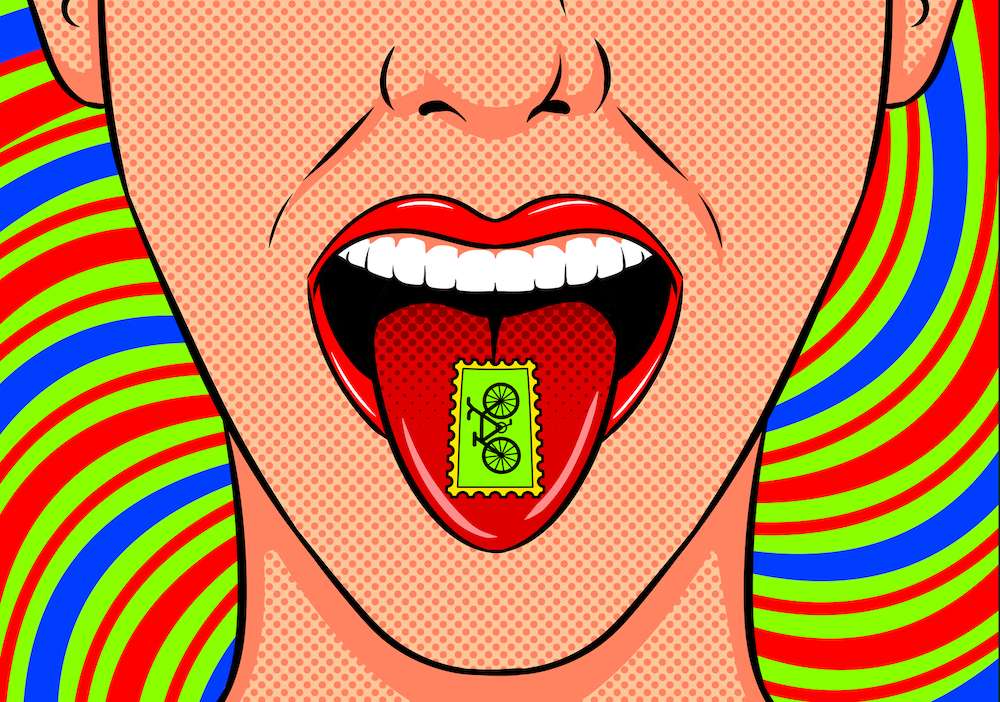
    You may have heard of microdosing. Some profess that consuming near-imperceptible doses of lysergic acid diethylamide (LSD) boosts productivity and creativity. Some are skeptical.

    There has not yet been an in-depth study of this practice, but new research published in the journal Biological Psychiatry has taken the first step in this direction.

    In four sessions, 20 young adults were given either 6.5, 13 or 26 micrograms of LSD or a placebo in random order. A usual dose of LSD is around 100-200 micrograms.

    During the sessions, participants were evaluated for effects on mood and cognition. The findings showed very little effect across mood, cognition or physiological impact.

    Study authors reported that at the highest dose given, 26 micrograms, the drug “increased ratings of ‘vigor’ and slightly decreased positivity ratings of images with positive emotional content.”

    They concluded that, “It remains to be determined whether the drug improves mood or cognition in individuals with symptoms of depression.”

    “Microdosing” was first introduced to the popular discourse by James Fadiman, author of The Psychedelic Explorer’s Guide, according to Rolling Stone. Since then, the practice has also been explored with psilocybin, cannabis, ketamine and more, apparently.

    Some claim that microdosing LSD was an effective tool for everything from increasing focus to quitting antidepressants. Study author Harriet de Wit was curious about these hefty claims.

    “I have studied effects of psychoactive drugs for many years, including drugs that have traditionally been considered recreational, but may also have therapeutic potential,” said de Wit, a professor at University of Chicago. “Therefore, I became curious about the widespread claims that low doses of LSD might improve mood and cognition.”

    This study was a first step toward future research. “This type of study may improve our understanding of the psychological and neural processes that underlie negative mood states and depression,” say the study authors. “We are seeking support to fund additional studies.”

    One example of an area needing further study is frequent and repeated microdosing, which the recent research did not cover. According to Fadiman, microdosing every fourth day yields the best results.

    “The effects of low doses of LSD should be investigated when the drug is administered repeatedly, and in individuals who report negative affect,” say the study authors. “Individuals who report microdosing in their everyday lives take the drug every 3-5 days, and it is possible that the beneficial effects emerge only after repeated administration.”

    View the original article at thefix.com
  • Overdose Deaths Dip For The First Time In Decades

    Overdose Deaths Dip For The First Time In Decades

    The national overdose toll declined by about 3,000 between 2017 and 2018.

    Overdose death rates were slightly lower in 2018 than in 2017, the first time in decades that the overdose rate has declined.

    Despite that positive news brought about by preliminary data released by the Centers for Disease Control and Prevention (CDC) experts emphasized that with more than 69,000 Americans dying of an overdose in 2018 the nation is still in an epidemic.

    Robert N. Anderson, chief of the Mortality Statistics Branch at the CDC’s National Center for Health Statistics told The American Journal of Managed Care that the national overdose toll was reduced by about 3,000 people between 2017 and 2018. That could indicate that “we may have reached a peak in the epidemic,” he said.

    Still, he cautioned, the overdose death rate remains extremely high.

    “That said, the number of deaths for 2018 is still predicted to be nearly 70,000. That is a lot of people dying much too young. Even if the decline holds once the data are final, it is too soon to declare victory,” Anderson said.

    The data is based on preliminary models and predictions of what the final data will look like. Anderson said that the models are usually accurate, however, so the trend will likely be confirmed.

    Increased access to the opioid-overdose reversal drug naloxone may have helped save lives and contributed to the lowered death toll. However, that means many people are still using drugs, and Anderson emphasized that the drug epidemic needs ongoing monitoring and interventions.

    “It is really impossible to predict what will happen for the next few years,” he said. “This may just be a lull in the epidemic or some new deadly drug will be introduced that exacerbates the situation.”

    For example, meth use is becoming more popular among opioid users. While there are established medication-assisted treatment options for opioid use disorder, there are fewer options available for people who abuse methamphetamines.

    Although the national overdose rate declined, that was not universal among states. Some states, like Ohio, saw a significant decrease in overdose rates. Others, including Missouri and New Jersey, had more overdoses in 2018 than they did in 2017.

    In general, the CDC data showed that overdoses increased in the west and southwest, and decreased in the east.

    The overdose rate national remains very high compared with previous decades. In 1999 overdoses accounted for 6.1 deaths per 100,000. In 2018, they made up 20.7 deaths per 100,000.

    View the original article at thefix.com
  • Alanis Morissette Talks Postpartum Depression, Miscarriage

    Alanis Morissette Talks Postpartum Depression, Miscarriage

    “Not singularly relying on myself to diagnose myself is key, because the first time around I waited,” the singer said about postpartum depression.

    Singer Alanis Morissette is planning ahead for how to deal with postpartum depression when she welcomes her third child in a few months.

    “Not singularly relying on myself to diagnose myself is key, because the first time around I waited,” she said in an interview with SELF.

    Morissette and her husband have an eight-year-old and an almost three-year-old. After both pregnancies, Morissette said that she felt depressed. Because of her history with the condition, she immediately recognized what was happening.

    “For me I would just wake up and feel like I was covered in tar and it wasn’t the first time I’d experienced depression so I just thought ‘Oh, well, this feels familiar, I’m depressed, I think,’” Morissette said. “And then simultaneously, my personal history of depression where it was so normalized for me to be in the quicksand, as I call it, or in the tar. It does feel like tar, like everything feels heavy.”

    Morissette thought because she had overcome depression before she could do so again. In the past, doing service through her songs and connecting with audience members helped her heal. However, that didn’t work during her postpartum episodes.

    “I would just think, ‘Oh I’m just going to go out into the world and serve and then I’m going to feel better,’ but that didn’t do it. And then I had my various forms of self-medicating [that also didn’t help]. So, creativity’s not doing it, tequila’s not doing it…and I even sang about it,” Morissette said.

    Eventually, she reached out to a doctor for help. This time, she is planning ahead, asking friends and loved ones to keep an eye on her and connect her with help when they are concerned, even if she insists that she is ok.

    “I have said to my friends, I want you to not necessarily go by the words I’m saying and as best as I can, I’ll try to be honest, but I can’t personally rely on the degree of honesty if I reference the last two experiences,” she said.

    During the interview, Morissette also talked about miscarriages and her struggle to get pregnant.

    “I […] felt so much grief and fear,” she wrote in a follow-up email after her interview. “I chased and prayed for pregnancy and learned so much about my body and biochemistry and immunity and gynecology through the process. It was a torturous learning and loss-filled and persevering process.”

    However, she also learned about rebuilding her health in the process.

    “When I […] chased my health in a different way, from multiple angles—[including, among other things] extensive consistent blood work monitoring to trauma recovery work to multiple doctor and midwife appointments to many tests and surgeries and investigations, things shifted,” she wrote.

    Overall, being pregnant and parenting has been an intense experience, Morissette said.

    “It’s this whole chemistry of emotions. Hormones and chemicals that are just coursing through your body. It [can] be triggering, or flashbacking, or re-traumatizing,” she explained.

    Through it, she has learned to do what she needs to do to take care of herself. .

    “Extroverts restore, in theory, with people, and introverts restore alone—so for me, one of the biggest questions with me having two or three kids, was where is that solitude? How and where?” she said. “For me, it’s just about getting really creative, and maybe it’s a hotel room here or bathroom stall here. Making sure there’s doors that go out behind our house so there’s a little area with a little gazebo here…whatever I need to do to create this. It’s not anyone else’s job to be responsible for my temperament. Maybe pin-drop silence right now is the key. Or it might be hey, being pure presence with my daughter right now is the key. Or right now crying is the key. Fucking binge-watching a TV show is key.”

    View the original article at thefix.com

  • Halle Berry Shares Message About Her Late Father’s Addiction Battle

    Halle Berry Shares Message About Her Late Father’s Addiction Battle

    Berry opened up about her late father in a recent Instagram post.

    Oscar-winning actress Halle Berry posted a heartfelt message about her late father on Instagram, which outlined the difficulties in their relationship due to his alcoholism, as well as her understanding of those challenges.

    Berry, who currently stars in the box office hit John Wick: Chapter 3 – Parabellum, was estranged from her father, Jerome Jesse Berry, from an early age, and has detailed his abusive behavior towards her mother and sister in previous interviews. But Berry appeared to strike a note of forgiveness in her recent post, in which she noted, “I now understand how much he loved me and how vital he was and is to my life.”

    Berry has described herself in the past as a “victim of domestic violence” who witnessed the physical abuse meted out to her mother, Judith Ann Hawkins, and older sister, Heidi, by her father.

    At a 2015 event for unite4:humanity, where she was presented with an award for her volunteer work with the Jenesse Center, a domestic violence intervention program, Berry said that at five years of age, she witnessed her mother beaten “day after day after day,” which included being kicked down stairs and hit on the head with a wine bottle.

    Berry also spoke about her guilt in regard to the beatings on a 2007 episode of the Bravo series Inside the Actors Studio. “The hard part for me was he never abused me,” she told host James Lipton. “I was dealing with a lot of guilt because I saw my sister go through terrible beatings. I felt helpless and like a coward because I didn’t do anything and couldn’t do anything. I spent many of the early years of my life trying to make sense of all that and recover and find my self-esteem.”

    These experiences spurred Berry to give back to programs like the Jenesse Center. “I understand the good that it does and the lives that it changes and the impact it has on women and the children in our community,” she said in 2015.

    Berry was estranged from her father after her parents divorced, and said in 1992 that she “[hadn’t] heard from him since. Maybe he’s not alive.” Jerome Berry passed away in 2003.

    In her Instagram post, Berry noted that “While I didn’t have much of a relationship with him while he was here, as he was alcohol addicted and that addiction robbed us of the relationship we were meant to have, I now understand how much he loved me and how vital he was and is to my life (sic)!”

    She continued by writing, “I miss you today daddy and wherever you are, I know you’re smiling down on me because I feel your love (sic).” The post included an image of a photograph of her father, which Berry noted was one of only two pictures she had of him, and which “has become family gold!”

    View the original article at thefix.com

  • Finding Deeper Meaning in Pride Month: Activists, Trailblazers, and “Wigstock”

    Finding Deeper Meaning in Pride Month: Activists, Trailblazers, and “Wigstock”

    At the end of Pride Month, Debbie Harry, Penny Arcade, Barb Morrison, and others weigh in on trauma, growth, activism, 9/11, and RuPaul’s Drag Race.

    June 28 marks five decades since the police raided the Stonewall Inn, a gay bar in Greenwich Village. Years of rage erupted into a series of riots demanding equal rights, kicking off the global fight for LGBTQ (lesbian, gay, bisexual, transgender, queer or questioning) liberation. Pride is a movement based on self-affirmation for the LGBTQ community; it came about to commemorate the Stonewall Riots and overthrow years of guilt and shame caused by discrimination and prejudice, and to “build community, and celebrate sexual diversity and gender variance.” 

    The first pride parade was in 1970 in New York City. Now, celebrating LGBTQ pride is worldwide.

    Wig, a movie about the annual drag festival Wigstock, premiered last month at the Tribeca Film Festival.

    A Drunken Drag Show in the Park

    Watching it brought up a mountain of memories for me. The much-loved extravaganza began late one night in 1984, when drunken drag queen Lady Bunny and her wasted entourage spilled out of a nightclub, then wobbled, lurched and landed in the local park. It was there they staged an impromptu drag show in the bandshell at 3 a.m. Their audience was a group of angry homeless peeps trying to sleep. That one unplanned performance launched a nearly 20-year drag (and drug) bacchanal.

    My first Wigstock was in 1987. Had I known about it earlier, I would’ve gone. Since 1980 my modus operandi was to get stinkin’ drunk then hit the East or West Village afterhours clubs until the sun came up.

    Dorri Olds at WigstockI have snippets of memories of meeting Hedda Lettuce (nee Steven Polito). I was a boundaryless touchy-feely drunk. He was wearing the cutest Minnie Mouse costume but with a bare chest. I remember coming eye-to-eye… er… eye-to-fringe-pasty. Without even introducing myself, I stuck out my pointer finger and gave that fringe a twirl.

    The next day, I woke up at 5 p.m., still drunk, and called a friend.

    “Can’t believe what I did this time,” I said, with each word triggering another hammer to my head. “I have to stop drinking. I’m so embarrassed. I twirled a stranger’s pasty.”

    “Honey, isn’t that what fringe pasties are for?”

    During my laugh she cut me off.

    “You’re right about the drinking, though. You’re getting closer to wet brain. Not a pretty look.”

    Man, her timing was right on. I’d just been side-swiped with a blow-up. My mild-mannered roommate and long-term bestie grabbed my upper arms with his long-fingered, graceful piano-player hands. He squeezed me so tightly it hurt. An enraged vein popped out near his temple as he shook me and yelled, “I’m not gonna watch you kill yourself anymore. Quit drinking or I’m leaving.”

    That’s when I buckled.

    He spotted my determination and supported my efforts but each failure led to another until it hit me hard: I could not stop. On a bug-eyed morning after a night of coke, I dialed my cousin and asked for help. I woke up in another state.

    The 31 days turned me inside out and ripped off the protective skin but I managed to learn a few things. On the last day, the staff told me I needed a therapeutic community for a year.

    “You won’t be able to stay sober because you started too young and New York City is full of temptations,” they said.

    It pissed me off, so I went home treating it like a dare. Oh yeah? Watch me.

    A Return to Wigstock, Sober

    Staying sober out of spite drove me to keep schlepping to therapy and muddling through dark moods without offing myself. It took a year and a half before I would take a chance on being around the lucky bastards who can be high and happy. After dips into socializing I inched toward more outings. Shaky, but better, I ventured back to Wigstock in August of 1999. The riotous, flamboyant, fake hair and sequins up to there were exactly what I needed. That year was a blast and I wasn’t in a blackout so I remembered it.

    Lady Bunny felt we needed a lift again so she brought Wigstock out of retirement last year and it was the inspiration for Wig. It reminded me of the impetus for Jane Rosenthal and Robert De Niro to co-found Tribeca Film Fest right after 9/11, when our grieving city needed a lift.

    My favorite segment in Wig is Lady Bunny engaging Debbie Harry in titillating banter at 2018’s Wigstock revival. Then Harry launched into the Blondie hit “Atomic.” The punk powerhouse who blew the ceiling off of rock and roll’s patriarchy doesn’t need any backup, but taut and sexy artist-director Rob Roth dancing beside her dressed in a black bikini with sparkly top and smoky eye makeup added to the hot ambiance.

    By happy coincidence, one month after the Wig premiere I found myself seated at a tiny table in a dark corner of Alan Cumming’s Club Cumming sandwiched between Roth on my right and Harry’s manager Manzi on my left. It struck me that here we were in the East Village only blocks from the park where Wigstock began.

    We were there for the season finale of “Enclave Reading Series,” a monthly event featuring literati like Pulitzer-prize winner Michael Cunningham along with other established and emerging voices. That night, Debbie Harry was the surprise guest. She snuck in via the club’s dimly-lit entrance then slid into her waiting seat beside Roth. Enclave’s co-founder, co-curator, and emcee Jason Napoli Brooks built up the mystery guest before announcing, “The one and only, Debbie Harry!”

    Debbie Harry Remembers 9/11

    As the Rock and Roll Hall of Famer headed to the stage, the room burst into cheers. The club’s seductive red lighting and boudoir-ish velvet curtains served as the perfect backdrop. The disco ball always hanging over the piano seemed especially fitting that night. “Club Cumming” shone in red neon hanging above the singer’s head. Next to that was the sign that read, “I ❤️ New York Pride.”

    Harry opened by saying she’d planned to read something “a bit more lighthearted” but instead took her manager Manzi’s advice.

    “I just hope that all of you that take antidepressants have taken them,” she told the crowd. “And for those of you who don’t, I hope you’ve had a nice drink.”

    Debbie Harry at Club Cumming

    Harry read about her night at a 2001 Marc Jacobs fashion show.

    “There was a big party that he threw down on one of the piers in the West Village and it was wonderful.” She described it as a happening—an event. “And everybody was there.”

    After going to bed happy, the next morning her friend called to say “Turn on the news.” Harry gave an eerie account of staring at the towers from her window. She saw smoke and recounted the “surreal feeling” of not knowing what she was seeing on the TV. After that, Harry read a poem about the days that followed.

    I’m looking forward to reading Harry’s memoir Face It (HarperCollins), which comes out on October 1. It’s hard to believe she turns 74 in a few days.

    During this month of Pride, I’ve been afraid we’re going backwards. Needing a reality check, I tracked down writer, cultural critic, comedian and theatre performer Penny Arcade. Her work exudes empathy and celebrates all of our differences.

    We discussed activism in the LGBT community.

    “Lady Bunny stands out because she has never relaxed her work standards over the past 30 years. She manages to have real politics in a world that is so much about fitting in,” she said.

    She also credited RuPaul for making a strong contribution in the ’80s.

    “The LBGT community was founded on having to band together against the illogical hatred of homosexuality,” said Arcade. “But 2019 is a long road from Stonewall to coming out to your mother as she is watching Will and Grace.”

    Arcade said it’s just human nature to want to be accepted.

    “But the LGBT community is no longer the issue it once was. RuPaul’s Drag Race has created drag contests for heterosexual boys all across America.”

    Arcade also expressed what many people seem to be feeling these days.

    “We are living in an era of emotional and social isolation that is greater than anything I have experienced in the past 50 years of my social consciousness.”

    Inspiration and Responsibility for Pride

    Next, I interviewed Harry’s music producer, Barb Morrison (pronoun they/them). They’re proud of 29 years clean.

    “One of the things that was so cool about hearing Debbie [Harry] read at Club Cumming was that we got to witness her speaking from a vulnerable place. She took us on an emotional journey with her,” Morrison said.

    We moved on to discussing today’s political climate with the emphasis on Pride Month.

    “I feel a responsibility to push myself to be even more honest with my work,” said Morrison. “Being on the trans spectrum I also feel a responsibility to help other trans musicians tell their stories.”

    They expressed that now it’s more important than ever to be visible and authentic.

    “Not only for ourselves,” they said, “but to help others free themselves from stigma and shame. Watching Debbie read that night inspired me to be even more honest, to tell my truth, and to fully step into my own authenticity.”

    Like Morrison, Steven Polito (aka Hedda Lettuce) finds deeper meaning in Pride.

    “For those of us with traumatic experiences almost anything can be a trigger,” said Polito. “I have to be extra vigilant. Turning my tragedies into triumphs is my gay pride.”

    Amen.

    Wig is now showing on HBO.

    (Images: the author at Wigstock; Debbie Harry at Club Cumming. Both provided by Dorri Olds, all rights reserved)

    View the original article at thefix.com

  • Tips For Handling The Summertime Blues

    Tips For Handling The Summertime Blues

    Symptoms of summer-onset seasonal affective disorder include insomnia, weight loss, agitation, anxiety and reduced appetite. 

    While it’s expected that wintertime, with its long, dark days, cold weather that prohibits socialization, and stressful holidays, would co-habitate with depression – it’s not the only season of sadness.

    Summer can bring on or increase depression, too, and just like in wintertime, there are coping mechanisms that can reduce the impact of the struggle.

    Seasonal affective disorder, which is more commonly associated with winter months, can also relate to the summertime as well. Specifically called summer-onset SAD, Mayo Clinic notes the symptoms as insomnia, weight loss, agitation, anxiety and reduced appetite. 

    If you have a family member with summer-onset SAD, have major depressive or bipolar disorder, or in some cases have a trauma associated with hot summer months, you may be more at risk for this mental health issue.

    To reduce the impact of summer-onset SAD, Dr. Norman Rosenthal, M.D. and the first psychiatrist to describe and label SAD, tells Self magazine that reducing light might be a key factor. While those who struggle with winter SAD can buy light lamps to increase their exposure, reducing exposure to bright lights is recommended for the hot months. 

    A light-sensitivity could also be a trigger for summer-onset SAD. It’s understood that light deeply impacts the brain and our hormones; melatonin, the “sleep hormone” is released only when triggered by a dramatic light reduction, for instance. 

    While there is no research supporting a light reduction, it is simple to experiment with and without negative side-effects. Dr. Rosenthal told Self, “These people [might] benefit from dark glasses, blackout shades in their bedroom, and other measures that reduce the amount of ambient light.” 

    Traditional cognitive behavioral therapy can be an important tool for those with summer SAD. A therapist can assist in identifying triggers for worsening symptoms, as well as unearthing the most effective treatment. 

    If the heat itself causes agitation or worsening symptoms, some people find that staying indoors during midday and utilizing cooling methods such as cold packs, air conditioning, and fans, can be helpful. Swimming is a good option for both cooling down and assisting the body in balancing hormones that can worsen depression.

    Those who experience summer-onset SAD and are already being treated for depression or anxiety with medication may find it helpful to work with their psychiatrist to increase their medication in the beginning of every summer, before the symptoms begin to present.

    View the original article at thefix.com