Author: The Fix

  • HBO’s "Euphoria" Tackles Teen Addiction, Depression

    HBO’s "Euphoria" Tackles Teen Addiction, Depression

    Early reviews of the show’s series premiere praise it for speaking directly to Generation Z and for its “unflinching” examination of addiction and mental illness.

    A new HBO drama titled Euphoria premiered on Sunday which takes on the issues of sex and drug use among teens. Creator Sam Levinson, who wrote and directed Assassination Nation, adapted Euphoria from an Israeli series and was inspired by his own history with drugs.

    “I was a drug addict for many years and I’ve been clean for many years now,” he said in an interview with Entertainment Weekly.

    “I was just trying to capture that kind of heightened sense of emotion, when you’re young and how relationships feel. Relationships have such a pull and people have such a pull, and the world feels like it’s just constantly sort of bearing down on you and that anxiety and those sort of mood swings that I think are inherent to being young, in general then, but are even more so when you struggle with anxiety and depression and addiction.”

    The issue of mixing teens with high amounts of sex and drug use has people talking, with some concerned that parents will “freak out” about it. However, Levinson hopes that honestly approaching these issues will help bridge what he sees as a growing gap between generations.

    “I hope that it at least opens up a dialogue between the two because it’s hard being a teenager,” he said. “It’s difficult, especially too if you’re struggling with addiction and battling those things. Hopefully it’ll open up those means of communication.”

    Early reviews of the show’s series premiere praise it for speaking directly to Generation Z and for its “unflinching” approach to topics people would rather not think about. According to Gretchen Smail of Bustle, actress Zendaya plays a 17-year-old girl who is so deep in depression and anxiety that her only relief comes from getting so high that “her heart stops.”

    According to a 2018 report by the World Health Organization, half of all mental illnesses begin by age 14 but “most cases are undetected and untreated.” Depression is also cited in the report as one of the primary causes of illness and disability among people age 10 to 19.

    Prior to the series premiere, Zendaya posted a warning on her Instagram account about the graphic and heavy nature of Euphoria’s content.

    “Just a reminder before tonight’s premiere, that Euphoria is for mature audiences,” she wrote. “It’s a raw and honest portrayal of addiction, anxiety and the difficulties of navigating life today. There are scenes that are graphic, hard to watch and can be triggering. Please only watch if you feel you can handle it.”

    View the original article at thefix.com

  • California Prisoners Can Possess Marijuana But They Just Can’t Smoke It

    California Prisoners Can Possess Marijuana But They Just Can’t Smoke It

    Smoking or ingesting marijuana in prison remains a felony in the state.

    A ruling by district court in Sacramento, California, will allow the state’s prison population to legally possess marijuana without threat of conviction, but they may not smoke or ingest it. The decision was made as part of an appeal brought by Sacramento County-based inmates who had been convicted of possessing cannabis in their cells.

    In overturning the case, justices from the California Court of Appeals for the Third Appellate District ruled that the language of Proposition 64 – the 2016 California ballot initiative that legalized recreational marijuana – specified that consumption of cannabis, not possession, is illegal, and as such, smoking or ingesting marijuana in prison remains a felony. The ruling also allows prison authorities to ban possession at their respective facilities.

    The case in question involved five prison inmates whose convictions for marijuana possession added more prison time to their respective sentences. After relief was denied by the Sacramento State Court, they appealed with the Third District, where a panel of three justices underscored that the “plain language” of Proposition 64 made clear that possession of less than one ounce of cannabis in a prison was not a felony.

    “The purpose of the language is to describe the vast array of means of consumption, and consumption, not possession, is the act the voters determined should remain criminalized if the user is in prison,” wrote Presiding Justice Vance W. Rayne.

    The justices also noted that consumption “can be achieved” through inhaling non-burning vapor or topical application, and not just smoking or ingesting, which the court noted remains a felony in prison. Additionally, the ruling confirmed that prison officials may ban possession to “maintain order and safety in the prisons.”

    Raye and his fellow justices also took to task California State Attorney General Xavier Becarra’s argument, which as NPR noted, claimed that Proposition 64 created an “absurdity” that would legalize the use of marijuana in prisons and support smuggling.

    “A result is not absurd because the outcome may be unwise,” Raye wrote. “We cannot ignore binding precedent and the plain language of a statute based on the intensity of the Attorney General’s passion to criminalize an act the electorate has decided no longer merits treatment as a felony.”

    Beccara’s office has yet to announce whether it will appeal the decision, but both the state corrections department and marijuana advocates weighed in on the court’s ruling.

    “We want to be clear that drug use and sales within state prisons remains prohibited,” said Vicky Waters, a spokesperson for the California Department of Corrections and Rehabilitation. “[We] are committed to providing a safe, accountable environment for prisoners and staff alike, and we plan to evaluate this decision with an eye towards maintaining health and security within our institutions.”

    Paul Armentano, deputy director of the National Organization for the Reform of Marijuana Laws (NORML), described the ruling as a “novelty decision,” but supported the court’s emphasis on the clarity of Proposition 64’s language and intent.

    “You’d be hard-pressed to make an argument that the majority of Californians, when they were deciding on this issue, were voting to allow marijuana in the criminal justice system.”

    View the original article at thefix.com

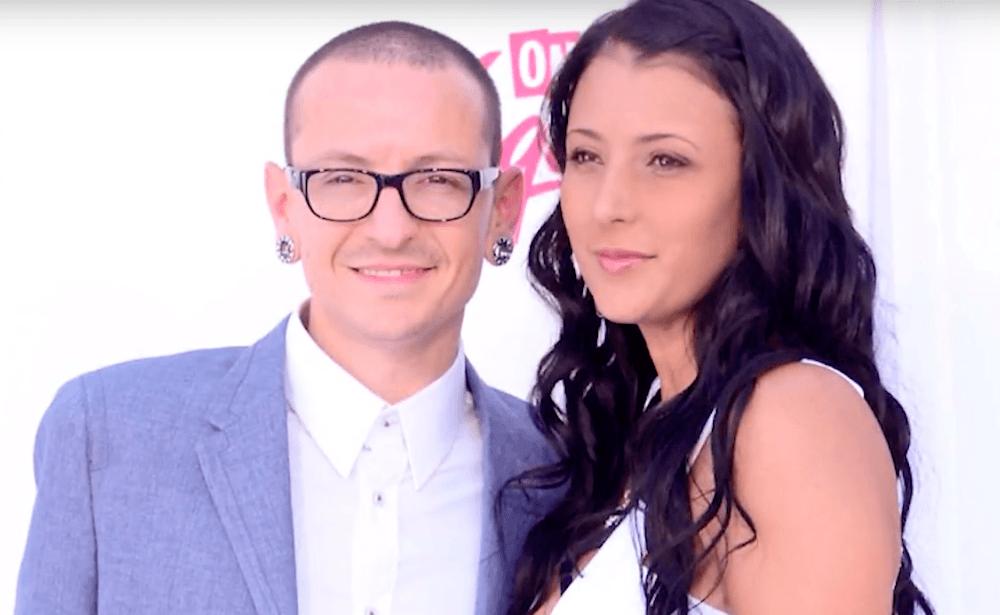
  • Chester Bennington’s Widow Aims To #ChangeDirection On Mental Health

    Chester Bennington’s Widow Aims To #ChangeDirection On Mental Health

    “Hangover” actor Ken Jeong and GnR bassist Duff McKagan are a few of the celebs taking part in the campaign to start a conversation about mental health.

    The widow of Chester Bennington is continuing the legacy of her late husband with a new social media challenge to raise mental health awareness.

    “I challenge you to do a 30-second video on why mental health is important to you,” Talinda Bennington said in a video posted on Instagram. “For me it’s very personal. And I’ve dedicated my life to change the culture surrounding mental health.”

    Even though the Week To Change Direction Challenge was issued last Monday (June 10), people have continued to post videos to add to the conversation using the hashtag #ChangeDirection.

    To kick things off, Talinda challenged Lisa Ling and Linkin Park band members Mike Shinoda, Joe Hahn and bassist Dave Phoenix Farrell to post their own 30-second videos.

    Actor Ken Jeong joined the conversation on his Instagram: “As a former physician having dealt with multiple cases of depression, bipolar disorder and schizophrenia, it’s important as a community that we all change direction, change our attitudes, evolve our attitudes towards mental health. We as a community should remind each other life doesn’t have to be perfect to be wonderful. And I challenge everyone to change direction.”

    Guns N’ Roses bassist Duff McKagan made a video as well with singer-songwriter Shooter Jennings: “This is something we can all do something about… Learn to recognize the signs of people who are suffering.”

    ABC Chief Medical Correspondent Dr. Jennifer Ashton used her platform to shed light on maternal mental health: “The reason that I am passionate about mental health awareness is because it is a leading cause of maternal mortality in this country,” she said in her video. She encouraged women’s health care providers to speak to their patients about mental health.

    Chester Bennington died by suicide in 2017. In the days prior to his death, the beloved Linkin Park vocalist—who long battled depression and substance use disorder stemming from trauma—showed no sign of what was to come, according to Talinda.

    “This was not a time where we or any of our family suspected this to happen… We thought everything was OK,” she said in June of 2018.

    Guitarist and friend Ryan Shuck said that Chester would detail his “hour-by-hour battle” with the urge to drink.

    Since her husband’s passing, Talinda Bennington has channeled her pain to help expand the conversation about mental health. She engages with people on social media, encouraging meaningful dialogue by promoting hashtags like #FuckDepression and #MakeChesterProud.

    View the original article at thefix.com

  • Please Don’t Tell Me How to Grieve

    Please Don’t Tell Me How to Grieve

    We are not taught how to grieve. Acknowledging that death is inevitable means that we have to come face-to-face with our own mortality and the mortality of everyone we love in this world. It’s incredibly scary.

    “Get over it.”
    “I’ve moved on. You need to move on too.”
    “Don’t talk about that.”
    “What’s wrong with you?”

    When it comes to grief, everyone seems to be an expert. We may not have life or death figured out, but life after death? People know how to do that. Or at least they think they do. According to them, there’s only one right way to grieve:

    Their way.

    Grief is universal. The way we experience it and process it, however, is not. To approach grief as if curing it were as easy as taking a pill is both irresponsible and insensitive.

    And yet, there are still people who take it upon themselves to try and tell you how, where, and when you should grieve. Now, in the age of social media, the shoulds and should nots have only gotten stricter. Grieving online is perhaps the biggest no-no. Experts have even coined the term “grief police” to describe the trend of policing just how people grieve — telling them they’re grieving too much or not enough.

    And in the last six months, we’ve even seen this grief-shaming play out in the headlines. First, people criticized The View co-host Meghan McCain for talking too much about her late father Senator John McCain following his death. Then, following actor Luke Perry’s sudden death, online trolls criticized his daughter Sophie for seemingly doing too well and not grieving enough.

    We get it: No matter how we grieve, people will have opinions about it. But it’s important to remember there is no “right” way to grieve, says Lauren Consul, a California-based licensed marriage and family therapist specializing in grief. Grief can be difficult to navigate because it’s not something our society is open about.

    “We are not taught how to grieve. Acknowledging that death is inevitable means that we have to come face-to-face with our own mortality and the mortality of everyone we love in this world. It’s incredibly scary,” said Consul. “Seeing someone who is grieving is a stark reminder that one day that will be us too. It’s painful to think about, so people tend to avoid and downplay other people’s grief. It can give a sense of control; if they can manage that person’s grief, they don’t have to think about their own.”

    This grief policing is especially true when the death is unexpected, as was the case when my father died from suicide in 2003. I learned pretty quickly that talking about death on places like Facebook makes some people uncomfortable. We may be a society that lives our life online, but for all the sharing we do on social media, there’s still this stigma associated with posting about our grief and the loved ones we’ve lost. It feels like an unspoken rule of sorts: grieve in silence. Don’t talk about it. And, if you do talk about it, make sure you find just the right balance – not too much and not too little.

    But here’s the thing about grieving: You’re never going to please everyone. You’re never going to grieve the “right” way because there is no right way to grieve. That’s something that took me a while to learn and understand. At first, I was afraid of what people would think or how they would view my grieving process, which included writing about my father’s suicide regularly on my blog. I even began to feel as though I needed to hold myself back and not talk about it, but you know what? That wasn’t good for me. In fact, it stalled my grieving process, and that wasn’t healthy.

    Maybe that’s why I’m always thinking of what I’d like to say to the “grief police.” If I had the chance to sit down with them and have an honest conversation about the realities of figuring out your life after losing a loved one, here are four things I’d tell them:

    My grief is not your grief. And your grief is not my grief.

    Grief is perhaps one of the most intense and most confusing emotions we’ll ever feel. And even though a plethora of grief books line the self-help sections of bookstores and libraries, how we actually go through our grief is a very personal journey. The strategies and coping skills that work for some may not work for others. Grief is as individual as the person going through it. For every loss, there are a hundred more ways to grieve. There is no right way, no one size fits all. Grief is an individual journey and no one can tell us how to do it. We must find the way that works for us and not judge others because they may grieve differently.

    Grieving is a journey – not a destination.

    That sounds cliché, but it’s true. Grief has no timetable, no script, and definitely no shortcuts. It’s not as easy as getting from Point A to Point B because the grieving road is far from linear. Elisabeth Kübler-Ross may have outlined the five stages of grief, but it’s not uncommon to vacillate back and forth sometimes. Even 16 years after my father’s death, I find myself returning to emotions like anger every so often. It doesn’t mean that I’m still in the throes of deep grief, though; it just reminds me that the work of grief is never really done.

    Sometimes, we just want people to listen.

    Grief demands that we feel, think, process, reflect – over and over. And there are times that we need to give voice to those feelings as we process. To put words to our emotions. To try and make sense of everything that’s happened to us. Maybe that’s why my writing has been such a healing part of my grief. I’ve been able to put the unimaginable into words, even at times when those words were hard to come by.

    Being there for someone during this time is a powerful thing. You don’t necessarily have to say anything. Trust me, your presence means more than you’ll ever know.

    Not everyone wants to be “cured” from their grief.

    People might be surprised to learn that I don’t want to “get over” my grief. There’s this misconception that you can easily move on, and that couldn’t be farther from the truth. As painful as some of these emotions are (hi, regret), I need to feel them. So while it’s tempting to listen and then try and offer advice to help us move on, I ask that you just listen. In the end, there are no magic words that will make everything better. We need to feel what we feel when we feel it — and feel it without judgment.

    I’m always going to talk about my father, my grief and my journey. It’s all part of my life and my story. We each have to move through grief at our own pace and in a way that is comfortable for us. But that doesn’t mean that we can’t be there for each other — in a way that is comforting without being condescending, sensitive without shaming, and helpful without being harmful. That just might be the greatest gift we can ever give someone: a safe space to grieve and begin the healing process.

    View the original article at thefix.com

  • Patients Discuss Their Naltrexone Implants

    Patients Discuss Their Naltrexone Implants

    The implant is currently not available in the United States.

    Six years ago, Peta Walker was ready to give up her fight against heroin and amphetamine addiction. She had tried medication-assisted treatment with methadone, but it had not worked for her.

    Desperate, she tried one more thing: a long-lasting stomach implant that releases naltrexone, a medication sold under the brand name Vivitrol that blocks the effects of opioids. 

    To Walker’s surprise and delight, it worked. “I’m doing things that I always dreamed of,” she told The New York Times

    Currently in the United States, naltrexone is available as a daily tablet or as a shot that lasts for a month. But the implant that Walker received from a doctor in Australia lasts for six months. 

    The doctor, George O’Neil, has been using the implants for nearly 20 years. The device isn’t approved in Australia, but he is able to give it to patients because the law allows people at risk of death to try unregulated medical treatments. The procedure costs about $4,800 U.S. dollars (about $7,000 Australian dollars). 

    For decades, O’Neil has been content to use his device on a relatively small scale, but now the implant is gaining international attention. “I’m good at dreaming, but there’s people around me good at doing,” O’Neil said. 

    When the Times reported the story, researchers from Columbia University in New York were watching O’Neil place an implant in a patient. The research team has been awarded nearly $7 million to study the possibility of a naltrexone implant, with an additional $14 million in funding available if the results are promising. 

    Dr. Adam Bisaga, a professor of psychiatry who is leading the study, said that a long-lasting implant is more appealing than a shot because it helps people commit to a longer stretch of sobriety. 

    “If we have a way of targeting the ambivalence—and the way you do that is long-acting preparation—that will be a major advance,” he said. “In the U.S., it’s pretty clear that it’s an acceptable and viable treatment.”

    Vivitrol, the injectable form of naltrexone, is already a popular medication in the United States because it lasts for a month and is not an opioid, unlike methadone and other medication-assisted treatment options. That makes it particularly appealing in law enforcement settings and jail, because it is impossible to divert Vivitrol for illegal use. The implant, if approved in the U.S., could broaden the appeal of naltrexone even more. 

    However, all forms of naltrexone do have some drawbacks. People who use naltrexone and then use opioids are at increased risk for overdose. In addition, to get started on the drugs people need to go through opioid withdrawal to first clear opioids from the system. 

    Despite that, the drug—and the implant—appeals to many people, including 25-year-old Jessica Martin, who received the implant recently. 

    “I feel better now coming here,” she said. “I feel confident that I’ll stop it.”

    View the original article at thefix.com

  • How Eating Disorders Present In Teen Boys

    How Eating Disorders Present In Teen Boys

    Doctors and parents may miss the signs of disordered eating in younger men because ED assessment tools are geared towards women. 

    Eating disorders are typically thought of as a struggle faced by girls and women.  

    However, according to Reuters, teen boys are also susceptible—eating disorders may just present differently for them, as the goal is often to build muscle rather than lose weight.  

    Dr. Jason Nagata of the University of California San Francisco and his colleagues explore the topic in a recent commentary in the Lancet Child & Adolescent Health, and stated that often the most well-known eating disorder symptoms like restricting calories and purging are signs of the disorder in females, not males. 

    “Many assessment tools that are currently standard practice to diagnose eating disorders are geared toward females and are based on weight loss behaviors with the goal to become thin,” Nagata said via email.

    Because of this, he says, doctors and parents may miss the signs of disordered eating in younger males. These signs often include eating too much protein, cutting carbs and fats, and going back and forth between too many calories and too few. Steroids or supplements and excessive exercise may also come into play, Nagata states. 

    “Exercise is an under-recognized component of eating disorders,” Nagata said, according to Reuters. “Teenagers who excessively exercise can have energy deficits and become malnourished if they do not increase their food intake to match their energy needs.”

    Nagata and his colleagues add that teen boys have also been known to take part in “biohacking,” which has to do with attempting to build muscle via methods like elimination diets, steroid use, supplements and intermittent fasting. 

    Dr. Trine Tetlie Eik-Nes, a researcher at the Norwegian University of Science and Technology in Trondheim, was not involved with Nagata’s team but states that disordered eating in males can be hard to diagnose since there is little research about them. 

    “We are basically not asking the right questions for boys,” Eik-Nes said. “Consequently, boys do not get access to treatment and they do not themselves see their problems as an eating disorder. Moreover, boys may be less familiar with talking about negative feelings, body image ideals and eating disorders.”

    According to Nagata, there are some telltale signs to watch for in males. 

    “Disordered eating may develop when a boy becomes preoccupied with his appearance, body size, weight, food, or exercise in a way that worsens his quality of life,” Nagata said. “He may withdraw from his usual activities or friends because of concerns with body size and appearance.”

    Dr. Antonios Dakanalis, a researcher at the University of Milano-Bicocca in Italy, was not involved in Nagata’s commentary but adds that it can be harder for boys to reach out and ask for help. 

    “Males can face a double stigma—about having a disorder characterized as feminine or gay, and seeking psychological help,” Dakanalis said via email.

    View the original article at thefix.com
  • FDA Considers Limiting Outpatient Opioid Prescriptions

    FDA Considers Limiting Outpatient Opioid Prescriptions

    The FDA is taking feedback from the public as it weighs the decision to reduce high-dose prescription painkillers delivered in outpatient settings. 

    Advisors for the Food and Drug Administration (FDA) met last week to discuss a possible cap on high-dose opioids delivered in an outpatient setting, a move that is intended to reduce the risk of addiction and dependency. 

    According to MedPage Today, the meeting of the Drug Safety and Risk Management Advisory Committee and the Anesthetic and Analgesia Drug Products Advisory Committee included presentations by doctors, and discussions by policymakers. 

    In a memorandum released ahead of the meeting, advisors for the FDA said that the conference aims to address dual concerns. 

    “When considering regulatory strategies relating to opioid analgesics, FDA always considers two fundamental public health goals: 1. We want to reduce opioid misuse, abuse, addiction, overdoses and deaths. 2. We want to ensure that products are available to meet the medical needs of people living with debilitating pain,” the memo read. 

    “We are also interested in discussing the magnitude and frequency of harms associated with higher doses of opioid analgesics relative to lower doses, as well as optimal strategies for managing these risks while ensuring access to appropriate pain management for patients,” Judy Staffa, associate director for the Public Health Initiatives Office of Surveillance and Epidemiology at the Center for Drug Evaluation and Research (CDER), wrote in the memorandum that was sent to conference attendees. 

    Restricting highly addictive high-dose opioids while also meeting the needs of patients with chronic pain has been a delicate balancing act that many people feel has not been addressed well by federal regulators. The meeting last week was an attempt to continue discussions about how best to serve both needs. 

    “There is a strong need to bring together the community of stakeholders to consider the collective scientific understanding of the issues relating to higher daily doses and higher dosage strength opioid analgesic products and potential strategies to reduce risks to patient and public health,” Staffa wrote. 

    Dr. Ning Hu, medical officer of the CDER’s Division of Anesthesia, Analgesia, and Addiction Products, said that high-dose opioids are dangerous, but so is uncontrolled pain, which—in the most severe cases—can cause people to consider suicide.

    Many prescribers followed the CDC’s 2016 guidelines for prescribing opioids, but those were interpreted too drastically, Hu wrote. 

    “The guidelines were misinterpreted and misapplied, contributing to substantial harms to patients, particularly patients with chronic pain who were forced to taper their previously stable opioid doses to lower doses, or who were forced to discontinue their opioids through forced tapers or patient abandonment,” Hu wrote. 

    In addition to the discussions happening at the conference, the FDA has opened public comment on the issue of high-dose opioids. Public comment will remain open through June 30, and is available here

    View the original article at thefix.com

  • Austin Eubanks, Columbine Survivor, Died Of Heroin Overdose

    Austin Eubanks, Columbine Survivor, Died Of Heroin Overdose

    In the wake of the 1999 Columbine school shooting, Eubanks struggled with opioid use. Eventually, he began speaking publicly about his struggles.

    A well-known addiction advocate and survivor of the Columbine shooting has died of a heroin overdose, reports have confirmed. 

    Austin Eubanks was found dead last month after failing to answer his phone during a welfare check, CNN reports. The coroner’s office has confirmed that the 37-year-old’s death was due to “acute heroin toxicity.”

    “I’m very sad about it myself,” Routt County, Colorado Coroner Robert Ryg tells CNN. “We were hoping for something else, heart attack or something.”

    In the wake of the 1999 Columbine school shooting, which left 13 dead and many injured, Eubanks struggled with opioid use. Eventually, he began speaking publicly about his struggles. 

    “An injured survivor of the Columbine shooting, Austin’s traumatic experience as a teen was the catalyst to his painful journey through addiction,” his website reads. “He has since devoted his career to helping those who have turned to substances as a result of trauma. Austin has spoken to millions across the nation regarding his personal journey as well as strategies for addressing the issues of substance abuse that are plaguing the nation.” 

    Eubanks’ family told KMGH in a statement that he “lost the battle with the very disease he fought so hard to help others face.”

    On the day of the shooting, Eubanks, then 17, was in the library with friends when gunshots broke out.   

    “A teacher ran through the same doors that we just entered into the library, yelling at everybody to get under the tables, that somebody had a gun, and I remember just being in shock,” Eubanks said

    Eubanks and his friends hid under the tables in the library, but when the two shooters began firing, Eubanks was struck in the knee and hand and his best friend was fatally wounded.

    “As a result of my injuries, I was pretty significantly medicated about 45 minutes after being shot,” Eubanks said. “I remember immediately being drawn to that feeling, because it took the emotion away.”

    Despite continuing to struggle with opioid use through his 20s, Eubanks eventually settled into long-term recovery and chose to share his experiences to help others. 

    In the wake of more recent school shootings, Eubanks said that he recognizes some differences. 

    “One of the things that I think is so inspiring and so different about the aftermath of the Parkland tragedy is the activism that I’m seeing in the student body, and I think that that’s wonderful,” he said. “What I’m fearful of is that if they get so laser-focused on trying to impact societal change, they’re going to detach from their own healing, and that is a form of medicating.”

    Eubanks’ family plans to continue his work in his memory, according to CNN.

    “Helping to build a community of support is what meant the most to Austin, and we plan to continue his work,” his family said in their statement. 

    View the original article at thefix.com

  • New Documentary Explores Hollywood’s "Secret" Addiction Epidemic

    New Documentary Explores Hollywood’s "Secret" Addiction Epidemic

    The film purports to expose “how many A-list celebrities are becoming victims of Hollywood’s secret opioid epidemic and what role the studios will play in ending the crisis.”

    A new documentary titled Fatal Addiction: Hollywood’s Secret Epidemic attempts to shed light on the amount of drug use among actors and other stars, particularly focusing on opioids.

    Led by celebrity journalist Nancy O’Dell, the film purports to expose “how many A-list celebrities are becoming victims of Hollywood’s secret opioid epidemic and what role the studios will play in ending the crisis,” according to the synopsis.

    A review by entertainment reporter Amy Zimmerman of The Daily Beast paints a picture of a sensationalizing film that puts too much blame for the opioid epidemic and other drug crises on Hollywood but that offers some important insights into the problem of Hollywood drug use.

    Among the most notable insights are the stories about young actresses being pressured to take Adderall “so they can keep going and stay thin.”

    Cocktails of dangerous drugs, often involving opioids, have claimed the lives of many A-list celebrities, from Judy Garland and Marilyn Monroe to Heath Ledger and Prince. Fatal Addiction tells stories of drug use that was expected and encouraged.

    “There was so much drug use on that set, it was kind of mind-numbing. And as a kid, you’re not sure how to negotiate that,” recalls Mariel Hemingway about her time filming Woody Allen’s Manhattan as a teenager.

    In the case of Prince, the iconic performer was first put on opioids due to “hip problems,” and years later, by the time of his overdose, “his house was full of pills, full of opioids.” The primary drug responsible for his death was fentanyl, the synthetic opioid up to 100 times more potent than heroin.

    The film does touch on the role of the pharmaceutical industry and doctors too willing to prescribe opioids in the epidemic and the deaths of many celebrities.

    “Anna Nicole Smith’s doctors, as one example, are called out for ‘unbelievably bad medicine,’” Zimmerman writes, “a point that could have been made without going into extreme, gruesome detail about Smith’s state at the time of her death.” 

    Smith was found dead in her hotel room in 2007 and was determined to have died of “combined drug intoxication,” with all the drugs in her system being legally prescribed medications. Many celebrity overdoses have resulted from a combination of substances, particularly opioids and benzodiazepines.

    Fatal Addiction isn’t a paradigm of sensitivity and nuance, and often falters when it attempts to propose actionable solutions,” Zimmerman concludes. “But as a history of celebrity addiction and a testament to this particularly deadly era, it’s alarmingly successful.”

    View the original article at thefix.com

  • Tim Allen Says 21 Years Of Sobriety Is His "Biggest Blessing"

    Tim Allen Says 21 Years Of Sobriety Is His "Biggest Blessing"

    The prolific comedian entered rehab after a 1997 DUI arrest and has been sober since. 

    Tim Allen has had a lot of success in his career with his hit shows Home Improvement and Last Man Standing, and he’s also had success on the big screen with the Santa Clause comedies, Galaxy Quest, and for providing the voice of Buzz Lightyear in the Toy Story movies. But he’s celebrating an even greater success these days, which is marking over two decades of sobriety.

    Allen told Parade, “To be perfectly frank, I’m going on 21 years sober. That’s the biggest blessing in my life.”

    Allen went through a terrible trauma when he lost his father at the age of 11. “When my dad was killed, we had a priest that said, ‘He’s in a better place,’ and I kind of snapped, like, ‘What are we doing here, then?!’”

    Before he became famous, Allen did nearly two and a half years in federal prison for cocaine possession. Allen told the Washington Times, “It was a watershed moment. It put me in a position of great humility and I was able to make amends to friends and family and refocus my life on setting and achieving goals.”

    Allen turned to comedy after getting out of jail in 1981. The Toy Story star called comedy his “coping mechanism. It always has been.”

    After Allen got busted for a DUI in 1997, he checked into rehab, and has been sober ever since. He told the Huffington Post, “For me, I was done! I was just done! And I didn’t know where to turn. A physician friend of mine told me a long time ago, you’ve just got to ask for help…if you need help, it’s the first thing you go to in the phone book, and it’s free. It’s a program that’s always got its doors open, there are no dues or fee.”

    Allen added, “It is a disease of the soul and the mind, and it will tear up the people around you. It’s a matter of hitting a personal bottom…I was tired of my excuses, I was tired of the shame and the guilt…so much energy to manage it. It was unmanageable. I sat there [and] I said to whatever God that was watching over me: ‘Help me! I will do what you want.’ I’m a guy who doesn’t like ‘organized’ anything but AA is just brilliant to me.”

    View the original article at thefix.com