Author: The Fix

  • Patton Oswalt Says Daughter Saved Him From Self-Medicating After Wife's Death

    Patton Oswalt Says Daughter Saved Him From Self-Medicating After Wife's Death

    “I would have just eaten to live and then would have drunk so that I didn’t feel anything any more and then would have repeated it every single day,” Oswalt shared.

    Comedian Patton Oswalt says he would have “merely existed” rather than learn to enjoy life again after the sudden passing of his wife, had it not been for his young daughter Alice.

    True-crime writer and Oswalt’s wife of nearly 11 years, Michelle McNamara, passed away unexpectedly in 2016 at the age of 46.

    “I can say with a pretty good amount of confidence that if I hadn’t had Alice, if I didn’t have a daughter, I think I’d be alive right now, but I don’t think I’d be functioning very well,” Oswalt said in the Guardian. “Drinking would have been a problem. Binge-eating would have been a problem… I would have merely existed. I would have just eaten to live and then would have drunk so that I didn’t feel anything any more and then would have repeated it every single day.”

    The comedian reiterated the significance of having to wake up every morning and care for his daughter, who was 7 at the time of McNamara’s passing. Oswalt’s crippling grief would have led him down a very different path had it not been for Alice and his duties as a parent which forced him to stay in a routine and have that structure despite his pain.

    “Having Alice was like: ‘I’ve got to get up, I’ve got to make breakfast, I got to take care of this little life.’ So, it’s almost like I had freedom from choice because I had our daughter,” Oswalt said.

    This routine was vital to his healing. “The thing that people don’t tell you is, when you’re going through grief, every single thing that you do—no matter how mundane: making breakfast for your daughter, doing laundry—is part of your healing process, whether you want it to be or not. You are basically rebuilding your psyche, whether it’s in something ‘elevated’ like writing, or quotidian like paying bills.”

    On April 21, 2016, Oswalt found McNamara in bed not breathing. Early on, he speculated that he had a “feeling it might have been an overdose,” he told the New York Times. An autopsy revealed that McNamara died from an undiagnosed heart condition coupled with a combination of prescription drugs including Adderall, fentanyl and Xanax.

    He attempted to self-soothe with alcohol, but said that he “found out the hard way these past few months that alcohol really doesn’t help.” Oswalt told Playboy magazine in 2017 that if not for his daughter, he would be a “shut-in alcoholic.”

    Despite the trauma of losing his wife, Oswalt is moving on. He married actress Meredith Salenger in 2017, and has continued to work. His latest projects include Veep and the upcoming The Secret Life of Pets 2.
    View the original article at thefix.com

  • New Jersey To Give Away Free Naloxone On June 18th

    New Jersey To Give Away Free Naloxone On June 18th

    The lifesaving medication will be available for free at select pharmacies in the state thanks to a new program. 

    New Jersey has launched a progressive initiative to combat the opioid epidemic. Naloxone, the opioid overdose reversing drug, will be available on June 18 for free through select New Jersey pharmacies.

    The pilot program was created through the New Jersey Board of Pharmacy and includes a number of large chain pharmacies including Walgreens, Rite Aid and CVS across New Jersey.

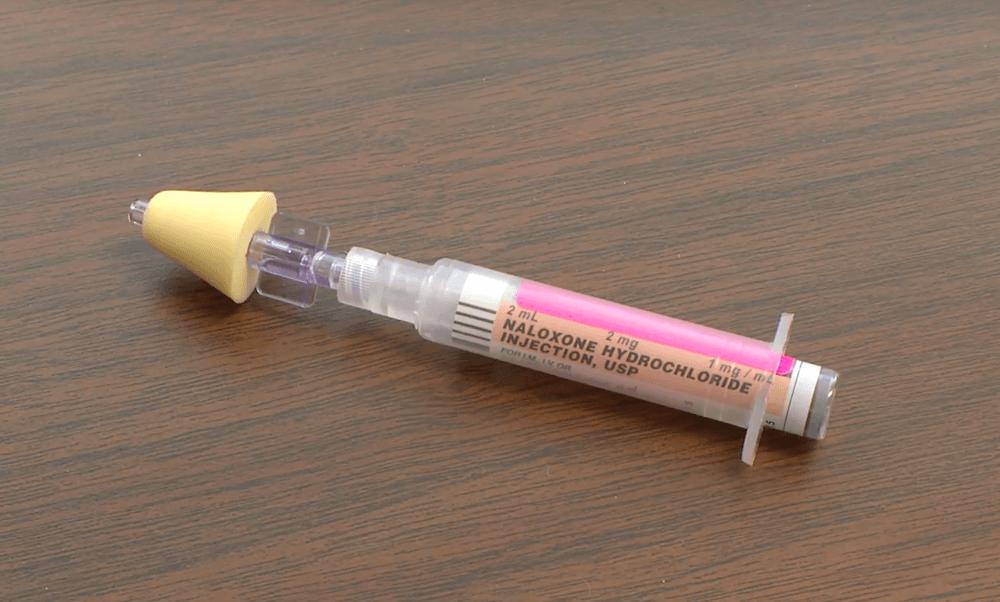
    Naloxone, brand name Narcan, is a drug that can be given through injection or nasal spray. Naloxone binds to opioid receptors in the brain and reverses opioid overdose.

    A large study looked at the possible benefits of Narcan availability in combating opioid overdose deaths.

    The paper, published in Addictive Behaviors, found conclusive positive results, and read, “Naloxone access and Good Samaritan laws are associated with 14% and 15% reductions, respectively, in opioid overdose deaths. Among African-Americans, naloxone and Good Samaritan laws reduce opioid overdose deaths by 23% and 26% respectively. Neither of these harm reduction measures result in increases in non-medical opioid use.”

    Not only did naloxone prevent many deaths, it did not have any unintended harmful side effects, such as increased opioid use. The study recommended that all opioid users, including those prescribed opioids for medical reasons, keep naloxone available at home.

    New Jersey Governor Phil Murphy is a staunch supporter of the new initiative. “The scourge of opioids continues to devastate families and communities across our state, and we must do everything we can to end the opioid epidemic,” said Murphy. “Through this initiative, people who are battling with addiction will be able to receive access to this critical medication and help them get on a path to recovery.”

    When naloxone is made available for free on June 18th at select pharmacies, it will be given away on a first come, first serve basis, no appointment necessary.

    The NJ Department of Health and the NJ Department of Human Services were recently granted $6 million for a program that will address overprescription of opioids in the medical community.

    New Jersey had over 3,000 opioid overdose deaths last year.

    “We are making the opioid overdose reversal drug naloxone available for free on June 18 to help New Jerseyans have the tools they need to support their friends and loved ones and to give us every opportunity to save lives and connect people with opioid addiction to treatment,” said NJ Human Services Commissioner Carole Johnson. 

    To see a list of participating pharmacies click here.

    View the original article at thefix.com

  • Oakland Decriminalizes Shrooms & Other Natural Psychedelics

    Oakland Decriminalizes Shrooms & Other Natural Psychedelics

    Over 100 people testified about how they have been helped by natural psychedelics.

    The use of psilocybin, mescaline or other natural psychedelic “drugs” can no longer be policed in the city of Oakland, California.

    Last Tuesday (June 4), the Oakland City Council voted unanimously to decriminalize psilocybin (magic mushrooms) and other entheogenic plants including ayahuasca, cacti (mescaline) and iboga—i.e., “the full spectrum of plants, fungi, and natural materials… that can inspire personal and spiritual well-being, can benefit psychological and physical wellness, and can reestablish human’s inalienable and direct relationship to nature.”

    Police can no longer “impose criminal penalties… or use any city funds to investigate or enforce the criminal penalties,” CNN explained. And according to the resolution, even people who are currently being prosecuted for the natural psychedelics in question will no longer be punished.

    Denver was the first U.S. city to decriminalize psilocybin in early May. Oakland’s resolution, meanwhile, covers a greater spectrum of natural psychedelics. However, synthetics such as LSD or MDMA are not included in the resolution.

    Councilman Noel Gallo, who introduced the measure after being approached by Decriminalize Nature Oakland, said that growing up in a Native American family, he was familiar with the use of natural medicine. “We didn’t go to Walgreens for medication,” he told CNN. “My grandma had plants in her backyard that would heal us.”

    During the night of the resolution’s passing, over 100 people testified about how they have been helped by natural psychedelics.

    Researcher Matthew Johnson of Johns Hopkins University says there is reason to be optimistic about the ability of psilocybin, in particular, to positively impact mental health issues such as PTSD, depression, addiction and more.

    “The data are really impressive,” he told the San Francisco Chronicle. “We should be cautiously but enthusiastically pursuing these threads.”

    Native communities have a long history of consuming peyote for ritual and medicinal use. Councilman Gallo referred to this fact in his agenda report.

    Another benefit to decriminalization, Gallo said, is freeing police from having to enforce the prohibition of natural psychedelics so they may focus on larger crimes.

    View the original article at thefix.com

  • Do Opioids Help With Sleep?

    Do Opioids Help With Sleep?

    A new study examined if using opioids can help pain patients get a better night’s sleep. 

    People with chronic pain often rely on opioids to manage their discomfort through the night and get a better night’s sleep, but a new scientific review indicates that opioids don’t usually improve the quality of sleep, and may actually make sleep worse. 

    Authors of the review, published in the journal Sleep Study Reviews, found that although people often self-reported that they got better sleep while on opioids, “the effect is inconsistent, small, and may be accompanied by excessive daytime sleepiness.”

    Lead study author Dr. Nicole Tang told Science Daily that studies need to use objective measurements of sleep quality, since self-reporting by patients can often be unreliable. 

    “The way people experience sleep could be quite different from what you get from physiological measurements. It is not uncommon for patients to report an improvement in their sleep quality when the severity of sleep disordered breathing has increased and without significant changes in important parameters reflecting deeper and more restorative sleep,” she said. “This phenomenon is perplexing, and may reflect the inherent challenge in reconciling a wide range of ambiguous bodily information to make a categorical judgement whether sleep has improved or not after opioid therapy.”

    One of the reasons that opioids may not improve sleep is because opioids affect the breathing system. This can make people more likely to deal with sleep apnea events, which affect the quality of sleep.

    According to Science Daily, insomnia is 42% more common among pain patients taking opioids than it is among pain patients who are not on opioids. 

    Tang said that there needs to be more studies on the use of opioids to assist with sleep. Future studies should include examinations of how different opioid doses affect sleep differently, she said. Study co-author Dr. Harbinder Sandhu is currently doing more research into opioids and sleep. 

    “The benefits of opioids on managing chronic pain in the short term is well-evidenced,” she said. “But we have not seen long-term benefits in managing pain and the effect on sleep is unknown. Results of the study will help to inform future interventions in opioid pain management.”

    Dr. Chantal Berna, another study co-author, said that people need to talk with their doctors about the benefits and drawbacks of using opioids to enhance sleep. 

    “Decisions regarding introducing or maintain[ing] long term opioid therapy are based on balancing risks and benefits with the patient suffering from chronic pain,” Berna said. “Given that side effects and risks are sometimes not clear to patients, assessing vigilance as well as sleep both subjectively and with overnight objective measures before and after introducing opioids can be useful.”

    View the original article at thefix.com

  • Texas Raises Legal Smoking Age To 21

    Texas Raises Legal Smoking Age To 21

    The ban does not extend to members of the military under the age of 21 years.

    Texas Governor Greg Abbott signed into law a bill that prohibits the sale of cigarettes and other tobacco products, including e-cigarettes, to anyone under the age of 21.

    Supporters of the ban, which goes into effect September 1, said that it could aid in reducing the number of young adults who become regular smokers, which according to the Surgeon General numbers around 2,400 per day.  With passage of the bill, Texas joins a growing list of cities and states across the country that have increased the legal tobacco age.

    Governor Abbott signed Senate Bill 21 into law on Friday (June 7). The scope of the ban includes cigarettes and other tobacco products, including e-cigarettes, which the Centers for Disease Control and Prevention (CDC) has attributed with a 38% rise in tobacco use among high school students between 2017 and 2018. Juul, which the Huffington Post described as the most commonly used brand of e-cigarette, has voiced support for “Tobacco 21” legislation, as such bills are often called.

    As HuffPost also noted, the ban does not extend to members of the military under the age of 21 years.

    A report from the Surgeon General stated that more than 600,000 middle school students and three million high school students currently smoke cigarettes. Those numbers have slowed in their decline over the last decade, while rates of decline for smokeless tobacco, such as e-cigarettes, have “stalled completely,” according to the report.

    The report also stated that more than 1,200 individuals in the United States die due to smoking-related causes each day, and for each of those deaths, at least two “youth or young adults” become regular smokers each day. Approximately 90% of those “replacement smokers” use their first cigarette by the age of 18.

    According to the Campaign for Tobacco-Free Kids, similar “Tobacco 21” bans have been passed in 14 states including California, Hawaii (the first to pass such a ban in 2016), Illinois, Massachusetts and New Jersey. Some 470 cities and counties, including New York City, Chicago and Boston, have also passed bans, though the strength of these ordinances varies by location.

    U.S. Senate Majority Leader Mitch McConnell is trying to raise the tobacco age to 21 on the federal level.

    Beverly Hills, California, recently became what is believed to be the first city to ban tobacco sales to anyone, save for hotel guests, cigar lounges and any retailer that can demonstrate undue financial distress due to the ban.

    View the original article at thefix.com

  • Taraji Henson Takes Her Mental Health Advocacy To Capitol Hill

    Taraji Henson Takes Her Mental Health Advocacy To Capitol Hill

    The Academy Award-nominated actress says the lack of discussion and confrontation around mental health is dangerous. 

    On Friday (June 7), actress and mental health advocate Taraji P. Henson spent time on Capitol Hill speaking to members of the Black Caucus and encouraging them to join in the conversation about mental health. 

    Henson, the founder of the Boris Lawrence Henson Foundation and Empire star, tells People that the lack of discussion and confrontation around mental health is dangerous. 

    “The suicide rate has taken off,” Henson told People. “It amazes me that 5-year-olds are contemplating suicide. That’s a word you shouldn’t even understand at five years old.”

    Henson added, “We don’t talk about mental health, we don’t deal with it. For generations, we’ve been told it’s a weakness, to pray our problems away—and that’s just not gonna cut it.”

    On Friday, Henson also spent time talking to reporters and interacting with guests at a benefit dinner held prior to a conference called “Can We Talk,” which focused on mental health in the black community. 

    “I felt that if a face or a personality you could trust would come forward to say, ‘Hey, you know, I suffered too—that would make others feel safe. I’ve had a few friends call me and say, ‘Bravo, thank you so much, you have no idea what I go through,’” she told People.

    Henson says that she supports the idea of mental health being taught in schools. That way children are aware of it, but parents would also be encouraged to discuss it with their children more often.  

    “If we can teach children about sex education and physical education, why not mental?” she said. “That’s where we start attacking this issue: with the children.”

    Earlier this year, Henson opened up about her own struggles with depression and anxiety, as well as the mental health challenges facing the black community

    Henson began her own foundation in memory of her father, who struggled with PTSD and manic depression. Her father died in 2005, shortly after the father of her son was murdered in Washington, D.C. It was then that Henson began to search for a therapist. 

    “It was like looking for a purple unicorn with a 24-karat-gold horn,” she tells People. “I say that jokingly, but it’s serious. The reason why we don’t have many psychiatrists of color, or psychologists of color, or therapists of color, is because we don’t talk about it at home.”

    Henson says she now talks to her therapist about twice a week, sometimes with her fiancé. 

    “I want people to know it’s okay,” Henson said. “I don’t know what human is not suffering from some sort of anxiety or depression.”

    In the end, it’s OK to struggle, Henson says. She encourages people to reach out and ask for help. 

    “It’s okay not to be okay,” she said. “Just talk about it.”

    View the original article at thefix.com

  • Brian Wilson Postpones Tour To Focus On Mental Health

    Brian Wilson Postpones Tour To Focus On Mental Health

    Wilson was scheduled to hit the road this summer.

    Brian Wilson not only has a long history of making incredible music with the Beach Boys, he also has a lengthy history of living with mental health issues that he’s had to grapple with most of his adult life.

    Now Wilson has announced that he’s postponing an upcoming tour to take care of his mental health.

    As People reports, Wilson was scheduled to hit the road this summer, and he told his fans through his website, “I had every intention to do these shows and was excited to get back to performing. I’ve been in the studio recording and rehearsing with my band and have been feeling better. But then it crept back and I’ve been struggling with stuff in my head and saying things I don’t mean and I don’t know why. It’s something I’ve never dealt with before and we can’t quite figure it out just yet.”

    Wilson added, “It is no secret that I have been living with mental illness for many decades. There were times when it was unbearable but with doctors and medications I have been able to live a wonderful, healthy and productive life with support from my family, friends and fans who have helped me through this journey.”

    After a recent back surgery, Wilson said, “I started feeling strange and it’s been pretty scary for a while. I was not feeling like myself. Mentally insecure is how I’d describe it.”

    Yet Wilson promised he’d be back soon. “I’m going to rest, recover and work with my doctors on this. I’m looking forward to my recovery and seeing everyone later in the year. The music and my fans keep me going and I know this will be something I can AGAIN overcome.”

    Wilson reportedly lives with schizoaffective disorder, a condition where one experiences symptoms of schizophrenia as well as a mood disorder. Wilson had endured childhood abuse at the hands of a cruel father, Murry Wilson, and eventually he started hearing voices in his head that told him he was “weak” and “worthless.”

    Wilson told Rolling Stone that he felt his mental health problems came from taking “bad drugs. I’ve told a lot of people don’t take psychedelic drugs. It’s mentally dangerous to take. I regret having taken LSD. It’s a bad drug.”

    View the original article at thefix.com

  • Some Christians Are Rethinking Their Views On CBD

    Some Christians Are Rethinking Their Views On CBD

    “I had the same concerns as a lot of Christians. I did not want to be a part of anything that promoted [marijuana use]. But then I saw the science and research, so I switched gears.”

    The Christian religion can deter many from accepting cannabidiol (CBD) as having medical benefits because it is associated with marijuana—though it has little to do with the psychoactive use of this “drug.”

    An in-depth feature published on Christianity Today challenges Christians’ perception of the medical properties provided by CBD for a variety of ailments—including epilepsy and chronic pain.

    “Hemp-based CBD oil is not the same as marijuana. You get the anti-inflammatory [effects], the pain relief without the high. For some people, it really is and has been a lifesaver,” said Troy Spurrill, a chiropractor specializing in functional neurology.

    Through his clinic Synapse, based in Eagan, Minnesota, Spurrill sees patients from 48 states and 12 countries. In his practice, he has observed the results of more than 100 patients who have taken hemp CBD oil and reported not “one problem with it.” Spurrill says CBD had the most significant impact in treating insomnia, pain, anxiety and seizures.

    One patient of his underwent multiple surgeries, resulting in chronic pain and the need for opioid painkillers. He became dependent on the drugs and suicidal. Spurrill reported that CBD was able to help the patient break free of his opioid dependency and improve his quality of life. “He got off the opiates and is alive and doing well today,” Spurrill told Christianity Today. “It managed the pain. It ended up being a big tool for me to help him.”

    As a church-going Christian, Spurrill admitted that he was at first reluctant to consider CBD as a legitimate treatment. “I was not for it in the beginning. I had the same concerns as a lot of Christians. I did not want to be a part of anything that promoted [marijuana use]. But then I saw the science and research, so I switched gears,” he said.

    A number of states have approved the use of CBD only—stopping short of establishing a medical marijuana program—in the name of helping young children suffering debilitating seizures.

    Mandy Van Schyndel, a mother from Wisconsin, shared her experience searching for ways to help her young daughter Emma, who was diagnosed with Lennox-Gastaut Syndrome (LGS), a severe form of epilepsy.

    At her worst, Emma would suffer 12 cluster seizures daily. At the beginning of her life, she lived in hospice care and was not expected to survive.

    The family tried “many different concoctions of medications” including steroid injections and a ketogenic diet—but none of it worked. They grew desperate for some relief. “We went from trying to find seizure freedom to just trying to find any kind of reduction—to increase her quality of life,” said Van Schyndel.

    Like Troy Spurrill, Van Schyndel, who is Christian, was hesitant to bring up CBD with Emma’s neurologist, but she was surprised by his response. “I said [to him], ‘I know this is a taboo subject.’ He said, ‘It’s not taboo. There’s really something to it.’ That was a nice reassurance to hear.”

    After procuring a high quality CBD oil and applying two drops twice daily under Emma’s tongue, they saw a “dramatic decrease” in her seizures—from 12 per day to zero in six months.

    “It felt like the fog was lifted. My child was awake under there. Now she’s laughing and smiling every single day!” said Van Schyndel.

    “She has more purposeful movement. She’s interacting with her peers. She’s playing with toys spontaneously. None of these things were happening before CBD oil. You can’t tell me that’s all a coincidence,” she added.

    “It’s miraculous. It baffles me that that minute amount can combat one of the most severe forms of epilepsy.”

    View the original article at thefix.com

  • Alexandria Ocasio-Cortez Wants To Make It Easier To Research Psychedelic Drugs

    Alexandria Ocasio-Cortez Wants To Make It Easier To Research Psychedelic Drugs

    Ocasio-Cortez’s new legislation is timely, falling in line with the recent decriminalization of psychedelic drugs in Oakland and Denver.

    Some democratic leaders, including U.S. Rep. Alexandria Ocasio-Cortez, are pushing for amendments that would make it easier to research the medical benefits of certain drugs. 

    On Friday (June 7), Ocasio-Cortez filed legislation that would eliminate an obstacle that often prevents scientists from being able to study any “medical benefits of psychedelic drugs,” including psilocybin and MDMA.

    The obstacle scientists speak of stems from a previous law that doesn’t allow the spending of federal funds for “any activity that promotes the legalization of any drug or other substance in Schedule I” of the Controlled Substances Act, Forbes reports

    The possible medical benefits of such drugs stem from psilocybin, also known as “magic mushrooms.” According to a summary of Ocasio-Cortez’s proposal, psilocybin has “shown promise in end of life therapy and treating PTSD.” 

    The summary also states that such provisions that are already in place just perpetuate stigma and block research. 

    “Academics and scientists report that provisions like this create [stigma] and insurmountable logistical hurdles to researching schedule I drugs,” it reads. 

    Marijuana is also a Schedule I drug and often those researching it face the same obstacles which have been in place since 1996

    “This language has served as a gag rule on government employees discussing the benefits of legalization,” said Michael Collins, director of national affairs for the Drug Policy Alliance. “We are moving away from the war on drugs—slowly but surely—and language like this belongs in Nancy Reagan’s journal, not in a Democrat bill.”

    Rep. Lou Correa is also taking action and filed a separate amendment, Forbes reports. His would block the Department of Education from taking action “to deny or limit any funding or assistance to institutions of higher education.” This fear of losing funding, Forbes states, is often the reason that certain educational institutions do not allow students to use medical marijuana on campus.

    These amendments are in line with a recent vote in Denver, Colorado, in which a ballot measure was approved to decriminalize psilocybin mushrooms. Additionally, in Oakland, California, the City Council recently voted to decriminalize magic mushrooms, ayahuasca, mescaline and ibogaine.

    Both amendments will be reviewed on Monday (June 10) by the House Rules Committee, which will determine whether they will be voted on at a later time. 

    Though unknown if the amendments will move forward, Rules Committee Chairman, Rep. James McGovern, has spoken candidly about his view on such amendments. 

    “I’m not going to block marijuana amendments like my predecessor has done,” he said last year, according to Forbes. “As chairman of the Rules Committee, I’m not going to block marijuana amendments. People ought to bring them to the floor, they should be debated and people ought to vote the way they feel appropriate.”

    View the original article at thefix.com

  • Minnesota Makes Move To Get Drug Companies To Indirectly Pay For Addiction Treatment

    Minnesota Makes Move To Get Drug Companies To Indirectly Pay For Addiction Treatment

    The new plan is anticipated to help put about $20 million annually toward the prevention of substance use disorders, as well as treatment for them.

    Minnesota is increasing fees for drug companies in an effort to pay for the effects of the opioid epidemic in the state. 

    On May 29, Minnesota Governor Tim Walz signed into law a bill that will drive up fees for both prescription drug manufacturers and distributors, the Star Tribune reports.  

    The new plan is anticipated to help raise about $20 million annually toward the prevention of substance use disorders, as well as treatment for them.

    For drug manufacturers and distributors, the new plan isn’t a minor change. It will drive their annual licensing fees from about $200 annually to $305,000 annually. After five years, the Star Tribune reports, those fees will decrease to $5,000 if state funding hits the goal of $250 million. This could be through the increased fees for companies, or via a settlement from existing lawsuits against such organizations. 

    “The opioid epidemic is devastating communities across Minnesota—claiming lives and leaving heartbroken families in its wake,” Walz said in a statement. “This law will help more families access the treatment they need and prevent addiction in the first place.”

    The Star Tribune reports that an advisory council made up of 19 members will monitor the funding and be responsible for issuing grants for programs that aim to combat the opioid crisis and prevent additional deaths as a result. The funding will also be allocated to various law enforcement areas, programs that work to provide nonnarcotic pain treatment and county services for children who have been affected by the opioid epidemic. 

    “This is unusual,” said Carmen Catizone, executive director of the National Association of Boards of Pharmacy, according to Kaiser Health News. “We keep seeing the states trying to find new ways to finance the costs of the opioid crisis. But this is a new angle, although it follows a pattern of states and municipalities assessing costs for disposing of unwanted or unused medicines.”

    However, the new legislation wasn’t supported by everyone. There was some pushback from chronic pain patients, as well as pharmaceutical companies themselves. 

    “Unfortunately, what’s being proposed—taxing legitimately prescribed medicines that patients rely on for legitimate medical needs to raise revenue for the state—ignores evidence-based solutions, sets a dangerous precedent and ultimately won’t help patients and families,” Nick McGee, director of public affairs for the industry trade group PhRMA, said earlier this year.

    According to the Star Tribune, such opposition in past years kept similar ideas from being enacted. However, increasing awareness around the opioid epidemic and the role of manufacturers and distributors helped to sway the dynamic. 

    View the original article at thefix.com