Category: Covid-19

  • Why using fear to promote COVID-19 vaccination and mask wearing could backfire

    While the pandemic stakes might justify using hard-hitting strategies, the nation’s social and political context right now might cause fear tactics to backfire.

    You probably still remember public service ads that scared you: The cigarette smoker with throat cancer. The victims of a drunk driver. The guy who neglected his cholesterol lying in a morgue with a toe tag.

    With new, highly transmissible variants of SARS-CoV-2 now spreading, some health professionals have started calling for the use of similar fear-based strategies to persuade people to follow social distancing rules and get vaccinated.

    There is compelling evidence that fear can change behavior, and there have been ethical arguments that using fear can be justified, particularly when threats are severe. As public health professors with expertise in history and ethics, we have been open in some situations to using fear in ways that help individuals understand the gravity of a crisis without creating stigma.

    But while the pandemic stakes might justify using hard-hitting strategies, the nation’s social and political context right now might cause it to backfire.

    Fear as a strategy has waxed and waned

    Fear can be a powerful motivator, and it can create strong, lasting memories. Public health officials’ willingness to use it to help change behavior in public health campaigns has waxed and waned for more than a century.

    From the late 19th century into the early 1920s, public health campaigns commonly sought to stir fear. Common tropes included flies menacing babies, immigrants represented as a microbial pestilence at the gates of the country, voluptuous female bodies with barely concealed skeletal faces who threatened to weaken a generation of troops with syphilis. The key theme was using fear to control harm from others.
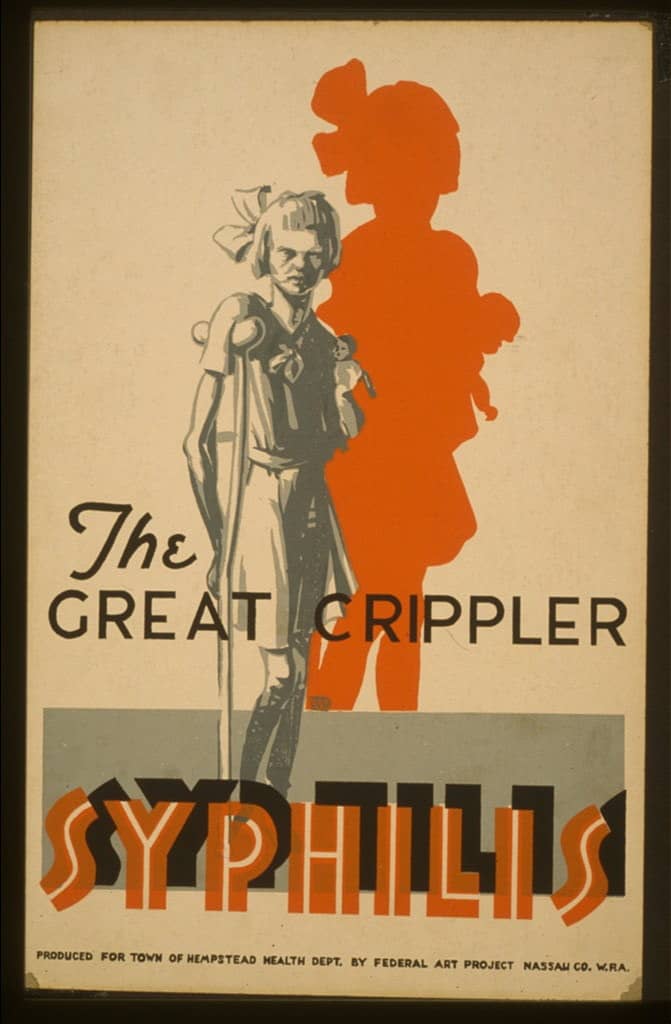
    Why using fear to promote COVID-19 vaccination and mask wearing could backfire
    Library of Congress

    Following World War II, epidemiological data emerged as the foundation of public health, and use of fear fell out of favor. The primary focus at the time was the rise of chronic “lifestyle” diseases, such as heart disease. Early behavioral research concluded fear backfired. An early, influential study, for example, suggested that when people became anxious about behavior, they might tune out or even engage more in dangerous behaviors, like smoking or drinking, to cope with the anxiety stimulated by fear-based messaging.

    But by the 1960s, health officials were trying to change behaviors related to smoking, eating and exercise, and they grappled with the limits of data and logic as tools to help the public. They turned again to scare tactics to try to deliver a gut punch. It was not enough to know that some behaviors were deadly. We had to react emotionally.

    Although there were concerns about using fear to manipulate people, leading ethicists began to argue that it could help people understand what was in their self-interest. A bit of a scare could help cut through the noise created by industries that made fat, sugar and tobacco alluring. It could help make population-level statistics personal.
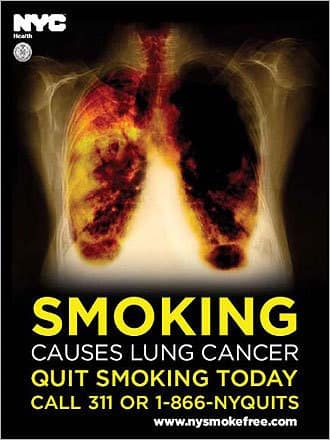
    Why using fear to promote COVID-19 vaccination and mask wearing could backfire
    NYC Health

    Anti-tobacco campaigns were the first to show the devastating toll of smoking. They used graphic images of diseased lungs, of smokers gasping for breath through tracheotomies and eating through tubes, of clogged arteries and failing hearts. Those campaigns worked.

    And then came AIDS. Fear of the disease was hard to untangle from fear of those who suffered the most: gay men, sex workers, drug users, and the black and brown communities. The challenge was to destigmatize, to promote the human rights of those who only stood to be further marginalized if shunned and shamed. When it came to public health campaigns, human rights advocates argued, fear stigmatized and undermined the effort.

    When obesity became a public health crisis, and youth smoking rates and vaping experimentation were sounding alarm bells, public health campaigns once again adopted fear to try to shatter complacency. Obesity campaigns sought to stir parental dread about youth obesity. Evidence of the effectiveness of this fear-based approach mounted.

    Evidence, ethics and politics

    So, why not use fear to drive up vaccination rates and the use of masks, lockdowns and distancing now, at this moment of national fatigue? Why not sear into the national imagination images of makeshift morgues or of people dying alone, intubated in overwhelmed hospitals?

    Before we can answer these questions, we must first ask two others: Would fear be ethically acceptable in the context of COVID-19, and would it work?

    For people in high-risk groups – those who are older or have underlying conditions that put them at high risk for severe illness or death – the evidence on fear-based appeals suggests that hard-hitting campaigns can work. The strongest case for the efficacy of fear-based appeals comes from smoking: Emotional PSAs put out by organizations like the American Cancer Society beginning in the 1960s proved to be a powerful antidote to tobacco sales ads. Anti-tobacco crusaders found in fear a way to appeal to individuals’ self-interests.

    At this political moment, however, there are other considerations.

    Health officials have faced armed protesters outside their offices and homes. Many people seem to have lost the capacity to distinguish truth from falsehood.

    By instilling fear that government will go too far and erode civil liberties, some groups developed an effective political tool for overriding rationality in the face of science, even the evidence-based recommendations supporting face masks as protection against the coronavirus.

    Reliance on fear for public health messaging now could further erode trust in public health officials and scientists at a critical juncture.

    The nation desperately needs a strategy that can help break through pandemic denialism and through the politically charged environment, with its threatening and at times hysterical rhetoric that has created opposition to sound public health measures.

    Even if ethically warranted, fear-based tactics may be dismissed as just one more example of political manipulation and could carry as much risk as benefit.

    Instead, public health officials should boldly urge and, as they have during other crisis periods in the past, emphasize what has been sorely lacking: consistent, credible communication of the science at the national level.

    Amy Lauren Fairchild, Dean and Professor, College of Public Health, The Ohio State University and Ronald Bayer, Professor Sociomedical Sciences, Columbia University

    This article is republished from The Conversation under a Creative Commons license. Read the original article.

  • The ‘Grief Pandemic’ Will Torment Americans for Years

    The optimism generated by vaccines and falling infection rates has blinded many Americans to the deep sorrow and depression of those around them.

    Cassandra Rollins’ daughter was still conscious when the ambulance took her away.

    Shalondra Rollins, 38, was struggling to breathe as covid overwhelmed her lungs. But before the doors closed, she asked for her cellphone, so she could call her family from the hospital.

    It was April 7, 2020 — the last time Rollins would see her daughter or hear her voice.

    The hospital rang an hour later to say she was gone. A chaplain later told Rollins that Shalondra had died on a gurney in the hallway. Rollins was left to break the news to Shalondra’s children, ages 13 and 15.

    More than a year later, Rollins said, the grief is unrelenting.

    Rollins has suffered panic attacks and depression that make it hard to get out of bed. She often startles when the phone rings, fearing that someone else is hurt or dead. If her other daughters don’t pick up when she calls, Rollins phones their neighbors to check on them.

    “You would think that as time passes it would get better,” said Rollins, 57, of Jackson, Mississippi. “Sometimes, it is even harder. … This wound right here, time don’t heal it.”

    With nearly 600,000 in the U.S. lost to covid-19 — now a leading cause of death — researchers estimate that more than 5 million Americans are in mourning, including more than 43,000 children who have lost a parent.

    The pandemic — and the political battles and economic devastation that have accompanied it — have inflicted unique forms of torment on mourners, making it harder to move ahead with their lives than with a typical loss, said sociologist Holly Prigerson, co-director of the Cornell Center for Research on End-of-Life Care.

    The scale and complexity of pandemic-related grief have created a public health burden that could deplete Americans’ physical and mental health for years, leading to more depression, substance misuse, suicidal thinking, sleep disturbances, heart disease, cancer, high blood pressure and impaired immune function.

    “Unequivocally, grief is a public health issue,” said Prigerson, who lost her mother to covid in January. “You could call it the grief pandemic.”

    Like many other mourners, Rollins has struggled with feelings of guilt, regret and helplessness — for the loss of her daughter as well as Rollins’ only son, Tyler, who died by suicide seven months earlier.

    “I was there to see my mom close her eyes and leave this world,” said Rollins, who was first interviewed by KHN a year ago in a story about covid’s disproportionate effects on communities of color. “The hardest part is that my kids died alone. If it weren’t for this covid, I could have been right there with her” in the ambulance and emergency room. “I could have held her hand.”

    The pandemic has prevented many families from gathering and holding funerals, even after deaths caused by conditions other than covid. Prigerson’s research shows that families of patients who die in hospital intensive care units are seven times more likely to develop post-traumatic stress disorder than loved ones of people who die in home hospice.

    The polarized political climate has even pitted some family members against one another, with some insisting that the pandemic is a hoax and that loved ones must have died from influenza, rather than covid. People in grief say they’re angry at relatives, neighbors and fellow Americans who failed to take the coronavirus seriously, or who still don’t appreciate how many people have suffered.

    “People holler about not being able to have a birthday party,” Rollins said. “We couldn’t even have a funeral.”

    Indeed, the optimism generated by vaccines and falling infection rates has blinded many Americans to the deep sorrow and depression of those around them. Some mourners say they will continue wearing their face masks — even in places where mandates have been removed — as a memorial to those lost.

    “People say, ‘I can’t wait until life gets back to normal,’” said Heidi Diaz Goff, 30, of the Los Angeles area, who lost her 72-year-old father to covid. “My life will never be normal again.”

    Many of those grieving say celebrating the end of the pandemic feels not just premature, but insulting to their loved ones’ memories.

    “Grief is invisible in many ways,” said Tashel Bordere, a University of Missouri assistant professor of human development and family science who studies bereavement, particularly in the Black community. “When a loss is invisible and people can’t see it, they may not say ‘I’m sorry for your loss,’ because they don’t know it’s occurred.”

    Communities of color, which have experienced disproportionately higher rates of death and job loss from covid, are now carrying a heavier burden.

    Black children are more likely than white children to lose a parent to covid. Even before the pandemic, the combination of higher infant and maternal mortality rates, a greater incidence of chronic disease and shorter life expectancies made Black people more likely than others to be grieving a close family member at any point in their lives.

    Rollins said everyone she knows has lost someone to covid.

    “You wake up every morning, and it’s another day they’re not here,” Rollins said. “You go to bed at night, and it’s the same thing.”

    A Lifetime of Loss

    Rollins has been battered by hardships and loss since childhood.

    She was the youngest of 11 children raised in the segregated South. Rollins was 5 years old when her older sister Cora, whom she called “Coral,” was stabbed to death at a nightclub, according to news reports. Although Cora’s husband was charged with murder, he was set free after a mistrial.

    Rollins gave birth to Shalondra at age 17, and the two were especially close. “We grew up together,” Rollins said.

    Just a few months after Shalondra was born, Rollins’ older sister Christine was fatally shot during an argument with another woman. Rollins and her mother helped raise two of the children Christine left behind.

    Heartbreak is all too common in the Black community, Bordere said. The accumulated trauma — from violence to chronic illness and racial discrimination — can have a weathering effect, making it harder for people to recover.

    “It’s hard to recover from any one experience, because every day there is another loss,” Bordere said. “Grief impacts our ability to think. It impacts our energy levels. Grief doesn’t just show up in tears. It shows up in fatigue, in working less.”

    Rollins hoped her children would overcome the obstacles of growing up Black in Mississippi. Shalondra earned an associate’s degree in early childhood education and loved her job as an assistant teacher to kids with special needs. Shalondra, who had been a second mother to her younger siblings, also adopted a cousin’s stepdaughter after the child’s mother died, raising the girl alongside her two children.

    Rollins’ son, Tyler, enlisted in the Army after high school, hoping to follow in the footsteps of other men in the family who had military careers.

    Yet the hardest losses of Rollins’ life were still to come. In 2019, Tyler killed himself at age 20, leaving behind a wife and unborn child.

    “When you see two Army men walking up to your door,” Rollins said, “that’s unexplainable.”

    Tyler’s daughter was born the day Shalondra died.

    “They called to tell me the baby was born, and I had to tell them about Shalondra,” Rollins said. “I don’t know how to celebrate.”

    Shalondra’s death from covid changed her daughters’ lives in multiple ways.

    The girls lost their mother, but also the routines that might help mourners adjust to a catastrophic loss. The girls moved in with their grandmother, who lives in their school district. But they have not set foot in a classroom for more than a year, spending their days in virtual school, rather than with friends.

    Shalondra’s death eroded their financial security as well, by taking away her income. Rollins, who worked as a substitute teacher before the pandemic, hasn’t had a job since local schools shut down. She owns her own home and receives unemployment insurance, she said, but money is tight.

    Makalin Odie, 14, said her mother, as a teacher, would have made online learning easier. “It would be very different with my mom here.”

    The girls especially miss their mom on holidays.

    “My mom always loved birthdays,” said Alana Odie, 16. “I know that if my mom were here my 16th birthday would have been really special.”

    Asked what she loved most about her mother, Alana replied, “I miss everything about her.”

    Grief Complicated by Illness

    The trauma also has taken a toll on Alana and Makalin’s health. Both teens have begun taking medications for high blood pressure. Alana has been on diabetes medication since before her mom died.

    Mental and physical health problems are common after a major loss. “The mental health consequences of the pandemic are real,” Prigerson said. “There are going to be all sorts of ripple effects.”

    The stress of losing a loved one to covid increases the risk for prolonged grief disorder, also known as complicated grief, which can lead to serious illness, increase the risk of domestic violence and steer marriages and relationships to fall apart, said Ashton Verdery, an associate professor of sociology and demography at Penn State.

    People who lose a spouse have a roughly 30% higher risk of death over the following year, a phenomenon known as the “the widowhood effect.” Similar risks are seen in people who lose a child or sibling, Verdery said.

    Grief can lead to “broken-heart syndrome,” a temporary condition in which the heart’s main pumping chamber changes shape, affecting its ability to pump blood effectively, Verdery said.

    From final farewells to funerals, the pandemic has robbed mourners of nearly everything that helps people cope with catastrophic loss, while piling on additional insults, said the Rev. Alicia Parker, minister of comfort at New Covenant Church of Philadelphia.

    “It may be harder for them for many years to come,” Parker said. “We don’t know the fallout yet, because we are still in the middle of it.”

    Rollins said she would have liked to arrange a big funeral for Shalondra. Because of restrictions on social gatherings, the family held a small graveside service instead.

    Funerals are important cultural traditions, allowing loved ones to give and receive support for a shared loss, Parker said.

    “When someone dies, people bring food for you, they talk about your loved one, the pastor may come to the house,” Parker said. “People come from out of town. What happens when people can’t come to your home and people can’t support you? Calling on the phone is not the same.”

    While many people are afraid to acknowledge depression, because of the stigma of mental illness, mourners know they can cry and wail at a funeral without being judged, Parker said.

    “What happens in the African American house stays in the house,” Parker said. “There’s a lot of things we don’t talk about or share about.”

    Funerals play an important psychological role in helping mourners process their loss, Bordere said. The ritual helps mourners move from denying that a loved one is gone to accepting “a new normal in which they will continue their life in the physical absence of the cared-about person.” In many cases, death from covid comes suddenly, depriving people of a chance to mentally prepare for loss. While some families were able to talk to loved ones through FaceTime or similar technologies, many others were unable to say goodbye.

    Funerals and burial rites are especially important in the Black community and others that have been marginalized, Bordere said.

    “You spare no expense at a Black funeral,” Bordere said. “The broader culture may have devalued this person, but the funeral validates this person’s worth in a society that constantly tries to dehumanize them.”

    In the early days of the pandemic, funeral directors afraid of spreading the coronavirus did not allow families to provide clothing for their loved ones’ burials, Parker said. So beloved parents and grandparents were buried in whatever they died in, such as undershirts or hospital gowns.

    “They bag them and double-bag them and put them in the ground,” Parker said. “It is an indignity.”

    Coping With Loss

    Every day, something reminds Rollins of her losses.

    April brought the first anniversary of Shalondra’s death. May brought Teacher Appreciation Week.

    Yet Rollins said the memory of her children keeps her going.

    When she begins to cry and thinks she will never stop, one thought pulls her from the darkness: “I know they would want me to be happy. I try to live on that.”

    Subscribe to KHN’s free Morning Briefing.

    View the original article at thefix.com

  • Opinion: The Opioid Crisis + COVID-19 = The Perfect Storm

    How can the addiction treatment community continue to assist people who are now being left even more isolated and desperate?

    Addiction – a chronic relapsing brain disorder, and a disease that gets deeply personal. It gets low-down and dirty, too.

    If you’re not an addict yourself, you surely know someone who is.

    You know someone abusing their opioid prescriptions, not because it’s a barrier to their pain, but because it’s a potent way to make them feel happier. You know someone whose alcohol consumption is dangerously high and verging on alcoholic – if they’re not already there, of course. Your kids will certainly know someone who abuses recreational drugs like they were going out of fashion. They’ll also know other students who swallow ADHD prescription tablets (as a study aid) because it makes them get their grades, and keeps their parents, people like you, happy.

    Among the people who are in your extended family, among your circle of friends, or someone within your workplace – at the very least, one, probably several more, will be a secret drug addict or an alcoholic. At the very least.

    It doesn’t discriminate. It certainly doesn’t care where you live either, just like most other diseases, and now this new coronavirusCOVID-19.

    Arizona & The Opioid Crisis

    Over the last 3 years, in Arizona alone, there have been more than 5,000 opioid-related deaths. Add to that the 40,000-plus opioid overdoses that have taken place during the same period, and you realize that COVID-19 has never been the only serious health issue the state continues to face, or the rest of the U.S., for that matter.

    In our “new reality” of social distancing and masks, more than 2 people every single day die from an opioid overdose in Arizona. Nearly half of those are aged 25-44 years old – in their prime, you might say.

    Opioids are not the only addictive group of substances that is costing young Arizonan lives right now either.

    From the abuse of “study aid” drugs, like Adderall and other ADHD medications, to the “party drugs,” like cocaine and ecstacy, and so to opioid prescription meds, and, if circumstances allow, a slow and deadly progression to heroin – addiction is damaging lives, if not ending them way too soon.

    These drugs did so before anyone had ever heard of COVID-19, and they’ll continue to do so after, or even if the world ultimately finds another drug – the elusive coronavirus vaccine – it is hoping for.

    Opioids + COVID-19 = The Perfect Storm

    We now live in this time of coronavirus. With the ongoing opioid epidemic, the question arises:

    How can the addiction treatment community continue to assist people who are now being left even more isolated and desperate, still with their chronic desire to get as high as they can, or drunker than yesterday?

    Furthermore, coronavirus has raised questions itself about the ongoing mental health needs of our population as a whole, and drug addicts and alcoholics continue to feature heavily in any statistics you offer up about those in the U.S. living with a mental health disorder.

    In fact, around half of those with a substance use disorder (SUD) or an alcohol use disorder (AUD) – the medical terminology for addiction – are simultaneously living with their own mental health disorder, such as major depression, severe anxiety or even a trauma-related disorder like PTSD.

    How are these predominantly socially-disadvantaged people able to receive the treatment they really need when they have been directed to isolate and socially distance themselves even further?

    This is why I believe the conditions for a “perfect storm” of widespread deteriorating mental health and self-medication through continued substance abuse are here now, with overdoses and fatalities rising across the addiction spectrum.

    There will be many drug or alcohol abusers living in Arizona who will be lost to us, and the majority will be young people in the age group of 25-44 mentioned previously, left isolated and unnoticed by an over-occupied medical community.

    The U.S. opioid epidemic plus the global coronavirus pandemic.

    A deceitfully isolating disorder in a time of generalized social isolation. For some, there will be no safe harbor from this, and it will wash them away from the lives of their families and friends without any chance of rescue whatsoever. The perfect storm – our perfect storm.

    Today, the truth is that successful addiction recovery has become exponentially more difficult. Apart from ongoing isolation to contend with, there exists an unfounded but very real distrust of medical facilities per se, and a real personal problem in maintaining good physical and mental health practices, eg. through nutrition and physical activity.

    Innovation: The Ideal Recovery Answer for Isolated Substance Addicts?

    Digital technology has advanced far further than its creators and financial promoters ever envisaged – or has it? We have become a society where it doesn’t matter where you are in the world, you’re always close by to loved ones you wish to talk to, friends you want to have a laugh with, and colleagues you need to share information with.

    Communication anywhere with anyone is as simple as the proverbial ABC.

    However, if you think that innovation and digital technology – sitting in front of your laptop or tablet, in other words – can provide the answers to the questions raised earlier about the timely provision of professional addiction or mental health treatment to those that need it, then you’re wrong. If only it were all that simple and straightforward.

    Online meetings of 12-Step organizations, like Alcoholics Anonymous, Narcotics Anonymous, and others, have been available for many years. However, all of these support organizations realize that an online or virtual 12-Step meeting is not the real thing. They are a temporary substitute and no more.

    In fact, they are a poor substitute when compared to the face-to-face and hands-on meetings that continue to be held successfully all over the nation and all year round.

    The various “sober aware” and “sober curious” communities that are present online do not provide a realistic treatment option to any substance addicts whatsoever, whether their SUD or AUD has been clinically diagnosed or not. Furthermore, the current crop of online addiction treatment and recovery programs available are currently statistically unproven in terms of successful outcomes, and with no official accreditation.

    That said, there is limited evidence that “telemental health care” does have several benefits in terms of more timely interventions in those with mental illness generally, particularly when these people are located in isolated communities.

    I honestly wouldn’t know, as there is no official patient outcome data for these services. In fact, by the time that data is able to be impartially and officially collected, these groups and so-called programs may have already lost their internet presence.

    Online “help” (you honestly couldn’t call it an actual treatment) with addiction is severely limited and nowhere near approaching the answer. Here’s exactly why…

    Substance addiction is an utterly isolating disorder. It can obliterate close family bonds, destroy what keeps us close together as friends, and will happily rampage unabated through any social life you may still hold onto, accepting no prisoners. Bleak isolation like you’ve never known before.

    Corona has little on addiction.

    Addiction is the catalyst behind premature death, the end of families and their marriages, long-term unemployment, and endless legal issues. It costs financially too – countless billions of dollars every year are lost to this disorder, over double that of any other neurological disease.

    Let me be absolutely clear and concise – there exists no replacement whatsoever for your hand held by another when lying in an intensive care bed, scared you’ll become just another coronavirus statistic, and there exists no replacement for the smiles, warmth, and openness of fellow recovering drug addicts meeting in a daily support group, especially on those days when you came so close, so very close, to using or drinking again.

    There’s little difference between the two either.

    The online addiction treatment industry is still in its childhood. It truly is an industry too, as you’ll only buy the brand and the product; you’ll never actually meet those telling you how to best change your life.

    At present, it falls woefully short.

    Really, what would you prefer? A mask-wearing addiction professional, clinically qualified to assist with your detox, your medication if needed, and your psychological needs, located in an accredited treatment facility (formally certified as being coronavirus-free), among peers, fellow addicts, and trained medical staff?

    Or a video image on a computer screen of someone you will never meet, who is telling you to do things you’ve never done before? At least, successfully?

    As society moves towards a more home-orientated existence, with WFH (working from home) the new norm, consider this:

    Would a specialized medical professional treating your disease ask you to consider “getting better from home,” as an alternative to the hospital?

    All we can hope for – the best that we can hope for – is that coronavirus soon leaves the state lines of Arizona, and that can continue all of our recoveries as successfully as before. Until then, the advice is simple – take the best help you can from wherever you can get it. Sadly, you are yet to find it on a computer screen.

    One last thought before I sign off…

    Protective masks may well become standard attire in our unknown future. So why, oh why, can they not make these transparent? Just take a moment… We’d be able to see each other – our friends, our colleagues, even complete strangers in the street – smile again.

    View the original article at thefix.com

  • Isolation, Disruption and Confusion: Coping With Dementia During a Pandemic

    The pandemic has been devastating to older adults and their families when they are unable to see each other and provide practical and emotional support.

    GARDENA, Calif. — Daisy Conant, 91, thrives off routine.

    One of her favorites is reading the newspaper with her morning coffee. But, lately, the news surrounding the coronavirus pandemic has been more agitating than pleasurable. “We’re dropping like flies,” she said one recent morning, throwing her hands up.

    “She gets fearful,” explained her grandson Erik Hayhurst, 27. “I sort of have to pull her back and walk her through the facts.”

    Conant hasn’t been diagnosed with dementia, but her family has a history of Alzheimer’s. She had been living independently in her home of 60 years, but Hayhurst decided to move in with her in 2018 after she showed clear signs of memory loss and fell repeatedly.

    For a while, Conant remained active, meeting up with friends and neighbors to walk around her neighborhood, attend church and visit the corner market. Hayhurst, a project management consultant, juggled caregiving with his job.

    Then COVID-19 came, wrecking Conant’s routine and isolating her from friends and loved ones. Hayhurst has had to remake his life, too. He suddenly became his grandmother’s only caregiver — other family members can visit only from the lawn.

    The coronavirus has upended the lives of dementia patients and their caregivers. Adult day care programs, memory cafes and support groups have shut down or moved online, providing less help for caregivers and less social and mental stimulation for patients. Fear of spreading the virus limits in-person visits from friends and family.

    These changes have disrupted long-standing routines that millions of people with dementia rely on to help maintain health and happiness, making life harder on them and their caregivers.

    “The pandemic has been devastating to older adults and their families when they are unable to see each other and provide practical and emotional support,” said Lynn Friss Feinberg, a senior strategic policy adviser at AARP Public Policy Institute.

    Nearly 6 million Americans age 65 and older have Alzheimer’s disease, the most common type of dementia. An estimated 70% of them live in the community, primarily in traditional home settings, according to the Alzheimer’s Association 2020 Facts and Figures journal.

    People with dementia, particularly those in the advanced stages of the disease, live in the moment, said Sandy Markwood, CEO of the National Association of Area Agencies on Aging. They may not understand why family members aren’t visiting or, when they do, don’t come into the house, she added.

    “Visitation under the current restrictions, such as a drive-by or window visit, can actually result in more confusion,” Markwood said.

    The burden of helping patients cope with these changes often falls on the more than 16 million people who provide unpaid care for people with Alzheimer’s or other dementias in the United States.

    The Alzheimer’s Association’s 24-hour Helpline has seen a shift in the type of assistance requested during the pandemic. Callers need more emotional support, their situations are more complex, and there’s a greater “heaviness” to the calls, said Susan Howland, programs director for the Alzheimer’s Association California Southland Chapter.

    “So many [callers] are seeking advice on how to address gaps in care,” said Beth Kallmyer, the association’s vice president of care and support. “Others are simply feeling overwhelmed and just need someone to reassure them.”

    Because many activities that bolstered dementia patients and their caregivers have been canceled due to physical-distancing requirements, dementia and caregiver support organizations are expanding or trying other strategies, such as virtual wellness activities, check-in calls from nurses and online caregiver support groups. EngAGED, an online resource center for older adults, maintains a directory of innovative programs developed since the onset of the COVID-19 pandemic.

    They include pen pal services and letter-writing campaigns, robotic pets and weekly online choir rehearsals.

    Hayhurst has experienced some rocky moments during the pandemic.

    For instance, he said, it was hard for Conant to understand why she needed to wear a mask. Eventually, he made it part of the routine when they leave the house on daily walks, and Conant has even learned to put on her mask without prompting.

    “At first it was a challenge,” Hayhurst said. “She knows it’s part of the ritual now.”

    People with dementia can become agitated when being taught new things, said Dr. Lon Schneider, director of the Alzheimer’s Disease Research Center at the University of Southern California. To reduce distress, he said, caregivers should enforce mask-wearing only when necessary.

    That was a lesson Gina Moran of Fountain Valley, California, learned early on. Moran, 43, cares for her 85-year-old mother, Alba Moran, who was diagnosed with Alzheimer’s in 2007.

    “I try to use the same words every time,” Moran said. “I tell her there’s a virus going around that’s killing a lot of people, especially the elderly. And she’ll respond, ‘Oh, I’m at that age.’”

    If Moran forgets to explain the need for a mask or social distancing, her mother gets combative. She raises her voice and refuses to listen to Moran, much like a child throwing a tantrum, Moran said. “I can’t go into more information than that because she won’t understand,” she said. “I try to keep it simple.”

    The pandemic is also exacerbating feelings of isolation and loneliness, and not just for people with dementia, said Dr. Jin Hui Joo, associate professor of psychiatry and behavioral sciences at the Johns Hopkins University School of Medicine. “Caregivers are lonely, too.”

    When stay-at-home orders first came down in March, Hayhurst’s grandmother repeatedly said she felt lonesome, he recalled. “The lack of interaction has made her feel far more isolated,” he said.

    To keep her connected with family and friends, he regularly sets up Zoom calls.

    But Conant struggles with the concept of seeing familiar faces through the computer screen. During a Zoom call on her birthday last month, Conant tried to cut pieces of cake for her guests.

    Moran also feels isolated, in part because she’s getting less help from family. In addition to caring for her mom, Moran studies sociology online and is in the process of adopting 1-year-old Viviana.

    Right now, to minimize her mother’s exposure to the virus, Moran’s sister is the only person who visits a couple of times a week.

    “She stays with my mom and baby so I can get some sleep,” Moran said.

    Before COVID, she used to get out more on her own. Losing that bit of free time makes her feel lonely and sad, she admitted.

    “I would get my nails done, run errands by myself and go out on lunch dates with friends,” Moran said. “But not anymore.”

    Subscribe to KHN’s free Morning Briefing.

    View the original article at thefix.com

  • Finding Emotional Sobriety in a Pandemic

    I never realized I was the cause of my negative thinking by willfully trying to “make” my life happen then getting angry that everyone wasn’t doing what I wanted.

    I used to work at this weird hotel and one of the door guys told me when he was in prison he kept going to solitary confinement until he was sitting there one day and realized he was the problem. I was still using then and thought to myself “Weird. I’m going to go get high in one of the rooms upstairs and think about that.” Well, now I get it. Left alone with me during this quarantine I realized I was the problem.

    Unlike most people I was so excited for the quarantine because I cherish my alone time. I loved it! I cooked, I meditated, I read books and I did a bunch of writing. Auditions I would normally drive into the city for, I was able to do from my apartment, along with our podcast. I saved so much money in gas! I did service, and still went to meetings. I relaxed somewhat, and it seemed like a dream come true. A nice, long, staycation! Minus the complete panic over the economy, being worried about family members overseas, and my aging gracefully mother who would kill me if I called her elderly (she is). Then it happened…..

    The negative thinking.

    The repetitive, negative thinking.

    Feeling like a victim.

    Not of COVID-19, but of the past, alcoholism, and that thing that happened in 2004. Or 1997. Or the day before at Shoprite!

    This has happened to me many, many times since sobriety and many, many times before that but there was always a PERSON, or a SITUATION that “caused” it. Honestly, I couldn’t even blame my boyfriend during the quarantine because he kept leaving and going to his office every day. I was alone, working from home, and doing whatever I wanted. I was having a great time!

    I cleaned out everything! Put pictures in frames from 10 years ago! Cleaned out every drawer, closet, journal, and my entire bookcase. I donated books, clothes, shoes, and jewelry. But still – I was LOSING MY FUCKING MIND. Because unbeknownst to me I had not achieved emotional sobriety yet.

    And I was addicted to negative thinking.

    And it didn’t just happen – my realization of it just happened. I was sitting here alone with myself and my thoughts and realized I have still – after all this time – been people-pleasing. And doing it in large part to get what I want. I was like (subconsciously) “I want what I want and if I’m nice to people and do stuff for them – I AM GOING TO GET WHAT I WANT.”

    Well, it took sitting here alone for months to realize once and for all – there’s a 3rd step and I wasn’t doing it, and people-pleasing doesn’t work. It’s always an inside job. Inside our own heads and hearts. For me, it’s only when I let go that I have seen the evidence of my higher power.

    It’s so hard to trust.

    Once again I am seeing “spiritual road signs” on the ground whenever I am outside exercising, via fallen tree branches. For some reason I get direction from these twigs and branches and lately they are all right or left turns. So it feels like something very different, and I believe emotional sobriety is the path I am meant to turn on. It’s something I never even really thought about but it makes so much sense now. I need to be sober in my head and heart, not just my body.

    I mean I have heard so many people share about this – that they came for their drinking and stayed for their thinking. I have said it! And I meant it! I just didn’t realize I was the CAUSE of my negative thinking by willfully trying to “make” my life happen then getting angry everyone wasn’t doing what I wanted. So what do I do about this? Because I have realized that this negative thinking is toxic for me and my body and I can’t have that. I already had cancer once! And honestly and truly I value my sobriety more than anything. I am nothing without it. So this is the next layer of my stupid alcoholic onion. I want to grow. I know that my spiritual condition relies on daily maintenance and as I begin to train my thoughts to the positive it has become a moment to moment training. I had just been letting my thoughts go crazy all the time and I was too busy to realize it. It’s like early sobriety again – taking it moment by moment sometimes. I rage at someone in my mind and then say “No, no – let’s go with a different thought.” It’s so frustrating and tedious! I have made this analogy lately that came about from COVID-19 and the subsequent quarantine.

    A positive one! Say it to myself all the time.

    I wash my hands 30-50 times a day. At least 25!

    I cook all the time and was a big hand-washer before all this – regardless I wash my hands a lot – right?

    So why not do the spiritual work 30-50 times a day? If right now, that’s what I have to do to get my head sober then why not? Pray more. Meditate an additional time each day. Reach out to other alcoholics so I stop obsessing over myself – more often. Spiritual hand-wash all day long.

    I can do more work! I started to do the Traditions with my sponsor.

    I started to do what I did when I got cancer and beefed up my program.

    This is bringing me to freedom – even though I feel a little beat up from all of this. Not as beat up as after cancer treatment or at the end of my drinking and drugging! And I am almost positive I don’t feel as beat up as that poor guy being in solitary confinement. But that’s what it has taken for me to realize I’m the problem. 

    So ultimately it has been people-pleasing and willfulness. This willfulness has come from a lack of trust in my higher power.

    I have this beautiful higher power that has brought me so much peace and clarity – and I haven’t trusted the strength of that higher power. It’s like there’s been a higher power budget I thought I had to be on.

    I can rely on my higher power to not only carry other people’s stuff but to guide me while I take care of myself around other people. I can worry about myself and my inner life and turn to my higher power to guide me where I will be the most useful next. I don’t need to manipulate anything.

    My sponsor always says we can be happy. We can be happy, joyous, and free – and that we work so hard for that. So this new awareness is bringing freedom. Ah, what a place to be! Awareness!

    It’s a beautiful thing.

    A beautiful, uncomfortable, and freeing thing.

    Sometimes freedom isn’t comfortable.

    I am going to put that into my higher power’s hands, along with everything else in my head and heart.

    There’s a lot to lose our minds over right now. Wasn’t there always? It’s not easy waking up and recovering. I am going to practice (one day at a time) not fighting anyone or anything and accepting that I am enough – as is. I don’t have to pick up a drink, drug or thought today and I don’t have to fight with myself, or anyone at Shoprite. I don’t even need to take care of anyone at Shoprite! 

    I can also practice being grateful that this quarantine helped me to remember an amazing lesson I learned at a weird hotel in 2003 from a poor guy who–I just realized–was probably recovering, just like me.

    View the original article at thefix.com

  • The Hidden Deaths Of The COVID Pandemic

    A recent analysis predicted as many as 75,000 people might die from suicide, overdose or alcohol abuse, triggered by the uncertainty and unemployment caused by the pandemic.

    BROOMFIELD, Colo. — Sara Wittner had seemingly gotten her life back under control. After a December relapse in her battle with drug addiction, the 32-year-old completed a 30-day detox program and started taking a monthly injection to block her cravings for opioids. She was engaged to be married, working for a local health association and counseling others about drug addiction.

    Then the COVID-19 pandemic hit.

    The virus knocked down all the supports she had carefully built around her: no more in-person Narcotics Anonymous meetings, no talks over coffee with a trusted friend or her addiction recovery sponsor. As the virus stressed hospitals and clinics, her appointment to get the next monthly shot of medication was moved back from 30 days to 45 days.

    As best her family could reconstruct from the messages on her phone, Wittner started using again on April 12, Easter Sunday, more than a week after her originally scheduled appointment, when she should have gotten her next injection. She couldn’t stave off the cravings any longer as she waited for her appointment that coming Friday. She used again that Tuesday and Wednesday.

    “We kind of know her thought process was that ‘I can make it. I’ll go get my shot tomorrow,’” said her father, Leon Wittner. “‘I’ve just got to get through this one more day and then I’ll be OK.’”

    But on Thursday morning, the day before her appointment, her sister Grace Sekera found her curled up in bed at her parents’ home in this Denver suburb, blood pooling on the right side of her body, foam on her lips, still clutching a syringe. Her father suspects she died of a fentanyl overdose.

    However, he said, what really killed her was the coronavirus.

    “Anybody that is struggling with a substance abuse disorder, anybody that has an alcohol issue and anybody with mental health issues, all of a sudden, whatever safety nets they had for the most part are gone,” he said. “And those are people that are living right on the edge of that razor.”

    Sara Wittner’s death is just one example of how complicated it is to track the full impact of the coronavirus pandemic — and even what should be counted. Some people who get COVID-19 die of COVID-19. Some people who have COVID die of something else. And then there are people who die because of disruptions created by the pandemic.

    While public health officials are trying to gather data on how many people test positive for the coronavirus and how many people die from the infection, the pandemic has left an untold number dying in the shadows, not directly because of the virus but still because of it. They are unaccounted for in the official tally, which, as of June 21, has topped 119,000 in the U.S.

    But the lack of immediate clarity on the numbers of people actually dying from COVID-19 has some onlookers, ranging from conspiracy theorists on Twitter all the way to President Donald Trump, claiming the tallies are exaggerated — even before they include deaths like Wittner’s. That has undermined confidence in the accuracy of the death toll and made it harder for public health officials to implement infection prevention measures.

    Yet experts are certain that a lack of widespread testing, variations in how the cause of death is recorded, and the economic and social disruption the virus has caused are hiding the full extent of its death toll.

    How To Count

    In the U.S., COVID-19 is a “notifiable disease” — doctors, coroners, hospitals and nursing homes must report when encountering someone who tests positive for the infection, and when a person who is known to have the virus dies. That provides a nearly real-time surveillance system for health officials to gauge where and to what extent outbreaks are happening. But it’s a system designed for speed over accuracy; it will invariably include deaths not caused by the virus as well as miss deaths that were.

    For example, a person diagnosed with COVID-19 who dies in a car accident could be included in the data. But someone who dies of COVID-19 at home might be missed if they were never tested. Nonetheless, the numbers are close enough to serve as an early-warning system.

    “They’re really meant to be simple,” Colorado state epidemiologist Dr. Rachel Herlihy said. “They apply these black-and-white criteria to often gray situations. But they are a way for us to systematically collect this data in a simple and rapid fashion.”

    For that reason, she said, the numbers don’t always align with death certificate data, which takes much more time to review and classify. And even those can be subjective. Death certificates are usually completed by a doctor who was treating that person at the time of death or by medical examiners or coroners when patients die outside of a health care facility. Centers for Disease Control and Prevention guidelines allow for doctors to attribute a death to a “presumed” or “probable” COVID infection in the absence of a positive test if the patient’s symptoms or circumstances warrant it. Those completing the forms apply their individual medical judgment, though, which can lead to variations from state to state or even county to county in whether a death is attributed to COVID-19.

    Furthermore, it can take weeks, if not months, for the death certificate data to move up the ladder from county to state to federal agencies, with reviews for accuracy at each level, creating a lag in those more official numbers. And they may still miss many COVID-19 deaths of people who were never tested.

    That’s why the two methods of counting deaths can yield different tallies, leading some to conclude that officials are fouling up the numbers. And neither approach would capture the number of people who died because they didn’t seek care — and certainly will miss indirect deaths like Wittner’s where care was disrupted by the pandemic.

    “All those things, unfortunately, are not going to be determined by the death record,” says Oscar Alleyne, chief of programs and services for the National Association of City and County Health Officials.

    Using Historical Data To Understand Today’s Toll

    That’s why researchers track what are known as “excess” deaths. The public health system has been cataloging all deaths on a county-by-county basis for more than a century, providing a good sense of how many deaths can be expected every year. The number of deaths above that baseline in 2020 could tell the extent of the pandemic.

    For example, from March 11 to May 2, New York City recorded 32,107 deaths. Laboratories confirmed 13,831 of those were COVID-19 deaths and doctors categorized another 5,048 of them as probable COVID-19 cases. That’s far more deaths than what historically occurred in the city. From 2014 through 2019, the city averaged just 7,935 deaths during that time of year. Yet when taking into account the historical deaths to assume what might occur normally, plus the COVID cases, that still leaves 5,293 deaths not explained in this year’s death toll. Experts believe that most of those deaths could be either directly or indirectly caused by the pandemic.

    City health officials reported about 200 at-home deaths per day during the height of the pandemic, compared with a daily average 35 between 2013 and 2017. Again, experts believe that excess is presumably caused either directly or indirectly by the pandemic.

    And nationally, a recent analysis of obituaries by the Health Care Cost Institute found that, for April, the number of deaths in the U.S. was running about 12% higher than the average from 2014 through 2019.

    “The excess mortality tells the story,” said Dr. Jeremy Faust, an emergency medicine physician at Brigham and Women’s Hospital in Boston. “We can see that COVID is having a historic effect on the number of deaths in our community.”

    These multiple approaches, however, have many skeptics crying foul, accusing health officials of cooking the books to make the pandemic seem worse than it is. In Montana, for example, a Flathead County health board member cast doubt over official COVID-19 death tolls, and Fox News pundit Tucker Carlson questioned the death rate during an April broadcast. That has sowed seeds of doubt. Some social media posts claim that a family member or friend died at home of a heart attack but that the cause of death was inaccurately listed as COVID-19, leading some to question the need for lockdowns or other precautions.

    “For every one of those cases that might be as that person said, there must be dozens of cases where the death was caused by coronavirus and the person wouldn’t have died of that heart attack — or wouldn’t have died until years later,” Faust said. “At the moment, those anecdotes are the exceptions, not the rule.”

    At the same time, the excess deaths tally would also capture cases like Wittner’s, where the usual access to health care was disrupted.

    A recent analysis from Well Being Trust, a national public health foundation, predicted as many as 75,000 people might die from suicide, overdose or alcohol abuse, triggered by the uncertainty and unemployment caused by the pandemic.

    “People lose their jobs and they lose their sense of purpose and become despondent, and you sometimes see them lose their lives,” said Benjamin Miller, Well Being’s chief strategy officer, citing a 2017 study that found that for every percentage point increase in unemployment, opioid overdose deaths increased 3.6%.

    Meanwhile, hospitals across the nation have seen a drop-off in non-COVID patients, including those with symptoms of heart attacks or strokes, suggesting many people aren’t seeking care for life-threatening conditions and may be dying at home. Denver cardiologist Dr. Payal Kohli calls that phenomenon “coronaphobia.”

    Kohli expects a new wave of deaths over the next year from all the chronic illnesses that aren’t being treated during the pandemic.

    “You’re not necessarily going to see the direct effect of poor diabetes management now, but when you start having kidney dysfunction and other problems in 12 to 18 months, that’s the direct result of the pandemic,” Kohli said. “As we’re flattening the curve of the pandemic, we’re actually steepening all these other curves.”

    Lessons From Hurricane Maria’s Shifting Death Toll

    That’s what happened when Hurricane Maria pummeled Puerto Rico in 2017, disrupting normal life and undermining the island’s health system. Initially, the death toll from the storm was set at 64 people. But more than a year later, the official toll was updated to 2,975, based on an analysis from George Washington University that factored in the indirect deaths caused by the storm’s disruptions. Even so, a Harvard study calculated the excess deaths caused by the hurricane were likely far higher, topping 4,600.

    The numbers became a political hot potato, as critics blasted the Trump administration over its response to the hurricane. That prompted the Federal Emergency Management Agency to ask the National Academy of Sciences to study how best to calculate the full death toll from a natural disaster. That report is due in July, and those who wrote it are now considering how their recommendations apply to the current pandemic — and how to avoid the same politicization that befell the Hurricane Maria death toll.

    “You have some stakeholders who want to downplay things and make it sound like we’ve had a wonderful response, it all worked beautifully,” said Dr. Matthew Wynia, director of the University of Colorado Center for Bioethics and Humanities and a member of the study committee. “And you’ve got others who say, ‘No, no, no. Look at all the people who were harmed.’”

    Calculations for the ongoing pandemic will be even more complicated than for a point-in-time event like a hurricane or wildfire. The indirect impact of COVID-19 might last for months, if not years, after the virus stops spreading and the economy improves.

    But Wittner’s family knows they already want her death to be counted.

    Throughout her high school years, Sekera dreaded entering the house before her parents came home for fear of finding her sister dead. When the pandemic forced them all indoors together, that fear turned to reality.

    “No little sister should have to go through that. No parent should have to go through that,” she said. “There should be ample resources, especially at a time like this when they’re cut off from the world.”

    View the original article at thefix.com

  • Dip into our Digital Detox Podcast Library

    Dip into our Digital Detox Podcast Library

    Dip into our Digital Detox Podcast Library

    Entertainment during the pandemic doesn’t have to mean staring at a screen. Dip into our back catalogue of chats from our digital detox podcast to find out how people from all walks of life get a good screen:life balance;

    Professor and author Cal Newport talks about his philosophy of ‘digital minimalism’ and why he has never had a social media account.

    Listen here.

    Founder of international lifestyle business kikki.k, Kristina Karlsson talks on the digital detox podcast about how to juggle life as an entrepreneur whilst still getting a good work:life and tech:life balance. 

    Listen here.

    New York Times best-selling author and TED speaker Johann Hari talks about addiction, depression, anxiety and community and how we’re all looking for connection in the wrong places.

    Listen here.

    Award-winning explorer and UN Patron of the Wilderness Ben Fogle and his wife Marina talk about the challenges of parenting, and being a mindful partner, in the age of smartphones.

    Listen here.

    Journalist and TV presenter Tim Lovejoy chats about phone addiction and having a thin skin in a world of 24:7 celebrity culture, including what he said to Will.i.am when he started browsing his phone live on air. 

    Listen here.

    Kelsea Weber from global repair community iFixit, talks about the environmental impact of our smartphone habits and what we can all do to counter the growing mountain of eWaste.

    Listen here.

    Celebrity photographer Dan Kennedy discusses maintaining focus in a permanently distracted world and how he has designed his working life to minimise distraction and maximise productivity.

    Listen here.

    Behavioural Change Specialist Shahroo Izardi talks on our digital detox podcast about the secret behind developing, and sustaining, healthy habits and how to apply that to our phone habits.

    Listen here.

    Professor Vybarr Cregan-Reid talks about what our smartphone and tech habits are doing to our bodies, from text neck to eyesight and sleep issues.

    Listen here.

    Social sex entrepreneur Cindy Gallop talks about why she believes online porn has become sex eduction by default, and why she’s pro-sex, pro-porn, pro-knowing the difference.

    Listen here.

    The former Deputy Leader of the UK Labour Party, Tom Watson, chats in a special lockdown episode about what this unprecedented period of intimate isolation may mean for our relationship with tech, and about the levels of abuse politicians routinely have to put up with online.

    Listen here.

    ‘Craftivist’ and Founder of Badass CrossStitch Shannon Downey talks about using social media for good to connect communities across a physical divide and how keeping our hands busy stops them grabbing for our phones!

    Listen here.

    Activist and campaigner Seyi Akiwowo talks about what we can all do to stem the uncontrollable tide of online abuse and learn to be better digital citizens along the way.

    Listen here.

    Influencer power couple Vex King and Kaushal Beauty talk about they get screen:life balance with their huge online followings of over 3 million between them, and how they’re using their platforms to give back.

    Listen here.

    We’d love to get feedback from you on what sort of guests and topics you’d like to see on Season Four of the podcast. Drop us a line with any thoughts, or any feedback on the first three seasons. Let us know who was your favourite episode so far, and why! Stay safe everyone and keep using your screen time wisely.

    View the original article at itstimetologoff.com

  • 6 Ways to Stop a Zoom Bomb

    6 Ways to Stop a Zoom Bomb

    6 Ways to Stop a Zoom Bomb

    Zoom seems to have taken over our lives. We’re all flocking to the video conferencing platform to keep in touch, both for work and play. But the huge increase of users has highlighted worrying safety issues on a platform that’s struggling to cope. These are particularly concerning for young users using the platform for distance learning. In a worrying trend, hackers are breaking in to join Zoom meetings uninvited and then broadcasting inappropriate content – dropping a so-called ‘Zoom Bomb’. Only last week in the UK, hackers broke into a Zoom virtual classroom in Scotland and broadcast child abuse to 200 children and parents during an online swimming ‘training session’. Here are six steps you can take to stop the same thing happening to you:

    #1 Enable a Waiting Room

    When you’re hosting a Zoom call ensure ‘enable waiting room’ is selected. This means that you will be able to check that everyone who joins the call is someone you know and not an unwelcome guest.

    #2 Manage Participants

    Once the meeting has started you can hit ‘manage participants’ to move people from the ‘waiting room’ into the call. You can also mute or remove participants at any time.

    #3 Play Chime for Enter/Exit

    Another way to manage this is to toggle on ‘play chime for enter/exit’. This might be an easier system if you are in the middle of the meeting already and do not want to be disturbed mid-flow as it will allow you to hear that people are joining without having to admit them yourself via the waiting room system.

    #4 Default Screen Share

    One of the most dangerous aspects of Zoom meetings is that people who join can share explicit imagery with all the attendees, so ensure that you have ‘default screen share’ assigned to you, as the meeting host, so that those who join will not be able to post publicly.

    #5 Lock the Meeting

    Once everyone has joined the meeting you can ‘lock’ it, meaning that anyone who may have found access to the URL or passcode after the meeting has started will now not be able to join. If you know exactly who should be in the meeting, and you can see they’re all there, this is a perfect way to block hackers.

    #6 Never post the passcode or URL online

    Many different meetings are being hosted on Zoom; public yoga classes, family group chats, business meetings, or online lessons and all of those will have different levels of security. We strongly advise you not to post the details of the meeting link on social media or on a website, but only to distribute it in private and direct messages. Obviously that’s easy if you know the people coming and can contact them directly, but even if you’re offering a public service online you can still ask that people contact you as the meeting/event host via a direct message to get the meeting link, and control the access to prevent it being hacked.

    Follow these steps to stay free of the threat of Zoom Bombs in your future meetings. And stay alert, as all these services become more commonly used during the pandemic, there will inevitably be more security issues, and more counter-measures introduced – make sure you’re up to date.

    View the original article at itstimetologoff.com

  • 6 Tips for Distance Learning during Lockdown

    6 Tips for Distance Learning during Lockdown

    6 Tips for Distance Learning during Lockdown

    One of the new challenges presented by lockdown measures is that of distance learning. With schools and universities generally closed, students are having to resort to attending class, watching lectures and turning in assignments all online.

    Loss of routine, unfitting environments and just all-out strangeness of the present situation can make concentrating on education right now very difficult. However, with it uncertain how long the lockdown will continue for, we all need to be able to adapt and adjust so we can find how to stay engaged, keen and productive in these overwhelming times. Here are 6 tips to make distance learning just that little bit easier:

    #1 Structure it

    With nowhere we have to be, our days can have very little structure. This can result in long, drawn out and distraction-heavy study sessions. To keep your sessions brief but productive, create some sort of schedule. This can be a fully planned out timetable or even just a checklist. Note that this structure should include having a fixed bed time. Stop working a minimum of few hours before this to allow your brain to wind down; otherwise, you will be too alert to sleep. Sleep shouldn’t suffer just because we have nowhere to be early the next morning!

    I personally prefer making a checklist at the beginning of the day of tasks that need to get done. Right now, a lot of us will be finding that our productivity can be hindered by outside events, and we may not be able to concentrate for as long as we timetabled. By focussing on tasks instead of time, we will be less harsh on ourselves if we do slip from schedule, rewarding and feeling good about ourselves when we can physically tick off things we’ve accomplished at the end of the day.

    #2 Schedule breaks

    Be kind to yourself. Trying to work for too long will just result in concentration lapses and therefore a decline in productivity. Limit the length of your study session so that you are never working for long enough that you get fed up. This will allow you to keep a healthier, happier attitude towards your work.

    In addition to this, most of us will find that our distance learning is predominantly computer based. Looking at a computer for too long can cause headaches, eye strain and dry eyes. It is therefore incredibly important that we give ourselves time away from our screens.

    On this note, maybe using tech to relax during your breaks isn’t the best idea. Take a look at our analogue activities suggestions for non-screen fun activities to take our minds off work!  

    I find that mealtimes are a great opportunity to take a longer break of an hour or so. Make the most of being in by taking the opportunity to prepare yourself something tasty and nutritious for lunch and dinner. It will be a welcome change from your usual packed lunch on the go!

    This approach should extend to how you view your week. You’re working hard, even at home, and so you still deserve time off. Honour weekends; use them as a chance to relax. Whether this is by spending time together with family (only those you live with!), working on a hobby of yours, or even just using the time to read or watch TV, it’ll be a welcome and well-earned longer break.

    #3 Eliminate tech distractions

    First and foremost: put your phone away! Believe me, I know the temptation of the phone on the desk. It doesn’t even have to buzz. I find that the simple presence of the phone is a distraction itself, and, similarly, research shows that a phone’s presence alone is enough to impair learning. Therefore, I never even have my phone resting on my desk whilst I work. I put it out of sight, out of mind and waiting there for me after my work session.

    Additionally, close any non-work related tabs and programs running on your computer. Having them in the background is another huge distraction, and can cause the mind to wander. Don’t even open up a tab to check the news midway through. With all that’s going on, scanning new pandemic stats and advice whilst trying to work is just going to cause unnecessary stress and loss of focus as you will struggle to go back to concentrating on your work. Get your task done, and then check the news when you are finished.

    #4 Move around

    Another great way to break up your study sessions, if you have the luxury, is to vary your study space. Attend a class from your bedroom; do your homework in the kitchen. You may then feel a bit less lethargic and cooped up than if you had been working from one space all day. However, as tempting as it may be, never work from bed. It’s not good for sleep or productivity.

    #5 Exercise

    If able to, do some exercise! Whatever the intensity, moving about and doing something completely different from your work will keep your brain fresh and help you focus better when you return to your work. This could even be a quick 10 minute yoga workout in your room. Studies show that exercise enhances learning and memory, and it will also add variety to your day.   

    #6 Ask for help

    It’s so important for a multitude of reasons that we stay connected. Check in on your friends. How are they doing? How are they finding the lessons? Crucially, if you are struggling, don’t be afraid to tell someone this!

    If the struggle is academic, there will always be a friend or a teacher willing to help. If you need extra help, don’t be afraid to contact them, just as you would in your normal learning environment. A video call study session with a friend could be fun!

    There is no shame in finding the whole current situation and your new learning environment overwhelming and difficult to adjust to. Talk to friends, family, teachers – people will be there to listen. It’s only natural to feel a certain level of anxiety at present, but whether academically or mentally, it is important that you communicate any concerns to someone.

    We’re providing updated resources specifically during the pandemic period so check back regularly for other ideas on how to use screens healthily at this tricky time.

    View the original article at itstimetologoff.com

  • Physicians Fear For Their Families As They Battle Coronavirus With Too Little Armor

    “With emergency rooms and hospitals running at and even over capacity, and as the crisis expands, so does the risk to our healthcare workers. And with a shortage of PPE, that risk is even greater.”

    Originally published 3/29/2020

    Dr. Jessica Kiss’ twin girls cry most mornings when she goes to work. They’re 9, old enough to know she could catch the coronavirus from her patients and get so sick she could die.

    Kiss shares that fear, and worries at least as much about bringing the virus home to her family — especially since she depends on a mask more than a week old to protect her.

    “I have four small children. I’m always thinking of them,” said the 37-year-old California family physician, who has one daughter with asthma. “But there really is no choice. I took an oath as a doctor to do the right thing.”

    Kiss’ concerns are mirrored by dozens of physician parents from around the nation in an impassioned letter to Congress begging that the remainder of the relevant personal protective equipment be released from the Strategic National Stockpile, a federal cache of medical supplies, for those on the front lines. They join a growing chorus of American health care workers who say they’re battling the virus with far too little armor as shortages force them to reuse personal protective equipment, known as PPE, or rely on homemade substitutes. Sometimes they must even go without protection altogether.

    “We are physically bringing home bacteria and viruses,” said Dr. Hala Sabry, an emergency medicine physician outside Los Angeles who founded the Physician Moms Group on Facebook, which has more than 70,000 members. “We need PPE, and we need it now. We actually needed it yesterday.”

    The danger is clear. A March 21 editorial in The Lancet said 3,300 health care workers were infected with the COVID-19 virus in China as of early March. At least 22 died by the end of February.

    The virus has also stricken health care workers in the United States. On March 14, the American College of Emergency Physicians announced that two members — one in Washington state and another in New Jersey — were in critical condition with COVID-19.

    At the private practice outside Los Angeles where Kiss works, three patients have had confirmed cases of COVID-19 since the pandemic began. Tests are pending on 10 others, she said, and they suspect at least 50 more potential cases based on symptoms.

    Ideally, Kiss said, she’d use a fresh, tight-fitting N95 respirator mask each time she examined a patient. But she has had just one mask since March 16, when she got a box of five for her practice from a physician friend. Someone left a box of them on the friend’s porch, she said.

    When she encounters a patient with symptoms resembling COVID-19, Kiss said, she wears a face shield over her mask, wiping it down with medical-grade wipes between treating patients.

    As soon as she gets home from work, she said, she jumps straight into the shower and then launders her scrubs. She knows it could be devastating if she infects her family, even though children generally experience milder symptoms than adults. According to the Centers for Disease Control and Prevention, her daughter’s asthma may put the girl at greater risk of a severe form of the disease.

    Dr. Niran Al-Agba of Bremerton, Washington, said she worries “every single day” about bringing the COVID-19 virus home to her family.

    “I’ve been hugging them a lot,” the 45-year-old pediatrician said in a phone interview, as she cuddled one of her four children on her lap. “It’s the hardest part of what we’re doing. I could lose my husband. I could lose myself. I could lose my children.”

    Al-Agba said she first realized she’d need N95 masks and gowns after hearing about a COVID-19 death about 30 miles away in Kirkland last month. She asked her distributor to order them, but they were sold out. In early March, she found one N95 mask among painting gear in a storage facility. She figured she could reuse the mask if she sprayed it down with a little isopropyl alcohol and also protected herself with gloves, goggles and a jacket instead of a gown. So that’s what she did, visiting symptomatic patients in their cars to reduce the risk of spreading the virus in her office and the need for more protective equipment for other staffers.

    Recently, she began getting donations of such equipment. Someone left two boxes of N95s on her doorstep. Three retired dentists dropped off supplies. Patients brought her dozens of homemade masks. Al-Agba plans to make these supplies last, so she’s continuing to examine patients in cars.

    In the March 19 letter to Congress, about 50 other physicians described similar experiences and fears for their families, with their names excluded to protect them from possible retaliation from employers. Several described having few or no masks or gowns. Two said their health centers stopped testing for COVID-19 because there is not enough protective gear to keep workers safe. One described buying N95 masks from the Home Depot to distribute to colleagues; another spoke of buying safety glasses from a local construction site.

    “Healthcare workers around the country continue to risk exposure — some requiring quarantine and others falling ill,” said the letter. “With emergency rooms and hospitals running at and even over capacity, and as the crisis expands, so does the risk to our healthcare workers. And with a shortage of PPE, that risk is even greater.”

    Besides asking the government to release the entire stockpile of masks and other protective equipment — some of which has already been sent to states — the doctors requested it be replenished with newly manufactured equipment that is steered to health care workers before retail stores.

    They called on the U.S. Government Accountability Office to investigate the distribution of stockpile supplies and recommended ways to ensure they are distributed as efficiently as possible. They said the current system, which requires requests from local, state and territorial authorities, “may create delays that could cause significant harm to the health and welfare of the general public.”

    At this point, Sabry said, the federal government should not be keeping any part of the stockpile for a rainy day.

    “It’s pouring in the United States right now,” she said. “What are they waiting for? How bad does it have to get?”

    Kaiser Health News (KHN) is a national health policy news service. It is an editorially independent program of the Henry J. Kaiser Family Foundation which is not affiliated with Kaiser Permanente.

    View the original article at thefix.com