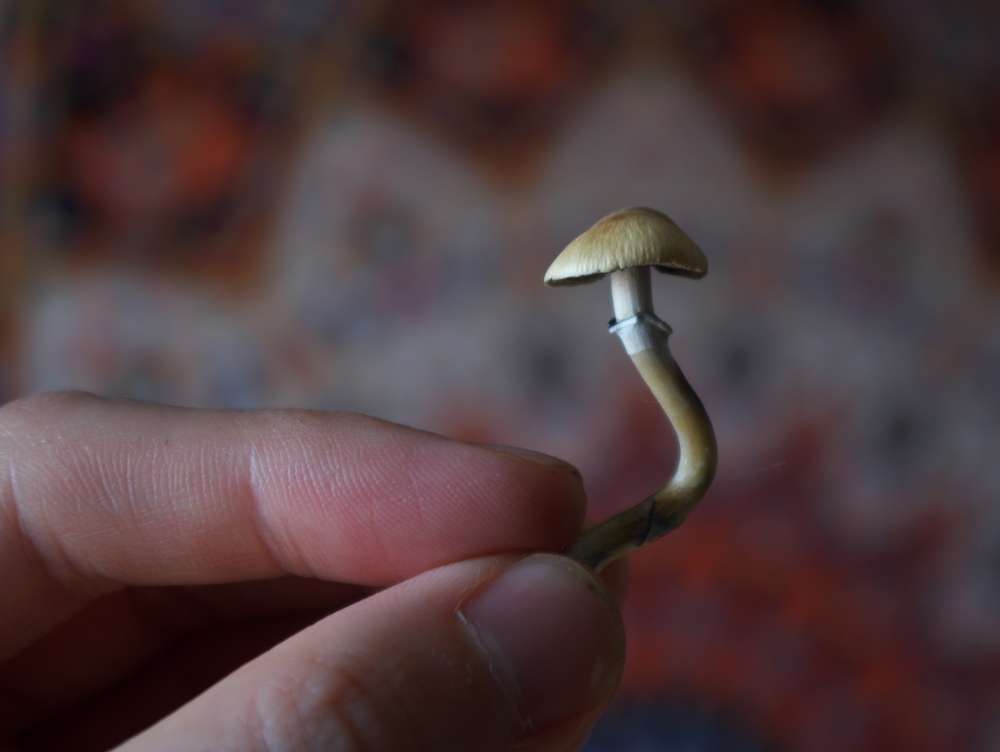
Category: Magic Mushrooms

  • Oakland Could Be Next City To Decriminalize Psilocybin, Other Entheogenic Plants

    Oakland Could Be Next City To Decriminalize Psilocybin, Other Entheogenic Plants

    Earlier this month, Denver became the first US city to decriminalize psilocybin.

    The city of Oakland, California may become the second city in the United States to decriminalize psilocybin mushrooms (i.e. magic mushrooms), following the recent example of Denver.

    Early May, voters in Denver, Colorado approved a ballot initiative to decriminalize psilocybin mushrooms by a narrow margin, with 50.64% voting in favor of Ordinance 301. The measure does not legalize magic mushrooms, but effectively prohibits the city from prosecuting or arresting adults for possession.

    Now, Oakland city officials are considering doing the same.

    Oakland’s resolution, provided by Decriminalize Nature Oakland, specifically refers to the decriminalization of “entheogenic plants,” which in addition to psilocybin include ayahuasca, cacti (mescaline) and iboga—i.e. “the full spectrum of plants, fungi, and natural materials… that can inspire personal and spiritual well-being, can benefit psychological and physical wellness, and can reestablish human’s inalienable and direct relationship to nature.”

    The federal government has long classified psilocybin mushrooms under Schedule I—the category of drugs that are defined as having no medical value and a high potential for abuse. Drug policy reform advocates disagree with the federal government’s decision to classify drugs like psilocybin and cannabis under Schedule I, where heroin also resides.

    NBC Bay Area reported that Oakland officials planned to discuss the issue on Tuesday (May 28) at a public hearing before the City Council’s public safety committee. The issue could go before the full council as early as June 4, according to the San Francisco Chronicle.

    Councilman Noel Gallo introduced the resolution after being approached by Decriminalize Nature Oakland. Gallo told the Chronicle that the city’s mental health problem may benefit from the decriminalized use of psilocybin mushrooms, which has been studied for its medical properties.

    “We need all the help we can get to deal with the mental health issues that we have. If I can bring it publicly and talk about the benefit and talk about (how it can) deal with the mental illnesses that we have in the city, why not?” said Gallo.

    Researcher Matthew Johnson of Johns Hopkins University says there is reason to be optimistic about psilocybin’s abilities to have a positive impact on mental health issues such as PTSD, depression, addiction and more. “The data are really impressive,” he told the Chronicle. “We should be cautiously but enthusiastically pursuing these threads.”

    The Oakland measure also has the support of Council President Rebecca Kaplan. “I believe we need to continue to support efforts to help end mass incarceration and I recognize that the war on drugs has been a racist, expensive, wasteful failure. I also believe there are strong public health reasons to support this change,” she told the Chronicle.
    View the original article at thefix.com

  • Denver Becomes First State To Decriminalize Magic Mushrooms

    Denver Becomes First State To Decriminalize Magic Mushrooms

    The enforcement of laws around psilocybin will now be the lowest priority for Denver police.

    Voters in Denver, Colorado, one of the first areas in the country to push for legalized cannabis, have voted to decriminalize the possession of psychedelic mushrooms in a move some people believe could set the stage for the next major drug policy change after the widespread legalization of marijuana.

    “Our victory today is a clear signal to the rest of the country that Americans are ready for a conversation around psilocybin,” Kevin Matthews, director of the “Decriminalize Denver” campaign, told NPR.

    Although initial reports said that city voters had rejected decriminalization, an unofficial tally released by the city found that the measure passed with fewer that 2,000 votes. In the end, 50.56% of voters wanted mushrooms decriminalized.

    The measure will not change the legality of psychedelic mushrooms, which will remain a Schedule I substance that is illegal under state law in Colorado. However, it will make the enforcement of laws around psilocybin the lowest priority for Denver police, as long as the person in possession of the psychedelic is 21 or older.

    People can even grow the mushrooms for personal use without becoming a target for law enforcement, according to the measure.

    Proponents of magic mushrooms claim that, like cannabis, the substance has medical benefits and is extremely low risk. Matthews has said that so-called magic mushrooms helped him overcome debilitating depression.

    “Because psilocybin has such tremendous medical potential, there’s no reason individuals should be criminalized for using something that grows naturally,” Matthews said, according to The New York Times.

    One 2016 study found that “Participants attributed to the high-dose [psilocybin] experience positive changes in attitudes about life, self, mood, relationships and spirituality, with over 80% endorsing moderately or higher increased well-being or life satisfaction.”

    However, the Drug Enforcement Administration in Colorado reported that it would still enforce a ban on mushrooms. Denver District Attorney Beth McCann also opposed the measure, according to her spokesperson Carolyn A. Tyler.

    “We’re still in the very early stages of marijuana legalization, and we are still learning the impact of that substance on our city,” Tyler said. “And [District Attorney McCann] is not in favor of Denver being the only city that doesn’t enforce the law.”

    Denver isn’t the only municipality changing its stance on magic mushrooms. In Iowa a lawmaker proposed a measure that would remove psychedelic mushrooms from the list of controlled substances in the state. California and Oregon also have organizations trying to get voters to consider decriminalizing mushrooms in 2020.

    View the original article at thefix.com