Category: Marijuana Research

  • US To Spend $3 Million Researching Chemicals in Marijuana

    US To Spend $3 Million Researching Chemicals in Marijuana

    Current marijuana research lags behind the public’s marijuana usage.

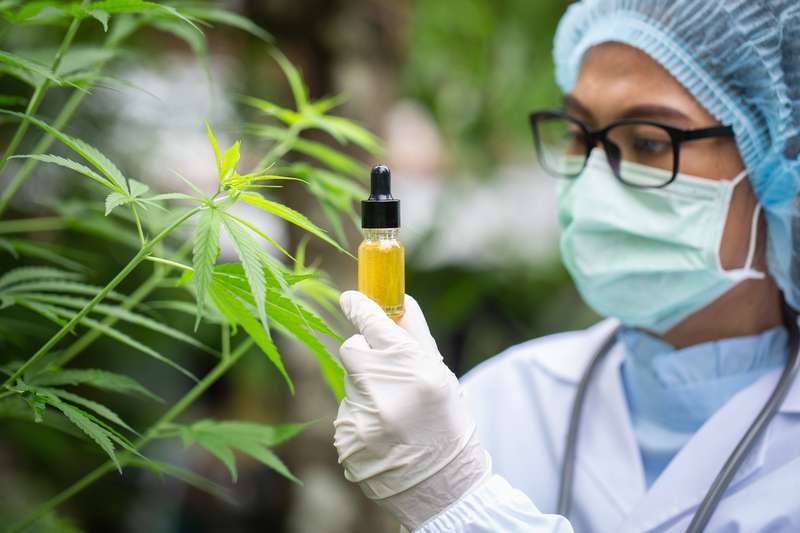
    The United States government plans to spend $3 million studying whether marijuana has pain-relieving effects. 

    However, it will only be studying the parts of the plant that do not get users high. 

    Study Will Focus on Chronic Pain Relief

    According to NBC News, the money is coming from nine research grants that were announced on Thursday (Sept. 19). The grants will allow researchers to delve deeper into the pain-treating properties of CBD and other lesser-known chemicals in marijuana. The chemical THC, which is what users get high from, is not included in the research plans. 

    When it comes to pain management using the chemicals from marijuana, “The science is strongest for chronic pain, the most common reason people give when they enroll in state-approved medical marijuana programs,” NBC notes.

    Dr. David Shurtleff is the deputy director of the National Center for Complementary and Integrative Health, which is funding the projects. He says THC has been studied “extensively” already and that the dangers of the chemical don’t make it a good option for treating pain. He adds that the hope is to catch up to the current use of other chemicals in marijuana

    “The science is lagging behind the public use and interest. We’re doing our best to catch up here,” he said. 

    According to Shurtleff, the grants come as a response to the 2017 National Academies of Sciences, Engineering and Medicine report which stated that there was a lack of research surrounding marijuana, making it a “public health risk.” 

    Responding To The Opioid Crisis

    Another motivator for the research on the pain-easing properties of marijuana is the opioid epidemic, which is rooted in the use of prescription painkillers. 

    Dr. Judith Hellman, a grant recipient from University of California San Francisco, is researching the ability of the body to create signaling molecules that are similar to the ingredients in marijuana

    Hellman says it’s vital for scientists to more deeply explore pain and its treatment. “It’s very exciting to have the opportunity to do that,” she said.

    According to NBC, only one of the grant projects involves human test subjects. University of Utah researcher Deborah Yurgelun-Todd plans to run brain scans of volunteers suffering from lower back pain. Her plan is to determine how CBD mixed with chocolate pudding can affect the pain-signaling pathways in the brain. 

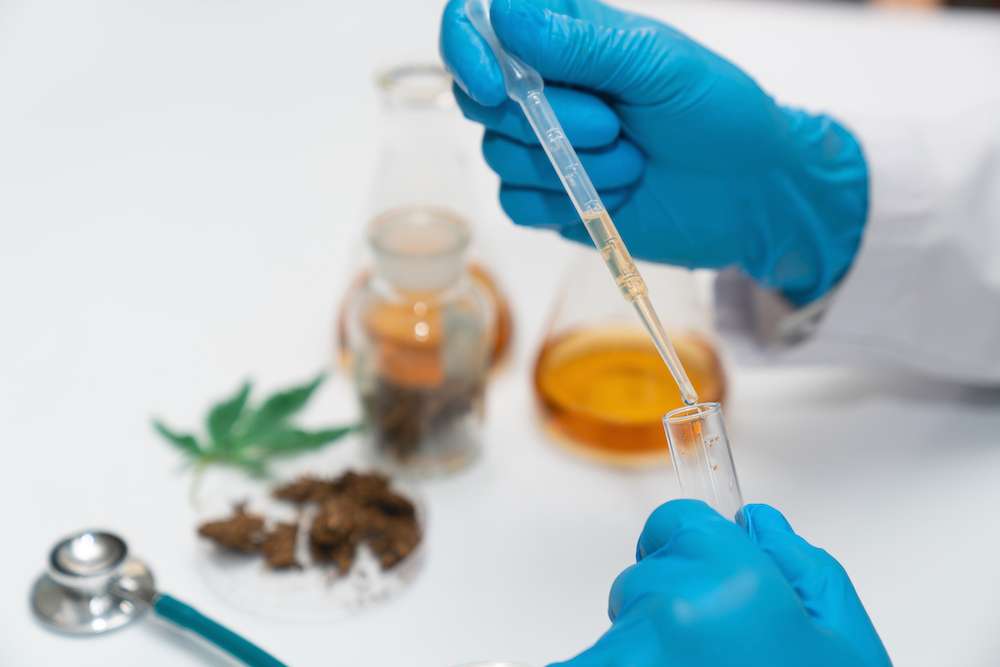
    Many of the new projects will use lab-made versions of the chemicals, instead of extracting them from the plant itself, according to NBC.
    View the original article at thefix.com

  • DEA Announces Plans To Expand Scientific Research For Marijuana

    DEA Announces Plans To Expand Scientific Research For Marijuana

    The agency also revealed plans to propose new regulations to evaluate these applications before reviewing and making possible approvals.

    Clinical studies involving marijuana moved a substantial step forward with an announcement by the Drug Enforcement Administration (DEA) to “facilitate and expand” applications for research into medical and scientific applications of cannabis.

    The agency intends to expand its review of applications from qualified growers who seek to cultivate marijuana for research. In doing so, the DEA noted that it will “increase the variety of marijuana available for these purposes.”

    However, the agency also stated that it plans to propose new regulations to evaluate these applications before reviewing and making possible approvals. For researchers whose work has been hampered by marijuana’s status as a federally illegal Schedule I drug, the news has prompted a response tempered with cautious optimism, given the DEA’s slow response to change on this topic in the past.

    A Monopoly on Marijuana for Research

    For the past half-century, a single facility at the University of Mississippi was legally approved by the National Institute on Drug Abuse (NIDA) to grow marijuana for scientific and medical research.

    As Think Progress noted, that scenario was a major roadblock to researchers; the facility produced only a handful of cannabis varieties and what was described as “low-grade” flower. 

    In 2016, the DEA announced its plans to expand research facilities, prompting numerous scientific and medical entities to apply for research grow licenses. However, as Think Progress noted, nothing came of the announcement.

    According to the DEA announcement, the number of applicants registered to conduct research has increased by 40% (from 384 in 2017 to 542 in 2019), while product quoted for federally approved research projects has doubled. The announcement of expanded review for these applications is a step in the right direction, according to researchers who have been waiting for years for approval—albeit a step that they suggest should be taken with a grain of salt.

    Proceed With Caution

    “DEA/DOJ can slow-roll this for many years to come, leaving progress of medical cannabis research in limbo indefinitely,” wrote Dr. Sue Sisley of the Scottsdale Research Institute in a statement.

    Sisley, who conducted a federally approved study on cannabis as treatment for post-traumatic stress disorder in veterans, applied for a grow grant in 2016 based on the “sub-par” cannabis provided by the NIDA-approved facility. When she received no response for three years, she filed suit against the DEA. The agency’s announcement was delivered two days before a major deadline imposed by the suit.

    “At least [the] door is now theoretically kicked open,” Dr. Sisley wrote. “Now we just need to keep the DEA’s feet to the fire.”

    View the original article at thefix.com

  • DEA May Be Coming Around On Expanding Marijuana Research

    DEA May Be Coming Around On Expanding Marijuana Research

    The DEA will finally review potential growers of marijuana used in research, which is currently very limited in quantity and quality.

    After years of delaying progress that would expand the supply of marijuana for research, the Drug Enforcement Administration (DEA) announced Monday that it will move forward with reviewing potential marijuana growers. 

    The agency issued a regulatory filing and held a press conference on Monday. 

    “I am pleased that DEA is moving forward with its review of applications for those who seek to grow marijuana legally to support research,” said Attorney General William Barr in a statement. 

    One Grow Facility

    Right now, scientists who want to study cannabis must use marijuana grown by one University of Mississippi facility, the only grower that has a contract with the National Institute on Drug Abuse (NIDA) to legally grow cannabis. This limits the amount of marijuana research that can be done, as well as the quality of the product being studied.

    In 2016, the DEA announced that it would accept applications from other organizations seeking to grow cannabis for research, but it never approved any permits. 

    That prompted one scientist, Dr. Sue Sisley, director of Scottsdale Research Institute, to sue the agency, alleging that the current arrangement is a monopoly on marijuana growth. “The bottom line is scientists need access to options,” Sisley told NPR.

    Sisley’s lawsuit likely prompted the DEA’s action on Monday, Think Progress reported

    Shane Pennington, who is on Sisley’s legal team, said that although the announcement may have seemed dry, it was monumental. “Until today, no one could do anything. We were handcuffed, in limbo,” he said. “Now they’ve done something. It’s a huge, huge deal.”

    Still, he was a bit apprehensive, saying, “I have high hopes, but I’ll believe it when I see it.” 

    Matt Zorn, a lawyer for the Scottsdale Research Institute, said that he is “cautiously optimistic” following Monday’s announcement. “It’s a positive first step because we were stuck in a kind of administrative limbo,” he said. 

    Catch-22

    Zorn explained how marijuana’s Schedule I status creates a catch-22. 

    “On the one hand, you can’t do the research with good, high-quality cannabis because it’s a Schedule I drug. On the other, it’s a Schedule I because nobody can really do the research,” he said.

    Sisley pointed out that getting approval to grow cannabis for research is just the first step. Then, scientists will need to grow marijuana that is comparable to the high-quality pot that people obtain from dispensaries. 

    “We haven’t really won anything until scientists are finally utilizing real-world cannabis flower in their clinical trials,” she said.

    View the original article at thefix.com