Category: Addiction News

  • Alaskan Bush People's Matt Brown Celebrates Recovery Milestone

    Alaskan Bush People's Matt Brown Celebrates Recovery Milestone

    The reality TV star shared his sober milestone with followers on Instagram.

    Reality star Matt Brown is making the most of his recent trip to treatment by celebrating his recent recovery milestone on Instagram, according to Pop Culture.

    Brown, known for his role in the Discovery Channel reality show Alaskan Bush People, has been in treatment numerous times in the past few years for alcohol use disorder—first in 2016, then 2018 and finally in 2019. 

    But it seems the most recent time could have been what he needed. On Friday (March 29), Brown posted a photo of himself holding a sobriety coin along with words of encouragement. 

    “Afternoon everyone! Hope your day rocks! Never give up never surrender,” Brown wrote

    On the post, fans expressed their congratulations and even shared their own stories. 

    “Proud of you and your recovery,” wrote one Instagram user. “Do what you’ve got to do to take care of you. My dad died of alcoholism 6 years ago. He was a great man, and in the public’s eye, so his disease was a family secret. We tried several times to get him help. But you have to want it for yourself. I’m proud of you!! Stay strong. You’ve got this.”

    According to Pop Culture, Brown’s most recent trip to treatment was in February. In early March, the website reports, his parents released $250,000 that he had made for allowing Discovery to document his treatment for the show. 

    Giving Brown the money was a source of anxiety for his parents, a source told Radar Online. In the past, Brown had taken large sums of money as a reason to fall back into his old ways. 

    “He finally got the money that was being withheld from him by his parents while he got his act together,” a source told Radar Online. “It’s really a double-edged sword because whenever Matt gets paid, he goes missing and everyone just assumes he is using again.”

    In September of 2018, before his second trip to treatment, Brown spoke to People magazine about his struggles. 

    “I struggle with substance abuse, and after a year of ups and downs, I decided to return to treatment,” he told People. “I’m really grateful for everyone’s support and hope to have my life back on track soon.”

    Brown’s parents expressed their support for their son at the time, also speaking to the magazine.

    “We miss him terribly, but we’d rather lose him from home for a little while than lose him forever,” said his father Billy. “We just want him to do what he needs to do to get better.”

    View the original article at thefix.com

  • Naloxone-Based Antidote For Fentanyl, Synthetic Opioids Is In Development

    Naloxone-Based Antidote For Fentanyl, Synthetic Opioids Is In Development

    The naloxone-based antidote has already shown promise in tests involving animal subjects.

    The opioid overdose reversal drug naloxone, or Narcan, has proven useful in preventing fatalities from the use of heroin or prescription opioids.

    But its duration in the human body – about 30 to 60 minutes – is less effective in countering the effects of powerful synthetic opioids like fentanyl, which can remain in an individual’s system for hours and may require multiple doses of naloxone.

    But researchers have begun work on a naloxone-based antidote that may outlast synthetic opioids, and which has already shown promise in tests involving animal subjects.

    The results of the test were presented in Orlando, Florida at a meeting of the American Chemical Society on March 31, 2019; there, researchers from Duquesne University, the Allegency Health Network Research Institute and the Edgewood Chemical Biological Center showcased their development of a naloxone-based antidote that used microscopic particles called nanoparticles to deliver a combination of naloxone molecules and a biodegradable polymer, or plastic, called polyactic acid.

    As Science News noted, once introduced to an individual’s system, water and enzymes in the body dissolve the nanoparticles and slowly release the naloxone.

    According to the researchers, a single dose using this delivery system proved effective in countering the effects of morphine in tests involving mice for up to 96 hours. 

    Reseacher Saadyah Averick of the Allegheny Health Network Research was quoted as saying that the next phase of testing will involve actual synthetic opioids, such as fentanyl and carfentanil, as well as increased testing to determine if the antidote can prevent a test animal from undergoing overdose. 

    Data from the National Vital Statistic System’s record of all U.S.-based deaths found that overdose deaths involving synthetic opioids had surpassed overdose fatalities caused by prescription opioids.

    A study published in the May 1, 2018 issue of the Journal of the American Medical Association found that of the 42,249 opioid-related deaths in 2016, 19,413 involved synthetic opioids, while 17,087 were due to prescription opioids and 15,469.

    More than 79% of synthetic opioid deaths also involved another drug or alcohol, with another opioid and heroin listed as the most commonly co-involved substances (47.9% and 29.8%, respectively).

    View the original article at thefix.com

  • How Ariana Grande Is Changing Things Up To Protect Her Mental Health

    How Ariana Grande Is Changing Things Up To Protect Her Mental Health

    Grande got candid about the emotional impact of nonstop performing and promotional tours on Instagram.

    Pop star Ariana Grande opened up about how she’s changing her music-release strategy in order to preserve her mental health

    Over the past few years, Grande has publicly dealt with a variety of life-changing events. From the bombing after her show in Manchester, England, which left 22 people dead, to the death of her former boyfriend, rapper Mac Miller, as well as a messy breakup with her former fiancé, SNL star Pete Davidson.

    Now Grande is making some changes to put less pressure on herself as she moves forward in her career. On Instagram, Grande thanked her fans “for being supportive of my random, impulsive and excessive music releases. The first few years were really hard on my mental health and energy. I was so tired from promo trips and was always losing my voice and never knew what city I was in when I woke up. It was so much. It was worth it, and I am grateful for everything I learned and accomplished when I did things that way, of course.”

    Taking a cue from hip-hop artists, Grande is now releasing music on a less rigid schedule that won’t be as mentally and emotionally taxing for the singer.

    “I feel like there are certain standards that pop women are held to that men aren’t,” the singer told Billboard. “We have to do the teaser before the single, then do the single, and wait to do the preoder…and all this (expletive). It’s just like, ‘Bruh, I just want to {expletive} talk to my fans and sing and write music and drop it the way the boys do.”

     If releasing new singles at her own pace doesn’t bring her the same success as her single, “Thank U, Next,” Grande is fine with that.

    “It’s even more beautiful to be honest and just do something. To drop a record on a Saturday night because you feel like it, and because your heart’s going to explode if you don’t – to take back your narrative…I don’t want to do what people tell me to do, I don’t want to conform to the pop star agenda.”

    View the original article at thefix.com

  • What Is Evidence-Based Addiction Treatment?

    What Is Evidence-Based Addiction Treatment?

    12-step programs are an incomplete approach and do not meet the requirements for evidence-based treatment because they lack biomedical and psychological components, and they use a one-size-fits-all approach.

    When looking for treatment for addiction, there is a lot of information out there and countless opinions. Friends, family, doctors, researchers, and people in recovery all have their own beliefs about what you need to do to get well. Unlike in other areas of healthcare, addiction treatment is often deemed “effective” based on anecdotal reports. In fact, most people who seek or are forced into treatment do not receive health care that is aligned with evidence-based practice.

    A frequently-cited definition comes from a 1996 article in the BMJ Medical Journal: evidence-based “means integrating individual clinical expertise with the best available external clinical evidence from systematic research.” Other definitions also include the patient’s individual circumstances, preferences, expectations, and values.

    These variables are not necessarily constant, and there is no one-size-fits-all solution; any list of evidence-based treatments is going to include a wide variety of approaches.

    What is Addiction?

    In the United States, addiction is still treated more as a crime than as a chronic illness or disorder. Until that perspective changes, treatments will not meet their full potential and will not be as effective as they could be. Addiction, or substance use disorder (SUD), is a chronic medical condition that has remissions, relapses, and genetic components.

    Are Relapses Normal?

    A relapse is not a failure but a symptom. The brain of a person with SUD has gone through neurobiological changes that increase the risk of relapse because the damaged reward pathways stick around much longer than the substances stay in the body. Stressful events and other painful life experiences can trigger that maladaptive coping mechanism and cause a relapse.

    For other chronic illnesses we would consider a relapse to be an unfortunate symptom of the disease, and we might call it a recurrence instead of a relapse. When successfully managed, the condition is considered to be in remission. Remission is a term that is relatively new in addition treatment; substance use disorder was not always believed to be a disease but rather a moral failing and a problem of willpower. We now understand that addiction is a chronic medical condition and that remission is the goal of treatment. Remission, as defined by the American Society of Addiction Medicine, is “a state of wellness where there is an abatement of signs and symptoms that characterize active addiction.”

    What Is Successful Addiction Treatment?

    Let’s take a look at what it means to have an effective treatment outcome in terms of addiction. The primary goal is usually abstinence or at least a “clinically meaningful reduction in substance use.” To measure effectiveness, we must look at how and if treatment improves the quality of life for the patient. Improving quality of life is the aim when treating all chronic conditions that have no cure.

    Evidence-based therapies do not support the notion of “hitting bottom.” As with any chronic disease, early intervention is going to provide the best outcomes. Even more effective than early intervention is prevention because SUDs are both preventable and treatable.

    Pharmacotherapies to Treat Substance Use Disorders

    Addiction is an overstimulation of the brain’s reward pathways, and as the condition progresses, the brain becomes less sensitive to the rewarding effects of a drug and requires more of the substance to get the same effect. This overstimulation can play tricks on memory recall, turning experiences that were not good into ones that seem better than they actually were. It creates false memories to encourage re-indulging in the addictive substance or behavior.

    From a medical standpoint, this disparity needs to be interrupted and corrected. Akikur Mohammad, the author of The Anatomy of Addiction, argues that successful treatment of addiction “must first address the biological component and correct the brain’s chemical imbalance in the process.”

    Pharmacotherapy is used in medication-assisted treatment and recovery. Depending on the patient’s individual drug history, different medications may be used to mitigate the brain’s compulsive race to stimulate the reward loop.

    Therapy for Substance Use Disorders

    Most research on therapy for substance use disorders has been done on cognitive behavioral therapy (CBT)—a form of typically short-term psychotherapy that combines talk therapy with behavioral therapy. Patients are taught how to adjust their negative thought patterns into positive thoughts. There is clinical evidence that CBT can be as effective as medications for many types of depression and anxiety. For treating SUD, CBT has been shown to have a “small but statistically significant treatment effect” but doesn’t necessarily have a long-lasting effect. As it’s a chronic illness, it stands to reason that SUD requires further maintenance beyond any short-term treatment.

    Are 12-Step Programs Evidence Based?

    Alcoholics Anonymous and other 12-step programs use a social model of recovery. They are built on the basic notion of peer support in a safe environment. There is research on the efficacy of 12-step programs, which shows it works for some people and that there are benefits to this social model of recovery. The steps, or rather the principles of the steps, must be internalized into a person’s psyche in order for the person to achieve lasting abstinence. 12-step programs are an incomplete approach and do not meet the requirements for the classification of evidence-based treatment because they lack biomedical and psychological components, and they use a one-size-fits-all approach.

    One central tenet of the 12-step solution requires turning one’s will over to the care of a higher power. Certainly, letting go of the notion that force of will can change the trajectory of addiction is necessary for any treatment. It’s a disease, and willpower will no sooner cure addiction than it will cure diabetes or heart disease. An evidence-based approach could mean that a doctor recommends a patient attend a 12-step program, or other support group, as part of a maintenance regime.

    The addiction treatment world is overrun with rehabs that primarily utilize 12-step programs, which are touted as the only treatment for addiction. That simply isn’t true. Addiction researchers have found that individually, cognitive and behavioral therapies, including social supports like 12-step programs, are incomplete treatment for a chronic disease that is both physiological and genetic in origin. From a treatment perspective that is grounded in evidence-based practice, involvement in a support group would be merely one piece of the puzzle.

    Holistic Care

    In evidence-based practice, the treatment process individualizes care and uses a holistic perspective to see what combination of resources will work best for a particular patient. The combination of treatment tools depends on a clinician’s specialized knowledge, the patient’s values and preferences, and the best research evidence. We need more specially trained addiction clinicians who can help people with SUDs make informed treatment decisions.

    Are you in recovery from addiction? What worked for you? Tell us in the comments!

    View the original article at thefix.com

  • Can Poor Mental Health Reduce Life Expectancy As Much As Diabetes, Smoking?

    Can Poor Mental Health Reduce Life Expectancy As Much As Diabetes, Smoking?

    Experts were surprised with the findings of a new report on healthy communities.

    A new report says that poor mental health can have as strong an impact on life expectancy as diabetes, smoking and even a lack of physical activity.

    These new findings are part of the Healthiest Communities rankings by U.S. News & World Report in collaboration with the Aetna Foundation.

    The rankings examined almost 3,000 different communities across 81 different health-related spectrums, like nutrition, housing and education, CNBC reports

    According to Aetna Foundation President Garth Graham, the link between people’s perception of their own mental health and life expectancy being almost as strong as the link between smoking and diabetes and life expectancy was surprising.

    “I at first wanted us to double check,” said Graham, according to CNBC

    In 2018, the link between mental health and life expectancy was not as apparent as it was in 2019, Graham says.

    “We often think about health as the four hours we spend in a doctor’s office a year, but health is about so much more than that,” Graham said.

    Of the top communities in the Mental Health subcategory, the report states, 16 of the top 100 were in Nebraska. Nebraska sees 26 deaths related to suicide, alcohol-related disease and drug overdoses per 100,000. The only state with fewer deaths per 100,000 is New York, at 25. 

    Of the nearly 3,000 communities involved in the report, Douglas County, Colorado was reported the healthiest community in the country. Colorado as a whole performed well, with seven communities making the top 20 results. In those seven communities, CNBC reports, nearly all adults reported exercising, which has been known to improve mental health

    Nancy VanDeMark of Mental Health Colorado says that the connection between mental health and life expectancy makes sense, since last year’s CDC data pointed to increased opioid overdoses and suicides—also referred to as “deaths of despair”—negatively affecting life expectancy. 

    VanDeMark adds that it is vital for people to be screened for mental health issues, just as they are for physical health. 

    “We have a screening site on our website so people can go in and complete a number of screenings to see if they’re high risk for some sort of mental health or substance use concern,” said VanDeMark

    Colorado resident Kristin Gibowicz says that monitoring her mental health is something she keeps at the forefront of her life. “Just getting out, breathing fresh air and slowing your mind down a little bit, putting your phone down disconnecting,” Gibowicz said. 

    Also worth noting is that among the top communities in the Mental Health subcategory specifically, the report states 16 of the top 100 were in Nebraska.

    Nebraska sees 26 deaths related to suicide, alcohol-related disease and drug overdoses per 100,000. The only state with fewer deaths per 100,000 is New York, at 25.

    In addition to Douglas County in Colorado, other communities in the top 10 overall include Los Alamos County, New Mexico; Falls Church, Virginia; Loudoun County, Virginia; Broomfield County, Colorado; Teton County, Wyoming; Hamilton County, Indiana; Carver County, Minnesota; Delaware County, Ohio; and Howard County, Maryland.

    View the original article at thefix.com

  • Cigna Behavioral Health Rehab Coverage for Addiction and Mental Illness

    Cigna Behavioral Health Rehab Coverage for Addiction and Mental Illness

    Behavioral health is a term that encompasses all types of mental illness, behavioral disorders and substance use disorders, or addictions. Rehab is an important treatment option for anyone struggling with one of these types of conditions, because it provides long-term, focused and individualized care. Cigna behavioral health rehab coverage is important to consider for anyone who needs this kind of treatment.

    What Counts as Behavioral Health?

    Medical terms can be confusing, especially when sorting through diagnoses, treatment options and insurance coverage. Behavioral health can refer to mental illnesses, like depression, anxiety disorders, personality disorders, schizophrenia and many others. Some childhood conditions are also a part of behavioral health, like attention deficit hyperactivity disorder, or ADHD.

    Behavioral health most often refers to addiction. More formally known as substance use disorder, addiction is a behavioral and mental health condition that is characterized by out-of-control use of drugs or alcohol. While misusing substances is a choice, being addicted is not. Professional and medical treatment is necessary to help individuals overcome this disease and to be firmly in recovery with a lower risk of relapse.

    Does Cigna Cover Substance Abuse Treatment?

    The degree of coverage depends on individual plans, but yes, Cigna does cover treatment for substance use disorders. Some of the types of services covered are rehab for drugs or alcohol, detoxification and outpatient counseling.

    Cigna also offers insurance holders important behavioral health and addiction resources. The free education series provides information about recognizing the signs of addiction as well as advice and helpful tips for both patients in rehabs and their families.

    Patients with Cigna health insurance will need to find out if they meet the criteria to have rehab and other types of treatment for substance use covered. It is important for each individual to understand their plans, to know what the requirements are for coverage and to find out what any out-of-pocket costs might be.

    Understanding Cigna Behavioral Health Rehab Coverage

    The type of coverage a patient has for behavioral health and addiction depends on the plan purchased. It is important to understand coverage when making decisions about treatment. There are many factors to consider, including deductible amounts, whether or not treatment needs be with an in-network provider, whether coverage includes inpatient or outpatient services, if there is any coverage for after care services, and prescription drug costs and coverage.

    Individuals should verify coverage and Cigna substance abuse policy before making a choice about treatment. There may be costs that have to be covered out of pocket, depending on individual plans and polices and the treatment chosen.

    Cigna In-Network Providers vs. Out-of-Network Providers

    One of the most important considerations to make when choosing treatment for addiction is between in- and out-of-network providers. Whether or not a patient needs to get treatment from an in-network provider depends on individual Cigna plans.

    For instance, an EPO, or exclusive provider organization, is a type of insurance that requires patients only see treatment providers in the network. A PPO, or preferred provider organization, allows for treatment from providers outside of the network, but costs to the patient may be higher.

    It is usually less expensive for the patient to choose treatment through an in-network provider. However, it is worth contacting Cigna to find out what is allowed and what extra costs would be. Sometimes an out-of-network rehab or therapist is the best option for a patient.

    Types of Behavioral Health Treatment Covered by Cigna

    Cigna substance abuse coverage includes two main types of treatment: inpatient and outpatient care. Outpatient treatment can be as simple as attending 12-step programs and support groups. However, for most people struggling with addiction, this is not enough.

    Outpatient care provided by professionals is therapy or addiction counseling. Patients in outpatient treatment may have one or more sessions per week, but they don’t live in a rehab facility. They live at home and are generally able to continue with normal activities, like work and school, while going through treatment.

    Inpatient treatment for addiction is also known as residential treatment or rehab. This type of care includes a stay for a month or a few months in a facility that provides 24-hour supervision and daily treatment. Inpatient treatment is best for people who have no safe place to live while getting treatment or who don’t feel confident in being able to stay sober while at home.

    Both types of treatment offer one-on-one therapy for learning how to live without alcohol or drugs. Residential care, however, provides much more. Patients in rehab usually have access to medical care, alternative therapies, and family and group therapies. They benefit from a whole team of professionals with different types of behavioral health expertise.

    Coverage for Aftercare Services

    Aftercare is an important part of addiction treatment, and much of it is covered by Cigna insurance plans. For patients going through residential treatment, aftercare may include outpatient therapy sessions, support group attendance, check-ins back at the residential facility, job and vocational training and medical care.

    This kind of ongoing treatment is important, because it provides patients with a smoother transition from the intensity of residential care to life back at home with little or no supervision. Aftercare helps to reduce the incidence of relapse and to minimize the need for additional inpatient treatment in the future.

    Some of the types of aftercare that are likely to be at least partially covered by Cigna plans are outpatientsessions with Cigna therapists and potentially with out-of-network providers, prescription drugs and medication-assisted addiction treatment, and the costs of staying in a sober living house.

    Cigna Mental Health Coverage

    Mental health is typically included in coverage for behavioral health services. In fact, many patients have co-occurring mental illnesses and substance use disorders. The most effective treatment addresses all of the behavioral health needs of an individual. It is important to get a diagnosis that uncovers any substance use disorder or mental illness and to choose treatment services accordingly.

    Cigna mental health criteria for coverage are having a diagnosis of a mental illness from a professional and recommended treatment plan. Patients who have been diagnosed are entitled to coverage for appropriate care. Like substance use disorders, this care may include residential treatment if necessary or outpatient therapy.

    Types of Behavioral Health Services Cigna May Not Cover

    Even with the highest level of Cigna behavioral health rehab coverage, there are some services that are not likely to be paid for by the insurance company. These will be out-of-pocket expense for the patients. Luxury rehab facilities, for instance, are probably not covered for any patient. A private room at a treatment center is also considered a luxury expense that is not typically covered.

    The insurance plan will also not cover any medications that can be purchased over the counter. Many types of alternative or complementary services may also not be covered—things like yoga classes, music and art therapy, or massage.

    Some of these services and treatments not covered can be beneficial. Patients should find out by contacting Cigna if coverage will be included before committing to them. Those who want to continue with services that are not covered must be prepared to pay the costs.

    Finding the Best Behavioral Health Treatment

    While Cigna behavioral health rehab coverage should not be the only consideration when choosing the best treatment, it should be an important one. Patients should start with in-network providers and look for a facility or therapist that is experienced and appropriate for the type of care needed. They can ask for references from previous patients and visit facilities to have a tour and to speak with staff before making a final choice.

    The treatment a patient gets for addiction or mental illness is crucial to recovery and long-term wellness. It is not a decision that should be taken lightly. Each individual must choose the treatment that feels best and most comfortable but that also meets their needs and makes sense within a Cigna insurance plan and coverage level.

    Using Cigna Insurance for Behavioral Health Care

    In order to make the best use of Cigna insurance for getting needed treatment for addiction and other behavioral health issues, have a firm understanding of coverage. Patients should check with Cigna to confirm coverage and out-of-pocket costs. They also need to go over insurance plans with the treatment provider. These steps are important to take before committing to any treatment plan.

    Most patients will not need a referral from Cigna to get treatment, but pre-authorization may be needed. Insurance holders will also need to cover any remaining deductible costs and copays associated with treatment.

    Getting behavioral health treatment is so important and too often overlooked. Insurance holders have an ally with Cigna. This insurance company provides coverage options that work with most people’s needs and income levels. Working with Cigna is a crucial part of getting the best care that is also affordable.

    View the original article at thefix.com

  • US Health Chief Announces Support For Needle Exchange Programs

    US Health Chief Announces Support For Needle Exchange Programs

    The Health Secretary’s reversal on needle exchange programs may be related to a new 2030 deadline related to HIV.

    Speaking at the National HIV Prevention Conference on Tuesday, Health and Human Services Secretary Alex Azar expressed support for needle exchange programs as a way to stop the spread of HIV.

    Republicans like Azar have largely resisted these programs, believing that they will encourage drug use—but evidence to the contrary appears to have convinced the HHS Secretary otherwise.

    “Syringe services programs aren’t necessarily the first thing that comes to mind when you think about a Republican health secretary, but we’re in a battle between sickness and health, between life and death,” Azar said during his speech according to The Hill. “The public health evidence for targeted interventions here is strong, and supporting communities when they need to use these tools means fewer infections and healthier lives for our fellow Americans.”

    Needle exchange programs have existed for years, but are as important as ever with the national opioid crisis. These programs have reduced the spread of dangerous viruses such as HIV and hepatitis C through intravenous drug use. The first such program in the U.S. was established in 1988 in Tacoma, Washington, and was rewarded with a 60% reduction in new hepatitis B and C cases.

    Studies over the decades have also consistently found that these services do not increase the number of intravenous drug users. At the same time, needle exchange programs cost significantly less than treating new cases of HIV and hepatitis.

    However, the larger Trump administration still opposes these programs as well as safe injection sites where individuals can use drugs without fear of arrest, and in the presence of medical professionals who both provide clean equipment and are ready to save lives in case of an overdose.

    In February, the Department of Justice sued Safehouse, a non-profit organization based in Philadelphia, to prevent them from opening the country’s first safe injection site.

    Azar’s reversal on needle exchange programs may be related to a new 2030 deadline related to HIV. Earlier this month, the Trump administration revealed its 2020 budget proposal, which included a request for $291 million for an ambitious plan to end the “HIV epidemic” in a decade.

    “For the first time in modern history, America has the ability to end the epidemic, with the availability of biomedical interventions such as antiretroviral therapy and pre-exposure prophylaxis (PrEP),” the budget plan reads.

    With Azar’s statements at the National HIV Prevention Conference, it appears that needle exchange programs could become a part of these efforts. Most of the $291 million requested will be given to the Centers for Disease Control and Prevention (CDC), which supports and helps to fund these services.

    View the original article at thefix.com

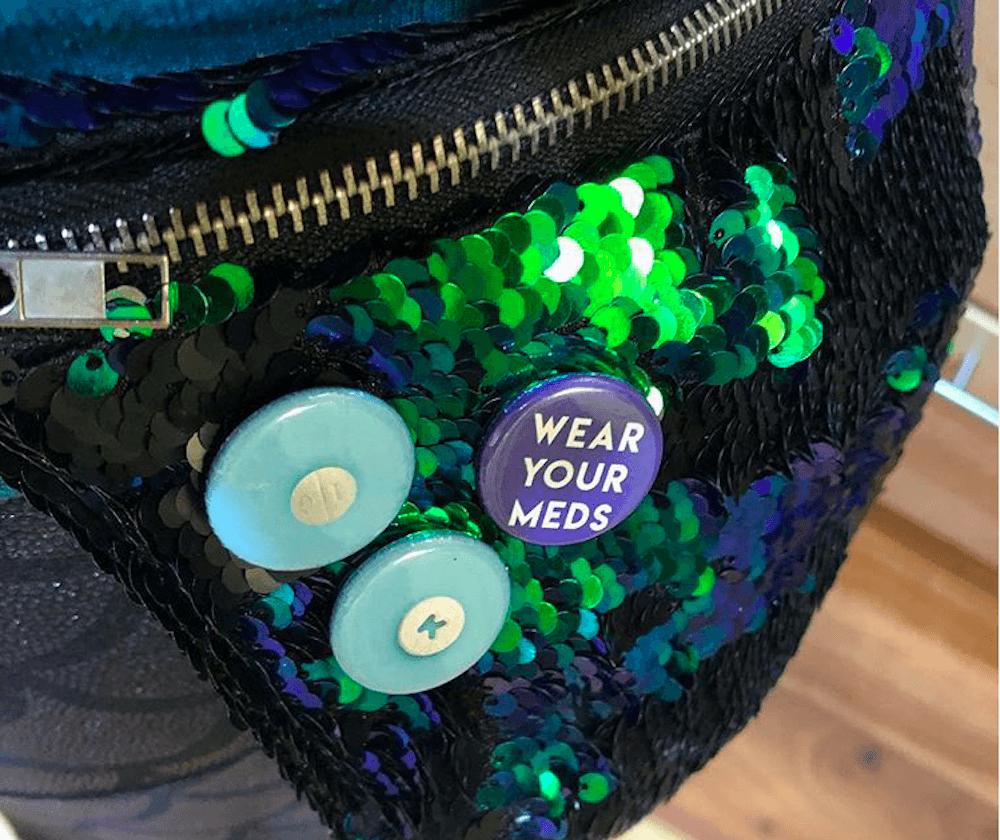
  • "Wear Your Meds" Buttons Help Fight Stigma Against Mental Health

    "Wear Your Meds" Buttons Help Fight Stigma Against Mental Health

    Creator Laura Weiss hopes her pinback buttons can spark conversations and break down the stigma surrounding mental illness.

    When Lauren Weiss took control of her mental health and began taking medication for bipolar disorder, she knew that she wanted to be an advocate for mental illness. Weiss studies advertising at Miami Ad School in New York City, so it was natural that she searched for a quick, engaging visual cue to open conversations about her condition. 

    Weiss designed pinback buttons depicting common psychiatric medications, like Xanax and lithium. Another button proclaims “Wear Your Meds,” summing up the mission of her project. Weiss told Fast Company that the buttons, which started as a class project, are a way to spark a conversation around mental health. 

    “[It’s a] symbol that represents the story you want to tell, and a gateway into your personal story,” she said. “I know that not everybody wants to be an activist about mental health. With something like the buttons, I think it’s a little more accessible for people who maybe are open to sharing their story, but don’t want to be shouting about it on the streets. They can have this button, and it’s an easy way for people to see it and maybe ask about it.”

    Weiss said that she doesn’t expect everyone to be comfortable broadcasting what medications they are on. Some people have said to her that they are afraid they would be fired or otherwise discriminated against if they were open about their mental health condition and the medications that they are taking. 

    However, she said the buttons allow people who are interested in sharing their story to help break down stigma. 

    “People like me who are talking about this from a position of privilege, in a community where we can feel safe talking about it, are the people who ultimately have to do the heavy lifting and have to do the work around this in order for that stigma to start to be lifted for people in communities that don’t feel comfortable talking about it right now,” she said. 

    Weiss is now selling the buttons online, with proceeds to benefit the National Alliance on Mental Illness. 

    “When you ‘wear your heart on your sleeve,’ it means you’re being honest, open, and vulnerable. When you wear your meds on your sleeve, you’re doing the same,” her website reads. 

    Weiss’ buttons depict 14 different pills commonly used for treating mental health conditions: Zoloft, Lithium, Adderall, Ativan, Klonopin, Desyrel, Lexapro, Lamictal, Effexor, Cymbalta, Celexa, Wellbutrin, Xanax, and Prozac.

    View the original article at thefix.com

  • Jenna Jameson Credits Sobriety With Weight Loss

    Jenna Jameson Credits Sobriety With Weight Loss

    “Sobriety is a game changer, not only are you bright, clear and capable… your gut says bye bye!” Jameson said in an Instagram post. 

    Adult film star Jenna Jameson shared a “Transformation Tuesday” picture on Instagram this week, showing how sobriety and a renewed focus on health have transformed her body. 

    “It’s important we talk about the aftermath of new sobriety,” she wrote on an Instagram post. “Raw feelings, fear, unsure how to deal with all the changes. The good far outweighs anything, that’s for sure. But this shows the effects of alcohol on your body. Sobriety is a game changer, not only are you bright, clear and capable… your gut says bye bye! #Sobriety and #keto for the win!”

    Last fall, Jameson posted a similar side-by-side photo to celebrate three years sober. She has also been open about her 80-pound weight loss

    “Today is an important day for me in my recovery. 3 years. I can’t begin to explain what sobriety has brought to my life. But I will try,” Jameson wrote in September. “Yes, I’m not the intensely self centered ‘the world owes me something’ woman anymore. I am now the ‘What can I do for the world’ woman. Sobriety has taught me a lot about myself, my coping mechanisms that I ignored came bubbling to the surface quickly after getting sober.”

    She continued, “That scared me. Everything I knew was wrong. Everything I believed in was hurting me, not helping. Meetings and leaning on my Sober friends… made things bearable the first year. I was surviving. Sober. It was shocking at first, but now it’s my new normal.”

    She said that sobriety and a keto diet have helped her transform her body after giving birth to her daughter in 2017. 

    “My weight loss has solidified my toughness and strength,” she wrote last year. “I know I am capable of beautiful things and these are the qualities I want to teach my daughter. No matter what life throws at you, you can overcome and flourish. 3 years. 3 whole years. I am grateful. Just for today.”

    Jameson hasn’t been very open about her addiction, but there are reports that she abused alcohol and pills. Her Instagram posts include the hashtags #AA and #NA, suggesting that she’s part of a 12-step fellowship. 

    Throughout her weight loss and recovery journeys, Jameson has learned to use healthier coping mechanisms rather than relying on substances. 

    “I think back to the way I used to run… run as far and as fast as I could, and I pray to God I never feel that emptiness again,” she wrote. 

    View the original article at thefix.com

  • Opioid Lawsuits Pile Up Against Family Behind Purdue Pharma

    Opioid Lawsuits Pile Up Against Family Behind Purdue Pharma

    A string of lawsuits seeks to hold the Sackler family, who own Purdue Pharma, responsible for the opioid crisis.

    The Sackler family is withdrawing from the public sphere, including ending their philanthropic initiatives, as legal pressure rises to hold them responsible for the opioid crisis.

    Their charity arm, the Sackler Trust, has historically donated millions but announced it was ceasing all such activity now that they’re receiving bad press and alleging that “false allegations” are being made against them.

    “The current press attention that these legal cases in the United States is generating has created immense pressure on the scientific, medical, educational and arts institutions here in the U.K., large and small, that I am so proud to support. This attention is distracting them from the important work that they do,” said Sackler Trust chairwoman Theresa Sackler. “The Trustees of the Sackler Trust have taken the difficult decision to temporarily pause all new philanthropic giving, while still honoring existing commitments. I remain fully committed to all the causes the Sackler Trust supports, but at this moment it is the better course for the Trust to halt all new giving until we can be confident that it will not be a distraction for institutions that are applying for grants.”

    Purdue Pharma is the manufacturer of the opioid painkiller OxyContin, a drug for which they stand accused of downplaying the negative effects of while encouraging doctors to prescribe as much as possible in the name of profit.

    According to the Centers for Disease Control, opioids caused about 218,000 American deaths between 1999 and 2017. A recent study found that people are now more likely die from an opioid overdose than in a car accident. The Sacklers say they recognize that action needs to be taken.

    “We recognize that more needs to be done and that’s why we launched a long-term initiative that continues to build as we pursue a range of solutions that we believe will have a meaningful impact,” wrote Theresa Sackler.

    The Sacklers have suspended a $1.3 million grant to the United Kingdom’ National Portrait Gallery as to “avoid being a distraction.” Some other organizations, like the art gallery Tate, the Guggenheim, and the hedge fund Hildene Capital Management, have cut ties to the Sacklers preemptively.

    “The weight on my conscience led me to terminate the relationship,” said hedge fund manager Brett Jefferson.

    Some have called for removing the Sacklers’ name from buildings they funded, including Harvard University’s Arthur M. Sackler Museum and the Smithsonian’s Arthur M. Sackler Gallery, which were funded by the Sacklers long before the invention of OxyContin. Spokespeople for both museums have said they are not going to remove the Sackler name from their buildings.

    “Museums (are) white washing the reputation of a family that is directly responsible for the deaths of hundreds of thousands of people … But the tide is turning against them,” said L.A. Kauffman of accountability group Sackler PAIN.

    View the original article at thefix.com