Category: Opioid Settlements

  • Johnson & Johnson Fined $107M Too Much In Opioid Settlement

    Johnson & Johnson Fined $107M Too Much In Opioid Settlement

    “That’s the last time I use that calculator,” an Oklahoma judge said, according to CNN.

    The judge who ordered Johnson & Johnson to pay $572 million said that he made a mathematical error that resulted in the settlement being $107 million too much. 

    Bad Math

    As part of the settlement, Judge Thad Balkman allotted $107,683,000 to help treat babies born dependent on opioids. However, Balkman said this week that he came to that sum by misguided math. He unintentionally added an extra three zeros. In reality, he only meant to assign $107,683 for the treatment of babies. 

    “That’s the last time I use that calculator,” Balkman said, according to CNN.

    Because of that, the landmark judgment against Johnson & Johnson will be reduced by nearly a quarter. 

    Lawyers for Johnson & Johnson were the first to notice the error. 

    “No evidence supports this higher amount, which appears simply to reflect a mistaken addition of three zeros to the calculation of the annual average, yet the state’s proposed judgment fails to account for this discrepancy,” the lawyers wrote in court paperwork. 

    Drugmaker Requests Further Reduction in Payout

    Johnson & Johnson also requested that Balkman reduce the amount that the company will be required to pay to account for the fact that Purdue Pharma and Teva Pharmaceutical Industries will be contributing $355 million to the state. That amount was decided on during a pretrial settlement. 

    Balkman has not yet said whether he will amend the Johnson & Johnson fine because of the settlement with Purdue and Teva. However, he will reduce the fine to account for his math error. The settlement amount will be updated, but Johnson & Johnson has said that it plans to appeal the ruling regardless. 

    The state of Oklahoma had asked for $17 billion in damages from Johnson & Johnson. Christopher Ruhm, professor of public policy and economics at the University of Virginia, helped the state decide how much to ask for. He said that $17 billion would have allowed Oklahoma to address the opioid epidemic over the next 30 years. 

    Opioid Settlements Pale in Comparison to Big Pharma Profits

    “It is a lot of money. It’s also a major public health crisis,” Ruhm said.

    Balkman used that plan to allot $572,102,028, roughly the amount that the state asked for per year. 

    “The state did not present sufficient evidence of the amount of time and costs necessary, beyond year one, to abate the opioid crisis,” he wrote in his ruling. 

    Although settlements around the opioid lawsuits can seem large, many people argue that they pale in comparison to the profits that companies made from opioids that were allegedly marketed in misleading ways. The settlement amounts are also small compared to the money that cities, counties and states spend to address the epidemic. 

    View the original article at thefix.com

  • How Should The Money From The Opioid Settlement Be Spent?

    How Should The Money From The Opioid Settlement Be Spent?

    Tight controls will be needed to guarantee that all funds support evidence-based methods of prevention and treatment.

    The opioid lawsuits and multi-billion dollar settlements that are being negotiated may seem like one-of-a-kind, but the U.S. has dealt with settlements of this magnitude before—in the 1990s, when Big Tobacco companies agreed to pay about $246 billion in damages over 25 years. 

    That money was intended to prevent people from smoking, and to help people stop if they were already addicted. And yet, just 2.4% of the settlement funds have gone toward cessation and prevention efforts. 

    Leana S. Wen, former Baltimore health commissioner and current visiting professor at George Washington University Milken Institute School of Public Health, says that we need to proceed carefully to ensure that the opioid settlements aren’t squandered in the same way. 

    Supporting Evidence-Based Methods of Prevention and Treatment

    Writing for The Washington Post, Wen says, “To prevent a similarly egregious diversion, today’s policymakers should commit—at the outset—to a strong public health framing for the opioid settlement. This starts with tight controls to guarantee that all funds support evidence-based methods of prevention and treatment.”

    Wen outlines a series of steps to ensure that the opioid funding is distributed fairly and used effectively. First, she says, the government needs to stop supporting out-of-date detox programs that do not result in long-term sobriety. Instead, she says, the funds should be used to fund medication-assisted treatment, the gold standard for treating opioid use disorder. 

    “Rapid ‘detox’ programs do not work, and, in fact, lead to higher rates of overdose deaths,” Wen writes. “Yet, these detox programs still get government funding, and many states force people to comply with these methods. That needs to change.”

    Racial Disparities in Fund Distribution

    Next, Wen suggests that the funds be distributed to areas most affected by opioid addiction. This could be done using a model similar to the one that the Ryan White HIV/AIDS Program uses to distribute money to areas hardest hit by HIV/AIDS outbreaks. 

    It’s important, Wen notes, that the funds be sent not just to areas with the highest prescription rates, but also to places where heroin and street drugs have been devastating. This is crucial in order to ensure that there are no racial gaps in who benefits from the settlement funds. 

    “A funding distribution that focuses only on one face of the disease would violate public health best practices,” she writes. “It would also worsen racial disparities. Already, many in my city and around the country are angry that opioid addiction was not deemed an epidemic until decades after it claimed the lives of countless people in minority communities.”

    Wen continues, “When the face of addiction was black and brown—and associated with heroin—addiction was seen as a crime and a moral failing; when it became white and associated with pills, addiction became understood as a disease. To be sure, it is an important development that much-needed resources are finally coming to address this crisis. But unless street drugs are given equal weight to prescription opioids, the response will not only be ineffective, it will perpetuate systemic injustice and structural racism that have long undergirded opioid addiction.”

    View the original article at thefix.com

  • Drug Companies Want Federal Judge Removed From Opioid Cases 

    Drug Companies Want Federal Judge Removed From Opioid Cases 

    Big Pharma lawyers argue that their clients will not get a fair trial with Judge Dan Polster because of his desire for a settlement.

    Drug companies and retailers that are being sued by local governments across the nation are requesting that the judge overseeing the opioid suits in federal court step down, saying that he is too focused on reaching a settlement. 

    Lawyers for the defendants—which include Cardinal Health, Walmart and many others—filed a motion on Saturday saying that Judge Dan Polster is not impartial in the case because he has said he wants a settlement, The Guardian reported

    Turning A Blind Eye

    Polster’s “unusual level of commitment” to reaching a settlement agreement has caused him to turn “a blind eye to the law,” the lawyers said in the motion. 

    They explained, “Defendants do not bring this motion lightly. Taken as a whole and viewed objectively, the record clearly demonstrates that recusal is necessary.”

    Polster has indeed been outspoken about his desire to see a settlement in the federal cases, which combined more than 2,000 lawsuits.  

    Hopeful For Change

    Last year, Polster discussed his hopes that the trials would result in meaningful change. The defendants latched onto that comment in their motion.

    They quoted Polster as saying, “My objective is to do something meaningful to abate this crisis,” including “dramatically reducing the number of opioids that are being disseminated, manufactured and distributed… and [assuring] that we get some amount of money to the government agencies for treatment.”

    Polster has acknowledged that the trials that he is presiding over are a unique situation, and something that hasn’t been seen before in the judiciary. 

    “The judicial branch typically doesn’t fix social problems, which is why I’m somewhat uncomfortable doing this, but it seems the most human thing to do,” he said in 2018. 

    The lawyers argue that their clients will not get a fair trial with Polster at the bench.

    “The court’s deep involvement in settlement discussions requires its disqualification from any bench trial of equitable remedies. Together, these factors more than raise a reasonable question about the court’s impartiality,” they wrote. 

    The first bellwether trial in the federal opioid litigation is scheduled to start next month. However, this motion is likely to delay that beginning, said law professor Carl Tobias.

    “Polster is likely to deny the motion, which will then be appealed, delaying the start of the trial,” he said. 

    Tobias pointed out that the whole point of presiding over all of the lawsuits in one court is to facilitate settlements. 

    “The defendants are saying Polster pre-judged the outcome through his public statements and in all he’s done,” Tobias said. “But trying to move it toward settlement is what Congress intended in this kind of situation.”

    View the original article at thefix.com

  • Purdue Reaches $10 Billion Settlement In Opioid Lawsuits

    Purdue Reaches $10 Billion Settlement In Opioid Lawsuits

    The deal does not include any admission of wrongdoing by Purdue Pharma or the Sackler family

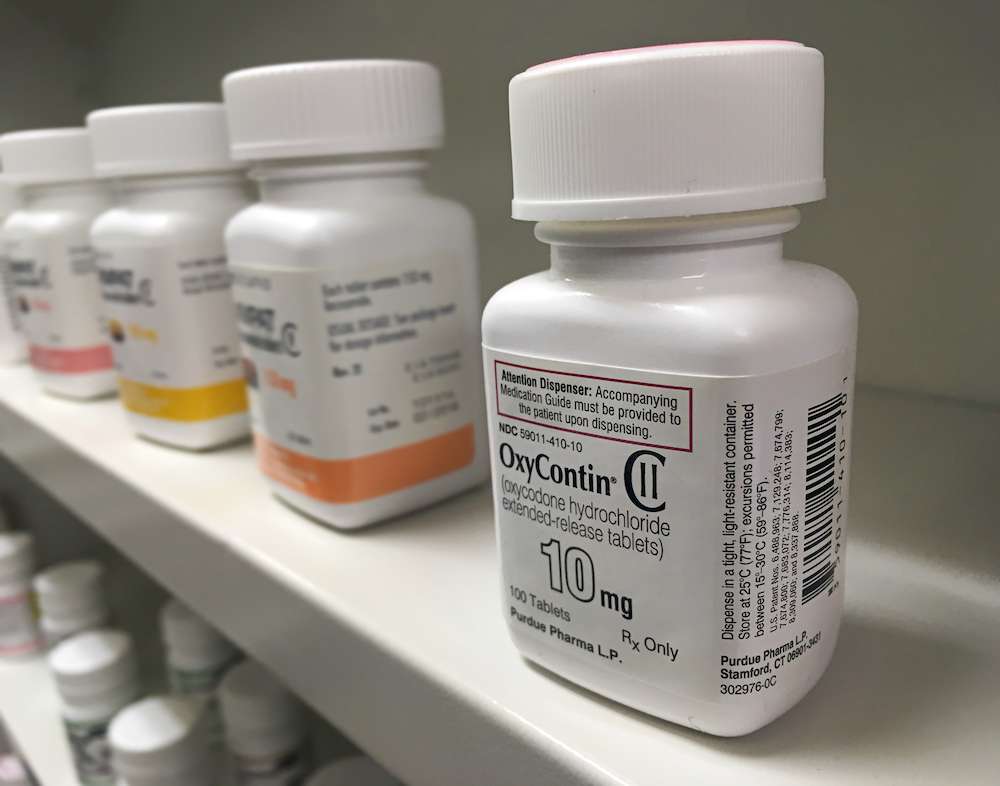
    Purdue Pharma, the most infamous manufacturer of prescription opioid pills, has reached a multi-billion dollar settlement with thousands of state, city and county governments that are suing the maker of OxyContin for its alleged role in the opioid epidemic. 

    The deal was first reported Wednesday evening (Sept. 11). The details were not immediately made public, but The New York Times reported the basics of the settlement: Purdue will declare bankruptcy.

    What Happens To Purdue?

    A new company will be formed to sell OxyContin, and the profits from those sales will go to Purdue’s settlement payout. The Sackler family, which owns Purdue, will contribute $3 million to the settlement over seven years. In addition, Purdue will donate prescriptions, including those for addiction treatment. NBC News reported that the settlement is worth $10-12 billion overall. 

    The deal does not include any admission of wrongdoing by Purdue Pharma or the Sackler family

    According to NBC News, as of Thursday (Sept. 12), at least 20 states have rejected the deal while legal officials in 27 states are reportedly in favor of the deal, which still needs to be approved by a bankruptcy judge and the board of Purdue Pharma. 

    “We are proud to participate in the nation’s most significant step in addressing this deadly crisis,” Texas attorney general Ken Paxton said through a spokesperson. 

    Tennessee Attorney General Herbert Slatery, who earlier this week predicted that Purdue would likely file for bankruptcy, said the settlement “would secure billions of dollars nationwide to go toward addressing the devastating effects of the opioid epidemic and will result in the Sackler family divesting themselves of their business interests in the pharmaceutical industry forever.”

    Florida Attorney General Ashley Moody said that the settlement was historic and will help provide treatment. 

    “Sadly, this agreement cannot bring back those who have lost their lives to opioid abuse, but it will help Florida gain access to more life-saving resources and bolster our efforts to end this deadly epidemic,” Moody said. 

    The Opposition Calls The Settlement “An Insult”

    However, not everyone was satisfied with the settlement. At least 20 states have opted not to sign on to the deal. New York Attorney General Letitia James had one of the strongest reactions, calling the settlement “an insult, plain and simple.”

    Other states want to hold onto their right to sue the Sackler family personally. 

    “If Purdue cannot pay for the harm it inflicted, the Sacklers will,” said New Jersey Attorney General Gurbir S. Grewal. 

    Massachusetts Attorney General Maura Healey wanted to see Purdue Pharma and the Sackler family forced to admit wrongdoing. 

    “It’s critical that all the facts come out about what this company and its executives and directors did, that they apologize for the harm they caused, and that no one profits from breaking the law,” she said. 

    View the original article at thefix.com

  • Purdue Pharma Would Pay Billions In Proposed Opioid Settlement

    Purdue Pharma Would Pay Billions In Proposed Opioid Settlement

    The newly proposed deal would involve the Sackler family giving up control of Purdue, and paying at least $3 billion toward the settlement.

    Purdue Pharma may be close to reaching a settlement. The OxyContin maker—named in more than 2,000 lawsuits for fueling, and then aggravating, the opioid crisis—is seeking to resolve the lawsuits through a multibillion dollar settlement, NBC News reported.

    The company’s lawyers were in Cleveland last Tuesday (Aug. 20) to meet with the plaintiffs’ attorneys, including state attorneys general, to discuss the proposal, anonymous sources relayed to NBC.

    The company would settle for $10 billion to $12 billion, and declare bankruptcy. The deal would involve the Sackler family giving up control of Purdue, and paying at least $3 billion toward the settlement. The family has owned Purdue since 1952.

    Purdue Speaks

    “The people and communities affected by the opioid crisis need help now,” the company said in a statement to NBC. “Purdue believes a constructive global resolution is the best path forward, and the company is actively working with the state attorneys general and other plaintiffs to achieve this outcome.”

    The company is blamed for fueling the opioid crisis by “downplaying the risks of addiction to OxyContin while exaggerating its benefits.”

    The death toll of the opioid crisis has exceeded 400,000 between 1999-2017, the CDC says.

    The Sacklers

    The legacy of the wealthy Sackler family—a major donor to the arts—has been tarnished by their affiliation with OxyContin. The Sackler name has been removed from the Louvre, and major institutions including the Metropolitan Museum of Art and the Guggenheim have agreed to stop accepting gifts from the family, following anti-Sackler rallies organized by photographer Nan Goldin, who herself is in recovery from prescription opioid abuse.

    This wouldn’t be the first time Purdue had to pay for the “alleged” damage inflicted by OxyContin. In 2007, the company paid a fine of $635 million and top executives pleaded guilty in federal court to criminal charges that they duped regulators, medical providers and patients about the drug’s potential to be abused, as the New York Times reported.

    The company also agreed to pay Oklahoma $270 million in March, avoiding the trial that just concluded this month with only Johnson & Johnson as the remaining defendant. Johnson & Johnson was ordered to pay the state $572 million to offset the cost of the opioid crisis.

    View the original article at thefix.com

  • States Fight For Control Over Opioid Master Settlement

    States Fight For Control Over Opioid Master Settlement

    A coalition of 39 state attorneys general signed a letter stating that the negotiations should be left up to the states, not local governments.

    With billions in payouts at stake, a national settlement between companies that manufacture and distribute opioid medication and municipalities across the United States that have sued for the companies’ alleged role in fueling the opioid crisis is being negotiated—but not without a fair share of hurdles to overcome.

    On Tuesday (Aug. 6), Judge Dan Polster, the federal judge overseeing the lawsuits, expressed his support for an “ambitious” proposal to reach a resolution at a hearing in Cleveland. 

    Inside The Proposal

    The proposal, suggested by the plaintiffs’ lawyers, would allow “all 34,000 towns, cities and counties… to vote on settlement offers,” the New York Times reported. Whatever they vote on—if the offer is approved—will be the final outcome. After that, plaintiffs “will be bound by the outcome and can bring no further suits.”

    The proposal would stop additional lawsuits and give each voting community a portion of the damages.

    However, as the Times reported, state attorneys general have criticized the plan, arguing that the lawsuits filed by towns, cities and counties undermine the states’ efforts to reach a settlement with the drug companies. By contrast, the municipalities have hired private lawyers to handle the lawsuits.

    A coalition of 39 state attorneys general signed a letter stating that the negotiations should be left up to the states, not local governments—i.e. it should be resolved “from the top down, not bottom up.”

    “In my view, it’s the plaintiffs’ lawyers using local governments to hijack the sovereignty of the states and create ‘city states.’ But this is not the United City-States of America,” said Dave Yost, Ohio’s attorney general.

    Local Municipalities Push Back

    There’s a reason for the local municipalities’ decision to pursue a settlement on their own, the Times explained. With the 1998 Master Tobacco Settlement reached by cigarette manufacturers and 46 states, a bulk of the $250 billion payout went to discretionary state spending rather than efforts to fix the damage inflicted by tobacco products like prevention and treatment programs.

    “Still bitter about those outcomes, communities whose coffers had been depleted by the opioid crisis decided to sign with private lawyers, circumventing the states,” the Times reported.

    In a recent op-ed, Mark A. Gottlieb, executive director of the Public Health Advocacy Institute at Northeastern University School of Law, emphasized the importance of securing a portion of the settlement that will go to future safeguards against similar public health crises. 

    “We must ensure that we do not squander the opportunity to address the opioid crisis through a coordinated public health approach in the next settlement,” he wrote.

    View the original article at thefix.com