It’s only a few sleeps to Christmas and the usual panic present buying has set in at Time To Log Off HQ, and we’re sure at your house too..? But every year we like to stop and ask ourselves, what is it that our friends and family really want from us this Christmas – and if we ask them we usually find it’s not something that can be put in a box and wrapped with a ribbon on top.
The Internet has helped us stay connected with those we love thousands of miles away, and every festive season we’re very grateful for it. But it often distracts us from the people right in front of us, who really want, and need, our attention.
So every year, our annual #PresenceNotPresents digital detox challenge is all about helping you remember what matters most. Switch off your devices, put down your phones and give your undivided attention to those you love.
Let’s Make This Christmas About Presence Not Presents
Tip 1: Rediscover analogue pleasures
Reading a book, playing a board game – those aren’t just things the younger members of your family will enjoy. Card and board games for older adults are having a bit of a boom as we all rediscover the joy of spending a bit of time away from a screen. Have a night where everyone gets to choose their favourite analogue game and you all play a few rounds.
Tip 2: Put the phone in a drawer
It’s incredibly hard to stop scrolling when your smartphone or tablet is still in your hand – or tucked in a pocket where you can feel its insistent presence. Put your device in a drawer in a separate room from the one your loved ones are in, and notice how much easier it is for you to fully be present.
Tip 3: Get off screens and get outside
Sometimes the most meaningful conversations can happen when we’re strolling along with someone we love, with no particular agenda or place to go. And connecting with nature is one of the very best things we can all do for our mental health. When the frenzy of festive eating and drinking just gets too much, lead an escape party outside and suggest a walk in the cold air to refresh everyone.
Tip 4: Give your time
Not everyone is going to be surrounded by love and support this season. Look around at your community and see if there’s anyone you could give an extra helping hand to, or even involve in your own family fun. Volunteering to do some shopping for an elderly neighbour, or helping clear their front path to spruce up their house, may only take minutes from your day but make a big difference to their peace of mind.
As we cocoon with our families and friends at the end of 2022, we’d like to invite you to be part of the digital detox movement and focus on presence not presents this holidays. And, as you go in to 2023, let’s all continue to look for opportunities to stop scrolling and make a deeper connection with those we love.
Human communication never used to be immediate, unless we were standing face-to-face. Letters could take days to arrive, and even more time to be answered. Phone calls could be left ringing, or answered by an answerphone message. No-one got irate if their attempts to contact us took a little bit of time. Now, if we ignore a text for longer than a few minutes it feels like a deadly social crime.
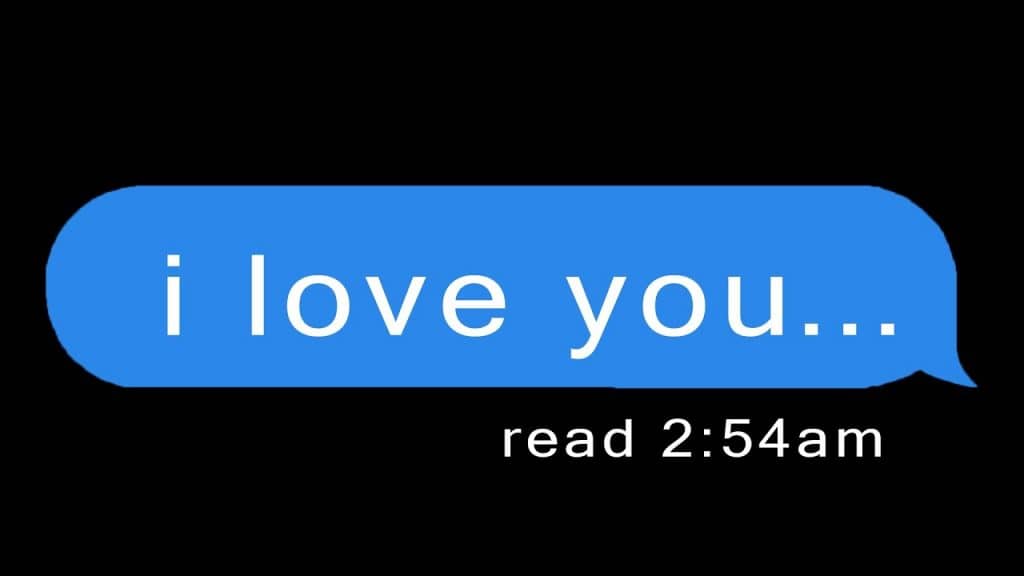
Text response times, ghosting, and being ‘left on read’ spawn memes all over the internet. We’re all agonising about why our messages aren’t being replied to immediately, while acknowledging we’re all overwhelmed with the volume of messages we receive every day.
So, is it really ever OK just to ignore a text?
Messaging is overwhelming us
Before we answer that question, take a look at just how big the problem of messaging overwhelm is. In 2016 Mark Zuckerberg revealed that the daily message volume from Facebook Messenger and WhatsApp combined stood at three times the global volume of daily SMS messages, at 60 billion messages a day compared to 20 billion SMSs. And in 2012 we knew that adults 18-44 were individually sending and receiving between 50 and 120 texts a day.
Adults 18-24 sent and received over 128 texts every day.
Adults 25-34 sent and received over 75 texts a day.
Adults 35-44 sent and received about 52 texts a day.
A decade later we have a glimpse into how those messages have proliferated. In the third quarter of 2021 in the UK alone the volume of SMS and MMS messages sent and received was around 10.6 billion messages.
Take a look at your own phone for a minute and count up how many messages you sent and received across all messaging platforms yesterday. Had you any idea just how many it was?
Do response times really = importance?
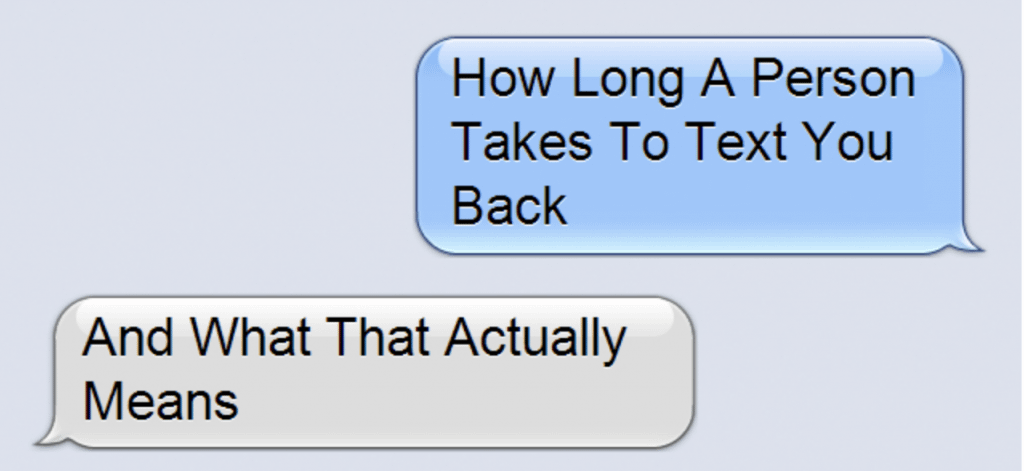
A whole heap of (only partially) tongue-in-cheek analysis has been devoted online to what it really means when someone takes a takes a certain amount of time to text you back. 12+ hours apparently means “you’re definitely on the cusp of insignificance” whereas 5-60 seconds means “You are Christmas morning to this person!”.
It’s worth noting though that even in the good news that you are “Christmas morning” to the speedy responder is buried the warning “Or they have no life at all”…
So, does the length of response time really equate to where you are in the life importance hierarchy of the person receiving it? What if they’re in a meeting, on a call, in the gym? What if they’re having a really, really bad day (or equally a really, really good one, and are off out celebrating somewhere)? What if they’re sitting across a table from a friend who, maybe one day like you, needs their full attention right now?
The agony of being ‘left on read’
Of course, it’s not as simple as just agonising over the gap between sending a message and receiving the response. ‘Read’ receipts, introduced by Apple in 2011, signalling when a message is ‘read’, rather than just ‘delivered’ (along with the timestamp) introduced a whole new realm of messaging-related anxiety. (Along with those evil blue ticks on WhatsApp). Both the Apple and WhatsApp read receipts can now be switched off (whew) but Facebook and Snapchat, don’t allow that. Snapchat even cruelly lets us know whether a screenshot of a snap or message has been taken.
How does this make you feel? Would it be better if you couldn’t see that ‘read’ timestamp?
Knowing when something we’ve sent has been received isn’t new of course. Postal organisations have let us use ‘signed for’ services for decades, so we could find out when a parcel or package was received. Courier and delivery companies now even record and send a photo of a parcel actually being handed over on the doorstep. But the ‘read’ receipts of the online world seem to induce a particular type of agony. We are unequivocal in our advice on this for your mental health – turn read receipts off.
We’re going to say ‘bad’.
Digital triage
One of our favourite digital gurus Cal Newport, whom we interviewed on our ‘It’s Complicated’ podcast, describes what we all need to do with digital and messaging overwhelm as ‘digital triage’. And digital triage inevitably means that yes, sometimes we are just going to have to ignore a text message for a while, if something much more urgent is in our in-box.
triage (noun)
(in medical use) the assignment of degrees of urgency to wounds or illnesses to decide the order of treatment of a large number of patients or casualties.
Most of us have absolutely no choice but to get much better at digital triage and to make it a central part of our day, when we’re flooded with requests for Zoom calls, Slack messages, emails, texts and DMs. Instead of attempting the impossible task of replying to everything immediately, we need to stop and think before answering and work out which ones are urgent and which merely important, while not worrying about offending those who we place further down the triage list.
Balancing good manners and self care
Maybe our worries about how our response (or delayed response) will be perceived are actually more about us than the sender? A November 2021 study found receivers tend to overestimate how quickly senders expect responses to non-urgent work emails, for example. Perhaps the same is true for messaging, and we can let ourselves off the hook a little more than we think?
“You have to be a civil and decent person, but you don’t have to give your time and attention to everyone who asks for it.”
Daniel Post senning, the emily post institute
It’s all about how we ignore a text of course. No-one wants to be rude. So, set clear expectations for response times, use automated tools to let people know you won’t be responding for a while and remind yourself that, if you’re doing digital triage properly, not every message needs or deserves a response.
The sanity checklist
So, yes, we really do think there are times when it’s absolutely OK to ignore a text. But, unless you want to find yourself without any friends and with a very annoyed family, design your environment and communicate your new habits clearly so you can do this with the minimum of offence given. Here’s our checklist;
Tell everyone your ‘no go’ texting times ( ie “never after midnight”)
Disable all ‘read’ receipts
Make use of ‘do not disturb’ mode
Enable ‘auto reply’ features
Give others permission to ignore a text from you
That last one is the most important of all. You can’t expect to be able ignore a text from a friend because it doesn’t come at a good time for you, then get upset when they do the same. Explain that this is about taking stress off everyone and that you’re completely OK with longer response times (just make sure you mean it, when you say it).
For more about texting, messaging and the impacts of being over-connected to the digital world – pick up a copy of our new book: My Brain Has Too Many Tabs Open. Available to order here.
As Valentine’s Day approaches we’re asking the tricky question “Do you love your smartphone more than your partner?” Are you making them feel like the third wheel in your relationship with your compulsive checking habits? It can be incredibly easy to do, and we have written about the dangers many times before: so here are the signs to watch out for!
Do you ‘phub’ them?
We are all aware of how phubbing (snubbing those around us by looking at our phone instead of engaging) can make people feel. We know how it feels when it happens to us (spoiler alert: not great) and many of us in recent years have taken to leaving our phone in a bag, or turning off notifications in order to fully commit time and energy to those we are with. Ironically it is when we are with our closest loved ones that we feel the least inclined to follow this rule. Perhaps it is because we see them all the time, perhaps it is because they know how vital that work email is, or perhaps we just don’t notice ourselves doing it. This has led to an epidemic of phubbing on unprecedented levels with more than 17% of people in a recent study admitted to phubbing those around them over four times a day. If you fall into that camp: beware!
Is your phone in your bedroom?
Another tell-tale sign that you may be prioritising your smartphone over your relationship is the physical spaces you allow it in. Are you, for example, winding down in the evenings by lying next to your partner on your phone: ignoring them? 40% of Americans take their phones to bed, so if you do too, you are not alone. But next time, remember how you feel when you want to talk with your loved one, listen to music together or just leave the space open for time together and you were shut down by them focussing solely on their phone. Maybe leave it outside the room tonight to give it a go?
When was the last time you had a phone free meal?
Similarly to the physical boundary of keeping your phone out of the bedroom, think about the boundaries you have around time such as meals. When you eat a quick breakfast or even leisurely dinner with your partner are you engaging with them? Or are you both sat together on your phones? Over 75% of Brits use their phones whilst eating, so again you are not in the minority but that doesn’t mean this is the healthiest practice for maintaining a solid relationship.
Are you intentional about your relationship?
Leading on from the last two: when you are using your phone with your partner present the most important question is whether you are using it intentionally. On average we check our phone every 12 minutes, often unconsciously. We can turn that off to a degree when spending time with those we don’t see often, and when we take part in planned activities. But, if you love your smartphone a bit too much, how often are you managing that level of concentration at home with your partner? Unfortunately in the age of smartphones we can’t simply relax into easy habits of communication: we must remember to intentionally make space and time for our partners without the distraction of screens. 70% of people have reported that smartphones regularly interfere with their relationships after all.
Has it come up before?
The last and most obvious clue that you love your smartphone more than your partner is if this is an issue in your relationship. Do you have conflict in the evenings, or at mealtimes over one of you focussing too much on your phone? Has it been mentioned by friends and family? Are you known as the one who can’t get off their phone? If that is the case then it’s time to make a change.
For more about how you can improve your relationships by getting a handle on your tech habits – pick up a copy of our new book: My Brain Has Too Many Tabs Open. Available to order here.
We all choose to spend Valentines differently: some go all out with gifts, activities and grand gestures whilst others choose to spend the day much like any other, stay in or get a takeaway. Regardless of the importance you place on the day, nothing screams romance less than someone who is glued to their phone and doesn’t pay proper attention to their Valentine. We have written before about the impact which phubbing (snubbing someone with your phone) can have on a relationship, and that is not the only point of tension between phones and loved ones!
So, we have put together some tips to help you log off for love this Valentines as part of our annual campaign encouraging you to prioritise relationships over devices.
Give an analogue gift
The most obvious display of Valentines spirit is in the gift giving, so this year we are challenging you to think outside of the box and give an analogue gift. From hand writing a card to booking a holiday for the two of you, there are lots of options for gifts which can focus on the person you love rather over technology! Especially on Valentines it is even more important that the thought behind your gift focuses on the real world, and demonstrates your investment in the relationship.
Plan offline activities
If you are celebrating the day in style with some Valentines related activities we recommend going for some offline events too! Perhaps you could play crazy golf, go up in a hot air balloon or simply cook them dinner and do a puzzle together. No matter how you celebrate there are lots of ways to spend time together in person and focus on quality time over consumption of media like going to the cinema or watching TV at home.
Intentionally log off
There will be lots of variety in ways that we all log off for love this Valentines but one thing we can all do throughout the day and incorporate into all our activities is to have the intention to log off. This means that we can plan in advance. If you know that you might be distracted by work emails, a match score or internet gossip instead of being fully focused on your partner take steps in advance to make sure that doesn’t happen. You could let your colleagues know you are going off-grid that night, or perhaps turn off notifications for the evening. We all know how easy it is to get distracted so get ahead of it!
Finally, the best gift you can give this Valentines is to log off for love all year round. Take these tips and institute them in your day to day life beyond one celebration of love. Your partner deserves it, and so do you!