Tag: addiction in the movies

  • Shia LaBeouf and Alma Har'el's Almost-True "Honey Boy" Tackles Family Alcoholism and PTSD

    Shia LaBeouf and Alma Har'el's Almost-True "Honey Boy" Tackles Family Alcoholism and PTSD

    In rehab, LaBeouf used a flashlight under the covers to write what he was learning about mental illness and alcoholism. These notes evolved into the screenplay for “Honey Boy.”

    Actor Shia LaBeouf, now 33, wrote Honey Boy during his 10-week lockdown in court-ordered treatment, which he nicknamed “head camp.” That was the sentence for his highly-publicized 2017 felony arrest for public drunkenness, obstruction, and disorderly conduct—a charge that could’ve landed him seven years in prison. Since then, much has changed for LaBeouf.

    “I want to thank the police officer who arrested me in Georgia for changing my life”

    This week, only two years post-rehab, the Hollywood Film Awards honored LaBeouf with its Breakthrough Screenwriter prize. Now sober, his acceptance speech was all gratitude, with the first shoutout going to Savannah cop Arthur Bryant:

    “I want to thank the police officer who arrested me in Georgia for changing my life. I want to thank my therapist and my sponsor for saving my life. I want to thank my team for being part of my life and my parents for giving me life.”

    LaBeouf’s mother Shayna Saide, who accompanied her son to the ceremony, teared up during the award speech. Honey Boy is based on a thinly-veiled story about a child actor named Otis Lort—played by Noah Jupe—and his bitter ex-rodeo clown father James Lort, played by LaBeouf. Before LaBeouf’s stay in rehab, he had been estranged from his father Jeffrey for seven years. LaBeouf gives a powerful performance as the elder Lort, a deeply disturbed, bitter alcoholic whose drinking destroyed his marriage, his career, and scarred the psyche of his young son. Yet, these complex characters display an obvious love for each other.

    The screenplay is a slice of LaBeouf’s life. The movie begins with Otis as a preteen, so it doesn’t include earlier scenes such as his parents divorcing when he was only three, nor the violence he witnessed at age nine—overhearing a man raping his mother in another room. In LaBeouf’s last rehab stay (his third), he learned about his PTSD.

    The daring, vulnerable script originated with email correspondence between two close friends. The actor, holed up in a treatment facility, used a flashlight under the covers to write what he was learning about mental illness and the family disease of alcoholism. He shared his innermost thoughts with Alma Har’el, an award-winning Israeli filmmaker he’d first met in 2011 after seeing Har’el’s Bombay Beach, which won Best Documentary at Tribeca Film Festival (TFF) that year.

    Alcoholic Fathers, Jewish Mothers, and Deep Emotional Scars

    They met for dinner and soon found much in common: Both had alcoholic fathers, Jewish mothers, and deep emotional scars. LaBeouf produced Har’el’s second doc, LoveTrue (2016), which also premiered at TFF.

    While LaBeouf was writing about his experiences in treatment, he described painful memories that were surfacing. Har’el recognized the seeds of a cinematic story and encouraged him to keep writing.

    The process of revising the script was a group effort with director Har’el at the helm. The moviemaking team included 12-year-old Jupe, Lucas Hedges as Otis in his 20s, and Byron Bowers as Percy, a kindred spirit for Otis during his rehab stay. LaBeouf and Har’el were open to everyone’s input.

    We reached out to Alma Har’el to find out more.

    How did making your first feature film compare to documentaries?

    AH: This film felt like a documentary even though a large part of Honey Boy was scripted. It was a combination of Shia’s real-life story, his dreams, and adding fiction. Regarding the documentary part, it was very important for me to find out as much as I could about where real events in Shia’s life took place. I spoke with both of his parents to understand as much as I could. His mother Shayna Saide provided so many photos. We used as many as we could in the credit sequence. It was to help bring the story to life as much as was possible.

    How true to Shia LaBeouf’s life was it?

    We were making a film about [the fictional] Otis—not about Shia. Much of the movie was inspired by real-life events and whenever [possible], I wanted to rely on those truths. It was a big help that Shayna, Shia’s mother, was on set with us every day, all day.

    Was his father offended by the portrayal of him?

    I don’t want to speak for him, so I don’t want to say what he felt, but I could say that he sent me a very warm message after he read the script. Then he sent me messages on Facebook almost every day. I think that [brought] good luck on the shoot. When he saw the final film, he was extremely happy for Shia.

    Was it like an AA living amends for him?

    It was. I think it was exactly that in so many ways.

    How do you feel about the use of the word “god” in 12-step programs?

    Yeah, it’s very challenging, but it is, as they say, your higher power, so it’s up to you to define what it is. I think that’s the power of these programs. It is the power of the people that support each other and come back to share things together and find …their own higher power. Much [of it] is a personal journey. [Everyone] has their own terms. But, yeah, I have my challenges with that. That’s been one of my biggest challenges—to find what those destinations are outside of religion. I think gods can be real even if it’s not the god everybody else is praying to. It is certainly about figuring that out for yourself—a personal journey.

    Can you add anything to that?

    Well, it’s like, what is that thing that makes you present? What makes you have faith in something bigger than yourself? Also, the part of Percy was written much more religious at first. It spoke about god-related steps in rehab….When Byron Bowers [was cast] in the role, he rewrote that part for himself so it was based on his own experiences.

    What was it like when you said something but didn’t realize it was a trigger. Did Shia have to take care of himself by taking a walk or was it smoother than that?

    It was a lot more intense than that! We had to deal with very, very intense situations, often on set, but we did it with privacy when we could. We always made sure that Noah, and all of us were feeling safe. I’m very happy that we were all able to … be present.

    Do you mean present for the difficult topics in the script?

    Yes. We all went through these deep feelings and learned so much.

    About each other?

    Yes, and about PTSD. I also feel like our movie could help children of alcoholics [who may be] struggling. We didn’t want to [shy away] or disregard anything.

    Was it cathartic for Shia?

    An exorcism! And not just for him. We let demons come up.

    Noah Jupe said he went into this movie as a child but left as a teenager. Did you see that metamorphosis taking place?

    I’m not a mother so I was really glad his mother was on set with us every day, and Shia’s mother too. They became close allies of mine in directing. We were all very intimate on set, having … intimate discussions about everything. I loved watching Noah’s perceptions and his ability to express himself emotionally and see things in a deeper way. It was happening, but I hadn’t really seen how much he’s grown until we took a break after Sundance. It was obvious then that he’s now a teenager just by the way he walked. He has physically and emotionally grown up so much. It’s so funny when we were sitting together doing the Q&A, some of us teared up when he was talking…from how much he’d grown up and what an amazing young man we were seeing.

    Honey Boy is now in theaters.

    View the original article at thefix.com

  • Timothée Chalamet Discusses The Message Of "Beautiful Boy"

    Timothée Chalamet Discusses The Message Of "Beautiful Boy"

    “The movie shows how devastating it can be to everyone around the addict,” Timothée Chalamet explained during a recent panel on Beautiful Boy.

    Timothée Chalamet knows that Beautiful Boy, based on the memoir Tweak written by Nic Sheff (played by Chalamet) and Beautiful Boy written by Nic’s father David Sheff (played by Steve Carell), is obviously about drug addiction.

    However, he says the real message lies in the relationships at the heart of the movie.

    “The ‘don’t do drugs because they will ruin your life’ narrative, which is very true and very important to know, is out there as effectively as it should be, so this movie tried to address things around it and not that direct message,” People reported Chalamet saying to a crowd of teens at a New York screening of the movie.

    In a separate interview, Nic Scheff agreed with Chalamet’s interpretation, saying, “You have to realize that there have been so many movies about addiction that show the downward spiral of a person as the drugs overtake their life. Many of these films show these people hitting bottom, then end with them dying or getting into rehab and ending on a hopeful note. Although there have been some great movies like that, our idea was to do something different. We wanted to show the effect the addiction has on the family because my dad had written about it so amazingly in Beautiful Boy. We wanted to combine the family narrative with the addiction narrative.”

    Chalamet had recently joined Sheff in a screening of the film for New York City high school students. On a panel Sheff and Chalamet answered questions, and one student asked if there was any lesson Chalamet thought the movie got across outside of not to “get too mixed up in drugs.”

    Chalamet responded thoughtfully. “It’s supposed to portray David and Nic’s story as a firsthand warning of how addiction can ruin one’s life in the personal context, but perhaps more eye-opening, the movie shows how devastating it can be to everyone around the addict.”

    The parents of those addicted to a substance often undergo extreme and ongoing trauma. Many times the parents of those with addiction end up struggling with PTSD from the effects of the path of addiction and their child’s numerous close calls with death and prison. 

    After the Q&A session Chalamet told People, “Our hope is that it’s not a glorification of drugs or a warning against the glorification of drugs because that’s not what the movie’s about.” 

    View the original article at thefix.com

  • "Six Gifts" Film Follows Athletes In Different Stages Of Recovery

    "Six Gifts" Film Follows Athletes In Different Stages Of Recovery

    “The movie is meant to inspire people currently suffering from addiction and those who are unable to find that missing piece to the puzzle to help finally get them sober.” 

    A new film celebrates six stories of recovery, sparking a movement to inspire and motivate the addiction/recovery community.

    6 Gifts, directed by Nick Tribuno, follows six athletes from all walks of life and shares their failures and triumphs in battling addiction—Ben Gravy (surfing), Scott French (snowboarding), Rebecca Selig (skiing), Chris Vargo (endurance athlete), Monica Lebansky (yoga) and Melody Schofield (crossfit).

    According to the official website of Sober and Stoked, the movement which funded and produced 6 Gifts, the film is now available to rent or to purchase on Blu Ray. Sober and Stoked co-founders Scott French and Eugene Stiltner raised $6,000 to produce the film with the help of a crowdfunding campaign.

    “The movie is meant to inspire people currently suffering from addiction and those who are unable to find that missing piece to the puzzle to help finally get them sober,” according to the official website. “It is also meant for people who are already sober and feel like they need something else to get them motivated and out enjoying life, so they don’t fall back into previous traps and pitfalls.”

    Both Stiltner and French, who are both originally from the Fairfax, Virginia area, have about 11 years of sobriety.

    “Over a decade of doing drugs and drinking every day had taken a toll on me,” said French on the Sober and Stoked website. “I had acquired 4 DUIs over 10 years, had many drunk-in-public offenses, and many violation of probations.”

    A series of failed relationships compounded his drug use. “Cocaine slowly turned into meth and crack, and then OxyContin and heroin.”

    Ultimately, French surrendered himself at the courthouse and pleaded guilty to his charges. Going to jail was his chance at redemption. “I remember smiling, this was my chance. I was given an opportunity to forcibly be away from drugs and alcohol. I could transform my life, incarceration is the only way I’ll get sober.”

    After enduring a “vicious” detox and attending AA meetings in jail, French put his energy into fitness, marathons and snowboarding.

    His friend and co-founder Eugene Stiltner stopped drinking after a “culmination of almost 8 years of reckless, out-of-control drinking, depression, trouble with the law, and a desire to no longer go on,” he said.

    Stiltner was pulled over by police and arrested while driving home after a night of drinking until last call. “When I got out the next morning, my parents and a family friend who had been sober for many years sat me down for an intervention,” he said.

    Now that the film is complete, Sober and Stoked is focusing on launching a pilot program throughout Maryland and Delaware in 2019.

    The pilot program will host “gear drives” to support the athletic or artistic pursuits of people in recovery.

    “The concept of a gear drive is similar to a clothing drive,” Stiltner told The Fix via email. “People can clean out their basements and garages and bring in lightly used/new outdoor gear and art/music supplies, so the halfway houses we partner with can have healthy activities for people in the houses to do.”

    6 Gifts is available to rent or to purchase on Blu Ray.

    To schedule a screening of 6 Gifts in your community, contact wearesoberandstoked@gmail.com, or purchase a community screening kit available on their website.

    You can also reach out to Sober and Stoked via social media.

    Watch the trailer here.

    View the original article at thefix.com

  • "Beautiful Boy" Shows Truth Of Addiction, Former NIDA Director Says

    "Beautiful Boy" Shows Truth Of Addiction, Former NIDA Director Says

    “The film shows the limits of treatment and family love in confronting the awesome and tenacious power of addiction.”

    Robert L. DuPont knows what addiction looks like — how it can strike anyone and tear families apart from the inside. As a doctor specializing in addiction and treatment and former National Institute on Drug Abuse and White House Drug Chief, DuPont has seen both the truth and the misconceptions around substance abuse, and says that Steve Carell’s new film Beautiful Boy portrays them both.

    “Throughout my 50-year career working on drug abuse prevention and treatment, I’ve often seen drug addiction befall every kind of person,” DuPont writes in an essay for STAT News. That can include even stable, loving families like the one portrayed in the film, which is based on the best-selling books by David Sheff and his son Nic, who progressed from sharing a joint with his father to shooting meth as addiction took hold.

    In addition to pushing back on the idea that addiction only affects people who have done something wrong, DuPont says that the film outlines the real risk of teenage drug abuse.

    “This movie is a cautionary story for teens and families. Another reason I am recommending the movie (and the books) is their riveting and relentless portrayal of how addiction hijacks the brain,” he writes. “The film shows the limits of treatment and family love in confronting the awesome and tenacious power of addiction. The movie does not let the viewer stray from that horrifying descent into this modern hell. It brutally and relentlessly portrays the chemical slavery that is addiction and the sustained helplessness of both father and son as they struggle to escape addiction’s iron grip year after devastating year.”

    Dupont, who is the author of Chemical Slavery: Understanding Addiction and Stopping the Drug Epidemic, says that people whose brains are on drugs are not the same people they were before they were using.

    “His or her brain has been reprogrammed to prioritize continued drug use over relationships and other meaningful aspects of life,” DuPont writes. “Dishonesty is part of addiction. When talking to an individual with an addiction who is using, you are talking to the drug, not to the person who existed before the addiction.”

    He says that all viewers — those who have experienced addiction in the families and those who haven’t — can take lessons from Beautiful Boy.

    “The first is the power of addiction to cause a downward spiral regardless of prior successes. Another is the danger of not confronting early drug use and insisting that a youth not use any marijuana, alcohol, or other drugs for reasons of health,” he writes. The final is the idea that addiction is a lifelong disease, and recovery a lifelong commitment.

    “When Nic leaves treatment, David does not effectively monitor him for relapse or actively manage his recovery plan. He fails to see that addiction is a lifelong threat to his son and not a temporary problem to be put behind them by even the best treatment,” DuPont writes.

    View the original article at thefix.com

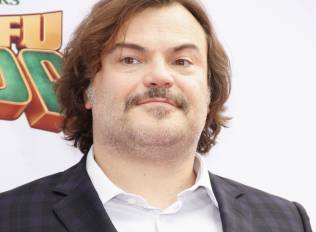
  • Jack Black Details What He Learned About Recovery While Filming "Don’t Worry"

    Jack Black Details What He Learned About Recovery While Filming "Don’t Worry"

    “It’s a battle for survival for millions of people around the world, and some of them are battling silently by themselves and no one else knows it.”

    Actor Jack Black said that he gained new perspectives about addiction and recovery filming “Don’t Worry, He Won’t Get Far On Foot.”

    The film, which was released last week, tells the story of real-life artist John Callahan, who became famous for his cartoons. Callahan was a heavy drinker who nearly died after a night of partying when he was involved in a car accident that left him paralyzed and in a wheelchair.

    After the accident he entered treatment for alcoholism and started drawing, eventually gaining a following. 

    Black, who plays a supporting role in the movie, said that being on set and learning what the real Callahan went through renewed his empathy for people in recovery.

    “Whether it’s alcohol or heroin or food or sex or whatever is it, people can get stuck in a hole and it can take all of your energy and powers and spiritual awakenings to get out and survive,” Black said, according to USA Today.  

    He noted that you can’t always tell from the outside who is struggling with substance abuse.

    “It’s a battle for survival for millions of people around the world, and some of them are battling silently by themselves and no one else knows it. They seem to be perfectly fine on the outside,” he said. “And some people are visibly heading down a dark path.” 

    He hopes that people will find hope from the film, which is based on a memoir that Callahan wrote. 

    “This is just one man’s journey on his way back to living a healthy happy life,” Black said. “It’s a cool story and a cool way to experience that in a small way.”

    Black didn’t mention his own substance abuse in relation to the movie, but in the past he has admitted to using cocaine as a teenager growing up in Los Angeles.

    “I remember just lots of turmoil from that time period,” he said in 2015. “I was having a lot of troubles with cocaine … I was hanging out with some pretty rough characters. I was scared to go to school [because] one of them wanted to kill me. I wanted to get out of there.”

    Ultimately, his mother put him in an alternative school that helped him address his cocaine problem.

    “It was a huge release and a huge relief,” he said. “I left feeling euphoric, like an enormous weight had been lifted from me. It changed me.”

    View the original article at thefix.com