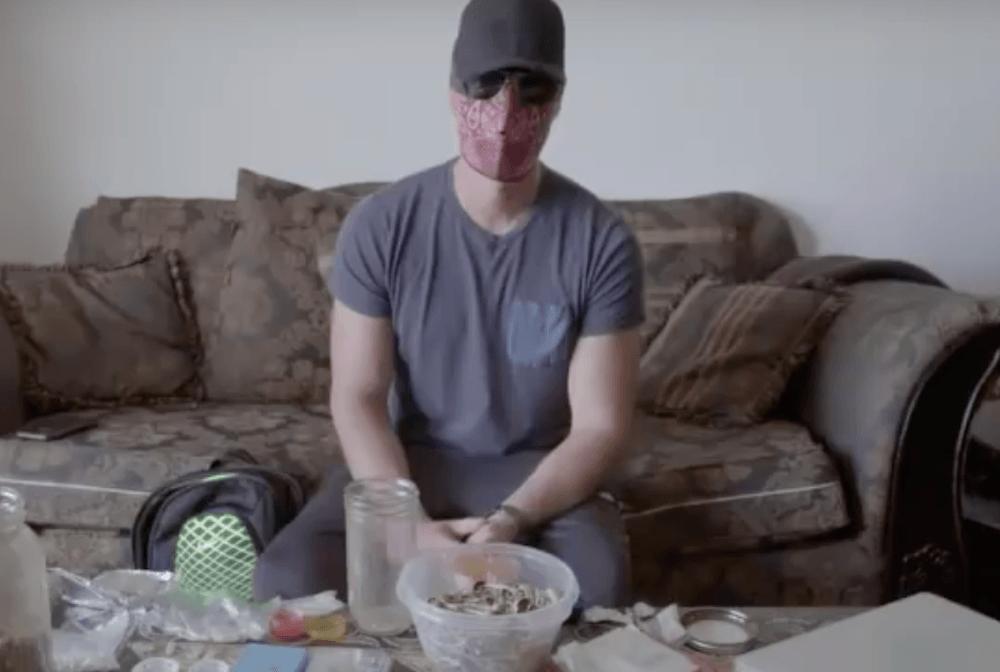
The anonymous tip that led to the man’s arrest identified him as an alleged drug dealer and a participant in the Netflix series.
Ryan James Zettell, who appeared in the Netflix documentary series Dope, is facing a prison sentence of three to 20 years for his alleged involvement in a drug-trafficking scheme.
The 21-year-old Zettell was arrested by Oakland County, Michigan narcotics officers in January 2019 after an anonymous tip identified him as not only an alleged drug dealer, but also a participant in a second season episode of the Netflix series, which examines the war on drugs from the perspective of police, traffickers and users.
Zettell pled guilty to multiple charges of delivery and manufacture of controlled substances, including cocaine, acid and MDMA (or “Molly”).
Zettell appeared in the third episode of the series’ second season, which focused on the drug trade in Detroit’s metro region. He identified himself by his alleged street name, “Ozone,” and told the documentary crew that he hoped to go into criminal justice.
Anonymous Tip
The anonymous tip to the Oakland County Narcotic Enforcement Team in July 2018 mentioned his appearance in the series, as well as his alleged status as a dealer in the Troy, Michigan area and surrounding communities.
The narcotics team launched an investigation that, over the course of several months, arranged undercover buys of cocaine and Molly from Zettell.
After obtaining a search warrant for two locations where Zettell had been observed conducting allegedly illegal activities, detectives arrested him on January 29, 2019. A backpack containing digital scales, 62 tabs of acid, 29 grams of Molly, and a gram of cocaine was retrieved at the time of the arrest, while a .45 semiautomatic weapon, another gram of cocaine and more than $7,000 in cash were found at one of the aforementioned locations.
Guilty Plea
During questioning, Zettell admitted to Troy deputies that he had appeared on Dope. He was subsequently booked on controlled substance delivery/manufacture charges. In June 2019, Zettell pled guilty to all six charges.
As Pop Culture Medianoted, Zettell’s arrest follows on the heels of the May 2019 capture of another Netflix series documentary subject, Megan “Monster” Hawkins, who was arrested after allegedly attempting to use another person’s identification to open a bank account in Elk Grove, California.
Hawkins, who appeared on Jailbirds, was arrested on charges of possession of a stolen vehicle, misuse of personal ID and probation violation, and was taken to Sacramento Main Jail, where the series was filmed.
Teens today have access to the world in a way many of us never experienced in our formative years. The drugs, sex, relationships portrayed in the show are absolutely something we see on the regular.
It’s no wonder why HBO’s new drama Euphoria has already been renewed for a second season—the riveting series is a no-holds-barred look at overstimulated teens who use drugs, deal with childhood trauma, and have sex; it’s a perfect recipe for “must-see TV.”
As gut-wrenching as it can be—scenes and images are raw and uncensored, eliciting visceral reactions—the vibrant ensemble cast led by Disney Channel star Zendaya and transgender model-turned-actress Hunter Schafer lights up the screen, making for electrifying viewing.
Creator Sam Levinson Struggled with Addiction as a Teen
Executive produced by rapper Drake and based on an Israeli teen series, much of what is seen onscreen was inspired by creator Sam Levinson’s personal experiences struggling with addiction.
“I spent the majority of my teenage years in hospitals, rehabs, and halfway houses,” Levinson told the audience at the premiere screening in Hollywood. “Some time around the age of 16, I resigned myself to the idea that eventually drugs would kill me, and there was no reason to fight it. I would let it take me over, and I had made peace with that.”
But then Levinson discovered a quote in a book that would change his life: “’In the end, we are nothing more than an amalgamation of our actions, and that’s ultimately what defines us.’ …that really spooked me in a sense that, if I were to die today, who would I be? I’m a thief. I’m an addict. I’ve been shitty to almost every person in my life that I love,” Levinson acknowledged.
“There was this voice that was clear as day that said, ‘stop fucking doing drugs.’ I’ve been clean for 14 years.”
While there are numerous irate people on social media accusing HBO of being too extreme, what the show describes is not all hyperbole: Teens who are using drugs are often self-medicating stress or trauma with untested high-potency chemicals. It’s an environment ripe for addiction or overdose.
“What we are witnessing with the availability of drugs and the viciousness of marketing aiming at normalizing use in younger and younger populations is a tragedy of immeasurable proportions,” said Daniel Ahearn, a certified addiction specialist and meditation counselor, who has worked with adults and teens in trauma clinics and rehabs for the past 16 years and also runs PTHWRK, a Buddhist-based meditation program.
Teens Use Drugs to Deal with Stress and Trauma
“Children are dealing with enormous stress in environment and influence on a daily basis. They are suffering and the drugs are becoming their outlet,” Ahearn told The Fix. “The real problem is the drugs work. They work for a while. Then things tend to get bad. Real bad. We are seeing record numbers of overdoses in younger and younger people.”
Ahearn is happy to see that at the end of each episode, HBO provides information on where to get help. “It’s important that Euphoria is offering an outlet of health and wellness resources. It’s hopeful that people are having this discussion and the series is contributing to this in a real way.”
Beck Gee-Cohen, director of LGBTQI+ Programming at Visions Adolescent Treatment Center, believes what is being portrayed is a “mirror” to the real world.
“Many parents/adults do not want to believe this is actually happening in the life of teens. However, those of us who work in the field of addiction/mental health see it regularly, and many times it’s worse. A show cannot capture all the pain/trauma that a person goes through; when we watch it from a 2D standpoint we can separate ourselves from it, because it doesn’t feel real,” he said.
“The trans character in the show has given an amazing narrative to what life can be like for a trans teenager today. Her being trans is not the main conversation. We are actually just starting to hear the word trans in the third episode and how it is relevant to her navigating a possible sexual relationship. In the past, a TV shows’ main focus would be about her being trans. Instead, we get to see her character’s depth, strength, and struggles, just like any of her cisgender peers.”
Transgender Youth Have to Deal with an Added Layer of Oppression
In working with trans youth, Gee-Cohen noted that gender is only one piece of the puzzle. “These teens are navigating a world that is coming at them at light speed. They have access to the world in a way many of us never experienced in our formative years. The drugs, sex, relationships that are being addressed in the show are absolutely something we see on the regular in teens today, despite gender. When it comes to trans young people, there is an added layer of oppression and struggle that needs to be addressed in order to help them find their way. As professionals, it is our responsibility to get educated in best practices and creating affirming environments for these young trans people to thrive.”
In the series, Algee Smith (The Hate U Give), plays a football star adjusting to college life: “Euphoria is a must-watch because it’s truth and reality that we live in today. It’s important for us to know the state of many people dealing with these same issues. If we don’t talk about it, we can’t help fix it.”
He continued: “We have so many different characters from different walks of life that a lot of people will relate to. From the life of teenage Rue (Zendaya) to the very adult life of Cal, every character has their own secrets that they live with.”
Eric Dane (Grey’s Anatomy, The Last Ship), who has had his own struggles with addiction in the past, plays Cal Jacobs, a married man with a secret: “I don’t think anyone will look at this and think drugs are cool. This is not a series that glamorizes drug abuse in any way, shape, or form. It’s done so truthfully that it shows a lot of this stuff for what it really is. There is an honesty and beauty to the eventual redemption.”
One of the standout performances in Euphoria is Barbie Ferreira, who plays Kat, a high school student dealing with body image issues and sexuality.
“Playing Kat really allowed me to [understand] how the exploration of sexuality can come in any and all forms. The role brought me back to how I navigated the world as a curious teenager, with internet access and a chaotic amount of free time to spend diving into the niche worlds of the web. I wasn’t really into many hobbies outside of the internet, as a true Gen Z baby.”
Sex, Drugs, and Social Media
In an early episode, Kat has an unimaginable breach of privacy that left the character feeling vulnerable and exposed.
“She immediately reacts by making extreme decisions that make her feel the power she had lost,” said Ferreira.
“The fact that one person with an iPhone can take away Kat’s precious and strongly guarded anonymity that so many of us cling to is a frighteningly real fear and anxiety that is growing in modern society and continues to be brushed under the rug with little conversation about it. I love Kat because although her decision to be a cam girl is far from healthy, it’s a step into owning her power and feeling her worth.”
Kat’s relief and excitement at finding something outside of her real life rings true for everyone who uses the internet as an escape or sanctuary, to feel a sense of importance and understanding, noted Ferreira.
“Her need for escapism in fics and fan culture hits home for me and millions of other self-professed outsiders, who felt community with strangers via text posts and gushing over people we will never meet.”
Early reviews of the show’s series premiere praise it for speaking directly to Generation Z and for its “unflinching” examination of addiction and mental illness.
A new HBO drama titled Euphoria premiered on Sunday which takes on the issues of sex and drug use among teens. Creator Sam Levinson, who wrote and directed Assassination Nation, adapted Euphoria from an Israeli series and was inspired by his own history with drugs.
“I was just trying to capture that kind of heightened sense of emotion, when you’re young and how relationships feel. Relationships have such a pull and people have such a pull, and the world feels like it’s just constantly sort of bearing down on you and that anxiety and those sort of mood swings that I think are inherent to being young, in general then, but are even more so when you struggle with anxiety and depression and addiction.”
The issue of mixing teens with high amounts of sex and drug use has people talking, with some concerned that parents will “freak out” about it. However, Levinson hopes that honestly approaching these issues will help bridge what he sees as a growing gap between generations.
“I hope that it at least opens up a dialogue between the two because it’s hard being a teenager,” he said. “It’s difficult, especially too if you’re struggling with addiction and battling those things. Hopefully it’ll open up those means of communication.”
Early reviews of the show’s series premiere praise it for speaking directly to Generation Z and for its “unflinching” approach to topics people would rather not think about. According to Gretchen Smail of Bustle, actress Zendaya plays a 17-year-old girl who is so deep in depression and anxiety that her only relief comes from getting so high that “her heart stops.”
According to a 2018 report by the World Health Organization, half of all mental illnesses begin by age 14 but “most cases are undetected and untreated.” Depression is also cited in the report as one of the primary causes of illness and disability among people age 10 to 19.
Prior to the series premiere, Zendaya posted a warning on her Instagram account about the graphic and heavy nature of Euphoria’s content.
“Just a reminder before tonight’s premiere, that Euphoria is for mature audiences,” she wrote. “It’s a raw and honest portrayal of addiction, anxiety and the difficulties of navigating life today. There are scenes that are graphic, hard to watch and can be triggering. Please only watch if you feel you can handle it.”
“We could’ve gone down other avenues, but we felt it was the right thing for the character. As you know, it’s a crisis in this country.”
The return of Roseanne was one of the biggest comeback stories of the year—until Roseanne Barr got fired for posting inflammatory tweets this May.
The show has since been rebooted without her as The Conners, and as rumored, her character dies of an opioid overdose.
Before Barr was fired, her character was keeping “secret bottles” of Vicodin stashed in her home because the family couldn’t afford an operation and she was trying to deal with chronic pain in her knee.
Like many who suffer from chronic pain, Roseanne Conner got her meds illegally, buying them through her neighbor Marcy (played by Mary Steenburgen).
Through Steenburgen, Dan Conner (John Goodman) realizes that many in the neighborhood are getting their meds this way.
“We thought we’d include issues such as a lack of proper healthcare and the prohibitive costs of medications that many face,” said executive producer Tom Werner toForbes. “I think the conversation between Marcy and Dan made the story quite affecting because, obviously it was an accident, but an accident that seems to be happening frequently. Their conversation became part of a larger issue of people in a community passing along drugs either not being prescribed them by a doctor, or drugs being too expensive and unaffordable. This is part of a bigger issue in this country.”
In making the decision to kill off Roseanne, Werner added, “Obviously, it is important for us to do the show respectfully. We could’ve gone down other avenues, but we felt it was the right thing for the character. As you know, it’s a crisis in this country.”
Bruce Helford, who is the showrunner of The Conners, told The Hollywood Reporter, “There was a lot of chatter in the ether about how we should explain Roseanne’s absence: Should she have a heart attack, a mental breakdown or go off into the sunset on a boat with her son? But we firmly decided against anything cowardly or far-fetched, anything that would make the fierce matriarch of the Conners seem pathetic or debased.
“I wanted a respectful sendoff for her,” Helford continued. “One that was relevant and could inspire discussion for the greater good about the American working class, whose authentic problems are often ignored by broadcast television.”
“We could’ve gone down other avenues, but we felt it was the right thing for the character. As you know, it’s a crisis in this country.”
The return of Roseanne was one of the biggest comeback stories of the year until Roseanne Barr got fired for posting inflammatory tweets this May.
The show has since been rebooted without her as The Conners, and as rumored, her character dies of an opioid overdose.
Before Barr was fired, her character was keeping “secret bottles” of Vicodin stashed in her home because the family couldn’t afford an operation and she was trying to deal with chronic pain in her knee.
Like many who suffer from chronic pain, Roseanne Conner got her meds on the black market, buying them through her neighbor Marcy, played by Mary Steenburgen.
Through Steenburgen, Dan Conner (John Goodman) realizes that many in the neighborhood are getting their meds this way.
The show’s executive producer, Tom Werner, told Forbes, “We thought we’d include issues such as a lack of proper healthcare and the prohibitive costs of medications that many face. I think the conversation between Marcy and Dan made the story quite affecting because, obviously it was an accident, but an accident that seems to be happening frequently. Their conversation became part of a larger issue of people in a community passing along drugs either not being prescribed them by a doctor, or drugs being too expensive and unaffordable. This is part of a bigger issue in this country.”
In making the decision to kill off Roseanne, Werner added, “Obviously, it is important for us to do the show respectfully. We could’ve gone down other avenues, but we felt it was the right thing for the character. As you know, it’s a crisis in this country.”
Bruce Helford, who is the showrunner of The Conners, told The Hollywood Reporter, “There was a lot of chatter in the ether about how we should explain Roseanne’s absence: Should she have a heart attack, a mental breakdown or go off into the sunset on a boat with her son? But we firmly decided against anything cowardly or far-fetched, anything that would make the fierce matriarch of the Conners seem pathetic or debased.
“I wanted a respectful sendoff for her,” Helford continued. “One that was relevant and could inspire discussion for the greater good about the American working class, whose authentic problems are often ignored by broadcast television.”