Tag: addiction stigma

  • Lena Dunham Talks About Shame After Rehab

    Lena Dunham Talks About Shame After Rehab

    “When I was dropped at rehab, I thought it was the end of my life,” Dunham said.

    Actress Lena Dunham, who celebrated one year of sobriety in April, spoke candidly this week about her time in treatment and how she experienced shame even after she got sober. 

    I Thought It Was The End Of My Life

    Dunham was speaking at a fundraiser for Friendly House, which provides treatment to women who need it. 

    “I’m here because getting sober changed my life and I’m really, really passionate about recovery and sober living being available for everyone no matter their income bracket, especially for women who are so often put in danger when they are new to sobriety,” Dunham said, according to People

    At the event, Dunham gave a speech about her recovery experiences.

    “When I was dropped at rehab, I thought it was the end of my life,” Dunham said. “Seemingly overnight I had lost almost all of what I held dear. My relationships, my body and my career were in relative shambles from decisions I had made and things that had happened. Well, I was under the influence of pills that I thought dulled my pain, but actually created it. I kept repeating the phrase I just don’t see a place for myself in the world anymore. And that wasn’t suicidal ideation. Exactly. I had simply edged myself out of the picture. Like I was a Polaroid. That wouldn’t develop.”

    She said that she could feel the pain from all the other patients, and that made her willing to open up about her own suffering.  

    “I was such an open nerve that on my first day of group therapy when I was asked to share a little bit about why I was there, I told my seemingly endless tale of woe,” she said. “You know, the one, just the one that justified and necessitated being numbed by medication. The patients. And the therapist simply looked at me and said, ‘shit.’”

    Her connections with that group eventually helped her get and stay sober. 

    “I allowed myself to be loved by a group of people in recovery who showed me that I was worth saving and worth loving no matter what metaphorical and like sometimes literal alleys I had wandered down,” she said. 

    Facing Addiction Stigma

    Still, Dunham said that she worried about being labeled after rehab, and dealt with a lot of shame. 

    “Not just the shame of facing decisions I didn’t like in my recent past, but the shame of this new title drug addict, couldn’t you call me something cooler? Like, like I dunno like Oxycontin expert? That’s close to being a doctor. But even as a chronic oversharer I lived in fear of anyone finding out this fact of my life. I went everywhere under a false name. I registered everywhere, not as myself. Were people still going to work with me, kiss me, hang out with me after midnight just shooting the shit and sometimes smoking a cigarette? Would everything I’ve ever done you’ve viewed through the lens of addiction?”

    Now, she says, she has learned to be herself in a happier and healthier way.  

    “I realized being me has hurt and sometimes it’s hurt so much that I couldn’t bear it. But being me is also a super power.”

    View the original article at thefix.com

  • SAMHSA Under Fire For "Meth Monster" PSA

    SAMHSA Under Fire For "Meth Monster" PSA

    While spreading awareness is key, people in the health industry say that the video’s approach is all wrong.

    With methamphetamine addiction and overdose on the rise, the Substance Abuse and Mental Health Services Administration (SAMHSA) is trying to raise awareness about the risks of meth use, but is coming under fire for a new PSA the agency released this week. 

    Stereotypes & Stigma

    As reported by Filter magazine, in the PSA, a man is shown in a boxing ring battling a hideous “meth monster.” In the first round, the man is knocked down, but springs back up. Next, the monster uses pliers to pull out his teeth, a reference to the “meth mouth” stereotype.

    “There goes the teeth,” a sports commentator narrating the video says. “That’s gotta hurt.”

    In the third round, the man is captured by the monster. “He doesn’t seem to be able to get away. He’s trapped. Meth is stealing his soul,” the commentator exclaims. 

    The commercial ends by urging people to get more information or seek help by visiting samhsa.gov/meth or calling 1-800-662-HELP (4357). While awareness is key, people in the health industry say that the approach in the video is all wrong.

    Dr. Sarah Wakeman, an addiction medicine specialist at Massachusetts General Hospital, took to Twitter to express her concern. 

    “Is this a joke?” she wrote. “This makes the old fried egg commercials look mild. ‘Meth will steal your soul’- really @samhsagov ?? How about some fact based, non stigmatizing public health approaches instead of this…”

    Bill Kinkle, co-host of the Health Professionals in Recovery podcast, wrote on Twitter that PSAs show the policy mistakes that can prevent people from getting help. 

    “Everything you need to know about how War on Drugs propaganda operates is in this video. Personifying a drug as an evil monster, filling you with intense fear, portraying drug use always as a boxing match, tons of misinformation and lies, then finishing with ‘get the facts,’” he wrote. He followed up with a simple tweet: “Not helpful.”

    SAMHSA’s web page dedicated to meth information does relay helpful and concerning facts. For example, the agency reports that meth use among adults 26 and older increased 43% between 2017 and 2018. 

    Still, Samatha Arsenault of the advocacy group Shatterproof said PSAs like this one waste resources that could be better spent on getting people with meth addiction real help.  

    “I was appalled by this video,” she wrote. “Sad to see that after knowing for so long that scare tactics not only don’t work but are damaging to ppl impacted by SUD that resources were used to put this together.”

    View the original article at thefix.com

  • Does The Disease Model Of Addiction Empower People To Get Help?

    Does The Disease Model Of Addiction Empower People To Get Help?

    A new study examined whether the messaging that addiction is a disease made people more or less likely to get help. 

    New research compared how differing approaches to substance use disorder affect how a person manages their addiction.

    For the study, 214 participants with substance use disorder were placed into one of two groups—a group that was exposed to a “growth mindset” and a group that was exposed to messaging that emphasized addiction as a disease.

    “The growth mindset message stresses that human attributes are malleable, and we know from previous work that it encourages better self-regulatory strategies such as seeking help from others,” said Jeni Burnette, associate professor of psychology at North Carolina State University and first author of the paper published in the Journal of Social and Clinical Psychology. 

    The growth mindset group read an article that explained the various roots of substance abuse and emphasized that there are multiple pathways to recovery, while the disease mindset group read an article that explained the effects of addiction on the brain.

    After reading the articles, members of each group completed a survey asking them about their approach to dealing with their addiction.

    The findings suggest that the disease messaging limited the participants’ approach to managing their addiction, while the growth mindset made participants feel more empowered to handle their substance use problem.

    The growth mindset group reported feeling more confident in dealing with their problem, and reported “stronger intentions” to seek counseling or cognitive-behavioral therapy.

    “When we began talking about addiction as a disease, the goal was to decrease stigma and encourage treatment,” said Sarah Desmarais, associate professor of psychology at NC State and co-author of the paper. “That worked, to an extent, but an unforeseen byproduct was that some people experiencing addiction felt like they had less agency; people with diseases have no control over them.”

    The study found no difference between the groups when it came to how much they blamed themselves or whether they would seek medication-assisted treatment (MAT).

    “It’s promising to see the growth mindset group express a greater willingness to seek treatment via counseling or cognitive-behavioral therapy,” said Desmarais. “And the lack of difference between groups on medication treatment is also good news, because it reflects the fact that both groups equally appreciate the medical aspects of addiction.”

    The authors conclude that their findings support “moving away from messaging about addiction solely as a disease.”

    “It’s more complicated than that,” said Desmarais. “Instead, the finding suggests that it would be more helpful to talk about the many different reasons people become addicted.”

    View the original article at thefix.com

  • Parent Coalition Fights To End Addiction Stigma, Reform Criminal Justice System

    Parent Coalition Fights To End Addiction Stigma, Reform Criminal Justice System

    As parents who saw firsthand how the criminal justice system has treated drug users, they have used their experience to make change—from communities to the policy level.

    In 1999, three parents affected by their children’s drug use decided they would form a coalition to reform the criminal justice system and bust the stigma surrounding substance use disorder. A New PATH: Parents for Addiction Treatment and Healing was born.

    “We’ve come a long way in 20 years,” co-founder Gretchen Bergman told NBC San Diego. “At that time people weren’t talking about it if they had a child with an addictive illness, because of the shame.”

    Bergman, Sylvia Liwerant and Tom O’Donnell met at a support group for families. At the time, parents and children struggling with substance use disorder had few options. “We got together, three hurt people, parents like lions who are helping their cubs,” said Liwerant. “We were angry and we were hurt by what was happening to our children. We wanted help. We felt so helpless.”

    All of their children had been incarcerated for non-violent offenses. The parents say the punishment did not make sense for what they say is a health issue, not a crime.

    In A New PATH’s long history of advocacy, they helped enact policies that aim to pull back punitive approaches to drug use.

    In 2000, they helped pass Proposition 36 in California, which allowed eligible non-violent, non-serious offenders to do their time in a treatment program instead of jail or prison. “That was the first real change in drug policy that rippled throughout the United States in terms of policy reform,” said Bergman.

    And in 2014, they helped pass Proposition 47, which reduced penalties for most non-violent and non-serious crimes. This gave 10,000 prisoners a chance to get a re-sentencing, according to Ballotpedia.

    “We took it upon ourselves to speak out… We started with a lot of passion and by the seat of our pants—not knowing or having any idea it would build and that the need was that large,” said Bergman.

    A New PATH has also supported efforts to legalize marijuana. “We are not promoting any drug use at all. The problem is the consequences are worse than the drug itself,” said Bergman, highlighting the difficulty of finding a job or enrolling in school with a felony looming on one’s record.

    Expanding access to naloxone, the opioid overdose-reversing drug, was a key issue as well. “Why couldn’t parents who were worried about their children overdosing have that in their medicine cabinet?” said Bergman.

    Since A New PATH formed, it has expanded its stigma-fighting and drug policy-reforming efforts to 35 states and 6 countries, according to NBC.

    “The awareness we created so that other families don’t have to go through what we went through, I am proud of that,” said Bergman.

    “There is still stigma about addiction. But people are understanding it better… and the way I understand addiction, people start using because of the pain they cannot solve,” said Liwerant.

    As parents who saw firsthand how the criminal justice system has treated drug users, the group of tireless advocates have used their experience to broadcast their message with the world.

    “Don’t leave us out of the conversation. We live with this. We are the primary stakeholders,” said Bergman.

    View the original article at thefix.com

  • Why Aren't More Doctors Embracing Medication-Assisted Treatment?

    Why Aren't More Doctors Embracing Medication-Assisted Treatment?

    A new op-ed suggests that concerns about “branding” may deter many doctors from offering medication-assisted treatment (MAT) for opioid use disorder.

    A new op-ed on STAT News highlights a troubling concern in regard to medication-assisted treatment (MAT).

    Author David A. Patterson Silver Wolf, PhD, opined that the reason why methadone, buprenorphine and naltrexone aren’t more widely used to treat opioid use disorders (OUDs) may be due to “branding”—specifically, concern on the part of primary care physicians about the stigma associated with OUDs and its effect on their practice.

    But as Silver Wolf noted, the toll taken by the opioid epidemic on individuals and families all but required physicians to undertake the necessary steps to prescribe MAT, despite any qualms they may have.

    In the article, Silver Wolf, an associate professor at Washington University in St. Louis, Missouri and faculty member for training programs funded by the National Institute on Drug Abuse (NIDA), wrote that he came to his opinion after participating in a national panel of addiction experts that produced “Medications for Opioid Use Disorder Save Lives,” a report from the National Academies of Sciences, Engineering and Medicine.

    In the report, he and his fellow experts noted that while the need for medication-assisted treatment is sizable, and drugs like methadone and Suboxone have been approved as safe and effective treatments for OUD by the Food and Drug Administration (FDA), only a small number of physicians have signed up for the necessary training by the Drug Enforcement Administration (DEA) to be able to prescribe it.

    Silver Wolf also cited another STAT opinion piece, which speculated on some of the reasons why more physicians haven’t been lining up to prescribe MAT. One deterrent may be the process for receiving a federal waiver and the specialized training required to administer this treatment.

    But he also suggested that concern over the perception of those with substance use disorders by other patients may also color certain medical professionals’ opinions, who fear that the inclusion of such individuals to a patient base may negatively impact business.

    “Physicians whose practices focus on patients with opioid use disorder don’t have to worry about their ‘brand’ being harmed because it is tied to this treatment and this patient population,” Silver Wolf wrote. “But a typical primary care physician in Manhattan or suburban Atlanta or rural Nevada might worry about the potential trouble that patients with addictions might cause in their waiting rooms.” 

    The answer, according to Silver Wolf, is for more physicians to look past financial concerns and stigma, and take the steps to make medication-assisted treatment a part of their practice—even though, he adds, that many will not.

    But if individuals and families impacted by the addiction crisis—what the National Academies committee has come to view as an “all-hands-on-deck” situation—then Silver Wolf believes that physicians need to do the same.

    View the original article at thefix.com

  • Fentanyl Brunch Joke Lands Restaurant In Hot Water

    Fentanyl Brunch Joke Lands Restaurant In Hot Water

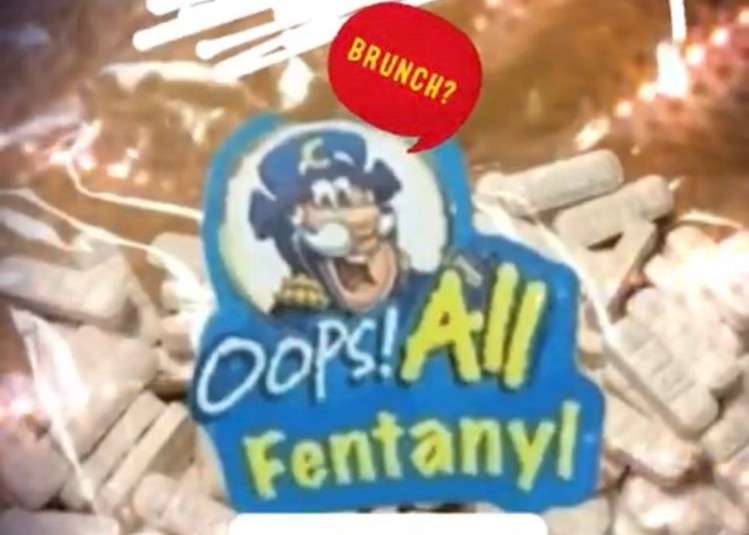
    An Ohio pub issued a public apology after parodying Cap’n Crunch with a joke menu item called “Oops! All Fentanyl.”

    Some jokes are best untold, as one restaurant and pub in Lakewood, Ohio is learning after a bungled social media post. On their Instagram account, the restaurant Yuzu posted a photo of a bag of fentanyl labeled “Oops! All Fentanyl” and “New brunch special? Sat & Sun.”

    The “joke” was likely referring to how many opioid drugs being sold have been unexpectedly cut with fentanyl, which has led to accidental fatal overdoses. Many Instagram users who saw it were not amused.

    “Screenshot from Yuzu Lakewood’s IG story. Not at all cool,” one person responded. “Making a joke of the opioid crisis is never funny ever.”

    The establishment’s owner, Dave Bumba, seemed to ignore the controversy his social media account created for about three days before finally responding on Facebook.

    “First, it’s never our intention to cause any malicious offense, and for that I do genuinely apologize for,” Bumba wrote in the post. “There’s a generational gap of humor; our target demo is 21 to 34. I’m aged out of our demo myself. Younger generations have developed a different sense of humor that more abstract, surreal, and darker than previous generations.”

    Bumba stopped short of calling the backlash a result of political correctness, instead turning into a meta-analysis of what’s a relatable coping mechanism versus what’s actually offensive.

    “It would be easy for me to blame this simply on an overly-politically-correct culture. A loud subset of people have been trained to seek out a reason to be offended. And while this might exist on some level, seeing some of the constructive criticism also made me think retrospectively about our social media content choices,” he posted. “Just because something exists and is perceived to be liked by enough of a subset of our demographic, does that make it the socially right choice to be relatable content?”

    Users considered the statement a non-apology, calling Bumba out on using a generational gap as cover.

    “Rather than sincerely apologizing for your offensive posts (which personally are not clever or funny and were in very poor taste), you backpeddle and still try to place blame on those you offended by implying they aren’t young or hip enough to get the joke,” wrote a user.

    Fentanyl has accelerated the number of deaths in the opioid crisis, hitting areas like Arizona especially hard. There, deaths from fentanyl overdoses have tripled between 2015 and 2017, mostly due to users believing they had a weaker opioid, like oxycodone, in hand.

    Street fentanyl is often disguised as legitimate prescription opioids, but these bootlegged pills are often made in primitive conditions with no quality control. And it only takes a little bit of fentanyl to send users into overdose.

    Users, including those of the targeted millennial demographic, have commented explaining why the joke wasn’t funny. Yuzu hasn’t posted anything further.

    View the original article at thefix.com