Tag: addiction treatment

  • Sisters On A Mission To Help People Who Are Unhoused, Living With Addiction

    Sisters On A Mission To Help People Who Are Unhoused, Living With Addiction

    The pair have sent nearly 200 people to rehab.

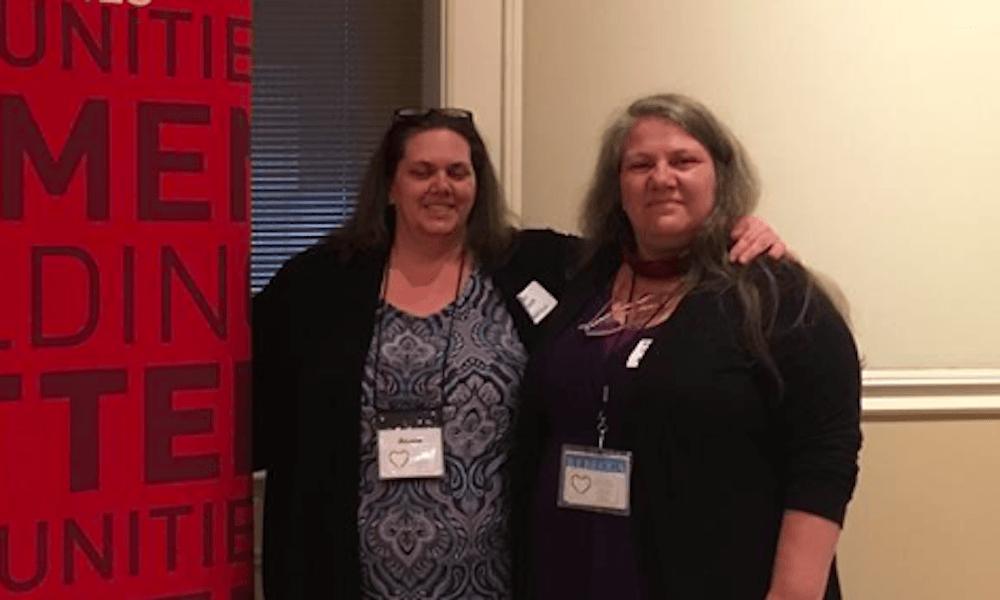
    Addie Arbach and Rebecca Parr may not have much, but they are passionate about serving the homeless and drug-using population in their community of Knoxville, Tennessee. Working under Next Step Initiative, which they founded in 2017, they make it work.

    The siblings provide everything from food, hygiene products, naloxone training, free rides (to the needle exchange for example) and most of all, love.

    “We love them until they either get treatment or they get it together, or they die, but at the end of their lives they’re going to know that somebody genuinely loved them,” said Arbach, who has been sober since 1989.

    Any Time, Any Place

    Arbach and Parr venture to any place, no matter how dangerous, to deliver sandwiches and Narcan to people they like to refer to as their “friends.” They do this to “build a relationship and a level of trust,” they told WVLT.

    And finally, if or when a “friend” is ready for change, the sisters will work hard to connect them to treatment. No matter how long it takes, or how many times a friend will fail, they are there with them back at square one.

    “It’s hard. This repetitive, falling back into addiction doesn’t mean to give up,” said Parr. “It just means it’s an issue, and how do we work around it? Well, you just keep coming and keep coming and keep coming. We don’t give up.”

    “We’re a bridge they can’t burn,” Arbach told the Knoxville News Sentinel.

    The two have sent nearly 200 people to rehab.

    The Next Step

    Next Step is growing, slowly but surely. They hosted a block party for their community twice this year, with a third planned for the fall in East Knoxville.

    At their block party last Saturday (July 20), at Sam Duff Park in South Knoxville, they provided food, entertainment, art and donated items, as well as a range of services including HIV and hepatitis-C testing, Narcan training, voter registration, wound care, child care, housing services and more.

    In August, they will welcome an AmeriCorps volunteer to their team, who will help them track and organize their data and apply for grants, the Sentinel reported.

    They’re hoping to someday add a van, a chest freezer and a washer-dryer to their arsenal to make their jobs easier.

    “We’re not just feeding people, we’re lining them up with services,” said Parr. “Our motto is ‘Come as you are.’ We keep them alive until they decide they’re worth (getting clean).”

    View the original article at thefix.com

  • Can Medication-Assisted Treatment Repair Damage Caused By Drug Use?

    Can Medication-Assisted Treatment Repair Damage Caused By Drug Use?

    Dr. Nora Volkow is testing this theory by studying the brain scans of people with opioid use disorder. 

    Over the past few years medication-assisted treatment (MAT) has become the standard of care for people with opioid use disorder, helping to cut users’ risk of fatal overdose by as much as half.

    Now, researchers from the National Institute on Drug Abuse (NIDA) are hoping to understand why. 

    NIDA director, Dr. Nora Volkow, has a theory. She believes that medications including methadone, buprenorphine and naltrexone don’t just help people deal with cravings for drugs. She thinks these medications also help repair the damage done to the brain by drug use, the AP reported.

    “Can we completely recover? I do not know that,” she said. However, people on medication-assisted treatment are “creating stability” in their brains, which allows the brains to react more normally to stimuli. 

    The Theory

    Volkow is testing her theory by completing brain scans on people with opioid use disorder. This includes people who are actively using, those in early recovery, and people on established MAT plans. Volkow and her research team are examining how people react to various stimuli—e.g. what reaction does a picture of a cupcake garner, for example, compared to a picture of heroin?

    The researchers are also doing other work to measure people’s impulse control with exercises like offering them $50 now or $100 in a week’s time. 

    “You need to be able to inhibit the urge to get something [to overcome addiction],” Volkow said. “We take for granted that people think about the future. Not when you’re addicted.”

    Volkow also wants to study how each medication affects people differently. For example, she suspects that buprenorphine will have more of an effect on mental and emotional health than methadone

    She expects to see big difference in the brain scans of people who use opioids, compared with those who are on medication-assisted treatment. 

    “You should be able to see it with your eyes, without having to be an expert,” she said.

    The Search For Participants

    Unfortunately the research team has struggled to find participants who are healthy enough to be considered. Research subjects cannot be on any medications that affect the brain other than their MAT regimen. 

    Overall, Volkow hopes that by better understanding medication-assisted treatment and how it can help people with opioid use disorder, scientists will dispel some of the myths and misunderstandings about MAT. 

    “People say you’re just changing one drug for another,” she said. “The brain responds differently to these medications than to heroin. It’s not the same.”

    View the original article at thefix.com

  • California To Vote On Certifying Peer Support Specialists

    California To Vote On Certifying Peer Support Specialists

    There are more than 6,000 peer support specialists working in California but without certification, their services are not reimbursable by Medicaid.

    Some consider peer support specialists to play a vital role in guiding people with mental health or substance use disorder toward recovery. According to advocates, only California and South Dakota lack a certification program for these peer support specialists—defined by SAMHSA as “people who have been successful in the recovery process who help others experiencing similar situations.”

    Without Certification, Peer Support Services Aren’t Reimbursable By Medicaid

    Currently there are more than 6,000 peer support specialists working in California, according to state Senator Jim Beall. But without being certified, their services are not reimbursable by Medicaid.

    For many people who have overcome their own histories of mental illness or substance use disorder, helping peers achieve the same outcome is vital work. “For many people, having a connection to someone else who’s had this experience proves vital,” Dr. Thomas Insel, a key mental health adviser to Governor Gavin Newsom, told California Healthline.

    Senator Jim Beall introduced legislation, SB-10, that would establish a certification process for peer support specialists in California—including required training, continued education and a code of ethics, according to Capital Public Radio.

    “We need to have client and family driven practices. We need to have the state recognize these individuals as professionals, as part of an interdisciplinary team, bringing them up to the standards that other licensed professionals have in California,” said Adrienne Shilton, Government Affairs director of the Steinberg Institute.

    SB-10 is headed to the California Assembly Health Committee after passing the State Senate with a unanimous vote in May.

    Prop 63 Funding Would Go Towards Developing The Certification Program

    Former Governor Jerry Brown vetoed similar legislation last year, citing the high financial cost of establishing a certification program. Under SB-10, the state would be able to use funding from Proposition 63 (the Mental Health Services Act) to develop and maintain the program, according to CPR.

    Advocates consider peer support specialists to play a vital role in the behavioral health care system. “Through shared understanding, respect, and mutual empowerment, peer support workers help people become and stay engaged in the recovery process and reduce the likelihood of relapse,” according to SAMHSA. “Peer support services can effectively extend the reach of treatment beyond the clinical setting into the everyday environment of those seeking a successful, sustained recovery process.”

    “At the moment of being ready to discharge, I had zero idea what I was doing,” said Eric Bailey, referring to his hospitalization after a mental health crisis in 2013. He had lost everything. But a stranger guided him to peer support work.

    “I was very grateful for that,” Bailey told CPR. “At that moment, I realized that there was something that I could do for myself as I was released from the hospital.”

    View the original article at thefix.com

  • New Jersey EMTs Now Allowed To Offer Suboxone After Overdose

    New Jersey EMTs Now Allowed To Offer Suboxone After Overdose

    New Jersey’s health commissioner said that getting people Suboxone as soon as possible could change the course of treatment at a critical moment. 

    The rising prevalence of naloxone has contributed to the first decrease in overdose deaths in decades, and now health officials in New Jersey are hoping to use medications to take an even bigger chunk out of the overdose death rate, by administering buprenorphine to patients almost immediately after an overdose.  

    The Initiative Is The First Of Its Kind In The U.S.

    The New Jersey initiative, announced in June, will allow EMTs to administer buprenorphine (brand name: Suboxone) to patients who have been treated for an overdose. This could reduce their feelings of withdrawal and give them more chance of connecting with long-term treatment. 

    “This comes out of left field, and it’s very interesting,” University of California professor Dr. Dan Ciccarone told STAT. “It’s a potentially brilliant idea.”

    Doctors need a special waiver to prescribe buprenorphine, but under the New Jersey initiative EMTs would be able to give a dose with permission from the emergency room doctors that they work under, as long as those doctors hold the waiver.

    EMTs Can Give A Dose Of Suboxone With Permission From ER Doctors

    Then, a patient could be connected with a doctor who can prescribe the treatment long-term and help connect the patient with over recovery supports. Ciccarone said that removing the initial barrier to buprenorphine could become the standard of care. 

    “Here we are basically suggesting that we’re going to treat the person in as well-meaning and patient-centric a manner as possible,” he said. “And that means naloxone plus a softer landing with buprenorphine.”

    Shereef Elnahal, New Jersey’s health commissioner, said that getting people buprenorphine as soon as possible could change the course of treatment at a critical moment. 

    “We had a lot of paramedics telling us that someone would be in an ambulance, knocked out, and then receive naloxone, and they would run out of the ambulance,” Elnahal told The Atlantic. Giving buprenorphine after naloxone could reduce withdrawal and make people more receptive to care. 

    “Buprenorphine is a critical medication that doesn’t just bring folks into recovery – it can also dampen the devastating effects of opioid withdrawal,” Elnahal said in a statement. “That’s why equipping our EMS professionals with this drug is so important.”

    James Langabeer, a researcher at the University of Texas Health Science Center at Houston, said the program has promise, but will also require EMTs to integrate new decision-making protocols around medication-assisted treatment. He added that the initiative will only really make a difference if overdose victims are connected with long-term care. 

    “It’s a really positive first step — but the next step is the next day,” he said. “They’ve got to be linked to continuing treatment.”

    View the original article at thefix.com

  • Relapse for Cash: How Patient Brokers and Unscrupulous Rehabs Prey on Addicts Looking for Help

    Relapse for Cash: How Patient Brokers and Unscrupulous Rehabs Prey on Addicts Looking for Help

    Patient brokers know there’s more money in relapse than in getting people sober.

    If you think patient brokering, also known as “body brokering,” is just about “professionals” getting kickbacks for referring a client to a certain rehab, you are wrong. It’s much more complicated and sinister than that. I did a deep dive and interviewed the head of a watchdog group, a rehab counselor, a rehab business development guy, and the head of an ethics association to try to get the full picture. And despite patient brokering being officially illegal in California and Florida since January, it’s still terrifyingly prevalent.

    I was first prompted to write this piece after an experience with a sponsee. She was in a sober living and was offered money by another client at the house to relapse and then check into an upscale rehab. Because you must test dirty for your insurance to start over and cover treatment, she got loaded and was shipped off to a fancy Malibu rehab for a week. She was ecstatic. 

    Recovering Addicts Preying on Other Recovering Addicts

    Of course, soon she was sent to a shitty sober living which she described as a “flop house.” Thankfully she didn’t die during the relapse, and she didn’t get her money either. The “body brokers” in this case, recovering addicts preying on other recovering addicts, ran off with the kickback money they got from the rehab as well as the money they were supposed to give my sponsee. If this sounds bad, it gets worse. 

    I spoke with David Skonezny, the admin for the closed Facebook group “It’s Time for Ethics in Addiction Treatment.” As Skonezny moved through the ranks of drug and alcohol counseling, eventually becoming the COO of a treatment center, “body brokering,” an open secret in the business, came to his attention. He started the group to “separate the wheat from the chaff” and to identify the people he wanted to work with to create a solution for the myriad problems plaguing the profession; however, he underestimated how pissed off and hurt people were. 

    “It quickly ended up being a referendum of sorts on addiction treatment as people started posting snapshots of text messages, naming names… It got really deep really fast.” As a result, one of the moderators of the group set up a site that provided a comprehensive list of agencies for the reporting of illegal and unethical activity, including credentialing and accreditation bodies, law enforcement, state agencies, and insurance investigators. People can now report the facilities as well as the brokers engaging in this illegal and unethical behavior. That site is: Ethics in Treatment (www.EthicsInTreatment.com).

    “Body Brokers” Buy and Sell Patients

    As Skonezny explained to me, in the referral game it’s about buying clients. Initially a treatment center might pay perhaps $10,000 for a client (that figure has dropped substantially as a result of immense competition), but it was worth it because you could bill the insurance for six figures over the course of a treatment episode. As it became harder to acquire clients this way, body brokers and rehabs started to offer other inducements such as air travel to treatment, clothes, cell phones, and cigarettes. And because people with these premium insurance policies are hard to find, brokers would find a prospect and then buy the policy for them. The rehab pays the first month’s premium, and then once the insurance is active, bingo. 

    Once the benefits are exhausted, however, the client gets kicked out, usually with nowhere to go and no return ticket home, and ends up homeless and desperate. But now they know the drill. They realize if they get loaded, they’re eligible for treatment again and can go back into rehab. This revolving door, “going on tour,” as Skonezny calls it, became a common strategy for both the brokers and the clients in order to maintain free housing, food, and other perks. 

    “This has created an artificial recovery community in Southern California, particularly in Orange County where kids are getting flown in and then kicked out. At one point it created a massive homeless population of young addicts, especially in Costa Mesa,” Skonezny told me. Some of those kids die on the streets, some go home, some keep cycling through treatment. 

    How did we get to this place? I asked. Well, when the Affordable Care Act went into effect, behavioral health issues, including mental health and addiction, became essential medical services. 

    “This created an unprecedented availability for people to get insurance coverage, and people who wouldn’t have otherwise had an opportunity to go to treatment now could,” Skonezny explained. “This should have been a good thing, except that with addicts flooding addiction centers, the owners and others began to realize that there was a lot of money to be made.”

    There are two types of insurance policies: an HMO, where you need a referral from a primary doctor and must go to a place in network, and a PPO, where there’s no referral necessary and because it’s out of network, there are no contracted or set rates. Rehabs want the PPOs. They can charge whatever they want, and they do. They can bill the insurance for ridiculous amounts for daily services ($2,500 for a daily session from a PPO vs. $300 from an HMO) including huge charges for urine tests.

    Alumni Get Kickbacks for Bringing in New Patients 

    Soon insurance companies got wise to the game and began reducing the financial reimbursement to rehabs, as well as the length and level of care they would allow. As a result, the rehabs were making less money and thus needed to up their referral game even more, so they got their alumni involved. Newly sober addicts who have been in a 12-step program have access to a network of possible patients: newcomers in meetings. These newly sober ex-clients start getting kickbacks from rehabs to bring in new clients. And then those clients do the same once they get out of treatment. Now you have a new cycle: predators creating predators. 

    Eventually, those people who were cycling through treatment stopped getting authorized for the higher levels of care, but they were still being okayed for intensive outpatient treatment (IOP). So IOPs began to get swarmed with clients, but these clients needed a place to live. To fill that need, sober living residences started popping up all over the place. Therein lay the beginning of kickbacks between IOPs and sober livings. 

    “So now we have this massive infrastructure that needs to be fed. With less clients at higher levels of care, rehabs start charging for urine testing they’re not doing and getting kickbacks from labs. Even sober livings who have no right to bill insurance for testing clients start hooking up with labs and getting kickbacks,” Skonezny said.

    The people engaging in these practices are not necessarily predators by nature, Skonezny says. They are typically new to recovery and still fighting old demons and dealing with underlying trauma or other psychiatric conditions. “I think initially most people (with the exception of some of the more predatory ones) that get into this profession are well intentioned, but then greed takes over, or perhaps fear, and they begin to cut corners and engage in unhealthy, unethical, illegal behaviors.”

    There’s More Money in Relapse Than Getting People Sober

    Skonezny pointed out that all of it—treatment, sober livings, urine testing—has roots in legitimacy, but here’s the ugly truth: there’s more money in treatment than there is in recovery. There’s more money in relapse than in getting people sober. 

    Chuk Davis has 21 years in recovery and has been working in this business for over a decade. He is currently a counselor at Wavelengths Recovery and he has seen patient brokering first-hand and from the inside.

    Davis explained to me the phenomenon of “client advocates.” The “advocate” calls a treatment center and says, “We have somebody who’s a really good fit for your program.” They then charge a “finder’s fee,” which was outlawed in January. “Unless you are part of the organization, you cannot be a paid recruit for the organization.” he said.

    “These client advocates are really entrepreneurs: 25-year-old kids driving $50,000 cars,” Davis clarified. “Turns out they were bribing the client to come to treatment with money and a $500 gift card… The idea was they were doing some sort of vetting, but they weren’t. They were getting a fee from the center and then bribing the clients to go to treatment.”

    Prior to this practice, treatment centers would contract with call centers, which would take leads and then charge the facility a certain amount of money for any lead they took. That too is now illegal.

    “I’ve seen people come into treatment who say they are drug addicts but they test clean immediately. They give us some bullshit story that they already got clean but need help maintaining their sobriety. Soon enough they are paying a bunch of clients to leave and go to some other treatment center that they’re probably getting a kickback from,” Davis said. “Unfortunately, two of the people that were pulled out of treatment like this ended up getting loaded and dying.”

    If Treatment Centers Don’t Pay for Patients, There’s No More Patient Brokering

    Davis is hopeful that the new laws regarding patient brokering will thin the herd, and the super shady people will get pushed out. “I mean they have people talking to the local homeless and offering them $1,500 to go to some place in Long Beach for ten days. Of course those guys are going to go. In the end it’s the kids that really want help that are getting fucked.”

    I next spoke with Zach Snitzer, the co-founder and director of business development at Maryland Addiction Recovery Center

    His take on patient brokering was a little different. “Patient brokering goes further than simply paying for patients. In my mind, it includes things like waiving insurance deductibles, website and call aggregates, free sober living thanks to the high payment for lab tests; not simply paying someone $1,500 to go to treatment.”

    Snitzer’s answer to the brokering problem is simple: “If treatment centers don’t pay for patients, there’s no more patient brokering. If you take down the treatment centers that are doing patient brokering, then patient brokering goes away.” He’s adamant that we not only prosecute the patient brokers themselves, but the facilities engaging in it as well. 

    Snitzer echoed Skonezny’s observations that it’s not money-hungry crooks infiltrating the treatment industry to take advantage of people who need help, it’s people who are already here: “The patient brokers are typically people who are early in sobriety or people who were once patient brokered themselves.”

    “You should be piss testing us more than you are…”

    Snitzer has seen many patients who are hip to the hustle, asking what the facility is getting reimbursed, and having an insider’s knowledge of diagnostic codes. “When you have clients saying, ‘You should be piss testing us more than you are,’…well, no wonder they can’t get better.” Usually patients like that—who are already caught up in the game—don’t stay long in treatment, he said. They’re rarely initially willing to get better; for them there’s no money in getting sober.

    Snitzer agreed that the ACA was a contributing factor to the problem but added that referral fees were happening way before insurance. “It’s a decades-old industry but it’s still very wild wild west. There needs to be more regulation in the industry. People seem terrified that if they don’t self-regulate, an outside agency will come in. But there are lots of industries that are regulated by outside agencies and organizations thrive in those environments.”

    And state licensing is simply not thorough enough. “They don’t look at the whole scope of the organization. They don’t look at admission processing, urinalysis policies, or marketing practices… they look at hand washing stations and fire extinguishers.”

    “Part of the problem is that addiction is a disease and rehab facilities are actually healthcare organizations and want to be paid and respected as such, yet they often don’t have programs that are offering evidence-based care,” Snitzer said. 

    “We can’t even agree as an industry about what ‘success’ looks like. Is it sobriety? That used to be what success looked like. But can that be the standard anymore? Not everyone who enters treatment is a hopeless variety alcoholic as defined by the 12 steps, and therefore maybe they don’t require lifelong sobriety to achieve a high quality of life. What about an 18-year-old kid with trauma who’s self-medicating to cope or dealing with a psychiatric issue? Do they need sobriety?” 

    Snitzer believes the results of effective treatment can’t be measured by the same set of criteria for everyone: “We need to figure out what a successful outcome for that person is, and it has to be defined by quality of life, and not just sobriety.”

    He’s also witnessed the bribing from other facilities: vans pulling up with gift cards and other goodies, coercing patients to come to their facility in whatever way they can. “We take our clients to outside meetings and they’re approached by poachers offering to fly them out to California, claiming they have ‘music connections,’” Snitzer complained.

    When I asked him how Maryland Addiction Recovery Center manages to stay ethical amidst all this, he was frank. “We don’t expand above our means. We keep things a size that’s manageable. We all started working at an ethical place [Caron]. In the mentorship we got, this kind of stuff doesn’t happen. Granted we opened in a place where there aren’t hundreds of rehabs like Florida or California. When we started, there were just a few IOPs and a few residential places but not a true extended care.”

    What’s the Solution to Patient Brokering?

    So now you’re well versed in the problem. What’s the solution?

    Andrew Powers is in long-term recovery and has worked in the treatment field for eight years. While working for a center based in both Colorado and Maryland, he noticed several differences between the locations. Colorado treatment professionals worked in a very collaborative, transparent environment while those in the DC Metro area were more closed off. 

    “The cultures were drastically different,” Powers told me. He saw that people were talking shit about each other, and he thought, “Let’s raise the bar for the individuals representing treatment programs because people are receiving care at these unethical centers whether you agree with what they do or not.”

    To accomplish this goal, he created the D.C.-Maryland-Virginia Professional Liaisons Association (DMV PLA), a regular forum for business development professionals, admissions representatives, marketers, and others that “focuses on the professional development of those working in these roles.” 

    Unlike other PLAs, which Powers found were often about referral generation and schmoozing, the DMVPLA would aim for a higher standard.

    “We are working on a membership similar to NAATP [National Association of Addiction Treatment Providers], but rather than for the provider it is for the individual, which folks will be able to apply to be a part of and then held to an ethical standard of conduct,” he said. “It will be community-based at first and then we can roll it out from there… if it makes sense to do so.”

    “In our field there are very limited forums for individuals working as business development, or in admissions, to receive professional development… In fact, most organizations don’t even invest in their own employees’ growth or train them on ethics at all,” Powers explained, emphasizing again that his organization is not for networking. 

    Like Skonezny and Snitzer, Powers acknowledges these brokers didn’t start out as predators, but that after they learn what’s going on they have an obligation to do the right thing. “There are people with good hearts and intentions working for these unethical programs, but some don’t know better,” he said. “[We’d have to tell them] ‘That thing you just saw go down, that is illegal.’ And they say, ‘Well I didn’t know it was illegal, I wasn’t trained when I got hired!’ Well now you know.”

    Addiction Treatment Must Police Itself from the Inside

    Powers was clear that the industry must continue to police itself from the inside. There is only so much that outside bodies can do. “People need to speak up and stop pointing fingers behind people’s backs. The term ‘marketer’ is almost synonymous with felon at this point… Let’s move toward a solution and gain the respect that our profession and roles deserve,” he urged.

    The DMV PLA has received support from NAATP and others, but it’s still a work in progress. They have a lot of people reporting “well I heard…” and with that kind of vague info, their hands are tied. 

    Since so many people are afraid to come forward lest they lose their jobs, Powers would like to have a confidential suggestion box where people can submit anonymously and then they’ll confront that person. 

    Powers was humble in saying that “the DMV PLA is nothing special… just good people who came together in the community to try and make a difference in the profession, and ultimately in the lives of those seeking treatment… this can happen anywhere.” 

    Let’s hope it does. 

    View the original article at thefix.com
  • Meth And Opioids: Exploring The Dual Addiction

    Meth And Opioids: Exploring The Dual Addiction

    Researchers speculate that meth has become a more viable option as the price of heroin has risen and opioid painkillers are harder to get.

    The number of people who are addicted to both opioids and methamphetamine is rising, particularly in the West of the country, complicating recovery efforts and leaving users even more at risk. 

    “You’re like a chemist with your own body,” said Kim, a former meth and heroin user who spoke to NPR. “You’re balancing, trying to figure out your own prescription to how to make you feel good.”

    Kim has been in recovery for a year, and her experience of trying to get off both heroin and meth is becoming more common. In San Francisco, 22% of people who use heroin starting rehab said they also had a problem with meth; that’s up from 14% in 2014. 

    University of California professor Dr. Dan Ciccarone, who teaches family community medicine, said that is a very high rate. 

    “That’s alarming and new and intriguing and needs to be explored,” he said. 

    While heroin and cocaine — a speedball — is traditionally a more common drug combination, using meth and opioids is an odd choice, he said. 

    “Methamphetamine and heroin are an unusual combination” that makes people feel “a little bit silly and a little bit blissful,” he said. 

    For Amelia, who has also been in recovery from heroin and meth addiction for a year, using both drugs was a matter of survival. She started using heroin to keep up with work. When that became too expensive, she turned to meth

    “The heroin was the most expensive part. That was $200 a day at one point. And the meth was $150 a week,” she said. 

    A study published in December 2018 found that 34% of heroin users said they also use meth. In 2011, only 19% of heroin users took meth as well. Researchers speculated that as opioids became harder to come by and heroin more expensive, drug users turned to meth, which is cheaper and more readily available, especially in the west. Meth — an upper — can also help people feel and function more normally despite using opioids. 

    “Methamphetamine served as an opioid substitute, provided a synergistic high, and balanced out the effects of opioids so one could function ‘normally,’” study authors wrote. 

    However, for Kim, the progression went from meth to heroin, not the other way. 

    “I thought, ‘Oh, heroin’s great. I don’t do speed anymore.’ To me, it saved me from the tweaker-ness,” she said. 

    No matter which drug comes first, the San Francisco Department of Public Healths’ Director of Substance Use Research, Dr. Phillip Coffin, said there is certainly a connection between opioid and methamphetamine use. 

    “There is absolutely an association,” he said. 

    View the original article at thefix.com

  • Outreach Vans Increase Sobriety, Survival For People With Addiction

    Outreach Vans Increase Sobriety, Survival For People With Addiction

    The mobile outreach program provides Suboxone prescriptions, syringe exchange, health screenings, disease management and other free services for individuals who are homeless and struggling with addiction.

    The CareZONE van in Massachusetts is providing treatment and hope to those with addiction who are experiencing homelessness. Funded by The Kraft Center for Community Health at Massachusetts General Hospital and the GE Foundation, the goal of the program and the van is to bring preventative health care, addiction treatment, and harm reduction services to any person with addiction who wants it.

    There are only six or so of these mobile treatment programs around the country, testing the effect of their services on the rate of overdose and recovery in the community.

    The CareZONE van provides an impressive range of free services, including in-patient detox, medications for addiction treatment (such as Suboxone), Naloxone (Narcan), syringe exchange, health screenings, disease management and more. 

    WYBR reported that the CareZONE team consists of experienced outreach workers, doctors and case managers. Dr. Jessie Gaeta, chief medical officer with the Boston Health Care for the Homeless Program, works with compassion and patience as she earns the trust of her patients.

    “We’re trying to let people know we’re not there to arrest them. We’re not there to clean up their encampment and kick them out,” Gaeta told WYBR. “All we want to know is, do we have something you need and want, and if we do, great, here it is. And so we gradually build a relationship that way.”

    If the patient is willing, Gaeta treats infected injection sites, checks for heart and lung infections (common with certain drug addictions), and offers vaccinations as well as buprenorphine (the active ingredient in Suboxone), a drug that reduces opioid cravings. If Gaeta believes the patient may have a more serious condition, she requests that they come back to the van for a more extensive check-up.

    According to those involved, the CareZONE van has been successful. WYBR reported that in its 18-month lifespan, 316 prescriptions for Suboxone have been supplied from the Care Zone van, and 90% of them are filled, with 78% of those being refills.

    Dr. Andrew Kolodny, co-director of opioid policy research at Brandeis University, told WYBR that he believes this could be a solution. 

    “Once [they’re] in every county in the United States, there’s a place somebody can go and get started on treatment for free, that same day,” Kolodny affirmed, “that’s when we’ll really start to see overdose deaths come down, significantly.”

    View the original article at thefix.com

  • Focus On Opioids Leaves States Struggling To Find Money To Treat Other Addictions

    Focus On Opioids Leaves States Struggling To Find Money To Treat Other Addictions

    Restricting funds to covering opioid-related treatments mean that some treatments will become more easily accessible while others remain hard to come by.

    Although the phrase “opioid epidemic” has become mainstream, experts on substance use disorder say that the country’s drug problem is about more than just opioids, and states are struggling to adequately address that with federal funds that have been earmarked specifically for opioid-related interventions. 

    “Even just the moniker — ‘the opioid epidemic’ — out of the gate, is problematic and incorrect,” Northeastern University professor Leo Beletsky, who teaches law and health sciences, told NPR. “This was never just about opioids.”

    Still, much of the $2.4 billion that the federal government has sent to states since 2017 has come in the form of grants that require states specifically address opioid use. Even the names of the federal grant programs make show their focus on opioids: the State Targeted Response to the Opioid Crisis and State Opioid Response are two major sources of funding. 

    That has left people like David Crowe looking for other options for funding to do more comprehensive drug use prevention. Crowe is the executive director of Crawford County Drug and Alcohol Executive Commission in Crawford County, Pennsylvania. He says that opioids are a major factor there, but so is methamphetamine, and he needs funds to address that as well. 

    “Now I’m looking for something different. I don’t need more opiate money. I need money that will not be used exclusively for opioids,” he said. 

    Opioids remain a prevalent problem, but in 11 states that class of drugs were responsible for less than half of opioid overdose deaths, according to data from the Centers for Disease Control and Prevention. 

    Restricting funds to covering opioid-related treatments mean that some treatments will become more easily accessible — like medication-assisted treatment for opioid use disorder. Yet, interventions for other drugs, like methamphetamines, might continue to be hard to come by. 

    This is especially concerning since use of specific drugs tends to come and go, while pervasive drug use continues nationally, said Bertha Madras, a professor at Harvard Medical School and former member of the President’s Commission on Combating Drug Addiction and the Opioid Crisis.

    “I think we have to really begin to self-examine why this country has so much substance use to begin with,” she said. 

    Still, proponents of the programs say that even opioid-targeted funds can help address gaps in the treatment of mental illness and addiction. Those gaps contribute to the use of all drugs, including opioids, according to Marlies Perez, a division chief at the California Department of Health Care Services. 

    “This funding is dedicated to opioids, but we’re not blindly just building a system dedicated just to opioids,” Perez said. 

    View the original article at thefix.com

  • How to Find the Best Rehab for Co-Gesic Addiction

    How to Find the Best Rehab for Co-Gesic Addiction

    If you’re struggling with the life-altering impact of Co-Gesic addiction, the number one topic on your agenda should be treatment in a reliable, effective substance program.

    Table of Contents

    1. What is Co-Gesic and Why is it Prescribed?
    2. Development of Hydrocodone Dependence
    3. Development of Hydrocodone Addiction
    4. Detoxification Starts Your Recovery From Addiction
    5. Inpatient or Outpatient Treatment?
    6. Effective Treatment Plans
    7. Finding the Best Treatment Facilities

    Finding the Best Treatment FacilitiesOn any given day, you may see dozens of these rehab programs advertised online, in print or on television. With so many options, how do you determine which facilities offer you the best chance of a sustainable recovery?

    To make effective choices, you must have the information needed to make educated decisions. Fortunately, it doesn’t take long to ground yourself in the basics of Co-Gesic addiction and appropriate addiction treatment. With knowledge on your side, you can do more than just pick an adequate rehab destination—you can pick a first-rate rehabilitation facility that does everything possible to help you succeed.

    What is Co-Gesic and Why is it Prescribed?

    Co-Gesic is the brand name of a prescription drug that contains two active ingredients: the opioid painkiller hydrocodone and the non-opioid painkiller acetaminophen. It belongs to a large group of combination medications based on the same two substances. Co-Gesic comes in the form of a tablet, which is available in two strengths.

    The medication’s hydrocodone content produces its primary effects by changing the way that pain signals travel between your brain and body.  At the same time, it produces a significant increase in feelings of pleasure, as well as sedation (reduced feelings of agitation). The acetaminophen in Co-Gesic also provides relief by altering your normal perceptions of pain. In addition, it lowers your body temperature.

    Doctors prescribe Co-Gesic for the treatment of pain that ranges in intensity from moderate to moderately severe. Current federal laws include the medication on a register of controlled substances known as Schedule III. All substances listed under this heading have a “moderate to low” potential to trigger physical dependence and addiction.

    The list of combination products that also contain both hydrocodone and acetaminophen includes Vicodin, Hycet, Lorcet, Liquicet, Lortab, Norco, Maxidone, Zydone, Zolvit and Xodol. Products that combine hydrocodone with other active ingredients include the non-expectorant cough medications Ru-Tuss, Vicodin Tuss and B-Tuss.

    There is apparently no specific street name for Co-Gesic. However, medications that contain hydrocodone are sometimes known by names such as:

    • Vikes
    • Hydro
    • Watsons
    • Tabs

    Opioid Overdose Risks

    If you take too much Co-Gesic in a given span of time, you may experience a non-lethal or lethal opioid overdose. This situation occurs when the medication’s hydrocodone content slows down your central nervous system too far for it to maintain its basic function. (Some people are unusually sensitive to the drug effects of hydrocodone. In these circumstances, even a standard level of intake may trigger the same harmful reaction.) The most common symptom of overdose in Co-Gesic users is respiratory depression. Doctors use this term to refer to a slow and/or irregular pattern of breathing that may not supply you with adequate amounts of oxygen.

    You can increase your chances of overdosing by mixing your medication with alcohol or benzodiazepines on any occasion. That’s true because the added effects of these substances will make your nervous system run slower still. Your risks for an overdose escalate even further if you combine a pattern of hydrocodone abuse with a pattern of benzodiazepine or alcohol abuse.

    Development of Hydrocodone Dependence

    As a Schedule III substance, Co-Gesic does not carry a high risk for physical dependence. However, a very real risk still exists. Hydrocodone dependence occurs when your brain’s chemical environment shifts and comes to expect a certain amount of the medication throughout the day. Failure to receive this accustomed intake can lead to the onset of something called opioid withdrawal.

    When this form of withdrawal begins, you may experience symptoms that include sleep problems, unusual yawning and heavy sweating. You may also experience effects such as achy muscles, a persistent runny nose and increased tear production. Later on in the withdrawal process, notable effects that may appear include nausea, vomiting, pupil dilation and bowel or abdominal distress.

    Opioid dependence is distinct and separate from opioid addiction. If you become dependent on hydrocodone, your doctor can manage your medication use and help you stay away from any kind of serious harm. In this way, you can remain functional, live your life and avoid the serious problems that characterize the presence of addiction.

    If you abuse any product that contains both hydrocodone and acetaminophen, you also run the risk of developing serious health problems that have nothing to do with dependence or addiction. That’s true because acetaminophen can damage your normal liver function if you take too much of it. In extreme cases, this damage can be extensive enough to trigger the need for a liver transplant. In a true worst-case scenario, it can even kill you.

    Development of Hydrocodone Addiction

    In contrast to cases of dependence, cases of addiction are marked by uncontrolled actions and behaviors that have a major, negative effect on your ability to stay mentally and physically well. Chances are you will avoid any risk for addiction-related problems if you have a legitimate prescription for Co-Gesic and use the medication as directed. However, your risks will rise if you abuse hydrocodone/acetaminophen in any way.

    There are several potential ways to abuse prescription medications. If you hold a current prescription from a doctor, abuse occurs if you do either of two things: take your medication too often or take more than instructed in individual doses. Some people combine these two forms of abuse. Abusive intake of a prescription drug also occurs whenever someone without a prescription takes any amount of that drug.

    Addiction specialists and other medical professionals can diagnose a condition called opioid use disorder in people who develop serious, opioid-related substance problems. You can meet the terms for this disorder if you don’t have symptoms of addiction, but still experience significant harms that stem from your hydrocodone abuse. Possible symptoms of these harms in people who take Co-Gesic include:

    • A recurring pattern of using the medication excessively when involved in activities that could cause you to injure yourself or someone else
    •  A level of medication intake that makes it difficult or impossible to live up your responsibilities in any major area of life
    • A level of medication intake that you maintain even though it disrupts your ability to keep important relationships intact

    Clinical addiction to Co-Gesic also produces a classic set of potential symptoms. These symptoms may include things such as:

    • Experiencing strong cravings for continued medication abuse
    • An established pattern of taking hydrocodone/acetaminophen too often or in overly large amounts
    • A history of poor results when trying to limit your intake of the medication
    • Setting up your daily routine to accommodate your need to buy the medication, use it or recover after using it
    • Diminishing drug effects from any typical dose of hydrocodone/acetaminophen (a phenomenon also known as tolerance)
    • A pattern of abuse that you continue despite knowing that it hurts you physically and/or mentally
    • Opioid withdrawal symptoms that appear if you rapidly decrease your typical dose or stop taking the medication altogether

    Damaging abuse and addiction are not completely separate aspects of opioid use disorder (or any other type of substance use disorder). You can develop symptoms of both of these problems at the same time. In fact, such a symptom overlap is quite common.

    To be diagnosed, you must have two or more symptoms of addiction or serious abuse within a single 365-day window. If you have no more than three total symptoms, your case will be considered mild. Moderate opioid use disorder involves four or five abuse/addiction symptoms, while severe cases involve six or more.

    You may sometimes hear Co-Gesic-related hydrocodone addiction referred to as Gesic addiction. However, this term is not strictly accurate. The words gesic and analgesic can be applied to any substance capable of relieving pain. For this reason, many medications have “gesic” in their name. Among other things, this means that the terms Gesic addiction  and Gesic rehab could be used to describe problems with other substances, not just hydrocodone.

    Detoxification Starts Your Recovery From Addiction

    Safe, effective recovery from hydrocodone addiction begins with a period of medical detoxification. Detoxification has two overlapping objectives. First, it’s designed to break your current habit of excessive medication use. At the same time, the process provides the time needed for your body to eliminate the accumulation of Co-Gesic already in your system.

    You might think that you can just go “cold turkey” and stop your medication abuse on your own. However, in reality, there are several good reasons for enrolling in a detoxification program instead. First, if you halt your addiction-supporting hydrocodone use all at once, you will quickly go into opioid withdrawal. And depending on factors such as your level and duration of addiction, those withdrawal symptoms can take a severe form. In turn, the degree of mental and physical misery triggered by your symptoms may be enough to encourage you to relapse and give up your recovery efforts.

    During supervised medical detoxification, your withdrawal symptoms will be monitored. In some cases, your doctor may be able to ease those symptoms with a medication called lofexidine (Lucemyra). You’ll also receive supportive care to maximize your comfort. Together, these services help reduce the discomfort of withdrawal and increase your chances of completing the detoxification process.

    Supervised detoxification also safeguards your health during opioid withdrawal. If any unforeseen complications should arise, you’ll have ready access to medical assistance. This margin of safety can be critical in emergency situations.

    There is another major danger to going through detoxification on your own. If you make it even partway through the process, your tolerance to the drug effects of opioids will decline by a considerable amount. A relapse at this stage of detoxification can have catastrophic consequences. That’s because a dose of Co-Gesic that you normally used in the past may now have a much bigger impact on your central nervous system. If that impact is too great, you may find yourself facing an overdose. Every day, someone in the U.S. dies in exactly this kind of scenario.

    Finally, detoxification does one other crucial thing. Namely, it prepares you for participation in an active course of addiction rehabilitation. This is important because all public health officials and addiction experts view rehab enrollment as an essential next step after detoxification comes to an end. Unless you take this step, you’ll have serious chances of relapsing, even if you’ve succeeded in reaching an initial state of sobriety.

    Inpatient or Outpatient Treatment?

    Rehabilitation from Co-Gesic problems can take place in any one of several settings or facilities. If you have severe symptoms (and/or other serious health problems) that pose a clear risk to your short-term well-being, rehab may be preceded by some type of hospitalization. However, this is not required for the vast majority of people. Instead, you will start your treatment in an inpatient rehab program or an outpatient rehab program.

    Inpatient programs take place in residential treatment centers. While participating in this kind of rehab, you must leave home temporarily and live at your chosen facility. During your stay, you’ll follow the plan of treatment devised by you and your rehabilitation team. You’ll also receive round-the-clock monitoring of your vital signs and other key aspects of your health. If an emergency arises, onsite staff will be there to help you as soon as possible. And if your doctor needs to adjust your current treatment, that change can be made with little or no delay. For all of these reasons, experts in the field view inpatient rehab as the most effective approach to recovery.

    Most people with moderate or severe symptoms of opioid use disorder are steered toward inpatient treatment from the very beginning of rehab. On the other hand, if you have mild symptoms of this disorder, you may choose to enroll in an outpatient program. Rehabilitation programs of this type serve the same basic purpose as inpatient options. However, they provide greater flexibility and convenience by allowing you to remain in your home during treatment.

    Despite the benefits, there are tradeoffs to outpatient rehab. For example, if you remain in your normal, day-to-day environment while receiving care, you may face exposure to situations and influences that boost your chances of abusing hydrocodone. Even if you don’t have to deal with these kinds of direct problems, the outpatient approach can increase your exposure to everyday stress. In turn, this stress can disrupt your ability to focus on your recovery.

    You should also know that inpatient treatment is sometimes considered a must for people with mild symptoms. That may especially be the case if you suffer from a serious mental illness in addition to your substance problems. The combination of these issues, known as dual diagnosis or co-occurring disorders, introduces a whole new level of difficulty into the treatment process. In these circumstances, inpatient facilities often provide the only available setting for safe, effective care.

    Effective Treatment Plans

    Whether hydrocodone or some other substance plays a role in opioid use disorder, the same basic treatment approach is used. That approach has two main parts: medication and forms of psychotherapy designed to help you change your addiction-supporting behaviors. Two of the approved, proven medications used to provide help are buprenorphine and methadone. Both of these treatment options are themselves types of opioids.

    It might seem scary or foolish to rely on opioids to treat hydrocodone addiction. However, controlled use of these medications in Co-Gesic or Gesic rehab is far different from the uncontrolled use that supports serious substance problems. To begin with, the doses of methadone or buprenorphine you receive will not make you feel “high.” In addition, they will not promote a pattern of abusive opioid consumption. Instead, both of these medications help you avoid abusive intake, while also making the withdrawal process easier to withstand. Some programs will taper your intake of buprenorphine or methadone to zero before your treatment ends. Others will bring you to a low, stable maintenance dose instead.

    If detoxification proceeds to a point where there are no opioids left in your system, your treatment plan may also include the prescription drug naltrexone. Once you take it, naltrexone shuts down the chemical mechanisms that opioids must use to reach your brain. In this way, it makes intake of those substances unrewarding as long as it remains in your bloodstream.

    Behavioral therapies can support your recovery process in a number of ways. The methods used to help people with opioid problems include:

    • Motivational interviewing
    • Cognitive behavioral therapy
    • Community reinforcement approach (CRA) plus vouchers
    • Contingency management
    • 12-step facilitation
    • Family behavior therapy

    Motivational interviewing is used to help you overcome any objections or reservations you have about participating in treatment. Therapists who use this technique take a stance called reflexive listening. This means that they actively engage with you instead of just giving one-way advice. In addition, motivational interviewers help you see how your behaviors can make your stated goals harder to reach. They also work with you to help you find treatment success on your own terms.

    In group or individual cognitive behavioral therapy, you start by learning more about the ways you’re affected by your substance problems. From there, you learn how to identify specific things you think or do that can increase your chances of abusing hydrocodone or other opioids. Next, you learn effective ways of countering those thoughts and behaviors so you can make better choices in moments of stress.

    Community reinforcement approach plus vouchers and contingency management are separate therapy options that rely on some of the same techniques. In CRA plus vouchers, the focus is on valuable vouchers that you receive when you remain substance-free during treatment. Contingency management also sometimes uses vouchers to help you remain substance-free and follow your program guidelines. It may also encourage the same kinds of compliance by giving you a chance to win prizes in the form of cash.

    The goal of 12-step facilitation is to encourage you to follow up or combine your time in Co-Gesic or Gesic rehab with enrollment in a 12-step mutual self-help group. To achieve this goal, facilitators introduce you to some of the key aspects of 12-step groups (including acceptance and surrender). Participation in a mutual self-help program may reduce your risks for relapsing back into opioid use.

    Family behavior therapy views opioid addiction as a family-wide issue, not just an issue affecting you as an individual. During this form of treatment, you and your loved ones discuss any and all topics that may be contributing to a dysfunctional home life. You will also learn ways you can change your current behaviors and create an environment that doesn’t support or promote substance abuse.

    Finding the Best Treatment Facilities

    Today, it sometimes seems that almost everyone is either seeking or providing help for people with opioid-related problems. If you’re seeking treatment, that can be a good thing. However, it can also lead to some major confusion if you don’t know what to look for when picking your Co-Gesic or Gesic rehab destination.

    To avoid this kind of confusion, keep several important things in mind when making inquiries or reading facility websites. First and foremost, any program worth your consideration must follow the accepted professional guidelines for helping people affected by opioid use disorder. Those guidelines are firm in their requirement of some combination of approved medication and behavioral therapy with known effectiveness.

    If you call a program for help, make sure they steer clear of meaningless jargon and focus on the ways that they provide useful treatment. You should also receive clear answers to your questions about how the facility operates. In addition, whether you call or check a website, you should receive proof that the facility is accredited and is staffed by addiction experts with a wealth of experience. In every case, those experts should begin their work with a comprehensive screening that reviews all factors with an impact on the best choices for treatment.

    Top hydrocodone addiction programs do something else. They supplement their primary care options with secondary options that help reinforce your prospects for recovery. The best of these options (e.g., stress management, music therapy) take a holistic perspective that views you as a unique person in a unique situation.

    At each stage of your rehab facility selection process, remember that the goal is to return to a functional, stable way of life that doesn’t revolve around Co-Gesic abuse. Examine every program from this perspective, and you’ll increase your chances of making the perfect personal choice.

    View the original article at thefix.com

  • Researchers Posing As Opioid Users Struggle To Get Treatment Appointments

    Researchers Posing As Opioid Users Struggle To Get Treatment Appointments

    Researchers posing as Medicaid patients in need of buprenorphine were often denied appointments by providers. 

    Researchers called hundreds of addiction treatment providers across the U.S. while posing as individuals in need of help—in a study of the barriers that people with addiction disorders face when seeking treatment. What they found was a minefield of discouragement, especially when they were posing as people on Medicaid.

    According to ABC News, two researchers reading from scripts called 546 prescribers of the opioid addiction treatment drug, buprenorphine, to attempt to schedule an initial screening appointment.

    After three tries, 77 of the prescribers were unreachable, often due to outdated contact information on government websites. When they were able to make contact at all, 46% of prescribers denied the researchers appointments when they said they were on Medicaid, compared to 38% when they said they could pay with cash.

    This is a serious problem in light of the fact that finding the motivation to go through such a frustrating process is even more difficult when you’re coping with an addiction disorder, says study co-author Dr. Michael Barnett.

    “Think about the last time you had to make four or five phone calls in a row and how annoying that was,” he explained. “Addiction makes doing tasks like that even harder.”

    According to the Kaiser Family Foundation, 38% of “nonelderly” people with opioid use disorders are covered by Medicaid. Analysis by the foundation found that those on Medicaid were twice as likely to receive treatment for addiction than those with either private insurance or no insurance.

    However, the results of this latest study suggest that prescribers are still reluctant to take patients on Medicaid, likely because it doesn’t pay as much as private insurance. 

    This is particularly true for doctors, who only agreed to schedule appointments 40% of the time. Nurse practitioners and physician assistants, on the other hand, agreed to appointments 70% of the time.

    Other barriers included the cost of buprenorphine treatment, which averaged $250 to start but could go as high as $500, plus lab fees. Additionally, some states require Medicaid patients to try other avenues of treatment before they’re allowed to go on buprenorphine in spite of multiple studies finding it more effective than many other forms of opioid addiction treatment.

    “Abundant evidence shows that methadone, buprenorphine, and naltrexone all reduce opioid use and opioid use disorder-related symptoms, and they reduce the risk of infectious disease transmission as well as criminal behavior associated with drug use,” reads the National Institute on Drug Abuse website. NIDA Director Dr. Nora Volkow said of the study that the barriers discovered “should be eliminated.”

    View the original article at thefix.com