Tag: Alcohol Abuse Help

  • How Does Alcohol Work?

    How Does Alcohol Work?

    Alcohol alters your brain and has many effects on your body. But how exactly does alcohol affect the body and brain? Does alcohol have the same effects for everyone, especially as relates to how alcohol makes you drunk? And who gets addicted to alcohol? We’ll explore these questions and more in this article. And we invite your questions about how alcohol works at the end.

    How does alcohol affect the brain and nervous system?

    Alcohol works as a depressant on the brain. Alcohol can also affect the inhibition of neurotransmitters, thus making you sluggish and slow to respond when drinking. Alcohol also directly interacts with the serotonin and dopamine receptors in the brain. This is what accounts for the feel good sensations in the body and good moods you feel when you’re drunk. When you drink too much, serotonin and dopamine carried by alcohol flood the brain and create this reaction. Over time, if you drink too much you can slowly kill brain cells which control memory and cognition.

    How does alcohol work in the body?

    Alcohol affects everyone differently based on your weight, age, and gender. But alcohol is process the same for everyone. Once you drink alcohol, it slowly moves through the body and absorbs into the blood stream. Most of the alcohol gets absorbed through the stomach and small intestine. Once in the bloodstream, alcohol can cross the blood-brain barrier and affect the brain. The liver then breaks down the alcohol and metabolizes, or processes, alcohol to pass through the system. Alcohol in system for how long? Alcohol can linger in the body some two odd hours after drinking.

    When alcohol starts to affect the body, your limbs feel a little numb and you lose control of motor functions. Your body responses are slower and your sense of touch decreases. If you drink too much all of the time, you begin to affect your liver and heart. Over time, alcohol weakens the liver’s ability to process alcohol and can actually cause disease in the liver. When you are drunk, accident likelihood increases and the potential for body harm can occur.

    How fast or quickly does alcohol work?

    How fast alcohol works involves a great many factors. Factors that contribute to the speed of intoxication include:

    1. Food in the stomach
    2. Gender
    3. Genetic factors of dependence
    4. Height
    5. Other substances and drugs in the system
    6. Tolerance
    7. Weight

    How long does alcohol work?

    Alcohol generally stays in the body for about 2 hours. You may feel the various effects of alcohol within about this time frame. In general, you can feel the effects of alcohol about 30 minutes after it enters the system. The effects might last for awhile afterward, depending on how much you continue to drink. Still, keep in mind that how long alcohol works varies by type of alcohol and type of physical body as well as the environmental and genetic factors which predispose drinking. People with a higher tolerance for alcohol may be intoxicated for shorter periods while those with low tolerance may be drunk for longer amounts of time.

    Alcohol work better

    Alcohol has a stronger effect on people with lower tolerance. The concept of the “light weight” actually means that alcohol works better on people with a lower tolerance for alcohol. Additionally, different strengths of alcohol content will work better on some people. Drinking on an empty stomach will get you drunker faster than if you had food in the body.

    Also, some people take many different types of drugs both illegal and prescribed while they drink. Other times people purposefully use drugs and drink. Don’t do this! If you are on medications and drink, pharmaceutical drugs can interact with alcohol in negative ways. In these cases, drugs increase the absorption rate of the alcohol into the system. The end result might be faster intoxication, but you can also overdose or experience alcohol poisoning. Likewise, alcohol increases the effects of drugs in the system making the high stronger, as well as increasing the danger of all the substances in the body. Consult your labels.

    Does alcohol work for everyone?

    Yes. Alcohol works on almost everyone. Because there are so many different forms of alcohol, it really is a matter of finding what works for you. Some people do have a very high tolerance to alcohol and it may take many drinks or high alcohol content start to feel the effect of alcohol and to alter mood and perceptions in the way the body and mind reacts to everything.

    How alcohol works questions

    There are so many different types of alcohol. Wine, beer, and hard liquor, to name a few. But drinking alcohol is not always bad for you if you drink responsibly. Do you still have questions about how alcohol works? Please leave your questions here. We will try our best to answer you personally and promptly. And if we don’t know the answer to your questions, we’ll refer you to someone who does.

    Reference Sources: NIH: Alcohol effects the body
    NIAAA: Alcohol and the brain

    NIAAA: Exploring Alcohol’s Effects on Liver Function

    State of California: Stop Teen DUI campaign – The short and long term effects of alcohol

    View the original article at addictionblog.org

  • How long does a hangover last?

    How long does a hangover last?

    It’s the morning after. You feel horrible. When will your hangover end?

    Hangover causes

    Hangovers are simply caused by drinking too much alcohol. It might make you feel better to know that some people report hangovers after drinking one to three drinks. But on the other hand, there are heavy drinkers out there that don’t get hung over at all. Although experts still don’t know officially what causes alcohol hangovers exactly, ten possible explanations for why you feel the hair of the dog include:

    1. acetaldehyde
    2. alcohol withdrawal
    3. dehydration and imbalance of electrolytes
    4. drug use
    5. gastrointestinal problems
    6. genetics
    7. low blood sugar
    8. methanol
    9. psychological traits
    10. sleep disturbance

    When will this hangover end?

    OK. Now a little wake up call. Hangovers exist for a reason: the hangover experience may deter us from future episodes of heavy drinking or intoxication. They are our body’s way of asking that we avoid binge drinking and a call for homeostasis, or balance. But when will they end?

    Typically, a hangover will end within 24 hours.  Hangovers begin within several hours after you stop drinking, when blood alcohol concentration (BAC) falls. Symptoms of a hangover usually peak about the time BAC is zero and may continue for up to 24 hours thereafter. Most cases of hangover end several hours after 0 level BAC, though. This is for somewhat “normal” cases of over drinking, and a typical average. But hangovers can continue for a couple of days in more severe cases or in times when alcohol withdrawal occurs.

    More severe cases of hangovers

    Generally, the greater the quantity and length of time drinking, the more prevalent is the hangover. Some hangovers go on and on and can last for 72 hours, especially if you are mixing drinks, drinking low quality and less refined alcohol or drinking certain types of alcohol (brandy, red wine or whiskey all contain methanol).

    How bad is your hangover?

    Hangovers suck. But time will ease the symptoms of illness and discomfort. There are also a few hangover remedies that you might want to try to help reduce the severity of symptoms or shorten its duration. But keep in mind that most folk remedies for hangovers have not undergone clinical tests, and experts believe that conservative management of symptoms combined with time are your best bet for feeling better.

    Hangover questions

    Please leave your hangover story below, or questions about hangovers. We are happy to answer and respond to all of your comments personally.

    Reference source: Mechanisms and Mediators of Alcohol Hangover

    View the original article at addictionblog.org

  • Can Hypnosis Help Me Stop Drinking? How Does it Work?

    Can Hypnosis Help Me Stop Drinking? How Does it Work?

    By Georgia Foster

    ARTICLE SUMMARY: The goal of hypnosis is to break the unhealthy emotional conditioning to alcohol and to replace it with more logical and helpful responses. Is it for you? This article takes a look at the practice of hypnosis and how it can help people who are drinking too much.

    ESTIMATED READING TIME: 6 minutes

    TABLE OF CONTENTS

    Do I Need To Drink Less Alcohol?

    Many drinkers secretly worry that they drink too much. They think they may need to quit drinking altogether because they’ve never been able to drink in moderation.

    Although quitting alcohol altogether can be the way forward for a lot of people, it is not the only way.

    There is a very large group of people who, even though they worry about their consumption levels, can keep alcohol in their life by drinking less.

    The truth is that a lot of people choose not to discuss their concerns with their doctor or even their family because they know that their response will be, “Just cut back a little.” I know many clients have to said to me, “If it was that easy, I would have done it by now!”

    Professional guidance can be helpful to some, but the problem lies in the fact that many drinkers feel isolated, alone, and shamed by the medical response which doesn’t give them any tools to help them drink less. They often walk away from a meeting asking themselves if they have a “real” drinking problem, or not.

    I firmly believe that most over-drinkers can reduce their drinking dramatically with the right resource. The good news is: no willpower required!

    Hypnosis has been used for decades to help people stop smoking, lose weight, overcome phobias as well as reduce alcohol consumption. Let’s take a look at how hypnosis can help people who may not be diagnosed as “alcoholic”…but who can benefit from cutting back on drinking.

    What is Hypnosis?

    Everybody is able to be hypnotized. It is a natural state that we all enter when we go to sleep at night and before we wake in the morning. The hypnotic space is when we are half asleep and half awake. How and why does it work?

    The unconscious mind is the part of the mind that stores all memories and emotional habits. The unconscious mind also manages all of the bodily functions. When the conscious mind decides that a person needs to reduce their drinking, unless the unconscious mind understands this request and can confirm it is an appropriate behaviour, it will reject all requests to change.

    In other words, if the unconscious mind believes that alcohol helps calm you down or helps you to sleep, this part of the mind will continue to habitually demand alcohol when you are feeling anxious or restless.

    Hypnosis is really good at communicating directly with the unconscious mind. During hypnosis, new messages accepted by the unconscious mind can help guide emotional responses so that you begin to function without alcohol in the bloodstream. The more someone is exposed to repeated suggestions of positive actions and responses, the more the mind accepts them.

    During hypnosis, we are open to emotional suggestions and change in behaviours more than when we are in the conscious state. During hypnosis, a heightened state of learning can take place without judgement. The unconscious mind doesn’t know the difference between imagination and reality, hence hypnosis is a powerful space to introduce new habits.

    A Case Study

    Here is Jack’s story.

    At the age of 18, he discovered his girlfriend was cheating on him. He was inconsolable. After a few weeks, his friend suggested they get drunk and party so he can get some closure on the situation. Jack tried vodka for the first time and within 10 minutes, he felt relaxed and more at ease. Suddenly, he didn’t care so much about his ex-girlfriend.

    Many years later, Jack was still reliant on that vodka whenever he felt like life was getting a little out of hand emotionally. He wasn’t a regular drinker but when he hit the bottle he would hit it hard and this worried his wife a lot. Jack was secretly worried too. However, he just couldn’t seem to “just have one or two vodkas!” –– It was always half a bottle or more.

    The trauma that Jack experienced when he was 18 triggered an emotional habit of feeling driven to drink too much whenever he felt unsafe. Even though many years have passed since the initial trauma, Jack felt he couldn’t get out of this binge drinking cycle. He and his wife both thought that he was going down the slippery slope of alcoholism.

    The truth was, Jack’s unconscious mind had developed a habit. Whenever he felt vulnerable, it scanned his history to find a quick fix to resolve his current emotional pain. In a nanosecond, it found vodka! Unbeknownst to Jack, his unconscious mind was demanding vodka in order to soothe him.

    It wasn’t that Jack wanted to drink in unhealthy quantities, it was that his mind had learned that alcohol was a good quick fix.

    Can Hypnosis Help You Drink Less Alcohol?

    Yes, the practice of hypnosis can help the mind choose options that are healthier than alcohol.

    Many worried drinkers, like Jack, have at some time in their life discovered that alcohol is an easy and fast solution to find some reprieve from the everyday fears of life. The mind doesn’t like feeling vulnerable. So, whenever someone feels like life is too challenging, it will find ways to give that person an emotional pick-me-up.

    For Jack, his mind thought vodka was the solution. For others, it could be chocolate or cigarettes. It just so happens that Jack’s mind learned early on in life that vodka was his answer. However, it is not the only answer, and hypnosis can help the mind choose a healthier option.

    Hypnosis is a life-changing therapy that can aid many worried drinkers who know they don’t belong in addiction recovery. The goal of hypnosis is to break the unhealthy emotional conditioning to alcohol and to replace it with more logical and helpful responses. It is also important to train the brain to be more emotionally resilient and to be open to challenges that can be dealt with without a glass of alcohol in hand.

    Once a drinker has developed healthier coping strategies through this method, they will not be drawn to alcohol as the instant answer. It does take practice but the hypnosis method is simple, effective, and life-affirming for many heavy drinkers. We all have the right to decide how we want to improve our lives and hypnosis is a brilliant way to achieve this.

    Once a drinker does not use alcohol to soothe negative emotions, their whole outlook will bebrighter, they will feel more in control of their life, and they can thendrink alcohol without it being an emotional crutch for them.

    Your Questions

    Still have questions for Georgia about hypnosis?

    Please leave your questions in the comments section below. We do our best to respond to all questions personally and promptly. And we love to hear from our readers!
    ——

    About the Author: GEORGIA FOSTER is a clinical hypnotherapist & voice dialogue trainer. She qualified with distinction at The London College of Clinical Hypnosis in 1996. She then went on to become one of the college’s senior lecturers before venturing out on her own to build her online products while running her busy London Clinic. Georgia now resides in Melbourne, Australia. She specializes in alcohol reduction, emotional overeating, self-esteem, anxiety, and fertility issues. Her unique and highly successful approach has helped tens of thousands of people learn how to feel better emotionally and physically. Her new book, “Drink Less in 7 Days,” is on shelves now. To learn more visit www.georgiafoster.com.

    View the original article at addictionblog.org

  • Alcohol Symptoms and Warning Signs

    Alcohol Symptoms and Warning Signs

    ARTICLE OVERVIEW: Drinking too much, too often is considered “alcohol abuse”. It can be a warning sign of a drinking problem. One major indication of alcoholism is physical dependence on alcohol. In this article, we review dependence and other symptoms of a true drinking problem… and offer suggestions on how can you deal with them.

    TABLE OF CONTENTS:

    Half of all Americans Drink Regularly

    Do you drink alcohol?

    If so, you are like half of all adult Americans. If truth be told, the National Survey on Drug Use and Health of 2015 found that 56% of people 18 aged 18 and older were current, past-month alcohol consumers. The survey also reports that 86% of all people aged 18 + said that they drank alcohol at some point in their lifetime.

    But, just because you drink regularly doesn’t mean that you have a drinking problem…

    Just to clear the air…

    In the U.S. a ‘standard drink‘ is any drink that contains about 0.6 fluid ounces or 14 grams of pure alcohol.

    And the AMOUNT you drink of these standard drinks does not – in an of itself – determine a problem. In fact, the development of a drinking problem varies from person to person. Some people may trigger a problem after only a few drinking sessions, while others may develop drinking problems after years of prolonged use. And some people only binge drink on parties…with little to no real consequences.

    A Drinking Problem, or Not?

    So, how do you know whether you have a drinking problem or not?

    The National Institute on Alcohol Abuse and Alcoholism(NIAAA) gives us the general definition for having a problem as follows:

    For women:

    • If you drink more than 1 drink per day.
    • If you drink more than 7 drinks per week.
    • If you drink more than 3 drinks on any single day.

    For men:

    • If you drink more than 2 drinks per day.
    • If you drink more than 14 drinks per week.
    • If you drink more than 4 drinks on any single day.

    But there are also two high-risk drinking patterns that can lead to a problem with booze.

    1. Binge drinking defined by the NIAAA is a pattern of drinking that elevates the blood alcohol concentration levels (BAC) to 0.08 g/dl, which is after 4 drinks for women and 5 drinks for men in a timeframe of about 2 hours.
    2. Heavy drinking defined by SAMHSA is binge drinking on 5 or more days in a period of one month.

    NIAAA’s Rethinking Drinking claims that about 1 in 4 people who exceed these limits can be diagnosed with alcohol use disorder, while the others are at great risk for becoming dependent to alcohol over time. The SAMSHA survey on drug use and health reported that in 2016, 15 million people aged 12 or older meet the criteria for being diagnosed with an alcohol use disorder. This means that 1 in 18 Americans have a drinking problem.

    Do you fit into this definition?

    If so, keep reading. Next, we review the common signs of alcohol abuse and dependence, and we provide help on what to do next. If you have any questions, please feel free to write them in the comments section at the end. We will try to respond personally and promptly to all legitimate inquiries.

    DRINKING TOO MUCH + TOO OFTEN + NEGATIVE IMPACT = Alcohol Abuse

    Signs of Alcohol Abuse

    As a socially acceptable psychoactive substance, alcohol is widely used. It’s safe to say that most social events are organized around a drink. But, when do you start to ‘abuse’ alcohol?

    Alcohol abuse is considered when you drink too much, and too often, and your drinking starts to have a negative impact on your life.

    BUT, alcohol abuse is not the same as being physically dependent on alcohol. These two drinking conditions are different. According to the DSM-IV Diagnostic Criteria for Alcohol Abuse and Dependence, you are abusing alcohol if you meet at least one of the following criteria within 12-month period:

    • Recurrent alcohol-related legal issues.
    • Recurrent drinking in situations that are dangerous, like driving under the influence.
    • Recurrent use of alcohol resulting in a failure to fulfill obligations at work, school, or home.
    • You continue to drink despite constant problems with family and friends due to alcohol use.

    Alcohol abuse is serious drinking condition that may lead you to dependence and addiction. However, this condition is treatable!

    Signs of Alcohol Dependence

    According to the “Neurobiology of Alcohol Dependence”, alcohol dependence is a chronic relapsing disorder that is progressive and has serious detrimental health outcomes. The DSM-IV states that you have alcohol dependence if you meet three or more of the following criteria in the same 12-month period:

    • A persistent desire for drinking.
    • Drinking in larger amounts or over a longer period than intended.
    • Experiencing withdrawal symptoms once you cut down or quit drinking.
    • Giving up or reducing important social, occupational, or recreational activities because of drinking.
    • You continue to drink despite having health problems.
    • You need to increased amounts of alcohol to achieve intoxication or desired effect.
    • You spend a great deal of time spent in activities necessary to obtain, to use, or to recover from the effects of drinking.
    • The diagnosis of liver disease, high blood pressure, or heart disease.
    • One or more unsuccessful efforts to cut down or control drinking.

    Alcohol dependence is a way more serious drinking condition than alcohol abuse. It is an indication that you may suffer from alcoholism.

    On the contrary of DSM-IV, the updated version DSM-V lists 11 criteria that one person needs to meet in order to be diagnosed with alcohol use disorder:

    1. Use alcohol in larger amounts, or longer than intended.
    2. Spend a lot of time using, and/or recovering from use.
    3. Experiencing strong urge/cravings to drink.
    4. Fail to perform normally at work/school/home due to drinking.
    5. Continue to drink despite the negative consequences caused in relationships with loved ones, friends, and family.
    6. Continue to drink despite being aware of harmful risks and side effects.
    7. Continue to drink despite the risk of developing health problems or worsen physical or psychological condition.
    8. Give up hobbies, recreational activities, or social interactions because of drinking.
    9. Experiencing withdrawal symptoms once the drinking is cut down or stopped. (dependence)
    10. Tried and failed to quit.
    11. Need to drink more in order to feel the desired effect (tolerance).

    Having at least two symptoms indicates a level of alcohol use disorder. The levels of severity are classified as following:

    • Mild disorder: Presence of 2 to 3 symptoms.
    • Moderate disorder: Presence of 4 to 5 symptoms.
    • Severe disorder: Presence of 6 or more symptoms.

    Recognizing an Alcohol Addiction

    Alcohol use disorder may be hard to spot it. How can you know whether someone is drinking in moderation or if they have a drinking problem?

    The best way to recognize any drinking problem is by learning the drinking patterns or habits mentioned earlier.

    Some patterns, such as binge drinking, are easy to spot, but for some you may need more insights.

    People who have drinking problems may:

    • Consume alcohol to feel the buzz.
    • Drink large amounts at social gatherings.
    • Drink throughout the whole day.
    • Drive under influence.
    • Engage in trouble like picking fights.
    • Have an urge to drink every day.

    You can always check out these online alcohol screening tools and questionnaires to assess a possible problem:

    Intervention for Alcoholics

    Intervention involves a group of individuals who are ready to confront the person who has drinking problems in order to persuade them to seek treatment. This group usually consists of family members, close friends, loved ones, or even close colleagues. The goals of an intervention are to:

    • Help the addict see the problem.
    • Help them find a treatment.
    • Help them follow through by setting up consequences.

    Interventions led by certified professionals are more effective that when you attempt to approach a loved one on your own.

    A successful intervention is best when it is planned and arranged with an intervention specialist. The 7 principles of intervention for alcohol use disorder include:

    1. Meet with a certified interventionist.
    2. Plan in advance.
    3. Choose the right people to take part.
    4. Choose the right time for the intervention.
    5. Speak with respect and love, but never with anger.
    6. Follow through.
    7. Take care of yourself.

    Here are two websites where you can find certified interventionists:

    Alcohol Withdrawal & Detox Symptoms

    Alcohol withdrawal is a set of symptoms that occurs when people who are dependent to alcohol cut down their drinking or quit for good. Why does this happen?

    Your brain and body have adjust to the constant presence of alcohol because is a nervous system depressant. So, once you cut back on drinking, your body needs time to adjust. Withdrawal syndrome is actually the manifestation of symptoms meant to “reverse” the effects of alcohol. It takes time for the brain’s chemistry to even out again…but can be dangerous by provoking seizures, hallucinations, or life-threatening situations.

    For this reason, always seek medical supevision when you detox off alcohol.

    Withdrawal usually occurs within 8 hours after last drink, but symptoms can last for days or weeks. Some of the most common symptoms include:

    • Agitation.
    • Anxiety.
    • Depression.
    • Difficulty concentrating.
    • Disorientation.
    • Fatigue.
    • Headache.
    • Heightened.
    • Irritability.
    • Jumpiness or shakiness.
    • Mood swings.
    • Nausea.
    • Nightmares.
    • Sweating.
    • Tremors.
    • Vomiting.

    Moreover, some individuals may experience post-acute or protracted withdrawal symptoms (PAWS). According to SAMHSA protracted withdrawal is the presence of withdrawal symptom beyond the general timeframe.

    Some PAWS include:

    • Anxiety.
    • Depression.
    • Increased blood pressure and pulse.
    • Increased body temperature
    • Increased breathing rate.
    • Sleep disruption.
    • Tremor.

    Check out our infographic to learn a detailed list of alcohol withdrawal symptoms, with timetable of their appearance.

    Alcohol Use Disorder Treatment

    Alcohol treatment is the process of treating alcoholism. There are two main types of treatment: inpatient  rehab you live at the facility with 24/7 medical surveillance and outpatient rehab where you come and go to the facility for several hours, a few days per week. The most successful rehabs are those that implement evidence-based strategies that include:

    1. Assessment.

    The first stage of any rehab is assessment. Doctors and staff should take your full medical history, perform a physical exam, interview you for an hour or more, and help you complete paper work. Also, you may be asked to submit a blood or urine sample for drug testing.

    During assessment, the medical staff will run both physical and psychological evaluations. This stage helps clinicians to plan out the treatment plan, which can be adjusted over time.

    2. Medical detox.

    This stage provides medical supervision while you are going through the process of withdrawal.

    3. Psychotherapy.

    During this stage of treatment, you will be invited to identify the roots and underlying issues for your drinking problems. Talk therapy will help you move towards a life without alcohol, and you will learn how to live without needing to drink. Most therapies that are used in rehabs include some form of:

    • Behavioral Therapy
    • Individual Therapy
    • Group Therapy
    • Family Therapy

    4. Pharmacotherapy.

    One way to address alcohol problems is with the help of medications. Medicine combined with talk therapy leads to best results. Medications included in the treatment of a drinking problem include:

    Acamprosate may be used to reduce symptoms of protracted withdrawal, such as insomnia, anxiety, restlessness, and dysphoria.

    Antabuse (disulfiram) is used to prevent future drinking; it can make a person sick if even a small amount of alcohol is consumed.

    Barbiturates can help manage withdrawal and address specific symptoms.

    Benzodiazepines are used to address symptoms of withdrawal. Sample regimen includes 3 days of long-acting benzodiazepine (such as lorazepam, diazepam, and chlordiazepoxide) intake on a fixed schedule.

    Naltrexone blocks the rewarding effects of alcohol.

    5. Education sessions.

    This stage helps people to learn how alcohol affects and changes the brain activity, and how can drinking destroy your life. Also, during this stage, patients will learn some coping mechanism to deal with stress, triggers, and avoid relapse.

    6. Aftercare.

    Aftercare services provide support to maintain sobriety in the mounts and years after you complete the program. Most common aftercare services include:

    • Coaching.
    • Counseling therapy.
    • Living in sober house.
    • Support Groups.

    Next Steps

    Do you think that you may have drinking problems? Don’t waste your time. Admit that the problem is real, and act!

    You can reach out for help with any of the following organizations:

    American Academy of Addiction Psychiatry
    401–524–3076

    American Psychological Association
    1–800–964–2000 (ask for your State’s referral number to find psychologists with addiction specialties)

    American Society of Addiction Medicine
    301–656–3920 (ask for the phone number of your State’s chapter)

    NAADAC Substance Abuse Professionals
    1–800–548–0497

    National Association of Social Workers
    (search for social workers with addiction specialties)

    National Institute on Alcohol Abuse and Alcoholism
    301–443–3860

    National Institute on Drug Abuse
    301–443–1124

    National Institute of Mental Health
    1–866–615–6464

    Substance Abuse Treatment Facility Locator
    1–800–662–HELP

    OR, CALL OUR HELPLINE.

    According to the 2016 National Survey on Drug Use and Health there are 21 million people aged 12 or older who need treatment for alcohol and/or drug use. But many people are not getting the help that they need!  NIAAA states that less than 10% of people who need help for drinking problems receive any treatment.

    Don’t wait to be a statistic!

    Get help today.

    Reference sources: NIDA: Evidence-Based Approaches to Alcohol Addiction
    SAMHSA: Alcohol
    U.S. Department of the Interior Signs and Symptoms Fact Sheet on Drugs and Alcohol
    NIAAA: Alcohol Facts and Statistics

    View the original article at

  • Drunk Driving

    Drunk Driving

    ARTICLE OVERVIEW: This article provides a brief review of the consequences you face if you get arrested for drunk driving. 

    TABLE OF CONTENTS:

    What’s the Drunk Driving Limit?

    Alcohol is a depressant. It works by slowing down the activity of the central nervous system. When you drink, information and activity across the brain is delayed. Plus, alcohol impairs cognitive and psychomotor skills. For these reasons, drinking and driving increases the risk of:

    • Car accidents
    • Injuries
    • Vehicular deaths

    So, what’s the official limit for drink driving?

    According to the National Highway Traffic Safety Administration (NHTSA), it is illegal to drive with blood alcohol concentration (BAC) of 0.8 g/dL or higher in all 50 states, the District of Columbia, and Puerto Rico. This means that your BAC needs to be lower than 0.8 g/dL if you drive. If you’re over that limit, you’re considered to be “alcohol-impaired”.

    Alcohol Impairment >= 0.8 g/dL BAC

    However, the current limit is up for debate. There is evidence that driving impairment may occur at lower BACs. This article published in the British Medical Journal  challenges us to accept even this alcohol limit for drunk driving. The authors think that 0/8 g/dL is high, and it needs to be much lower.

    Also, there is a zero tolerance for alcohol levels in drivers who are minors, under the age of 21. You can find more info about the state policies on underage drinking and driving here. Zero tolerance is also required for operators of a commercial motor vehicle, school bus drivers, and child care vehicle drivers.

    Levels of alcohol impairment are determined by a driver’s BAC at the time of arrest.

    DUI vs. DWI

    Drunk driving is known as both DUI or DWI. Both acronyms describe the illegal act of operating a motor vehicle while alcohol and/or drugs impaired. The main difference lies in the meaning of the letters:

    • DUI= Driving Under the Influence
    • DWI= Driving While Intoxicated

    NOTE: In some states, the term ‘Driving While Intoxicated’ is referred to as “Operating While Intoxicated,” or OWI.

    These terms may sound identical, but some states classify these two conditions as separate crimes. If you live in a state that classifies them separately, a DUI is considered  a lesser level of impairment, and is charge more leniently than a DWI. In other jurisdictions, DUI is only used when the driver is alcohol-impaired, while DWI is only used when the driver is under the influence of drugs. Other states have created a zero tolerance policy which means that there is no distinction between DUI and DWI. These states mandate that any BAC over the legal limit is a crime.

    Drunk Driving Dangers

    Driving after drinking can cause direct harm and can end in death. Getting behind the wheel after few drinks can be dangerous not only to you, but also to the other drivers and pedestrians.

    Approximately one-third of all traffic crash fatalities in the U.S. involve a drunk driver.

    Roughly, over 10,000 people die every year due to driving under influence. But death is not the only danger that you are facing when DUI. Some legal consequences may include:

    … and more.

    Drunk Driving Accident Statistics

    Statistically speaking, young men aged 21 to 35 are the critical target group for drunk driving. They are most likely to drive drunk. The Centers for Disease Control and Prevention reported that in 2010, 4 million U.S. adults reported that had at least one episode of drunk driving. 81% were men, and 32% were young men aged between 21 to 34.

    In 2016, more than 1 million drivers were arrested for DUI of alcohol or narcotics. To confirm these numbers, the Federal Bureau of Investigation found that in 2016, 1,017,808 drivers were arrested for driving under the influence of alcohol or drugs. However, this is only 1% of the 111 million self-reported episodes of DUI among U.S. adults each year.


    Finally, the financial impact is devastating: impaired driving crashes costs our American society $44 billion annually.

    An estimated 28% of all traffic fatalities occur due to drunk driving.

    Drunk Driving Death & Fatalities Statistics

    The National Highway Traffic Safety Administration reported just over 10k fatalities in motor vehicle crashes involving drivers with BACs of 0.8 d/dL or higher in 2016. To put it another way, 28% of all traffic fatalities in 2016 were due to alcohol impairment.

    1 person dies every 50 minutes due to alcohol-impaired driving.

    The top 5 states with the highest number of drunk driving fatalities in 2016 included:

    • Texas 3,776
    • California 3,623
    • Florida 3,174
    • Georgia 1,554
    • North Carolina 1,450

    Check out all state statistics in this NHTSA pamphlet on Traffic Safety Facts.

    Moreover, this NHTSA report looks into the innocent victims of drunk driving accidents. In 2016, a total of 1,233 children were killed in motor vehicle crashes, and of these fatalities, 214 children died in alcohol-impaired driving crashes. 45% of the time, the child’s own driver was under the influence of alcohol.

    Also, CDC reports that from all motor vehicles deaths:

    • 1.3% were children aged 0 to 20 who died due to drunk driving.
    • 6.7% were young adults aged 21 to 35 who died due to drunk driving.
    • 3.1% were adults aged 35+ who died due to drunk driving.

    Men are more likely than women to be driving in fatal accidents. In 2016, 21% of males were drunk in these crashes, while only 14% were females.

    Find state-specific fact sheets made by CDC here.

    About one in three traffic deaths in the United States involves a drunk driver.

    You know what?

    This cause of these deaths is preventable.

    Indentify a designated driver or plan a safe way home when you plan to drink.

    Drunk Driving Laws

    Laws about drunk driving are set up differently by state. This is why penalties and sentences vary in every state. Commonly, laws involve a combination of the following:

    • Enormous fines
    • Jail time
    • Loss of your driving license
    • Mandated treatment

    For instance, in North Carolina, there are five levels of DWI misdemeanor:

    • Level I being the most serious with a fine up to $4,000 and a minimum jail sentence of 30 days to a maximum of two years.
    • Level V being the least serious with a fine up to $200 and a minimum jail sentence of 24 hours and a maximum of 60 days.

    Another example is California with fours days in jail for the first offense, 90 days for a second offense, and 120 days for a third offense. Texas mandates three days of jail for the first offense, 30 days for the second, and two years for the third.

    Moreover, vehicular assault or vehicular manslaughter brings severe outcomes in most of the states. For example, a person convicted of vehicular manslaughter may face anywhere from zero to 10 years in prison in California. This state recognizes two different charges: Gross Vehicular Manslaughter While Intoxicated (facing 4-10 years in state prison), and Vehicular Manslaughter While Intoxicated (up to one year in the county jail or about 16 months in the state prison).

    Additionally, different states are more or less aggressive in their DUI and DWI arrest quota. A collection of 2014 DUI arrest research reported the following results after one year of tracking:

    • California had 214,828 arrests
    • Florida had 61,852 arrests
    • New York had 25,169 arrests
    • Texas had 90,066 arrests.

    Consequences of Driving Drunk

    What’s the price for having few drinks on a night out and then driving?

    If you get arrested, some legal consequences may include:

    • Going to jail.
    • Going into court-ordered alcoholism treatment.
    • Losing the custody of your children.
    • Losing your driving license.
    • Losing your job.
    • Paying a fine.

    Moreover, if your DUI arrest is combined with a manslaughter conviction, some consequences include the loss of:

    • Custody of children, and parental rights.
    • Employment in certain fields.
    • Government financial aid for college.
    • Jury rights.
    • Professional practice licensing
    • Public housing benefits.
    • Traveling abroad rights.
    • Voting rights.

    Drunk Driving Help and Treatment

    During a DUI court hearing, the defendant will  usually be required to be evaluated by a qualified court-appointed counselor for an alcohol use disorder assessment. The job of the counselor is to review the court’s records, to conduct the screening process, and to appoint the appropriate alcohol treatment options.

    The counselor will take into account:

    • BAC at the time of arrest.
    • History of substance use treatment.
    • The alcohol-impaired offenses.
    • Possibility of other drug use.
    • Possibility of presence of any other mental health disorders.

    A treatment referral will be made of one or a combination of the following:

    1. Medical detox.
    2. Outpatient rehab program.
    3. Inpatient rehab program.
    4. Support groups.

    Once the counselor’s observation is completed, the judge can refer the convicted driver to a host of many rehab programs, starting from a few sessions to structured programs that can last several weeks or months. In some severe cases, the court can order the driver to an inpatient program, while in other cases, the court may appoint only local community services, such as Alcoholic Anonymous meetings. Also, the judge may put the driver on probation.

    Court-ordered alcohol rehab is a concern for its effectiveness. Is rehab effective when it isn’t voluntary? Many studies have well established that recovery and willingness to change must come from within the individual. However, the National Institute on Drug Abuse supports the fact that court-appointed rehab can outcome with as positive results as those who enrolled into rehab on their own. Also, the persons who enrolled into rehab under legal pressure have higher rates of attendance, and stay in rehab for longer period.

    Your Questions

    Did we answer all the questions you have about a DUI or DWI? If not, feel free to post your specific question in the comments section at the end. We will try to answer to all legitimate inquiries personally and promptly.

    Reference Sources: NCBI: The Effectiveness of Drinking and Driving Policies for Different Alcohol-Related Fatalities: A Quantile Regression Analysis 
    CDC: Sobering Facts: Drunk Driving State Fact Sheets
    NHTSA: Drunk Driving
    CDS: Impaired Driving: Get the facts
    US Department of Transportation: Drunk Driving By the Numbers 

    View the original article at

  • Alcoholism Causes and Risk Factors

    Alcoholism Causes and Risk Factors

    ARTICLE OVERVIEW: Many risk factors contribute to a drinking problem. We review the major ones, starting with psychological and then looking at genetic and cultural factors.

    ESTIMATED READING TIME: 5-10 minutes

    TABLE OF CONTENTS:

    Causes of Alcoholism

    Alcoholism is also known as “alcohol use disorder” (AUD). It is a chronic brain disease that can impact anyone no matter the gender, age, ethnicity, personality, nor body type. Everyone is at risk. But how does alcoholism begin?

    A drinking problem doesn’t usually happen over night. Most cases develop gradually over a period of time. While it can sometimes develop quickly and aggressively, an AUD usually takes a longer period to develop. According to SAMHSA’s national survey on drug use and health,over 15 million Americans aged 12 or older had an alcohol use disorder in 2016. What are the causes for this difficult disease?

    There is no fixed formula for the onset of an AUD. Many studies has shown that alcoholism is influenced by a variety of factors. These factors interact differently in each person causing alcohol disorder in some, and not in others. The risk factors can be divided into two categories:

    External factors:

    • Age
    • Cultural norms
    • Education
    • Employment status
    • Environment
    • Family
    • Social norms
    • Religion

    Internal factors:

    • Drinking history
    • Genetics
    • Personality
    • Personal choice
    • Psychological conditions

    The numerous risk factors make it impossible to predict whether any person will develop alcohol use disorder. They just increase the chance that a person will develop this disorder. Even if you have some of the risks factors it doesn’t mean that you will become an alcoholic.

    But, regardless of when the drinking problems start or what caused them, there are many options for treatment that can help you get back your life on track. Do not waste time, reach out for help as soon as possible.

    Psychological Factors

    People with certain psychological conditions are at higher risk of developing alcohol use disorder. Many people with psychological disorders turn to alcohol as a coping mechanism for their disorder. For instance, individuals with depression claim that alcohol elevates their mood, while those with schizophrenia claim that drinking quiets down the voice in their head. One study published in the journal BioMed Central estimated that:

    • More than 40% of people with bipolar disorder can develop a drinking problem.
    • More than 45% of people diagnosed with schizophrenia can develop a drinking problem.
    • More than 25% of people with major depression can develop a drinking problem.
    • More than 80% of people with anti-social personality disorder can develop a drinking problem.

    Personality Factors

    Person’s personality is clearly associated with drinking patterns. There are many theoretical models showing connection between effects of personality on alcohol use and its problems.

    Indeed, some personalities are more prone to developing alcohol use disorder than others. Numerous studies show links between specific personality traits and alcohol abuse. Some of the most common traits related to alcohol abuse include a person’s impulsiveness/ disinhibition and these five traits:

    • Agreeableness.
    • Conscientiousness.
    • Extraversion.
    • Neuroticism.
    • Openness to experience.

    Still, a recent meta-analysis suggests that among the five-factor traits only low conscientiousness, low agreeableness, and high neuroticism are significantly linked to alcohol use disorder.

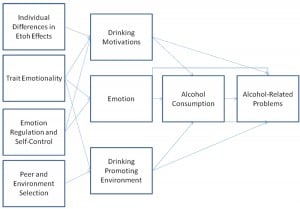
    In sum, there are numerous theoretical models with varying degrees of empirical support whose goal is to answer the question how and why certain personality develop drinking problems. Keep in mind that these models are neither all-inclusive nor mutually exclusive. Check out this illustration of multiple pathways related to personality that show alcohol use disorder might develop:

    Personal Choice Factors

    The personal choice to start drinking is a risk factor of developing alcohol dependence. For example, an individual who has decided that they will never have a drink, can obviously not develop an AUD. Also, people who choose to avoid social situations where drinking occurs heavily, are less likely to develop dependence.

    On the contrary, people who love to socialize with few drinks, are more prone to developing alcoholism.

    Whether you are at risk of developing alcohol use disorder or not, the choice to try alcohol is yours. You make the decision to try it or not.

    Drinking History Factors

    An individual’s drinking history plays an important part of developing alcohol use disorder. People who started drinking at early age, and continue into their adulthood are at high risk of becoming alcohol dependent.

    Also, the National Institute on Alcohol Abuse and Alcoholism lists few drinking patterns that show drinking problems:

    For women, problem drinking is:

    • Drinking more that 1 standard drink daily.
    • Drinking more than 7 drinks weekly.
    • Drinking more than 3 drinks on any single day.

    For men, problem drinking is:

    • Drinking more than 2 drinks daily.
    • Drinking more than 14 drinks weekly.
    • Drinking more than 4 drinks on any single day.

    Binge drinking, by definition is a drinking pattern that builds up the blood alcohol concentration (BAC) to 0.8 g/dL or more. This usually happens after 4 drinks for women, and 5 for men in one drinking session. Heavy drinking is a binge drinking on 5+ days in a period of one month.

    Even though a person may have a genetic predisposition to developing alcohol use disorder, it doesn’t mean that they will become alcoholic.

    Genetic Factors

    NIAAA’s genetic research shows that genetic factors account for 50 to 60 percent of the variance in risk for developing alcohol use disorder. Moreover, children of alcoholic parents have an approximately four times greater risk of becoming alcoholic themselves.

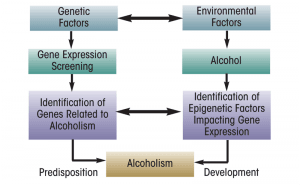
    Still, there is no empirical data that identifies what genes are responsible for increasing the risk of becoming alcohol dependent.  However, there are many genes in person’s DNA that can increase the risk of becoming alcohol dependent. A combination of these genes with personality traits, and various environmental factors may have the key of alcoholism. Check out this diagram to help you see the relationship between genes and environment of developing AUD:

    Familial Factors

    If alcoholism runs in your family, the risk of developing alcohol use disorder is higher that for someone who does not have a family history of AUD. Growing up around a parent who struggles with alcohol problems may change your perspective: you may see drinking as normal, and fall victim to bad habits, or learn the negative effects of alcohol, and never touch it.

    Even though genetics and familial (heredity) are closely linked, there is a difference when discussing genetic versus familial diseases:

    • A person with genetic disease has abnormality in their genome.
    • A person with a familial disease has received a genetic mutation from their parents’ DNA.

    Environmental Factors

    Environment has a huge impact on becoming alcohol dependent. How? For example, if a person cannot cope with stress, they might choose drinking as a way to deal with the stress. Moreover, if an individual has experienced a traumatic event, the chances to turn to drinking are enormous.

    Some of the many environmental factors related to alcoholism include:

    • Attitudes.
    • Bad parenting.
    • Beliefs.
    • Culture.
    • Financial power.
    • Lifestyle.
    • Physical abuse.
    • Peer pressure.
    • Sexual abuse.

    Religious Factors

    Every religion has a different view towards alcohol use. Islam promotes total abstinence, while Catholicism have integrated alcohol use into some religious ceremonies. One study published in the journal Drug and Alcohol Dependency showed that individuals who viewed their religion as promoting abstinence were less likely to develop alcohol dependence. Also, drinking was highly associated with person’s religious commitment: if the religion promoted abstinence the percentage of reduced drinking was higher.

    Moreover, the U.S. National Alcohol Survey showed diverse patterns of abstention and drinking that shows that religion is important for drinking behaviors.

    Social and Cultural Factors

    Alcohol use varies across gender and ethnicity. Worldwide, men drink more than women. According to the 2013 National Survey on Drug Use and Health, American men drink more than women:

    • Regular drinking: 56% vs. 47%
    • Binge drinking: 30% vs. 16%
    • Heavy drinking: 9% vs. 3%.

    Among ethnic and racial groups, Caucasians report the highest rate of alcohol use among people aged 12+, while American Indian/Alaska Natives report the highest rate of binge drinking. Moreover, this SAMHSA’s report shows the following rate on demographics and addiction rates:

    • American Indian/Alaska Native: 14.9%
    • Native Hawaiian and Other Pacific Islander: 11.3%
    • Hispanic: 8.6%
    • Caucasian: 8.4%
    • African American: 7.4%
    • Asian: 4.6%

    Additionally, this analysis show that there are many underlying social and cultural factors contributing to the numbers above. For instance, people with high socioeconomic status tend to drink more frequently than others, while people with low socioeconomic status tend to drink in larger quantities of alcohol.

    On the other hand, cultural norms play a huge role in developing AUD. African Americans and Latinos report more conservative claims towards alcohol use compared with Whites. However, some studies have found out that drinking problems differ across Latino subgroups, such as higher rates of alcohol use disorder among Mexican-American and Puerto Rican men compared with Cuban Americans and Central and South Americans. As a cultural norm, machismo, which is a cultural influence for many generations of Latino male identity, suggest that Latino men attempt to appear strong and masculine because of cultural values, and drinking huge amounts of alcohol is one of the ways to show masculinity. On the contrary, Asians are believed to have higher abstention rates.

    Also, alcohol consumption can be linked to a complex array of factors overlapping with each other, ranging from individual to cultural and societal factors. High social status suggest that social networks and connection influence overall health. For example, people who have higher levels of social support are thought to be healthier because they have better links and access to health services, and greater financial support.

    Finally, this NIAAA pamphlet shows that the Native American population have a 60 percent lifetime prevalence rate for the development of alcohol use disorders and alcohol dependence.

    Read this study Social and Cultural Contexts of Alcohol Use published in the journal Alcohol Research: Current Reviews to find more social and cultural risk factors including:

    • Discrimination factors.
    • Immigration factors.
    • Community factors.
    • Societal Influences (advertising, marketing, and social media).

    Age Factors

    One of the important risk factors for developing alcoholism is the age when you start drinking. The earlier a person starts to drink, the bigger the chances are they continue to drink in future. Also, regular drinking increases the risk of developing alcohol use disorder.

    Even though it is illegal to drink before 21, many teenagers consume alcohol around 13 to 15 years old. According to this survey:

    • 26% of 8th graders reported drinking in the past month.
    • 40% of 10th graders reported drinking in the past month.
    • 51% of the 12th graders reported drinking in the past month.

    Moreover, binge drinking is a popular pattern among youngsters.

    Drinking at an early age increase the risk of alcohol abuse, but alcoholism as a disease doesn’t spare anyone. It can affect anyone at any age.

    Educational Factors

    According to this study, education levels affect your risk of a drinking problem. Individuals who dropped out from high school were about 6 times more to develop alcohol problems, while college dropouts were 3 times more to become alcohol dependent.

    Career Factors

    Careers can be exhausting, and many individuals seek coping mechanism in drinking. High levels of stress, long working hours, and strenuous tasks are only few factors that may produce negative effect on the person.

    According to this CBHSQ Report, 8.7 % of full-time workers aged 18 to 64 drank heavily in the past month. The highest rate of drinking was noticed in mining (17.5%) and construction industry (16.5%).

    How Alcoholism Risk Factors Affect Treatment and Relapse

    All risk factors for developing alcohol dependence affect the treatment on many levels. For example,

    • This study published in the Journal of Ethnicity in Substance Abuse found that Spanish speaking individuals are less likely to perceive a need for treatment and seek treatment services than the general public. Also, women face more barriers to access substance abuse treatment, and are less likely to seek help.
    • According to NIAAA, women tend to seek help in mental health or primary care settings rather than in specialized programs.
    • People with stressful and high-end professions may consider addiction as shame and stigma, while people that are uninsured or have low income may have troubles finding treatment to their standard.
    • Moreover, depression is a major trigger for relapse. But, relapsing does not mean that you have failed. Relapse means that you need to reevaluate your treatment, and find the one that fits your needs. Also relapse makes you aware of the triggers around you.

    However, treatment works!

    Evidence-based treatment that is customized by the needs of the patient is overwlehmingly successful. NIAAA has found that about one-third of people who are treated for alcohol problems have no further symptoms a year later, while many others have reduced their drinking habits.

    So, don’t put life on hold. Gelp help! Or, seek help for a loved one.

    The time to act is now.

    Reference sources: NCBI: The Multiple, Distinct Ways that Personality Contributes to Alcohol Use Disorders
    NCBI: Genetic factors influencing alcohol dependence
    NCBI: Religion and alcohol in the U.S. National Alcohol Survey

    View the original article at

  • Alcohol and the Liver

    Alcohol and the Liver

    ARTICLE OVERVIEW: Heavy drinking can result in serious alcoholic liver diseases including cirrhosis, hepatitis, fatty liver, and even cancer. But, liver damage can be reversed. How? We review here.  If you have additional questions, feel free to post them in the comments section at the end.

    TABLE OF CONTENTS:

    What is Liver Damage?

    The meaty, reddish-brown organ known as the liver has a huge role in filtering the blood, and is active in digesttion, absorbtion, and the processing of food. Moreover, it detoxifies chemicals or toxins that make their way into our bodies, and metabolizes drugs. How does alcohol cause liver damage?

    Alcohol stays in the bloodstream until it is metabolized by the liver, during which it can do much harm to this organ.

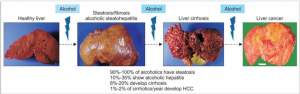
    Let’s explain the process a little more clearly. The liver can metabolize a certain amount of alcohol at any given time, But if you drink excessively, chronically, or too quickly, your liver cells struggle to process it. This can result in developing serious alcoholic liver diseases such as:

    • Alcoholic hepatitis
    • Cirrhosis
    • Fatty liver

    Alcohol liver disease is the development of liver damage as a result of heavy drinking.

    Risk Factors

    According to the Centers for Disease Control and Prevention there are 4.9 million adults diagnosed with liver disease, while just over 21K people died from alcoholic liver disease. So, who is at risk of developing liver disease?

    Typically, most heavy drinkers develop serious alcoholic liver disease. This is why alcohol consumption accounts for approximately 3.8% of all global deaths and 4.6% of global disability-adjusted life-years. Further, people who drink excessively are at a higher risk of developing an alcoholic liver disease. Those who do not follow the guidelines on standard drinking are directly exposed to liver diseases, which may have a fatal outcome.

    MedlinePlus reports that liver trouble is common in people between 40 and 50 years old, and men are more likely than women to develop liver disease. Keep in mind that women are not immune to alcoholic liver disease. In fact, they can develop this condition after less exposure to alcohol than men.

    Metabolism

    The liver is a filter of the human body: it breaks down and gets rid of harmful substances in the body. The liver further transforms vitamins, nutrients, and medicines into substances needed by the body. So, just how is alcohol metabolized in the liver?

    90% of alcohol is metabolized in the liver by oxidation via action of the enzyme called “alcohol dehydrogenase (ADH)”, while less than 10% is eliminated in breath, sweat, and urine. Alcohol is absorbed into the system more rapidly than it is metabolized, and this is the reason why alcohol levels build up in the body. In fact, one unit of alcohol stays in the body up to 2 hours after being consumed. This time frame increases with each drink. The higher the blood alcohol concentration, the longer it takes to process alcohol.

    How Alcohol Affects the Liver

    But the liver can only process a certain amount of alcohol at a time. So, when someone drinks too much, the alcohol that is unprocessed circulates through the bloodstream.

    Q: How much alcohol does it take to damage the liver?
    A: The amount of damage that alcohol causes depends on the drinker and individual factors.

    Experts know that heavy drinking (as well as chronic drinking) destroys liver cells, causing serious damages such as cirrhosis, alcoholic hepatitis, and the cellular mutation that leads to liver cancer. So, the American College of Gastroenterology has set out guidelines that state: “Prolonged abstinence is the most effective strategy to prevent disease progression.”


    Alcohol and Cancer

    Can alcohol cause liver cancer?

    YES!

    Drinking too much alcohol regularly can damage the liver, leading to scarring and inflammation, which also raises the risk of developing liver cancer. According to this NIAAA’s synopsis on alcohol liver diseases, people with alcohol-related cirrhosis are at much higher risk for development of liver cancer.

    Hepatocellular carcinoma (liver cancer) is the eighth most frequent cancer worldwide, accounting for approximately 500,000 deaths annually.

    How does alcohol cause liver cancer?

    Alcohol is converted in our bodies into the toxic chemical, acetaldehyde. This toxin can cause cancer by damaging DNA and stopping cells from repairing liver damage. Also, it makes liver cells grow faster than usual, and these cells are more likely to pick up changes in their genes. This is why the International Agency for Research for Cancer has classified acetaldehyde together with alcohol use as carcinogenic for people.


    However, scientists are still limited in their understanding. Even though there is much plausible evidence, the mechanisms about how alcohol causes carcinogenic effect have not been defined in depth.

    Alcohol and Cirrhosis

    One of the most serious alcohol liver diseases is cirrhosis. This disease replaces normal liver tissue with scar tissue, disrupting blood flow, and preventing the liver from working properly.

    Signs of cirrhosis include:

    • Abnormal accumulation of fat in normal liver cells.
    • Liver enlargement or inflammation.
    • Redness of the palms caused by capillary dilation.
    • Shortening of muscles in the fingers caused by toxic effects or fibrous changes.
    • Thickening and widening of the fingers and nails.
    • White nails.

    Why does alcohol cause liver cirrhosis?

    Currently, there are no empirical studies that adequately explain why and how alcohol consumption causes cirrhosis. Regardless, the correlation between drinking and this disease is strong. Our federal institute of health reports that between 40% to 90% of the 26,000 annual deaths from cirrhosis are alcohol-related.

    Even further, the National Institute on Alcohol Abuse and Alcoholism (NIAAA) reports that about 10% to 15% of people diagnosed with alcohol use disorder develop cirrhosis, and many are unaware that they have it. In fact, about 30%-40% of the cases with cirrhosis are diagnosed at autopsy. Moreover, the NIAAA states that 5-year survival rate of people with cirrhosis is about 90% for those who stopped drinking, while it is 70% of those who didn’t stop drinking.

    Symptoms of Liver Disease

    Some common early symptoms of liver disease include:

    • Abdominal pain.
    • Appetite loss, and weight loss
    • Energy loss.
    • Small, red spider-like blood vessels on the skin.

    As the function of the liver worsens, more serious symptoms take place:

    • Abdomen swelling.
    • Dark urine.
    • Discolored stool.
    • Confusion and problem thinking.
    • Itchy skin.
    • Fatigue.
    • Leg swelling.
    • Nausea and/or vomiting.
    • Readiness on the palms.
    • Unusual bruising.
    • Yellowish skin and eyes.

    Diagnosis of alcoholic liver disease is made with biopsies, but laboratory tests can help too. If you notice any of these symptoms, consult with a physician ASAP.

    Can the Damage Be Reversed?

    The only organ in the body that has the ability to regenerate its damaged tissue with new cells is the liver.  So, most people want to know, “Can alcoholic liver damage be reversed?”

    Yes, liver damage can be reversible… if you stop drinking.

    One study on alcohol-related cirrhosis found that alcohol abstinence is a key factor in the survival rate, even in the most severe cases. Its findings show that abstinence from alcohol at one month after diagnosis of cirrhosis was one of the most important factors determining survival: 7-year survival of 72% of people who stopped drinking in comparison with 44% of people who continue to drink.

    However, the liver may get overwhelmed, and it can lose the function to repair itself completely. This usually happens if it is still “under attack” from drug use, continued drinking, or a virus. In these cases, a scar tissue develops, which becomes difficult to reverse.

    Lifestyle changes can support the liver more than you think. You can start taking care of yourself (and your liver) with these simple life changes:

    • Stop drinking.
    • Eat a healthy diet low in salt.
    • Consult regularly with a healthcare provider.

    While there is no safe amount of alcohol beverage to consume, many reputable sources report that if you drink in moderation (one drink per day for women, and two for men) you will do less harm to the liver. But, liver disease due to alcohol consummation is avoidable. Why drink, and put yourself at risk, when you can do more for your health?

    The best way to take care of your liver is to stop drinking.

    Treatment for Alcoholism

    If you are struggling with liver disease, alcohol addiction can be trated. In these cases, it is important to find evidence-based treatment for alcoholism. There are two main types of alcohol rehab programs: inpatient and outpatient.

    Inpatient treatment provides constant medial care and supervision because patients live at the facility. This type of treatment is designed to help people with moderate to severe addictions. Some of the services include:

    • Detox services.
    • Educational classes.
    • Group therapy.
    • Individual therapy.
    • Medication and medical support.

    Outpatient treatment provides similar services, but patients do not live at the facility. They visit the rehab center for few hours at day, several days weekly. This treatment is designed for people who are willing to change, have mild cases of addiction, and have emotional support from loved ones at home.

    If you have drinking problems, don’t wait. Seek help as soon as possible. We can help, you only need to reach out. Feel free to leave us a question at the end…or give us a call.

    Reference sources: NCBI: Pathophysiology and Management of Alcoholic Liver Disease
    NIAAA: The Epidemiology of Alcoholic Liver Disease
    NIH: Exploring Alcohol’s Effects on Liver Function 
    NCBI: The Burden of Cancer Attributable to Alcohol Consumption
    NCBI: Alcohol Metabolism 
    NCBI: Reversal of liver cirrhosis: current evidence and expectations

    View the original article at