Tag: alcohol addiction treatment

  • Actress Claudia Christian’s On A Mission To Spread The Word About Naltrexone

    Actress Claudia Christian’s On A Mission To Spread The Word About Naltrexone

    Christian founded the C Three Foundation to educate the public and medical professionals about the alcohol treatment method. 

    June 12 marks the first ever Global Sinclair Method Awareness Day, a method for the treatment of alcohol addiction that TV actress Claudia Christian swears by. Christian, best known for her role in the sci-fi series Babylon 5, founded the C Three Foundation after struggling with alcoholism for years and finding a solution in what is commonly called The Sinclair Method (TSM).

    TSM involves the use of naltrexone—a medication for treating alcohol or opioid use disorder—one to two hours before drinking. Doing this on a regular basis breaks the behavior-reward cycle that is key to addiction disorders by disrupting the endorphin reward system, blocking the pleasant intoxication when alcohol is consumed. 

    “Naltrexone does not make one ill from drinking. Instead, the drug removes the incentive to drink, helping the addicted brain to unlearn previous harmful behaviors over time,” says a press release from the C Three Foundation. “’Drink yourself sober,’ is how Christian and others describe the method because one must drink alcohol with naltrexone for the treatment to work.”

    According to the foundation, TSM was found to have a 78% success rate after “120 peer-reviewed clinical trials” tested the method. Naltrexone can be purchased in generic form for $1-2 per pill, making it much more affordable than inpatient detox and rehab.

    However, the method comes into conflict with traditional addiction treatment methods, which often emphasize abstinence as a necessity and work under the assumption that addiction cannot be “cured” or unlearned.

    The problem with TSM, as described by someone who tried it, is that there is always the temptation to skip the pill.

    “The problem is that, as someone who loves getting drunk, this begins to take on the connotation of, ‘You aren’t going to be able to have as good of a time tonight if you take this pill,’” wrote Joe Ricchio for The Fix. “For a while, I continue to fire them down the hatch immediately to nip this thought process in the bud as soon as it begins—but eventually my lust for alcohol, the reason I began this process in the first place, takes over and I decide that I will have a few ‘snow days’ from the pill.”

    The C Three Foundation’s goal, however, is simply to educate both medical professionals and the general public on TSM so that people with addiction can make an informed choice.

    Abstinence and 12-step programs have come under increasing scrutiny as relapse rates reach 40-60%, and an increasing number of people are seeking out alternatives. The foundation believes TSM should be a better-known alternative for alcohol addiction treatment.

    “Right now, no one but C Three Foundation is out there educating these medical professionals,“ said C Three Foundation Executive Director Jenny Williamson. “This is one of our biggest challenges to gaining mainstream adoption of TSM.”


    View the original article at thefix.com

  • Beacon Health Options Behavioral Health Coverage Guide

    Beacon Health Options Behavioral Health Coverage Guide

    If you’re looking into the Beacon Health Options network for alcohol treatment, our guide can help.

    Table of Contents

    1. Pros and Cons of Beacon Health Options Health Insurance
    2. Beacon Health Options Alcohol Abuse Care
    3. Beacon Health Options Substance Abuse Coverage
    4. Beacon Health Options Mental Health Providers
    5. Using Beacon Health Options in Network Mental Health Emergency Services
    6. Behavioral Health Inpatient and Outpatient Services
    7. Does Beacon Health Options Cover Substance Abuse Treatment Aftercare?
    8. Choosing Beacon Health Options in Network Providers
    9. Types of Behavioral Health Services Beacon May Not Cover
    10. How to Find Beacon Health Options Alcohol Rehab Centers and Mental Health Services

    Beacon Health Options, which used to be known as Value Options, is a company devoted to good mental and behavioral health. The Beacon network is made up of facilities, physicians, nurses, patient advocates, and other professionals who help meet the social, behavioral, and emotional needs of individuals and employees in large companies.

    The Beacon insurance plans for mental and behavioral health include coverage for alcohol use disorder, substance use disorder, rehab, and other behavioral health treatments. Because mental health issues are sometimes emergencies, the plans also cover these situations, when emergency room treatment or out-of-network providers are needed.

    Pros and Cons of Beacon Health Options Health Insurance

    One of the best things about Beacon Health is that it provides coverage for a variety of behavioral health needs. Many other insurance programs make mental illness, addiction, and behavioral conditions secondary to physical health. If you have struggled to get covered for behavioral health, this is a great company that will better meet your needs.

    Another pro of working with Beacon Health Options PPO and other coverage plans is that you get access to useful online tools and resources. These include things like educational materials about opioid addiction and overdose, depression treatment, ADHD, and suicide. You can also use Beacon’s guides for reducing alcohol consumption, identifying mental health warning signs, Beacon Health strategies for managing stress, and integrated care.

    Beacon also has a unique feature that is beneficial in a variety of situations. This is coverage for so-called surprise bills. If your Beacon Health Options substance abuse care was administered by an out-of-network provider, but you either had no choice or had not been fairly informed of the provider’s network status, you may get coverage for the surprise bill you get as a result.

    If there are any cons to using Beacon Health insurance, it is that this company focuses on behavioral, not physical, health. So you may need this plan as well as another health insurance plan to cover all your behavioral and physical health needs.

    Beacon Health Options Alcohol Abuse Care

    Beacon Health Options alcohol abuse coverage includes top-notch treatment with in-network providers. You should be able to find the right treatment plan for your needs within the network. Make sure you understand your plan’s coverage and options so that you don’t end up being responsible for more than you can afford.

    Treatment options for alcohol abuse include rehab, the traditional residential style of treatment, as well as outpatient services, intensive outpatient programs, and regular addiction counseling and therapy. Keep in mind that many of Beacon’s plans are offered to you in conjunction with other insurance companies. This can influence coverage.

    Beacon Health Options Substance Abuse Coverage

    Beacon health options drug addiction and substance abuse providers are among the best at what they do. The Beacon network includes addiction experts, rehab facilities, outpatient treatment plans and therapists, and inpatient services. Getting treatment for substance abuse and addiction is important, so don’t let questions about insurance and coverage hold you back. Contact Beacon to find out what exactly is covered with your plan and where you can go immediately for good in-network care.

    Beacon Health Options Mental Health Providers

    Behavioral health is the focus of Beacon Health insurance, and this includes the treatment of mental illnesses. For example, Beacon Health Options depression care may include prescription coverage for antidepressants, the costs of ongoing therapy, or possibly even a stay at a residential rehab facility or hospitalization in a mental health crisis. What coverage you can expect for mental and behavioral health depends on your plan.

    Using Beacon Health Options in Network Mental Health Emergency Services

    A mental illness, or a substance use disorder or behavioral condition, can cause emergency situations. You may have a mental health crisis or overdose on a drug and need emergency care to be stabilized. Beacon Health’s network providers offer 24-hour access to clinical staff that can help you right away. They can provide guidance, advice, mental health care, medical care, and can direct you to the nearest emergency room.

    Beacon defines an emergency as a situation in which you are in extreme danger, you could be severely impaired, you could have serious dysfunction of an organ, or you could be severely disfigured. Your plan should include emergency services as long as is administered by Beacon and has a provider network feature. Your cost for emergency services through an out-of-network provider should not be higher than they would be if you had been able to get to someone in the network for care.

    Behavioral Health Inpatient and Outpatient Services

    When you’re struggling with a behavioral health issue, such as addiction or a mental illness, you will need to choose between receiving inpatient and outpatient care. One important consideration should be the coverage in your Beacon Health Options plan. Read your plan carefully and call if you have questions regarding cost sharing and coverage before making this important choice.

    Generally, if you have a Beacon plan you can get coverage for inpatient rehab through an in-network facility. This kind of care may include drug detox treatment, medication or medical care if appropriate, and assessment and screening, therapy, and support services for alcohol or drug recovery.

    The same is true of outpatient services. If you choose providers from within the network, your treatment should be covered. Outpatient services allow you to stay at home while receiving treatment. Treatment may include medical care, medications, therapy, and counseling.

    Does Beacon Health Options Cover Substance Abuse Treatment Aftercare?

    If you choose an inpatient treatment facility for substance abuse, alcohol addiction, or even a severe mental illness, you should ask about aftercare. Aftercare services are any additional services that you may receive as you transition from rehab to your home. This can be a tough transition to make, and can lead to relapses if not handled well.

    Aftercare may include ongoing outpatient therapy, substance abuse counseling, group and family therapy, and other services. Check with Beacon Health to find out if your insurance plan will cover any of these important services that will help you get back on your feet.

    Choosing Beacon Health Options in Network Providers

    Beacon is comprised of more than one network of behavioral healthcare providers. Be sure that you understand your plan and know how to determine if a physician or other health professional is in your particular network. Beacon includes many great providers for treating alcohol addiction, substance abuse, and mental illnesses. You should be able to find an alcohol rehab or outpatient provider that can help you.

    If you choose a provider for care that is outside the Beacon network, you could be responsible for additional costs. This is known as cost-sharing. Your plan may cover some of the cost of that out-of-network treatment, but the rest will be up to you to pay. How much, if any, is covered depends on your particular plan and network.

    Types of Behavioral Health Services Beacon May Not Cover

    Even if you have the best level of Beacon behavioral health rehab coverage, you may find that there are some services that are not covered. Any of these services or types of treatments that you feel is important for your well-being will have to be paid for out-of-pocket. Your plan will outline what is covered and give you an idea of what is not, but the best way to know for sure before you book the treatment is to call and ask.

    Some examples of things that are not likely to be covered by Beacon Health Options are luxury rehabs. These are considered to be beyond what you truly need for good behavioral health. You may also expect to have to pay for your own private room or any luxury, or extra, services in rehab. These could be things like salon services, massage, or exercise classes. Just because they are not likely to be covered does not mean these services aren’t good for you. You can always call and find out if something you think would help falls within your plan’s coverage.

    How to Find Beacon Health Options Alcohol Rehab Centers and Mental Health Services

    To use your Beacon health insurance to your greatest advantage, know your plan. Read it thoroughly and call the company if you still have questions about what is covered and the services you can receive at no cost or with a co-pay. With that information you will be ready to make better choices about the treatment you receive for alcohol addiction, mental illness, and substance use disorders.

    Start by searching the in-network options. You should be able to access a Beacon Health Options mental health professionals list to help with your search. Decide if you want inpatient or outpatient care, and narrow down your options. Consider practical factors like any cost-sharing responsibilities you’ll have with a particular provider or service and the location. Then you can narrow your list down further by considering the exact kind of treatment you need and the providers you prefer.

    Beacon Health Options behavioral health coverage is an important tool for your overall wellness. The more you understand your plan, the better you will be able to make good choice for your mental health needs. Rely on in-network providers when possible and get the treatment you need without worrying about costs.

    View the original article at thefix.com

  • How long does Antabuse stay in your system?

    How long does Antabuse stay in your system?

    Antabuse (disulfiram) is an alcohol antagonist drug used in the management of chronic alcoholism. It one of a handful of medicines to help you stop drinking that has been designed to act as a deterrent to alcohol consumption. Antabuse works by making you feel physically nauseous, provoking vomiting if you drink. But how is disulfiram metabolized in the body? How long will it stay in your system?

    Continue reading here to learn more about the use, mechanism of action, elimination, and possible side effects of Antabuse. If you have any questions after reading the text, we invite you to ask questions and share comments at the end of the page. We do our best to respond to all questions about what happens when you quit alcohol…personally and promptly.

    Main Antabuse uses

    Antabuse is prescribed for people who suffer from chronic alcoholism. It works as a deterrent to drinking by making you feel nauseous any time you consume alcohol. While not prescribed for people who want to try controlling their drinking, it is an excellent option for those who would like to abstain. How does it work exactly?

    The main ingredient in Antabuse, disulfiram, produces an irreversible inhibition of the enzyme responsible for oxidation of the ethanol metabolite called “aldehyde dehydrogenase”. By blocking oxidation of alcohol and allowing the enzyme to accumulate in blood concentrations 5-10 times higher than normal, it produces a very unpleasant side effects if the person taking Antabuse also consumes alcohol. The disulfiram-alcohol reaction provokes the following number of unpleasant symptoms:

    • intense flushing of face
    • difficulty breathing
    • heart palpitations
    • pulsating headache
    • nausea
    • vomiting

    Antabuse produces best results if/when used together with behavior modification, counseling sessions, psychotherapy, and when you have an adequate support system. It is not, however, a cure for alcoholism.

    How do you take Antabuse?

    Antabuse can be administered after at least 12 hours of alcohol abstinence. At the beginning of the course of treatment, Antabuse is usually taken only once a day, preferably in the morning, at a maximum dose of 500 mg. After the first 1-2 weeks of Antabuse treatment, patients are usually given a single daily dose of 125-500mg. The duration of Antabuse therapy may be several months (or sometimes even years), or simply until the patient has established a solid recovery from alcoholism and has established period of a long term sobriety.

    Peak levels and half life of Antabuse

    Antabuse is slowly absorbed by the body. Likewise, it is also eliminated from the system at a very slow rate. Upon administration, about 80-90% of a single oral dose makes it into the blood system, while the rest are quickly eliminated. Disulfiram is metabolized in the liver and is excreted primarily through the kidneys, while some metabolites are exhaled as carbon disulfide. The half life of Antabuse is 60-120 hours and up to 20% of a single dose may remain in the body for a week or more.

    Antabuse starts to affect ethanol metabolism within 1-2 hours after administration. Following a single dose of the medication, the body may react to any amount of alcohol for up to 14 days.

    Antabuse drug testing: How long does Antabuse stay in the body?

    Antabuse is not a narcotic and IS NOT subject to the legal restrictions of the Controlled Substances Act. But, doctors will probably be scheduling frequent blood tests if you are taking Anatabuse. Regular blood check-ups are important for monitoring the liver function and checking for side effects.

    Note here that Antabuse (disulfiram) may also interfere with certain laboratory tests, including urine VMA/HVA tests. Since it can cause a false positive on drug test results, it is important that you notify the laboratory personnel and all your doctors that you are using Antabuse.

    Antabuse and alcohol addiction

    Antabuse tablets contain the active ingredient disulfiram, which is an aldehyde dehydrogenase inhibitor. This medicine is a tool to keep alcoholics away from drinking. If someone who is taking Antabuse drinks alcohol, a severe, unpleasant and potentially dangerous reactions occur quickly. This is achieved because disulfiram interferes with the way the body metabolizes alcohol.

    It is important that Antabuse therapy is used in combination with other forms of therapy and good social and psychological support. After all, alcoholism is not only a drinking problem, it’s also a thinking and social problem. A recovering person needs to implement many new and positive changes in life, in order to remain alcohol-free.

    Who should not have Antabuse in their system?

    Some people may experience unwanted reactions to disulfiram (the active ingredient in Antabuse) that may require medical attention. If this medication causes any severe or persistent physical or mental problems you should notify your healthcare professional as soon as possible.

    For safety reasons, Antabuse should not be administered by intoxicated patients, or if a person hasn’t abstained from alcohol for at least 12 hours. It shouldn’t be used by patients allergic to disulfiram or by pregnant women. Further, Antabuse should be prescribed and used with great caution in the populations who are diagnosed with:

    • cerebral damage
    • chronic and acute nephritis
    • diabetes mellitus
    • epilepsy
    • hepatic cirrhosis or dysfunction
    • hypothyroidism

    Antabuse questions about length in system

    If you or a loved one are suffering from alcoholism and are looking for medications that can help you quit, Antabuse is one of several meds that can help. We suggest consulting your family doctor or a medical professional who specializes in addiction treatment to be screened for treatment.

    If you have any questions, feel free to share them in the comments section below. Or if you are someone who succeeded in recovery with Antabuse, share your story with others. We appreciate your feedback and try to answer all legitimate enquiries in a personal and prompt manner.

    Reference Sources: Sultan Qaboos University: Disulfiram
    Medline Plus: Disulfiram
    NCBI: Incorporating Alcohol Pharmacotherapies Into Medical Practice: Chapter 3-Disulfiram 
    MedSafe: Antabuse (disulfiram) 200mg Tablets-Data Sheet
    PubMed: The efficacy of disulfiram for the treatment of alcohol use disorder

    View the original article at addictionblog.org

  • 6 Ways of Helping Your Alcoholic Child

    6 Ways of Helping Your Alcoholic Child

    ARTICLE OVERVIEW: Finding out that your child has become addicted to alcohol is a challenging situation for any parent to face.  But where do you start to look for help? What treatment approach is the best? We answer these questions here and invite your questions at the end of the page.

    TABLE OF CONTENTS:

    Warning signs of alcohol addiction

    It is natural for parents to think that alcoholism only occurs in other households; however, addiction does not discriminate. Alcohol abuse can affect people at almost any age, from the teenage years to adulthood. It can also become a problem for any individual, regardless of income level, race, region or gender.

    Even straight-A students can fall prey to the dangers of alcohol abuse. The important thing is to watch for signs of abuse in order to know when it’s time to help an addicted child quickly and effectively.

    [banner variant=”article-1″]

    Common signs among teenagers include:

    • A decreased interest in physical appearance.
    • Asking for money without a good explanation or stealing items.
    • Increased obsession with privacy, such as locking the bedroom door at all times.
    • Sudden lack of interest in schoolwork and other responsibilities or activities.

    Some common signs of addiction in all ages include the following:

    • Confusion
    • Decreased appetite and unexplained weight loss
    • Drowsiness
    • Memory problems
    • Sudden change in personality or behaviors, such as increased irritability

    Part of knowing how to help an addicted child is becoming aware of these signs and knowing when to intervene.

    How can you help?

    1. Research addiction and understand what it is.

    [banner variant=”article-2″]

    If you want to truly help a child struggling with alcoholism, it is important not to avoid the problem. Some parents ignore the issue due to embarrassment or denial. Rather than blaming themselves or hoping the substance abuse will go away on its own, parents need to understand that their child’s alcoholism does not reflect on them; addiction is a disease.

    That’s right, a disease.

    [banner variant=”sidebar-1″]

    In fact, the National Institute on Alcohol Abuse and Alcoholism defines problem drinking as more than one drink per day for women or more than 2 drinks per day for men. [1] Additionally, the organization goes on to describe alcoholism as severe problem drinking that requires diagnosis and intervention. [2] Browse this website to learn more about alcohol addiction, the most common and pervasive addiction on the planet. Or, ask us a question in the comments section below.

    2. Wait for a moment of sobriety.

    [banner variant=”sidebar-3″]

    It is important to talk to your child about the alcohol use. Approach your child when he or she is not currently using alcohol. An important part of knowing how to help an addicted child involves trusting your own instincts as a parent. Wait for a time when you are both calm and at ease, rather than letting emotions to spiral out of control. Instead of expressing accusation, talk calmly, yet seriously, about your concerns.

    3. Stop enabling behaviors.

    It is natural for parents to want to help their children, but alcoholic children need to learn to deal with the negative consequences of their behavior. Do not lie to teachers, bosses or other family members about your child’s alcohol abuse. Discuss the repercussions if your child does not stop abusing alcohol. For a teenager, this might mean having a car taken away. For a grown child, this could mean that you will no longer lend money or bail your child out of tricky situations. Knowing how to help an addicted child includes using your own knowledge of your family and the specific situation.

    4. Stage an intervention.

    Call us on the phone number listed here to learn more about this process. Usually, you meet with an addiction counselor or therapist before the intervention, but without your child. Together, you discuss how you’ll approach the child and what each of you will say. You can also discuss about possible reactions with the therapist.

    You may want to write down what kind of behaviors will not be tolerated and what will be the consequences if they appear, as well as writing down all the things that were lost after your child’s behavior has changed.

    [banner variant=”article-5″]

    Keep in mind that an intervention is successful even if your child refuses to go to rehab, because at least the family has united to set a boundary. This means life will not be the same for your child, and a process has started that will one day result in him or her getting treatment.

    5. Seek treatment.

    If your child is unable to stop abusing alcohol on his/her own, it may be time to seek professional treatment.  Many rehab centers offer options for teenagers and younger patients. Inpatient treatment can help by removing your child from a harmful peer group and providing professional guidance and supervision during detoxification.

    6. Family therapy and support groups.

    In addition to learning how to help an addicted child, parents should also focus on the whole family. Dealing with an alcoholic child can be draining for any family, so it is also important to learn healthy coping mechanisms, avoid extra stress and seek support. Parents can benefit from support groups that specifically address the challenges faced by parents of alcohol abusers.

    What if your child doesn’t accept rehab?

    Offering help and providing your child with rehabilitation options may be all you can do. In most cases, people with drinking problems overcome addiction when they are too tired to fight anymore, when they are faced with too much pain, or when they realize that alcohol isn’t the answer. What do they all have in common?

    People who enter addiction recovery have made a decision to try something different. This decision is their own…you cannot force it.

    You should not put too much pressure on yourself if your child does not want to quit. If your treatment offers are contantly refused, you can work on doing research together to show him/her why they should get better. And, you can focus on yourself.

    Often, drinking problems exist as a red flag to dysfunction in a family or social system. Are there other things going on in the household that require your attention? What about your own mental health? Turn the magnifying glass inward, to yourself or to your family system. Start asking questions.

    Finally, even though your son or daughter might refuse treatment, you should continue visiting family support meetings and find help for yourself on how to deal with your inner struggles on this issue. The only other thing you can do is keep encouraging your child to go to treatment. But you also need to have a strong base of self-awareness and love. No one else can do this for you.

    Your questions

    Are you still afraid of addressing your child’s addiction?

    You are not alone.

    Please leave us your questions or comments in the section below. We’ll try to respond to you personally and promptly, or refer you to help.

    Reference Sources:[1] NIAAA: Drinking Definitions
    [2] NIAAA: Alcohol Use Disorder
    Ohio – Department of Youth Services: Project Know – Understanding your addiction: How to Help an Addict or Alcoholic Child
    [banner variant=”article-6″]

    View the original article at addictionblog.org

  • Aftercare Programs

    Aftercare Programs

    ARTICLE OVERVIEW: Aftercare programs are an essential part of every good rehab program. They will help you maintain sobriety and prevent relapse. This article offers details on aftercare programs for a drinking problem and their importance.


    TABLE OF CONTENTS:

    Why Aftercare is Important after Alcohol Rehab

    You have successfully finished alcohol rehab! Congratulations. Now you have been discharged in the world. But, are you really cured and ready to face the everyday challenges? Can you do it without ongoing support?

    [banner variant=”article-1″]

    Life after rehab can be difficult.

    According to the National Institute on Drug Abuse (NIDA) relapse rates for individuals who are in active treatment programs is actually relatively high, 40-60 % in most cases. [1] This is because addiction is a complex disease. Recovery doesn’t begin and end with rehab,but is a lifelong and continuous process.

    So,the longer you stay sober after completing a rehab program, the lower your chances of relapse are.

    How can aftercare help? Aftercare is the stage following intensiveand it is an integral part of every good alcohol treatment program.The primary goal of every aftercare program is maintaining abstinence and preventing relapse. In fact, aftercare programs are shown to considerably improve the long-term recovery and lead to higher rates of abstinence. [2]

    [banner variant=”article-2″]

    Staying sober can be challenging, and that is whyyou need careful planning. Aftercare is the time when you implement the lessons and strategies you have learned in rehab in the real world.

    So, what are the benefits of an aftercare program?

    [banner variant=”sidebar-1″]
    • Building positive social relationships
    • Keeping your motivation high
    • Maintain sobriety
    • Preventing relapse

    Without individualized and carefully planned long term community based services that support sobriety, the relapse rates will be much higher, especially for socially vulnerable individuals.

    An Alcohol Aftercare Plan

    A reputable rehab center should be able to draft an aftercare plan tailored to your needs. The quality of your aftercare plan is closely connected with your overall success. In fact, its purpose is to connect you and your family to community support to help keep you sober and minimize the risk of relapse.

    [banner variant=”sidebar-3″]

    Your aftercare plan should include a collection of the following:

    • Education
    • Family therapies
    • Group therapy
    • Help with employment
    • Housing
    • Monitoring, done in eitherscheduled appointments, phone or email.
    • Outpatient appointments with a clinician / counselor
    • Participation in addiction support groups
    • Psychotherapy
    • Recommended or required alcohol testing
    • Relapse prevention strategy
    • Social services
    • A stay in a sober living home

    There are many different kinds of aftercare treatment options which can help you prevent relapse and live a sober life. However, knowing what works for you will help you achieve your goals. This is why aftercare needs to be 100% custom to your needs.

    Treatment Center Programs

    Aftercare is usually coordinated by your original treatment center. It is important that the treatment center you choose provides a continuum of care. Addiction affects many aspects of life: medical, mental, social, occupational, family, legal, and a treatment center should address the same aspect in order to be successful. [3]

    This why finding a treatment center that offersquality programs and services matched to your needs is a key step on your journey to recovery.

    Before choosing a treatment center program, do your research. Take into consideration the following factors:

    1. Can you get a private room?
    2. Does it offer medically assisted detox?
    3. Does it offer specialized programs for different groups (age or gender based, LGBT)
    4. Does the program address dual diagnosis issues?
    5. How close is the facility to your home, and will you need transportation?
    6. How qualified is the staff?
    7. Is the treatment center licensed?
    8. Is their approach evidence-based?
    9. Staff-patient ratio. The more staff per patient, the better the care.
    10. The length of the treatment programs.
    11. The quality of aftercare services.
    12. Inpatient vs. outpatient setting for treatment.
    13. Will you have access to email, phone or computers?
    14. Will your insurance cover payment and will it be enough?

    Many treatment center programs operate their own aftercare programs, and the services can vary greatly. Always check what does an aftercare program includes, and if it will fit your needs, or not.

    [banner variant=”article-5″]

    Sober Living Homes

    These are typically apartments or houses that help people safely transition into the “real world”. A good sober home is a drug-free environment for people that dedicated themselves to a sober life.Although they don’t offer actual treatment and are not as strictly structured as inpatient rehab, they offer a lot more than a living environment. Many halfway or ¾ way houses provide recovery methods and 12-step programs. Every sober living home has its own house rules that need to be respected.

    If you want to live in a sober house, you are expected to be self- sufficient and pay rent. You can also work or search for employment during your stay. In general, it is a cheaper alternative to a residential treatment center where you can invest in your own recovery.There are no limits on the length of stay, although many people stay for at least 90 days.

    So, what are the benefits of living in a sober home?

    • Maintaining sobriety
    • Lower risk of relapse
    • Finding and keeping a job after recovery
    • Staying out of legal trouble
    • Safe environment free from triggers
    • Reconnecting with your friends and family

    Not everyone needs to stay in a sober living home. But for many people, staying in a halfway house can decrease the chances of relapse.A sense of comradery and sober living can start here…and last for a lifetime.

    Therapy and Counseling

    The purpose of aftercare counseling is to create a supportive and comfortable environment where you can speak freely and openly about your feelings, struggles, and strengths during the recovery process. It is particularly beneficial for people diagnosed with dual diagnosis who are also suffering from some mental issue.

    There are two types of talk therapy offered in alcohol aftercare programs:

    1. Group counseling.

    In a group therapy setting, you will share and listen to others’ experiences in a group of people recovering from alcohol addiction. This option is often less expensive, as you share the cost of therapy with those who attend.

    2. Individual counseling.

    In an individual therapy setting, you will meet one-on-one with a therapist to talk about yourself and your progress. Often, you set very personal goals during your sessions. Some people explore and resolve past trauma with a specialist.

    Counselling sessions are initially held weekly in most cases, and as you progress, you will gradually reduce your attendance to one session in two weeks or one in a month.

    Alternative Therapy

    There are many types of alternative therapies available in long-term treatment of alcohol problems. Know that scientific evidence is still being collected for some of these modalities. However, some people swear by these treatments and speak anecdotally of their effectiveness. [4] Some of the forms of alternative therapy in alcohol aftercare include:

    • Acupuncture
    • Art therapy
    • Biofeedback therapy
    • Chiropractic care
    • Cognitive behavioral therapy
    • Contingency Management
    • Dialectical behavior therapy
    • Equine therapy
    • Exercise programs
    • Experiential Therapy
    • Holistic Therapy
    • Massage therapy
    • Mindfulness meditation
    • Motivational Interviewing
    • Neurofeedback
    • Nutrition therapy
    • Animal therapy

    NOTE HERE: These therapies should only be part of a complete alcohol rehab treatment plan, and are used with the aim of maintain sobriety and improving overall well-being to the recovering person.

    Support Groups

    Most people are strongly encouraged to attend support group meetings.Support groups help you rebuild self-esteem and improve self-perception.These groups offer structured program of recovery and help you stay focused and motivated.

    There is no admission process or specified length of participation.In general, meetings are hosted weekly, although you can decide to attend more than one group or meeting each week.

    In a support group, members share experiences or concerns related with their addiction and recovery, provide each other with encouragement, comfort, and advice. All members have one aim: staying sober.

    Most support groups are based on the 12-step program, which is spiritual in nature and created by the founders of AA, butthere are many alternatives for those who prefer a more secular foundation for treatment.Some of the most popular support groups include:

    • Alcoholics Anonymous, AA
    • Narcotics Anonymous, NA
    • Life Ring
    • SMART Recovery

    Aftercare for Alcohol Abuse

    For people in recovery, sobriety is a learned behavior. Abstinenceis maintained bymaking the rightdecisions and choices on daily basis. It is hard at the beginning, but as times passes and you learn new skills and strategies to cope with triggers it gets easier and new habits and routines are formed.

    In addition to the therapies offered in your overall treatment plan, you can develop your own aftercare strategy.

    So, what can you do, and when?

    1-30 Days After Rehab

    • Be aware of the negative impulses and learn how to cope with them.
    • Create a daily routine.
    • Create a support network you can turn to when tempted.
    • Make a recovery plan with goals you want to achieve.
    • Search for a psychotherapist and begin to attend sessions.
    • Search a support group and attend at least 2 meetings a week.
    • Start exercising.

    30 – 90 Days after Rehab

    • Create a recovery journal and record triggers and how you’ve handled them.
    • Go to career counseling.
    • Go to weekly therapy or counselling sessions.
    • Have weekly routines.
    • Keep on going to support meetings, minimum one weekly.

    90 – 180 Days after Rehab

    • Find new hobbies.
    • Set up long-term financial goals.
    • Set up short-term and long-term goals.
    • Work on fixing your broken relationships.

    180 – 365 Days after Rehab

    • Mark and celebrate 6 months and 1 year of sobriety.
    • Create personal, professional, and financialfive and ten-year plans.
    • Find motivational methods for success.
    • Help others in recovery.

    What Happens if I Relapse During Aftercare?

    Relapse: it can happen to anyone.

    Unfortunately, relapse is very common among recovering alcoholics. Addiction is a lifelong battle in a world full of triggers and stresses.

    So, what happens if you relapse? What can you do?

    First, get right back into an active routine that’s focused on recovery. It’s important that you don’t give up. Instead, continue on the path of recovery. Persistence is the key. Even if you started drinking again, that doesn’t mean you can’t get back on the right track.

    Then, know the difference between a slip and a relapse. A slip is an unplanned one-time event, while a relapse is a complete abandonment of the aftercare and recovery plan. If a slip turns into a relapse than you should immediately contact someone so they can help you get back to rehab.

    Don’t hesitate to call us if you have relapsed. Our treatment advisors are available 24 hours a day, seven days a week to give you information about the next steps you can take.

    Reference Sources:[1] National Institute on drug abuse: Drugs, Brains, and Behavior: The Science of Addiction
    [2] NCBI:Outcome of Alcohol Dependence: The Role of Continued Care
    [3] National Institute on drug abuse: Drugs, Brains, and Behavior: The Science of Addiction
    [4] American Addiction Centers: Addiction Therapies for Treating Alcoholism

    [banner variant=”article-6″]

    View the original article at addictionblog.org
  • The Secret Of Getting Into An Alcoholic’s Mind

    The Secret Of Getting Into An Alcoholic’s Mind

    ARTICLE SUMMARY: Is a friend or a loved one experiencing alcohol problems? Are you looking for a way to understand his/her behavior? This article gives you the basics on alcohol addiction.  If you want to get deeper inside the mind of an alcoholic, this is a good place to start.

    TABLE OF CONTENTS:

    First, What’s The Big Deal?

    The Big Deal about alcohol is that it negatively affects about 8% of the adult population in the U.S. Over consumption is one of the leading causes of preventable death. And alcohol is associated with a growing list of really bad diseases of the body and mind.

    So, how did your loved one become addicted to it in the first place?

    [banner variant=”article-1″]

    It might be consoling to know that a certain population of people have and will always be prone to alcoholism. Alcohol has played a significant part in religious, cultural and social practices in many societies. As it became rapidly produced and distributed, alcohol became one of the widely spread and most available substances across the world. This mass production of alcohol lead people to start using it more frequently, leading them from casual users, to abusers, and eventually people dependent on its psychoactive effects.

    About 17.6 million people, or one in every 12 adults, suffer from alcohol abuse or dependence, which means that these individuals have lost control over their alcohol consumption.

    And as we mentioned earlier, alcohol consumption impacts both the incidence and course of and the course of many health conditions. According to the World Health Organization, 5.9 percent of all global deaths in 2012 were caused by alcohol consumption. The Big Deal is that alcohol is legal…but it’s not going away. How can you help your loved one? What understanding do you need to have?

    The Secret Of Getting Into An Alcoholic’s Mind

    The secret of getting into an alcoholic’s mind is to understand how alcohol affects the brain. Both moderate and heavy drinking can lead to behaviors that would never occur in a sober state. Alcohol belongs in the category of drugs called depressants, which means that drinking alcohol results in depressing, or slowing down brain processes. As a result of this alteration, alcohol abusers can behave uncharacteristically and aggressively.

    [banner variant=”article-2″]

    Still, not all alcoholics are alike. They experience different subsets of symptoms. We do know that heavy drinking may have extensive and far–reaching effects on the brain, ranging from simple “slips” in memory to permanent and debilitating conditions that require lifetime custodial care.

    And while researchers have not yet found conclusive evidence that any one variable can consistently and completely account for the brain deficits, they do know that alcohol impairs the way the brain normally works. So, a person who drinks heavily over a long period of time may have brain deficits that persist well after he or she achieves sobriety. Exactly how alcohol affects the brain and the likelihood of reversing the impact of heavy drinking on the brain remain hot topics in alcohol research today.

    [banner variant=”sidebar-1″]

    Is Alcoholism Treatable?

    Yes.

    Those who have drinking problems can solve their addiction issues with the help of health care professionals such as addiction counselor. According to studies  on Alcohol Use Disorders, alcoholics requires medical help and treatment to address physical and mental aspects of the problem. Treatment helps recovering alcoholics reduce their drinking and report fewer alcohol-related problems.

    [banner variant=”sidebar-3″]

    There is no one-size-fits-all solution when it comes to alcohol addiction problems. What might work someone, may not be a good fit for another person. This is why it is important to research all available options and chose what you think will work the best. There are various treatment options for alcohol abuse problems such as:

    1. Behavioral Therapy: Lead by healthcare professionals, behavioral therapy techniques are focused on helping those addicted to alcohol in changing their behavior through counseling.

    2. Medication Therapy: Three medications are currently approved in the United States to help people stop or reduce their drinking and prevent relapse:

    • Disulfiram
    • Naltrexone
    • Acamprosate

    These medications can be prescribed only by a primary care physician or a doctor and can be used alone or in combination with counseling.

    3.Support Groups: Alcoholics Anonymous and other 12-step programs provide peer support for people quitting or cutting back on their drinking. Combined with treatment, mutual-support groups can be very beneficial for those who struggle with drinking issues.

    So who can you see for help?

    [banner variant=”article-5″]

    If you know someone who’s experiencing alcohol addiction issues, you can refer them to:

    • Alcohol Counselor
    • Licensed Psychologist and/or Psychiatrist
    • Medical Doctor
    • Social Worker

    Here are some online resources which can help you find professional help:

    When in need of a treatment facility, use SAMHSA’s treatment service locator.

    Obstacles to Treatment

    The main thing which makes alcohol addiction so hard to address is the stigma attached to it. We think that drinking too much is a sign of weakness or a moral problem. Someone should just stop quitting if it’s hurting them, right? But a drinking problem is a medical problem.

    People who are addicted to alcohol have gone through profound – and most reversible – brain changes. But you cannot underestimate how the brain changes its function when someone is drinking.

    Additionally, there are huge obstacles to quitting the drinking cycle. They range from the cost of treatment to a person’s support network to the way that they feel about themselves. Here are some of the most common obstacles to successful alcohol addiction treatment:

    1. Being In Denial

    Denial is probably the greatest enemy to anyone’s recovery journey. False statements such as: “I can choose to stop whenever I want,” or “I can handle my drinking,” are the most commonly heard statements among alcoholics in denial. This is why a professional interventionist or addiction counselor might be the only way to break through to a loved one. Professionals are trained in messaging and planning for objection. Plus, they help pull you through during a tough time.

    Accepting loss of control over alcohol consumption is not a sign of weakness. On the contrary, it is a sign of consciousness. Help can only be given to those who ask for it. So, for the alcoholic mind, realizing that they have an alcohol problem is the first step on the way to change.

    2. Lack Of Devotion And Commitment

    In order to really “change”, the desire to be different needs to come from inside. You cannot wish someone to be different than they are; they must want to change. So, one of the other things that can get in the way of getting better is a person’s own mindset.

    Indeed, psychologists and psychiatrists say that awareness of a problem does not always signify change. Commitment during treatment are vital to be able to get through withdrawal and maintain sobriety. Recovery does not work unless an alcoholic works it: for themselves, by themselves.

    3. Lack Of Good Aftercare Plan

    Alcohol recovery is an ongoing process. So, treatment does not end once a person leaves rehab. The real battle begins when s/he needs to make change last. so, the transition from rehab to home should be done only after a person is adequately prepared. Sometimes, this can be months or years later. You need to understand and accept this.

    The main idea here is that an aftercare plan is needed if you want to see someone change for good. This plan outlines a strategy designed to help individuals deal with all the challenges that await them. So, when they leave rehab, they are ready to return home.


    Top 5 Things To Avoid When Getting Into An Alcoholic’s Mind

    1. Avoid self sacrifice. You can only help an alcoholic loved one as much as they let you.
    2. Avoid giving criticism; it can only lead to conflict. Your alcoholic loved one needs to recognize the problem , perhaps with support from a profession.
    3. Avoid enabling your loved one alcohol addiction. Enabling a loved one’s addiction can hurt you both.
    4. Avoid discussing anything with your alcoholic loved one when s/he is under the influence; they can become violent.
    5. Avoid any kind of negative talk. Instead, focus on looking for treatment alternatives for yourself and your loved one.

    An Extra Tip To Getting Into An Alcoholic’s Mind

    The last thing you need to keep in mind regarding your loved one’s alcohol addiction problem is this: understanding more about the alcoholic brain is not going to make him/her stop. But getting to the bottom of how alcohol influences on the brain might give you more acceptance of the situation that you are currently in. Always remember that in order for an alcoholic to recover, medical help and treatment are required. The only thing you can do is be a part of your loved one’s recovery journey and give them all the support they need along the way.

    Questions?

    Have any more questions? We’d love to hear from you!

    If you still have questions regarding getting into an alcoholic’s mind after reading this article, we welcome you to post them in the comments section. We will try to provide personal answers as quickly as we can, or refer you to someone who can help.

    Reference Sources: Integrated Approaches to Drug and Alcohol Problems: Action on Addiction, 109.p
    NIAAA: Alcohol Facts and Statistics
    NIAAA: Treatment for Alcohol Problems: Finding and Getting Help
    AAFP: Medications for Treating Alcohol Dependence
    NIAAA: Alcoholism and the Brain, An Overview
    NIAAA: Alcohol Alert, Alcohol’s Damaging Effects on the Brain
    Alcohol Research Current Reviews: Alcohol’s Effect on Brain and Behavior
    [banner variant=”article-6″]

    View the original article at addictionblog.org

  • Alcohol and Depression

    Alcohol and Depression

    ARTICLE SUMMARY: Depression and alcohol have a causal relationship, and one condition doubles that you’ll develop the other. In this article, we review the connection and treatment options.

    ESTIMATED READING TIME: 10 minutes

    TABLE OF CONTENTS:

    Depression is a mood disorder.

    What Depression Is

    Depression is a disorder of the brain that affects your mood. This mental issue causes distressing symptoms that affect how you feel, think, and how can you handle daily activities.

    In the U.S. more than 20 million people can be diagnosed with depression.

    Accorind to the American Psychiatric Association, depression affects 1 in 15 adults in any given year, while 1 in 6 people will experience depression at some time in their life.[1] Depression is more than feeling ‘blue’ or ‘under the weather’. Instead, it is a constant sadnessthat just doesn’t go away.

    But, how can you get diagnosed?

    To be diagnosed with depression…. symptoms must be present most of the day, nearly every day at least 2 weeks.There are some common forms of depression. These include:

    1. Major depression: The symptoms of depression will last most of the day, almost every day for at least 2 weeks. These symptoms will affect your daily activities, and you will not able to enjoy life. This episode may occur once in a lifetime, but most of the people have several episodes.

    2. Persistent Depressive Disorder:The symptoms of depression can last at least 2 years. A person with this diagnose may experience episodes of major depression along with less severe symptoms.

    3. Other Forms of Depression: Still, there are other forms of depression that may develop under certain circumstances. These types of depression include:

    Perinatal Depression or Postpartum Depression:Women with this type of depression experience full-blown major depression during pregnancy and/or after giving birth. The reasons for this depression is the overwhelming of hormonal and psychical changes, and the responsibility of caring for a baby. About 10% to 15% of women experience postpartum depression after delivery.

    Psychotic Depression: The person with this diagnosis has severe depression and some form of psychosis such as delusions or hallucinations.

    Seasonal Affective Disorder: This type of depression comes and goes with seasons. The onset of SAD occurs during winter months, when there is less sunlight. Usually, it starts in the late fall or early winter, and it diminishes during spring and summer. SAD is typically accompanied by increased sleep, weight gain, and social withdrawal.

    Disruptive Mood Dysregulation Disorder: This type of depression is diagnosed in children and adolescents. Depression can also be one phase of bipolar disorder.

    The Alcohol-Depression Cycle

    There is a huge correlation between alcohol and depression. Drinking can cause depression, and depression can cause alcohol abuse. Moreover, you can get caught in a constant cycle of going back and forth. In these cases, professional help is a must to help you deal with this viscous circle of co-occurring disorders.

    What does the Alcohol-Depression Cycle look like?

    On one hand, people who suffer from depression may turn to drinking as a way of coping. About one-third of people with depression have drinking problems.They drink alcohol to ‘drown their sorrows’, and hope for better feelings. The effects of alcohol changes their sad mood into a happy one.

    On the other hand, people diagnosed with alcohol use disorder (AUD) may develop depression. The National Institute on Alcohol Abuse and Alcoholism (NIAAA) reports that depression is more likely to develop during alcoholism treatment. Some patients may even increase their drinking in order to deal with the mood swings. [2] NOTE HERE: If depression occurs as a symptom of alcohol withdrawal, it’s likely that it will vanish after you stop drinking.

    But, having undiagnosed depression in combination with alcohol consummationputs us at risk of developing a drinking problem. In fact, a study published in the medical journal BioMed Central estimated that more than 25% of people with major depression can develop a drinking problem. [3] Finally, a study called ‘Alcohol and Depression’ reports that the presence of a drinking problem doubles the risk of developing depression, and vice versa. One condition doubles the risk of the other condition. [4]

    Alcohol abuse and depression have a causal relationship. One can cause the other.

    Can Alcohol Make Depression Worse?

    YES!

    It is important to understand that drinking alcohol worsens any mental health disorder.

    Alcohol is a nervous system depressant. It blocks stress hormones, and if you are dealing with depression you may become increasingly irritable when drunk. Moreover, alcohol lowers serotonin and norepinephrine, mood-regulating chemicals in the brain. So, when you’re under the influence, the body struggles to achieve balance, which results in depressed mood.

    On top of it, if you are depressed, you may have sleep disorders. Drinking also interferes with sleep, so you may worsen your sleep disorders if you consume alcohol.Finally, drinking too much can increase your anxiety.

    In sum, drinking makes depression much worse.

    Symptoms of Depression

    Depression affects people differently. Not everyone will experience every symptom: some may experience few, while others may experience different and more symptoms. Plus, symptoms will vary depending from the stage of the illness.

    The most common signs of depression include:

    • Appetite changes
    • Anxiety
    • Decreased energy
    • Concentration problems
    • Fatigue
    • Feelings of hopelessness
    • Feelings of guilt
    • Feelings of worthlessness
    • Irritability
    • Loss of interest for hobbies and activities
    • Problems with making decisions
    • Restlessness
    • Sadness
    • Sleep disorders
    • Suicidal thoughts

    Moreover, depression is characterized with a set of physical symptoms that occur without a clear physical cause and/or they do not set up or ease even with treatment. These physical symptoms include:

    • Aches
    • Headaches
    • Cramps
    • Digestive problems

    To be diagnosed with depression, in addition to ‘blue’ mood, several persistent symptoms should be present for at least two weeks for nearly every day.

    Alcohol is NOT the answer for depression. Drinking makes things worse.

    Does Alcohol Depression Go Away?

    Many people wonder if depression will go away on its own.

    The answer is: NO.

    In this case, time won’t heal all wounds. In fact, waiting may worsen your depression. The longer you wait, the worse it may become. If you are drinking to ease your depression hoping that you will get better, you couldn’t be more wrong. Alcohol will only make your depression feel even more hopeless.

    Proper treatment for alcohol use disorder and depression is the key to getting better. Treatment is effective. So stop thinking that drinking and depression will go away. Take your destiny in your hands, and make the call: reach out for help.

    Call us to talk through depression and drinking. Our confidential hotline operators are waiting for your call.

    Alcohol Dependence, Detox, and Depression

    Alcohol dependence is a serious drinking condition that may cause serious harm to your health. The study Neurobiology of Alcohol Dependence published in the journal Alcohol Research: Current Reviews reported that,

    Alcohol dependence…is progressive and has serious detrimental health outcomes.[5]

    But, how can you know that you are alcohol dependent?

    Dependence occurs when the brain adapts to alcohol. When you are alcohol dependent and stop quitting, you go through withdrawal. But it doesn’t have to be that bad to be a problem. The Diagnostic and Statistical Manual of Mental Disorders (DSM–5) lists 11 criteria that an individual needs to have in order to be diagnosed with a drinking problem.

    If you are an alcohol dependent who has depression issues, the rehab process may be hard. But do not worry… every condition is treatable!Don’t risk it, just make the first step of treatment.

    Go to a medical detox clinic when you are alcohol dependent.

    Detox is a process of removing alcohol from the body under 24-hour medical supervision. Any good alcohol detox can help:

    • Ease withdrawal symptoms.
    • Manage any serious medical condition that may occur.
    • Prevent the development of more serious symptoms.
    • Provide the safest path for every patients to deal with their difficult period of discomfort.

    Since alcohol withdrawal can be very unpredictable and uncomfortable, and even worse for people who deal with depression, the safest way to start treatment is in inpatient setting with constant medical care. Moreover, seizures occur in about 25% of all alcohol withdrawal cases [6], and if these symptoms are not treated on time, not only they can put your general health in danger, but they also can worsen your depression.

    Don’t wait when you need to detox, reach out for help!

    Alcohol and Depression Medication

    Even though antidepressants are considered to be safe medications, it is never recommended that you drink alcohol while using them. The chances for worsening the symptoms of depression when mixing them with alcohol are enormous. Some of the negative effects when you mix these two substances include:

    • Dizziness
    • Drowsiness
    • Elevated blood pressure
    • Higher chance of overdose
    • Increased depression
    • Impaired motor functioning
    • Liver damage
    • Memory complications
    • Slowed breathing
    • Strange conduct

    Remember never to stop taking antidepressants just so you can have a drink. Sudden cessation of antidepressants may cause you to experience withdrawal symptoms. So, always consult with your doctor before stopping antidepressants.

    Depression Treatment Options

    Even the most severe depression can be treated. So, don’t lose hope! There is always a way to deal with it. The earlier you start with treatment, the better and more effective it is. Medications, psychotherapy or a combination of the two are the most effective therapies for depression.

    TREATMENT OPTION 1: Medications

    Medications that are used to treat depression are called antidepressants. Antidepressants help improve the way your brain uses certain chemicals that control mood. It takes time about 2 to 4 weeks for the medication to start working. There are several types of antidepressants:

    • Selective serotonin reuptake inhibitors (SSRI)
    • Serotonin and norepinephrine reuptake inhibitors (SNRI)
    • Tricyclic antidepressants (TCA)
    • Monoamine oxidase inhibitors (MAOI)

    Moreover, there are other antidepressants such as Mirtazapine and Bupropion that don’t fall into these categories.

    TREATMENT OPTION 2: Psychotherapy

    Psychotherapy or ‘talk therapy’ helps a lot in treatment for depression. The most used psychotherapies include:

    • Cognitive-Behavioral Therapy (CBT)
    • Interpersonal Therapy (IPT)
    • Problem-Solving Therapy (PST)

    Moreover, there are many apps that can help you manage your situation once you completed treatment.However, if these treatments don’t help, you may consider brain stimulation therapies. Speak with a qualified medical professional to learn more. Or, call our hotline to speak with an operator about rehab.

    Get Help Now

    Drinking and depression can make you feel like you are stuck in a maze and you cannot find the way out. But, there is a way… the only thing you need to do is to reach out for help.

    Call our helpline to learn about your rehab options.

    Dual diagnosis treatment is effective! And a combination of medicine and talk therapy can get you on your way to a healthy, happy live. Learn more about how professionals treat alcohol addiction and depression together. You’ll need to address both at the same time.

    Still have questions about alcohol use and depression? Don’t hesitate to post them below. We are eager to hear from our readers. And we try to answer all real-life questions personally and promptly.

    Reference Sources:
    1. APA: What Is Depression?
    2. NIAAA: Alcoholism and Co-occurring Disorders
    3. NCBI: The prevalence and significance of substance use disorders in bipolar type I and II disorder
    4. Research Gate: Alcohol and Depression
    5. NCBI: Neurobiology of Alcohol Dependence
    6. NIAAA: Treatment of Alcohol Withdrawal
    NIH: Depression: What You Need To Know

    View the original article at addictionblog.org

  • Alcohol Withdrawal and Detox

    Alcohol Withdrawal and Detox

    ARTICLE OVERVIEW: Alcohol withdrawal can be severe and very uncomfortable. Some symptoms, such as delirium tremens, can be dangerous or fatal. How do medical professionals treat withdrawal? We review here.

    TABLE OF CONTENT:

    Always seek medical help when you are alcohol dependent and want to quit drinking.

    Medical Detox, or Not?

    To begin, you may be wondering, “Do I need a detox clinic, or can I handle withdrawal on my own?”

    If you have become physically dependent on alcohol, you should always seek medical help when you’re ready to stop drinking.

    When it comes to treating alcohol dependence, you must be monitored 24-7. This is because severe symptoms can be triggered unpredictably, usually even a few days after your last drink. For example, seizures occur in about 25% of all withdrawal cases.  If symptoms are left untreated, you risk serious health complications or even death.

    Keep reading to learn more about common medical protocols during detox. Then, we invite your questions at the end. If you have any questions feel free to post them in the comment section below the text.

    Detox Protocols

    Detox protocols for alcohol withdrawal are often administered in inpatient rehab settings to patients under 24/7 medical supervision. Each stage builds upon the previous one. Main stages of detox and protocols include:

    1. Alcohol dependence assessment.

    Before you start detox, you will need to fill-out paper work to include insurance or payment information, personal and family history, and your complete medical history. You’ll also go through a full assessment, often an interview, or two. You can plan on blood and urine testing as wll. Moreover, the medical staff will complete physical and psychological evaluations. This stage is helpful to clinicians to plan the course of treatment and to have a baseline of data in the case that treatment requires adjustment.

    2. Supportive care.

    Clincial guides to alcohol withdrawal state that non-pharmacologic interventions are the first-line approach and, sometimes, the only approach required. A quiet room without dark shadows, bright lights, noises, and other excessive stimuli is recommended. Main supportive care for this time usually includes:

    • Frequent reassurance
    • Nursing care
    • Orientation to reality

    Also, detox clinics should provide routine examination of alcohol concentration in your system, complete blood count, renal function tests, electrolytes, glucose, liver enzymes, urinalysis and urine toxicology screening. General supportive care in a detox setting should aim to address fluid depletion, hypoglycemia and electrolytes disturbances. In these cases, treatments include hydration and vitamin supplementation. In particular, thiamine supplementation and B-complex vitamins (including folates) are essential for the prevention of Wernicke’s encephalopathy.

    3. Medications.

    Alcohol withdrawal can be hard to handle. During this stage, you will be under medical care. The acute detox period can last up to a week or longer.

    Alcohol dependence is usually treated with help of medications. The most commonly used are benzodiazepines. In fact, benzos represent the gold standard treatment for detox for their high rate of efficacy and proven ability to prevent the complicated forms of seizures or delerium tremens. Other medications used in the treatment of alcohol withdrawal include:

    • Acamprosate
    • Alpha2-agonists, beta-blockers and neuroleptics
    • Baclofen
    • Barbiturates and propofol
    • Carbamazepine
    • Gabapentin
    • Naltrexone
    • Sodium oxybate
    • Topirimate
    • Valproate

    Alcohol Withdrawal Symptoms

    Alcohol withdrawal is a set of symptoms that occur when an individual who is alcohol dependent cuts down own their drinking or stops drinking for good. It occurs because your brain and body have adopted to the presence of alcohol as normal. So, when you cut down or stop drinking, your body requires time to readjust.  It takes time for the brain’s chemistry to even out again.

    But, keep in time that withdrawal may be dangerous. The best and safest way to treat it is via constant medical care.

    Some of the most common symptoms of alcohol withdrawal include:

    • Agitation.
    • Anxiety.
    • Depression.
    • Difficulty concentrating.
    • Disorientation.
    • Fatigue.
    • Headache.
    • Heightened.
    • Irritability.
    • Jumpiness or shakiness.
    • Mood swings.
    • Nausea.
    • Nightmares.
    • Sweating.
    • Tremors.
    • Vomiting.

    Delirium Tremens

    Delirium tremens (DT) is a severe form of alcohol withdrawal. According to this synopsis on delirium trements only a few, 3% to 5%, experience this form of withdrawal. Symptoms of DT usually happen as early as 48 to 96 hours after the last drink, and can last up to 5 days.

    Some of the symptoms include:

    • Autonomic hyperactivity
    • Agitation
    • Confusion
    • Increased heart rate
    • Instability
    • Hallucinations

    Delirium tremens was first recognized as disorder of excessive alcohol use in 1813, and it has an anticipated mortality of up to 37% without appropriate treatment.

    Delirium tremens could be fatal, so it is important to treat alcohol withdrawal under medical supervision.

    Protracted Withdrawal Symptoms

    Generally speaking, symptoms of alcohol withdrawal resolve within 5-14 days, but some of the symptoms may persist for weeks and months after the last use. This condition is know as post-acute or protracted withdrawal syndrome (PAWS). According to this SAMHSA’s advisory pamphlet protracted withdrawal is the presence of withdrawal symptoms beyond the general time period.

    Some protracted symptoms of alcohol withdrawal include:

    • Anxiety.
    • Depression.
    • Increased blood pressure and pulse.
    • Increased body temperature.
    • Increased breathing rate.
    • Reduced sexual interest
    • Sleep disruption.
    • Tremors.

    Duration of Withdrawal

    Usually, it takes about 5 to 14 days for symptoms of alcohol dependence to resolve. Still, the length of alcohol withdrawal is different for each individua. Final duration of time you’ll spend in detox depends upon several personal factors such as your:

    • Age.
    • Gender.
    • General health.
    • Level of dependence.
    • Amount of alcohol you were drinking.
    • Period of time you were drinking.

    Alcohol withdrawal is the worst in the first days after the last drink.

    The first symptoms of withdrawal usually start 6-14 hours after the last drink. In fact, the onset of detox appears once a person’s blood alcohol concentration (BAC) level starts to decrease. Tremors or muscle shaking are known to be the first signs of withdrawal. Physical symptoms tend to subside sooner than psychological symptoms. These symptoms – often related to mood, sleep, or craving – may last for months or years after the last drink.

    However, withdrawal can be hard, severe, and in extreme cases fatal. So, don’t risk your life.

    Always seek medical help.

    Alcohol Withdrawal Timeline

    Symptoms of alcohol withdrawal can be divided into three stages based on the severity of symptoms and time of their appearance. Below is a list of the most common symptoms with a timetable of their occurrence.

    Stage 1 (6 to 72 hours after the last drink)

    This is the period when the alcohol leaves the system. These initial withdrawal symptoms tend to be mild, and can last a few days or longer. The symptoms include:

    • Abdominal pain
    • Anxiety
    • Insomnia
    • Fever
    • Nausea
    • Restlessness
    • Tremors

    Stage 2 (2-5 days after the last drink)

    In this stage, you can expect more severe symptoms to appear such as:

    • Agitation
    • Autonomic instability
    • Confusion
    • Disorientation
    • Delirium tremens
    • Gross tremor
    • Hallucinations
    • Paranoia

    Stage 3 (5 to 14 days after the last drink)

    During this stage, the physical symptoms should resolve while the psychological may remain for longer period if not treated. Expect some of these symptoms to appear:

    • Brain fog
    • Depression
    • Mood swings
    • Nightmares
    • Nervousness
    • Shakiness

    Individuals who drink excessively for longer periods of time usually experience more intense symptoms than those who are only recently alcohol-dependent. You can find a detailed alcohol withdrawal timeline in our infographic here. This graph depicts the course of time during which alcohol withdrawal symptoms manifest, peak, and fade:

    Medications Used in Detox

    Alcohol withdrawal can be hard to deal with it. So, pharmacotherapy is often required. The most common medications used in alcohol detoxification process include:

    Acamprosate. This medicine addresses protracted withdrawal symptoms such as anxiety, dysphoria, insomnia, and restlessness.

    Barbiturates: These medications were widely used to manage alcohol withdrawal symptoms, but today, the therapy with barbiturates is replaced with benzodiazepines.

    Benzodiazepines. Treating alcohol with benzodiazepines is one of the most common therapies for addressing withdrawal. It is th “gold standard”. In general, the treatment includes 3 days of long-acting benzodiazepine use on a fixed schedule. The most comonly used benzos include:

    • Ativan (lorazepam)
    • Librium (chlordiazepoxide)
    • Valium (diazepam)

    Naltrexone. This medication blocks the rewarding receptors in the brain by diminishing the pleasurable effects of alcohol.

    Treatment for Alcohol Addiction

    Drinking too much may cause serious problems to health, home, and social life. Admitting that you have a problem is the first step of your recovery. But, enrolling into rehab can help you restart your life. There are two main types of treatment programs for alcohol addiction: inpatient and outpatient.

    1. Inpatient treatment.

    This treatment requires living at a rehab facility for a certain period of time, and it is usually recommended for people who are diagnosed with moderate to severe levels of alcoholism. Inpatient treatment is also suitable for people who do not have a home support network. During treatment, you can expect 24/7 medical supervision, educational sessions, and talk therapy. Moreover, the daily regimen includes regular meal times, sleeping hours, and exercise. Finally, community support is fits in the whole process. Inpatient program can last 30, 60, or 90 days. In some cases, it can last up to a year or more.

    2. Outpatient treatment.

    This treatment offers the same services, except that patients don’t sleep at the facility. They come and go to the center for a few hours a day, several days weekly. During the time there, you will meet with an addiction counselor for individual therapy. Also, you will have group therapy and education sessions. This treatment is more flexible because you can stick with a normal routine. Outpatient programs can be adjusted in length and may be extended for a period of a few months or a year.

    Is treatment for alcohol use disorder helpful?

    The answer is yes, always yes!

    According to the National Institute on Alcohol Abuse and Alcoholism most people with drinking problems can benefit from some form of treatment. About one-third of people who receive any treatment have no further symptoms one year later, while others substantially reduce their drinking.

    Moreover, alcohol treatment programs that are structured on evidence-based approaches are effective.

    So, don’t waste your time, admit that you have a drinking problem, and reach out for help! For more information, we recommend that you check out any of the following organizations:

    American Academy of Addiction Psychiatry
    401–524–3076
    American Society of Addiction Medicine
    301–656–3920 (ask for the phone number of your State’s chapter)
    NAADAC Substance Abuse Professionals
    1–800–548–0497
    National Institute on Alcohol Abuse and Alcoholism
    301–443–3860
    Substance Abuse Treatment Facility Locator
    1–800–662–HELP

    OR, CALL OUR HELPLINE.


    1 in 18 people aged 12+ had alcohol use disorder in 2016.


    Reference sources: NIAAA: Complications of Alcohol Withdrawal
    NIAAA: Introduction to Alcohol Withdrawal
    Medline Plus: Alcohol withdrawal

    View the original article at

  • Top 10 Strongest Alcohols

    Top 10 Strongest Alcohols


    ARTICLE OVERVIEW: Alcohol acts as a depressant on the central nervous system and slows down brain function. Though all alcohol is potentially dangerous, it’s important to that understand some alcohol is more deadly than others. In this article, we’ve compiled a list of the strongest alcohols currently on the market. At the end of the article, we invite you to ask further questions.

    ESTIMATED READING TIME: Less than 10 minutes.

    Table of Contents:

    The general amount of alcohol contained within liquor is 40%.

    How Do We Measure the Strength of Alcohol?

    We measure the strength of an alcoholic drink based on its percentage of alcohol content. The general amount of alcohol contained within hard liquor is 40%.

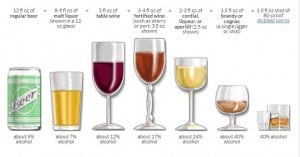
    Since much of the alcohol mentioned on this Top 10 list is much stronger than what we normally drink, it’s helpful to have something to compare it to. The following are your most typical alcoholic beverages and the percentage of alcohol each contains:

    • Beer, 4% to 5% alcohol content
    • Wine, 12% alcohol content
    • Fruit liquors, 28% to 32% alcohol content
    • Gin, 35% to 40% alcohol content
    • Vodka, 35% to 46% alcohol content
    • Rum, 40% to 46% alcohol content
    • Whiskey, 55% to 60% alcohol content

    The National Institutes on Alcoholism and Alcohol Abuse have created this graphic to help visualize the difference.

    However,, the alcohol percentages listed above are the average. What we’re about to list below are the ten strongest alcohols in the world. It’s vital to remember that drinking this amount of alcohol is very dangerous towards your health and well-being. Especially when getting behind the wheel.

    Every kind of alcohol sold on the market must be labeled under the Federal Alcohol Administration (FFA) Act. These labels will usually tell you the percentage of alcohol within each drink. Or, the label will give the “proof count”. For example, you purchase a whiskey which advertises itself as 100-proof. This is the doubled percentage of the alcohol content. Therefore, the whiskey you purchased has 50% alcohol within it.

    Alcohol addiction is a very serious disease and shouldn’t be left untreated. If you or anyone you love is struggling with alcohol addiction, you need to seek help as soon as possible. The longer you wait, the more time alcohol can ruin your life. Furthermore, if you happen to find any of the following alcohols within your liquor cabinet, it’s highly suggested you get rid of them. Again, these are the strongest alcohols the world has to offer and, likewise, the most dangerous.

    #10 – Absinthe (up to 72% Alcohol)

    Up until 2007, Absinthe was banned in the United States. This is primarily due to prior associations with the alcohol inflicting criminal-like behavior in those who drank it. Think mafia or just plain gangsters. Absinthe has psychoactive properties which caused seizures, thought to be caused by the grand wormwood plant – the source of Absinthe – and its production of thujone, a chemical which afflicts sleeplessness, convulsions, and hallucinations. It can be a serious danger and a lethal drug-of-choice.

    #9 – Bacardi 151 (75.5% Alcohol)

    Typically, people who drink Bacardi 151 do so through a variety of mixed drinks, such as combining it with fruit juice. . It is considerably one of the strongest rums ever created.

    However, this brand of Bacardi has been discontinued. The reason it’s no longer available for purchase is that people too often ignored the warnings of the drink being highly flammable. Due to this lack of inspection, many ended up exposing the bottle to open flames and experienced burns. If you still have a bottle of this lying around, it’s important to understand the fire safety risks involved with this alcohol.

    #8 – Devil Springs Vodka (80% Alcohol)

    Another highly flammable alcoholic beverage is Devil Springs Vodka. Coming in at 15 times stronger than your average beer, it comes to no surprise that this drink has found a market for abuse. It is especially popular with people and cultures who prefer vodka compared to other alcoholic beverages.

    As we climb the alcohol content ladder, it’s vital to remember that the stronger the alcohol is, the more dangerous it becomes to your health and the more susceptible the user ends up in terms of abusing it.

    #7 – Balkan 176 Vodka (88% Alcohol)

    An alcoholic drink so strong, it requires 13 health warnings on the bottle. The strongest drink made in Scandinavian, Balkan 176 is distilled three times over and is considered to be absolutely tasteless. This is dangerous, as without any pungent taste most associate with alcohol, this can leave the drinker consuming more and more, not realizing the potential harm he/she’s putting him/herself into.

    In fact, there are numerous reports of people experiencing alcohol poisoning and death due from drinking too much strong liquor in a short period of time.

    #6 – Pincer Vodka (88.8% Alcohol)

    Being the strongest alcohol Scotland produces, it comes to no surprise Pincer Vodka has similar qualities as Balkan 176. However, one major appeal of Pincer is the fact that it has such a low calorie count. So much so, there are people out there who claim they don’t get hangovers as bad as your average liquor.

    There is an obvious danger in this. One of the many qualities of alcohol that turns a social drinker off is the fact that they have to handle a hangover the next morning. Considering the calorie count of alcohol and what it can do to one’s health, it’s understandable that a responsible adult only drinks on occasions. However, since Pincer doesn’t offer these negative alternatives, there’s lies a stronger chance for abuse.

    #5 – River Antoine Royale Grenadian Rum (90% Alcohol)

    There’s a certain quality to River Antoine Royale Grenadian Rum. That is, the people who make it distill over a long period of time through an old, traditional pot stilling method. In turn, this gives it a very prominent flavor not usually found in alcohol with such a high percentage count.

    #4 – Bruichladdich X4+1 Quadrupled Whiskey (92% Alcohol)

    Balkan 176 Vodka is distilled three times over. But Bruichladdich X4 is distilled four times over, which is what gives it is name and appeal. Furthermore, it has a distinct taste which doesn’t match to most alcohols due to the fact that it’s aged in new oak casks.

    Due to the high level of alcohol content, we’re beginning to endeavor into very dangerous territory. This kind of alcohol can do serious harm to someone in a matter of minutes and it’s important to be aware of the fatal consequences alcohol can have if you’re not careful or properly prepared.

    #3 – Golden Grain (95% Alcohol)

    Golden Grain is made by the same people who make the next alcohol on this list and both drinks are actually very similar in appearance, taste, and effects they have on the user. It should be noted Golden Grain is illegal in certain parts of the United States.

    #2 – Everclear (95% Alcohol)

    Everclear was one of a kind when it came out, as no alcohol prior had could be labeled 190 proof. Furthermore, just like Pincer Vodka, it’s absolutely tasteless. As already mentioned, there are numerous dangers involved for those who decide to drink Everclear. Just as with all the alcohols on this list, addiction can happen much more quickly due to the fact that you need less of the drink to feel its effects.

    Furthermore, there are instances when an alcohol like Everclear is placed in someone’s drink without them realizing – a concept known as “drugging”. Inevitably, getting them much more inebriated than they intended to be or putting them in a dangerous position without their
    knowledge.

    #1 – Spirytus Rektyfikowany (96% Alcohol)

    Spirytus contains the most alcohol content by volume in the world. In fact, it’s not even legal in most states, due its potency. Though this alcohol is rare in the United States, it can be found in Poland or Eastern Europe, where it’s manufactured. Spirytus is without a doubt the most dangerous alcohol to intake and if you happen to run into it, or any of the other alcohols on our list, you should be aware of the risks this can have on your health.

    Alcohol’s Risk on Your Health

    Alcohol’s risk factors can be divided into two sections – the short term risks (those of which will appear either immediately or soon after drinking) and the long term risks (those of which will appear after drinking for months on end).

    The short term concerns primarily lie around over-drinking to the point of being incapable of inducing alcohol poisoning which can be fatal. Other health risks involved from short term use are:

    • Bluish tint to skin
    • Coma
    • Confusion
    • Loss of consciousness
    • Low body temperature
    • Seizures
    • Slow breathing
    • Vomiting

    Some people react to alcohol differently and even get sick from it, especially when they take too much of a beverage they can’t handle. If someone has a sensitivity to alcohol, they may feel the following:

    • Diarrhea
    • Facial flushing
    • Low blood pressure
    • Nausea
    • Worsening of asthma
    • Vomiting

    However, over time, people who drink alcohol frequently will develop a dependence. If this happens, they face the same health risks as the short term effects and more. These complications can include:

    • Brain and nerve damage
    • Cancer
    • Cardiomyopathy (damage to heart muscle)
    • Immune system dysfunction
    • Liver disease
    • Mental health issues (such as anxiety or depression)
    • Osteoporosis
    • Pancreatitis
    • Peripheral neuropathy
    • Stomach ulcers
    • Vitamin deficiency

    As you can see, an alcohol addiction is very serious and can have consequences on your health and well-being. If you or anyone you love is currently struggling with an alcohol addiction, it’s vital to seek out treatment as soon as possible.

    Check out this NIAAA blood alcohol content chart for more.

    Basics for Alcohol Addiction Treatment

    If you think that you have a drinking problem, finding help can be a life changing experience. The goal of treating an alcohol addiction is to look at life through a new, clearer perspective. And to understand oneself without the use of drugs. Alcohol addiction treatment happens in two important stages; detox and continued treated.

    During detox, your body rids itself of alcohol’s chemicals and returns to its normal, organic functioning – a state known as homeostasis. If you’re a chronic drinker or have developed dependence on alcohol, you’re going to feel withdrawal symptoms. The severity of these symptoms and how long they last all depends on your level of addiction.

    A reputable treatment facility will give you a proper medical assessment which will determine your level of physical dependence. ALWAYS SEEK MEDICAL ATTENTION WHEN WITHDRAWING FROM ALCOHOL. Symptoms can become dangerous or life-threatening. Common withdrawal symptoms include:

    • Agitation
    • Anxiety
    • Depression
    • Difficulty concentrating
    • Disorientation
    • Fatigue
    • Headache
    • Heightened sensitivity to light and sound
    • Irritability
    • Jumpiness or shakiness
    • Mood swings
    • Nausea
    • Nightmares
    • Sweating
    • Transient hallucinations (in more serious cases)
    • Tremor
    • Vomiting

    After your body withdraws, you’re going to need to take the time address your thinking. Again, how long this will take and how difficult it will be all depends on your level of addiction. Generally speaking, most people go through intensive psychotherapy for an initial 3-6 month period. Ongoing weekly therapy then lasts upwards of a year or more.

    Where to Find Help

     If you’re unsure as to where to turn, there are a variety of options at your disposal. Here are some suggestions:

    If you’re looking to talk to someone immediately, check out the following helplines:

    • Drug Hotline 877-736-9802
    • National Council on Alcoholism and Drug Dependence HopeLine 1-800-475-HOPE (4673)
    • National Institute on Drug Abuse – Drug and Treatment Information 1-800-6224357
    • National Suicide Prevention Helpline 1-800-273-TALK (8255) or 800-SUICIDE (784-2433)
    • Substance Abuse Helpline (available 24/7) 1-800-923-4327

    Furthermore, you can always call us for more information on how to find the right treatment facility. The helpline number listed on this page will connect you to American Addiction Centers (AAC). The helpline is offered at no cost and with no obligation to enter treatment. Caring admissions consultants are standing by to discuss your treatment options. So, if you are ready to get help, reach out and pick up the phone.

    We’re happy to help!

    Your Questions

    If you have any further questions about the strongest alcohols or how to treat alcohol addiction, we invite you to ask them below. If you have any advice to give pertaining to these topics, we’d also love to hear from you. We try to reply to each question promptly and personally.

    View the original article at