Tag: alcohol consumption

  • Worldwide Alcohol Consumption Continues To Rise

    Worldwide Alcohol Consumption Continues To Rise

    A new study predicts that 50% of all adults will consume alcohol by the year 2030.

    Consumption of alcohol across the world is still rising each year—and it’s not expected to stop any time soon, a new study reports

    The study, published in the journal The Lancet, looked at the trends in alcohol consumption from 1990 to 2017.

    Researchers found that over those 27 years, there was a 70% increase in the volume of alcohol consumed across the world, increasing from 5.5 billion gallons in 1990 to 9.4 billion gallons in 2017. 

    On average, researchers state, these numbers come out to an increase of about 1.7 gallons of alcohol each year. 

    While this seems like an enormous increase, researchers note that the growth could have to do with a growing population. 

    Among the study’s discoveries was the fact that alcohol consumption is increasing mainly in low- and middle-income countries, while high-income countries haven’t changed drastically. 

    “Our study provides a comprehensive overview of the changing landscape in global alcohol exposure,” study author Jakob Manthey of the Technical University of Dresden, Germany tells USA Today. “Before 1990, most alcohol was consumed in high-income countries, with the highest use levels recorded in Europe. However, this pattern has changed substantially, with large reductions across Eastern Europe and vast increases in several middle-income countries such as China, India, and Vietnam.”

    Overall, the study found that people in North Africa and the Middle East drink the least, while individuals in Central and Eastern Europe consume the most alcohol. 

    The study predicts that by the year 2030, 50% of all adults will consume alcohol, with 23% binge drinking at least once monthly. The study examined data from 189 countries, and Manthey says that by then, Europe will likely no longer be at the top of the list consumption-wise.

    If this prediction holds true, Manthey says that reduction efforts from the World Health Organization will not be reached. 

    “Based on our data, the WHO’s aim of reducing the harmful use of alcohol by 10% by 2025 will not be reached globally,” Manthey said, according to USA Today. “Instead, alcohol use will remain one of the leading risk factors for the burden of disease for the foreseeable future, and its impact will probably increase relative to other risk factors.” 

    However, not everyone agrees that this will be the case. The Distilled Spirits Council tells USA Today that the study’s findings may not be accurate. 

    “This forecast is based on a questionable model that does not accurately reflect the long-term global reductions in alcohol abuse,” the council told USA Today via email. “In fact, the study’s findings contradict the latest data from the World Health Organization’s Global Status Report on Alcohol and Health 2018, which showed important reductions in key global alcohol abuse indicators including alcohol related deaths and heavy episodic drinking from 2010 to 2016.”
    View the original article at thefix.com

  • Study: Drinking A Bottle Of Wine A Week As Bad As Smoking 5 to 10 Cigarettes

    Study: Drinking A Bottle Of Wine A Week As Bad As Smoking 5 to 10 Cigarettes

    A new study is the first to investigate the “cigarette equivalent” of alcohol’s cancer risk.

    A new study from the United Kingdom compares drinking a bottle of wine in seven days to smoking five to ten cigarettes.

    BMC Public Health published the study, the first to attempt to find the “cigarette equivalent” of alcohol’s risk of causing cancer. Women and men in the study had different results—for women, a bottle of wine a week equals the cancer risk of five cigarettes, and for men, it is ten cigarettes.

    “Everybody knows that cigarettes cause cancer,” Dr. Richard Saitz, an addiction medicine specialist and chair of the Department of Community Health Sciences at Boston University School of Public Health, told Live Science. “Hearing that some amount of alcohol is the equivalent of some amount of cigarettes” in cancer risk is a good way to spread awareness, Saitz said.

    Saitz noted that the cancer risk of alcohol has been “under the radar,” and the researchers in the study agree. Multiple studies connecting moderate drinking to health risks have been published in the last few years.

    It had been widely believed that moderate drinking reduced a gambit of health risks, but new research has tied moderate drinking to higher blood pressure, stroke risk, and now possibly increased lifetime cancer risk.

    According to Live Science, lead study author Dr. Theresa Hydes, of the Department of Gastroenterology and Hepatology at the University Hospital Southampton NHS Foundation Trust, said, “Our estimation of a cigarette equivalent for alcohol provides a useful measure for communicating possible cancer risks that exploits successful historical messaging on smoking. We hope that by using cigarettes as the comparator we could communicate this message more effectively to help individuals make more informed lifestyle choices.”

    One bottle of wine (the alcohol used in the study) contains near 80 grams (2.8 ounces) of pure alcohol. Using national data from the UK, the study looked at lifetime risk of cancer in the general population, including published research on the relationship between smoking, alcohol, and cancer.

    Non-smoking men who drank one bottle of wine a week were estimated to have a 1.0% increase in lifetime cancer risk. Non-smoking women who drank the same were estimated to have a 1.4% increase in lifetime cancer risk.

    The research presumes that women are at higher risk due to the connection between alcohol consumption and increased breast cancer rates.         

    View the original article at thefix.com

  • Are Millennials Redefining Sobriety?

    Are Millennials Redefining Sobriety?

    Millennials may be choosing to lean into moderation more than other generations. 

    American consumers have traditionally been divided into two camps: those who drink, and those who abstain completely—often because they are in recovery. However, young Americans seem to be pushing back on that dichotomy by taking a more moderate and measured approach to drinking. 

    Sam Thonis, who operates a sober bar, told The Atlantic that he has seen a change in attitude among patrons.  

    “It feels to me like the older people are, the more they see [our bar] as a thing for sober people. They see it as black or white—you drink or you don’t drink,” Thonis said. “With younger people, there’s a lot more receptiveness to just not drinking sometimes.”

    Despite more talk about less drinking, it’s hard to measure the trend. 

    “There isn’t any great statistical evidence yet that young adults have altered their drinking habits on a grand scale,” Amanda Mull writes for The Atlantic. “Changes in habit often lag behind changes in attitude, and national survey data on drinking habits reflect only small declines in heavy alcohol use.” 

    Cassie Schoon, of Denver, said that she started to reexamine her drinking habits after a particularly bad hangover following election night 2016. 

    “I was in this meeting feeling absolutely miserable, and I was like, You know, this is not what grown-ups do,” she said. 

    Today, she still drinks, but much less than she used to. Rather than always meeting friends at a bar, she is just as likely to meet at a museum or for coffee, the 37-year-old said. 

    “[Drinking] has to be more of an occasion for me now, like someone’s birthday or a girls’ night. So it’s once every couple of weeks instead of a weekly occurrence.”

    Leanne Vanderbyl, of San Francisco, had a similar realization as she aged. “It wasn’t until I hit my 30s that I realized that alcohol was no longer my friend.”

    For others, the decision to drink less is about weighing priorities. 

    “I’ve already calculated how much I’m saving by not drinking, and I’m thinking about where I can put that money now,” said Alex Belfiori, 30. 

    Therapist Britta Stark, who works with people with addiction, said that many millennials have healthy self-care practices in place, so they’re not left reaching for the bottle after a stressful day. 

    “There does come a time when there has to be some introspection. Folks in the millennial generation have maybe a better sense of balance,” she said. “Some do yoga or meditation or are physically active, so they don’t need to find stimulation and stress reduction in substances.”

    View the original article at thefix.com

  • How Alcohol Can Harm People Who Don't Drink

    How Alcohol Can Harm People Who Don't Drink

    A new study examined the ways that alcohol can cause third-party harm.

    People who don’t drink a drop can still be harmed by alcohol, according to a new study. 

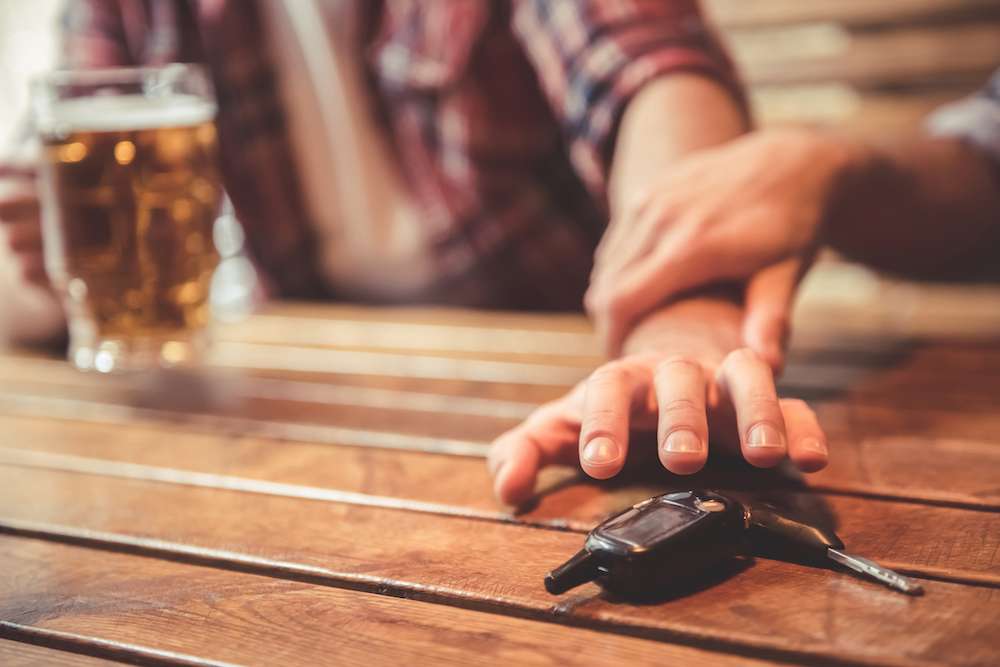
    The study, published in BMC Medicine, looked at the health consequences of alcohol, even for people who don’t drink. The researchers found that through car accidents, physical assaults, and the effects of alcohol on pregnancy, thousands of people who do not drink are hurt or killed by alcohol each year in Germany.

    Although researchers looked at only one country, they say the study proves that alcohol can cause third-party harm or loss of life. 

    “These study’s estimates indicate there is a substantial degree of health harm to third parties caused by alcohol in Germany. While more research on harms to others caused by alcohol is needed to provide comprehensive estimates, the results indicate a need for effective prevention,” the study authors wrote.

    The authors took a fairly conservative approach to estimating the number of car accidents, violence and birth defects where alcohol was a contributing factor. They found that alcohol was involved in 45.1% of third-party traffic fatalities (this did not include drunk drivers who killed themselves).

    In addition, alcohol was estimated to be a factor in 14.9% of deaths caused by interpersonal violence. It also contributed to birth defects in nearly 3,000 babies born in 2014 alone. 

    “The harmful effects of alcohol on others need to be recognized as a public health problem in the same way as are the harmful effects on the drinker or the costs to society,” the study authors wrote. “The present findings of harms to others related to alcohol use during pregnancy, drunk driving, and interpersonal violence using the best available data reveal that alcohol may not only cause harm to the drinker but may also harm a substantial number of third parties.”

    The study authors pointed out that most research has focused on alcohol’s harms to drinkers, while other studies have focused on the financial cost to society. However, interpersonal harm from alcohol hasn’t been studied in depth because it can be hard to measure. 

    Although the authors focused on harms from three conditions that are relatively easy to measure, they pointed out that alcohol can also cause social harms that are more difficult to study. 

    “Sober people walking home at night may be harassed and injured by drunken pedestrians or may be attacked while attempting to separate intoxicated young people who are fighting,” they write. “Children may suffer problems caused by a drinking father or mother, and continued heavy drinking during pregnancy may severely harm the health of the newborn.” 

    View the original article at thefix.com

  • Students "Take Back" Billboards To Reduce Alcohol Advertising

    Students "Take Back" Billboards To Reduce Alcohol Advertising

    Students at the school said that alcohol use among teens is universally accepted so their anti-drinking campaign is necessary. 

    A school in California is trying to reduce the number of alcohol advertisements that its students see by purchasing billboard ad space and replacing alcohol ads with messages that encourage kids to avoid drinking. 

    A nonprofit associated with Roosevelt High in Fresno purchased the ad space and replaced it with an ad showing teens who chose education over alcohol. There are plans for at least one more billboard in Fresno. 

    Fresno Unified Superintendent Bob Nelson told ABC30, “For folks that are making good choices and prioritizing education over drugs and alcohol that you have some like-minded colleagues. So kids finding each other and willing to say hey I’m not willing to let anything get in my way of college is a really strong message.”

    The billboard that is up now shows eight students from Roosevelt High with the caption “I choose my education over alcohol.” 

    Students at the school said that alcohol use among teens is universally accepted, so taking a dramatic stance with something as visible as billboard is important. 

    Sophomore Nicole Lee said, “When we go to parties, my uncles would give my cousins drinks when they’re 18, so you’re basically breaking the law. I came to a point where I’m taking a stand so I’m going to do something to change that.” 

    Christina Garcia, another sophomore, agreed that talking about the dangers of alcohol for teens is important. 

    “Coming from me as a youth I have friends that say drinking is this and drinking is my life and OK it’s your life but what about your life. You’re just going to throw away your life for alcohol,” she said.

    Despite the experiences of teens at Roosevelt High, researchers have found that teen drinking rates are actually decreasing. According to researchers who conducted the Monitoring The Future survey, which looks at substance use among middle and high school students, teen drinking peaked in 1997 and has decreased 60% since then. 

    Last year, binge drinking among seniors in high school decreased by 2.8%. Fourteen percent of high school seniors reported that they had engaged in binge drinking in the prior two weeks. 

    At the same time, vaping of nicotine and marijuana has increased dramatically among teens, worrying health providers. More than 7% of teens reported that they had vaped marijuana in the past 30 days, while the percent of teens who had vaped nicotine doubled to 21%.  

    View the original article at thefix.com

  • Can Having One Drink A Day Affect Your Health?

    Can Having One Drink A Day Affect Your Health?

    A new study investigated the connection between moderate drinking and hypertension.

    It’s long been suggested by studies that moderate alcohol consumption can be good for the heart—but a new study finds otherwise.

    Dr. Amer Aladin, a cardiovascular medicine fellow at Wake Forest Baptist Health, led the study which looked at over 17,000 American adult’s medical records. They found a correlation between as little as one drink a day and increased risk for hypertension, or high blood pressure–a know risk factor for heart attack.

    The increased risk for hypertension was two-fold for moderate drinkers, the research showed. The study defined Stage 1 hypertension as a systolic top blood pressure reading of 130 to 139 mmHg and a diastolic bottom reading of 80 to 90 mmHg. Stage 2 hypertension was defined as a systolic blood pressure of 140 mmHg or higher and a diastolic reading of 90 mmHg or more.

    “I think this will be a turning point for clinical practice, as well as for future research, education and public health policy regarding alcohol consumption,” lead author Dr. Aladin told NBC News. “[This is] the first study showing that both heavy and moderate alcohol consumption can increase hypertension,” he said.

    It is important to note that because the study was observational, it can only show a correlation between drinking and hypertension—it does not prove cause and effect. 

    The Wake Forest researchers, led by Dr. Aladin, looked at the Third National Health and Nutrition Examination Survey (NHANES III), a large decades long study led by the Centers for Disease Control and Prevention. This data included 17,059 U.S. adults who signed on to NHANES between 1988 and 1994.

    The five groups included abstainers; former drinkers; those who consumed one to six drinks a week; those who consumed seven to 13 drinks a week; and heavy drinkers who consumed 14 or more drinks a week.

    Factors taken into account were age, sex, race, smoking status, physical activity BMI, cholesterol, and diabetes. Comparing moderate drinkers with non-drinkers, the drinkers were 1.5 times more likely to develop stage 1 hypertension and twice as likely to develop stage 2 hypertension. Heavy drinkers were 2.5 times more likely than non-drinkers to develop severe hypertension.

    Dr Marcin Kowalski directs cardiac electrophysiology at Staten Island University Hospital in New York City. He told Health24 that the study “gives us more insight to the negative effect of alcohol on the cardiovascular system.” He continued that Americans drink too much and “should be encouraged in the general population and especially in patients at higher risk for developing hypertension”.

    View the original article at thefix.com

  • Can Binge Drinking Alter DNA?

    Can Binge Drinking Alter DNA?

    For a new study, scientists investigated whether heavy drinkers experienced genetic changes due to their alcohol consumption.

    Researchers have determined that binge drinking may alter a person’s genetic makeup and result in an even greater desire to consume alcohol.

    A recent study suggested that two genes that help to control drinking behavior become altered, and as a result, have different responses in individuals who classify as binge or heavy drinkers.

    The study appears to underscore the notion that genetics play a more significant role in alcohol and drug dependency, as well as the possibility for scientists to determine a predisposition for addiction.

    The study, conducted by researchers from Rutgers University and Yale University and published in the journal Alcoholism: Clinical and Experimental Research, focused specifically on genetic responses produced in binge or heavy drinkers—which according to the Centers for Disease Control and Prevention (CDC) are defined as men who consume five or more alcoholic beverages in a two-hour period, and women who consume four or more in the same period, resulting in a blood alcohol concentration of 0.08% or above, at least four times per month. 

    The two genes at the center of the study are PER2 and POMC, both of which are involved in the regulation of drinking behavior. PER2 plays a role in the body’s biological clock, while POMC regulates the stress response system, according to a press release from Rutgers.

    In binge drinkers, both genes were found to exhibit a change caused by alcohol called methylation, which employs a chemical tag that retains the DNA sequence of the gene but also retains the ability to turn those genes on or off.

    As the Philadelphia Inquirer noted, environmental stressors like drugs or alcohol, but also emotional stress, can cause methylation in different genes.

    To support the notion of genetic change due to alcohol, groups of test subjects—differentiated by their level of drinking (moderate, heavy and binge)—were shown stress-related, neutral or alcohol-related images, as well as containers of beer, and were allowed to taste beer while their motivation to drink was evaluated.

    The researchers found that binge and heavy drinkers who exhibited signs of genetic change also showed an increased desire to consume alcohol.

    Though the exact impact of the DNA change will require additional research, the study authors believe that focusing on genetic alteration will lead to the discovery of a biomarker, or genetic indicator, that can determine if a person is more likely to develop an alcohol or drug dependency.

    “That’s always been the hope of all mental illness,” said Bill Jangro, medical director for the division of substance abuse programs at Thomas Jefferson Hospital, to the Inquirer. “That we would find a medical cause that is somehow reversible.”

    View the original article at thefix.com

  • Are Social Pressures Making Women Drink More?

    Are Social Pressures Making Women Drink More?

    A recent op-ed examined some of the reasons why women are drinking more alcohol than ever before.

    Drinking used to be thought of as a boys’ club, and men have traditionally used alcohol had higher rates than women. However, in recent decades women’s drinking has expanded dramatically, and social factors may be to blame. 

    According to the CDC, the percentage of American women who drink more than once a week has increased dramatically, from 45% in 2002 to 67%. 

    Writing for The Bold Italic, Ginny Hogan examined the social pressures that may be affecting the rate in which women are drinking. 

    “The reality is that women often drink for different reasons than men do, and it’s not a stretch to think that those reasons often stem from social pressures that women face but men don’t,” Hogan writes. 

    Many women feel pressured to relax, even as they deal with higher levels of anxiety than men. Rather than showing that stress to people in their lives, many women opt to drink to mask it. 

    “When we put social pressure on women to not ever appear stressed or anxious, I worry that we instead make alcohol a more appealing option,” Hogan writes. 

    In addition, alcohol has become a marker of many female social groups, whether it is symbolizing high-powered career women or moms who gather together and bond over wine. 

    “Society tends to admire women who can play hard and work hard — to be cheerful and warm even in the face of negative surroundings or working conditions,” Hogan writes. 

    In popular culture, successful women are often shown sipping a drink. 

    “Tumblers of brandy, whiskey sours and fishbowls of merlot are synonymous with female glass-ceiling-smashing in TV shows like The Good Fight, The Good Wife, Scandal, Killing Eve, The Killing; I honestly can’t think of a successful female protagonist on TV who isn’t a hard drinker,” said Catherine Gray, author of The Unexpected Joy of Being Sober.

    Finally, dating while sober can put even more pressure on women. 

    “I definitely feel like not drinking ups the stakes for going on a date with me — if getting a drink is the most casual meet-up, it’s like, ‘I’m sorry, you need to commit to coffee and a day date, and I’m now occupying your weekend,’” comedian Molly Brown told Hogan. 

    Ultimately, pushing back on some of these social pressures could be a way to help women reduce their drinking, if that’s something they desire, Hogan writes. 

    “I want women to feel OK being in bad moods, to speak up if someone is mistreating them, to be comfortable with boring their date and to turn down happy-hour invitations. If women are able to do this more often, I wonder if we could use alcohol as a way to enhance our lives instead of often suppressing them,” she wrote. 

    View the original article at thefix.com

  • Do Studies Touting Benefits Of Alcohol Consumption Tell The Whole Story?

    Do Studies Touting Benefits Of Alcohol Consumption Tell The Whole Story?

    For young and middle-age adults, alcohol consumption may actually be more harmful than previously thought.  

    Studies that point to alcohol consumption as beneficial may only be telling part of the story, as they tend to focus on those aged 50 and older, and disregard alcohol-related deaths before that age, according to new research.

    For young and middle-age adults, alcohol consumption may actually be more harmful than previously thought.  

    Researchers in a recent study, according to Live Science, looked at information from a database which estimates the U.S.’s approximate number of deaths and years of life lost due to alcohol intake.

    Included in the database were 54 medical conditions related both directly and indirectly to alcohol use, like car crashes involving alcohol and liver-related diseases. Some of the conditions, such as cardiovascular disease, linked alcohol with a reduced risk of the condition. 

    In studying the data, researchers led by Timothy Naimi of Boston Medical Center’s Clinical Addiction Research and Education Unit determined that in the four years from 2006 to 2010, around 36% of alcohol-related deaths were in those ages 20 to 49, and 35% were in those older than 65.

    Additionally, Live Science reports, researchers noted that about 60% of the years of life lost were in those ages 20 to 49, and only 15% were in those ages 65 and older. 

    The authors note that “deceased persons cannot be enrolled in cohort studies,” and add that, “Those who are established drinkers at age 50 are ‘survivors’ of their alcohol consumption who [initially] might have been healthier or have had safer drinking patterns” when compared to others who drank. 

    In order to determine any benefits of alcohol consumption, researchers took note of fatalities “estimated to be ‘prevented’ by alcohol consumption, as well as years of life ‘saved by alcohol,” according to Live Science.

    They found that those ages 20 to 49 accounted for about 4.5% of deaths supposedly prevented by alcohol, in comparison to 80% in those ages 65 and above.

    In conclusion, the authors note that those in the younger age ranges “are more likely to die from alcohol consumption than they are to die from a lack of drinking.” They add that those in older age brackets are more likely to reap benefits from drinking, and are likely the ones highlighted in studies that point to benefits of alcohol consumption. 

    “This study adds to the literature questioning protective effects for alcohol on all-cause mortality,” the authors add. 

    View the original article at thefix.com

  • Will Drinking Liquor Before Beer Actually Prevent A Hangover?

    Will Drinking Liquor Before Beer Actually Prevent A Hangover?

    A new study examined whether drinking alcohol in a certain order or by a certain color could prevent a hangover.

    There are many old tales about how to cure hangovers or prevent them altogether. 

    Perhaps one of best-known “rules” to drinking is that the order in which you down your drinks—whether it is hard liquor, wine, and beer—can affect the severity of a hangover. There are even little rhymes to accompany this, such as “Liquor before beer, you’re in the clear,” or “Beer before wine, you’ll be fine.”

    But a new study has discredited this idea, claiming that no matter what type of alcohol a person consumes first, their hangover will be the same. 

    To determine this, senior clinical pediatrics fellow Dr. Kai Hensel of the University of Cambridge in the UK and his colleagues conducted a two-year study. 

    For the study, they gathered 90 German students in the medical and psychology fields, ages 19 to 40. Each individual in the study, according to Time, was matched with two others of about the same age, body mass, sex, and drinking habits. 

    After eating a filling meal, the researchers instructed one member from each group of three to drink around 2.5 pints of lager beer, or to drink until their breath alcohol concentration was .05%. Following that, they drank around four glasses of white wine, until reaching .11%. 

    At the same time, a second member of the group drank the same amount but in the opposite order, while the third drank only wine or only beer. Then, each member was given cold water and instructed to go to bed.

    The following week the participants did the same thing again, but opposite what they had drank in the prior week. 

    Each week, according to Time, the participants tracked and rated the severity of their hangovers. Common hangover symptoms like headaches, nausea and dizziness were reported, and 21 of the participants said they vomited at some point. 

    Despite the groups drinking alcohol in various orders, the researchers did not find any glaring difference from group to group. 

    The researchers did determine that women seemed to feel worse than men when it came to hangovers. They also found that a person’s breath alcohol concentration did not correlate with the strength of their hangover, but vomiting and how intoxicated someone felt did. 

    In conclusion, the researchers determined that using common sense and following moderate drinking guidelines is the best way to avoid feeling hungover. 

    “Just asking the participant, ‘How drunk are you?,’ if they are really drunk, is the best predictor,” Hensel said, according to Time. “You don’t have to do all that research. Just ask yourself.”

    View the original article at thefix.com