Tag: alcohol consumption

  • Being "Sober Curious" Helps Some Explore Relationship With Alcohol

    Being "Sober Curious" Helps Some Explore Relationship With Alcohol

    “Being sober curious is about ­questioning every impulse or expectation to drink and using the answers to inform whether or not you actually drink,” says the author who coined the term.

    Make room, Dry January—there’s another sobriety exploration method in town. 

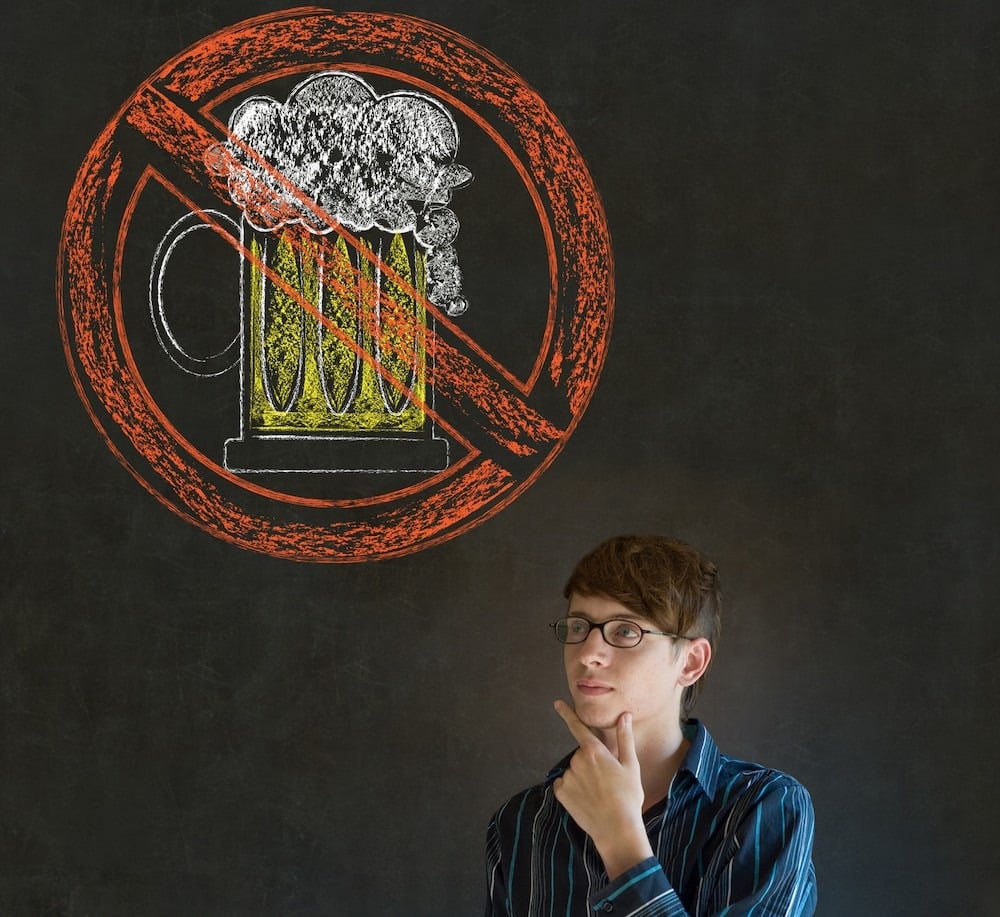
    In recent months, the term “sober curious” has become more prominent. Rather than abstaining completely from alcohol, those who are sober curious may choose to take a break from drinking and give some thought to their relationship with alcohol. 

    The concept, according to Time, was coined by Ruby Warrington and is the title of her new book as well. 

    In the book, Warrington explores the idea of reexamining one’s relationship with alcohol. Time reports that while Warrington never struggled with substance use disorder, she did use alcohol to be more at ease in social situations and to cope with or cover her feelings. 

    “Being sober curious is about ­questioning every impulse or expectation to drink and using the answers to inform whether or not you actually drink,” Warrington tells Cosmopolitan

    While Warrington doesn’t necessarily press the idea that alcohol should be cut out of one’s life forever, she does think there are benefits to stepping back from it. She says, according to Time, that rather than squeeze out confidence from alcohol, it can come from healthier methods, like positive affirmations and power poses. 

    In addition to helping her mentally, Warrington tells Cosmopolitan that cutting down alcohol helped her feel better physically. “My anxiety levels were lower. I woke up fresh. I had so much more energy,” she said.

    In the book, Warrington also addresses the idea of FOMA, or “fear of missing alcohol.” She provides some advice to get around this fear, such as taking part in new hobbies or ditching dinner plans and going out for brunch instead. 

    Psychotherapist Alison Stone tells Bustle that being “sober curious” isn’t restrictive and allows people to make decisions based on their feelings. 

    “Identifying as sober curious prevents us from falling into a black and white way of thinking, feeling, and behaving,” she said. “It can help us better understand our relationship with alcohol, too—when do we drink more than we intended to? Are we drinking because we want to, or because we feel we need to? Having curiosity opens up the possibilities to better understand ourselves and our motives for doing things.”

    Stone adds that when something in one’s life is restricted or completely off limits, it may just make that person want it more. In that way, being sober curious is beneficial. “That is partially due to the psychological impact of making an extreme decision—there are often parts of us that want to do the exact opposite of that decision,” Stone stated. 

    But while being sober curious may work for some, others may need to stick to complete abstinence from alcohol. 

    View the original article at thefix.com

  • Dry January's Popularity Leads More Bars To Mix Non-Alcoholic Drinks

    Dry January's Popularity Leads More Bars To Mix Non-Alcoholic Drinks

    Bars are crafting specialty drinks with flashy names to draw in alcohol-free customers during the month of January.

    The Dry January public health campaign started several years ago by a group called Alcohol Change UK, a London-based advocacy group. Now the campaign has spread to the U.S., and many New York bars are finding themselves mixing mocktails (cocktails without alcohol) for their customers.

    This is great news for those trying to abstain or reduce their alcohol consumption, making it easier to do a night on the town with friends and still participate in the festivities—without the drinking.

    New York bars such as Existing Conditions are crafting specialty drinks with flashy names to draw in alcohol-free customers, such as the “Serendipity,” a drink with a tomato and passion fruit blend.

    At $16, the drink is expensive but delicious—just refrain from calling it a mocktail. According to Channel Three News, owners Dave Arnold and Don Lee say, “It contains the word ‘mock.’ Why would I want to mock the guest who’s coming in?” Arnold and Lee want to take their customers seriously, they say—alcohol drinkers or not.

    They continue, “We put more time and effort into going from a raw ingredient to a final product, because that’s what it takes to put that much flavor into something without alcohol.”

    Not all bars are happy about Dry January.

    “We hate it!” says Johnny Swet, a bar owner in New York. “You don’t see your regulars. Where are they?” he says. “A guy comes in for four or five bourbons, four or five nights a week, and then you don’t see him. Is he out of town? His friends say, ‘He’s not drinking this month.’ Oh lord.”

    Swet says that January has gotten so slow that he is encouraging his bartenders to go on vacation. Tips are down by as much as 25%. The average person at a bar might drink two or three cocktails in one sitting, but just one or two mocktails, says Rick Camac at the Institute of Culinary Education in The Wall Street Journal.

    Mocktails also often involve complicated recipes with pricey ingredients, and fresh-squeezed juice in an alcohol-free drink can cost more than the alcohol itself. $16 is the average cost for a virgin drink, and customers aren’t always willing to pay that much.

    Though Dry January may not be good for business, the month-long public health campaign is about health and wellness. Mintel Senior Beverage Analyst Caleb Bryant told Channel Three News, “For some that means reducing alcohol consumption, or abstaining from alcohol entirely.”

    View the original article at thefix.com

  • Smoking, Alcohol Use Linked To Different Brain Areas

    Smoking, Alcohol Use Linked To Different Brain Areas

    A new study suggests that individuals who smoke may do so in order to increase their brain connectivity with nicotine.

    Connectivity in certain areas of the brain may affect smokers’ and drinkers’ tendencies to continue the behavior, new research has found. 

    The study, done by researchers in the department of computer science at the University of Warwick, looked at the neural mechanisms connected to two types of substance use: drinking alcohol and smoking. 

    Researchers studied 2,000 study participants, according to Science Daily. In doing so, they discovered that those who smoked had low connectivity, particularly in the lateral orbitofrontal cortex, which is a brain region that is connected with impulsivity.

    This suggests, according to researchers, that individuals who smoke may do so in order to increase their brain connectivity with nicotine, which has a stimulating effect. It also suggests that being impulsive may play a role in beginning and continuing to smoke. 

    In drinkers, researchers noted that there was high overall connectivity in the brain, particularly in the brain region associated with reward, which is the medial orbitofrontal cortex. The stimulation in this reward center, according to researchers, may be what leads some individuals to drink. 

    “Importantly the extent of these functional connectivity changes in the brains of drinkers and smokers correlated with the amount of alcohol and nicotine being consumed,” Science Daily stated. “Critically they were even detectable in individuals smoking only a few cigarettes or drinking one unit of alcohol every day.”

    Researchers also noted that it may be possible to study an individual’s connectivity at age 14 to predict whether they would smoke or drink at age 19. 

    “These discoveries help to show that there are different neural bases of different types of addiction, and that the orbitofrontal cortex, a key brain region in emotion, is implicated in these two types of addiction,” said Professor Edmund Rolls from the University of Warwick. 

    According to Professor Jianfeng Feng, also from the University of Warwick, the findings of this study could be vital when it comes to public health implications. Feng cited a World Health Organization study which states there are 1.1 billion people in the world who smoke and 2.3 billion who drink. He also noted that more than 3 million people die annually due to alcohol use disorder.

    “These are key discoveries that advance our understanding of the neurological bases of smoking and drinking and also provide new evidence on the different neurological mechanisms that are related to these two types of human addictive behavior, smoking and drinking, and these advances have implications for prevention and treatment of these two substance use,” Feng noted. 

    View the original article at thefix.com

  • Your Body Processes Alcohol Differently As You Age

    Your Body Processes Alcohol Differently As You Age

    Experts detail the way our bodies process alcohol as we age.

    Hard partying might seem like a young person’s game, but experts warn that people need to be conscious of their alcohol intake as they get older, because aging changes how the body processes alcohol and the reasons why people drink. 

    “You may not realize it, but as we age, we become more vulnerable to developing an alcohol use disorder, more commonly known as alcoholism,” Brad Lander wrote in a blog post for The Ohio State University Wexner Medical Center and Ohio State’s College of Medicine, where he is a psychologist and addiction medicine specialist.

    Biology is partially to blame, Lander said. As people get older, the body breaks down alcohol more slowly, so alcohol stays in the body for longer. At the same time, tolerance for alcohol decreases. 

    “Even if you don’t develop an alcohol use disorder, it’s important to know that your body processes alcohol less efficiently the older you get,” he wrote. 

    Another risk for older adults who drink is that alcohol will interact with medications they are on, causing unintended side affects. 

    “[Alcohol] also can decrease the effectiveness of some medications and highly accelerate others, including over-the-counter medications such as aspirin, acetaminophen, sleeping pills and others,” Lander wrote. 

    In addition, many older adults might drink alone as a way to deal with isolation or depression, he noted. 

    “The reasons why people are drinking may change as they grow older,” he said. “Chances are, younger and middle-aged people are more likely to drink in social gatherings or celebrating with family and friends, while seniors may drink more to seek relief from the boredom, loneliness and grief that are common with aging.”

    Although the amount people can drink will vary, Lander said that on average a senior shouldn’t have more than seven drinks in a week or three drinks in a sitting. Drinking more than that can lead to health complications including increased risk of falls, worsening of chronic health conditions like diabetes or heart disease and increased risk of dementia. 

    Lander pointed out that even among people who follow these guidelines, about 2% will develop an alcohol use disorder. 

    Lander suggested that older adults start by being more mindful of when and why they are drinking. They should also eat food when they drink in order to slow alcohol absorption. 

    “A lot of drinking is ‘thoughtless,’ so simply ask yourself, ‘Do I really want a (or another) drink?’” Lander wrote. “Stand up to peer pressure to drink. Remember, you don’t have to drink.” 

    View the original article at thefix.com

  • Could Higher Taxes Affect Binge Drinking?

    Could Higher Taxes Affect Binge Drinking?

    A new op-ed makes the case that higher taxation could reduce excess drinking. 

    Decreasing the amount of binge drinking in the country could be as simple as increasing taxes, according to a recent piece by The Washington Post editorial board.

    The board notes that 60 years ago, about 40% of American adults smoked cigarettes, whereas fewer than 20% do today. According to the board, this decrease has to do with the increase in cigarette taxes — and binge drinking should be treated in a similar manner. 

    The board cites a Johns Hopkins study from this year, which examined two tax increases in the state of Maryland. One was a 50% increase in alcohol sales tax in 2011 (bringing it to 9%), and the other was doubling the excise tax on a pack of cigarettes, bringing it to $2. In both cases, the board writes, consumption of the products went down quickly.

    “Opponents of such increases are often quick to denounce nanny-state politics, but government has a responsibility to promote public health,” the Post board wrote. “Cigarette and alcohol consumption exact a terrible toll, and not just on users; witness the impact of binge drinking on families and children, not to mention the carnage on the nation’s highways attributable to drunken driving.”

    More specifically, the study determined that in Maryland in 2015, retailers sold about 30% fewer packs of cigarettes than in 2007, which was the year before the excise tax was put into effect. Researchers determined that much of that decrease came quickly after the price increase. The change also affected minors, as researchers state teens who said they had smoked at least one time in the past 30 days decreased in that same span of eight years. 

    When it came to the increase in alcohol tax, the results were similar. According to the editorial board, researchers in another study examining police crash reports in Maryland found that the number of teenagers in alcohol-related crashes decreased by 12% annually in 11 years from the tax increase. Among drivers as a whole, the decrease was 6% annually. 

    The Johns Hopkins study also determined that alcohol intake decreased, as researchers said adult binge drinking in the state dropped by 17%, five years after the alcohol tax was enacted. 

    According to the board, those who oppose such increases may not be thinking about the whole picture. 

    “Among the arguments from opponents of such taxes is that they fall disproportionately on low- and middle-income people,” the board writes. “That’s true. It is also true that by reducing consumption (which weighs on wallets), they relieve the burden of long-term health care costs on those same people. That’s part of the compelling argument for public-health taxes, and why lawmakers are justified in imposing them.”

    View the original article at thefix.com

  • Which State Ranked Worst For Excessive Drinking?

    Which State Ranked Worst For Excessive Drinking?

     “America’s Health Rankings” report cited this state for its abnormally high percentage of adults who consume alcohol at a rate higher than the national average. 

    A new report released by the United Health Foundation, a non-profit group dedicated to improving American health care, claims that Wisconsin is the worst state in the US when it comes to excessive drinking.

    In the foundation’s 29th annual “America’s Health Rankings” report, the Badger State was cited for its abnormally high percentage of adults who consume alcohol at a rate much higher than the national average. Factoring in community, environment, health outcomes and public policy (among other concerns), the report concluded that nearly a quarter of all adults in Wisconsin (24.2%) drank alcohol to excess. 

    The Foundation defines “excessive drinking” by using two separate categories: “binge drinking” and “chronic drinking.”

    Binge drinkers include women who consumed four or more drinks on one occasion within the past 30 days (five drinks for men), while chronic drinkers are women who consumed eight or more alcoholic drinks per week (15 drinks for men). 

    By contrast, the best-ranked state was Utah, as only 12.2% of its adults reported excess drinking there. The study also found that men, young adults and adults in higher-income homes are far more likely to drink to excess than women, older adults or adults in comparatively lower socioeconomic brackets. 

    On the same day the report was released, Wisconsin’s Department of Transportation announced an anti-drunk driving campaign. Geared toward holiday drinkers, the state’s “Drive Sober or Get Pulled Over” campaign involves over 100 law enforcement agencies across the state, which are all grouped into 25 separate task forces. 

    Overall, Wisconsin boasts roughly 3,800 law enforcement officers across those task forces—all of whom are trained with Advanced Roadside Impaired Driving Enforcement (ARIDE), a program developed by the National Highway Traffic Safety Administration to train police officers how to “observe, identify, and articulate the signs of impairment related to drugs, alcohol or a combination of both, in order to reduce the number of impaired drivers and impaired driving related traffic collisions.” 

    In terms of where Wisconsin falls in relation to the country’s overall health, it ranks 23rd out of the 50 states. (Last year, it ranked 21st.) The United Health Foundation also noticed a 16% increase in mortality and chronic disease in the state, including obesity. Premature death increased by 6% in Wisconsin, too.

    According to Wisconsin Public Radio (WPR), only $52 is spent per person on public health funding as opposed to states like Alaska, which spends $281 per person.

    “These rankings are indeed a wake-up call for all the people that are involved in such activities, and the state on the whole as well, and certain measures must be taken to address such situations which may not seem to have severe effects directly, but sure can be a cause for concern as they may affect many things indirectly, before it is too late for the same,” writer Jessica Pittard observed

    The Foundation’s annual report listed Alabama, Mississippi and Louisiana as the country’s most unhealthy states, while Hawaii, Massachusetts and Connecticut sat at the top as the healthiest.

    View the original article at thefix.com

  • Does Climate Affect Alcohol Intake?

    Does Climate Affect Alcohol Intake?

    Researchers investigated whether there was a connection between alcohol intake and climate for a new study.

    Could the climate where you live be leading you to drink more?

    Recent research says yes. 

    According to The Independent, a new study determined that across the country and the world, alcohol intake and related diseases increased as temperatures and hours of sunlight decreased. The study, conducted by researchers at the University of Pittsburgh and published in the journal Hepatology, looked at data from 193 countries. 

    Ramon Bataller, the senior author and chief of hepatology at the University of Pittsburgh Medical Center, says the study is the first to make the connection between climate and alcohol intake and disease. 

    “It’s something that everyone has assumed for decades,” Bataller told The Independent. “Why do people in Russia drink so much? Why in Wisconsin? Everybody assumes that’s because it’s cold. But we could not find a single paper linking climate to alcoholic intake or alcoholic cirrhosis. This is the first study that systematically demonstrates that worldwide and in America, in colder areas and areas with less sun, you have more drinking and more alcoholic cirrhosis.”

    More specifically, the study found that as the hours of sunlight and the average temperature fell, the intake of alcohol per individual, the percentage of the population drinking alcohol, and binge-drinking levels each increased. 

    According to study author Meritxell Ventura-Cots, people living in Ukraine consumed 13.9 liters of alcohol per capita each year in comparison to 6.7 liters in Italy, which has a warmer climate. The same was true in the US, where in Montana the average was 11.7 liters, compared to 7.8 liters in North Carolina.

    Bataller said the results of the study could help officials focus on colder climates and add resources there accordingly. He also, according to the Philadelphia Inquirer, said the results could help an individual with a history of family alcohol use disorder to keep the climate in mind when thinking about moving.

    There are a variety of possible explanations for the link, Bataller stated. One is that people who live in colder areas may drink more because it could lead to feeling warmer. In contrast, those who live in warm areas may be more likely to feel light-headed or unwell if they drink.

    Additionally, Bataller said, cold and dark climates can make depression worse for some people, which may lead to alcohol use. 

    Peter McCann, a medical adviser to Castle Craig Hospital in Scotland, told The Independent that these findings mean stricter laws on winter alcohol prices and advertising are justified. 

    “This weather-related alcohol consumption is directly linked to our chances of developing the most dangerous form of liver disease – cirrhosis – which can ultimately end in liver failure and death,” he said. “Stricter laws on alcohol pricing are surely justified when we consider the devastating combined effect of low sunlight and cheaper alcohol on consumption.”

    View the original article at thefix.com

  • The High Cost Of Alcohol Misuse In The US

    The High Cost Of Alcohol Misuse In The US

    A USA Today editorial explores how the US can save lives and money by reducing alcohol consumption. 

    Public health campaigns reduced cigarette smoking in the United States by more than half since 1964, according to the CDC. Can the same be done with alcohol?

    A new report in USA Today reminds us that drinking alcohol—while it is socially acceptable and promoted widely—is no benign matter.

    Alcohol is attributed to approximately 88,000 deaths every year in the U.S. About half of alcohol-related deaths involve binge drinking. According to a 2015 national survey, 15.1 million American adults were reported as having alcohol use disorder, with just about 6.7% of them receiving treatment for it.

    “It’s just so socially acceptable, especially among the people who write the laws. It’s the drug of choice and incredibly normalized for upper income people in the USA,” says David Jernigan, a professor at Boston University School of Public Health.

    In 2010, the public health cost of alcohol misuse in the U.S. was $249 billion—most of it involved binge drinking.

    Alcohol-related deaths are reportedly on the rise. So what can be done about it?

    USA Today explores several approaches to reducing alcohol consumption, and thus its public health costs:

    Raising taxes

    “Alcohol taxes are a win, win, win. States get more money and people drink somewhat less,” says Jernigan. According to the CDC, a 10% increase in taxes leads to a 5-8% decline in drinking. But critics of this policy say that state coffers will suffer while drinking levels remain the same. They claim that instead of giving up booze, people will opt to travel to other states where taxes aren’t as high.

    Restricting sales

    Municipal governments have the option of limiting the number of liquor stores per region, and the days and hours of operation. With fewer liquor stores per capita, the idea is to reduce sales and thus drinking.

    Expanding access to treatment

    Psychologist Ben Miller says that integrating mental health care in the practice of primary care physicians can “begin to change the culture of care to be more comprehensive.” This may improve early detection of drinking problems.

    Teaching coping skills

    Teaching resilience, coping skills and mental health literacy at a young age are important and can be effective in preventing kids from seeking an unhealthy relationship with mind-altering substances.

    “The most important substance we should be looking at is alcohol, because it leads to so many things, including physical abuse and rape, that shouldn’t happen,” says Jernigan. “We need to stop accepting that there isn’t anything we can do about it.”

    View the original article at thefix.com

  • Could Alcohol Use Screenings Become More Common For Adults?

    Could Alcohol Use Screenings Become More Common For Adults?

    One task force suggests that if an adult reports drinking more than recommended amounts, doctors should take steps to help them cut back.

    Alcohol use screenings while seeing a physician may become more common for all adults, due to a new recommendation from the United States Preventive Services Task Force. 

    The recent recommendation, according to CNN, was accompanied by a statement Tuesday (Nov. 13) in the journal JAMA. The statement advises that if an adult reports drinking more than recommended amounts, doctors should take steps to help them cut back. 

    Recommended amounts, according to the National Institute on Alcohol Abuse and Alcoholism (NIAAA), are different for men and women and across age ranges. Men 21 to 64 years old should not surpass four drinks daily or 14 drinks weekly.

    For women and men over 64, that changes to three drinks daily and seven drinks weekly. For women who are pregnant, no level of alcohol consumption is safe. 

    The task force has made similar recommendations before, and this is simply the latest update to the version from 2013. Among the changes is removing the phrase “alcohol misuse” and replacing it with “unhealthy alcohol use.”

    The task force has recommended since 1996 that doctors screen adult patients and provide counsel if need be. Prior to that, in 1989, the task force suggested that doctors should have their patients describe their alcohol use. 

    However, in an editorial accompanying the recommendation, Boston University School of Public Health officials Angela Bazzi and Dr. Richard Saitz wrote that not enough doctors are doing so.

    “Yet implementation of screening and brief intervention still remains quite low,” the editorial read. “For example, in the United States, 1 in 6 patients reports having discussed alcohol with their physician; rates in Europe are similarly low.”

    The authors go on to state that addressing unhealthy drinking in adults could be difficult for various reasons.

    “First, screening may be met with reluctance if unhealthy alcohol use is viewed as less ‘medical’ than other conditions,” they wrote. “The stigma surrounding heavy alcohol use and blame that may be placed on patients make this challenge difficult to address, possibly requiring a shift in thinking, additional training, and acceptance of broader, more contemporary views of disease and prevention.”

    Difficulty could also be due to the brevity of doctor visits, as well as the normalization of drinking in today’s culture, Bazzi and Saitz wrote. 

    The pair went on to note that the way alcohol is viewed in society must change in order to make forward progress.

    “The societal context must change, as recommended by the World Health Organization, to limit the influence of the alcohol industry and make the message unequivocal that less use of a toxin and carcinogen (even at very low levels) is better for health,” the two concluded. 

    View the original article at thefix.com

  • Stone Cold Steve Austin Gives Up Trademark Beer Chugging

    Stone Cold Steve Austin Gives Up Trademark Beer Chugging

    The legendary WWE star has given up alcohol and taken up yoga. 

    Stone Cold Steve Austin announced on his podcast, The Steve Austin Show, that he is giving up beer. He announced to fans that he’s doing it for his health, it’s working, and that he hasn’t had a drink in over two weeks.

    “My eating program is going fantastic. [I’m] sticking to my exact macros. [I’ve had] zero alcohol for right at 14 days now,” he said on the podcast. “Pounds are coming off. My strength is going up. Jesus Christ, I’m getting as strong as a goddamn horse over here.”

    Quitting beer isn’t the only way the WWE legend is boosting his health, he also told listeners he’s started Diamond Dallas Page’s yoga program.

    “No alcohol, and when you hit the weights on a consistent basis and eat what you’re supposed to, it is amazing the difference that you can make or I’m making,” he raved on the show. “I’m also doing my DDP Yoga s***. Hell, I’m going to jump up here and do the splits like a goddamn cheerleader in a minute! I’m flexible as a motherf******. Dallas’ program works like a b****. I appreciate it, Dallas. I appreciate it, man. That’s a badass program. I’m sticking to it.”

    He also told listeners about another change, though one that’s less in interest of his health and more about trying something new: medical marijuana.

    “The times I had tried to smoke dope way back in the day, I didn’t like it because dope just always made me feel kind of dumb and when I’d said something, I’d think, ‘does that sound stupid or not?’” he recalled. “It just brought me down, so dope never was my thing. I was an alcohol guy. I liked whiskey, tequila, vodka, beer. I could go on and on.”

    After getting his hands on a “marijuana cigarette,” Austin recalled becoming paranoid as he approached a checkpoint.

    “I’m thinking, ‘man, here I am, retired from the wrestling business, a global icon and a national treasure, and I’m about to get busted for f***ing one joint because I wanted to try out a goddamn marijuana cigarette, so I could get away from the booze,’” Austin recounted.

    “We go through there, the dude looks at me and I look at him. We’ve been passing through there for 10, 15 years. I’ve been passing through my whole damn life and they knew who we are and we always say ‘hi’ to them. But anyway, on this occasion, since I’m carrying.”

    Despite the trouble, Austin found the marijuana underwhelming and asked his wife for a drink.

    View the original article at thefix.com