Tag: alcohol help

  • The Secret Of Getting Into An Alcoholic’s Mind

    The Secret Of Getting Into An Alcoholic’s Mind

    ARTICLE SUMMARY: Is a friend or a loved one experiencing alcohol problems? Are you looking for a way to understand his/her behavior? This article gives you the basics on alcohol addiction.  If you want to get deeper inside the mind of an alcoholic, this is a good place to start.

    TABLE OF CONTENTS:

    First, What’s The Big Deal?

    The Big Deal about alcohol is that it negatively affects about 8% of the adult population in the U.S. Over consumption is one of the leading causes of preventable death. And alcohol is associated with a growing list of really bad diseases of the body and mind.

    So, how did your loved one become addicted to it in the first place?

    [banner variant=”article-1″]

    It might be consoling to know that a certain population of people have and will always be prone to alcoholism. Alcohol has played a significant part in religious, cultural and social practices in many societies. As it became rapidly produced and distributed, alcohol became one of the widely spread and most available substances across the world. This mass production of alcohol lead people to start using it more frequently, leading them from casual users, to abusers, and eventually people dependent on its psychoactive effects.

    About 17.6 million people, or one in every 12 adults, suffer from alcohol abuse or dependence, which means that these individuals have lost control over their alcohol consumption.

    And as we mentioned earlier, alcohol consumption impacts both the incidence and course of and the course of many health conditions. According to the World Health Organization, 5.9 percent of all global deaths in 2012 were caused by alcohol consumption. The Big Deal is that alcohol is legal…but it’s not going away. How can you help your loved one? What understanding do you need to have?

    The Secret Of Getting Into An Alcoholic’s Mind

    The secret of getting into an alcoholic’s mind is to understand how alcohol affects the brain. Both moderate and heavy drinking can lead to behaviors that would never occur in a sober state. Alcohol belongs in the category of drugs called depressants, which means that drinking alcohol results in depressing, or slowing down brain processes. As a result of this alteration, alcohol abusers can behave uncharacteristically and aggressively.

    [banner variant=”article-2″]

    Still, not all alcoholics are alike. They experience different subsets of symptoms. We do know that heavy drinking may have extensive and far–reaching effects on the brain, ranging from simple “slips” in memory to permanent and debilitating conditions that require lifetime custodial care.

    And while researchers have not yet found conclusive evidence that any one variable can consistently and completely account for the brain deficits, they do know that alcohol impairs the way the brain normally works. So, a person who drinks heavily over a long period of time may have brain deficits that persist well after he or she achieves sobriety. Exactly how alcohol affects the brain and the likelihood of reversing the impact of heavy drinking on the brain remain hot topics in alcohol research today.

    [banner variant=”sidebar-1″]

    Is Alcoholism Treatable?

    Yes.

    Those who have drinking problems can solve their addiction issues with the help of health care professionals such as addiction counselor. According to studies  on Alcohol Use Disorders, alcoholics requires medical help and treatment to address physical and mental aspects of the problem. Treatment helps recovering alcoholics reduce their drinking and report fewer alcohol-related problems.

    [banner variant=”sidebar-3″]

    There is no one-size-fits-all solution when it comes to alcohol addiction problems. What might work someone, may not be a good fit for another person. This is why it is important to research all available options and chose what you think will work the best. There are various treatment options for alcohol abuse problems such as:

    1. Behavioral Therapy: Lead by healthcare professionals, behavioral therapy techniques are focused on helping those addicted to alcohol in changing their behavior through counseling.

    2. Medication Therapy: Three medications are currently approved in the United States to help people stop or reduce their drinking and prevent relapse:

    • Disulfiram
    • Naltrexone
    • Acamprosate

    These medications can be prescribed only by a primary care physician or a doctor and can be used alone or in combination with counseling.

    3.Support Groups: Alcoholics Anonymous and other 12-step programs provide peer support for people quitting or cutting back on their drinking. Combined with treatment, mutual-support groups can be very beneficial for those who struggle with drinking issues.

    So who can you see for help?

    [banner variant=”article-5″]

    If you know someone who’s experiencing alcohol addiction issues, you can refer them to:

    • Alcohol Counselor
    • Licensed Psychologist and/or Psychiatrist
    • Medical Doctor
    • Social Worker

    Here are some online resources which can help you find professional help:

    When in need of a treatment facility, use SAMHSA’s treatment service locator.

    Obstacles to Treatment

    The main thing which makes alcohol addiction so hard to address is the stigma attached to it. We think that drinking too much is a sign of weakness or a moral problem. Someone should just stop quitting if it’s hurting them, right? But a drinking problem is a medical problem.

    People who are addicted to alcohol have gone through profound – and most reversible – brain changes. But you cannot underestimate how the brain changes its function when someone is drinking.

    Additionally, there are huge obstacles to quitting the drinking cycle. They range from the cost of treatment to a person’s support network to the way that they feel about themselves. Here are some of the most common obstacles to successful alcohol addiction treatment:

    1. Being In Denial

    Denial is probably the greatest enemy to anyone’s recovery journey. False statements such as: “I can choose to stop whenever I want,” or “I can handle my drinking,” are the most commonly heard statements among alcoholics in denial. This is why a professional interventionist or addiction counselor might be the only way to break through to a loved one. Professionals are trained in messaging and planning for objection. Plus, they help pull you through during a tough time.

    Accepting loss of control over alcohol consumption is not a sign of weakness. On the contrary, it is a sign of consciousness. Help can only be given to those who ask for it. So, for the alcoholic mind, realizing that they have an alcohol problem is the first step on the way to change.

    2. Lack Of Devotion And Commitment

    In order to really “change”, the desire to be different needs to come from inside. You cannot wish someone to be different than they are; they must want to change. So, one of the other things that can get in the way of getting better is a person’s own mindset.

    Indeed, psychologists and psychiatrists say that awareness of a problem does not always signify change. Commitment during treatment are vital to be able to get through withdrawal and maintain sobriety. Recovery does not work unless an alcoholic works it: for themselves, by themselves.

    3. Lack Of Good Aftercare Plan

    Alcohol recovery is an ongoing process. So, treatment does not end once a person leaves rehab. The real battle begins when s/he needs to make change last. so, the transition from rehab to home should be done only after a person is adequately prepared. Sometimes, this can be months or years later. You need to understand and accept this.

    The main idea here is that an aftercare plan is needed if you want to see someone change for good. This plan outlines a strategy designed to help individuals deal with all the challenges that await them. So, when they leave rehab, they are ready to return home.


    Top 5 Things To Avoid When Getting Into An Alcoholic’s Mind

    1. Avoid self sacrifice. You can only help an alcoholic loved one as much as they let you.
    2. Avoid giving criticism; it can only lead to conflict. Your alcoholic loved one needs to recognize the problem , perhaps with support from a profession.
    3. Avoid enabling your loved one alcohol addiction. Enabling a loved one’s addiction can hurt you both.
    4. Avoid discussing anything with your alcoholic loved one when s/he is under the influence; they can become violent.
    5. Avoid any kind of negative talk. Instead, focus on looking for treatment alternatives for yourself and your loved one.

    An Extra Tip To Getting Into An Alcoholic’s Mind

    The last thing you need to keep in mind regarding your loved one’s alcohol addiction problem is this: understanding more about the alcoholic brain is not going to make him/her stop. But getting to the bottom of how alcohol influences on the brain might give you more acceptance of the situation that you are currently in. Always remember that in order for an alcoholic to recover, medical help and treatment are required. The only thing you can do is be a part of your loved one’s recovery journey and give them all the support they need along the way.

    Questions?

    Have any more questions? We’d love to hear from you!

    If you still have questions regarding getting into an alcoholic’s mind after reading this article, we welcome you to post them in the comments section. We will try to provide personal answers as quickly as we can, or refer you to someone who can help.

    Reference Sources: Integrated Approaches to Drug and Alcohol Problems: Action on Addiction, 109.p
    NIAAA: Alcohol Facts and Statistics
    NIAAA: Treatment for Alcohol Problems: Finding and Getting Help
    AAFP: Medications for Treating Alcohol Dependence
    NIAAA: Alcoholism and the Brain, An Overview
    NIAAA: Alcohol Alert, Alcohol’s Damaging Effects on the Brain
    Alcohol Research Current Reviews: Alcohol’s Effect on Brain and Behavior
    [banner variant=”article-6″]

    View the original article at addictionblog.org

  • Alcohol Poisoning

    Alcohol Poisoning

    ARTICLE OVERVIEW:Alcohol poisoning usually occurs with binge drinking. It is a very serious and potentially fatal condition. We review symptoms and what to do in an emergency here.

    ESTIMATED READING TIME: 7 minutes.

    TABLE OF CONTENTS

    What Is Alcohol Poisoning?

    Alcohol poisoning, or “alcohol overdose”, is a serious and sometimes fatal consequence of drinking too much alcohol in a short period of time. When there is too much alcohol in the bloodstream, your system shuts down. Involuntary actions like

    • Breathing
    • Heart rate
    • Temperature control

    and the gag reflex that prevents choking are impaired.When someone is poisoned by alcohol, s/he will eventually stop breathing or choke on their own vomit…leading to coma or death. Even if you survive the poisoning, you can suffer long-lasting brain damage.

    What Causes Alcohol Poisoning?

    One of the mains causes of alcohol poisoning is binge drinking. The National Institute on Alcohol Abuse and Alcoholism (NIAAA) defines binge drinking as a pattern of heavy drinking that brings blood alcohol concentration (BAC) levels to 0.08 g/dl or above. This happens when:

    Men consume 5 or more drinks in 2 hours or less.

    Women consume 4 or more drinks in 2 hour or less.

    According to the Centers for Disease Control, on average there are six alcohol poisoning deaths every day or approximately 2,200 a year. Drinking on empty stomach increases your risk for poisoning, as the rate of alcohol absorption is faster. Mixing drugs and alcohol also increases the risk of poisoning. Butcertain groups of people also have an increased risk of alcohol poisoning. These include:

    Young people: Teens and adolescents are more likely to binge drink and are not experienced enough to know when to stop. Drinking games also put this group at risk.

    Females: Women are usually smaller, have more body fat, and lower total body water content than men. Also, their ability to metabolize alcohol can be affected by menstrual cycle and higher levels of estrogen.

    People in poor health: People with poor health are more vulnerable to the damaging effects of alcohol.

    People with low height to weight: In this group of people, alcohol can enter the bloodstream faster.

    Symptoms of Alcohol Poisoning

    Knowing the signs and symptoms of alcohol poisoning might save someone’s life.The usual symptoms include:

    • Bluish skin color or paleness
    • Dulled senses
    • Impaired coordination
    • Low body temperature
    • Mental confusion
    • Seizures
    • Slow heart rate
    • Slow or irregular breathing
    • Sweaty skin
    • Unconsciousness or difficulty staying conscious
    • Vomiting

    Keep in mind that a person experiencing alcohol poisoning may not have all of the symptoms listed here, and don’t forget that alcohol poisoning can lead to long- lasting brain damage or death.

    Always seek medical help when someone passes out.

    Alcohol Poisoning BAC

    The risk of alcohol poisoning is measured by Blood Alcohol Concentration (BAC). BAC measures the percent of alcohol in your bloodstream, breath or urine. It expresses the weight of ethanol in grams, in 100 milliliters of blood, or 210 liters of breath. In most states, a BAC of .08 is considered legally intoxicated.

    As BAC increases, the risk of alcohol poisoning increases as well.

    Age, weight, gender, metabolism, and alcohol tolerance are factors that can determine how quickly the body processes alcohol and the amount it can tolerate. That is why two people who have consumed the same amount of alcohol may have different BAC levels.

    You can use tools like this to estimate your BAC.

    As BAC increases, the risk of alcohol poisoning increases as well.

    Alcohol Poisoning Levels

    There are predictable stages of alcohol poisoning, buthow fast an individual will reach each stage and what symptoms will it manifest, depends on metabolism and the factors listed above in the article.

    An unconscious person who has been drinking is at risk of dying.

    When to Call 911

    Deciding if someone has an alcohol poisoning can be tricky. Err on the side of caution instead of risking serious consequences.

    If you suspect that someone has alcoholpoisoning, call 911 or the Poison Control Center at 1-800-222-1222 for immediate medical assistance. Also, be prepared to give relevant information about the kind of alcohol and the amount the person drank.

    So, what can you do while waiting for help to come?

    Check their breathing.

    If conscious, try keeping them awake.

    If possible, try keeping them hydrated.

    Keep them in a sitting position.The person’s gag reflex may be impaired so it is important to try keeping the victim in a sitting position in order to avoid choking on his/her vomit and breathing problems.If, however the person lies down turn his/her head on the side to prevent choking. Never lie them on the back.

    Never assume that the person will get better if it get some sleep. Be aware that even if someone has stopped drinking, there is risk of alcohol poisoning for some time afterward. That is because the heart keeps pumping and alcohol continues to enter the bloodstream and circulate in the body.
    Act immediately!

    Don’t hesitate to call 911 or the Poison Control Center.

    Poisoning or Hangover?

    There is a big difference between alcohol poisoning and a hangover. A hangover occurs when you drink too much and the body responds. It’s like a big, “OUCH!” or a group of unpleasant signs and symptoms to remind you not to do it again. Typically, hangovers after a single night’s drinking go away on their own…but alcohol poisoning requires immediate medical assistance.

    Alcohol poisoning is dangerously drinking too much. Binge drinking 4 or more drinks for women or 5 or more drinks for men in a short period of time typically leads to high blood alcohol concentration. Then, alcohol depresses nerves that control involuntary actions such as breathing and the gag reflex. Large doses of alcohol will eventually stop these functions.

    As a general rule, the more alcohol you drink, the higher your risk of a problem.

    Q: How can you tell the difference between a hangover and poisoning?

    A: Count your drinks. What tips the balance from drinking that produces impairment to drinking that puts one’s life in jeopardy varies among individuals. Age, sensitivity to alcohol, gender, speed of drinking, medications you are taking, and amount of food eaten can all be factors.

    How Long Does Alcohol Poisoning Last?

    Acute poisoning effects can last for as long as you continue drinking, and can be fatal if left untreated. Full recovery may take days, or even weeks, depending on the severity of the case. After being released from hospital, some people can take up to a month to start feeling normal again.

    In general, the effects of alcohol are usually felt within 10 minutes and then peak at maximum an hour after consumption. If you binge drink and start experiencing alcohol poisoning symptoms your BAC will continue increasing for 30 – 40 minutes after the last drink. That is because the liver is still processing the alcohol.

    But alcohol poisoning can last from hours to several days.The only thing that reverses the effects of alcohol is time…something you may not have if you are suffering from an alcohol overdose.

    How to Treat Alcohol Poisoning

    Call 911 when you suspect alcohol poisoning. The condition requires advanced treatment techniques. This person is in a life or death situation and needs immediate medical care.Possible interventions can include:

    • Give activated charcoal.
    • Give oxygen therapy or use a respirator.
    • Give vitamins and glucose to prevent further complications.
    • Monitor vital signs.
    • Prevent breathing or choking.
    • Prevent dehydration.
    • Pump the stomach to minimize the body’s alcohol absorption.

    Again, alcohol poisoning is typically treated in an emergency department. Prompt medical treatment is very important in cases of overdose, and doctors have to recognize and treat the dangerous condition. Do not attempt to wake a person up, give them a shower, or have them drink coffee.

    Call 911 in any case of suspected alcohol poisoning.

    As you’re waiting for medical help, you can:

    • Monitor airway and breathing.If you know CPR, use it as needed.
    • Stay with the person at all times.
    • Turn the person on the side to prevent inhaling of vomit.
    • Watch for seizures.

    Treatment and observation will last until the vital signs return to normal. Full recovery may take days, or even weeks, depending on the severity of the case. During this period, the person may feel depressed, loss of appetite, discomfort, and memory problems.

    Can Alcohol Poisoning Kill You?

    Yes, alcohol poisoning can be fatal.Very high levels of alcohol in the body can shutdown critical areas of the brain that control breathing, heart rate, and body temperature, resulting in death. The following may happen if alcohol poisoning is ignored and/or goes untreated:

    • Breathing slows, becomes irregular, or stops.
    • Dehydration can cause seizures, permanent brain damage, or death.
    • Low body temperature or hypothermia.
    • Too little blood sugar can lead to seizures.
    • The heart beats irregularly or stops.
    • You can chokes on your own vomit.

    According to the Centers for Disease Control, an average of 6 people die of alcohol poisoning each day in the U.S. Alcohol poisoning deaths affect people of all ages but are most common among middle-aged adults and men. For example, 3 of 4 of those (76%) of alcohol poisoning deaths are among adults ages 35 to 64. Likewise, about 76% of those who die from alcohol poisoning are men.

    How to Prevent Alcohol Poisoning

    The best way to prevent alcohol poisoning is to drink moderately. Smart drinking can also help prevent problems. Take responsibility and educate yourself about the dangers it encompasses. Implement the following strategies to reduce the chances of overdose:

    • Don’t accept drinks from stranger or from suspicious sources.
    • Don’t indulge in rapid binge drinking.
    • Eat before you drink.
    • Never mix alcohol with drugs or medication.
    • Stay hydrated. Drink water in between alcohol.
    • Stop drinking altogether.

    If you crave alcohol and can’t stop drinking, you may need help. Give us a call to learn about rehab.

    Don’t Let Alcohol Poisoning Happen

    You can prevent alcohol poisoning 100%. Only you can keep your alcohol intake within the safe limits. Monitor what you drink how much you drink and how fast you drink.Know your tolerance and avoid extremes.

    If you or a loved one exhibits risky drinking habits, it can be a cry for help. There is always a way out. Recovery is possible. Seeking treatment is sometimes the best option because it helps people to learn to say, “No,” and get their life in control.

    Don’t wait, ask for help today.

    Our compassionate hotline operators are waiting for your call.

    If you need help, feel free to call us. OR, leave us a message in the comments section below. We love to hear from our readers. And we try to answer all real-life comments with a personal and prompt reply.

    Reference Sources: University of Oklahoma Department of Medicine: Stages of acute alcoholic influence/ intoxication
    Addiction Blog: How long does alcohol last in the body?
    Texas Alcoholic Beverage Commission: Alcohol Poisoning
    Mayo Clinic: Hangovers
    College Drinking: Facts About Alcohol Overdose (or Alcohol Poisoning)
    NIAAA Facts and Brochures: Understanding the Dangers of Alcohol Overdose
    Pennsylvania Department of Drug and Alcohol Programs: Alcohol Poisoning or Overdose
    Princeton University: First Aider’s Guide to Alcohol


    View the original article at addictionblog.org

  • Alcoholism Causes and Risk Factors

    Alcoholism Causes and Risk Factors

    ARTICLE OVERVIEW: Many risk factors contribute to a drinking problem. We review the major ones, starting with psychological and then looking at genetic and cultural factors.

    ESTIMATED READING TIME: 5-10 minutes

    TABLE OF CONTENTS:

    Causes of Alcoholism

    Alcoholism is also known as “alcohol use disorder” (AUD). It is a chronic brain disease that can impact anyone no matter the gender, age, ethnicity, personality, nor body type. Everyone is at risk. But how does alcoholism begin?

    A drinking problem doesn’t usually happen over night. Most cases develop gradually over a period of time. While it can sometimes develop quickly and aggressively, an AUD usually takes a longer period to develop. According to SAMHSA’s national survey on drug use and health,over 15 million Americans aged 12 or older had an alcohol use disorder in 2016. What are the causes for this difficult disease?

    There is no fixed formula for the onset of an AUD. Many studies has shown that alcoholism is influenced by a variety of factors. These factors interact differently in each person causing alcohol disorder in some, and not in others. The risk factors can be divided into two categories:

    External factors:

    • Age
    • Cultural norms
    • Education
    • Employment status
    • Environment
    • Family
    • Social norms
    • Religion

    Internal factors:

    • Drinking history
    • Genetics
    • Personality
    • Personal choice
    • Psychological conditions

    The numerous risk factors make it impossible to predict whether any person will develop alcohol use disorder. They just increase the chance that a person will develop this disorder. Even if you have some of the risks factors it doesn’t mean that you will become an alcoholic.

    But, regardless of when the drinking problems start or what caused them, there are many options for treatment that can help you get back your life on track. Do not waste time, reach out for help as soon as possible.

    Psychological Factors

    People with certain psychological conditions are at higher risk of developing alcohol use disorder. Many people with psychological disorders turn to alcohol as a coping mechanism for their disorder. For instance, individuals with depression claim that alcohol elevates their mood, while those with schizophrenia claim that drinking quiets down the voice in their head. One study published in the journal BioMed Central estimated that:

    • More than 40% of people with bipolar disorder can develop a drinking problem.
    • More than 45% of people diagnosed with schizophrenia can develop a drinking problem.
    • More than 25% of people with major depression can develop a drinking problem.
    • More than 80% of people with anti-social personality disorder can develop a drinking problem.

    Personality Factors

    Person’s personality is clearly associated with drinking patterns. There are many theoretical models showing connection between effects of personality on alcohol use and its problems.

    Indeed, some personalities are more prone to developing alcohol use disorder than others. Numerous studies show links between specific personality traits and alcohol abuse. Some of the most common traits related to alcohol abuse include a person’s impulsiveness/ disinhibition and these five traits:

    • Agreeableness.
    • Conscientiousness.
    • Extraversion.
    • Neuroticism.
    • Openness to experience.

    Still, a recent meta-analysis suggests that among the five-factor traits only low conscientiousness, low agreeableness, and high neuroticism are significantly linked to alcohol use disorder.

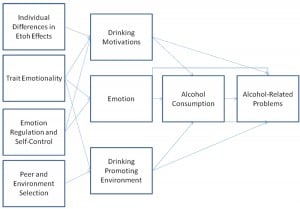
    In sum, there are numerous theoretical models with varying degrees of empirical support whose goal is to answer the question how and why certain personality develop drinking problems. Keep in mind that these models are neither all-inclusive nor mutually exclusive. Check out this illustration of multiple pathways related to personality that show alcohol use disorder might develop:

    Personal Choice Factors

    The personal choice to start drinking is a risk factor of developing alcohol dependence. For example, an individual who has decided that they will never have a drink, can obviously not develop an AUD. Also, people who choose to avoid social situations where drinking occurs heavily, are less likely to develop dependence.

    On the contrary, people who love to socialize with few drinks, are more prone to developing alcoholism.

    Whether you are at risk of developing alcohol use disorder or not, the choice to try alcohol is yours. You make the decision to try it or not.

    Drinking History Factors

    An individual’s drinking history plays an important part of developing alcohol use disorder. People who started drinking at early age, and continue into their adulthood are at high risk of becoming alcohol dependent.

    Also, the National Institute on Alcohol Abuse and Alcoholism lists few drinking patterns that show drinking problems:

    For women, problem drinking is:

    • Drinking more that 1 standard drink daily.
    • Drinking more than 7 drinks weekly.
    • Drinking more than 3 drinks on any single day.

    For men, problem drinking is:

    • Drinking more than 2 drinks daily.
    • Drinking more than 14 drinks weekly.
    • Drinking more than 4 drinks on any single day.

    Binge drinking, by definition is a drinking pattern that builds up the blood alcohol concentration (BAC) to 0.8 g/dL or more. This usually happens after 4 drinks for women, and 5 for men in one drinking session. Heavy drinking is a binge drinking on 5+ days in a period of one month.

    Even though a person may have a genetic predisposition to developing alcohol use disorder, it doesn’t mean that they will become alcoholic.

    Genetic Factors

    NIAAA’s genetic research shows that genetic factors account for 50 to 60 percent of the variance in risk for developing alcohol use disorder. Moreover, children of alcoholic parents have an approximately four times greater risk of becoming alcoholic themselves.

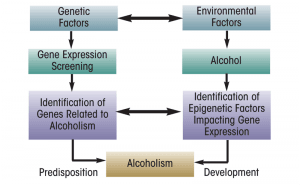
    Still, there is no empirical data that identifies what genes are responsible for increasing the risk of becoming alcohol dependent.  However, there are many genes in person’s DNA that can increase the risk of becoming alcohol dependent. A combination of these genes with personality traits, and various environmental factors may have the key of alcoholism. Check out this diagram to help you see the relationship between genes and environment of developing AUD:

    Familial Factors

    If alcoholism runs in your family, the risk of developing alcohol use disorder is higher that for someone who does not have a family history of AUD. Growing up around a parent who struggles with alcohol problems may change your perspective: you may see drinking as normal, and fall victim to bad habits, or learn the negative effects of alcohol, and never touch it.

    Even though genetics and familial (heredity) are closely linked, there is a difference when discussing genetic versus familial diseases:

    • A person with genetic disease has abnormality in their genome.
    • A person with a familial disease has received a genetic mutation from their parents’ DNA.

    Environmental Factors

    Environment has a huge impact on becoming alcohol dependent. How? For example, if a person cannot cope with stress, they might choose drinking as a way to deal with the stress. Moreover, if an individual has experienced a traumatic event, the chances to turn to drinking are enormous.

    Some of the many environmental factors related to alcoholism include:

    • Attitudes.
    • Bad parenting.
    • Beliefs.
    • Culture.
    • Financial power.
    • Lifestyle.
    • Physical abuse.
    • Peer pressure.
    • Sexual abuse.

    Religious Factors

    Every religion has a different view towards alcohol use. Islam promotes total abstinence, while Catholicism have integrated alcohol use into some religious ceremonies. One study published in the journal Drug and Alcohol Dependency showed that individuals who viewed their religion as promoting abstinence were less likely to develop alcohol dependence. Also, drinking was highly associated with person’s religious commitment: if the religion promoted abstinence the percentage of reduced drinking was higher.

    Moreover, the U.S. National Alcohol Survey showed diverse patterns of abstention and drinking that shows that religion is important for drinking behaviors.

    Social and Cultural Factors

    Alcohol use varies across gender and ethnicity. Worldwide, men drink more than women. According to the 2013 National Survey on Drug Use and Health, American men drink more than women:

    • Regular drinking: 56% vs. 47%
    • Binge drinking: 30% vs. 16%
    • Heavy drinking: 9% vs. 3%.

    Among ethnic and racial groups, Caucasians report the highest rate of alcohol use among people aged 12+, while American Indian/Alaska Natives report the highest rate of binge drinking. Moreover, this SAMHSA’s report shows the following rate on demographics and addiction rates:

    • American Indian/Alaska Native: 14.9%
    • Native Hawaiian and Other Pacific Islander: 11.3%
    • Hispanic: 8.6%
    • Caucasian: 8.4%
    • African American: 7.4%
    • Asian: 4.6%

    Additionally, this analysis show that there are many underlying social and cultural factors contributing to the numbers above. For instance, people with high socioeconomic status tend to drink more frequently than others, while people with low socioeconomic status tend to drink in larger quantities of alcohol.

    On the other hand, cultural norms play a huge role in developing AUD. African Americans and Latinos report more conservative claims towards alcohol use compared with Whites. However, some studies have found out that drinking problems differ across Latino subgroups, such as higher rates of alcohol use disorder among Mexican-American and Puerto Rican men compared with Cuban Americans and Central and South Americans. As a cultural norm, machismo, which is a cultural influence for many generations of Latino male identity, suggest that Latino men attempt to appear strong and masculine because of cultural values, and drinking huge amounts of alcohol is one of the ways to show masculinity. On the contrary, Asians are believed to have higher abstention rates.

    Also, alcohol consumption can be linked to a complex array of factors overlapping with each other, ranging from individual to cultural and societal factors. High social status suggest that social networks and connection influence overall health. For example, people who have higher levels of social support are thought to be healthier because they have better links and access to health services, and greater financial support.

    Finally, this NIAAA pamphlet shows that the Native American population have a 60 percent lifetime prevalence rate for the development of alcohol use disorders and alcohol dependence.

    Read this study Social and Cultural Contexts of Alcohol Use published in the journal Alcohol Research: Current Reviews to find more social and cultural risk factors including:

    • Discrimination factors.
    • Immigration factors.
    • Community factors.
    • Societal Influences (advertising, marketing, and social media).

    Age Factors

    One of the important risk factors for developing alcoholism is the age when you start drinking. The earlier a person starts to drink, the bigger the chances are they continue to drink in future. Also, regular drinking increases the risk of developing alcohol use disorder.

    Even though it is illegal to drink before 21, many teenagers consume alcohol around 13 to 15 years old. According to this survey:

    • 26% of 8th graders reported drinking in the past month.
    • 40% of 10th graders reported drinking in the past month.
    • 51% of the 12th graders reported drinking in the past month.

    Moreover, binge drinking is a popular pattern among youngsters.

    Drinking at an early age increase the risk of alcohol abuse, but alcoholism as a disease doesn’t spare anyone. It can affect anyone at any age.

    Educational Factors

    According to this study, education levels affect your risk of a drinking problem. Individuals who dropped out from high school were about 6 times more to develop alcohol problems, while college dropouts were 3 times more to become alcohol dependent.

    Career Factors

    Careers can be exhausting, and many individuals seek coping mechanism in drinking. High levels of stress, long working hours, and strenuous tasks are only few factors that may produce negative effect on the person.

    According to this CBHSQ Report, 8.7 % of full-time workers aged 18 to 64 drank heavily in the past month. The highest rate of drinking was noticed in mining (17.5%) and construction industry (16.5%).

    How Alcoholism Risk Factors Affect Treatment and Relapse

    All risk factors for developing alcohol dependence affect the treatment on many levels. For example,

    • This study published in the Journal of Ethnicity in Substance Abuse found that Spanish speaking individuals are less likely to perceive a need for treatment and seek treatment services than the general public. Also, women face more barriers to access substance abuse treatment, and are less likely to seek help.
    • According to NIAAA, women tend to seek help in mental health or primary care settings rather than in specialized programs.
    • People with stressful and high-end professions may consider addiction as shame and stigma, while people that are uninsured or have low income may have troubles finding treatment to their standard.
    • Moreover, depression is a major trigger for relapse. But, relapsing does not mean that you have failed. Relapse means that you need to reevaluate your treatment, and find the one that fits your needs. Also relapse makes you aware of the triggers around you.

    However, treatment works!

    Evidence-based treatment that is customized by the needs of the patient is overwlehmingly successful. NIAAA has found that about one-third of people who are treated for alcohol problems have no further symptoms a year later, while many others have reduced their drinking habits.

    So, don’t put life on hold. Gelp help! Or, seek help for a loved one.

    The time to act is now.

    Reference sources: NCBI: The Multiple, Distinct Ways that Personality Contributes to Alcohol Use Disorders
    NCBI: Genetic factors influencing alcohol dependence
    NCBI: Religion and alcohol in the U.S. National Alcohol Survey

    View the original article at