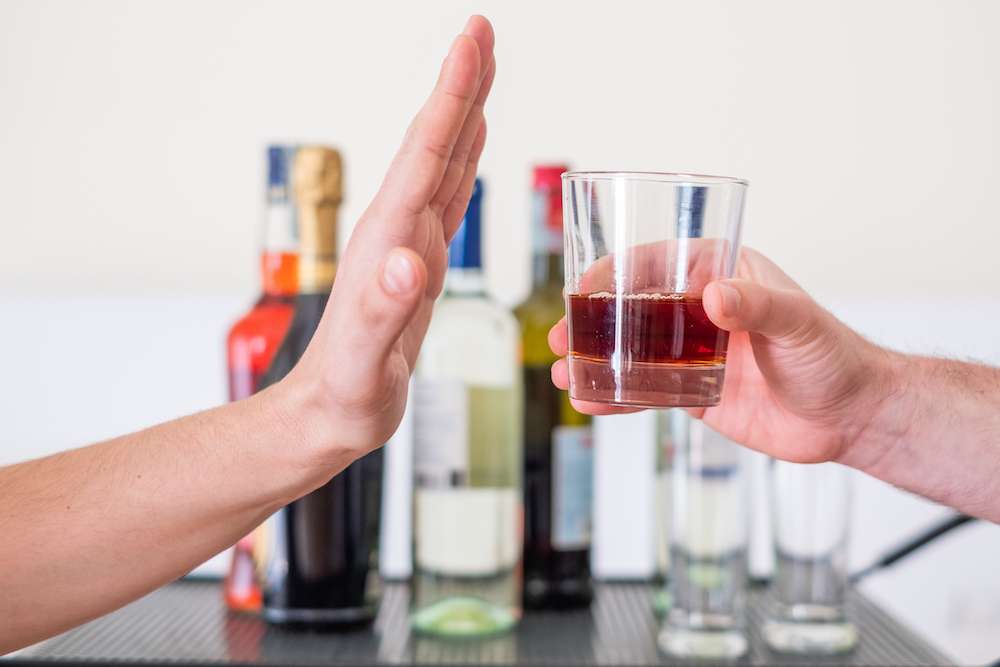
Tag: alcohol use disorder

  • Drinking Surged During The Pandemic. Do You Know The Signs Of Addiction?

    While some people may be predisposed to problematic drinking or alcohol-use disorder, these can also result from someone’s environment.

    Despite the lack of dine-in customers for nearly 2½ long months during the coronavirus shutdown, Darrell Loo of Waldo Thai stayed busy.

    Loo is the bar manager for the popular restaurant in Kansas City, Missouri, and he credits increased drinking and looser liquor laws during the pandemic for his brisk business. Alcohol also seemed to help his customers deal with all the uncertainty and fear.

    “Drinking definitely was a way of coping with it,” said Loo. “People did drink a lot more when it happened. I, myself, did drink a lot more.”

    Many state laws seemed to be waived overnight as stay-at-home orders were put into place, and drinkers embraced trends such as liquor delivery, virtual happy hours and online wine tasting. Curbside cocktails in 12- and 16-ounce bottles particularly helped Waldo Thai make up for its lost revenue from dine-in customers.

    Retail alcohol sales jumped by 55% nationally during the third week of March, when many stay-at-home orders were put in place, according to Nielsen data, and online sales skyrocketed.

    Many of these trends remained for weeks. Nielsen also notes that the selling of to-go alcohol has helped sustain businesses.

    But the consumption of all this alcohol can be problematic for individuals, even those who haven’t had trouble with drinking in the past.

    Dr. Sarah Johnson, medical director of Landmark Recovery, an addiction treatment program based in Louisville, Kentucky, with locations in the Midwest said that, virtual events aside, the pandemic has nearly put an end to social drinking.

    “It’s not as much going out and incorporating alcohol into a dinner or time spent with family or friends,” Johnson said. “Lots of people are sitting home drinking alone now and, historically, that’s been viewed as more of a high-risk drinking behavior.”

    There are some objective measures of problematic drinking. The Centers for Disease Control and Prevention defines heavy drinking as 15 or more drinks a week for a man or eight or more for a woman.

    But Johnson said that more important clues come from changes in behavior. She explains that, for some people, a bit of extra drinking now and then isn’t a big deal.

    “If they are still meeting all of their life obligations, like they are still getting up and making their Zoom meetings on time, and they’re not feeling so bad from drinking that they can’t do things, and taking care of their children and not having life problems, then it’s not a problem,” Johnson said. “It’s when people start to have problems in other areas of their life, then it would be a signal that they are drinking too much and that it’s a problem.”

    But there are signs to watch out for, she says. They include:

    • Big increases in the amount of alcohol consumed
    • Concern expressed by family or friends
    • Changes in sleep patterns, either more or less sleep than usual
    • Any time that drinking interferes with everyday life

    Johnson noted that for many people, living under stay-at-home orders without the demands of a daily commute or lunch break could be problematic.

    “Routine and structure are important to overall mental health because they reduce stress and elements of unknown or unexpected events in daily life,” Johnson said. “These can trigger individuals in recovery to revert to unhealthy coping skills, such as drinking.”

    Johnson explained that while some people may be predisposed to problematic drinking or alcohol-use disorder, these can also result from someone’s environment.

    Johnson said that people who are unable to stop problematic drinking on their own should seek help. The federal Substance Abuse and Mental Health Services Administration runs a 24/7 helpline (800-662-HELP) and website, www.findtreatment.gov, offering referrals for addiction treatment.

    Peer support is also available online. Many Alcoholics Anonymous groups have started to offer virtual meetings, as does the secular recovery group LifeRing. And for people who are looking for more informal peer support, apps such as Loosid help connect communities of sober people.

    Darrell Loo at Waldo Thai said that he has been concerned at times about people’s drinking but that he generally has seen customers back off from the heavy drinking they were doing early in the pandemic.

    Loo and others in the Kansas City restaurant business are pushing for the carryout cocktails and other looser laws to stay in place even as restaurants slowly start to reopen.

    “This will go on for a while. It’s going to change people’s habit,” Loo said. “People’s spending habit. People’s dining out habit. So there’s definitely a need to keep doing it.”

    This story is part of a partnership that includes KCUR, NPR and Kaiser Health News.

    View the original article at thefix.com

  • Privilege Lurks at the Heart of Recovery Movements

    Privilege Lurks at the Heart of Recovery Movements

    Making blanket statements that “anyone can recover” whitewashes and overlooks the gross inequities that people of color and marginalized communities face.

    Recovery is possible for anyone, but it isn’t the reality for everyone. We may see an increasing number of people on social media proudly displaying their recovery as badges of honor — which in turn reduces stigma about addiction and a life in recovery — but it doesn’t accurately depict the true picture that recovery isn’t accessible to everyone, it heavily depends on your privilege.

    Recovering “out loud” has gained so much momentum that it’s now a social justice movement: we are now questioning advertisers who normalize the excessive use of alcohol, challenging the use of biased language, highlighting the inequity in authorities tackling opioids but overlooking alcohol as the leading cause of drug-related deaths, and advocating for policy changes that affect people with substance use disorders.

    While this recovery activism should be celebrated, we are still overlooking the inconvenient truth lurking beneath the surface: recovery is, unfortunately, still a privilege. Can we really be part of a social justice movement if we overlook the role privilege plays in the accessibility of recovery? 

    The Role of Privilege in Substance Use Disorders and Recovery

    Many people within the recovery movement believe that recovery is possible in spite of race, ethnicity, economic circumstances, nationality, sex, gender, access to health insurance, and a strong support system — in other words, privilege. This simply isn’t the reality. There are great disparities both in how addiction affects people and how much recovery capital is available to us based on privilege.

    Rates of addiction are higher in oppressed populations, especially among LGBTQ people and people of color. Black women over 45 are the fastest growing population with alcohol use disorder, and the risk of developing a substance use disorders is 20-30 percent higher for individuals who identify as LGBTQ+.

    We don’t hear about those statistics, though; we see an opioid epidemic that is largely affecting white people. When drugs have a detrimental impact on communities of color, the media is less interested in covering it. Advocate Shari Hampton explains “Nobody gave a damn when black lives were being ravaged by crack cocaine in the 80’s. Families were ripped apart; communities were literally destroyed. People were thrown in jail and some of them are still there.”

    She continues, “I’ve witnessed grandparents raise grandchildren right up to their grave while their grown children suffered from a crack addiction or a jail sentence that is so ridiculously long, it might as well be life. But now we have an opioid epidemic. It’s affecting a different demographic. And now, now it’s a treatment issue. This is disparaging and discouraging, especially to the black and brown folks that have never been treated with even a remote sense of compassion compared to what we see today.”

    This disparity continues in access to recovery. Recovery is vastly different for those who lack recovery capital — the resources that can be used to sustain recovery: financial security, education, health insurance, and a support system — which is heavily linked, again, to our privilege.

    Not all people who speak openly about their addiction and recovery are blind to the reality of the effects of privilege. In her recent book Strung Out, author Erin Khar unpacks the role of privilege in her own recovery: “Escaping addiction, and it truly does feel like an escape, requires protective layers of aftercare. I have been incredibly fortunate to have access to the support I’ve needed.”

    She continues, “We don’t have a system in place that makes it simple or easy for people to get help or support. There are financial, social, and racial barriers to getting help. If we are going to see a real downshift in the opiate crisis, support is what is needed — not just from peers and family members, but also the medical community and government.”

    Studies show that African American and Latinx individuals are far less likely than white people to complete outpatient and residential substance use disorder treatment.

    The inequity is also in access to medication. NPR highlighted a recent study by Dr. Pooja Lagisetty, an assistant professor of medicine at the University of Michigan, who stated that “this epidemic over the last few years has been framed by many as a largely white epidemic, but we know now that’s not true.”

    Lagisetty found that as overdose deaths rose between 2012 and 2015, so did though the number of medical visits where buprenorphine was prescribed. However, researchers found no increase in prescriptions for African Americans and other minorities. In fact, the study found that white populations are almost 35 times more likely to have a buprenorphine visit than African Americans even though death rates among people of color were rising faster than white people. Researchers also observed that these visits were paid for by cash (40 percent), or private insurance (35 percent) rather than with Medicaid (25 percent), suggesting inequalities in healthcare. 

    “We shouldn’t see differences this large, given that people of color have similar rates of opioid use disorder,” says Lagisetty. “As the number of Americans with opioid use disorder grows, we need to increase access to treatment for black and low-income populations, and be thoughtful about how we reach all those who could benefit from this treatment.” 

    People of color have less access to treatment not only due to socio-economic circumstances. There is also a disparity in how drug use is viewed in communities of color. Despite similar rates of drug use and sales, people of color are more likely than white people to be arrested and receive harsher punishments for drug-related offenses. 

    Khar reflects on the criminalization based on race: “Some might say it’s a miracle that I never got pulled over, never got caught with that briefcase of drugs. But I see it less as a miracle and more because I was a young woman with passing-white privilege in a Jetta.”

    She continues, “I’ve thought about this often, that had my skin been darker, had I come from less privilege, I have no doubt that I would have been arrested early on. I’ve thought about how that would have changed the trajectory of my life, how early arrests may have kept me forever trapped in a cycle of incarceration. Our drug laws are undeniably skewed to keep people of color and people of less privilege imprisoned and enslaved. And I’ve always been aware of that.”

    The true picture of addiction and recovery inequity are often ignored on social media because our privilege blinds us to these realities. But if we really want to create a social justice movement, we have to change how we relay what substance use disorders and recovery looks like for all.

    Creating a More Impactful Social Justice Movement

    Let me be clear: this article is not intended to shame anyone for their privilege; instead, I’m suggesting that we can’t ignore the true picture in favor of a prettier, more palatable version. Making blanket statements that “anyone can recover” whitewashes and overlooks the gross inequities that people of color and marginalized communities face. 

    Advocate Shari Hampton explains this discomfort that underlies many recovery advocacy conferences. “I went to a conference earlier in the year and the white fragility in the room was nauseating. I literally didn’t understand why even talking about inequality caused so much discomfort. Simply discussing the topic had white folk with pursed lips and clenched fists. White folks can’t bear to examine a system that has entitled them to more, as being broken. It’s like admitting that Jesus was black. It’s not going to happen. To do so would disrupt all things.”

    When asked how we can make a difference, Hampton responds: “America’s history teaches that black people are inferior to white people — that we don’t deserve the same treatment or opportunities. The mindset must shift. Because until we are seen, truly seen as magnificent beings, equal and worthy of the same quality of life and opportunities afforded to whites, very little will change.”

    If we really want to create a more impactful social justice movement, we need to get uncomfortable. We need to be more mindful in our social media posts and consider if what we are portraying is an accurate representation of recovery, and question if our privilege played a role in our access to resources. We need to consider if we are amplifying the voices of those marginalized and oppressed. If not, why not? And in creating events to address addiction, or in going to Washington, DC seeking policy changes, we need to stop and ask ourselves if we have invited the people who are most affected by these policies. If not, we need to ask ourselves why we aren’t amplifying the voices of the people who most need to be heard?

    We cannot divorce recovery from true social justice. Writer and sobriety coach Holly Whitaker says: “For those people who don’t want to ‘dirty up’ or confuse recovery spaces with talk of racism, classism, transphobia, homophobia, ableism, classism, etc. — remember that recovery is about awareness, and that this path is about inclusion, love, and acknowledging wrongs and injustices. If we aren’t talking about the way the system works, and who gets crushed by the system, we aren’t actually talking about recovery. We’re still just talking about our comfort zones, and using our privilege to deny other experiences.”

    View the original article at thefix.com

  • We Need Harm Reduction for All Drugs, Not Just Opioids

    We Need Harm Reduction for All Drugs, Not Just Opioids

    While we’ve made great strides with harm reduction for people who use opioids, we’re slow to provide non-abstinence-based treatment for people who use other drugs.

    A quick glance at the news reveals the catastrophic effects of opioids across the nation: around 120 people a day die from opioid-related overdoses. It’s so devastating that the nation is calling it an opioid epidemic. Yet even as we watch this tragedy unfold, we’re missing the point.

    By focusing exclusively on opioids, we’re overlooking the harm caused by other deadly drugs. How can we highlight harm reduction resources if we only focus our efforts on people who use one class of drug?

    The Problem with the Opioid “Epidemic”

    According to the Centers for Disease Control and Prevention, more than 700,000 people died from a drug overdose between 1999 and 2017. Sixty-eight percent of those deaths in 2017 involved an opioid — approximately 70,200. However, that’s not the 100 percent that the “epidemic” coverage would have us believe.

    While I’m not arguing that the opioid-related deaths shouldn’t be covered — they should! — I am saying the problem with zeroing in on the opioid epidemic is that we are focusing too narrowly on the harms caused by one drug and are blinding ourselves to the impact of other deadly drugs. We should be reporting on those, too.

    A more accurate picture of drug-related deaths in 2017, according to the CDC, looks like this:

    • Alcohol was responsible for the deaths of 88,000 people
    • Cocaine misuse killed 13,942 people
    • Benzodiazepine misuse was responsible for 11,537 deaths
    • Psychostimulant misuse, including methamphetamines, was responsible for 10,333 deaths.

    Those aren’t insignificant numbers, so why are they being overlooked? I asked recovery activist Brooke Feldman for her perspective.

    “The sensationalized and narrow focus on opioids fails to account for the fact that people who develop an opioid use disorder typically used other drugs before and alongside opioids,” Feldman said. “So, we really have a polysubstance use situation, not merely an opioid use situation.”

    She continues, “Focusing on opioids only had led to the erection of an opioid-only infrastructure that will be useless for the next great drug binge and is barely relevant to address the deadliest drug used, which is alcohol.”

    The Deadliest Drug: Alcohol

    Alcohol is responsible for more deaths than any other drug. But we overlook it for two reasons: because it’s legal, and because it’s a socially acceptable drug. Not only that, but advertising actively promotes its use — you only have to look on Instagram or Etsy to see how widely excessive use of alcohol is normalized — especially among mothers and millennials. These advertisers have been smart to market alcohol as a means of self-care — encouraging drinking to help unwind from the stresses of the week — and as a means of coping with motherhood

    Social media reinforces the message that alcohol is a tool to cope with stress and something that should be paired with our favorite stress-relieving activities, like yoga. Captions on Instagram read like “Vino and vinyasa,” “Mommy’s medicine,” “Mommy juice,” “It’s wine o’clock,” “Surviving motherhood one bottle at a time,” and “When being an adult starts to get you down, just remember that now you can buy wine whenever you want.”

    Perhaps what is most insidious about alcohol is that it heavily impacts marginalized and oppressed communities. For example, Black women over 45 are the fastest-growing population with alcohol use disorder. And the LGBTQ+ community is 18 percent more likely to have alcohol use disorder than the general population.

    Alcohol aside, looking at the harm done by other drugs, we can see that opioids are no longer the leading cause of drug-related death in some states. In Oregon, statistics show, deaths related to meth outnumber those that involve one of the most common opioids, heroin. In fact, there has been a threefold increase in meth-related deaths over the last ten years, despite the restriction on pseudoephedrine products, which now require a prescription. 

    Similarly, in Missouri, which was ground zero for home-based meth labs 20 years ago, the recent spotlight on opioids has overshadowed an influx of a stronger, purer kind of methamphetamine. Deaths related to the new and improved drug are on the rise.

    Oregon’s state medical examiner Karen Gunson speaks to this disparity of focusing on opioids over other deaths and the damage that those other drugs cause. “Opioids are pretty lethal and can cause death by themselves, but meth is insidious. It kills you in stages and it affects the fabric of society more than opioids. It just doesn’t kill people. It is chaos itself.”

    Abstinence Is Not Attainable for Everyone

    Our approach to recovery has been too one-dimensional, stating that complete abstinence is the goal. But this perspective is outdated. Abstinence isn’t attainable for everyone. If it were, then more people would be in recovery. However, harm reduction is attainable. It reduces deaths, treats medical conditions related to drug use, reduces the transmission of diseases, and provides options for treatment services. In fact, people who use safe injection sites are four times more likely to access treatment.

    “Whether it is with problematic use of alcohol, tobacco, cocaine, methamphetamine, etc. use, centering harm-reduction principles and practices would likely engage more people than an abysmal 1 out of 10 people who could use but do not receive SUD (Substance Use Disorder) treatment,” Feldman explains. “Requiring immediate and total abstinence rather than seeking to address overall well-being and quality of life concerns is a barrier to engagement — and sadly, it is placing the focus more on symptom reduction than it is on what is causing the symptom of chaotic drug use in the first place.”

    Harm Reduction for All Drugs Means Fewer Deaths

    Our focus on the opioid crisis has helped improve harm reduction resources — like the increased availability of naloxone to reverse overdoses, and the more accepted use of pharmacotherapy and medication-assisted treatment (which has now been endorsed as a primary treatment by the Substance Abuse and Mental Health Services Administration), and some safe injection sites — but it has also meant we aren’t concentrating as much on research, funding, and education devoted to harm reduction practices for other harmful drugs. The result is that we have fewer resources and less awareness when it comes to keeping people who use non-opioid drugs safe.

    We need to look at reducing harm across the spectrum of drug use to reduce all deaths. More safe usage sites, clean tools, safe disposal bins, medical assistance, education, referral to other support services, and access to pharmacotherapy (including drugs to treat or mitigate harms of alcohol use disorder and the development of new medications for help with other substances). Specialized treatment other than abstinence should be accessible for people who use all drugs — not just opioids. 

    View the original article at thefix.com

  • Secondhand Drinking: When Your Alcohol Problem Becomes Everybody Else's

    Secondhand Drinking: When Your Alcohol Problem Becomes Everybody Else's

    Types of harm from secondhand drinking included being pushed or hit, feeling threatened or afraid, being a passenger of a drunk driver, marital problems, family problems, and financial problems.

    In my vast and storied drinking career of 20+ years, the damage to others was minimal. I mean, I was never in a drunk driving accident, I never even got a DUI (stumbling home on foot from dive bars solved that problem); the drunken brawls I was in usually happened at home with my ex, and there weren’t any arrests due to my insane behavior. The only person I was hurting by getting sloppy, blackout drunk seven days a week was me.

    Or at least that’s the story I like to tell myself.

    In reality, there were countless people affected by my drinking. From the landlords I didn’t pay and the employers I worked for while intoxicated to the innocent cashiers who had to help my slurring and sloppy ass at grocery stores and liquor stores and the cab drivers I would harass from the backseat, there were a slew of people taken down by my tequila-soaked tsunami. When you add those people to the list of family members, friends, coworkers, roommates, and neighbors who all suffered some sort of emotional fallout due to my drinking, the damage doesn’t look so minimal. It looks like a small town after a tornado.

    Studies Show Impact of Alcohol’s Harm to Others

    So when a new study came out last month about secondhand drinking, I could certainly identify.

    Nearly 9,000 participants answered questions from two surveys, the 2015 National Alcohol’s Harm to Others Survey and the 2015 National Alcohol Survey. They were asked if they had experienced any or all of 10 different types of harm caused by someone else’s drinking. Coming from an alcoholic home and being an alcoholic myself, I feel like I could answer, “Hell, yes!” to all of these questions without even seeing them. Causing other people harm is the only way I’ve ever known alcohol to work. I am not from civilized red wine sipping stock. For the record, the types of harm included being pushed or hit, feeling threatened or afraid, being a passenger of a drunk driver, marital problems, family problems, and financial problems, all caused by another person’s drinking. A staggering one in five answered what I would have answered: Hell, yes, they’ve been affected by the drinking of others.

    Researchers believe the number is probably even higher, given the study only asked the participants about the last year of their lives. Personally, this also checks out. I couldn’t even begin to come up with a total and comprehensive list of folks affected by my drunken douchebaggery over the years.

    According to the study, 23% of women and 21% of men reported experiencing at least one of those harms during the last year. Not surprisingly, women experienced the fallout of someone else’s drinking in marital problems, financial problems, and being the passenger of drunk drivers. Women were more likely to be the victim of violence, sexual assault, and harassment from someone who was drinking than their male counterparts. Men, on the other hand, felt the reverb in the form of property damage, vandalism, and harassment, in addition to drunk driving woes. Folks 18 to 25, the study found, felt the effects of alcoholism the worst, which makes sense as alcohol use disorder is on the rise in that age group. Children were not interviewed for the study but as a kid who grew up in an alcoholic home, I experienced the ill effects of secondhand drinking on a regular basis. All the things the survey mentions — personal violence, damage to property, feeling unsafe — that’s all part of daily life when you grow up around alcoholics.

    Advertising Normalizes Drinking, While Alcohol Destroys Communities

    Beyond the super relatable numbers and findings, the study packs an additional punch. The very framing of the study — calling it “secondhand drinking” — is somewhat revolutionary. By labeling it this way, the folks behind the study are emphasizing that drinking doesn’t just hurt the drinker, but it also affects the people around them akin to secondhand smoke. Sure, those of us in recovery who’ve had to write inventories or make amends are well aware of how we’ve effed up the lives around us. But for the rest for the world, drinking is fun, readily accessible, and not as bad as, like, heroin, right? Advertising agencies and big brands have worked really hard over the last decade to normalize drinking in every possible setting — airports, movie theaters, office meetings, and more. Initiating a conversation about how drinking messes up entire communities, economies, and the personal lives of innocent people feels like boldly bucking the system.

    This study in fact tells the truth of what people in recovery have known for years: the world is a safer and less shitty place if we stay sober. Beyond the loved ones who have to clean up our puke or the fender benders caused when we’ve had one too many, drinking — or more specifically alcohol use disorder — is destroying lives at an alarming rate.

    In addition to being a writer, I also work at a hospital on an addiction medicine team as a recovery mentor. Daily, our emergency room is filled with people brought in by the negative effects of drinking. Yet in a society where drinking is no big deal, these faces are commonplace and will be replaced by new ones the following day.

    “It’s Not That Bad…”

    Last summer in the hospital, I met a nice lady. She had a good life: She owned a successful business, she had beautiful and talented teenage daughters, a doting husband and concerned friends. Everybody lives next door to this lady. Your mom is friends with this lady. Hell, maybe your mom is this lady. And when they brought her in because of the negative effects of her drinking, she reported that it wasn’t that bad, she only had a few glasses of wine a night.

    Later, I shared my interaction with a doctor on her team. “Unbelievable!” he said. He told me that moments before I saw her, her medical team showed her detailed pictures of the damage that drinking had caused her brain. During her stay, I got concerned calls from her best friend and her daughters, all of whom had heartbreaking stories of how this woman’s drinking had negatively impacted them. It didn’t matter that she was white or successful or a nice lady. Drinking was ruining her brain, her life, and the lives of the people around her.

    In the 1970’s and 1980’s, the discovery of the effects of secondhand smoking changed how we thought about tobacco and nicotine. We started talking about how smoking was making the people around us sick, too. We changed how we smoked in front of children, in front of friends, and in public places. When we talk about secondhand drinking, we’re hoping for the same consideration and results. We’re saying it’s not just the alcoholic affected. It’s everybody around them, too.

    View the original article at thefix.com

  • Trump Gets Candid About Late Brother's Battle With Alcoholism

    Trump Gets Candid About Late Brother's Battle With Alcoholism

    “He was so handsome, and I saw what alcohol did to him even physically… and that had an impact on me, too,” Trump said in a recent interview.

    President Donald Trump shared that his late brother’s battle with alcohol use disorder is part of what fuels his “fight” against the country’s ongoing opioid epidemic. 

    In a recent interview with the Washington Post, the president spoke candidly about his brother, Fred Trump Jr., and how his sibling’s struggles have influenced his administration’s approach to the opioid epidemic. 

    “I guess you could say now I’m the chief of trying to solve it,” Trump told the Post. “I don’t know that I’d be working, devoting the kind of time and energy and even the money we are allocating to (the opioid crisis)… I don’t know that I’d be doing that had I not had the experience with Fred.”

    His Regrets

    Fred Trump Jr. died in 1981 at the age of 42 after battling with alcohol for many years. President Trump says that in retrospect, he regrets the way he treated his brother. When his brother was hoping to become a pilot instead of entering the family business, he told him, “You’re wasting your time.”

    “I do regret having put pressure on him,” Trump told the Post. Running the family business “was just something he was never going to want” to do. “It was just not his thing… I think the mistake that we made was we assumed that everybody would like it. That would be the biggest mistake… There was sort of a double pressure put on him.”

    As his brother’s drinking worsened and he ended up hospitalized, Trump recalled what it was like watching the brother he knew slowly fade away. “He was so handsome, and I saw what alcohol did to him even physically… and that had an impact on me, too,” Trump said. 

    The president himself does not drink or smoke, and says he asked his brother various times what compelled him to do so. “I used to ask, ‘Is it the taste, or what is it?’ He didn’t know what to say about it because, frankly, it was just something that he liked.”

    Trump also alluded to the fact that he refrains from drinking because he worries how he may handle it. “Let’s say I started drinking, it’s very possible I wouldn’t be talking to you right now,” he told the Post. “There is something about the genetic effect.”

    While not frequently, Trump has spoken about his brother in the past to other media outlets including Playboy magazine in 1990. 

    “His death affected everything that has come after it,” Trump said at the time. “I think constantly that I never really gave him thanks for it. He was the first Trump boy out there, and I subconsciously watched his moves. I saw people really taking advantage of Fred and the lesson I learned was always to keep up my guard one hundred percent, whereas he didn’t. He didn’t feel that there was really reason for that, which is a fatal mistake in life.”

    View the original article at thefix.com

  • Elizabeth Vargas To Give Keynote At National Conference On Addiction Disorders

    Elizabeth Vargas To Give Keynote At National Conference On Addiction Disorders

    Ahead of the conference, Vargas spoke about the hidden blessings of being forced to face her alcoholism in the public eye.

    This August, Elizabeth Vargas will give the keynote address at NCAD East, the National Conference on Addiction Disorders, in Baltimore, Maryland.

    The Emmy-award winning journalist, a former host of 20/20 and World News Tonight, will address the regional gathering of “clinical professionals and executives” as someone who struggled in the public eye with alcohol use disorder, a symptom of severe anxiety stemming from her childhood.

    Since she was outed in 2013 for undergoing treatment for alcoholism, Vargas has been on a long and intense journey of discovering that her pain, which she once struggled to keep private, could change the lives of others.

    Ahead of the NCAD conference, Vargas spoke to Behavioral Healthcare Executive about the hidden blessings of being forced to face her alcohol problem in the public eye.

    Writing The Memoir

    Vargas, who is now the lead investigative reporter and documentary anchor for A&E Networks, said that if her time in treatment had remained private, she probably would not have written her book Between Breaths: A Memoir of Panic and Addiction.

    “I’m not sure, honestly, if I would have written a book if it hadn’t been made public already,” she said. But years later, Vargas acknowledged the impact that her book has had. “Many say it helped them seek help. I think, gosh, if I can take the darkest chapter of my life and make something good out of it, that’s a huge gift for me.”

    Being open about her problem also affected her work as a journalist in an unexpected way. Through knowing her struggle, Vargas says people are more comfortable to “open up to me.”

    “In many ways, I feel like it has made my work easier, but deeper,” said Vargas. “When you’ve walked through a really dark time yourself, I have a great deal of empathy for people who are going through a dark time themselves.”

    Ultimately, she says, it’s important to treat people dealing with substance use disorder with dignity and respect, and not to shame them on top of the shame they are already feeling.

    “I think we need to keep in mind that getting sober or clean from drugs is very difficult. If it was easy enough to do on the first try, we wouldn’t have a problem in this country where half a million people have died of opioid overdoses in this century,” she said.

    “The more we can remember to treat them as human beings who are in pain and might have deep shame, the more successful we’ll be in helping them get clean and sober.”

    Vargas detailed her battles with alcohol abuse and anxiety in a 2016 interview with The Fix. Her anxiety stemmed from being “bullied mercilessly” as a child. Later in life, she developed a problem with alcohol that was new to her. “I drank moderately for 20 years,” she told The Fix. “It wasn’t until my 40s that I fell off a cliff.”

    Managing Sobriety

    Vargas has been sober for about four years now. She manages her anxiety through meditation, introduced to her by fellow ABC anchor George Stephanopoulos in 2014 upon returning from treatment.

    “If you can slow down long enough to think clearly, you can start to not only manage that panic, but understand that what you’re so terrified of isn’t really that terrifying.”

    View the original article at thefix.com

  • "Sober Curious" or Literally Dying: When Saving Your Life Becomes Trendy

    "Sober Curious" or Literally Dying: When Saving Your Life Becomes Trendy

    It’s not my intention to minimize what sober curious folks are doing, but let’s not lose sight of actual alcoholism or addiction either.

    Somewhere in the drunken mess of 2002, I was curious to try the combination of vodka and Klonopin. Ditto, I was a curious little kitten when it came to what could possibly happen if I took acid and ecstasy at the same time! I was curiouser and curiouser about everything, from trying heroin to trying to buy cocaine instead of paying my rent. That’s the sort of curious that kept me in trouble for the better part of two decades, but curious to quit drinking because I just needed a break from partying and how it was affecting my life? Uh, not so much.

    Trendy, Cool, and Not Dying

    If you don’t know what the “sober curious” movement is, you haven’t been paying attention to “sober influencers.” Those phrases actually cause my eyes to deeply roll and my head to shake like a bitchy old neighbor watching you try to parallel park. Look, I don’t know anything about being an influencer unless we’re talking about the fellow teenagers I influenced to take drugs and come to the mall with me in the 80’s. I also don’t know about sobriety being trendy. I didn’t get sober to be cool, I just got sober to stop dying. But I do know that this sober curious movement is an actual thing.

    We (and by that I mean people like me who write about recovery) like to latch our collective wagons to sobriety buzzwords and trends. This summer, the world cannot stop talking about “sober curious.” The term, taken from author Ruby Warrington’s book by the name same, has popped up on every media outlet over the last few months.

    “Sober curious,” for the uninitiated, describes:

    • Folks who don’t need to get sober but who can see the benefits of cutting down or cutting out alcohol completely.
    • Mainly younger people who want to relieve the pressure to drink heavily at social occasions.
    • Folks who are concerned with hangovers and how drinking is affecting their social and professional lives.
    • Whimsical nymphs who want to hang out with their friends but not get loaded.

    In short, the sober curious ain’t me.

    When Alcohol Is Mildly Inconvenient

    See, these folks can take or leave drugs or alcohol. They don’t identify as having a problem. Alcohol is mildly inconvenient for them; it’s like your aunt Linda who eats chicken vindaloo but forgets it gives her heartburn. Fundamentally, I do not understand this way of thinking. The way I’m wired, I like to do substances in amounts that will numb me out completely. I didn’t care if work was going to be hard the next day or if my health was going to be affected. Hell, I needed tequila and cocaine just to get through six-hour shifts waiting tables.

    I mean, why casually use drugs or drink alcohol when you can implode your whole existence? This is a level of insanity that probably isn’t familiar to the “sober curious.” Nevertheless, they’ve decided to rally together and say “We’re just going to stop drinking and it’s okay if you do too!” It’s more like giving up carbs for a trendy diet than, say, being placed on dietary restrictions because otherwise your diabetes will kill you.

    As a movement in and of itself, it’s harmless. I see no problem with people whose brains are very much not like my own who can say, “Maybe I should cool it with the booze for a while.” The fewer people stumbling around, barfing in Ubers, and screaming at each other in Taco Bell at 3 a.m. can only be a good thing for society. The annoying trendiness notwithstanding, sober curious has at the very least made people examine their relationship with alcohol.

    However, I don’t see a lot of “sober curious” folks in the ER or ICU.

    At my day job as a recovery mentor on an addiction medicine team at a busy urban hospital, I see far more people brought in because of the effects drinking has had on their lives than nearly anything else. As devastating as the opioid crisis continues to be, there is a continuous influx of people with alcohol-related health problems. Sure, sure, the emergency room sees a handful of bachelorette party attendees who drank too much and fell down a flight of stairs who show up needing TLC for a busted ankle. But mainly, I witness patients who are way beyond curious.

    They come in broken, in desperate need of medical and psychosocial attention due to their relationships with alcohol. Despite winding up in the hospital, sometimes in terrible condition, many of them think it’s not that bad or that they can just cut down. I certainly identify with this thinking. For decades, I fooled myself into thinking I could outrun it, or that the handful of people I knew who were heavier drinkers meant I couldn’t possibly be that bad.

    This is where the Alcohol Use Disorder (AUD) diagnosis comes in handy. Used in our hospital (and around the country), the diagnosis quickly separates the sober curious from people literally dying. Some NIH assessment questions for AUD include: “Have you continued to drink even though it was causing trouble with your family or friends?” and “Have you experienced craving — a strong need, or urge, to drink?” This sounds wildly different than the interns at the office who decided to cut back on Rosé because it was making them feel icky. It’s not my intention to minimize what sober curious folks are doing, but let’s not lose sight of actual alcoholism or addiction either. Marginalization, ignoring, and minimizing have never done substance use disorders any good.

    If You Drink Again, You Will Die

    For the people I see in hospital beds and for people like me, it’s a matter of life and death.

    Beyond that, this idea that younger people are drinking less and buying less alcohol doesn’t jibe with bigger, more staggering statistics of alcohol-related deaths among millennials. A study from earlier this summer found that folks between the ages of 23 and 38 were dying the most of “deaths of despair”, meaning suicide, overdose, and alcohol-related deaths. Furthermore, additional data shows that from 2009 to 2016 there was a significant increase in cirrhosis-related deaths among millennials, which researchers say was driven by alcohol-related liver disease.

    Over the last year, I have personally worked with a handful of patients under 30 who have the kind of alcoholic liver damage usually only seen in people twice their age. From my position at their bedsides, it certainly doesn’t look like a generation that has this booze thing all figured out. It looks like a group of people being killed even faster than the generation before them. This is a story not buzzword-worthy or even really noticed. About a month ago, I had the honor of sitting with a 28-year-old while he processed the news that if he ever drank again, he’d die. Heavy news for a kid whose friends are all still happy hour-hopping and swilling the latest craft beers. This young man didn’t have the option of being sober curious.

    Yet, as different as Ruby Warrington and I are regarding alcohol, we’re doing the same thing: We’re talking about how much we drink. What if someone reads my stuff and says, “Well at least I don’t drink like that guy!” Likewise, the plethora of sober curious articles might make a reverse light bulb go on for someone. They might seek help after reading about this new trendy health craze and think: “sober curious, that ain’t me.”

    View the original article at thefix.com

  • Thousands Of Cases Under Review After Judge Accused Of "Severe Alcoholism"

    Thousands Of Cases Under Review After Judge Accused Of "Severe Alcoholism"

    More than 2,700 cases may be affected by this turn of events.

    A guardianship petition filed by a retired judge’s daughter and mother alleges that said judge was addicted to alcohol and worked while under the influence on multiple occasions, throwing as many as 2,700 court cases into question.

    According to the American Bar Association Journal, Ohio’s public defender is planning to review many of the cases overseen by former Judge William Marshall of Scioto County, particularly those that resulted in prison time or court supervision.

    Marshall was on the bench in Ohio for 15 years and was first hospitalized for his addiction disorder in 2013. He retired in 2018 just before he was given a six-month suspension by the Ohio Supreme Court’s Board of Professional Conduct after they found he had improperly inserted himself into a speeding ticket case involving his own daughter.

    Earlier this year, both Marshall’s daughter and mother filed for guardianship over the former judge, claiming that advanced alcoholism had left him unable to care for himself. Ohio Public Defender Tim Young will be among those reviewing his cases to determine if any decisions should be reversed due to Marshall possibly being under the influence during the trial.

    “If you’re a severe alcoholic, you’re going to work under the influence… and that means you are ruling on people’s cases,” said Young according to The Cincinnati Enquirer. “It also makes you open to manipulation to those who know and perhaps your cases aren’t being handled fairly because of the fear of being outed. A fair justice system relies on so many things, but nothing more important than a fair arbitrator—the judge.”

    Marshall was the subject of another investigation by The Enquirer which lasted for over a year, the results of which were posted in early 2019. In the report, Marshall was linked to an alleged Ohio sex-trafficking ring that is currently being investigated by the Ohio Bureau of Criminal Investigation. Marshall denied all allegations, but three women named him as the judge who was associated with the lawyer responsible for the operation.

    Reviewing so many cases is going to be a huge undertaking for the public defender’s office, which will be doing so with the help of a Case Western University professor and his students. However, Scioto County Prosecutor Shane Tieman believes that few of Marshall’s cases will be found to be problematic.

    “But they are going to be sorely disappointed with this expense of resources,” Tieman said. “I don’t think there are going to be that many if any cases that have problems. Everything is written down, recorded on video and on audio.”

    View the original article at thefix.com

  • Actress Claudia Christian’s On A Mission To Spread The Word About Naltrexone

    Actress Claudia Christian’s On A Mission To Spread The Word About Naltrexone

    Christian founded the C Three Foundation to educate the public and medical professionals about the alcohol treatment method. 

    June 12 marks the first ever Global Sinclair Method Awareness Day, a method for the treatment of alcohol addiction that TV actress Claudia Christian swears by. Christian, best known for her role in the sci-fi series Babylon 5, founded the C Three Foundation after struggling with alcoholism for years and finding a solution in what is commonly called The Sinclair Method (TSM).

    TSM involves the use of naltrexone—a medication for treating alcohol or opioid use disorder—one to two hours before drinking. Doing this on a regular basis breaks the behavior-reward cycle that is key to addiction disorders by disrupting the endorphin reward system, blocking the pleasant intoxication when alcohol is consumed. 

    “Naltrexone does not make one ill from drinking. Instead, the drug removes the incentive to drink, helping the addicted brain to unlearn previous harmful behaviors over time,” says a press release from the C Three Foundation. “’Drink yourself sober,’ is how Christian and others describe the method because one must drink alcohol with naltrexone for the treatment to work.”

    According to the foundation, TSM was found to have a 78% success rate after “120 peer-reviewed clinical trials” tested the method. Naltrexone can be purchased in generic form for $1-2 per pill, making it much more affordable than inpatient detox and rehab.

    However, the method comes into conflict with traditional addiction treatment methods, which often emphasize abstinence as a necessity and work under the assumption that addiction cannot be “cured” or unlearned.

    The problem with TSM, as described by someone who tried it, is that there is always the temptation to skip the pill.

    “The problem is that, as someone who loves getting drunk, this begins to take on the connotation of, ‘You aren’t going to be able to have as good of a time tonight if you take this pill,’” wrote Joe Ricchio for The Fix. “For a while, I continue to fire them down the hatch immediately to nip this thought process in the bud as soon as it begins—but eventually my lust for alcohol, the reason I began this process in the first place, takes over and I decide that I will have a few ‘snow days’ from the pill.”

    The C Three Foundation’s goal, however, is simply to educate both medical professionals and the general public on TSM so that people with addiction can make an informed choice.

    Abstinence and 12-step programs have come under increasing scrutiny as relapse rates reach 40-60%, and an increasing number of people are seeking out alternatives. The foundation believes TSM should be a better-known alternative for alcohol addiction treatment.

    “Right now, no one but C Three Foundation is out there educating these medical professionals,“ said C Three Foundation Executive Director Jenny Williamson. “This is one of our biggest challenges to gaining mainstream adoption of TSM.”


    View the original article at thefix.com

  • Can Psychedelics Help You Kick Alcohol?

    Can Psychedelics Help You Kick Alcohol?

    Results of a new survey have convinced some researchers that psychedelics had “the potential for dramatic change.”

    Using psychedelics can help some people kick their problematic drinking habits, according to new research. 

    “Although results cannot demonstrate causality, they suggest that naturalistic psychedelic use may lead to cessation or reduction in problematic alcohol use, supporting further investigation of psychedelic-assisted treatment for [Alcohol Use Disorder],” wrote the authors of the study, published in the May issue of the Journal of Psychopharmacology

    The study relied on an online survey of people who had a history of problematic drinking that met the criteria for alcohol use disorder, according to Psychology Today. The participants had to have “used psychedelics outside of a university or medical setting, followed by reduction or cessation of subsequent alcohol use.”

    Overall, 343 people met the criteria and participated in the study. Only 10% had used psychedelics—most commonly LSD or mushrooms—to try to reduce their drinking. Yet more than 25% agreed that using the drugs let to a “change in values or life priorities, which… helped change their alcohol use.” On average, participants reported that they went from consuming 26 drinks per week to just 4, and 83% no longer met the diagnostic criteria for alcohol use disorder. 

    “Findings indicate that, in some cases, naturalistic psychedelic use outside of treatment settings is followed by pronounced and enduring reductions in alcohol misuse,” the study authors wrote.

    They noted that the survey indicated that psychedelics had “the potential for dramatic change.”

    One participant explained that using psychedelics “allowed me to feel whole again and forced me to reconnect with emotional trauma. It gave me insight into the nature of addiction and how it enslaves us—physically, mentally, and spiritually. Addiction numbs us to any kind of growth as a human being.”

    Others said that after using the drugs they were able to see that the long-term benefits of sobriety were more important than the short-term desire to drink.

    Study authors speculated that using psychedelics could help people connect with their spirituality, which in turn helped them stay sober. 

    “Spirituality has long been thought to play an important role in recovery from alcohol dependence, and has been posited as a protective factor against alcohol misuse,” they wrote. “Spirituality and spiritual practice have also been found to correlate with abstinence in alcohol dependence recovery. Though a major focus of research on spirituality and alcohol misuse has been on Alcoholics Anonymous (AA) and 12-step programs, psychedelics may represent an alternative path to spiritual or otherwise highly meaningful experiences that can help reframe life priorities and values, enhance self-efficacy, and increase motivation to change.”

    View the original article at thefix.com