Tag: alcoholism help

  • Alcohol Addiction and Abuse

    Alcohol Addiction and Abuse

    ARTICLE SUMMARY: Alcoholism the #1 addiction in America. The social acceptance of drinking can often lead to denial. But if left untreated, a drinking problem has severe consequences.

    ESTIMATED READING TIME: 5-10 minutes.

    TABLE OF CONTENTS:

    New studies reveal that NO LEVEL OF ALCOHOL CONSUMPTION improves health. In other words, alcohol is not good for you.

    No Healthy Amount

    Most people drink for one of two reasons:

    1. People drink alcohol to cope with stress.
    2. People drink alcohol because of social influences.

    Indeed, alcohol is socially acceptable. Most of us drink it in various forms, including beer, wine, and hard liquor. And many of us think that there are health benefits associated with consuming up to two drinks per day. However, recent studies are finding that no level of alcohol consumption improves health. So, a drinking problem can occur… even if you think you’re drinking within reasonable limits.

    “Abuse” Definitions

    According to the Dietary Guidelines for Americans,1 moderate alcohol consumption is defined as having up to 1 drink per day for women and up to 2 drinks per day for men. However, the Dietary Guidelines do not recommend that people who do not drink alcohol start drinking for any reason. This is simply because alcohol is not good for you!

    Not everyone who drinks is an alcoholic. In fact, about half of all Americans are active drinkers. But if your life is negatively affected by alcohol on a consistent basis, you may have a problem.

    So, what does it mean to “abuse” alcohol? The National Institute on Alcohol Abuse and Alcoholism (NIAAA) has a website Rethinking Drinking that defines what problem drinking is. And it’s not based on how much you drink, exactly. They say,”

    The more drinks you drink on any day and the more heavy drinking days over time, the greater the risk—not only for an alcohol use disorder, but also for other health and personal problems.

    Still, you can begin to suspect a drinking problem when…

    Men: You drink more than 4 drinks on any day OR you drink more than 14 drinks per week.
    Women: You drink more than 3 drinks on any day OR you drink more than 7 drinks per week.

    Image credit: NIAAA Rethinking Drinking

    So, if you are drinking like this, are you an alcoholic? According to the NIAAA, about 1 in 4 people who exceed these limits already has an alcohol use disorder (also called “alcoholism”). The remaining 3 in 4 people are at greater risk for developing these and other problems. Again, individual risks vary. People can have problems drinking less than these amounts, particularly if they drink too quickly.

    Use this NIAAA form to verify a drinking problem.

    DRINKING TOO MUCH + TOO OFTEN = TOO RISKY

    Definitions of a standard drink:

    Beer

    Beer is an alcoholic drink typically made from water, barley, hops, and yeast. Many people think that beer is safer to drink than wine or liquor. The Centers for Disease Control (CDC) describes the real story about beer on this alcohol FAQ page:

    Q: Is beer or wine safer to drink than liquor?
    A: No. One 12-ounce beer has about the same amount of alcohol as one 5-ounce glass of wine or 1.5-ounce shot of liquor.

    In fact, one beer may be your limit for the night, if you’re a man…and half a beer may be all you need if you’re a woman. It is the amount of alcohol consumed that affects a person most, not the type of alcoholic drink.

    But beer is a part of American culture. It can be hard to ignore the billboards and advertising around beer. There are drinking games based on beer, sporting events usually always have beer available, and beer is a part of post-work get together. Plus, the trend for microbrewed, craft beers is on the rise. However, even people who drink during social activities or who only drink craft beer can develop an alcohol use disorder.

    So, how do you know if you’re addicted to beer, or not?

    Signs of a problem may include continuing to drink when everyone else has stopped or feeling the need to drink during uncomfortable or boring situations. Basically, a drinking problem causes disruption in your life. So, if you’re facing beer addiction you may have difficulty making it to work on time, keeping up with schoolwork, or recovering from drinking the next day. To get help for a beer addiction now, please send us a message or give us a call.

    Wine

    Wine is made from fermented grapes. It is mostly sold as white wine or red wine with a variety of flavor profiles based on the type of grape used. For example, popular white wines include Sauvignon Blanc, Chardonnay, Pinot Grigio, and Riesling. Popular red wines include Cabernet Sauvignon, Merlot, Pinot Noir and Syrah / Shiraz.

    The percentage of alcohol in wine can vary widely; therefore, read the labels and adjust accordingly. When compared to beer, wine has a more concentrated amount of alcohol. Still, an average 5 oz. glass of wine is equivalent in alcohol content to 12 oz. of beer. An overpoured glass of wine, however, could contain much more alcohol than a standard drink.

    Wine is often consumed with meals. It has a status as a “classy” drink that can make it harder to spot a problem. Drinking wine may be a problem for you if any of these things are true:

    • Drinking wine causes trouble with your relationships, school, or work.
    • You can’t control how much wine you drink.
    • You’ve tried quitting drinking but cannot.
    • You feel anxious, irritable, or stressed when you aren’t drinking wine.

    If you or someone you care about has been drinking wine more frequently than intended or using it to combat anxious or depressive feelings, there may be a deeper issue at play. The earlier you get help for a wine addiction, the better! Wine problems are medical in nature and can be treated professionally.

    Liquor

    “Liquor” is the term used for hard alcoholic drinks or spirits like tequila, vodka, gin, rum and whiskey. Liquor has a much higher volume of alcohol than beer or wine: approximately 1.5 ounces of distilled spirits contain about 40% alcohol. Additionally, the type of spirit, recipe, and size of serving glass can impact the quantity of hard liquor in the drink. A mixed drink can contain from one to three or more standard drinks.

    Liquor can impact and speed up the development of a drinking problem. This is due to the way we metabolize alcohol. The Indian Health Service explains it like this…when a person drinks an alcoholic beverage, about 20% of the alcohol is absorbed in the stomach and about 80% is absorbed in the small intestine. The rate the alcohol is absorbed depends upon a few factors:

    1. The higher the concentration of alcohol, the faster the absorption.
    2. Carbonated drinks tend to speed up absorption of alcohol.
    3. Whether the stomach is full or empty. Food can slow down alcohol absorption.

    Basically, increased absorption of alcohol into the bloodstream can cause quicker intoxication. It’s like comparing oral vs. injection routes of drug administration. The quicker a drug hits your bloodstream and crosses the blood-brain barrier, the more addictive. Plus, the lower liquid content of shots make them easier to consume, leading to a higher risk of alcoholism.

    Regardless of the type of liquor consumed, alcohol of any kind possesses serious addiction potential. But you can get help for a liquor addiction now. Continue reading for more ideas.

    Binge Drinking

    Drinking too much at once is called “binge drinking”. As noted by the CDC, it is the most common way people drink too much in the U.S. But what does it mean to binge drink?

    The National Institute on Alcohol Abuse and Alcoholism defines binge drinking as a pattern of drinking that brings a person’s blood alcohol concentration (BAC) to 0.08 grams percent or above. Guidelines follow.

    Men: You binge drink when you consume 5 or more drinks on a single occasion and usually occurs within about 2 hours.
    Women: You binge drink when you consume 4 or more drinks on a single occasion and usually occurs within about 2 hours.

    While most people who binge drink are not alcohol dependent, binge drinking is the most common, costly, and deadly pattern of drinking too much. It causes injury and serious risk to health. It occurs frequently, with one in six adults binging about four times a month. And in many cases, prolonged binge drinking can develop into alcoholism.

    Mixing Alcohol with Drugs

    Because drinking is easily accessible, people often mix alcohol with other drugs. However, alcohol is both a central nervous depressant AND a stimulant… thereby posing a serious risk to your health when you mix it. For example, when mixed with benzodiazepines, opiates, or Rx painkillers, alcohol can trigger overdose effects. Alcohol on its own can be dangerous, but combining it with other substances can quickly prove lethal.

    When It Becomes Addiction

    Addiction occurs somewhere in a person’s drinking history. It can happen fast, within the span of a few months. Or, addiction can occur over the course of years. So when do you know you’ve crossed the line and become addicted to alcohol?

    Alcoholism (a.k.a. alcohol addiction) is marked by a craving for alcohol. This craving occurs after the first drink and compels you to drink more. Craving also occurs when you’re NOT drinking; it can drive you back to alcohol. People who are addicted also are unable to stop drinking, especially in the face of personal or social harm.

    Signs of an alcohol addiction include:

    • Alcohol dependence.
    • An increased tolerance (needing to drink more to feel drunk).
    • Frequently drinking more than intended.
    • Spending time getting alcohol, drinking it, or recovering from its effects.
    • Wanting to stop drinking but being unable to.

    High-Functioning Alcoholism

    Not all alcoholics are bottom of the bottle drinkers.

    In the early 2000’s researchers officially recognized a subset of drinkers called “high-functioning” alcoholics. Study author Howard B. Moss, M.D., NIAAA Associate Director for Clinical and Translational Research said, “We find that young adults comprise the largest group of alcoholics in this country, and nearly 20 percent of alcoholics are highly functional and well-educated with good incomes.”

    The problem with high-functioning alcoholism is that it can go undiagnosed. As people are able to keep their jobs, and experience relatively few harms…they often do not seek help. If you think you might have a drinking problem, ask for help. Here are some suggestions that we have for you:

    • Ask your friends and loved ones to support you.
    • Talk to a doctor or nurse if you are having a hard time cutting down on your drinking.
    • If one type of treatment doesn’t work for you, you can try another. Don’t give up!
    • Call 1-800-662-HELP (1-800-662-4357) for information about treatment.
    • To explore treatment options, visit the NIAAA Treatment Navigator.

    Statistics

    Alcohol use is a leading risk factor for disease burden worldwide, accounting for nearly 10% of global deaths among populations aged 15–49 years, according to the 2016 Global Burden of Diseases report. This 2011 study breaks down the most common disease categories that are entirely or partly caused by alcohol consumption, which can include:

    • Cancer
    • Cardiovascular disease
    • Diabetes
    • Infectious diseases
    • Liver and pancreas disease
    • Neuropsychiatric diseases (including alcohol use disorders)
    • Unintentional and intentional injury

    Why wait for things to get worse?

    Reach out and get help today.

    When to Get Help

    Getting help for a drinking problem early is best!

    So, if you think that you have a problem with alcohol, it’s best to assume that you do.

    Then, reach out for help.

    You are not alone!

    Many people who struggle with alcohol addiction find it difficult or impossible to quit on their own. There are many programs designed to get you the help you need. Or, you can increase your chance of a full recovery with the help of an alcohol rehab center. Get in touch with one today….and increase your chances for success and an alcohol-free life!
    View the original article at

  • The Genetics of Alcoholism

    The Genetics of Alcoholism

    ARTICLE OVERVIEW: Scientists still have not identified the combination of genes thought to increase risk of alcohol problems. In this article, we outline the possible risk factors and share some tips on how to protect yourself if you are genetically predisposed to becoming an alcoholic. Then, we welcome your questions at the end.

    ESTIMATED READING TIME: 10 minutes.

    TABLE OF CONTENTS:

    Alcohol Addiction and Genetics

    Alcohol is the #1 drug in the world. It’s consumed everywhere, from places of work to places of worship. But what can be causing alcoholism? And do your genes have something to do with it?

    Maybe.

    Genes are passed on by our parents, and some of those genes contain predisposition towards alcohol use disorder (AUD) and alcoholism. But just how much those genes influence us is still up for debate. According to the study Genetics and Alcoholism alcoholism is a complex genetic disease, with variations in a large number of genes affecting risk. So, what puts some people more at risk than others?

    Most of us can see that alcohol use disorder run in some families. For example, if you have a drinking problem and create a Family Map, you can probably identify multiple people across many generations that also struggle with alcohol. Further, among people who drink too much, those who are genetically predisposed have a higher risk of developing alcohol use disorder.

    However, even though people can have ‘the alcoholic gene’, it doesn’t mean that they will become alcohol dependent. Social and environmental factors play a huge role in becoming an addict.

    In sum, it is true that our genetic structure determines human traits such as physical characteristics (eye and hair color) and behavioral characteristics, including aggression and depression. But the truth is that there are many factors that create the perfect environment for alcohol problems. And our genes DO NOT INFLUENCE US AS MUCH AS WE THINK.

    Main Genetic Studies

    It ihas been established that genetics is responsible for alcohol use disorder about 50% of the time. However, genetic expression is more complex field then we think. How genetic material can influence the ‘final product’ of one person is still unknown. So, what landmark studies back this up?

    There are numerous studies that work on identifying the genes that can lead to alcoholism. The DRD2 gene was the first gene that showed promise of revealing the connection of alcoholism and genetics. Also, researchers at  the University of California in San Francisco UCSF are studying the fruit flies to find the genetic traits of alcoholism claiming that drunken fruit flies behave in the same way humans do when they drink.

    According to this study funded by the National Institute on Alcohol Abuse and Alcoholism (NIAAA), Genetic Research: Who Is At Risk for Alcoholism? researchers concluded that many twin, adoption, and family studies conclusively demonstrated that genetic factors account for 50 to 60 percent of the variance in risk for developing alcoholism.

    And to move the field forward, the NIAAA started the Collaborative Studies on Genetics of Alcoholism (COGA), a large–scale family study designed to identify genes that affect the risk for alcoholism and alcohol–related characteristics and behavior. COGA holds data on more than 2,255 extended families and more than 17,702 individuals that struggle with alcoholism.

    If you like to learn more about the main studies that contributed to this topic check out this collection of studies: A Brief History Of Research on the Genetics of Alcohol and Other Drug Use Disorders. 

    Certain combinations of genes that hold alcohol dependency material may increase your risk of developing alcoholism. 

    The “Alcoholic Gene”

    Do you believe that only one gene is responsible for inheriting alcoholism?

    You are wrong!

    There are hundreds of genes in one’s DNA that can increase the risk of developing an alcohol use disorder. Each gene plays a different role in your personal traits, and certain combinations of these genes may hold the key of alcoholism. The study Genes Contributed to The Development of Alcoholism claims that the genes most strongly implicated are those encoding the key enzymes of alcohol metabolism: ADHs and ALDHs.

    Moreover, COGA lists several genes that are connected to the development of alcoholism. These can include:

    DNA Regions with Susceptibility Genes. Genetic analysis has provided evidence that regions on 3 chromosomes contain genes that increase the risk for alcohol use disorder. Regions on chromosomes 1 and 7 have the strongest evidence, while regions on chromosome 2 have more modest evidence.

    DNA Regions with Protective Genes. In cases where one sibling is dealing with alcoholism while the other is nonalcoholic, there is an evidence of a protective gene found in the region of chromosome 4. This means that variants of a gene or genes in this region may reduce risk of becoming alcohol dependent.

    DNA Regions Related to Symptoms of Alcoholism. Signs and symptoms that are used to diagnose alcohol use disorder are very diverse, and range from biological symptoms to social symptoms. However, each individual who deals with AUD holds a unique set of symptoms. Therefore, a diagnose for AUD does not have a strict uniform phenotype. This fact complicates genetic analyses, but COGA researchers have created more defined phenotypes that are focused on the level of severity of alcoholism. These data provide evidence of DNA regions on chromosome 16 associated with higher risk for more severe drinking problems.

    DNA Regions Associated with Co–Occurring Disorders. Many people diagnosed with depression also develop alcoholism. Depression and alcoholism are linked to a gene/or genes found in the region of chromosome 1.

    DNA Regions Linked with Electrophysiological Measures. Reduced electrophysiological variables, such as EEGs (that measure brain activity) and ERPs (are brain waves elicited as a response to specific stimuli) seem to be a heritable phenotypes found in many cases of alcohol use disorder.

    Candidate Genes. Some genes encode components of various brain chemicals such as dopamine and serotonin that allow communication among cells. If some of these routes of communications are disturbed, the person may be prone to using substances.

    You can find more information on genes that put you at risk of becoming alcohol dependent here:

    Main Findings

    Just to clarify, there is still no clear evidence of what genes you need to have to be prone to becoming alcohol dependent. Specialists create theories that need to be more thoroughlt tested and elaborated upon. Additional work is required.

    All theories and studies into the genetics of alcoholism share a common finding: alcohol changes in an addict’s brain activity.

    Many substances affect the ‘reward circuit’ of the brain by releasing larger amounts of dopamine. This circuit regulates the ability to feel pleasure, and encourages a person to repeat the action that cause pleasure. If a person repeats the action over and over again, the brain starts to change, adopting the action as a normal and losing the ability to resist intense impulses (cravings).

    And it is this change in brain function that makes it difficult to quit drinking. Here’s an explanation from the National Institute on Drug Abuse (NIDA) about how the brain responds to drugs like alcohol.

    Genetics are only 50% responsible for the development of an alcohol use disorder.

    Environment vs. DNA

    Only 10% of people who consume alcoholwill go one to develop physical or mental dependency on alcohol.

    So, how do genes affects alcohol addiction?

    Genetics only make up half of the whole alcohol problem. Environment plays a huge role in becoming dependent. For instance, some people cannot deal with stress, and are unable to cope with hard relationships or work. So, as a coping mechanism they choose drinking. Also, people who are exposed to substances for longer time, are more likelyto become dependent. Moreover, a traumatic event may be the cause for one individual to turn to alcohol.

    Some of the numerous environmental factors can include:

    • Attitudes and beliefs.
    • Bad parenting.
    • Culture background.
    • Financial status.
    • Life qualities.
    • Physical abuse.
    • Peer pressure.
    • School factors.
    • Sexual abuse.

    … and many more.

    The SAMHSA’s National Survey on Drug Use and Health report of 2016 estimated that 15.1 million people aged 12 or older had alcohol use disorder in the previous year. This means that 1 in 18 Americans had drinking problems. But, can we blame genetics for all these cases?

    Of course not.

    If you are genetically prone to developing alcohol use disorder, it doesn’t necessarily mean that you will become an alcoholic. As you begin to understand the genetics of addiction … you need to know that alcoholism is not an inevitability. Having genetic predisposition to alcohol problems simply means that you are at higher risk of a problem. And while drinking begins as a choice, many studies suggest that alcoholism is largely connected with an individual’s control.

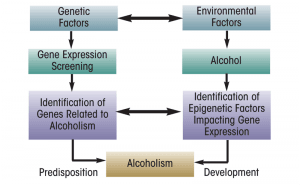
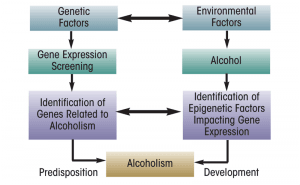
    So, the choice to raise a glass is yours. You make the decision to try alcohol, or not. Even though you may hold a high genetic risk of AUD, most people are first driven to try alcohol by a nonhereditary factor, which is usually environmental in nature. Here’s a diagram of the relationship between genes and environment that might provide you with a visual aid to understand the interplay:

    Alcoholism Genetic Risk Factors

    Many factors play a role in developing a drinking problem. These factors interact differently for different people. So, the same factors might lead to alcoholism in some, and not in others. The risk factors are divided into two categories:

    External factors:

    • Age
    • Cultural norms
    • Education
    • Employment status
    • Environment
    • Family
    • Social norms
    • Religion

    Internal factors:

    • Drinking history
    • Genetics
    • Personality
    • Personal choice
    • Psychological conditions

    For example, findings published by the NIAAA show that children of alcoholics are about four times more likely to develop alcoholism than the general population. These children are also at high risk for many other behavioral and emotional problems. Genes are not the only factor in these cases, how alcoholic parents act and treat their children play a huge role in developing drinking problems. Some aspects that may increase the risk for alcoholism include:

    • An alcoholic parent is depressed or has other psychological issues.
    • Both parents drink alcohol and/or use other substances.
    • Conflicts because of alcohol use lead to aggression and violence in the family.
    • Parent’s alcohol use is severe.

    To repeat, a combination of these risk factors may be the cause of alcohol use disorder for some, but not for others. This fact makes it difficult to predict who might become alcoholic, and who will not.

    Avoiding a Problem

    So, how can you protect yourself from a drinking problem? How can you avoid alcoholism if it runs in your family? The first thing you need to do in order to protect yourself is to learn your family history regarding alcoholism. Make a Family Map with an addiction counselor or other behavioral health professional…or you can learn how to make a family map here.

    If you are among millions of people who have a parent, grandparent, or other close relative with drinking problems, there is a way to protect yourself by lowering these risks:

    Avoid underage drinking. Underage drinking is illegal at the first place. Second, studies show that the risk of developing alcohol use disorder is higher among people who started drinking at early age.

    Drink in moderation. Adults who choose to drink should drink in moderation. Not only because of the risk of alcoholism, but also because alcohol may cause many health problems.

    Consult with a health care professional. Never hesitate to ask for help! Discuss your issues with professionals. They can help you find a suitable treatment or groups that can help you manage your alcohol problems.

    The good news? Many children of alcoholics do not develop drinking problems. Awareness and action are key!

    What’s Your Risk of Alcoholism?

    Do you think that you may be at risk of developing alcohol use disorder? How can you be sure? The National Institute on Alcohol Abuse and Alcoholism outlines general guidelines.

    For women, problem drinking is:

    • Drinking more that 1 standard drink daily.
    • Drinking more than 7 drinks weekly.
    • Drinking more than 3 drinks on any single day.

    For men, problem drinking is::

    • Drinking more than 2 drinks daily.
    • Drinking more than 14 drinks weekly.
    • Drinking more than 4 drinks on any single day.

    Moreover, there are also two ‘at-risk’ drinking patterns that can lead to alcohol use disorders:

    1. Binge drinking – It is a drinking pattern that levels up the blood alcohol concentration (BAC) to 0.8 g/dl or above, which is usually happening after 4 drinks for women, and 5 drinks for men in a one drinking session of about 2 hours.

    2. Heavy drinking is a binge drinking on 5 or more days in one month period.

    Did you find yourself in some of these patterns?

    Don’t wait until it’s too late, reach out for help!

    Top 10 Alcohol and Genetics Facts

    If drinking problems run in you family, don’t worry… It doesn’t mean that you will become addicted to alcohol. After all, even though you may have the ‘alcoholic gene’, alcoholism does not need to be your destiny. You are just at risk.

    Below is a list of 10 facts about alcohol and genetics:

    1. Genetics is about 50% responsible for developing alcohol use disorder.
    2. One gene is not responsible for causing alcohol problems. A certain combination of hundreds of genes in individual’s DNA can increase the risk of developing alcoholism.
    3. Having the ‘alcohol gene’ doesn’t mean that you will become an alcoholic.
    4. Children with an alcoholic parent are four times more likely to develop alcohol use disorder.
    5. Only 10% of people who drink become alcoholics.
    6. Even though you may begenetically predisposed to alcoholism,your choice to try alcohol in the first place is usually triggered by envinronmental factors.
    7. A combination of external and internal factors may lead to drinking problems.
    8. Environmental factors play a huge role in developing alcoholism.
    9. Drinking excessively over a long period of time puts you at higher risk of a drinking problem, even if you are not genetically predisposed to alcohol use disorder.
    10. Scientists still haven’t identified which genes are responsible for increasing the risk of developing alcohol use disorder.

    Reference sourses: NIAAA: Genetics of Alcohol Use Disorder
    NIAAA: A Family History of Alcoholism
    NIAAA: Collaborative Studies on Genetics of Alcoholism – Study
    NCBI: Genetics and Alcoholism 
    NCBI: Genetic factors influencing alcohol dependence

    View the original article at

  • Alcoholism Causes and Risk Factors

    Alcoholism Causes and Risk Factors

    ARTICLE OVERVIEW: Many risk factors contribute to a drinking problem. We review the major ones, starting with psychological and then looking at genetic and cultural factors.

    ESTIMATED READING TIME: 5-10 minutes

    TABLE OF CONTENTS:

    Causes of Alcoholism

    Alcoholism is also known as “alcohol use disorder” (AUD). It is a chronic brain disease that can impact anyone no matter the gender, age, ethnicity, personality, nor body type. Everyone is at risk. But how does alcoholism begin?

    A drinking problem doesn’t usually happen over night. Most cases develop gradually over a period of time. While it can sometimes develop quickly and aggressively, an AUD usually takes a longer period to develop. According to SAMHSA’s national survey on drug use and health,over 15 million Americans aged 12 or older had an alcohol use disorder in 2016. What are the causes for this difficult disease?

    There is no fixed formula for the onset of an AUD. Many studies has shown that alcoholism is influenced by a variety of factors. These factors interact differently in each person causing alcohol disorder in some, and not in others. The risk factors can be divided into two categories:

    External factors:

    • Age
    • Cultural norms
    • Education
    • Employment status
    • Environment
    • Family
    • Social norms
    • Religion

    Internal factors:

    • Drinking history
    • Genetics
    • Personality
    • Personal choice
    • Psychological conditions

    The numerous risk factors make it impossible to predict whether any person will develop alcohol use disorder. They just increase the chance that a person will develop this disorder. Even if you have some of the risks factors it doesn’t mean that you will become an alcoholic.

    But, regardless of when the drinking problems start or what caused them, there are many options for treatment that can help you get back your life on track. Do not waste time, reach out for help as soon as possible.

    Psychological Factors

    People with certain psychological conditions are at higher risk of developing alcohol use disorder. Many people with psychological disorders turn to alcohol as a coping mechanism for their disorder. For instance, individuals with depression claim that alcohol elevates their mood, while those with schizophrenia claim that drinking quiets down the voice in their head. One study published in the journal BioMed Central estimated that:

    • More than 40% of people with bipolar disorder can develop a drinking problem.
    • More than 45% of people diagnosed with schizophrenia can develop a drinking problem.
    • More than 25% of people with major depression can develop a drinking problem.
    • More than 80% of people with anti-social personality disorder can develop a drinking problem.

    Personality Factors

    Person’s personality is clearly associated with drinking patterns. There are many theoretical models showing connection between effects of personality on alcohol use and its problems.

    Indeed, some personalities are more prone to developing alcohol use disorder than others. Numerous studies show links between specific personality traits and alcohol abuse. Some of the most common traits related to alcohol abuse include a person’s impulsiveness/ disinhibition and these five traits:

    • Agreeableness.
    • Conscientiousness.
    • Extraversion.
    • Neuroticism.
    • Openness to experience.

    Still, a recent meta-analysis suggests that among the five-factor traits only low conscientiousness, low agreeableness, and high neuroticism are significantly linked to alcohol use disorder.

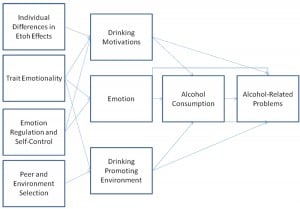
    In sum, there are numerous theoretical models with varying degrees of empirical support whose goal is to answer the question how and why certain personality develop drinking problems. Keep in mind that these models are neither all-inclusive nor mutually exclusive. Check out this illustration of multiple pathways related to personality that show alcohol use disorder might develop:

    Personal Choice Factors

    The personal choice to start drinking is a risk factor of developing alcohol dependence. For example, an individual who has decided that they will never have a drink, can obviously not develop an AUD. Also, people who choose to avoid social situations where drinking occurs heavily, are less likely to develop dependence.

    On the contrary, people who love to socialize with few drinks, are more prone to developing alcoholism.

    Whether you are at risk of developing alcohol use disorder or not, the choice to try alcohol is yours. You make the decision to try it or not.

    Drinking History Factors

    An individual’s drinking history plays an important part of developing alcohol use disorder. People who started drinking at early age, and continue into their adulthood are at high risk of becoming alcohol dependent.

    Also, the National Institute on Alcohol Abuse and Alcoholism lists few drinking patterns that show drinking problems:

    For women, problem drinking is:

    • Drinking more that 1 standard drink daily.
    • Drinking more than 7 drinks weekly.
    • Drinking more than 3 drinks on any single day.

    For men, problem drinking is:

    • Drinking more than 2 drinks daily.
    • Drinking more than 14 drinks weekly.
    • Drinking more than 4 drinks on any single day.

    Binge drinking, by definition is a drinking pattern that builds up the blood alcohol concentration (BAC) to 0.8 g/dL or more. This usually happens after 4 drinks for women, and 5 for men in one drinking session. Heavy drinking is a binge drinking on 5+ days in a period of one month.

    Even though a person may have a genetic predisposition to developing alcohol use disorder, it doesn’t mean that they will become alcoholic.

    Genetic Factors

    NIAAA’s genetic research shows that genetic factors account for 50 to 60 percent of the variance in risk for developing alcohol use disorder. Moreover, children of alcoholic parents have an approximately four times greater risk of becoming alcoholic themselves.

    Still, there is no empirical data that identifies what genes are responsible for increasing the risk of becoming alcohol dependent.  However, there are many genes in person’s DNA that can increase the risk of becoming alcohol dependent. A combination of these genes with personality traits, and various environmental factors may have the key of alcoholism. Check out this diagram to help you see the relationship between genes and environment of developing AUD:

    Familial Factors

    If alcoholism runs in your family, the risk of developing alcohol use disorder is higher that for someone who does not have a family history of AUD. Growing up around a parent who struggles with alcohol problems may change your perspective: you may see drinking as normal, and fall victim to bad habits, or learn the negative effects of alcohol, and never touch it.

    Even though genetics and familial (heredity) are closely linked, there is a difference when discussing genetic versus familial diseases:

    • A person with genetic disease has abnormality in their genome.
    • A person with a familial disease has received a genetic mutation from their parents’ DNA.

    Environmental Factors

    Environment has a huge impact on becoming alcohol dependent. How? For example, if a person cannot cope with stress, they might choose drinking as a way to deal with the stress. Moreover, if an individual has experienced a traumatic event, the chances to turn to drinking are enormous.

    Some of the many environmental factors related to alcoholism include:

    • Attitudes.
    • Bad parenting.
    • Beliefs.
    • Culture.
    • Financial power.
    • Lifestyle.
    • Physical abuse.
    • Peer pressure.
    • Sexual abuse.

    Religious Factors

    Every religion has a different view towards alcohol use. Islam promotes total abstinence, while Catholicism have integrated alcohol use into some religious ceremonies. One study published in the journal Drug and Alcohol Dependency showed that individuals who viewed their religion as promoting abstinence were less likely to develop alcohol dependence. Also, drinking was highly associated with person’s religious commitment: if the religion promoted abstinence the percentage of reduced drinking was higher.

    Moreover, the U.S. National Alcohol Survey showed diverse patterns of abstention and drinking that shows that religion is important for drinking behaviors.

    Social and Cultural Factors

    Alcohol use varies across gender and ethnicity. Worldwide, men drink more than women. According to the 2013 National Survey on Drug Use and Health, American men drink more than women:

    • Regular drinking: 56% vs. 47%
    • Binge drinking: 30% vs. 16%
    • Heavy drinking: 9% vs. 3%.

    Among ethnic and racial groups, Caucasians report the highest rate of alcohol use among people aged 12+, while American Indian/Alaska Natives report the highest rate of binge drinking. Moreover, this SAMHSA’s report shows the following rate on demographics and addiction rates:

    • American Indian/Alaska Native: 14.9%
    • Native Hawaiian and Other Pacific Islander: 11.3%
    • Hispanic: 8.6%
    • Caucasian: 8.4%
    • African American: 7.4%
    • Asian: 4.6%

    Additionally, this analysis show that there are many underlying social and cultural factors contributing to the numbers above. For instance, people with high socioeconomic status tend to drink more frequently than others, while people with low socioeconomic status tend to drink in larger quantities of alcohol.

    On the other hand, cultural norms play a huge role in developing AUD. African Americans and Latinos report more conservative claims towards alcohol use compared with Whites. However, some studies have found out that drinking problems differ across Latino subgroups, such as higher rates of alcohol use disorder among Mexican-American and Puerto Rican men compared with Cuban Americans and Central and South Americans. As a cultural norm, machismo, which is a cultural influence for many generations of Latino male identity, suggest that Latino men attempt to appear strong and masculine because of cultural values, and drinking huge amounts of alcohol is one of the ways to show masculinity. On the contrary, Asians are believed to have higher abstention rates.

    Also, alcohol consumption can be linked to a complex array of factors overlapping with each other, ranging from individual to cultural and societal factors. High social status suggest that social networks and connection influence overall health. For example, people who have higher levels of social support are thought to be healthier because they have better links and access to health services, and greater financial support.

    Finally, this NIAAA pamphlet shows that the Native American population have a 60 percent lifetime prevalence rate for the development of alcohol use disorders and alcohol dependence.

    Read this study Social and Cultural Contexts of Alcohol Use published in the journal Alcohol Research: Current Reviews to find more social and cultural risk factors including:

    • Discrimination factors.
    • Immigration factors.
    • Community factors.
    • Societal Influences (advertising, marketing, and social media).

    Age Factors

    One of the important risk factors for developing alcoholism is the age when you start drinking. The earlier a person starts to drink, the bigger the chances are they continue to drink in future. Also, regular drinking increases the risk of developing alcohol use disorder.

    Even though it is illegal to drink before 21, many teenagers consume alcohol around 13 to 15 years old. According to this survey:

    • 26% of 8th graders reported drinking in the past month.
    • 40% of 10th graders reported drinking in the past month.
    • 51% of the 12th graders reported drinking in the past month.

    Moreover, binge drinking is a popular pattern among youngsters.

    Drinking at an early age increase the risk of alcohol abuse, but alcoholism as a disease doesn’t spare anyone. It can affect anyone at any age.

    Educational Factors

    According to this study, education levels affect your risk of a drinking problem. Individuals who dropped out from high school were about 6 times more to develop alcohol problems, while college dropouts were 3 times more to become alcohol dependent.

    Career Factors

    Careers can be exhausting, and many individuals seek coping mechanism in drinking. High levels of stress, long working hours, and strenuous tasks are only few factors that may produce negative effect on the person.

    According to this CBHSQ Report, 8.7 % of full-time workers aged 18 to 64 drank heavily in the past month. The highest rate of drinking was noticed in mining (17.5%) and construction industry (16.5%).

    How Alcoholism Risk Factors Affect Treatment and Relapse

    All risk factors for developing alcohol dependence affect the treatment on many levels. For example,

    • This study published in the Journal of Ethnicity in Substance Abuse found that Spanish speaking individuals are less likely to perceive a need for treatment and seek treatment services than the general public. Also, women face more barriers to access substance abuse treatment, and are less likely to seek help.
    • According to NIAAA, women tend to seek help in mental health or primary care settings rather than in specialized programs.
    • People with stressful and high-end professions may consider addiction as shame and stigma, while people that are uninsured or have low income may have troubles finding treatment to their standard.
    • Moreover, depression is a major trigger for relapse. But, relapsing does not mean that you have failed. Relapse means that you need to reevaluate your treatment, and find the one that fits your needs. Also relapse makes you aware of the triggers around you.

    However, treatment works!

    Evidence-based treatment that is customized by the needs of the patient is overwlehmingly successful. NIAAA has found that about one-third of people who are treated for alcohol problems have no further symptoms a year later, while many others have reduced their drinking habits.

    So, don’t put life on hold. Gelp help! Or, seek help for a loved one.

    The time to act is now.

    Reference sources: NCBI: The Multiple, Distinct Ways that Personality Contributes to Alcohol Use Disorders
    NCBI: Genetic factors influencing alcohol dependence
    NCBI: Religion and alcohol in the U.S. National Alcohol Survey

    View the original article at