Tag: anxiety symptoms

  • Is There A Link Between Anxiety And Weight Loss?

    Is There A Link Between Anxiety And Weight Loss?

    Recent findings may make developing drugs to treat obesity and anxiety much easier.

    New research on mice suggests that there is a connection between anxiety and burning fat. 

    According to New Atlas, researchers say the connection comes from a molecule that seems to connect the two. Researchers believe these findings could aid in developing drugs for managing both anxiety and obesity. 

    The research was conducted by scientists at Florida’s Scripps Research Institute and carried out on mice. Researchers focused on a molecule called brain-derived neurotrophic factor (BDNF), which is known to “promote the growth and function of brain cells and recent research has linked it to schizophrenia, memory and experimental Alzheimer’s treatments.”

    Baoji Xu, a Scripps Institute obesity researcher, says that in observing certain mice that were engineered to lack the BDNF molecule, she noticed another potential function of it.

    She notes that just like with humans, there was a connection between times of stress and anxiety and weight loss in mice, even when the mice were specifically given a diet intended to lead to weight gain.

    “Even on a high-fat diet, these mice were really lean,” Xu said, according to New Atlas. “Could the same thing be happening in humans?”

    To fully understand this connection, researchers adjusted their study in an attempt to learn more. 

    In order to do so, researchers needed BDNF to be working in certain parts of the brain, but not in other parts. So they first eliminated the BDNF gene in the brain’s cortex, hippocampus and amygdala regions, according to New Atlas.

    After doing so, the mice still displayed anxiety symptoms. Upon further study, researchers found that the elimination of BDNF was impacting the neurotransmitter GABA, which has to do with slowing signals in the brain and creating a sense of relaxation. 

    In studying the BDNF-less mice, researchers determined that they had an “elevated basal metabolic rate,” which means they were “expending more energy just to keep their anxious bodies in working order,” according to New Atlas.

    It was also discovered that the mice produced more brown fat, which is a type of fat that burns energy to create body warmth. 

    Though the results of this study could prove helpful in creating drugs to treat anxiety and weight loss, there will have to be more thorough research conducted first. However, researchers are still hopeful based on these preliminary results. 

    “We’ve found a relationship between anxiety and weight loss,” says Xu. “This research could guide new therapies for anxiety and help researchers design treatments for obesity.”

    View the original article at thefix.com

  • Can Music Therapy Help Ease Anxiety For Pregnant Women?

    Can Music Therapy Help Ease Anxiety For Pregnant Women?

    Researchers examined whether music could work as a tool to help calm symptoms of anxiety in pregnant women.

    With four prior miscarriages, 42-year-old Elizabeth Larsen of Huntley, Ill., struggled with severe anxiety during her pregnancy. But Larsen says she found relief through music therapy, in which music is used to improve health.

    New research indicates that mothers with anxiety during pregnancy, like Larsen, can benefit from such therapy.

    “I wanted to find wellness tools to ensure that my baby and I would have a safe and wonderful birth,” Larsen told The Washington Post. “Music therapy opened up my bodily senses and helped me to relax.” Recently, researchers studied music and mental health during pregnancy. There were 409 participants, all in their third trimester of pregnancy.

    None had a history of anxiety. Of the group, half underwent music therapy where they listened to a relaxing CD three times per week. The other half of the group did not do so. Upon completion of the study, researchers found that those who had taken part in music therapy were overall less anxious than the other group.

    “During pregnancy, fears and anxieties about the health of the baby are very common. Many of the women in our study were anxious about the stress test, an ultrasound that examines the health of the baby,” lead researcher Jessica Garcia-Gonzalez told the Post.

    She added that the study indicates that “anxiety during pregnancy can increase a woman’s risk of postnatal anxiety and depression, but music therapy can help reduce stress.”

    According to Postpartum Support International, anxiety and depression before and after a child’s birth are not rare. The organization says about 6% of pregnant women and 10% of new mothers struggle with anxiety, and about 15% of women grapple with depression after a child is born.

    Karen Kleiman, a psychotherapist who specializes in maternal mental health, told the Post that it is vital for mothers and pregnant women to seek treatment for such issues. “Anxiety is associated with prenatal health concerns like preeclampsia, preterm delivery, and low-birth weight, which is why it’s important for women to learn coping strategies to minimize their worries during pregnancy,” she said.

    As a board-certified music therapist and birth doula, Kate Taylor told the Post she often provides music therapy for her clients. “I use music as a teaching tool,” she said. “We might analyze song lyrics or listen to instruments or music that can aid in relaxation. Songs can bring up intense emotions for women, which can help them connect with the baby, and openly share their worries and feelings about motherhood.”

    For Larsen, music therapy resulted in a more calming pregnancy overall. “During our sessions, we listened to the acoustic guitar,” she told the Post. “At home, I listened to relaxing music on my headphones. The music calmed my anxiety, which helped me stay positive.”

    View the original article at thefix.com

  • Can Tetris Help Alleviate Anxiety?

    Can Tetris Help Alleviate Anxiety?

    Researchers explored whether the classic game could have positive effects on those battling anxiety.

    Could an old-school video game help ease your anxiety? New research points to yes. 

    According to NPR, Kate Sweeny, a psychologist at the University of California, Riverside, conducted research into whether the game Tetris can have positive effects for those struggling with anxiety. 

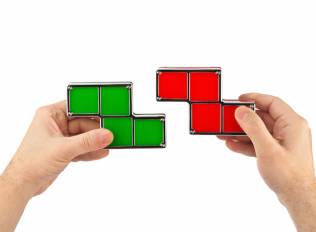
    The premise of the game is to rotate and adjust moving tiles so they fit into a flat line at the bottom of the screen.

    “Years of my life were lost disappearing into a game of Tetris on my Nintendo system,” Sweeny told NPR.

    The game, according to Sweeny, can help ease anxiety by allowing players to enter a state psychologists call “flow.”

    “The state of flow is one where you’re completely absorbed or engaged in some kind of activity,” Sweeny told NPR. “You lose your self-awareness, and time is just flying by.”

    In conducting the study, Sweeny’s team focused on people who were waiting for “uncertain, potentially life-altering news” with the idea that playing Tetris could help their minds focus elsewhere for a period of time.

    Specifically, they took a group of 300 college students and told them their peers would be rating how attractive they were. 

    “I know, it’s kind of cruel, but we found it’s a really effective way to get people stressed out,” Sweeny told NPR.

    While the students were waiting for the results, they were instructed to play Tetris. There were three levels of difficulty assigned to different students: one slow, easy and boring; one fast, challenging and frustrating; and one classic version, meaning the game is adjusted based on the player’s ability. 

    While players still reported varying degrees of worry, the group that played the classic version reported slightly increased levels of positive emotions and slightly decreased levels of negative ones. 

    “It wasn’t a huge difference, but we think it’s noticeable,” Sweeny told NPR. “And over time, it can add up.”

    Games aren’t the only way to reach a state of flow, according to Elizabeth Dunn, a psychologist at the University of British Columbia who studies happiness.

    “Think of the activity that grabs your attention and doesn’t let it go,” Dunn told NPR. “For me, it’s mountain biking.” 

    While Dunn was not involved in the research, she says the results were not surprising.

    “I can’t say I found this study particularly surprising at all,” she told NPR. “Mostly because, based on previous research, it’s hard to find a situation where the experience of flow isn’t a good thing.”

    Dunn also noted that the research indicates “that even in tough moments, we should push ourselves to do something challenging to get us out of the moment.”

    View the original article at thefix.com