Tag: anxiety

  • Does Tech Addiction Play A Role In Workplace Mental Health Issues?

    Does Tech Addiction Play A Role In Workplace Mental Health Issues?

    Mental health in the workplace is an evolving issue that needs to be addressed.

    While technology is largely helpful in today’s professional world, it can also be somewhat hindering for mental health, according to Mike Serbinis, the founder and CEO of Canada-based employee benefits platform League. 

    “If people feel like they always have to be on, it’s stressful and hard to relax and get the downtime and rest your brain needs,” Serbinis tells Forbes.

    Mental health in the workplace is an evolving issue that needs to be addressed. In fact, mental illness is now the greatest cause of disability in the world, according to the World Health Organization. 

    It’s an issue close to home for Serbinis too; 44% of employees in his country of Canada have faced a mental health issue in their place of work. 

    “We see it among our data [at League] too,” Serbinis tells Forbes. “Between one-third to one-half of all employees using us are checking in or accessing a service that has to do with helping them manage stress, anxiety, depression, and so on.”

    In the United States, similar statistics demonstrate that one in five U.S. adults are living with mental health issues of some sort, though the number is likely higher due to lack of reporting. 

    According to Serbinis, it’s important to distinguish between the types of mental health issues. He says two of the biggest are depression and anxiety. “There’s a range of different conditions and illnesses,” Serbinis tells Forbes. “People speaking about mental health as one sort of general category almost doesn’t do it justice.”

    When it comes to struggling with mental health in the workplace, Serbinis says “tech addiction” likely plays a large role.

    “What’s happening is that people are getting conditioned to see those signals or numbers and feel like they have to go back and check constantly,” Serbinis says. “And that triggers this fight or flight response. Which jacks up adrenaline, which jacks blood pressure, which can lead to cardiovascular issues, which leads to anxiety… it’s a whole cascade of events that really emanates from this constant interruption.”

    One solution is to expand employee benefits to cover mental health, Serbinis says. 

    Forbes says that in addition to covering mental health services, some companies are also taking time for mental health “office hours,” during which a therapist may visit a workplace. Or, as an alternative, companies are covering subscriptions for online tools such as Talkspace

    Another recommendation is to not encourage employees to constantly check work-related notifications during non-working hours. “We suggest that people to turn off their notifications at home, and dedicate time for messaging and emails at work that’s separate from your other tasks,” Serbinis tells Forbes.

    When it comes down to it, Serbinis says, workplaces need to change their approach to mental health. 

    “The current way of doing things is not sustainable,” he said. “Employers need to see employee health and wellness as a core part of their strategy to build a top company.”

    View the original article at thefix.com

  • How Parents Can Support Teens’ Mental Health

    How Parents Can Support Teens’ Mental Health

    Parents play a key role in connecting teens with mental health treatment and helping them learn to live with their diagnosis.

    The parents of teenagers used to fret about whether their kids were sleeping too much or “just saying no” to drugs, but today’s parents are more in tune with the mental health needs of their children, recognizing that many mental illnesses start during adolescence. 

    More than 17 million American teenagers have a mental, behavioral or emotional disorder, according to USA Today, and many times parents are key in connecting these individuals with treatment and helping them learn to live with their diagnosis.

    With suicide being the second-leading cause of death among people ages 10-34 in the U.S., talking about mental health with young people could very well save a life. 

    Still, many parents aren’t sure what the warning signs of mental illness are, especially since teenagers are general apt to be moody and withdrawn. Parents should look for sudden changes in behavior—a quick drop in school performance, a change in sleeping or eating habits, or physical pains such as stomach issues. All of these can be signs of mental illness in teens. 

    Myths and stigma about mental illness can hinder access to treatment, so it’s important to remember that mental illnesses are biological conditions, not caused by bad parenting, personal weakness or character flaws. Just like physical illnesses require expert care, so do mental illnesses.

    It’s important that parents consult with professionals such as counselors and primary care physicians to get teens the help they need. Most mental illnesses that emerge during the teenage years will become lifelong conditions. Although this is scary, connecting with the best treatment as soon as possible will help teens learn to cope with their illnesses. 

    Even when parents are able to identify that their child has a mental or emotional issue confronting them, it can be hard to talk about. However, talking is key. Ask your child how he or she is doing. If they’re not receptive to conversation, just try again later rather than pushing the issue. 

    If you suspect that something is wrong but your child insists that he or she is fine, turn to other adults in their life, like coaches, teachers or school counselors. Ask if they’ve noticed changes or behaviors that they find concerning.

    Although a medical professional may not be able to give you information about your teenager due to patient confidentiality, they are always able to listen to your concerns. 

    Finally, connecting with teenagers is important for controlling and preventing mental illness. Take walks together outside or play sports. Eat dinner together. These activities allow you to connect with your teen without the pressure of a sit-down conversation. 

    View the original article at thefix.com

  • How "This Is Us" Encourages Men To Speak About Mental Health

    How "This Is Us" Encourages Men To Speak About Mental Health

    The critically-acclaimed series showcased a candid conversation about mental health in a recent episode.

    Warning: This article may contain spoilers.

    The NBC drama series This Is Us doesn’t shy from addressing tough issues like the stress of in-vitro fertilization and the trauma of war. In the most recent episode, the show depicts two men talking about mental health. This simple exchange, broadcast on a major TV network, is more impactful than we know.

    A conversation between brothers-in-law Randall (played by Sterling K. Brown) and Toby (Chris Sullivan) turns to their personal demons.

    “I can’t picture you with anxiety. You know, the way you present,” says Toby. “That’s what we do, right? Men,” Randall replies.

    Toby, who we know has struggled with depression in the past, said that without his medication for his condition, “life gets pretty scary.” Randall is surprised to learn that his brother is medicating for depression. “Never would have known.”

    Toby’s depression diagnosis surfaced after separating with his first wife. And as he and wife Kate Pearson (played by Chrissy Metz) struggle to conceive, he is informed by a doctor that his depression medication may be affecting his sperm.

    As for Randall, his anxiety surfaced near the end of Season 1, when he had a panic attack, and it was addressed further, rather accurately, in Season 2. We learn that he has dealt with anxiety since he was a child and suffers panic attacks from time to time.

    Writer and co-executive producer KJ Steinberg, described the making of the normally taboo conversation between Randall and Toby. “[It’s] actually a really sensitive conversation,” he said. “The fear is to treat it too glibly. You never want anything to appear too simple. But you also are writing for characters who share an intimacy and a need to connect with one another.”

    Overall, the show is not afraid to depict the vulnerabilities of the men on the show. We learn that Jack Pearson (Milo Ventimiglia) had a drinking problem, as did his father. “We’re a family of addicts. Our father was an addict. We don’t talk about his drinking problem,” said Jack’s son Kevin (Justin Hartley), who faced his own addiction to opioid painkillers.

    Public health campaigns like Heads Together in the UK encourage people to speak up, not hide away, mental health issues they may be struggling with—particularly men. Retired Olympic medalist Michael Phelps is also on a mission to shed the stigma of mental health issues. He has publicly discussed his own struggles with depression and alcohol on many occasions.

    View the original article at thefix.com

  • Demand For Mental Health Resources Not Being Met On College Campuses

    Demand For Mental Health Resources Not Being Met On College Campuses

    One mental health professional estimates that almost half of colleges students who need services are not receiving them.

    College is a stressful transition for many—that’s apparent from recent mental health numbers. 

    According to Deseret News, greater numbers of college students are facing mental health challenges such as depression and anxiety, and as such, the number of students seeking help on campuses has increased.   

    Ben Locke, executive director of the Center for Collegiate Mental Health at Pennsylvania State University, tells Deseret News that the demand for mental health services is growing rapidly—about five to six times faster than enrollment. He says that since enrollment numbers help fund such services, it’s difficult for some colleges to fulfill the demand.

    The Center for Collegiate Mental Health has found that of the students seeking help, 70% have anxiety. Of those, 25% consider anxiety their main concern. These numbers, according to Deseret News, are based on 2017 data covering 160,014 students at 160 colleges.

    Additionally, a 2017 American College Health Association Survey of 63,000 students discovered that 2 in 5 students would say they are so depressed that they “struggled to function,” and 3 in 5 had felt “overwhelming anxiety” in the previous year.

    According to experts, college students may be particularly prone to such mental health struggles because of the transition from adolescence to adulthood.

    And it isn’t just the volume of students that’s an issue. According to Daniel Eisenberg, professor of health management and policy at the University of Michigan and director of the Healthy Minds Network, students’ symptoms are growing more severe.

    According to Eisenberg’s data, almost half of students who need services are not receiving them.

    Randy P. Auerbach of Columbia University and lead author of a study about mental health in college students worldwide, says the problem needs to be addressed. 

    “We are seeing debilitating levels of anxiety that are more and more common—where, by the time they get to college, students are so worried about different aspects of their lives it can be a real problem. Students struggling with very severe symptoms who don’t get treatment are likely to have consequences.”

    On some campuses, students are taking the matter into their own hands. At the University of Michigan, student body president Bobby Dishell and some of his peers had begun a program called the Wolverine Support Network. The idea was that students could form small groups and offer one another support. 

    Sam Orley, whose brother George took his own life when he was a student at the university, served as the executive director of the program. Orley said that rather than being a program for mental illness, the Wolverine Support Network is a “holistic mental health and well-being effort.”

    In some cases, the struggles college students are facing may be downplayed, according to Kelly Davis, director of peer advocacy, supports and services for Mental Health America.

    “There’s a lot of condescension—dismissal of how hard that period of life is,” Davis told Deseret News

    Last spring, Deseret News sat down with students to discuss their fears and worries. Topping the list were fear of missing out, fear of failure and job competition.

    “The bar is just so high for everything,” one student said in conclusion.  

    View the original article at thefix.com

  • How To Tell If A Child Is Battling Anxiety

    How To Tell If A Child Is Battling Anxiety

    Though child anxiety can sometimes take longer to diagnose, it is very treatable once diagnosed.

    What initially appears as bad behavior in children can actually be signs of an underlying issue — anxiety disorders. 

    According to the Washington Post, anxiety disorders are increasing in youth, especially during the school year.

    A study recently published in the Journal of Developmental and Behavioral Pediatrics makes the estimate that about 2 million children and adolescents in the U.S. have a diagnosable anxiety disorder. 

    When it comes to anxiety in children, it can be difficult to diagnose since it can present as negative behaviors. 

    “We tend to think of anxious children as these delicate little butterflies, but when kids are scared, they can be ferocious about trying to escape or avoid anxiety-provoking situations,” Eileen Kennedy-Moore, child psychologist and author of Kid Confidence, told the Post

    Susan Newman, psychologist and author of The Book of No, explains that sometimes children can have feelings of anxiety for the first time and don’t always know how to react.  

    “Children today are stressed on so many fronts: challenged socially, academically, having to cope with physical changes and development, the demands and influence of social media, trying to fit in and be accepted. It’s no wonder they show evidence of anxiety,” Newman told the Post. “Parents should ask questions about anything they notice or want to understand to show their interest and love for their child. Children want to be heard and listened to, even if they tell you to stop being nosy.”

    When it comes to anxiety in children, there are some warning signs, though all children differ. One, according to the Post, is psychosomatic complaints. 

    “Kids don’t usually come home from school saying, ‘I felt really anxious at school today,’ but they do say things like, ‘I have a terrible stomachache; I can’t go back to school tomorrow,’” the Post notes. “Frequent stomach aches, headaches and unexplained muscle aches and pains can all be symptoms of anxiety.”

    Other signs include anger and irritability, sadness, isolation and avoidance, fatigue, poor concentration, school refusal and frequent questions.

    Just like signs of anxiety can differ from child to child, so can triggers. Triggers can include genetics, academic pressure, bullying, big transitions, loss and violence or abuse. 

    Though child anxiety can sometimes take longer to diagnose, it is very treatable when that diagnosis is made, according to the Post. Through identifying triggers and learning coping skills, children and parents can learn to take control of anxiety. 

    “A pediatrician is a good first stop to rule out or diagnose possible medical issues and to refer a licensed mental health practitioner who specializes in working with children,” the Post reads. “Cognitive behavioral therapy and dialectical behavioral therapy can be very effective treatment options for children with anxiety.”

    View the original article at thefix.com

  • Emma Stone Talks Anxiety, Panic Attacks

    Emma Stone Talks Anxiety, Panic Attacks

    “You don’t have to be actor to overcome anxiety. You just have to find that thing within you that you are drawn to.”

    Emma Stone can vividly remember her first panic attack at age seven. 

    “I was sitting at a friend’s house and all of a sudden I was absolutely convinced that the house was on fire,” Stone recalled. “I was just sitting in her bedroom and obviously the house wasn’t on fire but there was nothing in me that didn’t think I was going to die.”

    On Monday, October 1, the actress sat down with Dr. Harold S. Koplewicz for a 30-minute conversation at the Child Mind Institute in New York City. She discussed her history of anxiety, beginning with the panic attack. Stone went on to describe how she would visit the nurse daily during second grade, where she would then call her mom. 

    “I had deep separation anxiety,” she told Koplewicz.

    Stone’s mother decided to take her to therapy and was informed her daughter had generalized anxiety disorder and panic disorder, ABC News reports. However, she chose not to tell her daughter, which is something Stone says she has appreciated. 

    “I am very grateful I didn’t know that I had a disorder,” Stone said. “I wanted to be an actor and there weren’t a lot of actors who spoke about having panic attacks.”

    Stone described how in therapy, she came up with a book called, I Am Bigger Than My Anxiety. She says she drew photos inside of “a little green monster that sits on my shoulder.” In the book, the monster — her anxiety — would increase in size if she listened and decrease if she didn’t.

    A few years after her first panic attack, at age 11, Stone says she began acting in improv and realized “my feelings could be productive.”

    She says she also kept involved in the local children’s theater which was helpful in managing anxiety.

    “I believe the people who have anxiety and depression are very, very sensitive and very, very smart,” she said. “Because the world is hard and scary and there’s a lot that goes on and if you’re very attuned to it, it can be crippling. But if you don’t let it cripple you and use it for something productive, it’s like a superpower.”

    Today, Stone says, she manages her anxiety disorder through therapy, medication, the company of others and staying busy. She also avoids social media. 

    “That would send me into a spin,” she said. “I don’t need to be getting constant feedback on who I am.”

    For anyone battling anxiety, Stone says the key is finding somewhere else to shift your focus. 

    “You don’t have to be actor to overcome anxiety, you don’t have to be a writer to overcome it,” she told Koplewicz. “You just have to find that thing within you that you are drawn to.”

    View the original article at thefix.com

  • Claire Foy On Anxiety: It's My Mind Working A Thousand Beats A Second

    Claire Foy On Anxiety: It's My Mind Working A Thousand Beats A Second

    “I used to think that this was my lot in life, to be anxious… but now I’m able to disassociate myself from it more.”

    Claire Foy, who is best known for playing Queen Elizabeth on the Netflix series The Crown, is having a banner year. Foy recently won an Emmy for Lead Actress in a Drama, and she’s also getting strong reviews for her performance in First Man, where she stars alongside Ryan Gosling.

    Despite Foy’s success, she’s had to cope with more than her share of anxiety—in fact, she recently confessed that her anxiety “exploded” as her career took off. 

    “When you have anxiety, you have anxiety about—I don’t know—crossing the road,” she told The Guardian. “The thing is, it’s not related to anything that would seem logical. It’s purely about that feeling in the pit of your stomach, and the feeling that you can’t, because you’re ‘this’ or you’re ‘that.’ It’s my mind working at a thousand beats a second, and running away with a thought.”

    Like many performers who struggle with self-doubt, Foy has had to fight off “lots of thoughts about how shit I am.”

    She recalled her parents separating when she was eight years old, and wanting to “make everyone happy. Never be angry. Be really sweet and well-behaved. I didn’t want to upset people.”

    Like many who suffer from anxiety, she began over-thinking everything and second-guessing herself. 

    Her self-doubt did not go away when she landed her role on The Crown, or when she played Anne Boleyn in the BBC Two series Wolf Hall (2015). “I just thought: ‘I’m not her. Not in any way, shape or form.’ Anne was so intelligent, so alluring, so able to be mysterious and have people be fascinated with her. Anne knew she was special… I just didn’t see it.”

    When Foy found out she was pregnant, it “upped things. I feel like the game was on in life. I had to get my shit together.”

    Foy went to therapy. “I’m glad I did,” she says. “All your shit—and everybody has shit—it doesn’t go away. It’s still there, but I guess I don’t believe it so much any more. I used to think that this was my lot in life, to be anxious. And that I would struggle and struggle and struggle with it… But now I’m able to disassociate myself from it more. I know that it’s just something I have—and that I can take care of myself.”

    View the original article at thefix.com

  • Selena Gomez Gets Candid On Instagram: "Depression Was My Life"

    Selena Gomez Gets Candid On Instagram: "Depression Was My Life"

    “I think before I turned 26 there was like this weird time in my life [where] I think I was kind of on auto pilot for about five years.”

    In a recent Instagram post, pop starlet Selena Gomez announced she would be taking a break from social media. She also held a live stream to speak to her fans about what she’s been going through.

    “Update: taking a social media break. Again. As much as I am grateful for the voice that social media gives each of us, I am equally grateful to be able to step back and live my life present to the moment I have been given,” she wrote in the post. “Kindness and encouragement only for a bit! Just remember- negative comments can hurt anybody’s feelings. Obvi.”

    Gomez also hosted an Instagram live stream where she spoke with fans for the last time before her hiatus. Fans asked her questions in the chat about a wide variety of topics, including her mental health.

    “Depression was my life for five years straight,” she revealed to her fans. “I think before I turned 26 there was like this weird time in my life [where] I think I was kind of on auto pilot for about five years. Kinda just going through the motions and figuring out who I am and just doing the best I could and then slowly but surely doing that.”

    Having her every action put under the spotlight for public scrutiny led to an “annoying” pattern where she constantly dealt with a “fear of what people are going to say.”

    To a fan who asked how to forget someone, Gomez offered a little advice.

    “Well, you can’t really just like forget. You kinda have to figure out why you’re still holding onto them. Like why do you want to forget them? And that’s where you start,” she said, before adding “Sometimes forgetting can be a bad thing.”

    This level of candidness from Gomez to her fans is not unprecedented. She has always been vocal about her struggles with mental health and her battle with lupus, an autoimmune disease. In February, the singer went to rehab for a mental health tune-up.

    “She felt like she needed to get away and focus on herself with no distractions. She came back feeling very empowered. She wants to go again later this year. She feels and looks great. She’s still working on new music and is excited about it,” someone close to Gomez told People.

    Gomez is also taking a social media break this time not because things are bad, but because they are good.

    “I enjoy my life,” she said on Good Morning America. “I don’t really think about anything that causes me stress anymore, which is really nice.”

    View the original article at thefix.com

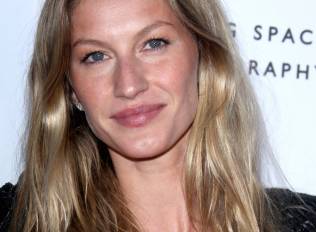
  • Gisele Bundchen Details Panic Attacks, Suicidal Ideation In New Memoir

    Gisele Bundchen Details Panic Attacks, Suicidal Ideation In New Memoir

    “I always considered myself a positive person, so I was really beating myself up…I felt like I wasn’t allowed to feel bad.”

    In an upcoming memoir, Gisele Bündchen reveals that her life as a supermodel was far from perfect, despite how it appeared on the outside.

    Behind the scenes, the Brazil native, who retired from the runway in 2015 after 20 years in the business, struggled with panic attacks and suicidal thoughts, People reports.

    In a new interview, the 38-year-old mother-of-three said she is ready to share the pain she struggled with as she went from small town life to global stardom as a young woman.

    Bündchen was 14 when she got her first taste of modeling in Brazil. The rest was history. 

    “Things can be looking perfect on the outside, but you have no idea what’s really going on,” she told People. “I felt like maybe it was time to share some of my vulnerabilities, and it made me realize, everything I’ve lived through, I would never change, because I think I am who I am because of those experiences.”

    As a young model, Bündchen suffered her first panic attack in 2003 during a bumpy plane ride. She struggled to accept the pain she was feeling while at the height of her success.

    “I had a wonderful position in my career, and I was very close to my family, and I always considered myself a positive person, so I was really beating myself up… I felt like I wasn’t allowed to feel bad,” she told People.

    The model said she felt “powerless.” In her memoir, Lessons: My Path to a Meaningful Life, she described feeling like an “animal trapped inside” a cage. “I couldn’t see a way out, and I couldn’t stand another day of feeling this way,” she said, according to Page Six.

    Unable to make sense of her emotions at the time, her anxiety only worsened.

    “The idea swept over me then: Maybe it will be easier if I just jump. It will be all over. I can get out of this. When I think back on that moment, and that 23-year-old girl, I want to cry. I want to tell her that everything will be all right, and that she hasn’t even begun to live her life. But in that moment, the only answer seemed to be to jump.”

    The former Victoria’s Secret model was prescribed Xanax by a treatment professional, but wasn’t enthusiastic about receiving medication for her problems.

    “The thought of being dependent on something felt, in my mind, even worse, because I was like, ‘What if I lose that [pill]? Then what? Am I going to die?’ The only thing I knew was, I needed help,” she said, according to People.

    Since then, she made some changes to her lifestyle—like cutting sugar and relieving stress with yoga and meditation—that she said were the building blocks to her recovery.

    “I had been smoking cigarettes, drinking a bottle of wine and three mocha Frappuccinos every day, and I gave up everything in one day. I thought, if this stuff is in any way the cause of this pain in my life, it’s gotta go.”

    View the original article at thefix.com

  • Singer JoJo On Mental Health: I Named My Depression Burlinda

    Singer JoJo On Mental Health: I Named My Depression Burlinda

    In a recent Instagram post, the pop star described the self-destructive habits that fueled her depression and anxiety.

    Depression and anxiety affects millions of Americans—and celebrities are not immune. Recently Noah Cyrus, Demi Lovato, Ariana Grande and Emma Stone were among a slew of young artists who’ve been public about their inner struggles.

    Now, singer JoJo (born Joanna Levesque) expanded on her experience with depression—which she nicknamed “Burlinda”—in a recent Instagram post.

    In the caption accompanying a candid photo of herself, the “Too Little Too Late” singer announced that she will log off of Instagram “for the week to see how it impacts my mental/emotional state.”

    “There’s no peace inside the anxious mind. Sporadically, for years, depression and anxiety have convinced me I’m unworthy of love, patience, (real) self-care, and forgiveness. Made me question if I’m ‘good enough’ to do anything consistently. Made it hard to follow through and to have healthy long-lasting romantic relationships without sabotaging them,” the 27-year-old singer wrote.

    Levesque described the self-destructive habits that fueled her depression/void, named Burlinda. “In so many ways I’ve invited [Burlinda] to stick around… feeding her instantly gratifying treats that keep her growing… late night food binges, mind-altering substances, gossip, sex, comparing my life to what I see my peers doing on social media, etc.”

    JoJo’s next steps include “changing habits that no longer serve me, reclaiming my time, re-evaluating the relationships in my life.”

    “I love to sing and perform more than anything I’ve ever loved and I’ve always wanted to be the soundtrack to your lives,” she wrote. “But sometimes I feel paralyzed. Time for a reset. I deserve me at my best. So do you.”

    In past interviews, JoJo addressed her parents’ history of alcoholism and addiction, as well as her own struggles with drinking.

    “(My 2015 single) ‘Save My Soul’ is a song about addiction, and I grew up seeing addiction very close to me: Both my parents have struggled with it. So as a kid, you don’t kinda know when the bottom is going to fall through or what’s gonna happen next,” she said.

    The song is “about feeling powerless, and I’ve struggled with addiction in different forms, whether it’s addiction to love, to a person who’s not good for you, to food, to negative feelings,” she said.

    She, too, has been down dark paths. “I’ve definitely abused alcohol; I’ve been depressed. You can just kind of go down a black hole and find yourself addicted to almost anything,” she said.

    “For a while, I coped by drinking too much. I wanted to get out of my mind. I wanted to stop picking myself apart. I just wanted to feel good, to chase that high. I wanted to stop worrying about my career.”

    View the original article at thefix.com