Tag: anxiety

  • Noah Cyrus Talks Anxiety, Depression

    Noah Cyrus Talks Anxiety, Depression

    On her new EP, Miley Cyrus’s younger sister opens up about depression and “how it’s okay to feel those feelings.”

    Noah Cyrus is the other famous daughter of country star Billy Ray Cyrus and she also has showbiz in her blood. She made her acting debut on the show Doc at the age of three, and sang the theme song for the animated movie Ponyo at the age of eight.

    Now Noah is one of a number of young pop stars who is getting candid about her depression and anxiety struggles.

    Noah says that her experiences with anxiety and depression shaped her upcoming EP. She told L’Officiel her latest release is “mostly just about how my emotions have been, and about my anxiety, and how I’ve been struggling with depression, and how it’s okay to feel those feelings.”

    Noah has dealt with the struggle of becoming a celebrity in the day and age of social media, adding, “A lot of people like to judge you, and make fun of you on the internet, and people make you feel crazy whenever you’re in a depression or having anxiety or having a panic attack.”

    Noah’s new music also deals with “being sad and having your emotions and not being able to ignore the feelings you’re having.”

    Her new music has been an outlet for her emotions, and with her latest single, “Make Me (Cry),” a duet with Labrinth, she’s showing the world more of her self-proclaimed “emo side.”

    Noah says that releasing a single where she’s more in touch with her feelings may have been influenced by her brother, Trace Cyrus, the lead singer of Metro Station. “I think [it] probably stems from growing up with Trace in my house because he was the king of emo.”

    In addition to being more in touch with her mental health in her music, Cyrus has also been dating rapper Lil Xan, who has been outspoken against drug abuse in the hip-hop community. They’ve already recorded a song together, “Live or Die,” and Cyrus told People, “He’s a little teddy bear.”

    In the past, Noah’s sister Miley has also been open about her own struggles with anxiety, depression and substance abuse. She announced to the world that she quit marijuana last year, and she told ABC in 2014, “I went through a time where I was really depressed. I locked myself in my room and my dad had to break my door down. It was a lot to do with, like, I had really bad skin, and I felt really bullied because of that.”

    View the original article at thefix.com

  • A Month of Heart Attacks: Withdrawing from Antidepressants

    A Month of Heart Attacks: Withdrawing from Antidepressants

    My doctor tells me not to worry. The medication is safe. I worry he doesn’t know what he’s talking about. I worry this was a big mistake I made at 18 and am paying for the rest of my life.

    My obsessions start as small thoughts. Random sparks catching kindling in my mind, eventually blazing into a wildfire. I’ve always been this way. I couldn’t run for fun, I had to run marathons. I couldn’t go to school for one degree, I had to get my PhD. I couldn’t write a few articles related to my work in digital design, I had to write a book. I couldn’t drink a little bit of alcohol, I had to drink until I passed out. This same thinking led to my decision to stop taking my anti-depression and anti-anxiety medication.

    I began taking medication to treat depression when I was 18. Melancholy was my constant companion the last two years of high school. It stuck around after my graduation as well. Depression had me incapacitated and numb to self-improvement. My first adult visit to a general practitioner took me 30 seconds to describe how I’d been feeling for years. I left with a prescription for Zoloft. 

    I didn’t start taking the medication immediately. I was smoking and drinking to self-medicate. Taking a pill seemed weak. I grew up as part of a generation over-exposed to and under-educated on anti-depressants. Particularly Prozac, which seemed to enter the lexicon of my peers overnight in the early 1990’s.

    “Quit being a spaz! Take a Prozac.” we’d tease each other. Even worse, “Her parents put her on Prozac.” we’d whisper in the hallway. We didn’t know what that meant. Only that being on Prozac meant you weren’t normal. Commercials and TV shows told us it was used for depression. You had a mental illness if you were depressed. Mentally ill people are crazy.

    I knew crazy was bad. My father had a mental illness. He took lithium for a good part of my childhood. He hallucinated aliens were sent to kidnap him. He was crazy. I constantly worried this secret would be exposed. I was the son of a mentally ill man.

    I struggled with what the decision to take medication would mean for my future. What would my future partner think? What would my future children think? Maybe I’d only need to take if for a few months, I thought. I wanted to feel better. I wanted to live up to the potential I’d always been told I had. I decided to take the medication.

    ———

    Medicated

    Zoloft worked. I could get out of bed easier. I could deal with the ups and downs of everyday life. I functioned. My thoughts dwelled less on negative aspects of life. But the stigma of taking medication for a mental illness was always present in my mind. The elephant in the room when I was getting to know new people. What if they wanted to get closer? Would I have to disclose I took medication? Was it worth it to cultivate relationships if I were going to lose them? Or, should I stop taking the damn medication?

    Over the next 15 years I ran through the alphabet of anti-depressant/anti-anxiety medications. Zoloft stopped working at low doses. Larger doses left me unable to sleep. It was on to Paxil, Wellbutrin, and finally Effexor. I constantly questioned my decision to take medication. During this time, I moved from Maryland to rural Ohio, I got married, had kids, got divorced, worked multiple jobs while attending school, and eventually enrolled in a PhD program. I promised myself I’d stop taking medication when life settled down.

    My quest to live medicine free started in May of the last year I was getting my PhD. I always feel positive in springtime. Sunshine removes my spirits from winter’s chest of darkness. You should stop taking medication, an inner voice whispered. At first a dew-covered bud, the thought bloomed alongside my uplifted mood. I have to admit these thoughts were assisted by the confidence of nightly drinking. Soon it was all I could think about. I’m a man earning a PhD. I’d been through marriage, divorce, and poverty over the years and not cracked.

    My life wasn’t perfect. It never would be. I had two kids with my ex-wife. She had custody. Worrying about them was my most ingrained behavior. But I should be able to handle things. I’m a good dad. I didn’t need medication to stay that way. The pills were a crutch. I’m strong. Medicine is for the weak. These thoughts cycled in my head for weeks.

    ——–

    Unmedicated

    I didn’t contact my doctor when my Effexor prescription ran out. I went cold turkey. I immediately found, to my surprise, my depression wasn’t as severe as it had been when I started taking medication. I also found out the medication had been masking crippling anxiety I’d developed.

    I wasn’t a stranger to the nausea and dizziness that accompany the first 72 hours not taking Effexor. I’d missed doses more than a few times. Forgetting to take medication for a day or two was not unusual. I’d realize I’d missed a dose when my gums would start feeling numb near the end of the day. Not taking a dose for another few hours would lead to what I called the snaps in my head. Bright pops that brought me in and out of reality. Micro explosions of light going off behind my eyes. I imagined it was my synapses going nuts. I have a powerful imagination.

    I figured I’d get over the brief withdrawal period and move on to whatever normal was. I powered through work keeping to my daily routine with manageable discomfort. Kind of. I laid my head on my desk quite a few times as the snaps passed over in waves.

    A few nights into my new life as an unmedicated, unstigmatized member of society I woke from an unsettled sleep. My first thought: my finances are in ruins! I had gone to bed thinking about bills I had coming due. I would need to dig into my savings. This fact disturbed me. But by no means would I have no money.

    My worry about finances had festered and grown while I slept. I felt it crushing me. Sitting on my chest. I inhaled and exhaled through my nose counting 10 second intervals. My brain wouldn’t stop. My body was exhausted. I looked at the clock. 2:15. More inhaling and exhaling. I fell back asleep.

    I woke again at 3:15. I felt pricks of stinging pain throughout my brain and body. As if fire ants had been biting me in my sleep. I’d stood in a fire ant nest once as a teenager. My legs burned for days. The pain I currently felt wasn’t enough to distract from the panicked thoughts – I’m going to be poor. How will I survive? How will I pay child support? I’m going to go to jail. I inhaled and exhaled slowly.

    I woke up hourly for the remainder of the night. My eyes popping open as intense fire-tingles raged throughout my body. Repeatedly falling back asleep while trying to assure myself dipping into my savings wouldn’t lead to my financial demise.

    The next few nights unfolded in much the same way. I broke the cycle with a binge drinking session that left me passed out and then hung over the next day. The alcohol washed away my anxiety. My anxiety resurfaced as vomit in the light of day.

    Still, I refused seeking more medicine. I was going to be normal. Not weak. This pain was temporary. Being strong and off medication would last forever. I knew I’d feel better once I had a few weeks under my belt.

    ——–

    A Week Off Medication

    I’m having a heart attack. This is it. I’m going to die. I was staring at a murder mystery show on Investigation Discovery. I’d stopped taking medication a week ago. Constant noise comforted me. Living alone, I craved hearing voices. I kept talk radio on, or the TV set to this channel constantly playing murder mysteries. My favorite. The show did not comfort me as I thought I was dying.

    I’m having a heart attack. The thought grabbed my throat, choking me. I’d never felt powerless over my survival. I’d been feeling tight in my chest all day. Sure, I’d been lifting weights and doing pushups throughout the week. This tightness was coming from deeper than my muscles. Tightness that started to burn. This is what dying feels like. Battery acid surged up my esophagus.

    Should I go to the hospital? I thought. No. Hospitals are the only thing I hate more than dying. I felt a surge of adrenaline as I imagined dying alone on my living room floor. It was still a better option than dying in a hospital room. Surrounded by the nauseating smell of sterilization and cleaners. Hospitals crystalized the concept of mortality. I stayed away at all costs.

    The pain in my chest continued through the afternoon. I’d been invited to meet up with a group of friends for a sushi dinner to celebrate a birthday later that night. I wanted to live long enough for that. I’d go to the hospital if I still felt chest pain after dinner. 

    I looked around the table at dinner. Everyone else seemed so happy. I’d been able to choke down a few edamame. I felt terrible. Maybe I should mention the fact that I was having chest pain. My jaw felt tight. My arm tingled. Classic heart attack symptoms. I knew this from WebMD and numerous medical-topic message boards I’d checked out to see what my symptoms meant. Unfortunately, I could make my symptoms match both a drop-dead heart attack, or a panic attack, depending on which outcome I thought it should be.

    I didn’t bring up my troubles over dinner. Verbalizing a fear was often the final step off a cliff into a panic attack. I’d learned that from my previous experiences with milder anxiety. Expressing my fears made them real. Bottling them up kept my mind racing, too busy for full blown panic. I kept my mouth shut and avoided eye contact with my friends.

    My chest still hurt after dinner. I didn’t go to the hospital. It must be something else. Surely a heart attack can’t last hours. I fell asleep convinced I’d never wake up. But I did, again and again. My chest still hurt a week later. I started referring to it as my week-long heart attack with my inner-voice. A week later it became my two-week heart attack.

    I was unable to sleep for more than an hour straight during this time. I’d stopped worrying as much about my finances. I was dying of a heart attack! I worried I’d never wake up. I also found other things to worry about. This wasn’t hard for a divorcee with two kids. I stayed up worrying about their future if I were to die. About our future relationships if I were to live.

    ——–

    Five Weeks Off Medication

    It was 11 pm. I was dying. I stood in front of my bathroom mirror. I stared at my bare chest. I watched my chest muscles pulsing in rhythm with my heart. Was this normal? I’d never noticed before. Never had a reason to. I imagined my heart fluttering to a stop.

    The joke was on me. You really can have a heart attack lasting an indefinite period of time. Four weeks to be specific. I knew this was the grand finale. Time to go to the hospital.

    I called up the girl I’d been dating for a couple years while I walked to my front-door. I’d made her aware of my panic and that I’d stopped taking medication during the first week I’d stopped. She was concerned I wasn’t doing well. She said I should take medication. I should look at it as part of who I am. I take antidepressants, like a diabetic might take insulin. She didn’t like who I was when I didn’t take medication

    “I’m having a heart attack.”

    I slid down to the floor with the phone at my ear.

    “What? Are you OK?” she asked.

    “I don’t know. I’m so confused.”

    I laid down with my head on the ceramic-squares making up my front doorway. They felt cool. So refreshing. My mind stopped racing. I caught a whiff of lemon scented floor cleaner. A familiar scent. Not one I usually found pleasant. Tonight was different. The scent smothered me in comfort while the floor’s coolness eased my tension.

    “I need to hear your voice.” I mumbled. “I’m so tired.”

    I rolled my head to the side to distribute the coolness across my forehead. “Will you keep me company for a bit over the phone?”

    I woke up at 3 am. The phone had fallen from my hand. The screen was lit. I was still on a call with my girlfriend. The timer stated 4 hours and 24 minutes had elapsed.

    “Hello?” I asked into the phone.

    Nothing. I hung up. I couldn’t believe she had been kind enough to keep the line open. I noticed my chest felt better as I slunk up the stairs to bed.

    ——–

    My Last Day Off Medication

    I made an appointment to see my doctor as soon as the office opened. I couldn’t handle what my life had become. I was falling apart in ways I didn’t know were possible. A constant feeling of having a heart attack. Fixating on small problems until I can’t see a way past them. I was used to overcoming adversity daily in my medicated life. I couldn’t face an uneventful day without a panic attack while unmedicated.

    “It’s going to take a couple of weeks to really feel the effects.” my doctor said. He scrawled Effexor XR 150 across his prescription pad.

    “I think I can handle it.” My body flooded with a sense of relief. I knew I’d feel better the next day. The placebo effect is strong with me.

    I stayed at the pharmacy while they filled the prescription. I took the pill while downing a bottle of acai berry juice. Promotes heart health boasted the bottle’s label.

    Just in case, I thought.

    ——–

    Six Years Later

    I’ve continued taking Effexor. I frequently think about stopping. I’ve expressed my concerns to my doctor each time I’ve had my prescription renewed. My doctor tells me not to worry. The medication is safe. I worry he doesn’t know what he’s talking about. I worry this was a big mistake I made at 18 and am paying for the rest of my life.

    I’ve spent over 20 years on some type of anti-depressant/anti-anxiety medication with only the one month break. I’ve spent more years alive taking medicine than not. I wonder what the medication is doing to my mind. Will I have memory loss at an early age? I wonder what the medication is doing to my body. Am I poisoning my liver?

    It’s been six years since my month-long heart attack. It’s been six years since I stopped taking medication for slightly over a month. I haven’t had any more everlasting heart attacks or phone calls lasting till 3 am. I haven’t fixated on a small problem like my finances until I become incapacitated. I haven’t had my body feel like fire ants had spent the night gnawing on me. I am functional. I love my job. I am remarried with another child. I am generally happy.

    Anyone taking an antidepressant has been told it takes more than medication to properly treat a mental disorder. Counseling, behavior modification, meditation, and other self-help activities need incorporation into your life. However, I use medicine as my main line of defense against depression and panic attacks.

    I understand the importance of going beyond medication to treat depression and anxiety. I know and occasionally practice many anti-anxiety techniques. Nothing I’ve committed to doing on a regular basis. Perhaps I’d try harder at these activities if medication wasn’t such an easy and accessible option for me. I feel good most days. I love many more aspects of my life than I don’t. The medication seems a fair price to pay.

    View the original article at thefix.com

  • Carson Daly & NBA Star Kevin Love Discuss Anxiety on Today Show

    Carson Daly & NBA Star Kevin Love Discuss Anxiety on Today Show

    “I had a moment where I thought I was going to die. I had never experienced something like that. I thought I was having a heart attack,” Love told Carson Daly.

    NBA All Star Kevin Love and Carson Daly have something in common—they both struggle with managing their anxiety.

    This came up in a recent interview on the Today show, where Love, who plays for the Cleveland Cavaliers, described the panic attack that set off his quest to spread mental health awareness.

    “I had a moment where I thought I was going to die. I had never experienced something like that. I thought I was having a heart attack,” he told Carson Daly.

    Love is sharing his experience in hopes that he’ll encourage more people to feel comfortable doing the same. Men in particular, Love says, have a hard time opening up about mental health issues.

    Raised on this mindset, at first Love, too, tried downplaying his panic attack. “I kind of brushed it off, because in our sport or in life, and being a man, you’re taught to suppress it. You’re taught to suffer in silence,” he said.

    Love’s essay “Everyone Is Going Through Something” was published in The Players’ Tribune in March 2018. In it, Love discussed the panic attack and the importance of talking about mental health.

    “To me, it was a form of weakness that could derail my success in sports or make me seem weird or different,” he wrote.

    “If you’re suffering silently like I was, then you know how it can feel like nobody gets it,” he wrote. “Partly, I want to do it for me, but mostly, I want to do it because people don’t talk about mental health enough. And men and boys are probably the farthest behind.”

    With Love and fellow NBA players DeMar DeRozan and Channing Frye speaking up about mental health, the NBA has addressed mental health in the league. It launched a new initiative under NBA Cares called Mind Health, aiming to teach people how to recognize and manage stress, while providing support.

    And the NBA Players Association appointed its first director of mental health and wellness, Dr. William Parham.

    TV anchor Carson Daly previously shared his struggles with anxiety disorder in March. The former Total Request Live (TRL) host said he was a “worrywart kid” and was “nervous my whole life.”

    His anxiety reached a breaking point the more success he achieved. “I had no idea what [a panic attack] was at the time,” he recalled. “The success of my career, I flew to New York, and my life changed overnight. I had a hard time breathing. I was terrified for no apparent reason.”

    View the original article at thefix.com

  • Emma Stone Talks To Jennifer Lawrence About Her Anxiety Struggles

    Emma Stone Talks To Jennifer Lawrence About Her Anxiety Struggles

    In an interview for Elle magazine, Emma Stone spoke candidly about mental health to her close friend Jennifer Lawrence.

    Emma Stone has been very open about her struggles with anxiety, which she’s had since she was a child. Now, Stone and fellow actress Jennifer Lawrence have interviewed each other for Elle magazine, in which the Hollywood BFFs spoke about struggling with anxiety and how acting can be a release.

    In the interview, Lawrence asked Stone, “What do you think caused your anxiety? Do you think you were born like that, or do you think something happened that made you extremely sensitive, or do you think that you’re naturally pathetic?”

    Stone, who has battled anxiety since she was seven years old, replied, “I think your wiring is just kind of what you are. My mom always says that I was born with my nerves outside of my body. But I’m lucky for the anxiety, because it also makes me high-energy.”

    Stone has reached out to Lawrence on the phone, on what Lawrence calls Emma’s “frequent sleepless nights.” Stone’s racing thoughts have also been kicking up lately because she’ll soon be turning 30.

    Stone is currently taking a break from Hollywood. “I haven’t shot anything for six months, which has been amazing because there’s been more time to be with friends or travel.”

    Lawrence also pointed out that Stone doesn’t have a “big social media presence,” to which Stone replied, “I think it wouldn’t be a positive thing for me. If people can handle that sort of output and input in the social media sphere, power to them.”

    While Lawrence didn’t talk about her own anxiety in her conversation with Stone, the Hunger Games star did talk about her mental health struggles to Esperanza. Like Stone, Lawrence used acting as an escape and as a way of healing her self-image.

    Growing up, Lawrence felt like she was “a weirdo… I’ve always had this weird anxiety. I hated recess. Parties really stressed me out. I was having trouble at school and I had a lot of social anxieties.”

    Lawrence’s parents also took her to a therapist, and like Stone, she realized performing “was the one that that [made] anxiety go away. I didn’t feel good about myself until I discovered acting and how happy it made me feel.”

    View the original article at thefix.com

  • Ariana Grande Talks Manchester Attack, Anxiety In Emotional Interview

    Ariana Grande Talks Manchester Attack, Anxiety In Emotional Interview

    “You try not to give in to fear. You want to keep going. You want to not be afraid.”

    In a new interview, singer Ariana Grande described how “everything” changed after the 2017 bombing attack on her concert at Manchester Arena in England.

    Ebro Darden of Beats 1 radio addressed speculation that “Get Well Soon,” a song on her new album Sweetener, had to do with the aftermath of the Manchester attack.

    “You have really been working through recovering from what took place in Manchester with your fans, with your family, with yourself,” Darden said. “Was that song important to put out some of that energy and let people know that we’re all working to get well?”

    In her emotional response, Grande said the song was about that and more. “[The song is about] just being there for each other and helping each other through scary times and anxiety,” she said. “We just have to be there for each other as much as we can because you never fucking know.”

    She continued, “It’s also about personal demons and anxiety, more intimate tragedies as well. Mental health is so important. People don’t pay enough mind to it… People don’t pay attention to what’s happening inside.”

    At the time, NBC News reported that 22 people were killed and about 59 were wounded.

    “You try not to give in to fear,” Grande said. “That was the point of finishing my tour, to set an example for my fans, who were fearless enough to show up to the shows. You want to keep going. You want to not be afraid.”

    Less than a month after the attack, Grande returned to Manchester for the One Love Manchester benefit concert, which featured Justin Bieber, Miley Cyrus, Katy Perry, Pharrell Williams, and Coldplay. The pop star performed in front of 55,000 people that night.

    Grande, who previously addressed the emotional scar that the attack left on her in a Vogue interview, told Darden that in the aftermath of Manchester, she can’t help but fear for her safety.

    “You don’t want to give in, you don’t want to be afraid, but it’s still there,” she said. “It changes everything, changes your life quite a bit. You want to be more present and follow happy impulses and figure it out later and stay in the moment.”

    In a June interview with Vogue, Grande said the attack left her with a crippling amount of anxiety. “I think a lot of people have anxiety, especially right now. My anxiety has anxiety,” she said. “I’ve always had anxiety. I’ve never really spoken about it because I thought everyone had it, but when I got home from tour it was the most severe I think it’s ever been.”

    View the original article at thefix.com

  • Hay Fever's Link To Mental Health Issues Examined

    Hay Fever's Link To Mental Health Issues Examined

    Researchers examined the link between hay fever and depression in adolescents for a study.

    For many people, itchy eyes, sneezing and a scratchy throat are a right of passage every spring as the flowers bloom and the pollen begins to blow.

    However, although it might be common, one report found that hay fever is linked to depression and anxiety in adolescents.

    A review published in the Annals of Allergy, Asthma & Immunology looked over 25 studies of individuals with hay fever, concentrating on patients who were between the ages of 10 and 19. The review found that adolescents with hay fever had a lower quality of life than other teens, were more likely to have their sleep and routines disrupted, and have academic consequences.

    “Although [hay fever is] sometimes perceived as trivial conditions, this review indicates that [the] effect on adolescent life is negative and far-reaching,” the authors wrote. “It is critical that clinicians gain a greater understanding of the unique burden of [hay fever] in adolescents to ensure they receive prompt and appropriate care and treatment to improve clinical and academic outcomes.”

    “The emotional burden of hay fever can be huge for adolescents,” lead study author Dr. Michael Blaiss told Medical News Today. “Three of the studies in our review examined how adolescents are emotionally affected by hay fever […] and hay fever with eye allergies (allergic rhinoconjunctivitis). They found adolescents with hay fever had higher rates of anxiety and depression, and a lower resistance to stress. [They] also exhibited more hostility, impulsivity, and changed their minds often.” 

    Blaiss pointed out that adolescents are particularly vulnerable to the effects of disruption to their sleep. 

    “Lack of sleep or poor sleep are both huge issues for adolescents, and it can be made worse by the symptoms of hay fever with or without eye allergies,” he said. “Poor sleep can have a negative impact on school attendance, performance, and academic achievement.”

    Between 15 and 38% of teens have hay fever, so understanding the social and emotional consequences is important for public health. It’s also important economically, since millions of doctors visits and sick days are caused by hay fever each year.

    Researchers also pointed out that teens might have their hay fever present differently from younger children or from adults. For example, teens are more likely to say that itchy eyes or sneezing is their most pressing symptom.

    However, symptoms like snoring at night and night waking are the cause for the most concern, since they can lead to sleep disruption. 

    View the original article at thefix.com
  • "Descendants" Star Dove Cameron Gets Candid About Anxiety, Panic Attacks

    "Descendants" Star Dove Cameron Gets Candid About Anxiety, Panic Attacks

    “Today I had my first full on panic attack in months. Out of nowhere, and for no reason. That’s just sometimes how anxiety goes.”

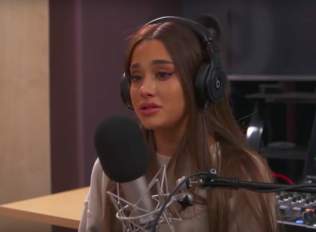
    Dove Cameron, the star of the Disney Channel film series Descendants, recently took to Twitter to discuss her struggles with anxiety and to offer advice to fans who may be dealing with it as well.

    “Do your best to not speak negatively of others, of life, of any given situation,” Cameron tweeted. “And especially, do your best to not speak negatively of yourself. It’s hard at first, but it gets easier. I am not perfect at it, but it does make a difference for my anxiety and my noise in my mind.”

    Cameron told her Twitter followers that she “wanted to speak honestly,” and that she has been “doing phenomenally” with her anxiety.

    “It’s always there, a little bit, sometimes a lot… but I have gotten more skilled at keeping it quieter, reasoning with myself, breathing… but today I had my first full-on panic attack in months. Out of nowhere, and for no reason. That’s just sometimes how anxiety goes.”

    Cameron revealed that after making it through the panic attack, she wanted to share her experience.

    “I wanted to tell you this so that you don’t look at me and feel hopeless because I always seem stable,” she tweeted. “I know I can present like that sometimes.”

    Cameron continued, “No one is ‘perfect’ and we should not strive to be ‘cured,’ but rather, embrace highs and lows as a fact and centerpiece of being alive. ‘This moment is inevitable…’ There is help, hope, and growth for all of us. But we should never compare our paths to others, but rather, honor, embrace and accept our own path… None of us are OK 100% of the time, and that’s OK.”

    A couple of years ago on Twitter, Cameron addressed the importance of speaking up about mental health issues to help break the stigma.

    “So many people have anxiety/related things. It needs to be less taboo to talk about it, it helps so much to talk.”

    She added that anxiety had “made me that much more disciplined in my thoughts. So it has been a blessing in disguise… It’s not about hiding it, it’s about genuinely embracing, acknowledging and managing it.”

    In previous tweets, Cameron recommended the following to combat anxiety: “Time alone, self-reflection, laughter, getting in touch with my body, journaling, therapy, sleep, nature, exercise.”

    Cameron also revealed that she has taken up meditation in an effort to to deal with her anxiety and she “100% recommends” it to others dealing with the mental health issue. 

    View the original article at thefix.com

  • How Facebook Helped Me Overcome My Anxiety

    How Facebook Helped Me Overcome My Anxiety

    More than the actual anxiety was the anxiety about the anxiety. I felt tremendous shame for having negative feelings at all.

    It was 3pm on a Tuesday, and I was sitting at my desk with my head on my keyboard; I was too revved up to sit still, much less concentrate on work. I was in the midst of a resurgence of my lifelong anxiety and couldn’t talk to anyone or even focus on anything. Months later, I would finally be diagnosed with Generalized Anxiety Disorder (GAD).

    The diagnosis was a relief. It made sense of overwhelming feelings I’d had my whole life that had mostly been regarded as a character flaw. I grew up in an alcoholic home, and I’d been going to therapy for years to face the trauma of my childhood. For the first time I was feeling my emotions instead of mashing them down, and expressing anger before it turned into resentment. My anxiety had decreased throughout this process, but then I decided to get married. My fiance did nothing wrong, mind you, but somehow the thought of marriage made me feel trapped and put me mentally back in my childhood home. I grew incredibly anxious — and yet completely unaware of it.

    I’d had trouble sleeping for months but I wasn’t upset or stressed about anything — at least not anything conscious. My stomach felt like it’d been glued shut. I couldn’t eat. Soon enough my weight starting dropping enough for other people to comment on it. Compliments at first that slowly morphed into expressions of concern. I felt nervous all the time and I was hyper-vigilant, no matter who I encountered or where I was. If I was in a car, I’d flinch at the sight of another vehicle pulling out of a parking space as though it was about to hit me — even if it was well outside my physical range. I was sleeping two hours a night and not even feeling tired the next day. Sitting still felt like torture, and I was constantly second guessing myself as if I couldn’t trust my perceptions. I’d had episodes like this off and on for most of my life but I’d always pushed it down. But now, after a lot of therapy and ACOA recovery work, when the anxiety attacks returned, I had to acknowledge them. My overwhelming anxiety was there and I couldn’t hide it no matter how badly I wanted to.

    But that was the problem: I really really wanted to.

    More than the actual anxiety was the anxiety about the anxiety. I felt tremendous shame for having negative feelings at all. (All you ACOAs out there know what I’m talking about, right?) Growing up in my house, negative feelings had been treated like a disease that had to be banished. This didn’t just come from family but from the entire culture where I was raised. I explained to my therapist that even as an adult I felt like a streak of tar ran through me that marked me as broken, and I lived in constant fear of people seeing it. So when my anxiety revisited me, I tried to hide it, but piling that shame on top of it only made it worse. I wanted simultaneously to jump out of my own skin and hide inside my house forever.

    Then I remembered what Brene Brown said in her book on shame: that silence fed shame while a sense of common humanity combatted it. That meant talking about what I was feeling. Reaching out to tell someone was a major part of fighting shame because it made you feel less alone. Then it occurred to me: what if I just preempted this terror of someone discovering my anxious state and just told them? If I owned how I felt in advance, perhaps I’d feel less shame because I wouldn’t be so desperate to hide it. Problem was, any time I tried to talk about it in person, I completely fell to bits and I didn’t exactly want to put myself through that over and over again.

    So instead I opted to put it on Facebook.

    Of course, Facebook is the capital of oversharing and I normally kept my digital shouting box strictly to jokes. But I just didn’t see a better way to inform people of what I was going through or that my behavior might be different than my usual. In fairness to Brene Brown, she clarifies that reaching out to others in order to combat shame needs to be aimed at people who are receptive to hearing your pain. She definitely doesn’t suggest blasting it all over your social media. But that’s what I did.

    I wrote a long explanation of my mental state asking for compassion rather than advice and hit “post” before I could change my mind. Now, I should be clear that I didn’t exactly blast this to everyone I knew on Facebook. I used customized security settings so only those in the same city as me and my oldest, closest friends could see it, and I blocked my whole family as well as loose acquaintances. I hit post and immediately shut my laptop, vowing not to log into Facebook for at least a couple hours. I’d purposely planned my post to coincide with a concert I was attending because I knew it would prevent me from checking my phone constantly. I figured if anyone was judgemental or shaming, the bite might sting less if several hours had gone by — or possibly I wouldn’t even notice it in a flood of other tiny red notifications.

    When I finally gathered the courage to open Facebook again, I had a torrent of messages and notifications. Most of them carried the same sentiment: I have anxiety, too. While I’d certainly blasted my personal world with my emotional state hoping to get some level empathy, I didn’t anticipate which corners of my social circles would be delivering it. Close friends of mine, people I used to share every secret with, messaged to tell me they’d recently gone through something similar and not talked about it. Acquaintances wrote with ideas and (indeed) some advice. Much of the advice wasn’t especially helpful, but knowing that I wasn’t alone made a world of difference. For months afterward, casual acquaintances told me that sharing my experience actually helped them feel less alone, which I hadn’t even thought about.

    I can’t pretend like simply talking about my anxiety made it go away or even lessen much. It still took another year of focus, self care, and work before I truly felt like myself again. Sharing my anxiety online allowed me to deal with it without shame and without feeling like I was broken. In other words, it meant one less roadblock to contend with, and — given my emotional state at the time — I might not have made it through the anxiety without it.

    View the original article at thefix.com

  • Korn's Jonathan Davis Talks Addiction: "Benzos Are The Devil"

    Korn's Jonathan Davis Talks Addiction: "Benzos Are The Devil"

    “I’ve dealt with anxiety for a long-ass time. I got prescribed Xanax, benzodiazepine, a long time ago. Benzos are the f—ing devil. They’re horrible drugs.”

    Jonathan Davis, the frontman of the metal band Korn, puts his struggles with drugs and anxiety front and center in a song on his debut solo album, Black Labyrinth.

    In a new interview with Forbes, he spoke frankly about how attempting to treat his anxiety with drugs like Xanax led him to a dark place.

    “I’ve dealt with anxiety for a long-ass time. I got prescribed Xanax, benzodiazepine, a long time ago. Benzos are the f—ing devil. They’re horrible drugs,” he explained. “They feel good at the moment and are a quick fix to get you out of a panic attack, but they’re not designed to be taken long-term—especially Xanax.”

    His song on the album, “Medicate,” is about kicking the benzo dependency he developed.

    “I started taking it for anxiety. I’d take a piece in the morning and a piece at night, then go to bed. You start to build up a resistance,” he recounted. “Two years later and I was trying to kick it. The song is about me dealing with common regrets, that I need this pill to be happy or stay sane.”

    Getting off it was difficult—and dangerous.

    “I started off taking 0.25 milligrams of it, and eventually I got up to 2 milligrams, that’s one bar a day. And eventually I got up to two bars a day later down the road,” he told Forbes. “But the first time I kicked it, I was doing a bar a day, and I slowly weaned down. Which, you cannot function. And if you don’t do it correctly, if you just stop cold turkey off of it, you can go into seizures and die.”

    Nowadays, Davis is living completely sober, and getting high in a different way—sensory deprivation at the center of the Ganzfield experiment.

    “It’s a drug-free hallucination,” Davis says. “You’re staring into your subconscious. To me, it proved that there’s something different out there than what we’ve been taught about God. You see colors and shapes. It’s like you’re staring at the inside of your brain.”

    He also calms himself down with video games, music, and spending time with his children. His band seems to have caught the clean-living bug, too.

    “We just all independently faced our demons. There’s not really any drinking going on in the band anymore,” Davis explained. “It happens, every band that’s been doing it this long. Eventually you need to stop, or you’re gonna die. Everybody got through it their own way.”

    View the original article at thefix.com

  • David Spade Donates To Mental Health Organization In Kate Spade's Honor

    David Spade Donates To Mental Health Organization In Kate Spade's Honor

    In light of his sister-in-law’s suicide, the comedian has donated $100,000 to the National Alliance on Mental Illness.

    The tragic suicide of fashion designer Kate Spade has led her brother-in-law, comedian David Spade, to donate $100,000 to the National Alliance on Mental Illness (NAMI) in hopes that it will help others who may be dealing with similar problems Kate did.

    “More people suffer from mental health issues than we may realize but no one should ever feel ashamed to reach out for support,” Spade said in a statement to People. “If you or anyone you know is in need of help or guidance please contact the national suicide prevention hotline at 800-273-8255 or go to nami.org to learn more and help those who may be in need.”

    Kate was found unresponsive by a housekeeper in her Manhattan apartment on June 5. Her death was officially declared a suicide by the New York City medical examiner’s office.

    According to her husband, Andy Spade, Kate had been undergoing treatment for depression and anxiety. Additionally, he revealed that the couple had separated and had been living apart since 10 months prior. Their 13-year-old daughter had been splitting her time between both parents.

    “Kate suffered from depression and anxiety for many years. She was actively seeking help and working closely with her doctors to treat her disease, one that takes far too many lives. We were in touch with her the night before and she sounded happy,” said Andy in a statement. “There was no indication and no warning that she would do this. It was a complete shock. And it clearly wasn’t her. There were personal demons she was battling.”

    David Spade also felt the fallout, mentioning his feelings at the start of his stand-up comedy set at the Brea Improv Comedy Club the same week Kate died.

    “Thank you for coming. It was a rough week, but I didn’t want to cancel and I appreciate you all coming out here… And if my jokes don’t work then I get sort of a free pass,” he joked with the crowd. “Thank you for coming out, I appreciate it.”

    He also posted tributes to Kate with photographs on social media.

    “Fuzzy picture but I love it. Kate and I during Christmas family photos. We had so much fun that day. She was so sharp and quick on her feet. She could make me laugh so hard,” he wrote about one photo. “I still can’t believe it. It’s a rough world out there people, try to hang on.”

    View the original article at thefix.com