Tag: athletes & mental health

  • NFL To Focus On Treating Mental Health Issues, Offering Resources

    NFL To Focus On Treating Mental Health Issues, Offering Resources

    Doctors, trainers and directors gathered at a summit where the mental health needs of the league was a main focus. 

    The National Football League has decided to take a closer look at how it can treat mental health issues in the league, according to Sports Illustrated.

    Recently the NFL held a Player Health Summit, which was led by Nyaka NiiLampti, a psychologist who is now the vice president of wellness clinical services for the league.

    Physicians, trainers and directors of player engagement gathered at the summit with the goal of ensuring that the mental health needs of the 2,000 players in the NFL were being met.

    Resources

    In recent years there have been more mental health resources and regulations added to the NFL, but some players still aren’t aware of the help that’s available. Just as the NFL has emergency protocol set up in the event of player injuries, the goal is to have a strategy for mental health emergencies as well.

    While more mental health resources are available to players than ever before, there is still a stigma that keeps some players from seeking help.

    Stigma Lives On

    As Solomon Thomas of the San Francisco 49ers explains, “Some guys won’t sit at the same lunch table as our team therapist, because they are like, I don’t want anyone to think something is wrong with me… There’s a huge stigma about that. People are still afraid of therapists, still afraid of getting help.”

    Thomas lost his older sister to suicide, and has been an active supporter of the American Foundation for Suicide Prevention. “I realized what I can say can really help other people, or really help myself, or get a conversation started.”

    In the high-pressure world of professional sports, a lot of athletes are also terrified of being cut or traded. “Guys are fighting for their job every day,” Thomas said. “So they don’t want to have anything seen as a disadvantage or a reason to not be the one chosen. ‘Oh, both of them have the same amount of yards and TDs (touchdowns), but he has mental health problems.’ That’s scary to some guys, but it’s something that needs to change.”

    Thomas saw a big change in his performance once he started seeking help. “That’s all due to my head clearing up, or being able to freely live… If our brain’s not working, our bodies aren’t going to work.”

    Thomas is also hoping the stigma against seeking help will change. “If guys do it more openly, and the culture of mental health changes in the NFL, I think that is going to change a lot. Because it is a very masculine, tough sport. If we start that change, it will echo throughout the whole league and society as well.”
    View the original article at thefix.com

  • Michael Phelps Receives Award For Mental Health Advocacy

    Michael Phelps Receives Award For Mental Health Advocacy

    Phelps has been working to end the stigma associated with mental illness through his nonprofit foundation.

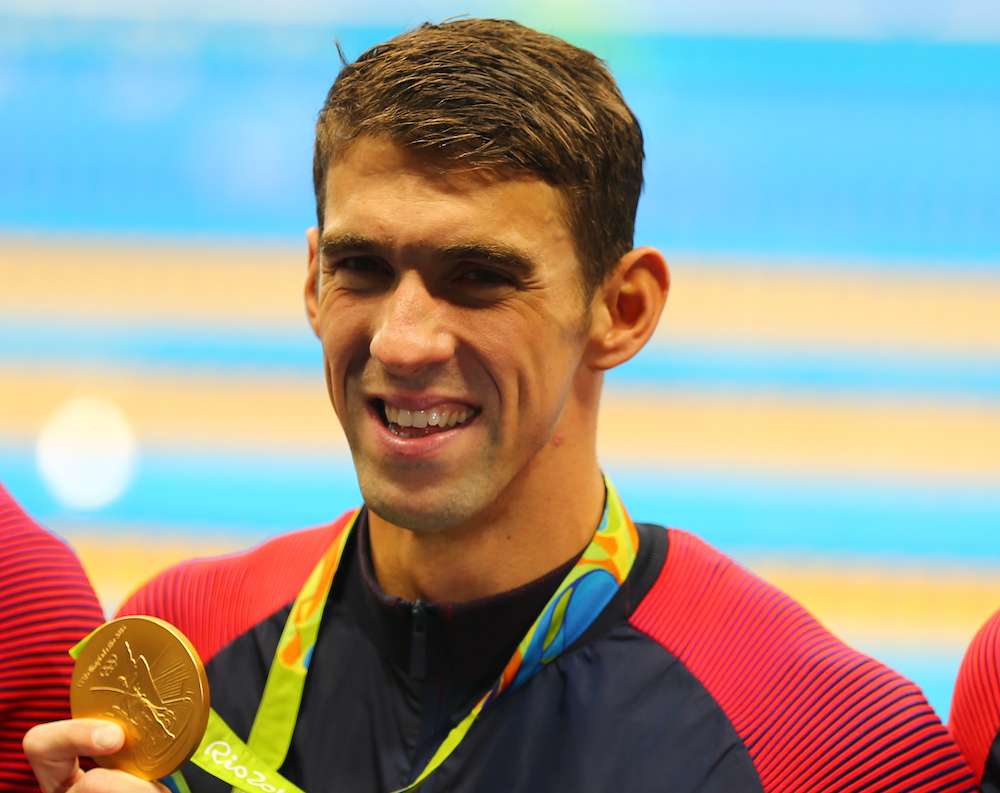
    With 23 Olympic gold medals, Michael Phelps is the most successful Olympian in history—but that didn’t stop him from experiencing mental illness. 

    “Probably my first real depression spell was after 2004, then the next big one was after 2008,” Phelps told the Associated Press in a recent interview, ESPN reported. “When you set out to be an Olympian, your whole life is put on hold. All the eggs are in one basket. I would say 2004, 2008, 2012, partly after ’16 (all Olympic years) I’ve dealt with pretty severe depression spells. I was kind of lost at that point.”

    After two DUIs, by 2014 Phelps checked himself into treatment, and since then he has been a vocal proponent for reducing stigma around depression and other mental illnesses. On Tuesday (May 21) Phelps received the Morton E. Ruderman Award in Inclusion for the work he has done to reduce stigma through the Michael Phelps Foundation.

    “Michael Phelps is a unique leader who has used his fame and status as the greatest swimmer of all time to challenge our society to remove stigma surrounding mental health,” said Jay Ruderman, president of the Ruderman Family Foundation. 

    Phelps never planned to become a mental health advocate. 

    “When I first really opened up about the struggles that I had in ’15, obviously I dreamed of being able to get more publicity to this and to really share my journey and have other people share their journeys with me as well,” he said. “Honestly, I never thought it would be as big as this, but it’s been a true dream to be able to watch the growth that mental health has taken, almost being at center stage.”

    Being able to help other people struggling with depression has meant more to him than his athletic success, he said. “Through this, if I can save one life, two lives, five lives, a thousand, a million, to me that’s so much more important than winning a gold medal.” 

    Phelps said that he has seen firsthand the difference that quality mental health treatment can make. Today, he is married with two children and a third on the way, and he has embraced his new role as a mental health advocate. 

    “When I was in my room and not wanting to talk to anybody for a number of days and not wanting to be alive, I wanted to see what other roads I could take to see if there was help,” he said. “I know it’s something that changed my life and saved my life and allowed me to be able to be where I am today, enjoying the platform of talking about something that’s so important.”

    View the original article at thefix.com

  • NBA Star Kevin Love Talks Anxiety, His First Panic Attack

    NBA Star Kevin Love Talks Anxiety, His First Panic Attack

    Love described having his first panic attack to Men’s Health.

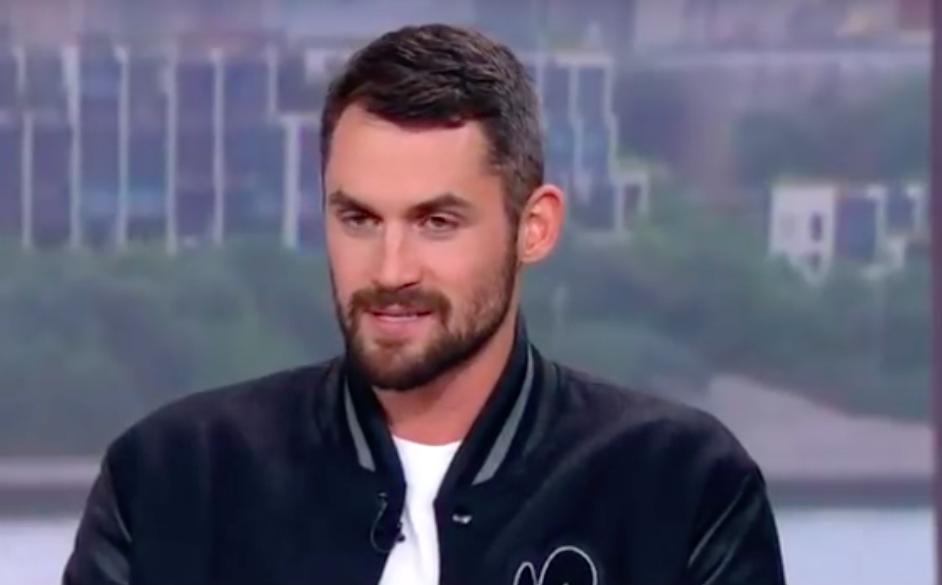
    Kevin Love is the five-time All-Star forward of the Cleveland Cavaliers who helped lead the team in winning a 2016 NBA championship. Since suffering a panic attack during a game, Love has also been an outspoken advocate for mental health awareness.

    Love can remember the exact date he had his panic attack, November 5, 2017, right after halftime during a game against the Atlanta Hawks. He told Men’s Health, “I couldn’t catch my breath. I was sticking my hand down my throat, trying to clear my air passage. I thought I was having a heart attack and ended up unconscious on the floor of our head trainer’s office.”

    At one point, Love thought “this could be it,” that he was actually dying, but then he also became terrified that his teammates would think he was “not reliable,” and he kept his anxiety attack a secret.

    As Love recalled to The Player’s Tribune, his panic attack “came out of nowhere. I’d never had one before. I didn’t even know if they were real. But it was real—as real as a broken hand or a sprained ankle. Since that day, almost everything about the way I think about my mental health has changed.”

    Love said that when he was younger, “You figure out really quickly how a boy is supposed to act… It’s like a playbook: Be strong. Don’t talk about your feelings. Get through it on your own. So for 29 years of my life, I followed that playbook. These values about men and toughness are so ordinary that they’re everywhere… and invisible at the same time, surrounding us like air or water. They’re a lot like depression or anxiety in that way.”

    Love has since learned to face his anxiety through therapy, spending time with his dog, taking medication and practicing meditation. He has also launched The Kevin Love Fund, a charity that works in tandem with the Movember Foundation and Just Keep Livin.

    “These superheroes that we look at, whether it be somebody in the entertainment industry or an athlete, we also have these layers that we deal with on a daily basis. Know that you’re not alone. You’re not different. You’re not weird. And we can do this stuff together,” said Love.

    View the original article at thefix.com