Tag: benzodiazepine addiction

  • Benzodiazepines: Another Prescription Drug Problem

    Benzodiazepines: Another Prescription Drug Problem

    Even taking benzodiazepines in adherence to a prescribing physician’s instructions can lead to dependence.

    May 30, 2019
    This tip sheet, originally published in 2018, has been updated to include more recent statistics and additional information.

    Benzodiazepines, a class of anti-anxiety drugs, are commonly-prescribed medications with the potential for abuse, addiction and overdose. Sound familiar? The parallels to the opioid epidemic are apparent; some physicians have taken to calling it “our other prescription drug problem” as they warn of potential dangers.

    “People don’t appreciate that benzodiazepines are addictive and that people abuse them,” said Dr. Anna Lembke, a psychiatry professor at Stanford Medical School. In a phone call with Journalist’s Resource, she said that, just as with alcohol, benzodiazepines can be taken to achieve a state of intoxication.

    Lembke is the program director for the Stanford University Addiction Medicine Fellowship and chief of the Stanford Addiction Medicine Dual Diagnosis Clinic. She has published research in JAMA Psychiatry, Molecular Psychiatry, the Journal of Substance Abuse Treatment, Addiction and other journals. In 2016 she published Drug Dealer, MD: How Doctors Were Duped, Patients Got Hooked, and Why It’s So Hard to Stop, a book on the prescription drug epidemic. Journalist’s Resource spoke with Lembke to learn more about the drugs and factors that have spurred current prescribing trends.

    For context, a few recent studies put numbers to these trends: A new study that focuses on Sweden finds that benzodiazepines and benzodiazepine-related drug prescriptions increased 22 percent from 2006 to 2013 among individuals aged 24 and younger.

    A study published in 2016 in the American Journal of Public Health finds that from 1996 to 2013, the number of adults in the United States filling a prescription for benzodiazepines increased 67 percent, from 8.1 million to 13.5 million. The death rate for overdoses involving benzodiazepines also increased in this time period, from 0.58 per 100,000 adults to 3.07.

    What Are Benzodiazepines?

    Benzodiazepines are a class of drugs with sedative and anti-anxiety effects. A few of the most commonly prescribed benzodiazepines include diazepam (brand name: Valium), alprazolam (brand name: Xanax; street names: bars, xannies), clonazepam (brand name: Klonopin) and lorazepam (brand name: Ativan). These drugs differ with respect to how long they take to start working and how long they last, but all have similar effects, since they work by the same mechanism.

    How Do They Work?

    Benzodiazepines bind to gamma-aminobutyric acid (GABA) receptors in the brain. GABA is an inhibitory neurotransmitter; in other words, it inhibits brain activity. Turning the power down in the brain feels like sleepiness and calm.

    What Are They Prescribed For?

    They can be prescribed for a number of concerns, including anxiety, insomnia and seizures.

    How Can They Be Dangerous?

    Benzodiazepines are accompanied by a number of side effects, including tolerance (reduced sensitivity) for the drug, cognitive impairment, anterograde amnesia (the inability to remember events that occurred after taking the drug), increased risk of Alzheimer’s disease, increased risk of falls (particularly among the elderly, who, according to a study in JAMA Psychiatry, comprise the age group in the U.S. most likely to use the drugs, and use them over the long term), and, most notably, dependence, abuse and overdose. Benzodiazepines are similar to opioids, cannabinoids, and the club drug gamma-hydroxybutyrate (GHB) insofar as the same neural mechanism underlies their addictiveness, according to research published in Nature.

    Even taking benzodiazepines in adherence to a prescribing physician’s instructions can lead to dependence. Withdrawal symptoms are likely among patients who have taken benzodiazepines continuously for longer than a few weeks, according to a study published in Australian Prescriber.

    For people who are looking to discontinue their use of benzodiazepines, Lembke noted that withdrawal could be potentially life threatening. “You can have full-blown seizures and die just from the withdrawal,” she said.

    “The way that they’re prescribed and continued is contrary to the evidence in the medical literature,” Lembke said. She noted that the evidence indicates benzodiazepines are effective and useful only in the short term, and typically at low doses. “There’s no evidence that benzodiazepines taken long term work for anxiety,” she said. “Nonetheless, it is common practice to prescribe and continue those prescriptions for months to years to decades. Somehow there’s a disconnect between the evidence and what the practice is.”

    Given These Risks, Why Are Prescriptions on the Rise?

    “No one knows for sure,” Lembke said. She did, however, offer a few possible explanations.

    She mentioned changes over the past three decades in the way healthcare is delivered.

    As more physicians have shifted from private practice into integrated health care centers, they might feel pressure to adhere to standard protocols or perform procedures and prescribe pills like benzodiazepines, because “that’s what pays.”

    She added that the way medicine is currently practiced separates patients into parts: “Patients have a different doctor for every body part … The right hand doesn’t know what the left hand is prescribing.”

    Frequent changes in insurance coverage, or churn, means that individuals bounce from one coverage source (and care provider) to another. This eliminates the possibility of a sustained, caring and trusting relationship that might allow for more efficacious, long-term health interventions, Lembke added.

    Other changes to the health care system have also occurred: “In many ways, doctors are like waiters and patients are customers,” Lembke explained, adding that some doctors feel the need to respond to patients’ requests and provide short-term relief or “customer satisfaction.”

    A cultural shift might be at work here, too, “Patients expect it,” Lembke said. “We now think pain in any form is dangerous … We’ve also got a whole generation of individuals raised on Prozac, Adderall, Xanax thinking there isn’t anything wrong with using chemicals to change the way you feel.”

    Benzodiazepines and Opioids

    As Lembke pointed out, rising pharmaceutical use isn’t limited to benzodiazepines. And as the United States grapples with widespread opioid use, research points to a dangerous link between these drugs and benzodiazepines.

    A study of over 300,000 patients receiving opioid prescriptions between 2001 and 2013 finds that by 2013, 17 percent also received benzodiazepine prescriptions — up from 9 percent in 2001.

    Moreover, a study that looked at U.S. veterans who received opioid prescriptions finds that those who received benzodiazepines as well experienced increased risk of drug overdose death; the risk increased along with the dose. Another study finds that the overdose death rate among patients receiving opioids and benzodiazepines was 10 times higher than among those receiving opioids alone.

    According to statistics from the National Institute of Drug Abuse (NIDA), from 1999 to 2017, there was a 10-fold increase in the number of overdose deaths involving benzodiazepines in the United States — a rise from 1,135 in 1999 to 11,537 in 2017. Most of the increase has been driven by the use of benzodiazepines in combination with opioids (since 2014, the number of overdose deaths involving benzodiazepines but not any opioids has held steady). As opioids contribute increasingly to benzodiazepine overdose deaths, benzodiazepines too are increasingly present in opioid overdose deaths — the powerful combination of drugs is present in over 30 percent of opioid overdoses, NIDA reports.
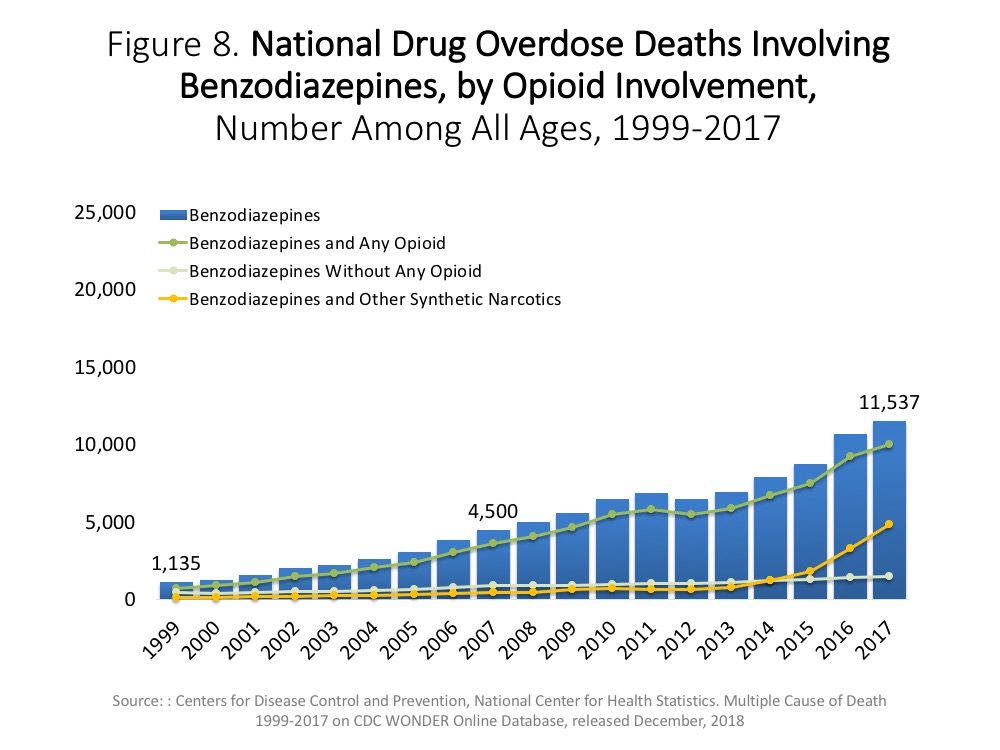
    cdc benzodiazepine overdose stats

    Benzodiazepine abuse on its own can lead to overdose and death, but overdose deaths typically occur in combination with other substances — generally other central nervous system depressants, which, like benzodiazepines, can lead to the life-threatening effect of slowed or stopped breathing.

    In August 2016, the Food and Drug Administration issued a requirement that opioids and benzodiazepines carry a black-box warning about the risks associated with using these substances together.

    Now that you have the background, here are some story ideas, courtesy of Lembke:

    Look into the latest wave of benzodiazepines: super-potent, designer, synthetic varieties made in illicit labs.

    Investigate the growth of benzodiazepine-related patient advocacy organizations as a phenomenon.

    Probe Big Pharma’s role in prescription trends and look at socioeconomic variations in benzodiazepine prescriptions (e.g., Medicaid prescribing rates).

    Journalist’s Resource also has explainers on other drugs, including fentanyl and meth.

    This photo, property of the United States Department of Justice, was obtained from Wikimedia Commons and used under a Creative Commons license.

    This article first appeared on Journalist’s Resource and is republished here under a Creative Commons license.


  • How to Find the Best Chlordiazepoxide Addiction Treatment

    How to Find the Best Chlordiazepoxide Addiction Treatment

    If you are looking for information about Chlordiazepoxide, this guide may be just what you need.

    1. Chlordiazepoxide Usage
    2. Addiction and Withdrawal symptoms of Chlordiazepoxide
    3. Chlordiazepoxide rehabs can help addicts get what they need
    4. Rehab payments with loans and insurance
    5. Conclusion

    Addiction is a disease that has been taking a toll on our society for a long time now. Although the government is taking steps to help block the buying and selling of drugs, they have not been able to eradicate the addiction problems so many people face. The illicit drug business is not only harming people’s personal lives, but it’s also affecting the country’s economic growth as people that get involved in addiction sometimes become unemployable and quit their jobs.

    In the United States, in 2017, 38% of the adult population engaged in illicit drug abuse. Drug abuse is prevalent in every country. Even when their governments have taken steps to reduce illegal activities, drug addicts find a way to purchase and use drugs. One such drug that is commonly abused is Chlordiazepoxide.

    Chlordiazepoxide is generally used to treat anxiety, insomnia, and acute withdrawal symptoms associated with alcohol and drug abuse. Although it’s a medicine used to treat drug abuse, some abuse it to get high. This drug was patented in 1958 and was approved to use for medical purposes in 1960. This drug belongs to the Benzodiazepine class, which means it mainly affects the brain and nerves (central nervous system) to calm the users’ body and mind. Chlordiazepoxide addiction is not uncommon. In addition to using the drug to get hight, addicts will use this drug for its intended purpose – to calm their mind and body when they are in a state of panic (which may be caused by other drugs they are abusing).

    Chlordiazepoxide Usage

    Chlordiazepoxide is a prescription drug, which means that one cannot buy this drug over the counter. Chlordiazepoxide is proven to be quite useful in treating anxiety and providing relief. However, this drug is meant for short term use only. Chlordiazepoxide is not intended for treating stress or tension from the pressures of everyday life. The drug is to be used only as prescribed by a doctor. 

    Since the drug is used to treat more than one health problem, the dosage might vary from person to person, and the time between doses might differ as well. So it’s essential to follow the doctor’s instructions carefully. While a patient looking for mild to moderate anxiety relief might need to take a low dose 1-2 times daily, a person suffering from severe anxiety disorder might need to take it in higher dosages or more frequently. However, following the doctor’s instruction strictly is required in all cases.

    Like many other drugs, using Chlordiazepoxide comes with potential side effects. Many people have found themselves feeling drowsy and confused after using this drug. Other side effects include nausea, constipation, irregular menstrual cycle, skin problems, blurred vision, dry mouth, etc. If a patient experiences discomfort, mood swings, and sleep disturbances, it’s recommended to contact a doctor immediately and ask them to modify the dosage. 

    When your doctor prescribes Chlordiazepoxide, make sure to inform them if you have had an allergic reaction to any medicine, or if you have a history of kidney disease, liver disease, lung problems, etc. This is a powerful drug that might have adverse effects (including death) on the health of someone with any of these conditions. Avoid any alcohol consumption with Chlordiazepoxide tablets. Do not take the medicine in any way other than as prescribed by the doctor. 

    Addiction and Withdrawal symptoms of Chlordiazepoxide

    The common name for Chlordiazepoxide is Librium, which is a type of psychotropic drug. Since it belongs to the class of benzodiazepines, Librium can be highly addictive, and users can become dependent on the drug quickly. Anxiety patients who take Librium to calm their nerves often find it difficult to avoid taking it, even for mild anxiety. They may begin to see these mild episodes as panic attacks and take the drug more frequently than necessary. This eventually increases dependency, which later becomes an addiction

    Therefore, it’s necessary that family members and friends of the patients keep a close eye on them to help them avoid falling into the pit of Chlordiazepoxide addiction. It’s been pointed out by many addicts that the effects of Chlordiazepoxide addiction are not as adverse as many other drugs of the same class. However, that does not mean that they should be allowed to abuse the substance.

    So how do you know if a person is getting addicted to the drug? Like many other addicts, the simplest way to recognize a drug addict is to look for telltale symptoms. An addict may often feel a strong urge to use Librium. Others might combine Librium with opioids to experience heightened pleasure in the brain. Combining drugs might offer greater satisfaction, but it comes at greater risks, including  long-term damage to the central nervous system or overdose which can easily lead to death. Combining drugs can easily be fatal, as the practice increases the chances of overdose. Under no circumstance should you mix Librium with any kind of drug. One should only take it as prescribed by the doctor.

    Chlordiazepoxide addiction has both physical and psychological side effects. Physical side effects may include but are not limited to uncontrolled eye movements, low blood pressure, slowed breathing, weakness, and slurred speech, etc., while psychological side effects may include, but are not limited to impaired memory, depression, trouble concentrating, etc. The numbers of overdose deaths from benzodiazepines in the United States saw a dramatic five-fold increase between 2001 to 2014 .

    Once a person is used to taking this drug for an extended period, reducing dosage or discontinuing use may cause extreme withdrawal symptoms. So it’s recommended to visit a doctor and lower the doses slowly instead of stopping or taperring on your own. Withdrawal symptoms may include anxiety, nausea, irritability, seizures, and many other physical as well as psychological problems. Always take as directed. Do not crush the drug, mix it with any kind of liquid, alcoholic or non-alcoholic, or snort it. Doing so can intensify the effects and lead to overdose.

    If a person showing Librium (Chlordiazepoxide) withdrawal symptoms is not getting the help that they need, their condition may worsen. Their behavior becoming erratic and their ability to function may become impaired. It’s not only the responsibility of the abuser themselves to get help but also the families and friends’ to make sure they are getting the support and encouragemen they needt. 

    Chlordiazepoxide rehabs can help addicts get what they need

    Throughout the country, there are rehabs, staffed by professionals who are trained to help addicts. Rehab facilities help addicts both physically and psychologically to address their drug addiction and get help during the withdrawal period. They conduct therapies and counseling sessions and provide emotional support by keeping patients engaged in activities that keep them away drugs. 

    When looking for a rehab, it’s essential to do some research first. If you have a friend who is a drug addict, and you want to help them get the best rehab treatment, the first step towards assisting them is by researching the rehab options available nearby. Different patients sometimes require different types of treatment. Things like cost and duration can vary. And while treatment centers have much in common with one another, no two are the same.

    Getting rid of Librium addiction could be harder than one can think. As Librium itself is a medicine used to treat anxiety, it’s easy to become addicted to the drug, even when one consumes it for medicinal purposes. If you set your mind on getting clean and leading a healthy life and are willing to do the work, you can eventually break free from Chlordiazepoxide addiction, no matter how tough it is. All you need is a strong will, an excellent rehab facility, and supportive people like friends, family, and doctors. 

    Get in contact with a few rehab facilities and ask them how their program differs from other rehab programs. Take your time and choose wisely. You may be paying a considerable amount of money for treatment, so it’s important that you get the services that you’re looking for. Librium addiction can be treated in three kinds of rehab:

    • Inpatient rehab: Like any other inpatient drug rehab, the inpatient rehab facility for Librium (Chlordiazepoxide) also requires their patients to be a part of a program where they are kept in a hospital or clinic-type facility under strict supervision 24/7 for a limited period. Most of these programs last from 28 days to 90 days, depending upon how severe their addiction is. While many centers include detoxification programs under proper supervision before they start with the rehab program, there are also centers that do not provide detoxification programs. So in those situations, the patient would need to have detox before they sign themselves into the program. Inpatient rehab usually includes individual therapy, group therapy, and recreational therapy.
    • Outpatient rehab: The outpatient rehab for Chlordiazepoxide addiction, like any other outpatient rehab for other drugs, does not require the addicts to live in a facility 24/7. They can live in their own homes, continue to go to their work or school regularly and visit the rehab clinic to attend their rehab session. The amount of time varies depending on the program they choose. They need to attend the sessions at the time allotted for them and continue living their daily lives. Outpatient therapy sessions could include but are not limited to coping skills, meditation, and sharing their stories with other people. 
    • Residential Rehab: A rehab facility for those addicts who are uncomfortable living in a hospital setting during their treatment period could opt for a residential rehab instead. In a residential rehab program, they are allowed to live in a home-type environment and receive treatment from professionals. No rehab program is cheap but compared to other programs, residential rehab could be a bit on the pricier side. Family members and friends of patients can also attend some group therapy sessions conducted there to understand how to handle and help addiction patients.

    Rehab payments with loans and insurance

    If a patient has health insurance, they need to make sure that their insurance covers the cost of treatment at a drug rehab. Rehab programs are not cheap, so the amount for treatment could exceed their savings and insurance amount.

    Some financial institutions provide loans for rehab. Since you would need to repay the amount, it’s always a good idea to choose a program that is not too expensive. Otherwise, another way to go is to borrow money from friends and family, as you could return their money without interest whenever you have saved up enough 

    Conclusion

    Being clean from drugs does not happen in a day or a week; it’s a long process. The patient themselves, their families, and friends need to have patience and believe that they can do it together. The most important thing for the patient during this time is the support they get from their loved ones. So if you know anyone who is struggling with addiction issues, help them gain their mental strength, and remind them that they can do it.

    View the original article at thefix.com

  • "Halt and Catch Fire" Star Lisa Sheridan’s Cause Of Death Revealed

    "Halt and Catch Fire" Star Lisa Sheridan’s Cause Of Death Revealed

    The 44-year-old actress passed away in February.

    Halt and Catch Fire actress Lisa Sheridan died on February 25, 2019, and the autopsy report has revealed that her cause of death was chronic alcoholism.

    Radar Online recently published the 44-year-old actress’s autopsy report. Although the manner of her death was said to be “natural” in the report, it also stated that the actress had a “reported history of benzodiazepine abuse.”

    Benzodiazepines are typically used to treat anxiety and are known to be extremely addictive.

    Although no date was given, the report noted that Sheridan had a “remote brain injury” due to a fall. Her lungs were labeled “hyperinflated” and she had a cyst on her right ovary.

    The mixture of benzos and alcohol is a particularly dangerous combination that can cause an overdose. Benzodiazepines sedate the pill taker through an increase in the brain neurotransmitter GABA. If taken with alcohol, this can slowly and ultimately stop breathing.

    A report from the Centers for Disease Control and Prevention showed that the amount of women overdosing on benzodiazepines has increased by a staggering 830% since 1999.

    Sheridan’s manager, Mitch Clem, released a statement soon after the actress was found in her residence. “We all loved Lisa very much and are devastated by the loss we all feel. She passed away Monday morning, at home, in her apartment in New Orleans. We are waiting for a coroners [sic] report on cause of death.”

    Baywatch actress Donna D’Errico, who worked with Sheridan on the 2015 film Only God, posted a Facebook tribute to the actress.

    “I just received news that my dear friend, actress Lisa Sheridan, has passed away. She was found Monday morning. I am sitting here stunned. Lisa and I filmed a movie together 5 years ago and became very close on set and remained close friends after filming ended. It’s so rare to find kind, gentle souls like hers in this industry, this city…even this world. Truly one of the most genuinely sweet and gentle people I’ve ever come across in my life…Everyone who knew her loved and adored her. Goodbye and goodnight sweet angel…I will miss you terribly.”

    View the original article at thefix.com

  • How long do benzos stay in your system?

    How long do benzos stay in your system?

    ARTICLE OVERVIEW: Benzodiazepines can be detected up to 30 days in urine although chronic use (1+ years) can be detected 4–6 weeks after last dose in urine. Benzos can also be detected in serum and plasma for 12 hours to 2 days after last dose.

    TABLE OF CONTENTS

    Taking Benzos

    Benzodiazepines, or “Benzos”, are one of the most powerful tranquilizer sedatives prescribed by doctors. As a central nervous system depressant, benzodiazepine can be highly effective. However, benzos vary in terms of uses, active times and addictive qualities. When taken recreationally, people use these meds for sedative effect, or to enhance the effects of alcohol or opioids…but also increase addictive potential.

    Medically, benzodiazepines are prescribed to induce sleep, relieve anxiety, to sedate, treat muscle spasms and prevent seizures. Benzos can also be prescribed during alcohol withdrawal, or used to treat anxiety related disorders of the gastrointestinal tract. They should only be prescribed for short periods of time.

    Benzodiazepines are usually prescribed and taken orally, but some people use benzos without a prescription from a doctor. This is illegal and can be very dangerous. Some use intravenous injection after preparing a solution from crushed tablets. Commercially available liquid forms can also be injected, and gel forms can be rectally administered.

    The list below shows some of the different generic and brand names of benzodiazepines:

    • Bromazepam: Lexotan.
    • Clonazepam: Rivotril.
    • Diazepam: Valium, Ducene, Antenex.
    • Flunitrazepam: Rohypnol, Hypnodorm.
    • Lorazepam: Ativan.
    • Nitrazepam: Mogadon, Alodorm.
    • Oxazepam: Serepax, Murelax, Alepam.
    • Temazepam: Euhypnos, Normison, Temaze.

    Some slang names for benzos are rowies, serries, moggies, vals, V, normies, downers, tranks and sleepers.

    Main Effects

    The effects of benzodiazepines can be divided into immediate and long-term effects and may last from a few hours to a few days, depending on the dose and type of benzo you take.

    The immediate effects can include that you:

    • Become confused or dizzy.
    • Cannot judge distances or movement properly.
    • Cannot remember things from just a short time ago.
    • Feel drowsy, sleepy or tired.
    • Feel really good.
    • Feel relaxed.
    • Have blurred or double vision.
    • Have mood swings.
    • Have no energy.
    • Slur your words or stutter.

    If you use benzodiazepines often for a long time, you may:

    • Be cranky.
    • Be depressed.
    • Be hungrier and put on weight.
    • Experience fatigue or drowsiness.
    • Feel sick in the stomach.
    • Get skin rashes.
    • Have dreams that make you feel bad.
    • Have headaches.
    • Have menstrual problems if you are a woman.
    • Have no energy or interest in doing normal things.
    • Lose interest in sex, or your body will not work properly during sex.

    Factors that Influence Metabolism

    Not everyone reacts to benzos the same way. In fact, there are a number of factors that play into how these types of drugs effect you and how you metabolize them. For example, your current mood, past experience with benzodiazepines, and whether you use alone or with others, at home or at a party can also include outcomes.
    Generally, benzodiazepine metabolism depends on:

    • How many tablets and what dose you take.
    • Route of administration.
    • Whether you use benzos on their own or with other drugs.
    • Your general health.
    • Your height and weight.

    Peak Levels And Half-Life

    Peak levels and drug half life of benzos depend upon the particular drug prescribed, dosage, interval between doses, and route of administration. Longer half-life benzodiazepines have a more sustained effect, although some may accumulate. In general, benzos can be divided into these three categories:

    Ultra short acting benzos: The half-life of ultra short acting benzodiazepines is less than 5 hours. These drugs are essentially non-accumulating.

    Short acting and intermediate benzos: This class of benzodiazepines have half-life values from 5-24 hours and can be dosed more frequently. Accumulation during multiple dosage is less extensive than with the long-acting group, and diminishes as the half-life becomes shorter.

    Long acting benzos: Long acting benzodiazepines have half-life values usually exceeding 24 hours. Drugs in this category have long acting pharmacologically active metabolites, which accumulate extensively during multiple dosage.

    Blood, Hair, And Urine Sample Tests

    Testing cutoff concentrations for benzodiazepine are at 200 ng/ml. So how long do benzos stay in the body?

    Blood: Benzos can be detected in serum and plasma for 12 hours to 2 days after last dose.

    Hair: Hair samples are usually not used to detect benzodiazepines. While some popular medicines like diazepam may regularly be detected via this method, false negative results and variability in performance make this test less standard.

    Urine: Benzodiazepines can be detected up to 30 days in urine although chronic use (1+ years) can be detected 4–6 weeks after last dose in urine.

    You can find a full list of Drug Tests approved by the FDA here. [1]

    Benzodiazepines are now part of most routine drug screening procedures. Most standard drug screens are usually unable to distinguish between different benzodiazepines. Since a number of benzodiazepines share common pathways of metabolism, it is not possible to test for the abuse of specific benzodiazepines such as diazepam or temazepam. It is also difficult for drug tests to detect ‘low’ dose benzodiazepine use.

    Tolerance and Dependence

    Anyone can develop a ‘tolerance’ to benzodiazepines. Tolerance means that you must take more of the drug to feel the same effects you used to have with smaller amounts or lower doses. This may happen very quickly with benzodiazepines.

    Physical dependence occurs when you regularly take benzos for period of a few weeks or longer. In fact, most of the drugs in this class of medications should be prescribed for 6 weeks or less, due to the phenomenon of dependence. According to this 2015 article published in the Australian Prescriber [2]:

    Any patient who has taken a benzodiazepine for longer than 3–4 weeks is likely to have withdrawal symptoms if the drug is ceased abruptly. The risk of inducing dependence can be reduced by issuing prescriptions limited to 1–2 weeks supply.

    When you become drug-dependent, your brain has adapted to the psychoactive chemicals found in the benzodiazepine by compensation, in this cases, “speeding up” certain processes or functions. It does this to balance out the sedative, depressant effects of the strong benzo drug in your system. When you significantly lower dosage or quit altogether, it takes time for the brain to find homeostasis again. So, withdrawal symptoms occur.

    However, benzo dependence is not limited to physical dependence. ‘Psychological dependence’ on benzodiazepines is also possible. When a benzo takes up a lot of your thoughts, emotions, and activities…you might be hooked on it. People who are psychologically dependent spend a lot of time thinking about using benzodiazepines, looking for them, using them, and getting over the effects of using them. You may also find it difficult to stop using or control how much you use. This kind of dependence, also known as addiction, can lead to a variety of health, money, legal, work and relationship problems.

    Not all people who ever use benzodiazepines become dependent. But it is very easy to become dependent on benzodiazepines and it can happen within four weeks.

    Withdrawal

    People who are dependent on benzodiazepines find it very hard to stop using them or cut down because of withdrawal symptoms. Withdrawal often involves “rebound” symptoms related to the original problem. So, if you were taking the meds to control anxiety, your anxiety can be amplified. Likewise for sleeping problems.
    Still, suddenly stopping using benzodiazepines can be dangerous. You should get help and withdraw gradually if you have been using benzos regularly or using high doses of them. Tapering guidelines outlined by Dr. Heather Ashton are consider the go-to medical guidance for safely coming off these strong drugs. [3]

    Symptoms of benzo withdrawal can include:

    • Being confused or depressed.
    • Convulsions.
    • Disturbed sleep.
    • Feeling nervous or tense.
    • Feeling afraid or thinking other people want to hurt you.
    • Feeling distant or not connected with other people or things.
    • Flu-like symptoms.
    • Heavier menstrual bleeding and breast pain in women.
    • Pain, stiffness or muscle aches or spasms.
    • Panicking and feeling anxious.
    • Shaking.
    • Sharpened or changed senses (e.g. Noises seem louder than usual).

    Signs of a Problem

    There is significant concern regarding overprescribing of benzodiazepines and the resultant harms. People who are benzodiazepine dependent or at risk because of misuse should be identified and appropriately assessed to determine their risk of harm.

    You may have a problem if you present any of these characteristics:

    • Amnesia.
    • Appearance of dementia.
    • Benzodiazepine overdose.
    • Blurry vision.
    • Confusion.
    • Disturbing dreams.
    • Drowsiness.
    • Hostility.
    • Instability when walking or moving.
    • Irritability.
    • Judgment alteration.
    • Lack of coordination.
    • Reduced inhibition.

    Furthermore, these medicines can be addictive. Since many benzodiazepine addictions start out as prescriptions, it can be challenging to notice when a person becomes addicted. Once a person has become addicted to benzodiazepines, they may appear detached and apathetic. They may begin removing themselves from normal family and social activities and lose interest in hobbies and maintaining relationships.

    The main signs of benzodiazepine addiction include:

    1. Continued use, despite harm to health, work, or relationships.
    2. Feeling that you cannot function without the medicine.
    3. Trying to quit but being unable to stop.
    4. Using benzos to get high.

    Prescribing interventions, substitution, psychotherapies and pharmacotherapies all contribute to the management of benzodiazepine dependence.

    Risks of Misuse

    The way a person uses benzodiazepines can also cause some problems. If you take a very high dose of benzodiazepines alone or with other drugs, you can depress the respiratory system, go into a coma or die. Injecting benzodiazepines that are intended to be swallowed in tablet/capsule form can also cause severe damage to veins, leading to loss of limbs from poor circulation, organ damage or stroke. Injecting benzodiazepines with used or dirty injecting equipment makes you more likely to get infected with HIV, hepatitis B or C, get blood poisoning and skin abscesses.

    NOTE HERE: To minimize possible harm, avoid injecting benzos. If you do, DO NOT SHARE fits (needles and syringes), spoons, water, filters, alcohol swabs, or tourniquets.

    Benzos and Addiction

    Do you have problems with Benzodiazepines? If you think that you have a problem (with any chemical or drug), you probably do. Ask yourself, why you are taking it? And you will have an answer. We understand some benzodiazepines are more addictive than others and the problems they can cause.

    You are not alone. In fact, once you are ready to face potential addiction to drugs, help is available. If you think that you are addicted to benzos, please email us or write us a comment below. We would love to hear from you and are here to help you get treatment.

    Reference Sources: [1] FDA: Drugs Of Abuse Test
    [2] NCBI: Management Of Benzodiazepine Misuse And Dependence
    [3] New Castle University: Benzodiazepines: How They Work And How To Withdraw
    FDA: Drug Safety
    NIDA: Well-Known Mechanism Underlies Benzodiazepines’ Addictive Properties
    NIH: Detection OF Benzodiazepines AND Z-Drugs IN Hair Using AN Uhplc-Ms/Ms Validated Method: Application TO Workplace Drug Testing
    SAMHSA: FDA Regulation Of Drugs Of Abuse Tests
    STATE OF NJ: Benzodiazepine Addiction Help And Treatment In New Jersey

    View the original article at addictionblog.org

  • Benzodiazepine Addiction and Abuse

    Benzodiazepine Addiction and Abuse

    ARTICLE OVERVIEW:Benzodiazepines act on the brain by slowing down its activity. But they are one of the most abused medications in U.S. Check out the recent statistics on how many people abuse benzos and what the possible treatment options are here.

    ESTIMATED READING TIME: 7 minutes

    TABLE OF CONTENTS:

    Benzodiazepines can be dangerous.

    Understanding Benzodiazepines

    Benzodiazepines, commonly known as benzos, are pharmaceutical medications that are used for many mental issues such as panic attacks, seizures, or anxiety. Sometimes, they are used to manage alcohol withdrawal symptoms. Below is a list of the generic names of benzos, and well as their brand names:

    • Alprazolam – Xanax
    • Clonazepam – Klonopin
    • Diazepam – Valium
    • Lorazepam – Ativan
    • Temazepam – Restoril

    These medications are classified as Schedule IV by the Controlled Substances Act [1] which means that they have a low potential for abuse and low risk of dependence.But, benzos can be really addictive, and dangerous medications. In fact, a NIDA study has found that these medications cause addiction in a similar way as opioids, cannabinoids, and GHB. [2]

    Many researchers have come to understand that benzodiazepines have their own addictive potential. But there is still no strong movement to classify them as dangerous, even though they are.

    Finally, it is important to know that benzodiazepines are part of a drug classification type known as “depressants” because they work to slow down the brain. Theyare divided into two main groups: tranquilizers and sedatives. Moreover, benzodiazepines can be divided according to the length of time they are active in the body, which is measured by the half-life of each medication:

    1. Short-acting benzodiazepines. These benzos have a short half-life, which means they are processed more quickly, and leave the body faster.

    2. Long-acting benzodiazepines. These medicines have a long half-life, which means they stay in the body longer because are processed more slowly.

    Benzos can have a serious effect on your health.

    Benzodiazepines Effects and Abuse

    Benzodiazepines act directly on the central nervous system by binding with GABA receptors. This leads to slowing down brain function and relieving metal stress. In addition, benzos may produce euphoria, especially if used for a long period of time.And when you get high on benzos over the long run, benzos can put your health in serious risk.

    But, when do you abuse benzodizepines?

    Any use of benzodiazepines without a doctor’s recommendation is considered abuse. Also, if you take benzos in a way as not recommended by your doctor, this is considered abuse. If you crush, inject, chew, or snort benzos, you are abusing the drug. Some of the negative physical and mental side effects caused by benzo abuse include:

    • Anxiety
    • Blurred vision
    • Blunted emotions
    • Confusion
    • Dizziness
    • Depression
    • Drowsiness
    • Headaches
    • Lack of motor coordination
    • Loss of self-confidence
    • Memory lapses
    • Physical weakness
    • Poor judgment
    • Problems breathing
    • Sleep disturbances
    • Slurred speech
    • Tremors

    Additionally, abusing benzodiazepines can affect your personal life, not just your health. Some of the negative consequences may include:

    • Financial problems
    • Losing close friends
    • Problems with family
    • Troubles performing in work/school duties

    Benzos can be addictive.

    Benzodiazepines and Other Drugs

    People who work with addiction report that benzodiazepines are rarely abused by their own, and they are not typically the first drug of choice. Usually, these medications are often used in combination with other substances.The most recent SAMHSA DAWN report shows that during 7 years, almost a million emergency department visits occurred due to combination of benzodiazepines with opioid painkillers, alcohol, or other substances. [3]

    Alcohol, painkillers, and other benzos are the most common substances used in combination with benzodiazepines.

    Why do people combine benzos with other substances? Some of the reasons people mix benzos with other drugs are to boost the effect of the two drugs together. Others believe that mixing prescription pills is a safer practice than mixing illicit drugs with alcohol or other substances. However, there are way too many risks and dangers connected with mixing benzodiazepines and other substances.The main dangers include:

    1. Drug synergism.

    When you use medications with similar effects, the final outcome you can get is drug synergism. Both substances can produce high, enhanced, significantly increased effects. Meaning that 2+2 won’t be 4, it may be 8 or 10, or even higher.

    2. Increased risk of overdose.

    Mixing any two substances increase the chances for fatal overdose. It’s hard to overcome an overdose on one substance, but imagine what could happen if you OD on two. Smaller amounts of two different substances are needed to cause suppressed breathing, and/or organ failure that can result in death.

    3. Slow physical reactions.

    Because of synergistic effects of both drugs, you may experience slow motor reaction, lack of coordination, and impairment.

    4. Decreased cognition.

    You may experience decreased cognitive ability because of the enhanced effects of the both substances. This can lead to impaired judgment that can put you in risky situations and bad decisions.

    5. Increased potential for acute conditions.

    Mixing benzodiazepines with other substances increases the potential for heart attack, stroke, seizures, psychosis, or suicidal tendencies.

    6. Increased the risk for addiction.

    Long-term abuse of mixing benzos with other substances increase the risk of drug dependence and addiction. Withdrawal from two substances can lead to fatal outcomes, and treatment is a must.

    7. Increased risk of mental health disorder.

    Prolonged polydrug use increases the probability to develop some mental health disorder such as depression, anxiety, or stress disorders.

    Call us to discuss benzodiazepine addiction.

    Benzodiazepine Abuse Statistics

    There is a benzo problem in the U.S. So, if you’re facing an addiction, you are not alone. Take a look at these numbers and then give us a call to talk about getting out of the cycle. You don’t need to live with the need for benzodiazepines every day.

    According to the 2017 National Survey of Drug Use and Health, about 5.5 million people aged 12 or older were current abusers of benzodiazepine tranquilizers,and 202,000 people aged 12 or older were current abusers of benzodiazepine sedatives.[4] This break downs by types of benzodiazepine as follows.


    Moreover, the Surgeon General’s Report in 2015 stated that 18.9 million individuals misused benzodiazepines [5]:

    • 6.1 million people misused tranquilizers such as Xanax.
    • 1.5 million people misused sedatives such as Valium.

    Additionally, the 2014 DAWN Report of 2014 found that people came to hospitals for overdoses in the hundreds of thousands. From 2005 to 2011,over 943K emergency department visits involved benzodiazepine overdose alone or in combination with opioid pain relievers, or alcohol, or other substances. The benzodiazepine-only visits happened among all ages:

    • 174,998 aged 12 to 34
    • 88,644 aged 35 to 44
    • 150,780 aged 45 to 64
    • 72,575 aged 65 and older

    Finally, the CDC Report on Drugs Most Frequently Involved in Drug Overdose Deaths showed that about 6,000 overdose deaths involved benzodiazepines in 2014 including [6]:

    • 4,217 people died from alprazolam overdose
    • 1,729 people died from diazepam overdose

    Are you using more and more?

    Don’t wait until it’s too late.

    Make the first step to recovery. Reach out for help and call us today.

    Don’t wait until it’s too late. Call us today.

    How Does Addiction to Benzos Develop?

    Benzodiazepines aren’t supposed to be used for longer than a week or two at any one period of time. This is because benzos trigger drug dependence.

    When your body and brain adapt to the presence of the benzos as normal, you cannot function without them. The medication highjacks your brain and changes it.

    Is this cycle real?

    Yes.

    One analytical study reported that about a third of people who use benzodiazepines for more than 6 months develop drug dependence and tolerance [7].Another study published in the medical journal, Addictive Behaviors, reports that more 40% of chronic benzodiazepine users become dependent. [8]

    If you take benzo medications for about a month, it is very likely you’ll experience withdrawal symptoms when you stop taking them abruptly. Withdrawal is a sign that you have become dependent on the drug.Moreover, withdrawal symptoms can be very severe and uncomfortable. Always seek medical supervision when you want to quit a benzodiazepine.

    Caught in a cycle? Addiction is treatable.

    Treating a Benzodiazepine Addiction

    Benzodiazepine addiction is a treatable condition.

    First, you can safely quit these medications by enrolling into treatment program that follows tapering protocols.Tapering involves lowering benzodiazepine daily doses down gradually and slowly. Usually, it takes about 10 or more weeks to finally stop taking the medication. Check out the Ashton Manual to find more information on tapering schedules. [9]

    Then, you can address the reasons why you use benzos. This is done through talk therapy. If you’re self-medicating for anxiety or depression, you can get to the heart of these issues. If you’re mixing benzos with other drugs, you’ll look at why.

    Most people use drugs to feel better.

    Rehabs teach us how to feel better naturally. Basically, we can feel healthy and happy without the need for mind changing drugs. Instead, we adapt healthier habits. This is the main goal of an addiction treatment program.

    Inpatient programs are created for people who deal with severe levels of addiction, and can benefit from time away from a home environment. They live at the facility and are monitored 24/7. Also, this program offers constant medical care conducted by qualified addiction professionals.

    Outpatient programs are designed for individuals with mild levels of addiction. These patients follow their recommended tapering schedule, and only come and go to the facility for few hours, several day per week.

    You can quit benzos. Call us to begin treatment.

    How to Beat a Benzodiazepine Addiction

    Benzodiazepine addiction can ruin your life… but you don’t need to hit rock bottom! Take action today. Call us to discuss treatment options! We can help.

    Give us a call to talk about how benzodiazepines are affecting you. You don’t need to suffer alone. Break through the silence and talk with a compassionate operator. We know addiction. We can get you help.

    And, if you have any questions, please write to us in the comments section at the end. We try to respond to all real life questions personally and promptly.

    Call us and start over. You can live drug-free!

    Reference Sources:
    [1] DEA: Drug Scheduling
    [2] NIDA: Well-Known Mechanism Underlies Benzodiazepines’ Addictive Properties
    [3] SAMHSA: DAWN Report
    [4] SAMHSA: National Survey on Drug Use and Health of 2017
    [5] NCBI: Facing Addiction in America: The Surgeon General’s Report on Alcohol, Drugs, and Health
    [6] CDC: Drugs Most Frequently Involved in Drug Overdose Deaths:United States, 2010–2014
    [7] NCBI:Benzodiazepine harm: How can it be reduced?
    [8]NCBI: The Benzodiazepine Dependence Questionnaire
    [9] Benzo: The Ashton Manual

    View the original article at addictionblog.org

  • Get Rid Of Benzodiazepines Once And For All

    Get Rid Of Benzodiazepines Once And For All

    Despite the fact that benzodiazepines are taken by illicit drug users, many people became dependent on them as a result of medical treatment. When trying to discontinue benzodiazepines the most important thing to have into consideration are the withdrawal difficulties. Benzodiazepine withdrawal can be quite dangerous mainly because of the shock to the nervous system through inappropriate and dangerous tapering methods such as detox and abrupt discontinuation.

    Considering to free yourself from taking benzodiazepine, but don’t know how? In this article, we review the safe ways to get rid of benzodiazepines once and for all. Then, your questions are welcomed at the end of the page.

    Is Benzodiazepine Addiction Normal?

    Regardless of recommendations to limit benzodiazepines to short-term use, in the timeline of 2 (two) to 4 (four) weeks, doctors are still prescribing these medications long term, for months or years. The over-prescribing benzodiazepine trend has resulted in large populations of long-term users who have become dependent and has also led to the increase of illicit benzodiazepine drug traffic.

    Anyone can become dependent and/or addicted to benzodiazepines. Individuals who take bezos more than several weeks risk to develop tolerance and physical dependence. After repeated use for months users and/or abusers develop benzodiazepine addiction. Coming off benzodiazepines can be challenging resulting with feelings of losses, isolation. Most benzodiazepine abusers feel misunderstood and unsupported when they decide to quit these medication. The extremely uncomfortable and dangerous withdrawal is what leads so many people to the emergency rooms.

    If you want to get rid of benzodiazepines once and for all, it’s best to go through a medically supervised detox to ensure your life and health safety.

    What Are The Characteristics Of Benzodiazepine Dependence?

    Benzodiazepines are medications with high level of dependency. Medical practice has shown that 50-80% of people who regularly take low doses of benzodiazepines for longer than a few months will develop a physical tolerance and become dependent. As the lack of recognition of benzodiazepine dependency is common, it often goes undetected or is misdiagnosed. Be alert for dependency, even though it may not be initially identified as a problem. Benzodiazepine dependence is usually visible through physical and psychological signs. Individuals with benzodiazepines dependency usually have the following symptoms:

    • Experience withdrawal symptoms when they try to quit
    • Find it extremely difficult to stop taking benzodiazepines
    • Have cravings for their benzodiazepines
    • Lose their ability to respond to the effects from benzodiazepine, so they increase their dose to be able to achieve
    • The same effect
    • Need benzodiazepines to function normally
    • Unable to cope without their benzodiazepine pills

    Unless users are well informed about the risks associated with long term benzodiazepine use, they are likely to continue to use them and end up developing dependency. In the short-term, benzodiazepines are very effective in relieving the symptoms of anxiety and promoting sleep. People who use them will feel much better and will often choose to continue using them because they have not been warned about the risks.

    What Do The Experts Say About Benzodiazepines?

    Dr. Jennifer Leigh, Psy.D. says that Benzo withdrawal can take years and they can kill you. Benzodiazepines kill people. They can totally obliterate people’s lives when they try to stop taking them. Granted, not every benzo user will experience extreme benzo withdrawal, but a good proportion will. Benzos are dangerous at any dose and even when used for a few days. Poll a group of benzo survivors and you’ll hear horror stories from people who took them for a handful of days, and then took years to heal.

    Benzodiazepines destroy lives. That’s the bottom line. For those of us in the trenches healing from their damage, we are busy trying to put our lives back together again from the debilitating emotional and physical symptoms benzo withdrawal causes. Add in the bankruptcy, abandonment, divorce, and homelessness that withdrawal can cause, and you understand our grumbling when the media doesn’t portray the real reasons why benzos are dangerous.

    Jillian Jesser talks about hope in the treatment of benzodiazepines. The new data did confirm impaired cognitive abilities persist six months after the detox/withdrawal period of chronic benzo use. However, there is an important “but” to that statement. Some of the specific cognitive skills need a longer period of recovery to improve, so six months should not be used a benchmark for “full recovery.”

    Another important area of hope in treating the thinking, reasoning and other impairment issues that result from long-term benzo use is the new area of neuroplasticity. This means that the brain can be retrained and that the brain can actually change in structure resulting in cognitive improvement.

    How Can You Get Rid Of Benzodiazepines?

    Addiction counselors and doctors treat benzodiazepine dependence with gradual reduction of the doses people usually take.

    Doctor’s advice is that benzodiazepine dosage should be tapered gradually in cases where the individual was a long time users/abuser. Abrupt withdrawal, especially from high doses, can cause convulsions, acute psychotic states and panic reactions. Even with slow withdrawal from smaller doses, psychiatric symptoms sometimes appear and anxiety can be severe.

    Withdrawal from Benzos is different in every dependent individual, but it usually last from 6-8 weeks to a few months and some for some people it may last even up to a year. Addiction professionals advise that very slow rates of withdrawal might prolong the agony, and that although symptoms may be more severe with more rapid withdrawal, they do not last so long. But the tapering dynamics should be in accordance with the individual case of the person.

    The size of each dosage reduction depends on the starting dose. Individuals who used higher doses can usually tolerate larger dose reduction than those on lower doses. The reduction would of course vary according to the type of the abused benzodiazepine. But the scariest thing for addicts is stopping the last few milligrams. This is so mainly because of fears about how they will cope without their Bezos at all. However, doctors and addiction counselors constantly provide psychological support and encouragement to addicts reminding about the new sense of freedom when you completely come off Benzos.

    Guide on best practices and psychotherapy treatment for benzodiazepine treatment. What are the exact ways that counselors or mental health professionals treat benzodiazepine dependence? Describe the steps and/or treatments.

    Residential Vs Counselling Treatment: What Works Best?

    There are divided opinions on the matter of should you choose residential setting or home setting for benzodiazepine withdrawal. Some favour treating people in a counselling setting rather than treating them in hospital or a residential withdrawal facility. Benzodiazepine addiction treatment results show slow reduction of as the safest, most cost effective and most successful way for people to become pill-free. Slow reduction is best achieved in a counselling or home based withdrawal setting.

    Residential withdrawal is recommended only in the following cases:

    • Cases of more severe medical problems
    • History of withdrawal seizures
    • Psychiatric disorder as well as benzodiazepine dependency
    • If the person is a high dose user
    • In case the individual feels that they will be able to reduce their dose more successfully in residential setting
    • If the individual is a polydrug user

    Who Can Help You With Benzodiazepine Dependence?

    When facing benzodiazepine dependence and looking for help, you can always trust this issue into the hands of:

    • Addiction counselors
    • Doctors
    • Licensed psychiatrist
    • Physicians
    Reference sources: Benzo: The diagnosis and management of benzodiazepine dependence
    Benzo: Beyond Benzodiazepines
    Benzo: The Treatment of Benzodiazepine Dependence

    View the original article at