Tag: book excerpt

  • Everything Harder Than Everyone Else

    “Part of ultrarunning is a desire to be different. And for the drug addict, too, there is a deep need to separate ourselves from the crowd.”

    Where does hedonism end and endurance begin? That was the question that rose to the surface of the excitingly murky book I was writing, Everything Harder Than Everyone Else. A follow-up to my addiction memoir, Woman of Substances, this new book looked at some of the key drivers of addictive behavior—impulsivity, agitation, a death wish desire to drive the body into the ground—and the ways in which some people channeled them into extreme pursuits.

    I interviewed a bare-knuckle boxer, a deathmatch wrestler, a flesh-hook suspension artist, a porn star-turned-MMA fighter, and more; all of them what I came to term “natural-born leg-jigglers.” Some copped to having been diagnosed with ADHD, and many had a history of trauma, but I wasn’t interested in pathologizing people. I wanted to celebrate the extreme measures they’d gone to, to quiet what ultra-runner Charlie Engle called “squirrels in the brain.”

    Personally, I have a strong aversion to running. With combat sports—my preferred punishment—you smash through stray thoughts before they have time to take root. With running, there’s no escaping the infernal looping of your mind. Your circular breathing becomes a backing track for your horrible mantras, whether they are as blandly tedious as, you could stop, you could stop. you could stop, or something more castigating. No wonder runners’ bodies look like anxiety made flesh. No wonder their faces have the jittery eyes of whippets.

    So when Charlie, whose running feats have been made him an outlier in the sport, told me, “I myself don’t like it as much as you might think,” I was pretty intrigued.

    When we spoke for the book, Charlie was bustling around his kitchen in Raleigh, North Carolina, reheating his coffee. It’s a fair guess to say he’s the sort of guy who’d have to reheat his coffee a lot.

    As the story goes, he was eleven years old when he swung himself into a boxcar on a moving freight train, to experience escapism. So began a life of running that no destination could ever satisfy.
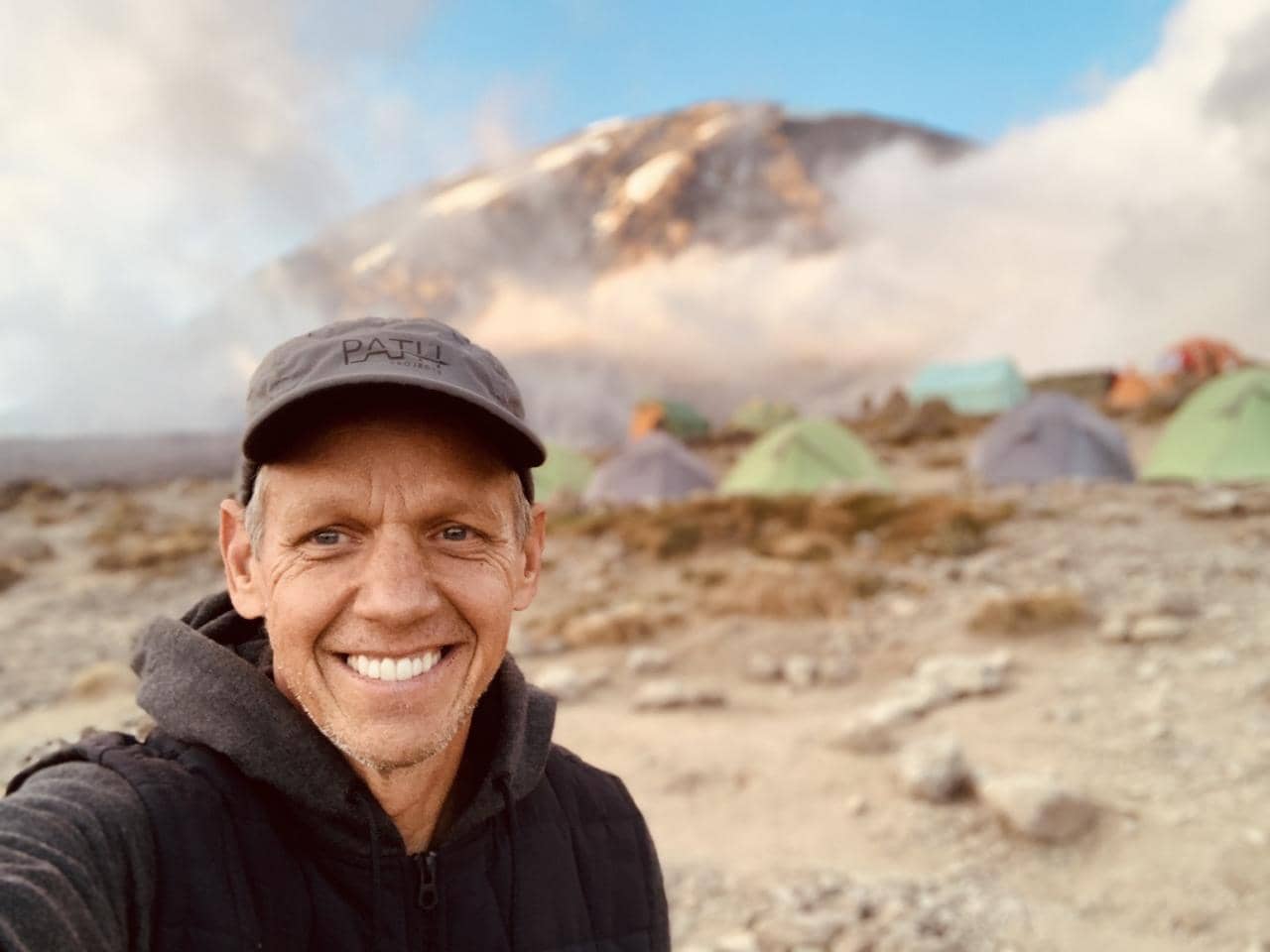
    Everything Harder Than Everyone Else

    Charlie, who’s now fifty-nine, said something about validation early in our conversation that I wound up repeating to everyone I interviewed after him, to watch them nod in recognition. We’d been talking about his crack years, before he pledged his life to endurance races—the six-day benders in which he’d wind up in strange motel rooms with well-appointed women from bad neighborhoods, and smoke until he came to with his wallet missing.

    “Part of ultrarunning is a desire to be different,” he told me. “And for the drug addict, too, there is a deep need to separate ourselves from the crowd. Street people would tell me, ‘You could smoke more crack than anybody I’ve ever seen,’ and there was a weird, ‘Yeah, that’s right!’ There’s still a part of me that wants to be validated through doing things that other people can’t.”

    Charlie has completed some of the world’s most inhospitable races. At 56, he ran 27 hours straight to celebrate his 27 years of sobriety. If his biggest fear is being “average, at best,” then he’s moving mountains to avoid it.

    It helps that he’s goal-oriented in the extreme. In fact, you might call him a high achiever. Even in his drug-bingeing years, which culminated in his car being shot at by dealers, Charlie was the top salesman at the fitness club where he worked.

    When he began using drugs—before he’d even hit his teens—they distracted him from his antsiness. He’s noticed a similar restlessness in endurance athletes that comes from a fear of missing out. If there’s a race he doesn’t take part in, he tortures himself that it was surely the best ever. He took control of this fear by starting to plan his own expeditions, which couldn’t be topped.

    “I need the physical release of running and the burning off of extra fuel,” he said. “I am that guy with a ball for every space on the roulette wheel. When I start running, all the balls are bouncing and making that chaotic clattering noise. Three or four miles into the run, they all find their slot.”

    Even before he quit drugs, Charlie ran. He ran to prove to himself he could. He ran to shake off the day. He ran as a punishment of sorts. He craved depletion. “Running was a convenient and reliable way to purge. I felt badly about my behavior, even if very often my behavior didn’t technically hurt anybody else.”

    A common hypothesis is that former drug users who hurl themselves into sport are trading one addiction for another. Maybe so—both pursuits activate the same reward pathways, and when a person gives up one dopaminergic behavior, such as taking drugs, they are likely to seek stimulation elsewhere. In the clinical field, it’s known as cross-addiction.

    Some people in my book with histories of addiction wound up doing combat sports or bodybuilding, but it’s long-distance running that seems to be the most prevalent lifestyle swap. High-wire memoirs about this switch include Charlie’s Running Man; Mishka Shubaly’s The Long Run; Rich Roll’s Finding Ultra; Catra Corbett’s Reborn on the Run; and Caleb Daniloff’s Running Ransom Road.

    Perhaps it’s the singularity of the experience: the solitary pursuit of a goal, the intoxicating feeling of being an outlier, the meditative quality of the rhythmic movement, the adrenaline rush of triumph; and on the flipside, the self-flagellation that might last as long as a three-day bender. The long-term effects of running can shorten the lifespan, and there have been fatalities mid-race, but they’re tempered by the “runner’s high.” As well as endorphins and serotonin, there’s a boost in anandamide, an endocannabinoid named for the Sanskrit word ananda, meaning “bliss.”

    Another commonality in endurance racing is hallucinating. This, combined with runners under stress being forced to drill down to the very essence of self, reminds me of the ego death that psychedelic pilgrims pursue, in order that the shell of our constructed identity might fall away.

    For Charlie, part of the attraction is the pursuit of novelty and the chasing of firsts, even though he knows by now that the intensity of that initial high can never be replicated. That explains why he takes such pleasure in the planning of his expeditions. “The absolute best I ever felt in relation to drugs was actually the acquisition of the drug … the idea of what it can be,” he told me. “Once the binge starts, it’s all downhill from there. In a way, running is the same because there’s this weird idea that you’re going to enter a hundred-miler and this time it’s not gonna hurt so much…”

    To run an ultra takes a real dedication to suffering. Races have names such as Triple Brutal Extreme Triathlon and Hurt 100. In his book The Rise of the Ultra Runners, Adharanand Finn writes about the hellscapes in race marketing materials that appear irresistible to this breed. “The runners look more like survivors of some near-apocalyptic disaster than sportsmen and women,” he wrote. “It is telling that these are the images they choose to advertise the race. People want to experience this despair, they want to get this close to their own self-destruction.”

    I think about a transcontinental US odyssey that Charlie planned, in which he would run 18 hours a day for six weeks. At one point, as he was icing his ankle and beating himself up for losing sensation in his toes, one of the film crew asked him, “Do you consider yourself a compassionate person?”

    Charlie looked up. “Yeah. I try to be.”

    “Do you feel any compassion at all for yourself?”

    Perhaps the psychology of ultrarunners is uncomplicated: they simply prioritize the goal above the body. The meat cage is a mule to be driven, and is viewed dispassionately, whether that be for practical purposes, or from lack of self-regard, or a bit of both.

    “Balance is overrated,” Charlie assured—and that’s something he says when giving keynotes to alpha types. “Very few people who’ve actually accomplished anything big, like writing a book or running a marathon or whatever it is, have balance in their lives. If you’re not obsessed with it, then why are you doing it? I don’t even understand how someone can do it just a little bit, whatever it is.”

    When he first quit drugs, Charlie felt like taking a knife and surgically removing the addict, so strong was his rejection of that part of his identity. It took three years to figure out that the “addict self” had plenty to offer: tenacity, ingenuity, problem-solving, and stamina. Perfect for the all-or-nothing world of endurance.

    Excerpted from Everything Harder Than Everyone Else: Why Some of Us Push Ourselves to Extremes by Jenny Valentish. Available from Amazon, Barnes & Noble, and Bookshop.org.

    View the original article at thefix.com

  • Intervention

    I did not know that the next time I held her body, it would be chips of bone and gritty ash in a small cardboard box.

    The following is an excerpt from The Heart and Other Monsters by Rose Andersen.

    I cannot remember my sister’s body. Her smell is gone to me. I do not recall the last time I touched her. I think I can almost pinpoint it: the day I asked her to leave my home after I figured out she had stopped detoxing and started shooting up again, all the while trying to sell my things to her drug dealer as I slept. When she left, she asked me for $20, and I told her that I would give it to her if she sent me a picture of a receipt to show me she spent the money on something other than drugs. “Thanks a lot,” she said, sarcastically. I hugged her, maybe. So much hinges on that maybe, the haunting maybe of our last touch.

    The last time I saw my sister was at an intervention at a shitty hotel in Small Town. Our family friend Debbie flew my stepmother and me there in her three-seater plane. The intervention was put together hastily by Sarah’s friend Noelle, who called us a few days beforehand, asking us to come. There were little resources or time to stage it properly—we couldn’t afford a trained interventionist to come. Noelle told us she was afraid Sarah was going to die. I agreed to fly with Debbie and Sharon because Small Town was far away from home and I didn’t want to drive.

    Debbie sat in the pilot’s seat, and I sat next to her. My stepmother was tucked in the third seat, directly behind us. It wasn’t until takeoff that I realized with my body what a terrible decision it was to fly. I am terrified of heights and extremely prone to motion sickness. I was not prepared for what it meant to be in a small plane.

    I could feel the outside while inside the plane. The vibration of chilly wind permeated through the tiny door and gripped my lungs, heart, head. It would have taken very little effort to open the door and fall, an endless horrifying fall to most-certain death. From the first swoop into the air, my stomach twisted into a mean, malicious fist that punched at my bowels and throat. For the next hour I sat trembling, my eyes shut tight. Through every dip, bounce, and shake, I held back bile and silently cried.

    When we landed, I lurched off the plane and threw up. I do not remember what color it was. My stepmom handed me a bottle of water and half a Xanax, and I sat, legs splayed on the runway, until I thought I could stand again.

    My sister vomited when she died. She shit. She bled. How much is required to leave our body before we are properly, truly, thoroughly dead? I dreamed one night that I sat with my sister’s dead body and tried to scoop all her bodily fluids back inside her. Everything wet was warm, but her body was ice-cold. I knew that if I could return this warmth to her, she would come back to life. My hands were dripping with her blood and excrement, and while begging her insides to return to her, I cried a great flood of mucus and tears. This I remember, while our last touch still evades me.

    My sister was late to her intervention. Many hours late. Seven of us, all women, five of us in sobriety, sat in that hot hotel room, repeatedly texting and calling Sarah’s boyfriend, Jack, to bring her to us. I realized later that he probably told her they were going to the hotel to get drugs.

    The hotel room was also where Sharon, Debbie, and I would be sleeping that night. It held two queen-size beds, our small amount of luggage, and four chairs we had discreetly borrowed from the hotel’s conference room. I sat on one of the beds, perched on the edge anxiously, trying not to make eye contact with anyone else. I didn’t know many of the other people there.

    When I told my mom about the intervention days before, I had immediately followed with “But you don’t need to come.” There were so many reasons. She has goats and donkeys, cats and dogs who needed to be taken care of. She didn’t have a vehicle that could make the drive. She could write a letter, I said, and I would give it to Sarah. The truth was, I didn’t feel like managing her now-acrimonious relationship with Sharon. I didn’t want to have to take care of my mom, on top of managing Sarah’s state of being. It occurred to me, sitting in this crowded, strange room, that I might have been wrong.

    Sitting diagonally across from me was Sarah’s close friend Noelle, who had organized everything. Sarah and Noelle had met in recovery, lived together at Ryan’s family home, and become close friends. They had remained friends even when Sarah started using again. Helen, a fair-haired middle-aged woman who was not one of the people Sarah knew from recovery but rather the mother of one of Sarah’s boyfriends, sat on the other bed. Sarah’s last sponsor, Lynn, sat near me. I had to stop myself from telling her how Sarah had used her name on her phone. Sitting in one of the chairs was the woman who was going to run the intervention. I cannot remember her name now, even though I can easily recall the sound of her loud, grating voice.

    The interventionist had worked at Shining Light Recovery, the rehab Sarah had been kicked out of about a year and a half before, and was the only person Noelle could find on short notice. She had run her fair share of interventions, she told us, but she made it clear that because she hadn’t had the time to work with us beforehand, this wouldn’t run like a proper intervention. She smelled like musty clothes and showed too many teeth when she laughed. She talked about when she used to drink, with a tone that sounded more like longing than regret. When she started to disclose private information about my sister’s time in rehab, I clenched my hands into a fist.

    “I’m the one that threw her out,” the woman said. “I mean, she’s a good kid, but once I caught her in the showers with that other girl, she had to go.” Someone else said something, but I couldn’t hear anyone else in the room. “No sexual conduct,” she continued. “The rules are there for a reason.” She chuckled and took a swig from her generic-brand cola. I felt hot and ill, my insides still a mess from the plane ride. We waited two more hours, listening to the interventionist talk, until Jack texted to say they had just pulled up.

    Intervention

    When my sister arrived, she walked into the room and announced loudly, “Oh fuck, here we go.” Then she sat, thin, resentful, and sneering, her hands stuffed into the front pocket of her sweatshirt. Oh fuck, here we go, I thought. The interventionist didn’t say much, in sharp contrast to her chattiness while we were waiting. She briefly explained the process; we would each have a chance to speak, and then Sarah could decide if she wanted to go to a detox center that night.

    We went in turns, speaking to Sarah directly or reading from a letter. Everyone had a different story, a different memory to start what they had to say, but everyone ended the same way: “Please get help. We are afraid you are going to die.” Sarah was stone-faced but crying silently. This was unusual. When Sarah cried, she was a wailer; we called it her monkey howl.

    When we were younger, we watched the movie Little Women again and again. We would often fast-forward through Beth’s death, but sometimes we would let the scene play out. We would curl up on our maroon couch and cry as Jo realized her younger sister had died. For a moment I wished for the two of us to be alone, watching Little Women for the hundredth time. I could almost feel her small head on my shoulder as she wailed, “Why did Beth have to die? It’s not fair.” She sat across the room and wouldn’t make eye contact with me.

    I addressed Sarah first with my mom’s letter. I started, “My dear little fawn, I know that things have gone wrong and that you have lost your way.” My voice cracked and I found I couldn’t continue, so I passed it to Noelle to read instead. It felt wrong to hear my mother’s words come out of Noelle’s mouth. Sarah was crying. She needs her mom, I thought frantically.

    When it came time to speak to her myself, my mind was blank. I was angry. I was angry that I had to fly in a shitty small plane and be in this shitty small room to convince my sister to care one-tenth as much about her life as we did. I was furious that she still had a smirk, even while crying, while we spoke to her. Mostly, I was angry because I knew nothing I could say could make her leave this terrible town I had driven her to years before, and come home. That somewhere in her story there was a mountain of my own mistakes that had helped lead us to this moment.

    “Sarah, I know you are angry and think that we are all here to make you feel bad. But we are here because we love you and are worried you might die. I don’t know what I would do if you died.” My sister sat quietly and listened. “I believe you can have any life you want.” I paused. “And I have to believe that I still know you enough to know that this isn’t the life you want.” The more I talked, the further away she seemed, until I trailed off and nodded to the next person to talk.

    After we had all spoken, Sarah rejected our help. She told us she had a plan to stop using on her own. “I have a guy I can buy methadone from, and I am going to do it by myself.” Methadone was used to treat opioid addicts; the drug reduced the physical effects of withdrawal, decreased cravings, and, if taken regularly, could block the effects of opioids. It can itself be addictive—it’s also an opioid. By law it can only be dispensed by an opioid treatment program, and the recommended length of treatment is a minimum of twelve months.

    “I have a guy I can buy five pills from,” Sarah insisted, as if that was comparable to a licensed methadone center, as if what she was suggesting wasn’t its own kind of dangerous.

    “But honey,” my stepmother said gently, “we are offering you help right now. You can go to a detox center tonight.”

    “Absolutely not. I am not going to go cold turkey.” Sarah was perceptibly shaking as she said this, the trauma of her past withdrawals palpable in her body. “I don’t know if I can trust you guys.”

    She gestured to my stepmom and me. “I felt really betrayed by what happened.” The heroin in her wallet, the confrontation at Sharon’s, Motel 6, breaking into her phone. “You guys don’t understand. Every other time I’ve done this, I’ve done this for you, for my family.” She sat up a little straighter. “For once in my life, it’s time for me to be selfish.”

    It was all I could do not to slap her across the face. I wanted desperately to feel my hand sting from the contact, to see her cheek bloom pink, to see if anything could hurt her. She wasn’t going to use methadone to get clean. She just wanted us to leave her alone. 

    I made an excuse about needing to buy earplugs to sleep that night and walked out. I did not hug her or look at her. I did not know I would not see her again. I did not know I would not remember our last touch. I did not know that the next time I held her body, it would be chips of bone and gritty ash in a small cardboard box.
     

    THE HEART AND OTHER MONSTERS (Bloomsbury; hardcover; 9781635575149; $24.00; 224 pages; July 7, 2020) by Rose Andersen is an intimate exploration of the opioid crisis as well as the American family, with all its flaws, affections, and challenges. Reminiscent of Alex Marzano-Lesnevich’s The Fact of a Body, Maggie Nelson’s Jane: A Murder, and Lacy M. Johnson’s The Other Side, Andersen’s debut is a potent, profoundly original journey into and out of loss. Available now.


    View the original article at thefix.com

  • My Daughter / Myself

    I would spend a decade trying to reconcile two feelings: complete hatred for the stranger who was living in my daughter’s body and total surrender to my love for her.

    (The following is an excerpt from a longer work.)

    The following summer, Oscar developed such serious health problems that we had to put him down. In July, Angel came over to say goodbye to him. Then Carter and I walked him to the vet and held him down while he received his injection. Annie couldn’t bear to be there. As we were sobbing over his dying body, unable to leave, the aide gently suggested that we needed to let go of him. We left the building and Carter and I held onto each other all the way home. Annie stayed in her room and I tried, unsuccessfully, to reach her.

    “Annie,” I said, knocking on her door, “please let me in. I know how you feel; we’re all sad to lose Oscar. I just want to hug you and tell you it’ll be okay. Please don’t isolate yourself like this. Come out and get something to eat with me and Carter.”

    “Mom, I couldn’t eat a thing right now. I just want to go to sleep. I’ll see you in the morning.”

    I couldn’t eat anything, either. We were both stunned by the absence of our much-beloved dog and, not surprisingly, we lost our appetites. Even bulimics can lose their appetites, at least for a while, when they’re sad.

    Another letting go served to uproot us as Angel and I sold our large house a month later. We all seemed to scatter like the four winds afterwards. Caroline had moved to California and Carter was living with a friend in D.C. I moved into a condominium near my high school, and Annie moved into a friend’s apartment.

    Her first year of living independently seemed uneventful at first. Frequently visiting her in the apartment she shared, I took her furniture from her old bedroom so she would feel at home in her new digs. But there were signs that she was changing. She had never had many boyfriends in high school. Then one Sunday morning I arrived to find a friend of hers on the sofa, clearly feeling at home. Later I learned he was a bartender at a watering hole and drug hotspot in Adams Morgan. Well, she was on her own. And by now she was twenty-one; I felt I didn’t have much leverage.

    In the spring, though two courses short of her graduation requirements at George Mason University, Annie was allowed to walk with her class, cap and gown and all.

    Angel, his wife and I all dressed up for our second child’s college graduation in the spring of 2001, and we all viewed this ceremony as a symbol of hope that Annie was willing and anxious to embrace her adulthood and take on more responsibilities, like other young people.

    “Hey, Mom, I want you to meet my friend Shelly. She got me through statistics sophomore year.”

    “Hi, Shelly, nice to meet you. Thanks for helping Annie. Is your family here today?”

    “No. They had to work. No big deal for them anyway.”

    “Oh. Well I think it’s a big deal, so congratulations from me! It was nice to meet you, Shelly, and good luck.”

    Annie’s graduation distracted us from being curious about what she was doing in the evenings. Again, she went to a lot of trouble to cover up behavior that she knew would alarm us and might threaten an intervention.

    Just like her mother.

    At the end of the summer, she asked if she could move into my basement. Her roommate was buying a condo, she said, and their lease was up anyway. Later on, when I watched in horror as the tragedy unfolded in my own house, I wondered about the truth of that. I thought maybe the roommate saw where Annie was going and asked her to leave. No matter. She was in my house now.

    The circle was about to close.

    Then a shocking discovery—a bowl of homemade methamphetamine on top of my dryer! I had been wondering about the stuff she’d left in my basement laundry room. I read the label: muriatic acid. I looked it up on my computer. So that’s what she used it for!

    I moved the bowl up to the kitchen and put it next to the sink, where recessed lighting bore down on it. She couldn’t miss it when she came in the front door. I thought I’d be ready for the confrontation.

    At 4:30 in the morning, she exploded into my bedroom while Gene and I were sleeping. I’m glad he was with me that night.

    “How dare you mess with my things downstairs! Don’t you ever touch my stuff again, you fucking bitch!” she roared. I thought I was dreaming when I saw her there, animal-like, with wild, blood-shot eyes.

    Gene held onto me as I sobbed into my pillow. “Oh God, this isn’t happening, Gene, please tell me this isn’t happening!”

    A half hour later, pulling myself together, I went downstairs to make coffee. I still had to go to work.

    Annie stomped upstairs from the basement with a garbage bag full of her clothes and brushed by me without a word or a look. After she slammed the door behind her, I ran to the kitchen window and saw her get into her car.

    My daughter went from crystal meth, to cocaine, to heroin, as though it were a smorgasbord of terrible choices. Despite four rehabs and family love, her addictive disease continued. There were periods of remission, but they were short-lived. My daughter lived in one pigsty after another, her boyfriends all drug addicts. I would spend a decade trying to reconcile two feelings: complete hatred for the stranger who was living in my daughter’s body and total surrender to my love for her.

    Because of our superficial differences, I didn’t realize right away how alike we were.

    We’ve both suffered from depression since we were young. The adults in our lives didn’t always acknowledge our screams. We turned to substance abuse for relief: food, cigarettes, and drugs. I added alcohol to my list, but I’m not aware that she ever drank alcoholically. My daughter moved on to heroin.

    At least I cleaned up well.

    Though Annie was no longer living with me at that point, I tried to continue embracing her, accepting her, so she’d know she was still loved. But I couldn’t yet distinguish between helping and enabling.

    I did unwise, misguided, things: I gave her money; I paid her debts; I shielded her from jail when she broke the law.

    “Are you sure you don’t want us to contact the authorities about this, Mrs. Rabasa?” the rep asked me when she stole my identity to get a credit card.

    “Oh no,” terrified of her going to jail, “I’ll handle it.”

    And I did, badly.

    This was enabling at its worst. Convinced her addiction came from me, that guilt crippled me and my judgment.

    Placing a safety net beneath her only served to ease my anxiety. It did nothing to teach her the consequences of her behavior. I kept getting in her way.

    It felt like I was in the twilight zone whenever I visited her. My daughter was buried somewhere deep inside, but the addict was in charge. One body, split down the middle: my daughter, Annalise; and a hard-core drug addict. A surreal nightmare.

    Her apartment smelled of incense and dirty laundry. The soles of her shoes flopped until she could get some duct tape around them. She didn’t offer me anything to eat because there was no food in the refrigerator.

    Nothing.

    Twice while I was there she ran to the bathroom to vomit.

    Heroin. Dope sick.

    Annie was hijacked by a cruel disease—cruel because it robs you of yourself while you’re still alive. While destroying your mind, it keeps your body alive long enough to do a lot of damage before it actually kills you. For many drug addicts, it’s an agonizingly slow death.

    It was like looking at a movie of my life in reverse, erasing all the good fortune that brought me to where I was, leaving only the pain and ugliness—and hopelessness—of a wasted life. How I might have ended up.

    For better or worse, my life had been unfolding as many do with addictive personalities. But to see the same disease taking over the life of my child—to see that mirror up close in front of me—was threatening to be my undoing.

    Trying to hold it together, I was imploding. Like all addicts and families of addicts, survival can be reached from many places, but often from the bottom.

    Mine was waiting for me.
    Excerpted from Stepping Stones: A Memoir of Addiction, Loss, and Transformation, to be released on June 16 by She Writes Press. It is the sequel to the award-winning debut memoir, A Mother’s Story: Angie Doesn’t Live Here Anymore (Maggie C. Romero), available on Amazon and where other books are sold.

    View the original article at thefix.com