Addiction recovery books have been fundamental to my recovery from substance use disorder, codependency, mental illness, and complex PTSD.
“Not every story has a happy ending … but the discoveries of science, the teachings of the heart, and the revelations of the soul all assure us that no human being is ever beyond redemption. The possibility of renewal exists so long as life exists. How to support that possibility in others and in ourselves is the ultimate question.” -Gabor Maté, In the Realm of Hungry Ghosts: Close Encounters with Addiction
Books have been fundamental to my recovery from substance use disorder, codependency, mental illness, and complex PTSD. They’re more than just books: they contain the powerful stories of others who have walked my path, and they have given me a sense of hope that there is a fulfilling life beyond this condition. I love reading the words of expertise from physicians and clinicians who help us better understand the science of addiction. Perhaps most, though, I devour the work of journalists who have beautifully woven the words of science and experience to help us understand the relationship between trauma and addiction and how that impacts us physiologically and psychologically.
These recovery-related books have given me the depth of insight into my illnesses that I would never have grasped in the rooms or the Big Book of Alcoholics Anonymous, or just with my physician’s intervention. It is with the knowledge I’ve gained from these books that I’ve empowered myself to self-direct a recovery and attain a life that I once felt was impossible.
This is by no means an exhaustive resource. It’s a curated list of the most powerful books that have impacted my recovery and the recovery processes of fellow writers, activists, and others in long-term recovery. While some of these books may not be specific to addiction, they contain potent insights into related conditions and circumstances.
Childhood Disrupted: How Your Biography Becomes Your Biology and How you Can Heal by Donna Jackson Nakazawa.
This book has been the most insightful book that I’ve read throughout my nearly seven years in recovery. Nakazawa explains the groundbreaking Adverse Childhood Experiences Study, and the link between ACEs and chronic illness in later life, in a way that is powerful and easy to digest. Through storytelling, she shares the experiences of those who have overcome their adverse experiences and inspires the reader to reset their biology and heal.
I loved this book. Kristi Coulter is witty and smart, and relates to the topic of addiction in a masterful collection of dry, heartbreaking, and hilariously human collection of essays. I’m not alone in my admiration of her work — NGCCFT has been wildly successful. Fellow writer and editor Irina Gonzalez agrees:
“I’ve been waiting for Kristi’s book ever since I first read her essay ‘Enjoli’ early in my recovery and relating to it so much.” Gonzalez explains the appeal of Coulter’s narrative: “I loved her story because it’s very relatable — from her not having a huge ‘rock bottom’ to her writing about what happens after quitting drinking, two topics I don’t think are often talked about in other recovery/alcoholism memoirs. I actually loved the book SO much that I read it in two days! I found it very inspirational and very encouraging.”
Unbroken Brain: A Revolutionary New Way of Understanding Addiction by Maia Szalavitz.
Maia Szalavitz is one of the world’s leading neuroscience and addiction journalists. In this book, she challenges the concept of a “broken brain” and an “addictive personality,” offering a radical and groundbreaking new perspective. In her book, she argues that addictions are learning disorders; by considering them in the context of this new paradigm, we can untangle our conflicting ideas around addiction treatment, prevention, and policy.
What I particularly like is her alternative perspective. I favor any outlook that stops us from believing that we are broken and instead focuses on an individualized approach and brings about healing.
What I love about Gabor Maté is his approach to those who suffer with substance use disorders — it is one of empathy and understanding of the trauma that we have suffered. He brings together the science of addiction and his decades of experience as a doctor specializing in this condition. He adds another realm to what has always been considered to be a spiritual condition: evidence of trauma and stress.
“Not all addictions are rooted in abuse or trauma, but I do believe they can all be traced to painful experience. A hurt is at the centre of all addictive behaviors. It is present in the gambler, the Internet addict, the compulsive shopper and the workaholic. The wound may not be as deep and the ache not as excruciating, and it may even be entirely hidden — but it’s there. As we’ll see, the effects of early stress or adverse experiences directly shape both the psychology and the neurobiology of addiction in the brain.” – Gabor Maté
The Body Keeps Score: Brain, Mind, and Body, In the Healing of Trauma by Bessel Van Der Kolk, MD.
Until the past few years, most addiction treatment focused on either retraining the mind or finding a spiritual solution. Few considered the physical element of recovery. In this fascinating book, Van Der Kolk explores the relationship between traumatic stress and its impact on the body, reshaping our body and brain and compromising our capacity for pleasure, engagement, self-control, and trust. This book is a must-read for those who want to heal their relationship with their body and the trauma stored within it.
Recovery Rising: A Retrospective of Addiction Treatment and Recovery Advocacy by Bill White.
Renowned recovery advocate, visionary, and prolific author Bill White writes a professional memoir of the stories, reflection, and lessons learned throughout his journey. Many of those who work within the addiction treatment field have been reading the insightful words of White for the last five decades. His book has been touted as perceptive, revealing, and inspiring.
The Recovering: Intoxication and Its Aftermath by Leslie Jamison.
Praised by most book fiends in recovery, The Recovering is a must read. In this memoir, Leslie Jamison navigates her personal story and interweaves the fascinating stories we tell about addiction together with the history of the recovery movement and its relationship with race and class. Her book has been described as “a transformative work showing that sometimes the recovery is more gripping than the addiction.”
In 2011, Hanchett set up the website Renegade Mothering to find out if the rest of the mothering world is as crazy as she was. Having reached an audience of hundreds of thousands, she wrote about her experiences of seeking relief from motherhood in too much wine. Favored by many writers in recovery, her book has been described as wickedly funny and empowering, chronicling her journey through addiction into a recovery she didn’t know was possible.
What books helped you in early recovery? Add your favorite titles in the comments and we’ll check them out for our next list.
“A really cool expression of the family bond in the film is how the love survives everything that the disease can throw at it. Despite so much trauma, at the very end, you see that that core love never goes away.”The journey from addiction to recovery is a personal one, with details usually confined to family, friends, and maybe a therapist’s office or sobriety fellowship. But what happens when you open the doors to the public, laying bare the trials and triumphs that got you to this point? Since the publication of his father’s award-winning memoir, Beautiful Boy: A Father’s Journey Through His Son’s Addiction, his own memoir, Tweak: Growing Up on Methamphetamines, and his writing for The Fix and other publications, Nic Sheff’s experiences with addiction and his subsequent recovery have played out under the public’s gaze.
Now, with the Amazon Studios wide release of the feature film Beautiful Boyon October 12th, Nic Sheff is going to experience a whole new level of recognition and fame. Now more than ever, anonymity is a thing of the past, but he remains dedicated to his personal recovery and the principles of a healthy program. With the premiere fast approaching, The Fix is honored that Nic took time to sit down and talk to us.
The Fix: How did you and your father decide to initiate and move forward with the movie project? Was it agreed upon from the beginning that your book and his book would be turned into a combined film if successful? How did you go about deciding to combine Tweak: Growing Up on Methamphetamines with the Beautiful Boy story, or was this choice made by the filmmakers?
Nic Sheff: We always thought the best idea was to combine the two books. Right after publication, we met with Jeremy Kleiner, a producer with Plan B Productions, and this is before the company had won two Academy Awards for producing 12 Years a Slave and Moonlight. They were just starting out, but when we sat down with him over dinner, I just felt that he got what we were trying to do with the books. Also, we had a friend in common who had been a heroin addict and had died due to this disease. It gave us an immediate emotional connection.
You have to realize that there have been so many movies about addiction that show the downward spiral of a person as the drugs overtake their life. Many of these films show these people hitting bottom, then end with them dying or getting into rehab and ending on a hopeful note. Although there have been some great movies like that, our idea was to do something different. We wanted to show the effect the addiction has on the family because my Dad had written about it so amazingly in Beautiful Boy. We wanted to combine the family narrative with the addiction narrative.
Along with that combination, we wanted to show a process that so many people experience when they first try to get sober — the cycle of relapse caused by the pain of being without the drugs and having to face your feelings. When the pain comes, we reach out to the one thing that we know has kind of made us happy for so long, and we end up relapsing. As soon as we take the drugs again, they immediately take hold, and we can’t stop. I felt that process of relapsing had never been depicted in films. We wanted a movie that shows how hard it is to get out of that cycle. Ultimately, the answer, if there is an answer, is that there is a love that exists within a family, and that love never goes away. The ending of the movie doesn’t tie up the story with a bow, but it does emphasize that that love is still there. It will never go away. I know that is not true in all cases, but it was true in our story. As a result, I thought it was a really powerful way to end the story.
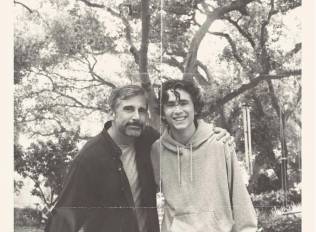
Nic Sheff Image Credit: UCLA Friends of the Semel Institute Open Mind Community Lecture and Film Series
In an interview with Variety, Timothée Chalamet said about first meeting you, “It was all trepidation on my part — nerves and anxiety — which was immediately settled by [the] extraordinarily warm and kind and intelligent and wise person that Nic is, that is innate to him but also through his experiences and his life.” What was it like for you to meet the actor that would play you and tell your most deeply personal story on film? What do you think stands out about his portrayal of you?
God, that is so sweet of him to say that about me. He’s such a sweet guy. I must admit that I wasn’t familiar with Timothée’s work when we first met at a coffee shop. As soon as he came in, I saw that he has this incredible energy and passion for his work. Sure, I could tell that he was nervous about meeting me, but he also was just so committed to getting it right. I immediately felt comfortable with him because I knew he was coming to the role with a very open mind. He wanted to make his portrayal of this young person struggling with addiction as honest and as authentic as possible. He was so willing to learn in an active way.
He asked me a million questions about everything from the emotions I was feeling to the physicality of what it actually looks like to be high on these drugs and what it looks like to be detoxing from these drugs. There’s something really amazing that Timothée does in the movie. It’s something I feel that I’ve not ever seen in a movie about addiction before. Even as he’s in the trenches and high and doing these unconscionable things like breaking into his parents’ house and stealing from his little brother and sister – at the very moments when he’s being volatile and angry and out of control – he conveys this self-awareness that he doesn’t want to be this person and he doesn’t want to be taking these actions. It seems like his body is almost possessed.
As a performer, Timothée was able to hold those two contradictory elements at once. He really expresses that sense of being trapped in the addiction and the behavior. At the same time, you see him fighting to hold onto who he was before the addiction took over; you can see how much guilt and shame he feels about everything he is doing, even while he is doing it. I thought that was so remarkable because it was exactly how I felt when I was out there. I saw myself doing these behaviors, and I was so horrified at myself, but I couldn’t stop. Indeed, that feeling of powerlessness is so devastating. It’s at the heart of the disease, and to see it captured so well on film I thought was truly remarkable.
At the Colorado Health Symposium in August, you talk about how watching the movie makes you feel so grateful because it’s such an amazing reminder of the miracle of recovery. Is gratitude the very heart of your recovery?
Absolutely. Although I know the film wasn’t made for this reason, I felt that the filmmakers gave me such an incredible gift by making this movie. It is such a visceral reminder of everything we went through as a family. It’s such a great help for me because I’m still very much involved in recovery. It’s a big part of my life every single day. In some ways, however, I have moved on. I write for television now, and I am doing things that aren’t necessarily connected to telling my story and writing about addiction. Seeing the movie, seeing my life reflected back to me, it hit home in a way that I hadn’t felt in a long time. I felt again on a very deep level what an incredible miracle it is that I survived and how much came back to me. My family and I have such a close relationship, and it’s beyond anything I ever thought possible. It makes me so grateful.
Every day, gratitude is such an essential part of my existence. Battling this disease, I have gone through such hell that coming out the other side is something I need to acknowledge on a daily basis. I try to be grateful and to express my gratitude. The amazing thing about being sober is how you learn to appreciate and love the simple moments of life. I am so grateful to be able to go out on a walk with my dogs or go out to dinner with my wife. The little things are so sweet like just watching a movie. Gratitude is a gift of sobriety that I keep close to me.
Like you, I first tried drugs when I was eleven years old, smoking pot. Although I didn’t develop a problem until high school, I know my eyes were opened to that feeling of escape. It felt like an answer. Did you feel this way as well? Do you believe the movie effectively highlights the real dangers of early drug use?
Yes, I felt that way exactly when I first smoked pot when I was eleven. I felt this very immediate sense of relief. Up until that point, I had felt so insecure and uncomfortable in my own skin. I just didn’t fit in anywhere. Smoking pot for the first time felt like the first real answer that I had ever found. I kept turning to drugs to cope with everything from success to failure to shyness and everything in between. Thus, when I wasn’t using, I really developed no skills to handle what life threw at me. I kept going back to the drugs because they were the only coping mechanism that I’d ever learned.
In the movie, I do think we show that relapse is not about having a good time. Most people think addicts relapse because they want to keep the party going. They think we are enamored with this fast-paced life. In my experience, I was just in a tremendous amount of pain, and I kept reaching out to the drugs to try to feel better. I really see that theme well-expressed in the movie. Every time Timothée relapses, it’s because he’s in pain. He doesn’t want to relapse, but he can’t stop himself. He does not know how to break that cycle.
For example, there’s a scene in the movie where Timothée and Steve are smoking pot together. Timothée is in high school, and he’s convinced his Dad to smoke pot with him. In the scene, you see that the Dad is trying so hard to connect with his son on a personal level. He believes that smoking pot with his son might help connect them. However, for the son, he’s already in his disease. All he can focus on is the drug. In that scene, we see how he keeps bringing the topic back to the drugs, and he wants to hear about the other drugs his Dad is doing or has done. He wants ammunition so he can feel justified about his using, and he wants to be exonerated in the process from his feelings of guilt. He doesn’t care about connecting; he cares about what his disease wants him to care about. He’s so obviously obsessed with the drug. I definitely felt like I hadn’t seen anything like that before.
Dr. Gabor Maté writes, “The question is not why the addiction, but why the pain.” What does that quote mean to you? Do you agree with him? Is treating the underlying trauma behind the addiction the key to long-term sobriety?
I think that quote is amazing. It makes me remember my last treatment center. When I got there, they asked, “Why are you here?” I replied, “Because I am an addict, and I can’t stop using meth and heroin.” They said, “That’s not the reason that you’re here. It’s not because of the drugs. It’s because of the feelings that were making you use the drugs.”
I knew right away how true that was for me. As I said, I was in a lot of pain growing up, and drugs were the one thing that I found that made that feel better. I’m sure it’s different for many people, and I am not an expert in addiction. I am just sharing my own experience. It definitely was super helpful for me to start exploring and treating that underlying pain behind the addiction. Some of it was just chemical. Going on antidepressants helped at first, then I was diagnosed as bipolar. Now I am on lithium for the bipolar disorder. All of that stuff helped to address that pain and break the cycle.
To me, recovery is like trying to put together this puzzle. There are all these different puzzle pieces. They are not the same for everyone, but for me, those puzzle pieces have been therapy, medication, fellowship, and 12-step. All of these puzzle pieces come together to allow me to stay sober, and they are all really important. However, they are different for everybody. I wish there was one solution that worked for all people, but unfortunately, that’s not the case.
In Tweak: Growing Up on Methamphetamines, you write, “There is this crazy fear I have of being rejected by anyone – even people I don’t really care about. It’s always better to leave them first, cut all ties, and disappear. They can’t hurt me that way – no one can.” Is this fear at the very core of what drives the escapism of addiction?
That’s a fascinating question. I think it definitely was a big contributor to the pain that I needed to use the drugs to help relieve. As I’ve gotten more long-term sobriety and had the opportunity to work on myself, I have found that I have developed these amazing friendships with other people. I never before had anything like the friendships I have today. Before I got sober, it was too scary for me to be vulnerable enough to have friends. Having friends means the potential of losing those friends. The lasting friendships that I’ve been able to form mean so much to me. It’s such a gift.
You have to realize that my disease wants me to be alone. It wants me to be isolated so it can take control. When I was alone, my disease would be talking to me, and it would make me feel like I wasn’t worth anything. Still, it does take courage to have friendships. Without my recovery, I don’t think it would have ever happened. My recovery and those friendships go so well together.
Worrying does not serve me at all. When I get into that negative headspace, I still have a hard time getting out of it. Luckily, I have friends that I can talk about it with, and they help me get more perspective. They help me take a step back and see again the value of my life. It’s one of the greatest gifts of authentic connection.
You know from firsthand experience how hard the disease of addiction is on families. Should families see this film together? Should parents take their teenagers? If they do, how should they prepare both themselves and their kids for the film before and what should they do afterward?
It’s hard for me to be prescriptive about anything. I really only can express things that come from my own experiences. I do believe that having conversations about this subject are really important for a family to consider. I have learned a lot by going around with the film to screenings and talking with people afterward. The main reason I’m doing it is that this film opens the door to such a great opportunity to have conversations about these issues. Watching this film raises awareness by making it easier for people to have honest talks about this disease.
Even more importantly, it is helping to not only emphasize recovery but also reduce the stigma around addiction that prevents such talk in the first place. From my perspective and beyond my personal stake, I believe the more people that see this film, the better. It will raise conversations that might not have occurred without it.
It made me proud to be connected to this film after I first saw it, and I realized there is nothing glamorous about the drug use in the movie. There is a scene in the movie where the son relapses. He does drugs with this girl, and it doesn’t look like a lot of fun. Instead of presenting it as fun or wild or on the edge like they do in a lot of movies, you really see how much guilt and shame the son has about it. There is no party period. Right after it happens when he’s alone, he breaks down and starts crying.
The power of the movie is that it really shows that the reason people use is because of this pain that they are experiencing. Relapsing tends to be a desperate attempt to escape that pain. It also shows the effect that a relapse has on the family. It was painful to watch it on the screen and kind of relive it again.
Watching the film reminded me of when I first read my Dad’s book. It was so hard to realize and see how much of a negative effect I had on him and my whole family. It was important to me that the film would capture that feeling, and it does it so well. Thus, I believe it would be amazing for families to see this film together. I think it would encourage honest conversation afterward.
The one warning I would add to that recommendation is that for people in recovery, especially early recovery, it can be really triggering to watch the explicit drug use in the film. There are some very intense scenes of IV drug use that could be triggering. I would encourage people in early recovery not to put themselves in a position where they might be triggered. If they are worried that it might be a possibility, then I would recommend that they choose caution and not take an unnecessary risk.
In Tweak: Growing Up On Methamphetamines, you write, “Sure, I buried it. I buried it and buried it and turned away from everything light and sweet and delicate and lovely and became so scared and scarred and burdened and fucked up. But that goodness is there, inside – it must be.” Do you believe this movie can help people struggling with addiction find the goodness within themselves and embrace recovery? If so, how?
Wow! That’s creepy to hear that quote again. I haven’t gone back and read Tweak in such a long time, and hearing it is such a sad reminder of how I was feeling. It amazes me how far my life has come since then, and it makes me feel so grateful.
This movie exemplifies that gratitude by showing in such a beautiful way how much love there is within a family. You really see the love within our family, and it’s a reflection of the way that families are. I am so impressed by the incredible bond between parents and children, and also between brothers and sisters. A really cool expression of that bond in the film is how the love survives everything that the disease can throw at it. Despite so much trauma, at the very end, you see that that core love never goes away.
I remember when I was out using, I had this horrible thing happen. My girlfriend OD’d, and I had to call 911 and do CPR. Thankfully, she came out of it, but she had to go to the hospital. Of course, I went with her, and it was such a wake-up call. I decided I had to do something to stop all of this. I called my Dad, and I told him, “Okay, I don’t want to go into rehab, but I want to come home and get clean on my own.”
My Dad had learned enough at that point to know that wasn’t going to be a good idea, and I wasn’t going to be able to do it on my own. He knew he couldn’t let me come home and put everyone else at risk. He said to me, “No, you can’t come home. I really hope you get help, but I can’t help you unless you’re willing to go into treatment.”
When I heard that from him, I was devastated. It was devastating to hear that from my father. All I wanted to do was come home. I was angry and hung up the phone, but even at that moment, when he said I couldn’t come home, I also recall this profound awareness of his love for me. I knew he wasn’t drawing that boundary because he didn’t care about me. Even after everything that had happened, I instinctively knew that love was still there. In the movie, the themes include that such deep love never goes away and that forgiveness is always possible. For people struggling with addiction, that’s a powerful message that they need to hear and that needs to be heard.
Nic and David Sheff Image Credit: UCLA Friends of the Semel Institute Open Mind Community Lecture and Film Series
Vigna seems convinced that a few watercolor washes can make the world a better place, but her idealism is misguided; stories of the horrible undercurrent of the real world are more likely to scare children.
Although the following review is not positive, I empathize with what Judith Vigna tried to accomplish. In the late 1980’s, she took on a topic that few writers of children’s books would choose to address: how to explain family difficulties brought on by alcoholism and addiction. Beyond the intimate connection of a parent or trusted family member talking directly to a child, raising this issue on a public platform is like walking through a minefield. It’s so easy to make a single misstep that blows the project straight to heck. Not to hell, mind you, we’re talking about children’s books.
I Wish Daddy Didn’t Drink So Much (1988) and My Big Sister Takes Drugs (1990) were published by Albert Whitman & Company as fictional self-help stories to educate kids about alcoholism and substance use disorder. With these books, Vigna invents a kind of misguided bibliotherapy designed for children in preschool to grade 3. The books do a belly flop, and it’s hard to imagine that either would successfully educate or console a young child, although that is their goal. Moreover, both books are culturally biased since they focus on white characters in either suburban America or a strange rural environment where isolated houses exist in the middle of nowhere for no good reason.
Is such grim reality needed in children’s picture books? In the context of both of these efforts, there is a sense that something precious has been hijacked to accomplish a worthy educational goal. Children’s storybooks and picture books are a beloved part of childhood, combining the visual imagination with language. The innocence of the genre is a key element to the lasting success of so many outstanding children’s books from Maurice Sendak’s Where The Wild Things Are and Dr. Seuss’s The Cat In The Hat to Shel Silverstein’s The Giving Tree and Margaret Wise’s Goodnight Moon.
Although each of these stories teaches a life lesson about good behavior and decency, they don’t cross the line by subverting the fantasy to morality. Indeed, the fantasy bolsters the moral message, taking it to the next level by presenting the ideas in an artistic context that provides access for a child. When I recall first reading books as a little boy, I remember the fun I experienced and the thrill of turning the pages. In Judith Vigna’s stories, the fun is replaced by a dull melancholy ruptured here and there by a disturbing undercurrent of anxiety and fear. Even when hope is presented in the end and partial solutions proffered, the ugliness remains, like the father’s undeterred alcoholism in I Wish Daddy Didn’t Drink So Much.
The best example of this replacement happens in I Wish Daddy Didn’t Drink So Much, aimed at kids in pre-school to grade 2. The night before Christmas is disturbed when young Lisa’s drunken father stumbles into her bedroom dressed as Santa Claus. On the very first page of text in the book, Lisa explains that the costume did not fool her for a second. She says, “I knew it was only Daddy in a Santa Claus suit because he bumped into my bed twice and spilled beer on the rug. I didn’t like that. When Daddy drinks a lot of beer, he acts funny.”
In other words, even a child knows that Santa Claus doesn’t show up drunk. Still, Lisa is excited because her father is going to take her sledding the next day. Santa even leaves a note taped to her new sled that says her daddy promised him that they would go sledding and try out the present after breakfast. Unfortunately, Daddy is too hungover to go sledding. Lisa asks later in the day if they can go, but Dad is drinking beer while watching television, focused solely on the hair of the dog that bit him the night before.
Lisa’s father ignores her request, and she gets mad, telling him that he promised. The face of the little girl is drawn with such sadness and disappointment. Reacting to her feelings, her father lashes out and yells at Lisa. She ends up playing with her sled in the house, imagining that she’s in the clouds but feeling sad and scared.
Although there is no direct physical violence in the book, beyond loud fights between the mother and father, the threat looms. The bad times continue and culminate with an intoxicated failed attempt to go sledding. Later, Lisa mopes outside as her mother and father have a big screaming match inside the house with sounds of breaking glass.
The story ends when Lisa and her mother escape her father’s drunken anger by going over to Mrs. Field’s house. They have a nice Christmas dinner with this old lady, and Lisa opens up about how her father’s drinking destroyed Christmas. Mrs. Field tells Lisa that she used to drink too much before she got help. One day, her father might be ready to get help as well. Until then, she advises this little girl, “you can learn to be happier. You can try to do one of your favorite things every day.”
And that’s about it. There’s a closing bit where Lisa returns home and her father promises to take her sledding on Sunday. But nothing changes, and Lisa remains in a crappy situation with little learned and less relieved. Telling a child to do one of her favorite things every day as a response to alcoholism in the family is like telling a cancer patient to go to Disneyland every weekend. It profoundly fails to address the primary problem.
Vigna seems convinced that a few watercolor washes can make the world a better place, but her idealism is misguided; stories of the horrible undercurrent of the real world are more likely to scare children. Story time is not when the dark issues of humanity should be raised with children. Going out and doing a favorite thing is not an effective approach to dealing with an alcoholic parent.
In complex.com’s list of The 25 Most Ridiculous Holiday Children’s Books, Vigna’s book comes in at number one. It’s an impressive accomplishment because the competition is stiff, ranging from How Santa Lost His Pants and How Santa Lost His Job to Santa Cow Island and The Flying Canoe: A Christmas Story.
My Big Sister Takes Drugs is Judith Vigna’s second attempt at the bibliotherapy children’s picture book genre. Designed for Grades 2 through 3, a slightly older crowd from seven to nine years old, the book tells the story of little Paul who is dealing with the fact that his teenage sister, Tina, is using drugs. The drugs profoundly change Tina in a negative way. Rather than play games with Paul, she offers him prescription pills. Later, after being busted by the cops for smoking crack in the park with her delinquent friends, Tina is shipped off to rehab. Tina’s drug use causes Paul to lose friends because other parents don’t want their kids around his older sister. Also, once Tina goes to rehab, there is no money left to send him to soccer camp.
As part of a Vigna’s desperate drug education and awareness program, this dank children’s picture book only succeeds in stigmatizing substance use disorder. Okay, Tina has become a mean big sister and hangs out with mean kids. Paul feels threatened in his own home. However, these scare tactics of losing friends and opportunities because of drug usage are counterproductive to any real understanding of addiction as a disease in general and a family disease in particular.
The story is poorly told and not believable. For example, there is a weird section where Tina tries to get her brother high on New Year’s Eve, offering him prescription medication while she reclines on her bed. Paul declines and Tina calls him a chicken. When Paul inevitably tells his parents about the incident, Tina is grounded for a week.
Such a sequence makes little or no sense. Why would a teenage sister want to give her little brother drugs? Why would she be home on New Year’s Eve with her little brother and not out with her friends? Does Vigna understand drug culture and teens at all? Tina is way too open about what she is doing with both her parents and Paul. The generally secretive nature of adolescent drug use is replaced with typical adolescent rebellion, a replacement which does not do justice to the truly insidious nature of drug abuse and addiction. I wondered why Judith Vigna did not do more first-hand research before writing a book designed to educate children on such a crucial issue.
At the same time, at this very moment, I feel a bit guilty about being so hard on Judith Vigna. Although her idealism might be misdirected, it comes from a loving instinct to do good in the world and help other people. At the end of I Wish Daddy Didn’t Drink So Much, she includes A Note to Grown-ups. In this note, Vigna writes about the challenge of alcoholism as a family disease: “The children tend to blame themselves, and without adequate support, may feel ashamed, confused, and alone… Parents and other caring adults can help by reassuring children that they are not responsible for the drinking.”
But despite such good intentions, Vigna’s attempt to offer such reassurance and educate children about substance use disorder, a worthy and necessary goal, falls flat.