Tag: bryan le

  • Elton John Biopic "Rocketman" Gets Childhood Trauma and Addiction Right

    Elton John Biopic "Rocketman" Gets Childhood Trauma and Addiction Right

    Vice’s Ryan Bassil writes that the movie understands how childhood trauma and addiction right.

    The minds behind Rocketman, the new Elton John biopic, understand how childhood trauma can lead to addiction, writes Vice’s Ryan Bassil.

    Rocketman’s narrative is anchored in an Alcoholics Anonymous meeting where Taron Egerton’s fictional Elton John shares his experiences with addiction.

    “I’m Elton Hercules John and I’m an alcoholic, cocaine addict, sex addict, bulimic, shopaholic…” Egerton says in the movie.

    The film has Egerton’s Elton John reflect on major events in his life in the AA meeting, providing audiences with insight into how traumatic events, especially in childhood, can ripple into substance abuse problems later down the line.

    In Bassil’s take on the film, he notes how well the film’s narrative, and Elton John’s real life, is reflected in the writings of Dr. Gabor Maté, author of In The Realm Of Hungry Ghosts: Close Encounters With Addiction.

    Maté defines addiction as “any behavior that a person craves, finds temporary relief or pleasure in but suffers negative consequences as a result of, and yet has difficulty giving up.”

    This is apparent in the movie and real-life Elton John, who spoke on his addictive behaviors in an interview with Variety earlier this month.

    “There were times I was having chest pains or staying up for three days at a time. I used to have spasms and be found on the floor and they’d put me back to bed and half an hour later I’d be doing the same. It’s crazy,” John said in the interview.

    Maté points to childhood trauma as a major factor in addiction.

    “Childhood trauma is the template for addiction—any addiction,” Maté writes. “All addictions are attempts to escape the deep pain of the hurt child, attempts temporarily soothing but ultimately futile.”

    Bassil points out that this narrative is present in the film, shown to the audience in the form of a young Elton John dealing with abuse at the hands of his father and his parents’ divorce. The real-life Elton also reflected on his childhood trauma in the Variety interview.

    “I’ve come to understand—as you get older you understand—the circumstances they went through. I’m not angry or bitter about that whatsoever, but it did leave a scar and that scar took a long time to heal—and maybe it will never heal totally,” he said.

    View the original article at thefix.com

  • Lisa Marie Presley Writes About Painkiller Addiction, Opioid Crisis

    Lisa Marie Presley Writes About Painkiller Addiction, Opioid Crisis

    The daughter of music legend Elvis Presley opened up about her struggles with opioids.

    Lisa Marie Presley, the daughter of Elvis Presley, wrote about going public with her struggles with painkiller abuse in a foreword for the new book, The United States of Opioids: A Prescription for Liberating a Nation in Pain by Harry Nelson.

    In the foreword, Presley tells the story of the first time she spoke publicly about her experiences with addiction.

    Last August, Presley was on Today to promote Where No One Stands Alone, a gospel compilation album featuring archival recordings of Elvis’ vocals with new instrumentals and mixing. When the interview took a turn towards the topic of addiction, Presley did not shy away.

    “I’m not perfect. My father wasn’t perfect, no one’s perfect. It’s what you do with it after you learn and then you try to help others with it,” said Presley, referring to her father’s famous substance abuse problems.

    On the show, she also revealed what life was like prior to finding recovery.

    “I was not happy,” she said. “And by the way, the struggle and addiction for me started when I was 45 years old. It wasn’t like it was happening all my life. I have a therapist and she was like, ‘You’re a miracle. I don’t know how you’re still alive.’”

    Presley chose to open up in hopes of helping others, she revealed in her foreword.

    “I had never openly spoken in public about my own addiction to opioids and painkillers,” she revealed. “I wasn’t sure that I was ready to share on such a personal topic.”

    Her own problems with painkillers began in 2008 when she was prescribed opioids while recovering from having her twin daughters, Vivienne and Finley. Her substance abuse problems began earlier than that, and she credits Scientology for getting her clean after a big, final bender.

    “I was on a 72-hour bender,” she said. “Cocaine, sedatives, pot and drinking—all at the same time. I never got my hands on heroin, but it’s not like I wouldn’t have taken it. I just couldn’t be sober. I don’t know how I lived through it.”

    She eventually found recovery and hopes that stigma will be abolished.

    “It is time for us to say goodbye to shame about addiction… Across America and the world, people are dying in mind-boggling numbers because of opioid and other drug overdoses,” wrote Presley in the foreword. “Many more people are suffering silently, addicted to opioids and other substances. I am writing this in the hope that I can play a small part in focusing attention on this terrible crisis.”

    View the original article at thefix.com

  • Illinois Set To Become 11th State To Legalize Recreational Marijuana

    Illinois Set To Become 11th State To Legalize Recreational Marijuana

    The legalization bill only needs the governor’s signature to become law.

    Illinois could become the 11th state to legalize recreational marijuana, as its House of Representatives have just passed a bill with a vote of 66-47. With just a signature from the governor, a statewide commercial pot industry would become a reality and marijuana-related charges would be expunged.

    “This will have a transformational impact on our state, creating opportunity in the communities that need it most and giving so many a second chance,” wrote Governor J.B. Pritzker in a statement. Pritzker won his office on a platform that promised legalization.

    Advocates for the Illinois bill say that ending marijuana prohibition would be a step toward rectifying decades of racial injustice resulting from the War on Drugs.

    “Prohibition hasn’t built communities. In fact, it has destroyed them,” explained Rep. Kelly Cassidy. “It is time to hit the reset button on the war on drugs.”

    The bill would allow Illinois residents 21 and older to possess 30 grams of marijuana, 5 grams of concentrate, or 500 milligrams of THC if present in infused products. Non-residents are allowed to possess a maximum of 15 grams of marijuana. The bill also lays the groundwork for cultivation and dispensary licensing.

    The bill will also compel Pritzker to pardon all low-level pot convictions. Rep. Jehan Gordon-Booth lauded the move as the only major policy decision in her 10 years of legislating that directly aims to help minority communities.

    With these charges lifted, anyone who has been bogged down with a marijuana charge now has an enormous range of employment or education opportunities re-opened to them.

    “If you are wearing the scarlet letter of a conviction, you are now calcified in poverty because of a mistake,” Gordon-Booth said. “Not even a mistake, a choice.”

    However, not everyone is on board. Opponents of the bill say that legalization could result in a greater rate of teenage use, more DUIs, and create potential health risks.

    “If this bill passes, a giant, big-money industry will commercialize another harmful, addictive drug in our state,” said Rep. Marty Moylan.

    As a compromise to earn greater bipartisan support, compromises were made. Only medical marijuana patients could possess home-grown marijuana. The bill would also allow employers to enact zero-tolerance policies against marijuana if they desired.

    And any local governments would be allowed to make the call on exactly where and when marijuana businesses could operate—including simply banning them outright.

    “I’m a father of three from a rural district, and I’m standing before you supporting this bill because I do not believe the current policy that we have out there right now is working,” said Rep. David Welter. “Prohibition doesn’t work, and we see that. Putting safeguards in place, taxing, regulating it, I believe provides a better market and a safer market.”

    The new industry is predicted to make $57 million in general revenue in the state in the coming budget year. The revenue will first be used to pay for costs related to expunging marijuana charges, and after that 35% of the revenue will go into state funding to community grants, mental health and substance abuse programs, unpaid state bills, law enforcement and education. 

    View the original article at thefix.com

  • Researchers Create Psych Test For Gaming Addiction

    Researchers Create Psych Test For Gaming Addiction

    The test allows users to compare their results with others to see how their gaming habits line up to the greater population.

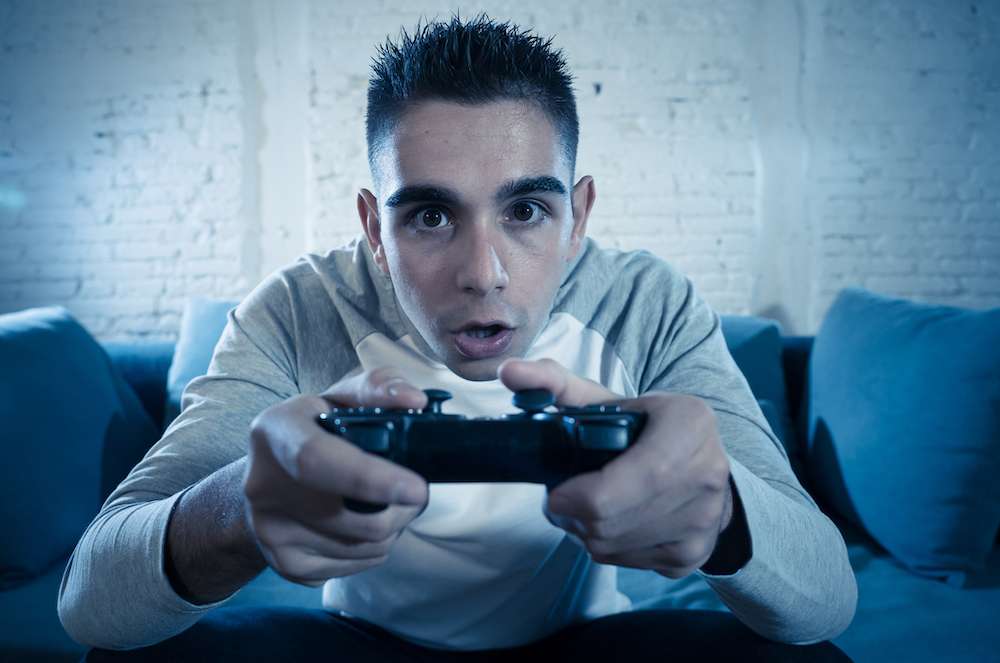
    Now that video game addiction is a recognized mental disorder, a new test aims to help people determine if they suffer from it.

    Last month, the World Health Organization (WHO) officially recognized video game addiction as a mental disorder. Now, academic researchers from the UK, Germany, China and Australia have banded together to create a test to help people determine if they have it. 

    Like many types of addiction, simply engaging in gaming is not in itself a mental disorder. However, gaming addiction does become a mental disorder of a person plays so excessively that they begin to experience detrimental effects on other aspects of their life for a time span of more than a year.

    The researchers have publicly released the test online in the form of a five to 10 minute quiz. In its current form the quiz rates its takers on a scale with a maximum score of 20, with a higher score indicating a greater tendency towards gaming addiction.

    However, there is no definitive score that defines addiction, with the test instead comparing your results with everyone else’s to allow you to see how your gaming habits line up to the greater population. The test also determines your personal motivations for gaming, be it to kill time, compete with others, or to cope with negative emotions.

    Of 550 gamers tested in the UK and China, 36 of them meet the WHO’s criteria for video gaming addiction, defined as “impaired control over gaming” as well as gaming taking “precedence over other interests and daily activities” with a continued pattern of such behavior even after repeated negative consequences.

    At the end of May, the WHO announced that gaming addiction would be officially recognized in their newest revision of the International Statistical Classification of Diseases and Related Health Problems (ICD-11), which is due at the beginning of the year 2022. The move gained a lot of attention from critics, including video gaming media outlets.

    The Entertainment Software Association blasted the move, stating that it “recklessly trivializes real mental health issues like depression and social anxiety disorder.”

    The announcement also drew ire from heath experts.

    “It’s really a junk diagnosis,” said Christopher J. Ferguson, PhD, a mental health provider who co-wrote a journal article saying that the WHO’s diagnosis provided “little clarity… regarding diagnostic criteria and appropriate symptoms.”

    View the original article at thefix.com