Tag: California

  • Death Certificate Project Goes Too Far, Addiction Specialist Says

    Death Certificate Project Goes Too Far, Addiction Specialist Says

    “Scaring providers into not prescribing opioids, I think that is not the ethically appropriate way to go forward,” said one addiction expert.

    Dr. Ako Jacintho, a family practitioner in San Francisco, says that he saw the opioid epidemic coming. His patients were asking for stronger medications and more pills. Instead of filling their requests, Jacintho trained as an addiction specialist, hoping to head off the problem, according to NPR

    However, that hasn’t protected him from an investigation that the California Medical Board is conducting into possible misuse of prescriptions. Jacintho received a letter from the board as part of the Death Certificate Project, which is examining death records in the state and seeking information from doctors who wrote prescriptions that may have contributed to fatal overdoses. 

    In Jacintho’s case, the board wanted to know about a 2012 methadone prescription that he wrote for a patient who later fatally overdosed on methadone and Benadryl. Jacintho reviewed the patient’s records—which the medical board had requested—but stuck by his decision to use methadone to treat the patient’s pain. 

    “If they’re looking for clinicians who are overprescribing, I’m the wrong doctor,” he said.

    Jacintho said that it’s especially unfair to look at prescribing practices from seven years ago in light of our new understanding of opioids. In 2012, when he wrote the prescription, doctors were told to treat pain aggressively, even by the California Medical Board’s own recommendations. 

    “It actually says that no physician will receive disciplinary action for prescribing opioids to patients with intractable pain,” Jacintho said. ”This person had intractable pain.”

    The letter from the board alleged that Jacintho prescribed toxic levels of the medication, but the doctor argues that it’s not that clear cut. “Toxicity is a very subjective word. What’s a toxic level for someone may not be a toxic level for someone else.”

    After the letter, Jacintho further reduced the amount of opioids that he prescribes to patients, something that worries Dr. Phillip Coffin, director of substance use research at the San Francisco Department of Public Health.

    “It’s like leaving a pair of scissors in an abdomen after surgery. If you’re just going to discontinue opioids, basically you’re ripping out the scissors and telling the person: ‘Good luck.’ Let them deal with the intestinal perforation on their own,” he said. “Scaring providers into not prescribing opioids, I think that is not the ethically appropriate way to go forward.”

    Kim Kirchmeyer, executive director of the medical board, said that most of the doctors who have received letters have not faced disciplinary action, although formal complaints have been filed against 25 doctors. She said that despite concern the death certificate project will continue, systematically working through records from previous years. 

    “If we save one life through this project, that is meeting the mission of the board, and that makes this project so worth it,” she said.

    View the original article at thefix.com

  • Confusing Law Led to Marijuana Arrests In California

    Confusing Law Led to Marijuana Arrests In California

    A recent high-profile stop has led to a lawsuit by two former highway patrol officers who now operate a cannabis transportation business. 

    Recreational cannabis may be legal in California, but complex laws in the state mean officers are still regularly pulling people over and seizing marijuana. In fact, in 2018, California Highway Patrol officers seized more cannabis than they had any other year since 2014. 

    According to The Sacramento Bee, a recent high-profile stop has led to a lawsuit by two former highway patrol officers who now operate a cannabis transportation business, Wild Rivers Transport. Rick Barry, 48, and Brian Clemann, 47, were stopped and their car was searched after a canine indicated the scent of marijuana. Although the two didn’t have cannabis in the car, they did have $257,000 in cash, which officers took and turned over to the Department of Homeland Security. 

    Now Barry and Clemann are suing the highway patrol, hoping a judge will rule that local and state law enforcement can’t interfere in the legal transport of marijuana

    “It appears the [California Highway Patrol] will stop at nothing to disrupt the lawful and legal transport of items involved in the medicinal cannabis industry,” they said in a press release. “Although all our invoices, licenses, and required paperwork were in order, the [California Highway Patrol] spent several hours trying to come up with charges for our lawful activity.”

    In California, the Bureau of Cannabis Control announced Jan. 16 that marijuana deliveries and transports can take cannabis anywhere in the state, “provided that such delivery is conducted in compliance with all delivery provisions of this division.”

    The specifics of California’s marijuana laws — which have the potential to influence a massive industry — have taken time to work out. 

    “These approved regulations are the culmination of more than two years of hard work by California’s cannabis licensing authorities,” Bureau Chief Lori Ajax said in a press release. “Public feedback was invaluable in helping us develop clear regulations for cannabis businesses and ensuring public safety.”

    Law enforcement was not pleased with the decision, according to David Swing, president of the California Police Chiefs Association.

    “We are deeply concerned with the adoption of the new cannabis regulations, which allow for the delivery of cannabis anywhere in the state. We are already having trouble enforcing a new and complex industry, and this allowance will only make enforcement even more difficult,” he said.

    A spokesperson for the California Highway Patrol said that agencies need to be able to stop black-market transports. 

    “In order to legally transport cannabis in California for commercial purposes, a person must possess the appropriate (Bureau of Cannabis Control) license and comply with the [Bureau of Cannabis Control] administrative regulations,” the spokesperson said.

    View the original article at thefix.com

  • Mental Health Specialists Strike Over Staffing, Resource Issues At Kaiser Permanente

    Mental Health Specialists Strike Over Staffing, Resource Issues At Kaiser Permanente

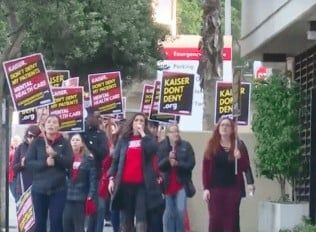
    Approximately 4,000 mental health specialists are expected to strike over Kaiser Permanente’s lack of mental health staff and resources in California.

    Thousands of mental health workers began a five-day strike on December 10, 2018 to protest what they view as shortages in patient resources at Kaiser Permanente facilities across California.

    Approximately 4,000 psychologists, therapists, nurses and addiction specialists are expected to picket the non-profit HMO’s medical centers in Sacramento, Modesto, Stockton and other locations in an attempt to demand increased staffing for mental health patients, whom the union claims often have to wait more than a month for appointments due to a lack of medical professionals.

    Kaiser Permanente condemned the strike as “disheartening,” especially at the holidays, when patients may need more mental health assistance.

    The strike was organized by the National Union of Healthcare Workers (NUHW), which has reportedly been locked in conflict with Kaiser for years. At the heart of the union’s concerns is what they described in a statement as a “long history of forcing patients to endure extensive waits for therapy appointments.”

    The union cited a 2013 fine imposed on Kaiser by the California Department of Managed Health Care (DHMC) for violating the state’s Mental Health Parity Act, which requires insurers to provide equal coverage for physical and mental health conditions and Timely Access to Care standards, which limits wait time for access to care. The statement also claimed that in 2017, the DHMC required Kaiser to accept outside monitoring of its mental health services.

    Though Kaiser patients can now see physicians within state-appointed timeframes, the union stated that many have to wait one month or more for a follow-up appointment. It also claimed that 1/3 of patients in Southern California are sent out of Kaiser’s network for therapy and must find quality, affordable treatment on their own while dealing with what the union said are serious mental health issues. Addressing these concerns would require the HMO to reduce follow-up wait times for appointments, the number of patients sent to non-Kaiser treatment and balance the number of returning patients to intake patients.

    “When you delay treatment appointments, it substantially delays recovery times, and it increases morbidity rates and mortality rates,” said Fred Seavey, the union’s research director, to USA Today. “It has huge implications for people’s lives . . . It has impacts on their incomes, their families and their relationships with loved ones.”

    In response to the union’s claims, Josh Nelson, vice president of communications at Kaiser, called the strike “completely unnecessary” and pointed to a 30% increase in the number of mental health professionals statewide since 2015 as evidence of its compliance with patient needs. “When necessary, we contract with community providers to further ensure its members have access to the care they need,” he added.

    A statement from Michelle Gaskill-Hames, chief nurse executive for Kaiser Permanente in Northern California, claimed that the strike was “particularly disheartening” during the holidays, “when many of our patients with mental health needs may be at their most vulnerable.” But Sonoma County Supervisor Shirlee Zane is galled by the notion that Kaiser would decry a five-day strike as harmful to patients.

    Zane’s husband struggled with anxiety and depression and sought treatment with Kaiser therapists in 2010. He was instead sent to an anxiety group and finally saw a therapist in late December of that year. After two appointments, the therapist told him that he was ineligible for a follow-up for two months. Three days later, Zane’s husband took his own life.

    Zane, who told USA Today that Kaiser asked her to remain neutral in the strike, said, “They’re making the point that somehow or other, this is irresponsible for therapists to leave their patients for five friggin’ days. They could put a patient on a five-week waiting list and not blink an eye, and then they’re worried about five days?

    “My husband’s dead, my kids don’t have a father, my grandkids don’t have a grandfather,” she said. “I’m glad these therapists are striking.”

    View the original article at thefix.com

  • Suspect In Deadly Rehab Shooting Taken Into Custody

    Suspect In Deadly Rehab Shooting Taken Into Custody

    The suspect denied responsibility for the shooting.

    A suspect in Monday’s shooting at a California recovery center is now in custody, according to authorities.

    Authorities believe Davance Lamar Reed was the person who opened fire at Helen Vine Detox Center in San Rafael early Monday morning (Nov. 5).

    Helen Vine, on Smith Ranch Road, is a licensed 26-bed co-ed residential detoxification program for people with alcohol and drug addiction as well as co-occurring psychiatric problems, according to the Sacramento Bee.

    Three people were shot—leaving one dead and two with life-threatening injuries.

    The deceased victim was identified as Nathan Lamont Hill, 52. The two injured are 32-year-old Anthony Dominguez Mansapit, an employee at the facility, and 30-year-old Brittney Kehaulani McCann. As of Monday, they remained in intensive care at Marin General Hospital.

    McCann is said to have a dating relationship with Reed, according to the Marin County Sheriff’s Office. The Marin resident, who friends say has a 7-year-old son with the suspect, was trying to drop Reed off at the recovery center, but instead he began shooting, according to her father and sister.

    The shooting victim is a “genuinely empathetic person” who wanted to help Reed, a friend told KTVU.

    Reed was arrested for an unrelated incident that occurred about an hour after the shooting. Police began pursuing Reed after spotting his Hyundai Elantra, which belonged to the mother of shooting victim Mansapit, weaving on the highway, according to KTVU.

    It was not until later that police learned that Reed was a suspect in the shooting at Helen Vine Detox Center.

    According to the sheriff’s office, Reed “made admissions that tied him to the crime scene” at Helen Vine.

    The suspect denied responsibility for the shooting. “I didn’t shoot nobody. I shouldn’t be here,” he told KTVU from jail. He said he is withdrawing from a dependence on Xanax. The anti-anxiety drug was discovered in the vehicle he was in during the police chase that ended in his arrest.

    Reed is being held at Sonoma County Jail. His next court appearance is scheduled for Nov. 15.

    Buckelew Programs, the non-profit organization that oversees the program at Helen Vine and other facilities in Marin, Napa and Sonoma counties, expressed its condolences in a social media post: “Our hearts are with the staff, clients and families affected at Helen Vine Recovery Center.”

    View the original article at thefix.com

  • Clearing A Pot Conviction Just Got Easier In California

    Clearing A Pot Conviction Just Got Easier In California

    Up to half a million Californians are estimated to be affected by the law.

    When California legalized marijuana in 2016, a provision in the new law made it possible for people with marijuana convictions to have their records cleared or changed to reflect reduced charges.

    However, the process to do so was long and convoluted, meaning many people weren’t able to take advantage of it. Now, a newly-passed law will require the legislature to automatically review cannabis convictions, streamlining the process. 

    “It was so inaccessible for a variety of reasons,” Rodney Holcombe of the Drug Policy Alliance told USA Today. “This (new law) will empower people. My heart goes out to people who have had to navigate this process on their own. It’s confusing, expensive and tiring.”   

    Assembly Bill 1793 was passed by a majority in the California state legislature and signed into law by Gov. Jerry Brown on Sept. 30.

    The bill requires the California Department of Justice “to review the records in the state summary criminal history information database and to identify past convictions that are potentially eligible for recall or dismissal of sentence, dismissal and sealing, or redesignation pursuant to AUMA (the Adult Use Marijuana Act)” before July 1, 2019. After that, prosecutors will have a year to either clear the conviction or reduce the charge to a misdemeanor.

    “AB 1793 will bring people closer to realizing their existing rights by creating a simpler pathway for Californians to turn the page and make a fresh start,” Assemblyman Rob Bonta told the Los Angeles Times. “Long after paying their debt to society, people shouldn’t continue to face the collateral consequences, like being denied a job or housing, because they have an outdated conviction on their records.”

    Up to half a million Californians are estimated to be affected by the new policy. Misdemeanors including growing and transporting up to an ounce of marijuana can be cleared, while felony convictions including possession with intent to sell can be reduced to misdemeanors. 

    “It’s safe to say the number of persons eligible to have their offenses reduced from felonies to misdemeanors is in the hundreds of thousands,” said Dale Gieringer, director of California NORML. “Most people should be relieved to no longer have a felony on their record.”

    Despite the huge number of people who are eligible to have their sentences reduced, only 5,000 have applied in the past two years. This highlights the need for the new, automated process. 

    “This is transformative,” Holcombe said. “This creates an opportunity for people to reclaim their lives.”

    View the original article at thefix.com

  • New Rehab Reform Laws Aim To Clean Up California's Troubled System

    New Rehab Reform Laws Aim To Clean Up California's Troubled System

    One of the new laws puts a ban on patient brokering. 

    California Gov. Jerry Brown last week green-lit a series of measures aimed at reforming the state’s troubled and under-regulated rehab system.

    One of the new measures, which come on the heels of media scrutiny of the state’s recovery industry, would require rehabs to refer to evidence-based models or the American Society of Addiction Medicine treatment criteria for a minimum standard of care. 

    “It’s an unbelievably unregulated field, and we’re going to try to put our arms around that by requiring some standards and the best scientific evidence before these facilities are licensed,” state Sen. Jerry Hill (D-San Mateo) told the Orange County Register. “We may be able to solve a small part of the problem, and save some lives.”

    The legislation gives the California State Department of Health Care Services five years to figure out the details.

    “This bill would require the department to adopt specified standards for these facilities as minimum requirements for licensure,” the law reads. “The bill would authorize the department to implement, interpret, or make specific this requirement by means of plan or provider bulletins or similar instructions until regulations are adopted and would require the department to adopt the regulations by January 1, 2023.”

    The governor also green-lit other rehab-related legislation, including one bill that puts a ban on patient brokering and another that makes rehab licenses provisional for a year  and revocable.

    Although the Hazelden Betty Ford Foundation, some cities and the Orange County Board of Supervisors voiced support for the new measures, an emergency room physicians’ associations worried whether giving in to NIMBY demands for regulation would work to increase stigma around addiction, according to Cal Matters.

    And, despite what advocates view as legislative successes, some proposals didn’t pass or didn’t make it into the final legislation, including language that would have raised sober living home standards and created criminal consequences for patient brokering.

    “Now we have legislative intent and precedent to address this issue in a larger context,” activist Ryan Hampton told the Orange County paper. “We’re going to continue to build on this success in the next session and in the future. We will get to the point where we have full protections in place. At least we’re not going backwards.”

    Though the various pieces of legislation had different legislative sponsors, at least one credited the newspaper group—and comedian John Oliver—with lighting the spark that ignited change.

    “Thanks to you and the paper and John Oliver for opening my eyes to the issue and the abuses,” state Sen. Hill told the publication. “Southern California has such a prevalence of these facilities. It’s not benefiting anyone, and harming so many people.”

    View the original article at thefix.com

  • Doctors Will Be Required To Check Prescription Database In California

    Doctors Will Be Required To Check Prescription Database In California

    The state’s monitoring system has been historically underused by healthcare providers. 

    Beginning on October 2, doctors in California will be required to check the state’s prescription monitoring database before writing a new prescription, in an attempt to provide better care and correct years of underutilization of the system.

    “California created the first system to track prescriptions of the strongest painkillers, but our state fell behind as the opioid crisis grew,” state Sen. Ricardo Lara, who drafted the legislation in 2015, told the Los Angeles Times. “I wrote SB 482 to require that doctors and others consult the CURES system before prescribing these powerful and addictive drugs. This tool will help limit doctor shopping, break the cycle of addiction and prevent prescriptions from ever again fueling an epidemic that claims thousands of lives.”

    California’s monitoring system, called The Controlled Substance Utilization Review and Evaluation System, or CURES, provides a list of patients’ prescriptions, the doctors who prescribed the medication and the pharmacies that filled them. The system was overhauled in 2016 to make it easier for doctors to use, and the new legislation will now require them to do so.

    Under the law, healthcare providers will need to check CURES every time they write a new prescription, or every four months for patients who have an ongoing prescription. There are exceptions, including for emergency room care and hospice patients.

    The legislation is meant to cut back on so-called doctor shopping, as well as ensure that doctors and patients are aware of any risky combinations of medicines that a patient is taking.

    “I think people make the mistake of thinking it’s just for doctor shopping,” said Dr. Roneet Lev, chief of emergency medicine at Scripps Mercy Hospital in San Diego. “Using CURES just makes you a smarter, better doctor.”

    Although some doctors balk at the amount of time that it will take to consult CURES, other believe that using the system will soon become second nature.

    “I think it’s going to be one of those things that a year from now is going to be second [nature] to them,” said Kimberly Kirchmeyer, executive director of the Medical Board of California. “It’s just the first round of it gets hard for them. Any additional administrative task for physicians in the world they live in is difficult for them, and we completely understand that.”

    However, if the requirement helps to protect patients, doctors say that they are willing to spend time using the CURES system.

    “I think every doctor in California will gladly do it as long as there’s a pot of gold at the end of the rainbow,” said Dr. Jason Toranto, chief of plastic surgery at Senta Clinic in San Diego. “As long as the patient is going to do better, that’s what it’s all about.”

    View the original article at thefix.com

  • Nearly 20% Of California Pot Products Fail Safety Testing

    Nearly 20% Of California Pot Products Fail Safety Testing

    Products like edibles and oils were much more likely to fail testing than marijuana buds.

    Nearly 20% of legal marijuana products in California are failing mandated safety testing, a figure that the industry says has more to do with an inefficient and inaccurate testing system than deficient products. 

    As of July 1, marijuana products sold on the legal market in California were subject to testing for pesticides and mold, and to ensure that the potency advertised matches the actual potency of the product.

    Since July, nearly 11,000 samples were inspected and nearly 2,000 rejected, according to a report by ABC News

    While some growers and distributors are unhappy with the state testing, the testing bureau says that the new screening process has been implemented successfully overall. 

    “Mandatory statewide testing is a new thing and it’s going to take some time for everything to run smoothly, but on the whole we’re pleased with how things are progressing,” said Bureau of Cannabis Control spokesman Alex Traverso.

    The California Growers Association, an industry group, disagrees. “Testing is currently costly, slow, and inconsistent,” the growers association said in a recent letter to the state. 

    Sixty-five percent of the samples that failed testing were rejected because of mislabeling, e.g. the potency advertised on the product label did not match the potency of the product. State law requires that the potency (which measures THC content), falls within a 10% margin of error. If a batch of product is even slightly outside that margin, it will be rejected and must be relabeled. 

    The California Cannabis Manufacturers Association, another industry group, says that this can happen when labs do not correctly test a sample, but right now there is no way for manufacturers to appeal a lab’s finding. The association is working to change that. 

    “Even if the lab admits it made an error, there is no way to change those results,” said Bryce Berryessa, an association board member who is CEO of TreeHouse dispensary in Santa Cruz County and president of La Vida Verde, which produces infused cookies. “Labs are not perfect. Mistakes get made.”

    About 90% of buds that were tested in California passed, while products like edibles and oils were much more likely to fail testing, suggesting that potency is more often inaccurate with those products. 

    The next most common reason for failed testing was pesticide levels that were too high (400 batches were flagged for this reason). And only about 100 samples failed testing because of contaminants or mold. However, this may be because state law only mentions a few specific types of mold in regards to cannabis.

    Because of this, Santa Ana-based testing company Cannalysis is urging the state to use a test that is already in place for food and pharmaceuticals, which could catch more potentially contaminated cannabis. 

    The regulators need to “create a bigger net to catch things,” said Swetha Kaul, the company’s chief scientific officer who sits on the board of the California Cannabis Industry Association. 

    View the original article at thefix.com

  • "Death Certificate Project" Helps Identify Doctors Who Overprescribe

    "Death Certificate Project" Helps Identify Doctors Who Overprescribe

    The crackdown has spooked physicians, including some who say they’re now less inclined to treat complex patients. 

    Hundreds of California physicians are under investigation for their prescribing habits, as the state medical board cracks down on overprescribing.

    Under the “Death Certificate Project,” the Medical Board of California is trying to take a proactive approach to identifying overprescribing behavior.

    The board, a state agency that licenses/disciplines physicians, has reviewed death certificates that list a prescription opioid (or more) as the cause of death, then identify the provider(s) who prescribed the controlled substance to the patient “within three years of death, regardless of whether the particular drug caused the death or whether that doctor prescribed the lethal dose,” MedPage Today reports.

    Prescribers were matched to patients through California’s prescription drug database, CURES (California Controlled Substance Utilization Review and Evaluation System).

    “Our goal is consumer protection… (to) identify physicians who may be inappropriately prescribing to patients and to make sure that those individuals are educated (about opioid guidelines), and where there are violations of the Medical Practices Act, the board takes (disciplinary) action,” said Kimberly Kirchmeyer, the medical board’s executive director.

    So far, 462 physicians have been identified as “warranting an investigation of patients’ files,” according to MedPage. Of these cases, 223 have been closed for either insufficient evidence, no violation, their license was already revoked/surrendered, or the physician has died.

    Nine physicians have been targeted in opioid-related prescribing accusations filed by the state Attorney General; four of them were already under scrutiny on “unrelated charges.”

    The state’s crackdown has spooked physicians, including some who say they’re now less inclined to treat complex patients.

    “When you hear a bunch of doctors all at the same time all getting the same letter, and you realize they’re going through the same thing, you see why some are saying [to patients], ‘Sorry, if you have a lot of medical conditions, we’re not going to take care of you,’” said Dr. Brian J. Lenzkes, a San Diego internist and one of the targets of the Death Certificate Project.

    Last December, Lenzkes received a letter from the state medical board notifying him that there had been a “complaint filed against you” about a patient who had died of a prescription drug overdose in 2013.

    According to Lenzkes, the patient’s severe condition required him to take a regimen of prescription drugs including painkillers.

    After receiving the letter, however, Lenzkes says he’s more wary of taking on pain management, saying that he’ll refer patients to pain specialists instead. “I’m not taking any more. That’s just how I feel,” he said.

    View the original article at thefix.com

  • Inside California's Massive Addiction Treatment Overhaul

    Inside California's Massive Addiction Treatment Overhaul

    Medi-Cal recipients will now have expanded access to addiction treatment.

    The California Health Care Foundation released a report on August 3 this year outlining the state’s new approach for residents using Medi-Cal and seeking substance abuse treatment options.

    California is the first state in the United States to use the new health care system structure, in a five-year pilot program authorized by the federal Centers for Medicare and Medicaid Services.

    Medi-Cal is California’s low-income health insurance, and previously covered very few addiction treatment services. In addition, patients had no database to explore what treatment plan would be best for their needs.

    A new system, called Drug Medi-Cal Organized Delivery, ensures that counties who participate can offer many more services to people struggling with addiction, as well as coordinate, manage and evaluate quality of care in those services.

    A huge leap forward is the increase in payment to treatment providers, allowing more access to various types of treatment. In California there are over 10 million people using Medi-Cal health insurance.

    “It’s been an enormous change,” William Harris, assistant regional manager of Riverside County’s substance abuse treatment program, told California Health Report. “We’re operating under an entirely new paradigm and are able to expand services and be more inclusive and better meet the needs of the population of our county.”

    Nineteen California counties have adopted the program with 21 more scheduled to do so in upcoming months. These counties represent 97% of the state’s Medi-Cal population.

    The California Health Care Foundation study looked at the four 2017 adopters of the new Medi-Cal system, including Riverside, Los Angeles, Marin and Santa Clara counties. Co-author Molly Brassil told California Health Report that the Medi-Cal program report was a way to access the strengths and weaknesses of the system.

    “This report sort of tells the story to other counties that, yes, (the implementation) is not without challenges and it isn’t easy, but it’s doable,” she affirmed. “I was taken aback by how positive all the counties were given the tremendous lift it is for all of them.”

    The newly offered services have induced a flood of user demand. In Riverside there was a large volume of calls after launching a hotline to screen members for substance use disorders and refer them for possible treatment. Since the inception of the program in 2017, Riverside has had to triple its staff to meet growing demand.

    The new system takes current research and implements it into their model, by treating substance use disorder like any other medical illness.

    Brassil noted to California Health Report that the goal is for substance abuse screening and treatment to become a mainstream part of all health care.

    The Medi-Cal program is working, and Brassil would like to see it put in place for good. “We’ve heard from folks overall that this is the right thing to do. It’s hard, but that doesn’t mean it’s not worth doing.”

    View the original article at thefix.com