Tag: car crashes

  • Opioid Overdose Deaths Surpass Vehicle Crash Deaths For First Time

    Opioid Overdose Deaths Surpass Vehicle Crash Deaths For First Time

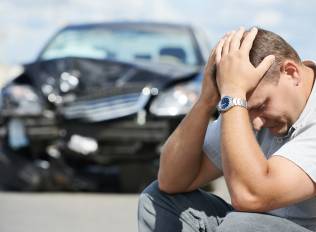
    According to a new report from the National Safety Council, Americans are more likely to die from an opioid overdoses than a car crash.

    An opioid overdose is now a more likely cause of death than even vehicle crashes, according to a recent report

    The report on preventable deaths from the National Safety Council found that Americans have a 1 in 96 chance of death due to an opioid overdose, based on 2017 accidental death data. 

    “Drug poisoning is now the No. 1 cause of unintentional death in the United States,” the report reads. “Every day, more than 100 people die from opioid drugs –  37,814 people every year – and many of these overdoses are from prescription opioid medicine.”

    In comparison, NPR states, the chance of death in a motor vehicle crash is 1 in 103. 

    “We’ve made significant strides in overall longevity in the United States, but we are dying from things typically called accidents at rates we haven’t seen in half a century,” Ken Kolosh, manager of statistics at the National Safety Council, said, according to PR Newswire. “We cannot be complacent about 466 lives lost every day. This new analysis reinforces that we must consistently prioritize safety at work, at home and on the road to prevent these dire outcomes.”

    According to the Centers for Disease Control and Prevention, the drug at the forefront of overdose deaths is now fentanyl, which the council addressed in a statement. 

    “The nation’s opioid crisis is fueling the Council’s grim probabilities, and that crisis is worsening with an influx of illicit fentanyl,” the statement read

    Causes of death such as motor vehicle crashes and overdoses are different from heart disease and cancer deaths in that they are considered “a preventable, unintentional injury” — a statistic that has increased in the last 15 years, according to NPR. Falls also top the list of preventable causes of death, at 1 in 114, compared to 1 in 119 a year ago. 

    “It is impacting our workforce, it is impacting our fathers and mothers who are still raising their children,” Kolosh said. 

    He added that such deaths often impact people in the “core of their life.”

    “As human beings, we’re terrible at assessing our own risk,” Kolosh said. “We typically focus on the unusual or scary events … and assume that those are the riskiest.”

    Though everyone will die at some point, Kolosh says, action can still be taken to prevent unnecessary deaths. 

    “Your odds of dying are 1 in 1,” Kolosh added. “But that doesn’t mean we can’t do something. If, as a society, we put the appropriate rules and regulations in place we can prevent all accidental deaths in the future.”
    View the original article at thefix.com

  • Legal Marijuana Linked To Rise In Car Crashes

    Legal Marijuana Linked To Rise In Car Crashes

    Legalizing marijuana isn’t completely harmless, according to a pair of new studies.

    Car crashes went up by about 6% in states that have legalized recreational marijuana, a couple of new studies found. Colorado, Nevada, Oregon, and Washington have seen an increase in insurance claims for collisions, according to separate studies by the Insurance Institute for Highway Safety and the Highway Loss Data Institute.

    The institutes presented their research at the Combating Alcohol- and Drug-Impaired Driving Summit on Thursday.

    The Highway Loss Data Institute focused on claims between 2012 and October 2017, comparing the results to four illegal states, including Idaho, Montana, Utah, and Wyoming. The Insurance Institute for Highway Safety observed a 5.2% increase in police-reported crashes after legalization in Colorado, Oregon, and Washington.

    “States exploring legalizing marijuana should consider this effect on highway safety,” said David Harkey, president of the Insurance Institute for Highway Safety and Highway Loss Data Institute.

    The findings are important as the tide is increasingly turning to favor the legalization of marijuana. Nine states and the District of Columbia have legalized marijuana, and Michigan and North Dakota are holding a vote on the issue next month. Canada has legalized it as well.

    FIguring out who is or isn’t impaired by marijuana while driving is also a challenge, the institutes acknowledge. Marijuana’s active ingredient, THC, can remain detectable in a person for as long as 30 days—long after the high has worn off. Currently, there isn’t a reliable method to determine whether someone is currently high. But according to the studies, it’s clear that marijuana has some effect on driving ability.

    “Despite the difficulty of isolating the specific effects of marijuana impairment on crash risk, the evidence is growing that legalizing its use increases crashes,” Harkey said.

    The Center for Medical Cannabis Research at the University of California San Diego is undertaking studies to better understand the effects of marijuana on driving as well as methods to more reliably detect if a driver is currently under the influence.

    Methods now used by law enforcement are notoriously unreliable, and as a result field sobriety tests for marijuana cannot be used as evidence in some cases.

    View the original article at thefix.com