Tag: CBD products

  • Can CBD Help With Meth, Cocaine Addiction?

    Can CBD Help With Meth, Cocaine Addiction?

    Researchers examined whether CBD has the potential to treat meth and cocaine addiction.

    CBD could help treat methamphetamine and cocaine addictions, for which there are currently no medication-assisted treatment options, according to a study released earlier this month. 

    The study, published in the journal Molecules, found that CBD helped reduce cocaine and methamphetamine use in rodents, and lowered their risk of relapse after a period of sobriety. The study authors say that the findings indicate that CBD should be explored as a treatment option for humans. 

    “While preliminary, there is some preclinical evidence showing that treatment with CBD might promote resilience to developing cocaine and meth use disorders and might prevent relapse into drug use after a period of abstinence,” the study authors wrote, according to Marijuana Moment.  

    Other Studies

    Studies have shown that mice that are given higher doses of CBD are less likely to continue seeking out cocaine or methamphetamine. After 14 days without meth or cocaine, mice that were given CBD over an extended time period were less likely to relapse. 

    “A limited number of preclinical studies indicate that CBD could have therapeutic properties on cocaine and meth addiction and some preliminary data suggest that CBD may be beneficial in cocaine-crack addiction in humans,” the study authors wrote. “CBD has shown promising results in reducing the inflammation and seizures induced by cocaine and in several preclinical models of addiction to amphetamine, cocaine and meth. Importantly, a brief treatment of CBD induces a long-lasting prevention of reinstatement of cocaine and meth-seeking behaviors.”

    While medication-assisted treatment for opioid use disorder has become the standard of care, there is currently no option for treating cocaine or meth addiction with medication. 

    “We’re realizing that we don’t have everything we might wish we had to address these different kinds of drugs,” psychiatrist Margaret Jarvis, a distinguished fellow of the American Society of Addiction Medicine, said earlier this year

    This isn’t the first time a study has indicated that CBD has potential for treating addiction. Last year a study also found that rats who received CBD were less likely to administer cocaine or alcohol, even when they were cued to take the substances. 

    Researcher Yasmin Hurd, director of the Addiction Institute at Mount Sinai School of Medicine in New York, has studied the potential of CBD for treating addiction. 

    “When we started investigating CBD, we hypothesized that perhaps it could decrease drug-taking behavior, but instead we saw that it actually decreased craving,” she said last year. “It was very specific about what it decreased, and that was surprising. Other researchers have replicated what we found, so we are confident in our results.”

    View the original article at thefix.com

  • FDA Issues Consumer Warning On CBD Products

    FDA Issues Consumer Warning On CBD Products

    The FDA is working to research the safety of CBD and other cannabis products to better understand how to regulate them.

    The Food and Drug Administration has issued a consumer warning urging people to proceed with caution when using CBD products for themselves or their animals. 

    “The U.S. Food and Drug Administration (FDA) recognizes the significant public interest in cannabis and cannabis-derived compounds, particularly CBD,” the warning reads. “However, there are many unanswered questions about the science, safety, and quality of products containing CBD.”

    The FDA has only approved one CBD product, the anti-seizure medication Epidiolex. Despite that, many other products make health claims as they relate to people and animals, but the FDA cautions consumers that these claims are unsubstantiated. 

    More Research Is Needed

    “The FDA has not approved any other CBD products, and there is very limited available information about CBD, including about its effects on the body,” the warning said. 

    The FDA is working to research the safety of CBD and other cannabis products to better understand how to regulate them. This includes looking at the way that CBD affects the liver. Research has indicated that CBD can be linked with liver damage, which is cause for concern as people use the product liberally. 

    More importantly, the FDA points out that people should not use CBD products as a replacement for medical care. 

    “Misleading and false claims associated with CBD products may lead consumers to put off getting important medical care, such as proper diagnosis, treatment, and supportive care,” the warning read. “For that reason, it’s important to talk to your doctor about the best way to treat diseases or conditions with existing, approved treatment options.”

    Protecting Public Health

    The agency has issued warnings to companies that market their CBD products as ways to relieve the effects of certain diseases. 

    “The FDA’s top priority is to protect the public health, and that includes making sure consumers know about products that put their health and safety at greatest risk, such as those claiming to prevent, diagnose, treat, or cure serious diseases,” the organization wrote. 

    In addition to better understanding how CBD affects people, the FDA is researching how CBD affects animals, and whether it is safe for animal use. Right now there are many CBD products marketing for animals, but the claims for their effects are unproven, the organization said. 

    The organization is collecting public comments online through July 16. The public input will help inform policy going forward. 

    “The FDA continues to believe the drug approval process represents the best way to help ensure that safe and effective new medicines, including any drugs derived from cannabis, are available to patients in need of appropriate medical therapy,” the organization wrote. “The Agency is committed to supporting the development of new drugs, including cannabis and cannabis-derived drugs, through the investigational new drug and drug approval process.”

    View the original article at thefix.com

  • Jonathan Rhys Meyers, Coca Cola Bottling Heir's Pot Business Trip Ends in Arrests

    Jonathan Rhys Meyers, Coca Cola Bottling Heir's Pot Business Trip Ends in Arrests

    The actor’s exact role in the chain of events remains largely unexplained.

    Stop us if you’ve heard this one: the Irish actor Jonathan Rhys Meyers, Coca-Cola bottling company heir Alki David, and Dish Network co-founder Chase Ergen land in the Caribbean—on a plane carrying more than $1.3 million in cannabis and CBD products.

    But their alleged mission—to “develop legal cannabis businesses” on the island nation of St. Kitts and Nevis, which recently legalized marijuana for private use—did not go as planned. Talks with the prime minister broke down, and Ergen and David were arrested at the airport, Vanity Fair reported.

    Meyers’ role in the trip remains unclear. According to Alki David, the actor’s wife and mother-in-law, who were also reportedly aboard the plane, were cavity searched during the party’s detainment.

    David, whose family business, Leventis-David Group, owns the Coca-Cola Hellenic Bottling Company, which is the third-largest international bottler in the world.

    He also owns Swissx, which manufactures a wide array of CBD products ranging from vape pens to sleep and beauty products and sexual enhancement supplements. With Ergen—the co-founder of Dish Network and EchoStar, among other companies—David formed a consortium that sought to develop a cannabis industry in eastern Caribbean nations, including St. Kitts-Nevis, Dominica and Antigua.

    On May 7, a private jet carrying David, Ergen, Meyers and members of his family, along with a reported 5,000 cannabis plants, seeds and CBD oil products flew to St. Kitts-Nevis.

    According to a press release by David, the trip was intended to “work with the government, the courts, the banks, the business sector and the farmers to develop a fair system that creates thousands of jobs on the island and uses Swissx’s international distribution network to make St. Kitts-Nevis cannabis products among the most sought after in the world.”

    A post on Facebook by the St. Kitts-Nevis police—which has been taken down—noted that when the group attempted to leave after the alleged failure of the talks with Prime Minister Timothy Harris, David and Ergen were arrested.

    David had been charged with “possession with intent to supply, possession of controlled drugs and importation of a controlled drug into the federation.”

    As The Cut noted, marijuana is decriminalized for adult use on the island, but bringing it into the country requires special permission. Ergen was also reportedly arrested for drug possession—specifically, ketamine—which he claimed was used to treat bipolar disorder. 

    David was eventually freed after posting $300,000 after a court appearance and left the country soon after. In Swissx’s press release—marked by the hashtag #FreeAlkiDavid—David said that he and Ergen plan to file lawsuits against Prime Minister Harris and the St. Kitts-Nevis government. 

    View the original article at thefix.com

  • CVS Stores Will Offer CBD Products In 800 Locations

    CVS Stores Will Offer CBD Products In 800 Locations

    A line of topical cannabis-derived products will be available in 800 CVS locations across eight states. 

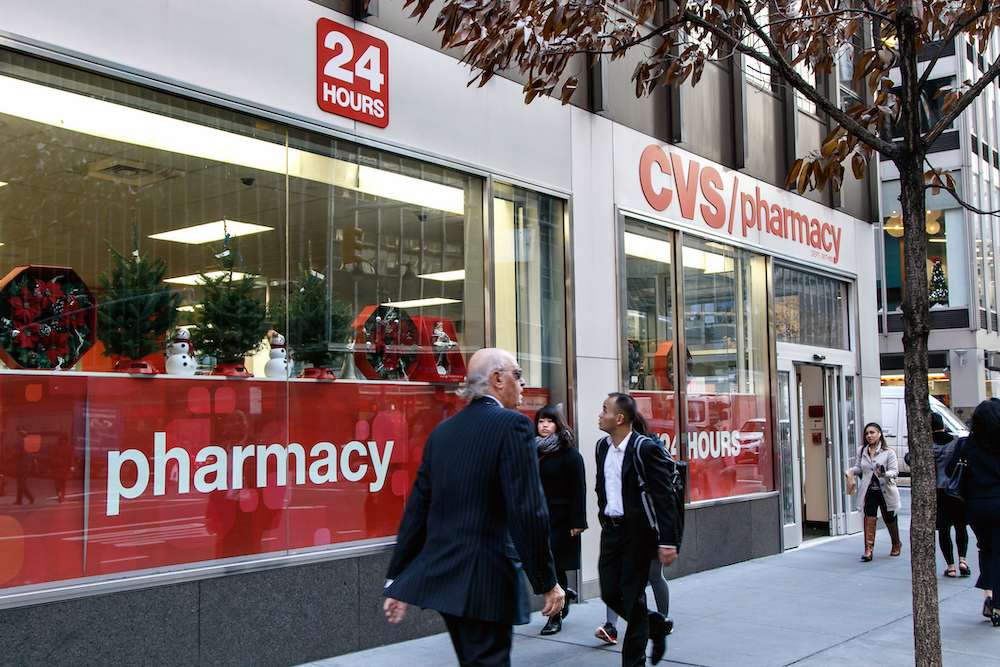
    CVS announced that it will now offer CBD topical products to customers in eight states across the United States.

    The pharmacy chain, which is the largest in the country with more than 9,900 retail locations, has entered into a deal with cannabis retailer Curaleaf Holdings to carry its line of cannabis-derived products in 800 stores located across eight states.

    Curaleaf CEO Joseph Lusardi told investors that he hopes to see an increase in the number of CVS locations carrying his products soon.

    CBD, or cannabidiol, is a naturally occurring cannabis compound that does not have a euphoric effect on the user.

    While the Food and Drug Administration (FDA) regards CBD as a drug, and has banned its use in foods and beverages that are pending regulation, proponents consider it therapeutic for a variety of health conditions. CBD is included in numerous and widely available products, including the creams, sprays, roll-ons, lotions and salves sold by Curaleaf that will be available to consumers at CVS.

    As MarketWatch noted, CVS stores in Alabama, California, Colorado, Illinois, Indiana, Kentucky, Maryland and Tennessee will sell Curaleaf products. Recreational marijuana is legal in California and Colorado, and medical marijuana is legal in Illinois and Maryland, but both are prohibited in the other four states on the list. None of the locations will sell food products or health supplements containing CBD.

    Lusardi also said that Curaleaf—which operates 40 cannabis dispensaries in 12 states—is in the process of striking similar deals with other large consumer chains. 

    “We’ve been having dialogue with national retailers for many months now,” he said. “We’ve got a number of potentially exciting partnerships in the pipeline.”

    MarketWatch also noted that the announcement of the distribution deal sent stock prices up for both companies on March 21st. It was good news for Curaleaf, which had reported net losses of $16.5 million for the fourth quarter just one day prior, but the news of the deal sent shares up 20% to more than $8 per share the following day.

    Revenue for the quarter was also up by a significant amount—$32 million, up from $6.3 million in 2018. In all, Curaleaf stock has risen more than 50% in the last three months, while shares in CVS rose more than 2% in Thursday’s trading.

    View the original article at thefix.com

  • NYC Cracks Down On CBD Edibles

    NYC Cracks Down On CBD Edibles

    Some NYC restaurants that sell CBD-infused foods are having their products “embargoed” by the state’s Department of Health.

    Despite the fact that New York State is moving forward with plans to legalize cannabis, officials in New York City are cracking down on restaurants selling food products laced with cannabidiol, commonly known as CBD. 

    C.J. Holm, the owner of Fat Cat Kitchen in the East Village, recently told The New York Times that health department officials showed up at the restaurant asking questions about products that contained CBD. Fat Cat Kitchen sold brownies, cookies and honey infused with CBD, a non-psychoactive compound in cannabis which many people believe has health benefits.

    The inspectors put the CBD-infused food, worth about $1,000, in a bag labeled “Embargoed,” according to Eater. They left the product with Holm, but couldn’t explain to her why she was not able to sell it. 

    “They couldn’t even intelligently explain to me exactly what the problem was when I spoke to them on the phone,” Holm said. 

    Similar events took place at at least five restaurants around the city. 

    CBD falls into murky legal territory. Although it is legal to buy and sell, it isn’t an approved food additive, the Department of Health said. 

    “Restaurants in New York City are not permitted to add anything to food or drink that is not approved as safe to eat,” a New York City Department of Health spokesperson told The Atlantic. “Until cannabidiol… is deemed safe as a food additive, the department is ordering restaurants not to offer products containing CBD.”

    Holm said that inspectors from the Department of Health have been to Fat Cat Kitchen twice before and never paid much attention to the CBD-infused product, which Holm began selling two months ago. She said that a ban on selling CBD edibles could have a big impact on her business’s bottom line. 

    “My CBD stuff is absolutely the No. 1-selling revenue source in the store.”

    Holm was frustrated by the lack of transparency about the policy. 

    “It just seemed so random and arbitrary to me. And it was really difficult getting answers as to what the exact issue is,” she said. “Now, just out of the blue, they’re just going to randomly embargo restaurants’ products? I just don’t feel like it was done properly.”

    The controversy over CBD edibles is gaining attention in other cities around the country, with Departments of Health arguing that food and drinks containing CBD need to be labeled and regulated.

    “The packaging and labeling requirements aren’t there yet in states that don’t have a cannabis regime,” said California lawyer Griffen Thorne. “If you go buy a CBD beverage and it’s not specially packaged—it just looks like another coffee or whatever—someone might take a sip who doesn’t intend to.”

    View the original article at thefix.com

  • Walmart Canada Considers Selling Marijuana Products

    Walmart Canada Considers Selling Marijuana Products

    The mega chain is reportedly investigating the viability of carrying CBD products in their stores. 

    As a growing list of major companies either embrace or consider the option to include cannabidiol (CBD)-based products in their retail offerings, a representative from Walmart Inc. in Canada told the Vancouver Sun that the mega-chain has conducted research into the viability of carrying CBD products on store shelves.

    Diane Medeiros, a spokesperson for Walmart Canada, said that while the company does not have plans to carry CBD products at this time, it “has done some preliminary fact-finding on this issue.”

    The timing of their investigation coincides with the legalization of marijuana at the federal level throughout Canada on October 17, 2018.

    In an email exchange with the Sun, Medeiros said that the review of CBD-based products—goods that contain the active but non-psychoactive compound cannabidiol—is standard operating procedure, something they carry out for “any new industry.”

    As High Times noted, the investigation is also good business practice, as Canadians are expected to drop $1 billion on marijuana in the first three months after legalization. Response to the company’s announcement also proved positive for Walmart, whose shares rose nearly 3% in afternoon trading that day.

    And while Walmart is apparently not ready to offer CBD-based product to its customers, other brands, both global and regional, have already announced their intent to cater to the new market.

    In Canada, the drugstore chain Shoppers Drug Mart was approved as a licensed medical marijuana producer, which will allow them to dispense cannabis to their customers, while the Montreal-based Molson Coors Canada has entered into a joint venture with The Hydropothecary Corporation to produce non-alcoholic, cannabis-infused beverages. 

    The Coca-Cola Company, too, has reported making inroads towards CBD-based products with a beverage produced in conjunction with Aurora Cannabis, while Estee Lauder has added Hello, Calm—a face mask infused with sativa—to its line of cosmetic products.

    Several U.S. breweries like Lagunitas and Coalition Brewing have already begun selling CBD-infused beer products, and the vegan chain By Chloe offers CBD-based products in its nationwide locations.

    And, as the Vancouver Sun noted, companies that have refused to expand its offerings to CBD product may experience a setback: PepsiCo’s declaration to not sell CBD-infused goods resulted in a decline in its market share.

    Cowen & Co. analyst Vivien Azer underscored the retail industry’s growing focus on CBD-based products in a research note that stated, “Health and wellness consumers are beginning to find value and use cases from CBD-based oil extracts, tinctures, topicals and capsules to improve everyday life. We expect to see CBD used as a functional ingredient in non-alcoholic beverages.”

    View the original article at thefix.com

  • Feds Reschedule CBD Drugs But There's A Catch

    Feds Reschedule CBD Drugs But There's A Catch

    The rescheduling does not apply to all CBD drugs.

    Following the approval of CBD-based epilepsy drug Epidolex by the Food and Drug Administration (FDA), the US federal government has decided that, going forward, it will reschedule all CBD medications that the FDA approves.

    As of Friday, the rescheduling order has been published to the official register. While CBD medications becoming legalized is good news for advocates, the excitement was somewhat dampened by just how narrow the order is.

    “Specifically, this order places FDA-approved drugs that contain CBD derived from cannabis and no more than 0.1% tetrahydrocannabinols in schedule V,” reads the order.

    While this may not read like a big deal, the problem is that the FDA approval process is costly and lengthy, greatly limiting who can actually bring CBD products to market. So far, only Epidolex, made by GW Pharmaceuticals in the United Kingdom, has approval.

    “What this does not do is legalize or change the status of CBD oil products,” said a DEA spokesperson. “As of right now, any other CBD product other than Epidiolex remains a Schedule I controlled substance, so it’s still illegal under federal law.”

    The DEA takes this tough stance on CBD despite the fact that it carries many medicinal benefits while not providing any of the trademark “high” that marijuana does. Epidolex was deemed by the FDA to be safe enough to be used as treatment for debilitating epilepsy for children as young as or younger than one year old.

    Advocates argue that such strict criteria for CBD products means that any medicine, no matter how popular or effective, cannot qualify for FDA approval if it has any trace of THC.

    “We anticipated that Epidiolex will be the first of many potential FDA-approved medicines based on the cannabis plant. These are welcome alternatives,” said Paul Armentano, the Deputy Director of NORML. “But these products should not be regulated in such a manner that patients no longer have ready access to herbal cannabis — a product that humans have used safely and effectively as a medicine for thousands of years and is approved today by statute in 31 states.”

    View the original article at thefix.com