Tag: china fentanyl distribution

  • Chinese Official Refutes Trump's Fentanyl Claims

    Chinese Official Refutes Trump's Fentanyl Claims

    The official alleges that since China added fentanyl-related drugs to their controlled substances list last May that no new smuggling cases have come to light.

    Amidst a recent war of words between China and the United States over fentanyl smuggling, a narcotics official in China said at a news conference that while the two countries have a “good cooperative relationship,” they have “extremely limited” cooperation on investigations into and prosecution of fentanyl cases.

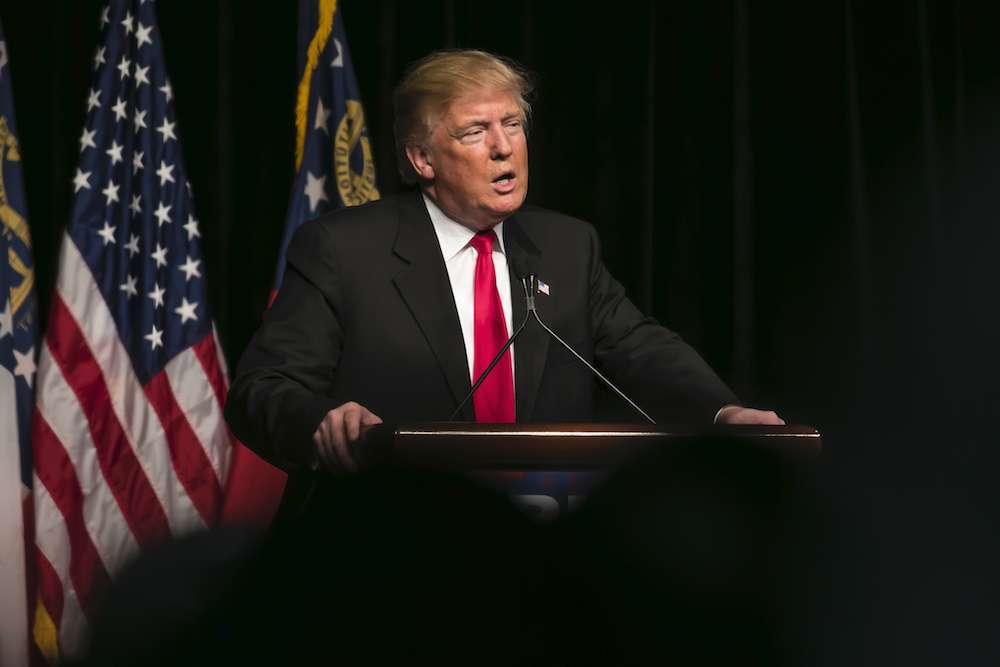
    President Donald Trump and other U.S. officials have alleged that the Asian superpower is the primary source of the synthetic opioid and derivatives that are smuggled into the U.S., a claim which Chinese drug officials have vehemently denied, and in turn levied allegations that the U.S. hasn’t done enough to curb fentanyl abuse within its own borders. 

    Finding Common Ground

    The statement by Liu Yuejin, Vice Commissioner of the China National Narcotics Control Commission, suggested that the countries had yet to reach common ground on how to tackle the global fentanyl problem.

    Reuters quoted a broadcast from Chinese state television that covered Liu’s appearance at a news conference to detail how the country was waging war on fentanyl production. Liu noted that “looking at cases, counter-narcotics law enforcement departments from China and the United States have for many years maintained a good cooperative relationship.”

    He then added, “But cooperation on investigating and prosecuting fentanyl-related substances is extremely limited.”

    Liu went on to claim that since 2012, the U.S. has only presented “clues” on six fentanyl-related smuggling cases to Chinese officials, and only three of those cases reached a positive resolution.

    By comparison, China had provided U.S. law enforcement with nearly 400 leads on fentanyl-related packages since 2012, Liu said.

    Controlled Substance Ban

    Liu further noted that since May 1, 2019—when China added the entire class of fentanyl-related drugs to its list of controlled substances at the behest of Trump—no fentanyl-related smuggling cases had come to light. He also claimed that fentanyl-related deaths in the States have risen further.

    Both points underscored, as Liu suggested, “that President Trump’s tweets about fentanyl in the U.S. mainly coming from China are not true at all,” referring to an August 23, 2019 tweet from the president in which he urged all postal and delivery service carriers to “search for and refuse” all deliveries of fentanyl from China.

    As for the notion that Chinese-produced fentanyl has been entering the U.S. through Mexico, which Trump alleged in a June tweet, Liu said that “police from [China, the U.S. and Mexico] have not detected or cracked a single case. Then what is the basis for the conclusion drawn by certain U.S. politicians? They have sat at home and imagined such things out of thin air.”

    In regard to Trump’s tweet, CNN stated that his assertion that 90% of the drugs entering the United States come through Mexico had some flaws, given that the fentanyl from China is purer and can then be used to manufacture more narcotics, while Mexico imports more fentanyl from China than U.S. law enforcement seizes at the border.

    View the original article at thefix.com

  • "60 Minutes" Tracks Down Fentanyl "Kingpin" In China

    "60 Minutes" Tracks Down Fentanyl "Kingpin" In China

    The show’s producers tracked down and confronted one of the primary sources offering fentanyl online to US residents.

    60 Minutes recently did a segment on the fentanyl crisis, tracking down a man identified as something of a “kingpin” for the trafficking of this incredibly potent drug from China. Shipments of fentanyl from China via the U.S. Postal Service (USPS) are considered by federal authorities to be a massive source of the influx of the drug that has been causing mass overdose cases across the country.

    Shopping For Fentanyl Online

    After two overdose deaths in a week in Akron, Ohio, assistant U.S. Attorney Matt Cronin decided to investigate how the synthetic opioid, which can be 50 times more potent than heroin, was making its way so easily into American hands. He found that ordering fentanyl online was shockingly simple.

    “We just said, ‘Hey,’ according to the source’s instructions, ‘we’re interested in buying fentanyl,’” said Cronin. “And the result was, to say the least, surprising. We have dozens, probably over 50 different drug trafficking networks reaching out to us saying, ‘We have fentanyl. We have even more powerful fentanyl analogs. Whatever you want, we’ll get it for you for cheap. We’ll get it for you in bulk.’”

    All of the replies came from China.

    According to similar investigations by Ohio Senator Rob Portman and his staff, these sources guaranteed shipments that went through the USPS due to delays in implementing shipping procedures designed to stop fentanyl trafficking.

    “That’s because after 9/11, all private carriers like FedEx were required to give U.S. Customs advance descriptions and tracking of foreign packages,” 60 Minutes reports. “The Postal Service was allowed to delay because of the cost.”

    Although the USPS has tried to implement these requirements, they say that China is not cooperating.

    Locating The Source

    Somehow, 60 Minutes producer Bob Anderson tracked down a man named Guanghua Zheng, who was identified as one of the primary sources offering fentanyl online to U.S. residents, and confronted him outside of a Shanghai grocery store. Zheng insisted that he no longer does this before the woman who was with him intervened.

    The U.S. government has “sealed” off Zheng’s offshore bank accounts, shut down 40 of his websites selling illicit substances like fentanyl in 20 languages, and officially designated him and his sons as “foreign drug kingpins.” China has promised to shut down the synthetic opioid trafficking networks operating within its borders, but it’s unclear whether they are following through.

    During the 60 Minutes segment, Justin Herdman, U.S. Attorney in Cleveland, repeated a claim that fentanyl can cause intoxication, overdose, and even death through mere skin contact. However, in 2018, harm reduction activist Chad Sabora demonstrated this to be a myth by holding fentanyl-laced powder in his hand for several minutes without effect.

    View the original article at thefix.com

  • Former Eagle Scout Turned Fentanyl Kingpin Gets His Day In Court

    Former Eagle Scout Turned Fentanyl Kingpin Gets His Day In Court

    Although the Utah man is only charged in connection with one death, prosecutors say that his pill operation has been linked to “dozens” of fatal overdoses. 

    A former Eagle Scout from Utah is on trial facing 13 federal charges connected with running an organization that used imported fentanyl from China to produce counterfeit OxyContin and sell it on the dark web, reaping millions in profits. 

    The prosecution argues that Aaron Shamo, 29, was the kingpin behind the operation. The defense argues that Shamo was roped into the organization and did not fully understand the consequences of his actions because of a learning disability, according to the AP.

    Prosecutor Michael Gadd was blunt during his opening statement: “Death, drugs and money. That’s why we’re here.”

    Shamo is being charged with criminal enterprise, drug trafficking and money laundering. He is also facing charges in connection to the death of one customer who snorted a pill that Shamo made and died. However, his defense attorney said that he is only guilty of some of the charges. 

    “He’s guilty of many of these counts. Aaron’s owning what he did,” defense attorney Greg Skordas said, according to Deseret News. However, “the evidence will not establish that Aaron Shamo caused the death of another, or that he was the organizer, leader, mastermind of this organization,” Skordas added.

    The Big Raid

    Law enforcement raided the home where Shamo lived with his parents in 2016. They found a pill press in the basement, along with hundreds of thousands of pills and more than $1 million in cash. Shamo—who had up to 20 employees at some points—reportedly paid people to allow fentanyl to be shipped to their homes. He collected the drugs, cut them with other substances, pressed pills and stamped them so that they resembled authentic prescription pills. That allowed him to produce a pill for 1 cent, and sell it for up to $20 on the dark web.

    Despite that level of sophistication, Shamo’s parents insist he should not be found guilty of all charges. 

    “They’re just a bunch of kids who did really bad things,” his mother Becky Shamo said. “He’s a good kid. He’s only 29. He deserves a chance at life.” 

    His father Mike said, “He was brought in and saw the opportunity for making money, and he didn’t truly understand the danger behind what he was doing, how dangerous the drugs were. I think he was able to separate what he was doing because he never saw the customer. To him, it was just numbers on a screen.”

    Although Shamo is only charged in connection with one death, prosecutors say that his pill operation has been linked to “dozens” of fatal overdoses. 

    View the original article at thefix.com

  • China Sees US Pot Legalization As A Threat

    China Sees US Pot Legalization As A Threat

    A Chinese drug official says there has been an increase in marijuana trafficking from North America to China over the past two years. 

    The United States says that China is one of the biggest manufacturers of the deadly synthetic opioid fentanyl, but now Beijing has turned the tables, saying that increasingly-lax laws about marijuana in the US is leading to an uptick in cannabis seizures in China. 

    Deputy director of the China National Narcotics Control Commission, Liu Yuejin, said that the number of cannabis users has grown 25% in 2018 alone. He estimated that there were 24,000 people out of the 3.4 billion in China. By comparison, more than 22 million Americans have used cannabis in the past month

    Liu did concede that there are “few cannabis abusers in China,” according to CNN.

    However, he said “in two years, we have found increasing cannabis trafficked from North America to China.” Most of the shipments have been found in the belongings of Chinese students returning from study abroad or work abroad experiences, he added. 

    Overall, China seized more than 55 kilos of marijuana in 2018, Liu said. The U.S. Postal service, on the other hand, intercepted more than 43,000 kilos of marijuana in 2018

    Marijuana use remains relatively rare in China — at least according to officials — at least in part because of very strict laws regarding the drug. As little as 50 grams of cannabis can trigger the death penalty. More recently, the government has been doing drug tests in bars and nightclubs to further crack down on cannabis use, particularly in places frequented by Westerners. 

    Despite that, last week scientists said that cannabis use in China may have a long history. A study of burial artifacts in a Chinese tomb showed evidence of THC. This find, from about 500 B.C., is the earliest evidence of marijuana being smoked for mind-altering affects. 

    “We can start to piece together an image of funerary rites that included flames, rhythmic music and hallucinogen smoke, all intended to guide people into an altered state of mind,” study authors wrote.  

    “We believe that the plants were burned to induce some level of psychoactive effect, although these plants would not have been as potent as many modern cultivated varieties,” Robert Spengler, director of Germany’s Max Planck Institute for the Science of Human History’s Paleoethnobotanical Laboratories told RTE. “I think it should come as no surprise that humans have had a long, intimate history with cannabis, as they have had with all of the plants that eventually became domesticated.”

    View the original article at thefix.com