Tag: chronic pain patients

  • Patients On Opioids May Have A Harder Time Finding Primary Care

    Patients On Opioids May Have A Harder Time Finding Primary Care

    According to a new study, more than 40% of clinics said that they would not take a new patient who was using opioids to manage pain.

    Patients who use prescription opioids to manage their pain may have a harder time accessing primary care, according to a new study. 

    The research, published in the journal JAMA Network Open, found that primary care clinics who were accepting new patients were less likely to take a patient who said that they were using opioids. In fact, more than 40% of clinics said that they would not take a new patient who was using opioids to manage pain. 

    Finding Care

    “These findings are concerning because it demonstrates just how difficult it may be for a patient with chronic pain searching for a primary care physician,” lead study author Pooja Lagisetty told the blog of the University of Michigan. 

    For the study, researchers cold-called clinics that were accepting new patients. The callers said they were looking for a new provider for their parent, who took a Percocet (oxycodone) each day to manage pain. 

    The findings confirmed the researchers’ hypothesis that people on opioids have a harder time accessing primary care. Forty percent of the clinics said they would not take the patient, while two-thirds said they would require a preliminary visit before deciding. Seventeen percent said they would need additional information to make a decision. 

    Pain Refugees

    “Anecdotally, we were hearing about patients with chronic pain becoming ‘pain refugees,’ being abruptly tapered from their opioids or having their current physician stop refilling their prescription, leaving them to search for pain relief elsewhere,” Lagisetty said. “However, there have been no studies to quantify the extent of the problem.”

    Surprisingly, the researchers found that whether a patient had private insurance or Medicare did not make a difference in whether or not they were accepted as a new patient. 

    “Our results did not differ by insurance status, which was surprising because previous studies on primary care access have showed that patients on Medicaid tend to have lower access to primary care than those with private insurance,” Lagisetty said. “This may indicate that providers and clinics are not making these decisions to restrict access based upon reimbursement. Larger clinics and community health centers were more likely to accept new patients suggesting that there may be some system level factors that affect access to care.”

    The lack of access to primary care is especially concerning in this case because the researchers who called clinics said that the patient was also on medication for high blood pressure and high cholesterol, both of which require regular treatment from a provider.

    In addition, having a primary care provider can help people manage their use of opioids and taper off them, if possible. 

    “We hope to use this information to identify a way for us to fix the policies to have more of a patient-centered approach to pain management,” Lagisetty said. “Everyone deserves equitable access to health care, irrespective of their medical conditions or what medications they may be taking.”

    View the original article at thefix.com

  • Pain Patients Express Hope Amid Revised Opioid Policies

    Pain Patients Express Hope Amid Revised Opioid Policies

    Some medical professionals are finally starting to understand that cutting pain patients off opioids abruptly causes more harm than good. 

    After years of having their access to opioids restricted, some chronic pain patients feel that they are finally being heard, as the medical community becomes more open to the idea that tapering opioids, especially after long-term use, needs to be done slowly and carefully. 

    In April, the FDA warned that cutting off patients’ opioids too quickly could be detrimental to their health. The organization went so far as to recognize that not being able to control pain could lead to suicide in chronic pain patients. The Centers for Disease Control and Prevention (CDC) made a similar change in policy. 

    Andrew Kolodny, who co-directs Brandeis University’s Opioid Policy Research Collaborative at the Heller School for Social Policy and Management, recently told OZY that it is “exceptionally cruel to abruptly withdraw a patient from opioids.”

    Many pain patients feel that the medical community and regulatory commissions are just now beginning to talk about that openly.

    Lelena, a woman who was given opioids to deal with pain from fibromyalgia, was dismissed from her pain clinic after testing positive for heroin, a result that was later proved to be a false positive. Despite that, she was not able to access pain medications and had to go through opioid withdrawal, in addition to coping with her pain. 

    Laura Mills, who works with Human Rights Watch, said that experiences like Lelena’s are unnecessary and discriminatory. 

    “We always emphasize that the risk for harm [from suddenly stopping opioid medication] is huge, given that an approximate 13 million Americans are still on opioids long-term,” she said. 

    That’s why people like Kate Nicholson, a civil rights attorney who previously worked at the U.S. Department of Justice, turned their attention to helping people with legitimate medical needs access opioid medications. Although Nicholson said that the government’s new, more nuanced approach is needed, she also feels that there is a lot of work still to be done. 

    “It was hard in some ways to get the CDC to change,” she said. “And in some ways, it was the easiest first step.”

    Still, many people who have seen the negative impacts of opioids feel that it is only natural for prescribers to be extra cautious. Kolodny pointed out that Lelena, like many people on opioids, should never have been given the pills in the first place. 

    “There’s no debate,” he said. “You don’t give opioids for fibromyalgia. It’s the fault of this campaign that encourages people to prescribe opioids, a highly addictive drug you become easily dependent on.”

    View the original article at thefix.com

  • Can Hypnosis Help Chronic Pain Patients Find Relief?

    Can Hypnosis Help Chronic Pain Patients Find Relief?

    A new review examined whether hypnotic intervention could provide “meaningful” pain relief.

    Undergoing hypnosis could significantly reduce pain that people experience, but it’s too early to tell whether this could be used to treat chronic or acute pain, experts say. 

    A review recently published in the journal Neuroscience and Biobehavioral Reviews found that study participants who were exposed to painful stimuli like heat or cold were able to reduce the amount of pain they experienced by 29-42% by using methods of hypnosis. 

    “These findings suggest that hypnotic intervention can deliver meaningful pain relief for most people and therefore may be an effective and safe alternative to pharmaceutical intervention,” study authors wrote. Yet, they warned, “High quality clinical data is, however, needed to establish generalisability in chronic pain populations.”

    Lead study author Trevor Thompson, a psychologist based at the University of Greenwich, England, noted that “experimental pain”—that created by heat, cold or other stimuli in a lab—is not a direct comparison to real-life pain from injury or chronic pain, or “clinical pain.” 

    “It is important, of course, to acknowledge that clinical pain isn’t quite the same thing as experimentally induced pain,” he told Medical Express. That’s because injuries and ongoing pain “involve more negative emotional states, less sense of control over pain, and adverse effects on quality of life,” he said. 

    Still, the fact that hypnosis provided such significant relief to people who were being hurt was significant. 

    “If hypnosis is effective at reducing experimental pain, there’s reason to be optimistic it would have the same effect on clinical pain,” he said.

    Mark Jensen, professor at the University of Washington in Seattle and editor of the Journal of Pain, said that previous research has indicated that hypnosis techniques can reduce the amount of pain that patients experience. How effective it is depends on the root cause of the pain, he said. He added that it’s important that people be informed consumers, and use hypnosis as one of many strategies for managing their pain. 

    “Anyone can hang out a shingle and call themselves a ‘hypnotist,’” he said.

    Jensen said that hypnosis uses a combination of relaxation and imagery to tap into the body’s natural pain-relief systems. Other research has indicated that hypnotherapy techniques change the body’s perception of pain. It’s often much more subtle than many people think, he added, and it’s certainly not a way to immediately remove all pain. 

    “It’s not all-powerful magic that will eliminate pain,” he said. “It’s not the hocus-pocus you see on TV.”

    View the original article at thefix.com

  • Olivia Newton-John Opens Up About Using Cannabis For Cancer Pain

    Olivia Newton-John Opens Up About Using Cannabis For Cancer Pain

    “I use a lot of cannabis in my healing. It helped me incredibly with pain and sleep. Opiates are killing people and cannabis doesn’t,” the prolific entertainer explained.

    Olivia Newton-John, the Australian star of Grease and Xanadu, is known for her bright and positive public persona, even in the face of fighting cancer. Newton-John has had to endure three bouts with it over the last 27 years, including her current fight with stage four breast cancer. She tells Yahoo Lifestyle that one of the key ingredients in fighting the disease is “a lot of cannabis.”

    As the singer explains, “I use a lot of cannabis in my healing. It helped me incredibly with pain and sleep. Opiates are killing people and cannabis doesn’t.”

    Newton-John’s husband, John Easterling, is in the wellness industry, and he grows cannabis in their home. Olivia told People, “He grows the plants and makes them into liquid for me. I take drops maybe four to five times a day.”

    Newton-John hadn’t indulged in cannabis much in her life, and at first she was “a little nervous” about taking it. But she then discovered that it was remarkably beneficial to managing her pain and contributing to her overall wellness. (Her daughter Chloe is also a cannabis farmer.)

    The singer-songwriter was pleasantly surprised to find that cannabis is “an amazing plant, a maligned plant, but it’s helping so many people.”

    Newton-John was first diagnosed with breast cancer in 1992, but she refused to let her diagnosis affect her mental health. “I had to make a decision that no matter what, I was going to be OK,” she explains. “My main decision was, ‘I’m going to get better, and I have a young child to raise.’” (Her autobiography is titled, appropriately enough, Don’t Stop Believin’.)

    In addition to cannabis, Newton-John also prays and meditates as part of her wellness routine. “The first time I had breast cancer in 1992, I had a transcendental meditation teacher come and give me a mantra,” she said. “And Deepak Chopra, who was a friend, gave me a mantra [too].”

    Newton-John also told The Telegraph that her dream is that the medical marijuana laws will change in her native Australia and that “it will be available to all the cancer patients and people going through cancer that causes pain.”

    View the original article at thefix.com

  • Should Your Mental Health Determine How Your Pain Is Treated?

    Should Your Mental Health Determine How Your Pain Is Treated?

    Patients with a mental health condition might have a hard time accessing opioids for pain relief, while patients with unexplained pain are often referred to psychiatric care, which does little to alleviate their symptoms. Finding treatment can be frustrating and humiliating.

    Four years ago, Dez Nelson’s pain management clinic demanded that she complete a visit with a psychologist. Nelson was surprised, since she had no history of mental illness, but she didn’t feel that she could push back on the request.

    “Of course I said okay — I didn’t want to lose my treatment,” Nelson told The Fix. “I was not happy about it, but I did it.”

    Nelson, 38, went to the appointment and had a mixed experience with the psychologist. She hasn’t been back since and the pain clinic hasn’t asked her to visit a psychologist again. Still, Nelson said that the experience highlighted — yet again — the discrimination pain patients face.

    “It was a condition of my continued care,” she said. “It seemed like they’re bringing it up in a beneficial light, as part of a multi-pronged approach to pain care. But I don’t think [mental health treatment] should be forced on a patient who doesn’t think they need it.”

    Chronic pain and mental illness are among the most stigmatized conditions in modern medicine. The conditions frequently intersect and change the way that patients are cared for and treated. Patients who have a mental illness might have a hard time accessing opioids for pain relief, while patients with unexplained pain are often referred to psychiatric care, which does little to alleviate their physical symptoms. At the same time, research suggests there is a strong connection between mental health and pain: depression can cause painful physical symptoms, while living with chronic pain can cause people to become depressed.

    All of this makes treating chronic pain and mental illness complex and frustrating for doctors and patients alike.

    A Mental Health Diagnosis Affects the Way Your Doctor Treats You

    Elizabeth* is a professor in her mid-thirties who had undiagnosed Lyme disease for eight years. Her Lyme contributed to the development of an autoimmune disease that has led to widespread inflammatory and nerve pain throughout her body. Elizabeth also has bipolar disorder. Despite the fact that she has been stable on medication for a decade, her mental health diagnosis complicates her pain treatment.

    “Doctors’ demeanor changes when I tell them my medications. When I say I have bipolar disorder, it’s a whole different ballpark. To them that’s clearly a risk factor and red flag for drug abuse,” Elizabeth said.

    Opioids are one of the only treatments Elizabeth has found that works to alleviate her pain. But she also takes benzodiazepines on an as-needed basis to control her anxiety (usually once a week). Even though Elizabeth is well aware of the risk of combining the two medications and knows better than to take the two pills together, doctors refuse to prescribe both. They don’t seem to trust her not to abuse them.

    “I could tell them that I wouldn’t take them together. But that’s not a valid choice,” Elizabeth said.

    While doctors were extremely cautious about this drug interaction, they didn’t focus on another drug-related risk: medications that are used to treat nerve pain can cause adverse reactions in patients with bipolar disorder. No one warned Elizabeth of this danger, and she ended up being hospitalized for psychosis after a long stretch of stability.

    “The doctors didn’t talk about it because it’s just a side effect, not a liability concern,” she said.

    On the flip-side, Elizabeth has experienced psychiatric providers who were skeptical of her pain diagnosis.

    “They wrote in my chart that I had a delusion that I had Lyme disease,” she said.

    The Intersection of Pain and Mental Illness

    Treating patients with pain and mental illness is complicated because both conditions rely on patient reports rather than objective tests for a diagnosis and to create or adjust a treatment plan.

    “Pain is a subjective symptom of the people feeling it. There is no way to measure it,” said Dr. Medhat Mikhael, a pain management specialist and medical director of the non-operative program at the Spine Health Center at Memorial Care Orange Coast Medical Center in Fountain Valley, California

    Pain and mental illness can exacerbate each other. In addition, medications for the conditions can interact in rare and serious ways, like what Elizabeth experienced. Finally — and at the forefront for many pain specialists — is the fact that many people with mental health conditions also develop substance use disorders and treating them with highly-addictive opioids can be dangerous. 

    “We address these issues with patients head on, explain that staying on these medications is very risky for them,” Mikhael said.

    Mikhael said that there’s a reason doctors ask patients so frequently about their mental health and substance abuse history. While some patients find that exhausting and repetitive, Mikhael feels it is his responsibility to be constantly evaluating the risk and benefits of using pain medications for people more susceptible to substance misuse or addiction.

    “I have to give them the benefits of the doubt, particularly if the history does not show they’re going doctor shopping. I have to trust them and I have to help them,” he said. “But trust has limits. I can’t say I trust the patient and let go.”

    My Body Is in Pain, I Do Not Need Psychiatric Care

    As the medical community grapples with how to manage pain in light of the opioid epidemic, there is an increased focus on holistic approaches to pain management. Nelson, however, believes this can be harmful to patients who need the pain-relieving power of opioids.

    “They’re trying to turn into bio-psycho-social model, and there are people with real diseases who are dying,” Nelson said. “My pain has nothing to do with my psyche. It has to do with the fact that my body is sick.”

    Before she was diagnosed with arthritis, emphysema and hemiplegic migraines, Nelson was often sent to psychiatric care when she arrived at the emergency room in pain. She had one provider tell her that facial paralysis — later found to be a symptom of her migraines — was psychogenic.

    “Instead of doing their jobs and investigating the physiological issues, they jumped right to the psychological,” she said, pointing to the long history of doctors believing that women’s pain was not real. Eventually, these experiences began to take a toll on Nelson.

    “There was a time when I began to question my own sanity. I thought ‘maybe they’re right, maybe this is just in my head.’”

    Untreated Pain Is Like a “Time Bomb.”

    Both Nelson and Elizabeth have been able to advocate for themselves. While they’ve still struggled with the medical community, they’re been able to improve their care. Yet many people with chronic pain and mental illness don’t have the ability to advocate for themselves in this way.

    “I’ve had a lot of education, so I feel comfortable and confident talking to a doctor,” Elizabeth said. She also has the money to be able to travel to a pain clinic and the support of a spouse and therapist.

    “I have a lot of these privileges that a lot of people don’t have,” she said. “I’m grateful for that, but I shouldn’t have to be. It should be ordinary.”

    Elizabeth often thinks about patients who have uncontrolled or treatment-resistant mental illness, and how that might affect their access to pain relief.

    “Should they just not get pain management because they’re not well with their mental illness? Of course not.”

    Having in-depth conversations, sharing information between different specialists, and providing community support could all help improve outcomes for people dealing with chronic pain and mental health conditions, she said.

    “People need help, not a punitive approach of taking [pain management] away,” she said. “Energy should be put into safe approach to dealing with pain. You can’t ignore it — it’s like a time bomb.”

    View the original article at thefix.com

  • Does Restricting Prescription Opioids Save Lives In The Long Term?

    Does Restricting Prescription Opioids Save Lives In The Long Term?

    A new study found that over a five- to 10-year period, policies limiting the prescription of opioids would initially increase deaths as many individuals turn to heroin or fentanyl.

    Combating the opioid epidemic is complicated for a number of reasons—one of which, according to new research, is that cutting back on prescriptions may cause more deaths in the short-term, despite saving them in the long-term.

    This information comes from a simulation study recently published in the American Journal of Public Health. The study determined that over a five- to 10-year period, policies limiting the prescription of opioids would initially increase deaths as individuals may turn to heroin or fentanyl.

    The simulation study was led by Stanford University researchers Allison Pitt, Keith Humphreys and Margaret Brandeau.

    “This doesn’t mean these policies should not be considered,” said Humphreys, who was a former senior policy adviser at the White House Office of National Drug Control Policy (ONDCP) during the Obama administration. “Over longer periods, they will reduce deaths by reducing the number of people who initiate prescription opioids.”

    Austin Frakt, director of the Partnered Evidence-Based Policy Resource Center at the VA Boston Healthcare System, wrote in a New York Times opinion piece that restrictions on prescribing opioids seem to be a logical response to curbing the crisis. As many as 80% of heroin users in the U.S. are estimated to have previously used prescription opioids.

    However, the idea of limiting prescriptions becomes more complicated when individuals who are truly in need of the medications for pain management are taken into account. 

    It’s a situation in which there has to be a trade-off of some sort, according to Frakt.

    “This is the fundamental trade-off opioids present, with which we have been battling for decades,” Frakt writes. “As the pendulum swung further toward treating pain, opioid-related deaths ballooned. Now to stem the deaths, it is swinging back, challenging us to treat pain in other ways.”

    According to the researchers of the simulation study, there is no one policy that would solve the crisis or even make a significant difference. The policy that could be most effective, according to the researchers, is increasing access to naloxone, an opioid overdose antidote. Even so, this would likely only bring the deaths down about 4% over the next decade. 

    “Expanding access to naloxone is inexpensive and saves lives,” Pitt said. “That’s an attractive combination, but we should be realistic that it will only save a small percentage of opioid deaths.” 

    As such, researchers note that combining policies such as increasing naloxone access, expanding treatment and more needle exchanges could help to save twice that number of lives. 

    “Policy interventions can prevent many deaths, as well as the other destruction that opioids bring to individuals, families and communities,” Frakt concludes. “But prescription opioids are neither all bad nor all good. Policies that sound sensible—potentially helping many people—could also cause a lot of damage, particularly in the short run.”

    View the original article at thefix.com

  • Woman Testifies About Chronic Pain, Opioids From Cot

    Woman Testifies About Chronic Pain, Opioids From Cot

    “We must invest in the discovery of new, effective, and safer options for people living with pain,” Cindy Steinberg said in prepared remarks.

    It’s heartbreaking to see the faces of the opioid epidemic—young lives cut short by drug overdoses. Yet, this week another tragic but often overlooked face of the epidemic was on display when a woman testified before Congress from a cot, detailing her life with chronic pain. 

    Cindy Steinberg, national director of policy and advocacy for U.S. Pain Foundation spoke before the Senate Committee on Health, Education, Labor and Pensions during a hearing entitled “Managing Pain During the Opioid Crisis.”

    Steinberg’s chronic pain began 18 years ago when filing cabinets and cubical walls fell on her at work. Today, she isn’t able to sit or stand for long periods without experiencing muscle spasms and pain.

    She told the committee that her life is like “being a prisoner in your own body and being tortured,” according to the National Pain Report

    Steinberg argued that substance abuse and access to pain management medications for those who need them are two entirely separate issues. She said that rising overdoses has highlighted an existing problem, “underscor[ing] our failure to provide adequate, safe, accessible treatment options for pain relief.”

    “We can and must restore balance to opioid prescribing,” Steinberg said. 

    According to NBC News, Steinberg said in her prepared remarks, “In the near term, we can and must restore balance to opioid prescribing with depoliticized, rational and cleareyed recognition of the risks and benefits of these medications. In the long term, we must invest in the discovery of new, effective, and safer options for people living with pain.”

    Others who advocate for pain patients, including Richard “Red” Lawhern, director of research for the Alliance for the Treatment of Intractable Pain, were happy to see Steinberg’s story in the spotlight.

    “Steinberg directly challenged the lack of resident expertise on pain management at CDC, suggesting that Congress direct the much better equipped NIH to rewrite the guidelines based on recommendations of the HHS (Department of Health & Human Services) Task Force. This is a recommendation I support,” Lawhern said. 

    Committee Chair Senator Lamar Alexander of Tennessee seemed to empathize with Steinberg’s concerns, saying the “massive effort in reducing the supply of opioids has had the unintended consequence of hurting people who need them.”

    This week, research emerged showing that current changes in access to prescription opioids are unlikely to reduce the number of opioid overdoses. The research shows that projected annual opioid overdose deaths will reach 82,000 by 2025

    View the original article at thefix.com

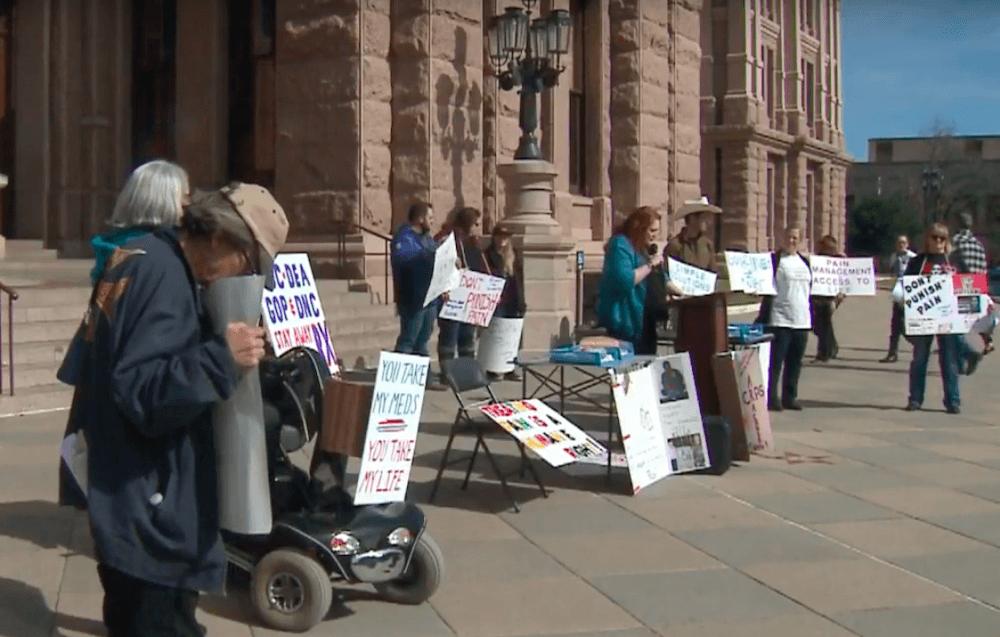
  • "Don’t Punish Pain" Rallies Held Across The Nation

    "Don’t Punish Pain" Rallies Held Across The Nation

    Pain patients gathered around the US to bring attention to the damage caused by restrictive opioid prescribing guidelines.

    While the opioid epidemic has claimed thousands of lives, the regulations meant to stem the death toll are having unintended consequences for people who live with chronic pain, according to people who rallied across the country Tuesday Jan. 29 as part of the “Don’t Punish Pain” event. 

    In Concord, New Hampshire, Lauren Benson was one of the younger people at the rally. Nine years ago, when she was just 23, Benson injured her back working as an EMT, and has been disabled since.

    She told The Union Leader that she and many other people who need opioids to control their pain have a harder time accessing the drugs because of tightening prescription regulations. This is especially frustrating for pain patients who have used opioids responsibly for decades, she said. 

    “They’ve been on pain medication longer than I’ve been alive and all of a sudden it’s: ‘No, stop, no more for you.’ What are they supposed to do? They’ve been taking their meds properly.”

    Many pain patients are afraid that they won’t be able to access the pills that make their lives bearable. Many have already had doctors taper their dosage or have had to go through humiliating questioning and drug tests to get their opioids. 

    “For over 10 years, I took the same dose and because of the Oklahoma opioid task force, my doctor had to cut my prescription by 75%,” Patrick Burdette, who attended a rally in Oklahoma City, told Fox 25 News. “It caused me to sit at home in bed most days.”

    There’s a misconception that pain patients can choose alternatives to opioids, according to many patients, who say that this isn’t an option for everyone. 

    “My physical therapist would come to my house and I just basically sat there and cried because the pain was so bad,” said Patty Loveless, who was also at the Oklahoma rally. 

    In Tucson, Arizona, one patient carried a sign proclaiming that pain patients are “afflicted, not addicted,” according to The Tucson Sentinel

    “You know that horrific pain that takes about a minute or so to go away?” said Debra Hickey, whose doctor recently reduced her pain medications. “Can you imagine if you were in that kind of pain 24/7 with no opioids? That’s the pain I’m in.”

    In 2016, the Centers for Disease Control and Prevention issued guidelines about the amount of opioids that most patients should be on. This year, Medicare has plans to further restrict access to opioids. However, pain patients say that their lives are being negatively-affected by these well-intentioned measures. 

    “It is borderline genocide,” Lauren DeLuca, founder of the Chronic Illness Advocacy and Awareness Group, told The Fix last year. 

    View the original article at thefix.com

  • How Physical Therapy May Help Reduce Opioid Use

    How Physical Therapy May Help Reduce Opioid Use

    Researchers combed through insurance claims of chronic pain patients to determine if physical therapy could help reduce their pain enough to cut back on their pain meds.

    Getting physical therapy early on may help pain patients reduce their long-term opioid use by about 10%, according to research published this week in the journal JAMA Network Open

    “By serving as an alternative or adjunct to short-term opioid use for patients with musculoskeletal pain, early physical therapy may play a role in reducing the risk of long-term opioid use,” the study authors wrote. “Early physical therapy appears to be associated with subsequent reductions in longer-term opioid use and lower-intensity opioid use for all of the musculoskeletal pain regions examined.”

    To conduct the study, researchers reviewed the insurance claims of 88,985 patients with shoulder, neck, knee or low back pain. They found that using physical therapy, as recommended by best practices, is associated with reduced opioid use. Since long-term opioid use can lead to dependence and addiction, physical therapy could potentially help reduce those conditions. 

    “Using early physical therapy, consistent with recent clinical guidelines, could play an important role in reducing the risk of transitioning to chronic long-term opioid use for patients with shoulder, neck, knee, and low back pain,” researchers wrote. 

    The director of the division of integrative pain management at Mount Sinai Hospital in New York City, Dr. Houman Danesh, said this study shows how important physical therapy can be in long-term pain relief. 

    “You can take an opioid for a month, but if you don’t get at the underlying issue [for the pain], you’ll go back to where you started,” Danesh, who wasn’t involved with the study, told WebMD. Getting physical therapy can help patients address the underlying cause of their pain. 

    However, he pointed out that it’s critical to have access to high-quality physical therapists.

    “Physical therapy is highly variable,” he said. “Not all physical therapists are equal — just like not all doctors are.”

    Dr. Eric Sun, who teaches anesthesiology, perioperative and pain medicine at Stanford University and who led the study, said patients should consider trying physical therapy instead of relying solely on opioid pain relief. 

    “For people dealing with these types of musculoskeletal pain, it may really be worth considering physical therapy — and suggesting that your health care provider give you a referral,” he said. 

    Sun pointed out that the study merely established a link between physical therapy and lower opioid use; it did not prove that physical therapy causes people to use fewer opioids. 

    “Since physical therapy is more work than simply taking an opioid, patients who are willing to try physical therapy may be patients who are more motivated in general to reduce opioid use,” he said. 

    View the original article at thefix.com

  • How The CDC's Opioid Prescribing Guideline Hurts Chronic Pain Patients

    How The CDC's Opioid Prescribing Guideline Hurts Chronic Pain Patients

    “Conflating the misuse of opioids with their legitimate medical use, and treating all opioids alike is stigmatizing patients for whom opioid painkillers are necessary and medically appropriate,” writes one expert.

    The heavy-handed misapplication of the Centers for Disease Control and Prevention’s opioid-prescribing guideline is hurting legitimate pain patients, according to a STAT News opinion piece penned last week by two health law attorneys and a doctor. 

    “The CDC guideline and its progeny of laws and policies have created chaos and confusion in the medical community,” the experts wrote in their Dec. 6 essay.

    “Conflating the misuse of opioids with their legitimate medical use, and treating all opioids – illegal or prescription – alike is stigmatizing patients for whom opioid painkillers are necessary and medically appropriate.”

    The guideline, published in early 2016, suggests restrictions on the daily dosage of painkillers, though the suggestions are not intended to apply to existing long-term pain patients.

    And in theory, the CDC guidelines aren’t mandatory – they’re simply guidelines. But insurance companies, lawmakers and pharmacies have relied on them to craft sweeping policies, the authors wrote, effectively treating long-term pain patients as suspected drug addicts. 

    That’s despite the fact that – even as overdose deaths continue to rise – opioid prescribing is on the downswing and currently is at an 18-year low. 

    Some research shows that most people who abuse painkillers don’t get them from doctors. And, most people who are prescribed painkillers don’t become addicted, even if they become physically dependent. 

    Even so, the authors wrote, doctors are reportedly dropping patients for fear of blowback as the Drug Enforcement Administration (DEA) and state medical boards continue using those guidelines to identify suspected over-prescribers. 

    “Some physicians are telling their patients that changes in the law are the reason they are tapering them to a preset dosage of opioids or off of opioids altogether,” the experts wrote. “Yet the specific dosage thresholds in the CDC guideline were never intended to apply to patients currently taking opioids. Indeed, nothing in the current legal or regulatory environment justifies forcibly tapering a patient off of opioids who is doing well, and there is no solid evidence to support such a practice.”

    This isn’t a new complaint; it’s a problem previously documented by reporters and researchers. But now the American Medical Association is weighing in; at their most recent interim meeting, the physicians group approved resolutions striking out against the spate of laws and mandated restrictions imposing blanket limitations on prescribers.

    The resolutions won’t change outside policy, but they represent a formal effort to push back against the mandates of lawmakers, pharmacies and insurers.

    “The resolutions underscore that dosage guidance is just that – guidance – and that doses higher than those recommended by the CDC may be necessary and appropriate for some patients,” the authors wrote.

    “Epidemics instill fear, but physicians have a responsibility to rise above fear and advance the interests of their patients. The AMA’s action in advocating for patients and for the right of physicians to practice individualized care is an important effort in beginning to rebalance the scales in the joint goals of reducing pain and opioid addiction.”

    View the original article at thefix.com