Tag: circadian rhythm

  • How Daylight Saving Time Affects Some Kids' Mental Health

    How Daylight Saving Time Affects Some Kids' Mental Health

    Experts break down the impact of daylight saving time on kids with mental health issues.

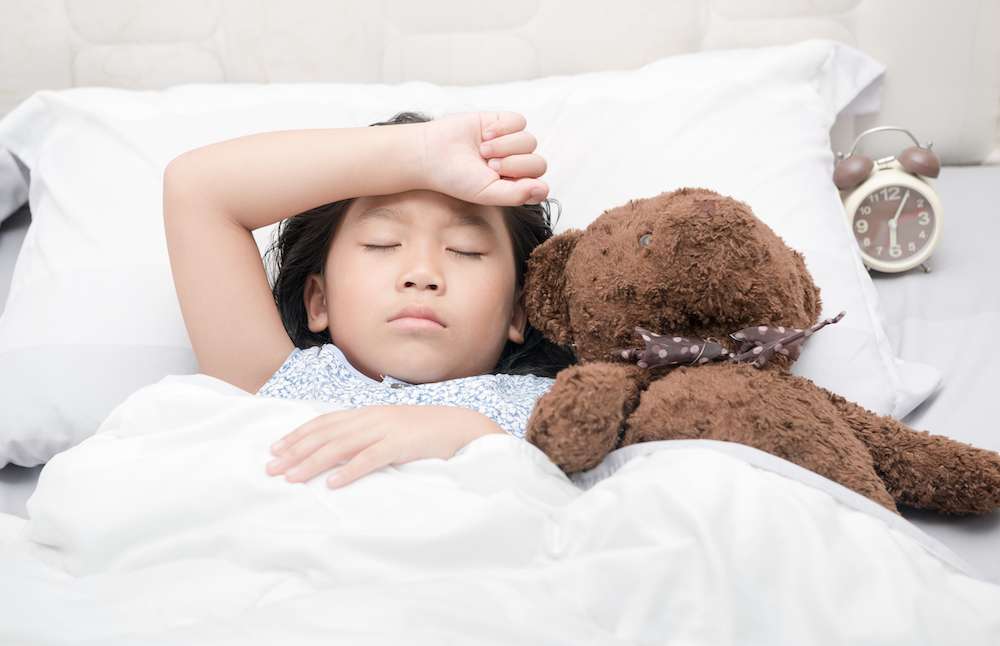
    Children with mental health diagnoses may be more prone to struggle with sleep around daylight saving time, according to physicians from Nationwide Children’s Hospital in Columbus, Ohio. 

    WMBF News reports that doctors there have observed changes in sleeping patterns around daylight saving time in many young patients—especially those with a mental health diagnoses.

    “Sleep is a more complicated issue for patients with a mental health disorder,” Robert Kowatch, child and adolescent psychiatrist and sleep medicine specialist at Nationwide, said in a news release. “Different conditions affect sleep differently, as do various medications for these conditions and their related side effects. These patients may be more sensitive to time changes than the typical child or teen.”

    Some of the physicians’ observations around daylight saving include the following: 

    • Children struggling with depression and anxiety may struggle to fall asleep and stay asleep.
    • Children diagnosed with autism have the tendency to sleep one to two hours less than their peers and tend to awake earlier in the mornings. 

    Those with bipolar disorder tend to sleep less when experiencing manic or hypomanic episodes, and in some instances any change in their circadian rhythm (such as a time change) can lead to manic episodes. 

    For some children with attention deficit/hyperactivity disorder, taking certain stimulant medications close to their bedtime will make it harder to get to sleep.

    “With many medications, an impact on sleep is a possible side effect, from interfering with falling asleep to resulting in next-day drowsiness,” Kowatch added in the release. “Parents and patients should create a plan with their clinician, and make sure dose schedules and amounts are properly followed, such as taking a longer-lasting dose earlier in the day followed by a shorter-lasting dose later in the day, so a stimulant can wear off—if necessary—in time for bed to allow for restful sleep.”

    Natasha Mero, a sleep technician at Palmetto Sleep Labs LLC, tells WMBF that a lack of sleep can affect a person’s life in numerous ways, some dangerous. She also made a comparison between the effects of daylight savings and those of jetlag. 

    “It can affect memory issues, it can affect alertness, mood,” Mero tells WMBF. “Sometimes people don’t get enough sleep, they can be depressed, help you concentrate. It definitely can affect driving. A lot of people can get in accidents if they don’t get enough sleep. We’ve seen several people come into the sleep lab where they fall asleep at the wheel because they’re not getting enough sleep at night, or get in a fender bender or fall asleep at a stop sign.”

    In order to strive for better sleep, experts from Nationwide Children’s Hospital recommend limiting electronic time in the bedroom, avoiding heavy meals before sleeping, eliminating caffeine eight hours before bed, keeping bedrooms cool and dark, and avoiding any exercise before trying to sleep. 
    View the original article at thefix.com

  • How Daylight Savings Time Affects Some Kids' Mental Health

    How Daylight Savings Time Affects Some Kids' Mental Health

    Experts break down the impact of daylight savings time on kids with mental health issues.

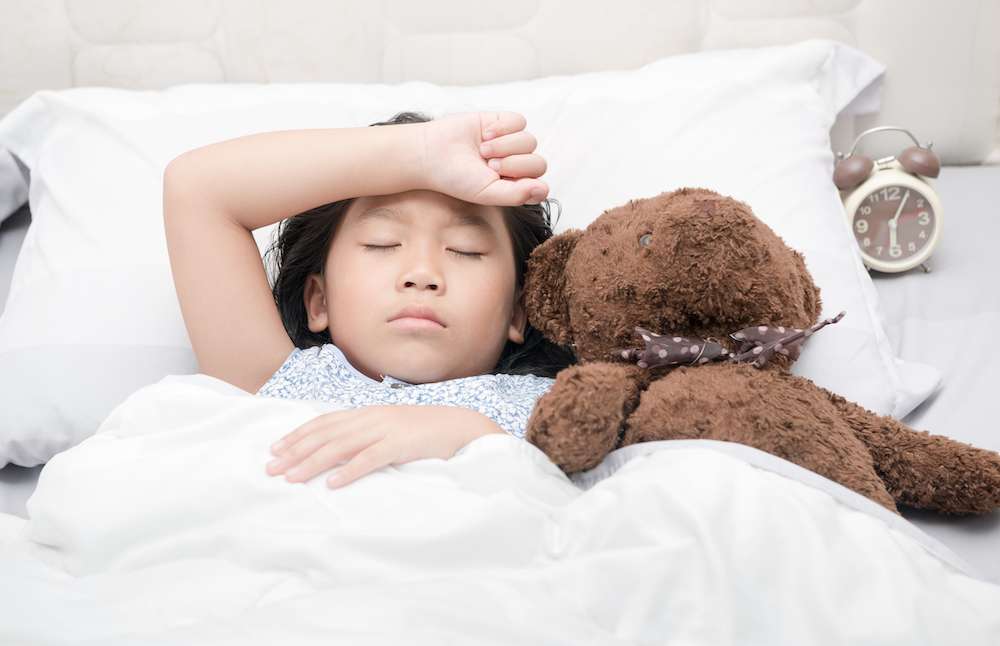
    Children with mental health diagnoses may be more prone to struggle with sleep around daylight savings time, according to physicians from Nationwide Children’s Hospital in Columbus, Ohio. 

    WMBF News reports that doctors there have observed changes in sleeping patterns around daylight savings time in many young patients—especially those with a mental health diagnoses.

    “Sleep is a more complicated issue for patients with a mental health disorder,” Robert Kowatch, child and adolescent psychiatrist and sleep medicine specialist at Nationwide, said in a news release. “Different conditions affect sleep differently, as do various medications for these conditions and their related side effects. These patients may be more sensitive to time changes than the typical child or teen.”

    Some of the physicians’ observations around daylight savings include the following: 

    • Children struggling with depression and anxiety may struggle to fall asleep and stay asleep.
    • Children diagnosed with autism have the tendency to sleep one to two hours less than their peers and tend to awake earlier in the mornings. 

    Those with bipolar disorder tend to sleep less when experiencing manic or hypomanic episodes, and in some instances any change in their circadian rhythm (such as a time change) can lead to manic episodes. 

    For some children with attention deficit/hyperactivity disorder, taking certain stimulant medications close to their bedtime will make it harder to get to sleep.

    “With many medications, an impact on sleep is a possible side effect, from interfering with falling asleep to resulting in next-day drowsiness,” Kowatch added in the release. “Parents and patients should create a plan with their clinician, and make sure dose schedules and amounts are properly followed, such as taking a longer-lasting dose earlier in the day followed by a shorter-lasting dose later in the day, so a stimulant can wear off—if necessary—in time for bed to allow for restful sleep.”

    Natasha Mero, a sleep technician at Palmetto Sleep Labs LLC, tells WMBF that a lack of sleep can affect a person’s life in numerous ways, some dangerous. She also made a comparison between the effects of daylight savings and those of jetlag. 

    “It can affect memory issues, it can affect alertness, mood,” Mero tells WMBF. “Sometimes people don’t get enough sleep, they can be depressed, help you concentrate. It definitely can affect driving. A lot of people can get in accidents if they don’t get enough sleep. We’ve seen several people come into the sleep lab where they fall asleep at the wheel because they’re not getting enough sleep at night, or get in a fender bender or fall asleep at a stop sign.”

    In order to strive for better sleep, experts from Nationwide Children’s Hospital recommend limiting electronic time in the bedroom, avoiding heavy meals before sleeping, eliminating caffeine eight hours before bed, keeping bedrooms cool and dark, and avoiding any exercise before trying to sleep. 

    View the original article at thefix.com

  • Can Hot Baths Help Ease Depression Symptoms?

    Can Hot Baths Help Ease Depression Symptoms?

    A recent study examined the effects that a regular hot bath had on people with depression.

    Can a bath a day keep the blues away? Researchers seem to think so.

    A new study published in New Scientist indicates that by taking regular afternoon baths, people with depression may experience a “moderate but persistent lift in mood.”

    During the study, researchers from the University of Freiburg in Germany took 45 individuals with depression and had one group soak in hot water (104 degrees Fahrenheit) for up to 30 minutes, then wrap in a blanket and hot water bottles for an additional 20 minutes, while another group took 40 to 45 minutes of exercise twice per week.

    Then, after eight weeks, the individuals taking the afternoon baths scored six points lower on a widely used depression scale, while those exercising scored about three points lower. 

    The theory is that warm baths strengthen and synchronize a person’s circadian rhythm by increasing the core body temperature. A circadian rhythm is “the daily fluctuations in behavior and biochemistry that affect every one of our organs, including the brain,” the Guardian notes.

    For most people, core body temperature increases during the day and decreases at night, which helps the body to fall asleep. But in those with depression, the circadian rhythm is frequently “flatter, disrupted or delayed by several hours.” So, by affecting the core body temperature, baths may help those with depression to fall asleep more easily.

    In addition to affecting the circadian rhythm, hot baths could lead to the firing of more neurons that distribute serotonin.

    According to the Guardian, depression is likely related to low levels of serotonin in the brain, and research involving rats has found that neurons that release serotonin are connected to mood-regulating parts of the brain, which fire when body temperature increases.

    When it comes to taking a good bath, the Guardian recommends picking a time without disruptions, possibly using an essential oil, making bathwater slightly warmer than body temperature, and taking into account the temperature of the room.

    However, such hot baths could cause issues for some people. According to Bustle, some study participants struggled to get hot enough water at home, since 104 degrees is fairly high, and had to go to a spa instead.

    People with health issues should be sure to check with their doctors before taking such hot baths, as they may be dangerous in some circumstances.

    Of course, hot baths may not be the answer for everyone. But, as Bustle notes, they may be a good go-to while waiting the four-to-six weeks it can take for antidepressants to start working.

    View the original article at thefix.com