Tag: cocaine trafficking

  • Smuggler Caught With Cocaine-Stuffed Liquor Bottles

    Smuggler Caught With Cocaine-Stuffed Liquor Bottles

    The three bottles contained over $100,000 worth of cocaine.

    A high-flying traveler had an abrupt come-down when authorities collared him at JFK Airport with $115,000 of blow stuffed into bottles of Baileys. 

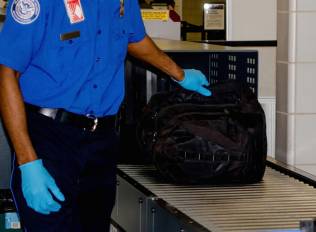
    Akeem Rasheen Lewis allegedly flew into the Queens, New York airport on Sept. 28 with three bottles of liquor in his duty-free bag, according to Customs and Border Protection. But agents at the airport noticed that the bottles appeared to be tampered with, and they pulled Lewis aside to a private search room where they allegedly found three powdery packages wrapped in clear plastic. 

    “This seizure demonstrates the dynamic border environment in which CBP officers operate at JFK,” said Frank Russo, the agency’s New York Field Operations acting director. “Our officers are determined to adapt and respond to these threats in an effort to protect the American people.”

    Lewis was arrested and turned over to Homeland Security Investigations. 

    Though the boozy bust raised some eyebrows, it’s not the agency’s weirdest—not even by a long shot. 

    Customs and Border Protection officials routinely intercept drugs and other illicit supplies stashed creatively inside vegetables, vehicles and people. 

    In 2017, officials uncovered more than $30,000 of pot hidden inside a hearse traveling near Tombstone, Arizona (yes, really). That same year, they turned up 40 pounds of meth hidden in the bumpers of a car in Texas. In another bust, authorities found 80 pounds of pot and coke hidden inside buckets of grease near the Mexican border. 

    Then there were the cans of tuna and corn actually filled with seven pounds of blow, the shipment of lettuce covering 3,700 pounds of pot, the speaker box full of heroin and the shipment of key limes that were actually poorly disguised packets of marijuana. And that was all just in 2017. 

    One of this year’s juiciest border busts happened in the spring, when agents in Texas stopped a tractor-trailer hauling 41 pounds of heroin hidden inside a supposed shipment of tomatoes

    The 18-wheeler was trying to pass through the checkpoint at the Pharr International Bridge when drug-sniffing dogs got a whiff of something amiss. Inside, they found roughly $1.6 million of smack. 

    Even though there are some consistent favorites when it comes to smuggling, traffickers in recent years have branched out and gotten creative, turning to drones, catapults and air compression guns. And, to get around border walls and vigilant agents, smugglers have started using speedboats to zip over from Mexico and bring in clandestine supplies, according to a New York Times report last year.

    From 2011 to 2016, authorities detected more than 300 such attempts to traffic by sea—and that’s only the ones they caught. 

    View the original article at thefix.com

  • Bananas Donated To Prison Contained $18M Worth of Cocaine

    Bananas Donated To Prison Contained $18M Worth of Cocaine

    The two unclaimed pallets of ripe bananas were filled with a lot more than potassium. 

    A Texas prison got much more than it bargained for, when a shipment of donated bananas bound for the penitentiary was found to contain nearly $18 million worth of cocaine

    “Sometimes, life gives you lemons. Sometimes, it gives you bananas. And sometimes, it gives you something you’d never expect!” the Texas Department of Criminal Justice wrote in a Facebook post.

    According to NPR, representatives from the Ports of America in Freeport, Texas contacted the department when two pallets’ worth of ripe bananas were left unclaimed at the port. The port agreed to donate the fruit to the Wayne Scott Unit prison farm in Brazoria County so they could be consumed before they went bad. 

    “Two sergeants of the Scott Unit arrived to pick them up, and discovered something not quite right,” the department wrote. 

    When the correctional officers were loading the 45 boxes of bananas, one noticed that a particular box felt different.

    “They snipped the straps, pulled free the box, and opened it up. Inside, under a bundle of bananas, he found another bundle! Inside that? What appeared to be a white powdery substance,” the department wrote. 

    That led to the whole shipment being searched and authorities found 540 packages of cocaine with a street value of $17.8 million. 

    “U.S. Customs arrived on the scene, and the substance tested positive for cocaine,” the department wrote. “Customs agents then searched each box on the two pallets, and they were all ripe and loaded. Once all 45 boxes had been emptied, what was left was quite the cache.”

    The department praised the attentiveness of the corrections officers who followed his gut.

    “With an instinct that something just wasn’t quite right, our guys uncovered 540 packages of cocaine within the shipment, with an estimated street value of $17,820,000!” the department wrote. 

    The Drug Enforcement Administration and U.S. Customs and Border Protection are investigating the cocaine shipment. They have not released where the shipment came from or who the intended recipient was.

    Apparently, shipping cocaine in bananas is relatively common. In April, Spanish police seized nearly 9 tons of cocaine in a shipment of bananas from Colombia. Albanian, Romanian and German police have also uncovered cocaine in banana shipments shipped from Colombia, the largest producer of cocaine.

    View the original article at thefix.com

  • Woman Caught Trying To Smuggle Cocaine In Heels For Online Charmer

    Woman Caught Trying To Smuggle Cocaine In Heels For Online Charmer

    The woman believed she was just smuggling artifacts for a promising love interest. 

    Before a charlatan offering an internet romance lured her into smuggling 2 kilograms of cocaine in her gold high heels, Denise Marie Woodrum once dreamed of becoming a nun. 

    But after crippling medical debt, a difficult surgery, a tough divorce, the loss of her job and a long battle with depression, the Missouri woman’s devout faith alone wasn’t enough to get her through.

    Maybe, she thought, her new lover—a mysterious online charmer known as Hendrik Cornelius—was. 

    Instead, the short-lived internet romance with the mystery Lothario she never actually met landed Woodrum in an Australian prison. She was reportedly sentenced last week to 7.5 years behind bars for her role in the smuggling scheme, a baffling illicit plot she claimed she knew nothing about. 

    “There are fraudsters out there who are relying on women who are vulnerable,” said her lawyer, Rebecca Neil, according to the Sydney Morning Herald. “She was groomed to provide a financial gain for this person, Hendrik Cornelius, whatever person or persons it was behind this identity.”

    The series of personal dramas that ended in the Aussie hoosegow started years earlier in California. Woodrum had been living with her husband and working as a grade school teacher when her marriage collapsed, according to the Washington Post.

    She moved to Montana and into her father’s condo, but her life continued on a downward slide until she found herself saddled with medical debt and selling vitamins at the mall.

    Then in the spring of 2017, she finally saw hope, a desperate grasp at something new that played out over the course of hundreds of text messages.

    “Can you promise you will never leave me?” Woodrum wrote in a message, according to the Sydney paper. “You are my Only and First True Family!!!” 

    It may have seemed that way at the time, but when Woodrum found herself at the airport with a key of coke and some hard questions to answer, Cornelius was nowhere to be found. 

    The then-50-year-old started her ill-fated smuggling run in Missouri, then flew to Texas, then Trindad and Tobago, then Suriname. Then, she hopped back to Trinidad and Tobago, then Miami, then Los Angeles and finally Sydney. 

    But when she touched down in the harbor city, her bags were flagged for additional inspection—and a swab test and X-rays found a heel full of blow.

    “How much did they put in the shoes?” Woodrum allegedly asked while the felonious footwear went through the scanner. “Sorry, just talking to myself,” she added. 

    Despite that muttered question, Woodrum consistently told the courts she’d been duped, and that she thought she was just bringing artifacts for the man she’d never met.

    District Court Judge Penelope Wass didn’t buy it, deeming her story “at times unbelievable” and noting the apparent lack of contrition.

    “I am being asked to accept that unknown to the offender the relationship was not genuine and created by the internet to dupe the offender,” Wass said, according to BuzzFeed. “There is a limit to which even her own expressions show she is genuinely remorseful for her conduct, rather than the position she now finds herself in.”

    And so, on Thursday, the New South Wales District Court sentenced Woodrum to a maximum of 7.5 years in the pen. She’ll be eligible for parole in 2022.

    View the original article at thefix.com

  • Whistleblower Alleges Tesla Covered Up Employee's Drug Dealing Ties

    Whistleblower Alleges Tesla Covered Up Employee's Drug Dealing Ties

    Whistleblower Karl Hansen alleges that raising those concerns to Tesla management was what got him fired in mid-July.

    Last week, a former Tesla security employee filed an explosive tip with the Securities and Exchange Commission, claiming the company hacked employee cell phones and turned a blind eye to drug dealing and large-scale theft at the Nevada Gigafactory.

    Whistleblower Karl Hansen claimed that raising those concerns to Tesla management was what got him fired mid-July, according to The Mercury News. Hansen lodged his complaint with the feds on August 9, according to his attorney Stuart Meissner, of the New York-based firm Meissner Associates. 

    The sweeping complaint claims that Tesla spied on its own workers by wiretapping their phones and hacking their computers, including those of another recently axed whistleblower, Martin Tripp. 

    Hansen also accused the company of keeping secret the results of its internal probe into a cartel-connected coke- and meth-dealing ring that one employee operated out of the Nevada site, a claim to which the DEA supposedly alerted the company.

    On top of that, Hansen alleges that Tesla neglected to disclose information about $37 million worth of raw materials stolen this year, an incident that supposedly led to the firing of another worker who reported it all to police. 

    Tesla fired back against the allegations with its own statement, saying the claims were “taken very seriously” when Hansen came forward with them—but ultimately, the company claimed, they couldn’t be proven. 

    “Some of his claims are outright false,” the company said, according to a statement published by CNBC. “Others could not be corroborated, so we suggested additional investigative steps to try and validate the information he had received second-hand from a single anonymous source.”

    But, Tesla claimed, Hansen refused to keep speaking with the company. 

    “It seems strange that Mr. Hansen would claim that he is concerned about something happening within the company,” Tesla added, “but then refuse to engage with the company to discuss the information that he believes he has.”

    Elon Musk was more to-the-point in his appraisal of Hansen. 

    “This guy is super [nuts],” he wrote in a Twitter DM to a Gizmodo reporter, using the peanut emoji to drive home the point. 

    “He is simultaneously saying that our security sucks (it’s not great, but I’m pretty sure we aren’t a branch of the Sinaloa cartel like he claims) and that we have amazing spying ability,” Musk added. “Those can’t both be true.”

    View the original article at thefix.com

  • Colombian Peace Deal Leads To More Drugs & Violence In Rebel Zones

    Colombian Peace Deal Leads To More Drugs & Violence In Rebel Zones

    “When the peace process started, we saw a great future for Ituango, but now, my God, things are worse than they were before.”

    When the Colombian government reached a deal with the guerrilla group, FARC, in 2016, it was supposed to usher in a new era of peace for the South American nation, and transform an economy that relied heavily on cocaine production. 

    However, according to a report by SF Gate, the agreement has led to increased violence in some territories as new guerrillas move in to take the place of the FARC. 

    “When the peace process started, we saw a great future for (the town of) Ituango, people started coming back after many years,” said Gladys Zapata, who works in a local school. “There was a lot of hope, but now, my God, things are worse than they were before.”

    As part of the peace settlement, the government was supposed to come into areas like Ituango, which were long controlled by the FARC. The government promised to provide security and crop replacement for farmers who grow coca. However, that hasn’t come through. 

    “What’s happening is a criminal reconfiguration for the control of territory and illegal economies,” said Ariel Avila, a political analyst at the Peace and Reconciliation Foundation in Bogotá. “No one counted on the government being so slow in arriving in this area.”

    This has frustrated former FARC fighters, some of whom have aligned with new guerrilla groups when promised work on government projects did not come through. 

    “They left us with nothing but our underpants,” a former fighter said.

    The Gulf Clan, a group known for trafficking cocaine, has taken hold in Ituango, bringing in intense violence, including roadside executions. 

    “We decided to continue the struggle due to the government’s failure to comply with the peace accord and due to the murders of ex-combatants and social leaders,” one fighter who joined the group said. 

    People working toward peace in the district have received death threats and many have left the area. In addition, local farmers who were used to paying a tax to the FARC often have crops or animals seized by the new group without compensation.

    “I want to get out of this hell,” said a woman whose 18-year-old son had been murdered. 

    In the meantime, without efforts to eradicate coca, cocaine production continues to surge. Last year, officials warned of a “tidal wave” of cocaine coming into the U.S., noting that Colombia was producing more cocaine than ever before. The drug is increasingly being laced with synthetic opioids like fentanyl, officials report, making it even more dangerous for users. 

    View the original article at thefix.com