Tag: coping mechanisms

  • Are Social Pressures Making Women Drink More?

    Are Social Pressures Making Women Drink More?

    A recent op-ed examined some of the reasons why women are drinking more alcohol than ever before.

    Drinking used to be thought of as a boys’ club, and men have traditionally used alcohol had higher rates than women. However, in recent decades women’s drinking has expanded dramatically, and social factors may be to blame. 

    According to the CDC, the percentage of American women who drink more than once a week has increased dramatically, from 45% in 2002 to 67%. 

    Writing for The Bold Italic, Ginny Hogan examined the social pressures that may be affecting the rate in which women are drinking. 

    “The reality is that women often drink for different reasons than men do, and it’s not a stretch to think that those reasons often stem from social pressures that women face but men don’t,” Hogan writes. 

    Many women feel pressured to relax, even as they deal with higher levels of anxiety than men. Rather than showing that stress to people in their lives, many women opt to drink to mask it. 

    “When we put social pressure on women to not ever appear stressed or anxious, I worry that we instead make alcohol a more appealing option,” Hogan writes. 

    In addition, alcohol has become a marker of many female social groups, whether it is symbolizing high-powered career women or moms who gather together and bond over wine. 

    “Society tends to admire women who can play hard and work hard — to be cheerful and warm even in the face of negative surroundings or working conditions,” Hogan writes. 

    In popular culture, successful women are often shown sipping a drink. 

    “Tumblers of brandy, whiskey sours and fishbowls of merlot are synonymous with female glass-ceiling-smashing in TV shows like The Good Fight, The Good Wife, Scandal, Killing Eve, The Killing; I honestly can’t think of a successful female protagonist on TV who isn’t a hard drinker,” said Catherine Gray, author of The Unexpected Joy of Being Sober.

    Finally, dating while sober can put even more pressure on women. 

    “I definitely feel like not drinking ups the stakes for going on a date with me — if getting a drink is the most casual meet-up, it’s like, ‘I’m sorry, you need to commit to coffee and a day date, and I’m now occupying your weekend,’” comedian Molly Brown told Hogan. 

    Ultimately, pushing back on some of these social pressures could be a way to help women reduce their drinking, if that’s something they desire, Hogan writes. 

    “I want women to feel OK being in bad moods, to speak up if someone is mistreating them, to be comfortable with boring their date and to turn down happy-hour invitations. If women are able to do this more often, I wonder if we could use alcohol as a way to enhance our lives instead of often suppressing them,” she wrote. 

    View the original article at thefix.com

  • Daniel Radcliffe Used Alcohol To Cope With Fame

    Daniel Radcliffe Used Alcohol To Cope With Fame

    Radcliffe discussed his past relationship with alcohol and decision to get sober on “Off Camera With Sam Jones.”

    Actor Daniel Radcliffe, who shot to fame when he was cast as Harry Potter, said that he used alcohol to cope with his sudden fame. 

    Radcliffe was discussing his sobriety on “Off Camera With Sam Jones.” According to E! News, Radcliffe was uncomfortable with how often he was recognized in his teens after he starred in the Harry Potter films. He would drink to cope with that anxiety, but realized that just led to more attention. 

    “There is an awareness that I really struggled with particularly in my late teens when I was going out to places for the first time where you would feel…again it could have largely been in my head but…you would feel watched when you went into a bar, when you went into a pub,” said Radcliffe, who is now 29. “Then, in my case, the quickest way of forgetting about the fact that you were being watched was to get very drunk and then as you get very drunk, you become aware that, oh people are watching more now because now I’m getting very drunk, so I should probably drink more to ignore that more.”

    Radcliffe said that it took him some time to break this cycle, but he was able to do it with the help of family

    “It took a few years and it took a couple of attempts. Ultimately, it was my own decision…I woke up one morning after a night going, ‘This is probably not good.’”

    He said in part his excessive drinking was an attempt to reconcile his new lifestyle. 

    “When I think of the sort of chaos that I used to invite into my life, I’m really much happier now and I think there was some part of me that was like actors have to be like crazy, cool drunks. I have to live up to this weird image that I have in my head of what it is to be a famous actor or something.”

    He also felt that he couldn’t be open about the downsides of his fame. 

    “Part of the thing is the expectation that you should just be delighted all the time. You have a great job, you’re wealthy, you don’t have a right to ever feel sad or to not be excited about the whole thing all the time and I think that’s a pressure as well.”

    Despite the challenges, he said he’s still grateful for the role that defined his career. 

    “Even at the lowest point, I still loved my job so much and I loved going to set and there was never a day where my own shit would affect how I was on set. There was never a point where I was like ‘I wished this didn’t happen to me. I wish I wasn’t Harry Potter,’ like that just didn’t happen.”

    View the original article at thefix.com

  • Can A Facebook Break Help Mental Health?

    Can A Facebook Break Help Mental Health?

    A new study examined whether deactivating Facebook could have a positive effect on mental health.

    The connection between social media and mental health is nothing new, as more research implies that regular use of platforms such as Facebook can take a negative toll on users. 

    In fact, a new “Gold Standard” study from Stanford University and New York University researchers indicates that deactivating Facebook can have positive effects on one’s mental health. 

    According to Fast Company, researchers in the study sought out 2,844 Facebook users via Facebook ads. They asked the users to take part in an in-depth questionnaire about “overall well-being, political views, and daily routine.”

    Of those, half were randomly chosen to be paid in order to deactivate their Facebook accounts for a full month. The accounts were monitored to make sure they remained deactivated. Over the four weeks, researchers studied the moods of the participants. 

    “Deactivation caused small but significant improvements in well-being, and in particular on self-reported happiness, life satisfaction, depression, and anxiety,” researchers wrote. “Effects on subjective well-being as measured by responses to brief daily text messages are positive but not significant.”

    Despite the increase in well-being, researchers made sure to note that Facebook is beneficial for users in some cases. 

    “Our participants’ answers in free response questions and follow-up interviews make clear the diverse ways in which Facebook can improve people’s lives, whether as a source of entertainment, a means to organize a charity or an activist group, or a vital social lifeline for those who are otherwise isolated,” they wrote. “Any discussion of social media’s downsides should not obscure the basic fact that it fulfills deep and widespread needs.”

    In conclusion, researchers noted that by not using Facebook, overall online activity was reduced and replaced by real-life activities such as spending time with friends and family and watching Netflix. They also added that participants who deactivated their accounts were found to have “lower levels of political polarization and news knowledge, and an increase in subjective well-being.”

    “We find that while deactivation makes people less informed, it also makes them less polarized by at least some measures, consistent with the concern that social media have played some role in the recent rise of polarization in the U.S.,” researchers wrote. 

    Additionally, researchers found that participants who had deactivated their accounts continued to spend less time on Facebook even in the weeks after the study had ended. 

    “The trajectory of views on social media—with early optimism about great benefits giving way to alarm about possible harms—is a familiar one,” researchers concluded. “Innovations from novels to TV to nuclear energy have had similar trajectories. Along with the excellent existing work by other researchers, we hope that our analysis can help move the discussion from simplistic caricatures to hard evidence, and to provide a sober assessment of the way a new technology affects both individual people and larger social institutions.”

    View the original article at thefix.com

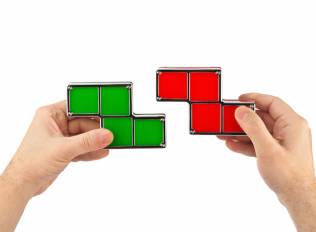
  • Can Tetris Help Alleviate Anxiety?

    Can Tetris Help Alleviate Anxiety?

    Researchers explored whether the classic game could have positive effects on those battling anxiety.

    Could an old-school video game help ease your anxiety? New research points to yes. 

    According to NPR, Kate Sweeny, a psychologist at the University of California, Riverside, conducted research into whether the game Tetris can have positive effects for those struggling with anxiety. 

    The premise of the game is to rotate and adjust moving tiles so they fit into a flat line at the bottom of the screen.

    “Years of my life were lost disappearing into a game of Tetris on my Nintendo system,” Sweeny told NPR.

    The game, according to Sweeny, can help ease anxiety by allowing players to enter a state psychologists call “flow.”

    “The state of flow is one where you’re completely absorbed or engaged in some kind of activity,” Sweeny told NPR. “You lose your self-awareness, and time is just flying by.”

    In conducting the study, Sweeny’s team focused on people who were waiting for “uncertain, potentially life-altering news” with the idea that playing Tetris could help their minds focus elsewhere for a period of time.

    Specifically, they took a group of 300 college students and told them their peers would be rating how attractive they were. 

    “I know, it’s kind of cruel, but we found it’s a really effective way to get people stressed out,” Sweeny told NPR.

    While the students were waiting for the results, they were instructed to play Tetris. There were three levels of difficulty assigned to different students: one slow, easy and boring; one fast, challenging and frustrating; and one classic version, meaning the game is adjusted based on the player’s ability. 

    While players still reported varying degrees of worry, the group that played the classic version reported slightly increased levels of positive emotions and slightly decreased levels of negative ones. 

    “It wasn’t a huge difference, but we think it’s noticeable,” Sweeny told NPR. “And over time, it can add up.”

    Games aren’t the only way to reach a state of flow, according to Elizabeth Dunn, a psychologist at the University of British Columbia who studies happiness.

    “Think of the activity that grabs your attention and doesn’t let it go,” Dunn told NPR. “For me, it’s mountain biking.” 

    While Dunn was not involved in the research, she says the results were not surprising.

    “I can’t say I found this study particularly surprising at all,” she told NPR. “Mostly because, based on previous research, it’s hard to find a situation where the experience of flow isn’t a good thing.”

    Dunn also noted that the research indicates “that even in tough moments, we should push ourselves to do something challenging to get us out of the moment.”

    View the original article at thefix.com