Tag: covid-19

  • Why using fear to promote COVID-19 vaccination and mask wearing could backfire

    While the pandemic stakes might justify using hard-hitting strategies, the nation’s social and political context right now might cause fear tactics to backfire.

    You probably still remember public service ads that scared you: The cigarette smoker with throat cancer. The victims of a drunk driver. The guy who neglected his cholesterol lying in a morgue with a toe tag.

    With new, highly transmissible variants of SARS-CoV-2 now spreading, some health professionals have started calling for the use of similar fear-based strategies to persuade people to follow social distancing rules and get vaccinated.

    There is compelling evidence that fear can change behavior, and there have been ethical arguments that using fear can be justified, particularly when threats are severe. As public health professors with expertise in history and ethics, we have been open in some situations to using fear in ways that help individuals understand the gravity of a crisis without creating stigma.

    But while the pandemic stakes might justify using hard-hitting strategies, the nation’s social and political context right now might cause it to backfire.

    Fear as a strategy has waxed and waned

    Fear can be a powerful motivator, and it can create strong, lasting memories. Public health officials’ willingness to use it to help change behavior in public health campaigns has waxed and waned for more than a century.

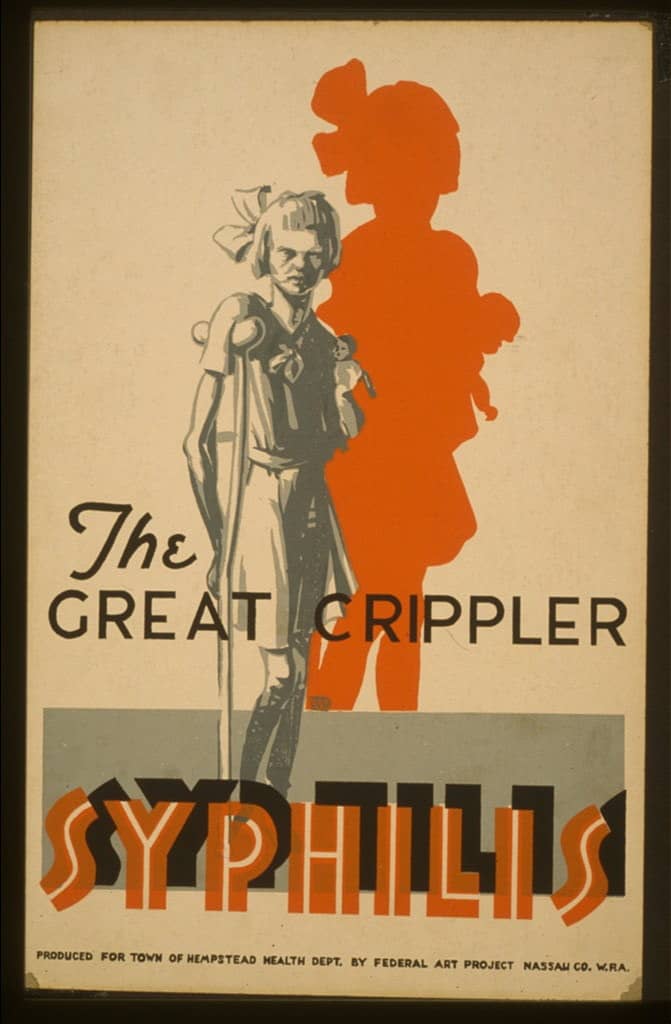
    From the late 19th century into the early 1920s, public health campaigns commonly sought to stir fear. Common tropes included flies menacing babies, immigrants represented as a microbial pestilence at the gates of the country, voluptuous female bodies with barely concealed skeletal faces who threatened to weaken a generation of troops with syphilis. The key theme was using fear to control harm from others.
    Why using fear to promote COVID-19 vaccination and mask wearing could backfire
    Library of Congress

    Following World War II, epidemiological data emerged as the foundation of public health, and use of fear fell out of favor. The primary focus at the time was the rise of chronic “lifestyle” diseases, such as heart disease. Early behavioral research concluded fear backfired. An early, influential study, for example, suggested that when people became anxious about behavior, they might tune out or even engage more in dangerous behaviors, like smoking or drinking, to cope with the anxiety stimulated by fear-based messaging.

    But by the 1960s, health officials were trying to change behaviors related to smoking, eating and exercise, and they grappled with the limits of data and logic as tools to help the public. They turned again to scare tactics to try to deliver a gut punch. It was not enough to know that some behaviors were deadly. We had to react emotionally.

    Although there were concerns about using fear to manipulate people, leading ethicists began to argue that it could help people understand what was in their self-interest. A bit of a scare could help cut through the noise created by industries that made fat, sugar and tobacco alluring. It could help make population-level statistics personal.
    Why using fear to promote COVID-19 vaccination and mask wearing could backfire
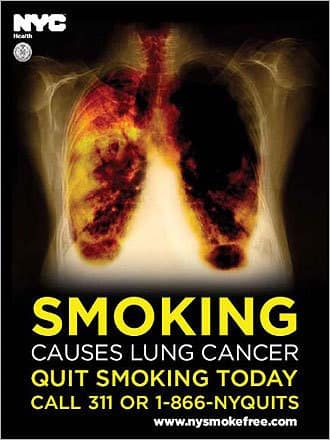
    NYC Health

    Anti-tobacco campaigns were the first to show the devastating toll of smoking. They used graphic images of diseased lungs, of smokers gasping for breath through tracheotomies and eating through tubes, of clogged arteries and failing hearts. Those campaigns worked.

    And then came AIDS. Fear of the disease was hard to untangle from fear of those who suffered the most: gay men, sex workers, drug users, and the black and brown communities. The challenge was to destigmatize, to promote the human rights of those who only stood to be further marginalized if shunned and shamed. When it came to public health campaigns, human rights advocates argued, fear stigmatized and undermined the effort.

    When obesity became a public health crisis, and youth smoking rates and vaping experimentation were sounding alarm bells, public health campaigns once again adopted fear to try to shatter complacency. Obesity campaigns sought to stir parental dread about youth obesity. Evidence of the effectiveness of this fear-based approach mounted.

    Evidence, ethics and politics

    So, why not use fear to drive up vaccination rates and the use of masks, lockdowns and distancing now, at this moment of national fatigue? Why not sear into the national imagination images of makeshift morgues or of people dying alone, intubated in overwhelmed hospitals?

    Before we can answer these questions, we must first ask two others: Would fear be ethically acceptable in the context of COVID-19, and would it work?

    For people in high-risk groups – those who are older or have underlying conditions that put them at high risk for severe illness or death – the evidence on fear-based appeals suggests that hard-hitting campaigns can work. The strongest case for the efficacy of fear-based appeals comes from smoking: Emotional PSAs put out by organizations like the American Cancer Society beginning in the 1960s proved to be a powerful antidote to tobacco sales ads. Anti-tobacco crusaders found in fear a way to appeal to individuals’ self-interests.

    At this political moment, however, there are other considerations.

    Health officials have faced armed protesters outside their offices and homes. Many people seem to have lost the capacity to distinguish truth from falsehood.

    By instilling fear that government will go too far and erode civil liberties, some groups developed an effective political tool for overriding rationality in the face of science, even the evidence-based recommendations supporting face masks as protection against the coronavirus.

    Reliance on fear for public health messaging now could further erode trust in public health officials and scientists at a critical juncture.

    The nation desperately needs a strategy that can help break through pandemic denialism and through the politically charged environment, with its threatening and at times hysterical rhetoric that has created opposition to sound public health measures.

    Even if ethically warranted, fear-based tactics may be dismissed as just one more example of political manipulation and could carry as much risk as benefit.

    Instead, public health officials should boldly urge and, as they have during other crisis periods in the past, emphasize what has been sorely lacking: consistent, credible communication of the science at the national level.

    Amy Lauren Fairchild, Dean and Professor, College of Public Health, The Ohio State University and Ronald Bayer, Professor Sociomedical Sciences, Columbia University

    This article is republished from The Conversation under a Creative Commons license. Read the original article.

  • The ‘Grief Pandemic’ Will Torment Americans for Years

    The optimism generated by vaccines and falling infection rates has blinded many Americans to the deep sorrow and depression of those around them.

    Cassandra Rollins’ daughter was still conscious when the ambulance took her away.

    Shalondra Rollins, 38, was struggling to breathe as covid overwhelmed her lungs. But before the doors closed, she asked for her cellphone, so she could call her family from the hospital.

    It was April 7, 2020 — the last time Rollins would see her daughter or hear her voice.

    The hospital rang an hour later to say she was gone. A chaplain later told Rollins that Shalondra had died on a gurney in the hallway. Rollins was left to break the news to Shalondra’s children, ages 13 and 15.

    More than a year later, Rollins said, the grief is unrelenting.

    Rollins has suffered panic attacks and depression that make it hard to get out of bed. She often startles when the phone rings, fearing that someone else is hurt or dead. If her other daughters don’t pick up when she calls, Rollins phones their neighbors to check on them.

    “You would think that as time passes it would get better,” said Rollins, 57, of Jackson, Mississippi. “Sometimes, it is even harder. … This wound right here, time don’t heal it.”

    With nearly 600,000 in the U.S. lost to covid-19 — now a leading cause of death — researchers estimate that more than 5 million Americans are in mourning, including more than 43,000 children who have lost a parent.

    The pandemic — and the political battles and economic devastation that have accompanied it — have inflicted unique forms of torment on mourners, making it harder to move ahead with their lives than with a typical loss, said sociologist Holly Prigerson, co-director of the Cornell Center for Research on End-of-Life Care.

    The scale and complexity of pandemic-related grief have created a public health burden that could deplete Americans’ physical and mental health for years, leading to more depression, substance misuse, suicidal thinking, sleep disturbances, heart disease, cancer, high blood pressure and impaired immune function.

    “Unequivocally, grief is a public health issue,” said Prigerson, who lost her mother to covid in January. “You could call it the grief pandemic.”

    Like many other mourners, Rollins has struggled with feelings of guilt, regret and helplessness — for the loss of her daughter as well as Rollins’ only son, Tyler, who died by suicide seven months earlier.

    “I was there to see my mom close her eyes and leave this world,” said Rollins, who was first interviewed by KHN a year ago in a story about covid’s disproportionate effects on communities of color. “The hardest part is that my kids died alone. If it weren’t for this covid, I could have been right there with her” in the ambulance and emergency room. “I could have held her hand.”

    The pandemic has prevented many families from gathering and holding funerals, even after deaths caused by conditions other than covid. Prigerson’s research shows that families of patients who die in hospital intensive care units are seven times more likely to develop post-traumatic stress disorder than loved ones of people who die in home hospice.

    The polarized political climate has even pitted some family members against one another, with some insisting that the pandemic is a hoax and that loved ones must have died from influenza, rather than covid. People in grief say they’re angry at relatives, neighbors and fellow Americans who failed to take the coronavirus seriously, or who still don’t appreciate how many people have suffered.

    “People holler about not being able to have a birthday party,” Rollins said. “We couldn’t even have a funeral.”

    Indeed, the optimism generated by vaccines and falling infection rates has blinded many Americans to the deep sorrow and depression of those around them. Some mourners say they will continue wearing their face masks — even in places where mandates have been removed — as a memorial to those lost.

    “People say, ‘I can’t wait until life gets back to normal,’” said Heidi Diaz Goff, 30, of the Los Angeles area, who lost her 72-year-old father to covid. “My life will never be normal again.”

    Many of those grieving say celebrating the end of the pandemic feels not just premature, but insulting to their loved ones’ memories.

    “Grief is invisible in many ways,” said Tashel Bordere, a University of Missouri assistant professor of human development and family science who studies bereavement, particularly in the Black community. “When a loss is invisible and people can’t see it, they may not say ‘I’m sorry for your loss,’ because they don’t know it’s occurred.”

    Communities of color, which have experienced disproportionately higher rates of death and job loss from covid, are now carrying a heavier burden.

    Black children are more likely than white children to lose a parent to covid. Even before the pandemic, the combination of higher infant and maternal mortality rates, a greater incidence of chronic disease and shorter life expectancies made Black people more likely than others to be grieving a close family member at any point in their lives.

    Rollins said everyone she knows has lost someone to covid.

    “You wake up every morning, and it’s another day they’re not here,” Rollins said. “You go to bed at night, and it’s the same thing.”

    A Lifetime of Loss

    Rollins has been battered by hardships and loss since childhood.

    She was the youngest of 11 children raised in the segregated South. Rollins was 5 years old when her older sister Cora, whom she called “Coral,” was stabbed to death at a nightclub, according to news reports. Although Cora’s husband was charged with murder, he was set free after a mistrial.

    Rollins gave birth to Shalondra at age 17, and the two were especially close. “We grew up together,” Rollins said.

    Just a few months after Shalondra was born, Rollins’ older sister Christine was fatally shot during an argument with another woman. Rollins and her mother helped raise two of the children Christine left behind.

    Heartbreak is all too common in the Black community, Bordere said. The accumulated trauma — from violence to chronic illness and racial discrimination — can have a weathering effect, making it harder for people to recover.

    “It’s hard to recover from any one experience, because every day there is another loss,” Bordere said. “Grief impacts our ability to think. It impacts our energy levels. Grief doesn’t just show up in tears. It shows up in fatigue, in working less.”

    Rollins hoped her children would overcome the obstacles of growing up Black in Mississippi. Shalondra earned an associate’s degree in early childhood education and loved her job as an assistant teacher to kids with special needs. Shalondra, who had been a second mother to her younger siblings, also adopted a cousin’s stepdaughter after the child’s mother died, raising the girl alongside her two children.

    Rollins’ son, Tyler, enlisted in the Army after high school, hoping to follow in the footsteps of other men in the family who had military careers.

    Yet the hardest losses of Rollins’ life were still to come. In 2019, Tyler killed himself at age 20, leaving behind a wife and unborn child.

    “When you see two Army men walking up to your door,” Rollins said, “that’s unexplainable.”

    Tyler’s daughter was born the day Shalondra died.

    “They called to tell me the baby was born, and I had to tell them about Shalondra,” Rollins said. “I don’t know how to celebrate.”

    Shalondra’s death from covid changed her daughters’ lives in multiple ways.

    The girls lost their mother, but also the routines that might help mourners adjust to a catastrophic loss. The girls moved in with their grandmother, who lives in their school district. But they have not set foot in a classroom for more than a year, spending their days in virtual school, rather than with friends.

    Shalondra’s death eroded their financial security as well, by taking away her income. Rollins, who worked as a substitute teacher before the pandemic, hasn’t had a job since local schools shut down. She owns her own home and receives unemployment insurance, she said, but money is tight.

    Makalin Odie, 14, said her mother, as a teacher, would have made online learning easier. “It would be very different with my mom here.”

    The girls especially miss their mom on holidays.

    “My mom always loved birthdays,” said Alana Odie, 16. “I know that if my mom were here my 16th birthday would have been really special.”

    Asked what she loved most about her mother, Alana replied, “I miss everything about her.”

    Grief Complicated by Illness

    The trauma also has taken a toll on Alana and Makalin’s health. Both teens have begun taking medications for high blood pressure. Alana has been on diabetes medication since before her mom died.

    Mental and physical health problems are common after a major loss. “The mental health consequences of the pandemic are real,” Prigerson said. “There are going to be all sorts of ripple effects.”

    The stress of losing a loved one to covid increases the risk for prolonged grief disorder, also known as complicated grief, which can lead to serious illness, increase the risk of domestic violence and steer marriages and relationships to fall apart, said Ashton Verdery, an associate professor of sociology and demography at Penn State.

    People who lose a spouse have a roughly 30% higher risk of death over the following year, a phenomenon known as the “the widowhood effect.” Similar risks are seen in people who lose a child or sibling, Verdery said.

    Grief can lead to “broken-heart syndrome,” a temporary condition in which the heart’s main pumping chamber changes shape, affecting its ability to pump blood effectively, Verdery said.

    From final farewells to funerals, the pandemic has robbed mourners of nearly everything that helps people cope with catastrophic loss, while piling on additional insults, said the Rev. Alicia Parker, minister of comfort at New Covenant Church of Philadelphia.

    “It may be harder for them for many years to come,” Parker said. “We don’t know the fallout yet, because we are still in the middle of it.”

    Rollins said she would have liked to arrange a big funeral for Shalondra. Because of restrictions on social gatherings, the family held a small graveside service instead.

    Funerals are important cultural traditions, allowing loved ones to give and receive support for a shared loss, Parker said.

    “When someone dies, people bring food for you, they talk about your loved one, the pastor may come to the house,” Parker said. “People come from out of town. What happens when people can’t come to your home and people can’t support you? Calling on the phone is not the same.”

    While many people are afraid to acknowledge depression, because of the stigma of mental illness, mourners know they can cry and wail at a funeral without being judged, Parker said.

    “What happens in the African American house stays in the house,” Parker said. “There’s a lot of things we don’t talk about or share about.”

    Funerals play an important psychological role in helping mourners process their loss, Bordere said. The ritual helps mourners move from denying that a loved one is gone to accepting “a new normal in which they will continue their life in the physical absence of the cared-about person.” In many cases, death from covid comes suddenly, depriving people of a chance to mentally prepare for loss. While some families were able to talk to loved ones through FaceTime or similar technologies, many others were unable to say goodbye.

    Funerals and burial rites are especially important in the Black community and others that have been marginalized, Bordere said.

    “You spare no expense at a Black funeral,” Bordere said. “The broader culture may have devalued this person, but the funeral validates this person’s worth in a society that constantly tries to dehumanize them.”

    In the early days of the pandemic, funeral directors afraid of spreading the coronavirus did not allow families to provide clothing for their loved ones’ burials, Parker said. So beloved parents and grandparents were buried in whatever they died in, such as undershirts or hospital gowns.

    “They bag them and double-bag them and put them in the ground,” Parker said. “It is an indignity.”

    Coping With Loss

    Every day, something reminds Rollins of her losses.

    April brought the first anniversary of Shalondra’s death. May brought Teacher Appreciation Week.

    Yet Rollins said the memory of her children keeps her going.

    When she begins to cry and thinks she will never stop, one thought pulls her from the darkness: “I know they would want me to be happy. I try to live on that.”

    Subscribe to KHN’s free Morning Briefing.

    View the original article at thefix.com

  • Doctors More Likely to Prescribe Opioids to Covid ‘Long Haulers,’ Raising Addiction Fears

    The study of VA patients makes it “abundantly clear that we are not prepared to meet the needs of 3 million Americans with long covid.”

    Covid survivors are at risk from a separate epidemic of opioid addiction, given the high rate of painkillers being prescribed to these patients, health experts say.

    A new study in Nature found alarmingly high rates of opioid use among covid survivors with lingering symptoms at Veterans Health Administration facilities. About 10% of covid survivors develop “long covid,” struggling with often disabling health problems even six months or longer after a diagnosis.

    For every 1,000 long-covid patients, known as “long haulers,” who were treated at a Veterans Affairs facility, doctors wrote nine more prescriptions for opioids than they otherwise would have, along with 22 additional prescriptions for benzodiazepines, which include Xanax and other addictive pills used to treat anxiety.

    Although previous studies have found many covid survivors experience persistent health problems, the new article is the first to show they’re using more addictive medications, said Dr. Ziyad Al-Aly, the paper’s lead author.

    He’s concerned that even an apparently small increase in the inappropriate use of addictive pain pills will lead to a resurgence of the prescription opioid crisis, given the large number of covid survivors. More than 3 million of the 31 million Americans infected with covid develop long-term symptoms, which can include fatigue, shortness of breath, depression, anxiety and memory problems known as “brain fog.”

    The new study also found many patients have significant muscle and bone pain.

    The frequent use of opioids was surprising, given concerns about their potential for addiction, said Al-Aly, chief of research and education service at the VA St. Louis Health Care System.

    “Physicians now are supposed to shy away from prescribing opioids,” said Al-Aly, who studied more than 73,000 patients in the VA system. When Al-Aly saw the number of opioids prescriptions, he said, he thought to himself, “Is this really happening all over again?”

    Doctors need to act now, before “it’s too late to do something,” Al-Aly said. “We must act now and ensure that people are getting the care they need. We do not want this to balloon into a suicide crisis or another opioid epidemic.”

    As more doctors became aware of their addictive potential, new opioid prescriptions fell, by more than half since 2012. But U.S. doctors still prescribe far more of the drugs — which include OxyContin, Vicodin and codeine — than physicians in other countries, said Dr. Andrew Kolodny, medical director of opioid policy research at Brandeis University.

    Some patients who became addicted to prescription painkillers switched to heroin, either because it was cheaper or because they could no longer obtain opioids from their doctors. Overdose deaths surged in recent years as drug dealers began spiking heroin with a powerful synthetic opioid called fentanyl.

    More than 88,000 Americans died from overdoses during the 12 months ending in August 2020, according to the Centers for Disease Control and Prevention. Health experts now advise doctors to avoid prescribing opioids for long periods.

    The new study “suggests to me that many clinicians still don’t get it,” Kolodny said. “Many clinicians are under the false impression that opioids are appropriate for chronic pain patients.”

    Hospitalized covid patients often receive a lot of medication to control pain and anxiety, especially in intensive care units, said Dr. Greg Martin, president of the Society of Critical Care Medicine. Patients placed on ventilators, for example, are often sedated to make them more comfortable.

    Martin said he’s concerned by the study’s findings, which suggest patients are unnecessarily continuing medications after leaving the hospital.

    “I worry that covid-19 patients, especially those who are severely and critically ill, receive a lot of medications during the hospitalization, and because they have persistent symptoms, the medications are continued after hospital discharge,” Martin said.

    While some covid patients are experiencing muscle and bone pain for the first time, others say the illness has intensified their preexisting pain.

    Rachael Sunshine Burnett has suffered from chronic pain in her back and feet for 20 years, ever since an accident at a warehouse where she once worked. But Burnett, who first was diagnosed with covid in April 2020, said the pain soon became 10 times worse and spread to the area between her shoulders and spine. Although she was already taking long-acting OxyContin twice a day, her doctor prescribed an additional opioid called oxycodone, which relieves pain immediately. She was reinfected with covid in December.

    “It’s been a horrible, horrible year,” said Burnett, 43, of Coxsackie, New York.

    Doctors should recognize that pain can be a part of long covid, Martin said. “We need to find the proper non-narcotic treatment for it, just like we do with other forms of chronic pain,” he said.

    The CDC recommends a number of alternatives to opioids — from physical therapy to biofeedback, over-the-counter anti-inflammatories, antidepressants and anti-seizure drugs that also relieve nerve pain.

    The country also needs an overall strategy to cope with the wave of post-covid complications, Al-Aly said

    “It’s better to be prepared than to be caught off guard years from now, when doctors realize … ‘Oh, we have a resurgence in opioids,’” Al-Aly said.

    Al-Aly noted that his study may not capture the full complexity of post-covid patient needs. Although women make up the majority of long-covid patients in most studies, most patients in the VA system are men.

    The study of VA patients makes it “abundantly clear that we are not prepared to meet the needs of 3 million Americans with long covid,” said Dr. Eric Topol, founder and director of the Scripps Research Translational Institute. “We desperately need an intervention that will effectively treat these individuals.”

    Al-Aly said covid survivors may need care for years.

    “That’s going to be a huge, significant burden on the health care system,” Al-Aly said. “Long covid will reverberate in the health system for years or even decades to come.”
     

    Subscribe to KHN’s free Morning Briefing.

    View the original article at thefix.com

  • New Intergenerational Trauma Workbook Offers Process Strategies for Healing

    New Intergenerational Trauma Workbook Offers Process Strategies for Healing

    By following the clearly outlined steps to healing in the workbook, one can start healing the emotional wounds brought on by unaddressed intergenerational trauma.

    In the Intergenerational Trauma Workbook, Dr. Lynne Friedman-Gell, PhD, and Dr. Joanne Barron, PsyD, apply years of practical clinical experience to foster a healing journey. Available on Amazon, this valuable addition to both the self-help and mental health categories is perfect for a post-pandemic world. With so many people uncovering intergenerational trauma while isolated during the extended quarantines, the co-authors offer a direct approach. The book shows how to confront and ultimately integrate past demons from within the shadowy depths of the human psyche.

    Addressing such a difficult challenge, the Intergenerational Trauma Workbook: Strategies to Support Your Journey of Discovery, Growth, and Healing provides a straightforward and empathetic roadmap that leads to actual healing. Dr. Gell and Dr. Barron explain how unintegrated memories affect a person negatively without the individual being aware of what is happening. Rather than being remembered or recollected, the unintegrated memories become painful symptomology.

    By following the clearly outlined steps to healing in the workbook, finding freedom from what feels like chronic pain of the mind and the body is possible. Yes, the emotional wounds of childhood often fail to integrate into the adult psyche. Never processed or even addressed, they morph into demons. In response, the workbook is all about processing.

    Clearly-Defined Chapters about Processing Intergenerational Trauma

    The workbook is divided into clearly defined chapters that provide a roadmap to recovery from trauma. In the first chapter, the authors focus on “Understanding Intergenerational Trauma,” providing the reader with an orientation to the subject matter while defining key terminology for future lessons. From a multitude of perspectives, they mine the depths of intergenerational trauma. Expressing with a clarity of voice balanced with compassion, they write, “Intergenerational trauma enables a traumatic event to affect not only the person who experiences it but also others to whom the impact is passed down through generations.”

    New Intergenerational Trauma Workbook Offers Process Strategies for HealingThe chapters carefully outline how the workbook is to be used and the psychological underpinnings behind the exercises. Moreover, they use individual stories to demonstrate the ideas being expressed. Thus, moments of identification are fostered where someone using the workbook can see themselves in the examples being presented. Overall, the organization of the workbook is well-designed to help someone face the difficult challenge of dealing with their legacy of intergenerational trauma

    In terms of the chapter organization, the authors make the smart choice to start with the microcosm of the individual and their personal challenges. By beginning with the person’s beliefs and emotions using the workbook, these chapters keep the beginning stages of healing contained. Afterward, a chapter on healing the body leads to expanding the process to others and the healing of external relationships. As a tool to promote actual recovery, the Intergenerational Trauma Workbook is successful because it does not rush the process. It allows for a natural flow of healing at whatever pace fits the needs and personal experiences of the person using the workbook.

    A Strong Addition to Self-Help Shelves in a Time of Trauma Awareness

    In a 2017 interview that I did for The Fix with Dr. Gabor Maté, one of the preeminent addictionologists of our time, he spoke about how the United States suffered from traumaphobia. The rise of the 21st-century divide in our country came about because our social institutions and popular culture avoid discussing trauma. Beyond avoiding, they do everything they can to distract us from the reality of trauma. However, after the pandemic, I don’t believe that these old mechanisms will work anymore.

    Losing their functionality, people will need tools to deal with the intergenerational trauma that has been repressed on both microcosmic and macrocosmic levels for such a long time. The pain from below is rising, and it can no longer be ignored. In need of practical and accessible tools, many people will be relieved first to discover and then use the Intergenerational Trauma Workbook by Dr. Lynne Friedman-Gell and Dr. Joanne Barron. In this resonant work, they will be able to find a way to begin the healing process.

    View the original article at thefix.com

  • Kids Already Coping With Mental Disorders Spiral as Pandemic Topples Vital Support Systems

    When states and communities fail to provide children the services they need to live at home, kids can deteriorate and even wind up in jail.

    A bag of Doritos, that’s all Princess wanted.

    Her mom calls her Princess, but her real name is Lindsey. She’s 17 and lives with her mom, Sandra, a nurse, outside Atlanta. On May 17, 2020, a Sunday, Lindsey decided she didn’t want breakfast; she wanted Doritos. So she left home and walked to Family Dollar, taking her pants off on the way, while her mom followed on foot, talking to the police on her phone as they went.

    Lindsey has autism. It can be hard for her to communicate and navigate social situations. She thrives on routine and gets special help at school. Or got help, before the coronavirus pandemic closed schools and forced tens of millions of children to stay home. Sandra said that’s when their living hell started.

    “It’s like her brain was wired,” she said. “She’d just put on her jacket, and she’s out the door. And I’m chasing her.”

    On May 17, Sandra chased her all the way to Family Dollar. Hours later, Lindsey was in jail, charged with assaulting her mom. (KHN and NPR are not using the family’s last name.)

    Lindsey is one of almost 3 million children in the U.S. who have a serious emotional or behavioral health condition. When the pandemic forced schools and doctors’ offices to close last spring, it also cut children off from the trained teachers and therapists who understand their needs.

    As a result, many, like Lindsey, spiraled into emergency rooms and even police custody. Federal data shows a nationwide surge of kids in mental health crisis during the pandemic — a surge that’s further taxing an already overstretched safety net.

    ‘Take Her’

    Even after schools closed, Lindsey continued to wake up early, get dressed and wait for the bus. When she realized it had stopped coming, Sandra said, her daughter just started walking out of the house, wandering, a few times a week.

    In those situations, Sandra did what many families in crisis report they’ve had to do since the pandemic began: race through the short list of places she could call for help.

    First, her state’s mental health crisis hotline. But they often put Sandra on hold.

    “This is ridiculous,” she said of the wait. “It’s supposed to be a crisis team. But I’m on hold for 40, 50 minutes. And by the time you get on the phone, [the crisis] is done!”

    Then there’s the local hospital’s emergency room, but Sandra said she had taken Lindsey there for previous crises and been told there isn’t much they can do.

    That’s why, on May 17, when Lindsey walked to Family Dollar in just a red T-shirt and underwear to get that bag of Doritos, Sandra called the last option on her list: the police.

    Sandra arrived at the store before the police and paid for the chips. According to Sandra and police records, when an officer approached, Lindsey grew agitated and hit her mom on the back, hard.

    Sandra said she explained to the officer: “‘She’s autistic. You know, I’m OK. I’m a nurse. I just need to take her home and give her her medication.’”

    Lindsey takes a mood stabilizer, but because she left home before breakfast, she hadn’t taken it that morning. The officer asked if Sandra wanted to take her to the nearest hospital.

    The hospital wouldn’t be able to help Lindsey, Sandra said. It hadn’t before. “They already told me, ‘Ma’am, there’s nothing we can do.’ They just check her labs, it’s fine, and they ship her back home. There’s nothing [the hospital] can do,” she recalled telling the officer.

    Sandra asked if the police could drive her daughter home so the teen could take her medication, but the officer said no, they couldn’t. The only other thing they could do, the officer said, was take Lindsey to jail for hitting her mom.

    “I’ve tried everything,” Sandra said, exasperated. She paced the parking lot, feeling hopeless, sad and out of options. Finally, in tears, she told the officers, “Take her.”

    Lindsey does not like to be touched and fought back when authorities tried to handcuff her. Several officers wrestled her to the ground. At that point, Sandra protested and said an officer threatened to arrest her, too, if she didn’t back away. Lindsey was taken to jail, where she spent much of the night until Sandra was able to post bail.

    Clayton County Solicitor-General Charles Brooks denied that Sandra was threatened with arrest and said that while Lindsey’s case is still pending, his office “is working to ensure that the resolution in this matter involves a plan for medication compliance and not punitive action.”

    Sandra isn’t alone in her experience. Multiple families interviewed for this story reported similar experiences of calling in the police when a child was in crisis because caretakers didn’t feel they had any other option.

    ‘The Whole System Is Really Grinding to a Halt’

    Roughly 6% of U.S. children ages 6 through 17 are living with serious emotional or behavioral difficulties, including children with autism, severe anxiety, depression and trauma-related mental health conditions.

    Many of these children depend on schools for access to vital therapies. When schools and doctors’ offices stopped providing in-person services last spring, kids were untethered from the people and supports they rely on.

    “The lack of in-person services is really detrimental,” said Dr. Susan Duffy, a pediatrician and professor of emergency medicine at Brown University.

    Marjorie, a mother in Florida, said her 15-year-old son has suffered during these disruptions. He has attention deficit hyperactivity disorder and oppositional defiant disorder, a condition marked by frequent and persistent hostility. Little things — like being asked to do schoolwork — can send him into a rage, leading to holes punched in walls, broken doors and violent threats. (Marjorie asked that we not use the family’s last name or her son’s first name to protect her son’s privacy and future prospects.)

    The pandemic has shifted both school and her son’s therapy sessions online. But Marjorie said virtual therapy isn’t working because her son doesn’t focus well during sessions and tries to watch TV instead. Lately, she has simply been canceling them.

    “I was paying for appointments and there was no therapeutic value,” Marjorie said.

    The issues cut across socioeconomic lines — affecting families with private insurance, like Marjorie, as well as those who receive coverage through Medicaid, a federal-state program that provides health insurance to low-income people and those with disabilities.

    In the first few months of the pandemic, between March and May, children on Medicaid received 44% fewer outpatient mental health services — including therapy and in-home support — compared to the same time period in 2019, according to the Centers for Medicare & Medicaid Services. That’s even after accounting for increased telehealth appointments.

    And while the nation’s ERs have seen a decline in overall visits, there was a relative increase in mental health visits for kids in 2020 compared with 2019.

    The Centers for Disease Control and Prevention found that, from April to October last year, hospitals across the U.S. saw a 24% increase in the proportion of mental health emergency visits for children ages 5 to 11, and a 31% increase for children ages 12 to 17.

    “Proportionally, the number of mental health visits is far more significant than it has been in the past,” said Duffy. “Not only are we seeing more children, more children are being admitted” to inpatient care.

    That’s because there are fewer outpatient services now available to children, she said, and because the conditions of the children showing up at ERs “are more serious.”

    This crisis is not only making life harder for these kids and their families, but it’s also stressing the entire health care system.

    Child and adolescent psychiatrists working in hospitals around the country said children are increasingly “boarding” in emergency departments for days, waiting for inpatient admission to a regular hospital or psychiatric hospital.

    Before the pandemic, there was already a shortage of inpatient psychiatric beds for children, said Dr. Christopher Bellonci, a child psychiatrist at Judge Baker Children’s Center in Boston. That shortage has only gotten worse as hospitals cut capacity to allow for more physical distancing within psychiatric units.

    “The whole system is really grinding to a halt at a time when we have unprecedented need,” Bellonci said.

    ‘A Signal That the Rest of Your System Doesn’t Work’

    Psychiatrists on the front lines share the frustrations of parents struggling to find help for their children.

    Part of the problem is there have never been enough psychiatrists and therapists trained to work with children, intervening in the early stages of their illness, said Dr. Jennifer Havens, a child psychiatrist at New York University.

    “Tons of people showing up in emergency rooms in bad shape is a signal that the rest of your system doesn’t work,” she said.

    Too often, Havens said, services aren’t available until children are older — and in crisis. “Often for people who don’t have access to services, we wait until they’re too big to be managed.”

    While the pandemic has made life harder for Marjorie and her son in Florida, she said it has always been difficult to find the support and care he needs. Last fall, he needed a psychiatric evaluation, but the nearest specialist who would accept her commercial insurance was 100 miles away, in Alabama.

    “Even when you have the money or you have the insurance, it is still a travesty,” Marjorie said. “You cannot get help for these kids.”

    Parents are frustrated, and so are psychiatrists on the front lines. Dr. C.J. Glawe, who leads the psychiatric crisis department at Nationwide Children’s Hospital in Columbus, Ohio, said that once a child is stabilized after a crisis it can be hard to explain to parents that they may not be able to find follow-up care anywhere near their home.

    “Especially when I can clearly tell you I know exactly what you need, I just can’t give it to you,” Glawe said. “It’s demoralizing.”

    When states and communities fail to provide children the services they need to live at home, kids can deteriorate and even wind up in jail, like Lindsey. At that point, Glawe said, the cost and level of care required will be even higher, whether that’s hospitalization or long stays in residential treatment facilities.

    That’s exactly the scenario Sandra, Lindsey’s mom, is hoping to avoid for her Princess.

    “For me, as a nurse and as a provider, that will be the last thing for my daughter,” she said. “It’s like [state and local leaders] leave it to the school and the parent to deal with, and they don’t care. And that’s the problem. It’s sad because, if I’m not here …”

    Her voice trailed off as tears welled.

    “She didn’t ask to have autism.”

    To help families like Sandra’s and Marjorie’s, advocates said, all levels of government need to invest in creating a mental health system that’s accessible to anyone who needs it.

    But given that many states have seen their revenues drop due to the pandemic, there’s a concern services will instead be cut — at a time when the need has never been greater.


    This story is part of a reporting partnership that includes NPR, Illinois Public Media and Kaiser Health News.

    View the original article at thefix.com

  • The Current Status of Addiction Recovery in Pennsylvania

    The pandemic continues to affect virtually every aspect of American life, and that, sadly, also includes those suffering with an addiction – including opioids.

    It’s holiday season, 2020. Undoubtedly, a different kind of festive season than normal for many Americans, but… it’s still the holidays, nonetheless.

    However, for many families, there’ll be empty places at the dinner table this year – loved ones missing not because of the dreaded and awful coronavirus pandemic that continues to tragically affect the U.S., but from fatal opioid drug overdoses, part of a national epidemic that was here long before COVID-19 ever became part of our vocabulary.

    Take a few moments out of this day to look back at the statistical data for the U.S. opioid epidemic, and you’ll see the highest peak in opioid-related fatal overdoses was during the first half of 2017 – in virtually every state across the nation. Only 3 short years ago, U.S. citizens were dying at a rate of around 130 every single day.

    It’s difficult to fully comprehend, but it happened – surely, we’d never see such death rates again (we’ll get to the dreaded “corona” shortly, which is now, more tragically, taking many more lives per day).

    Back to the opioid epidemic.

    A range of pain-killing medications, arguably misbranded by Big Pharma, were being prescribed freely across the U.S. in a practice that went on for over 20 years, leaving thousands upon thousands unknowingly dependent on powerful narcotics, and with a chronic medical condition – opioid use disorder (OUD).

    Like the layered tragedy of a Shakespeare play, just when you thought things were actually looking up (as the national rate of opioid-related deaths began to noticeably fall), along came a global accident-waiting-to-happen – the COVID-19 pandemic.

    Take a further few moments to access everyone’s favorite search engine, type in “US Covid Latest 2020,” and you’ll see the latest statistics about how badly the nation has been hit by the pandemic. Over 335,000 deaths, and still rising.

    However, the pandemic continues to affect virtually every aspect of American life, and that, sadly, also includes those suffering with an addiction – including opioids.

    In Beaver County, Pennsylvania, District Attorney David Lozier recently spoke about how his region is being affected by the virus in terms of the detrimental impact on people’s mental wellbeing, including rates of opioid use and addiction:

    COVID has sucked the wind out of every other issue. Now this year, the [drug overdose] numbers are going up like 2016 and the first half of 2017. We’re seeing an increase in domestic violence, Childline and child abuse calls, a worsening mental health picture, and worsening drug and alcohol pictures. The people who need support services or who are in treatment… It’s all been by phone. They haven’t had the in-person contact they need.”

    So it begs the question – what exactly is the current status of addiction recovery in Pennsylvania?

    To answer this, we first need to look at how Pennsylvania stood last year (2019 seems a remarkably long time ago now, doesn’t it?) with respect to substance addiction rates and addiction treatment levels, and how the state stands now, after around half a year of severe socio-economic disruption, including mandatory lockdowns and long periods of social isolation for its residents.

    How COVID-19 Has Radically Altered Addiction Recovery

    2019:

    According to the Substance Abuse and Mental Health Services Administration (SAMHSA), in 2019, Pennsylvania rehab centers saw more than 19,000 admissions. There’s little doubt, the fight against the opioid epidemic was still being fought (a situation destined to last many years). However, many thousands of Pennsylvania residents were still becoming addicted to the prescriptions written out by their family doctor.

    According to a research study by the Perelman School of Medicine at the University of Pennsylvania, in Philadelphia, it was found that excessive, high-dose opioid prescriptions were still being routinely prescribed following common, minor day-patient surgeries – at a strength strictly advised against by the Centers for Disease Control & Prevention (CDC), for the purpose of reducing the number of opioid-related fatal overdoses.

    So how was the level of access to opioid addiction treatment at this time?

    In short – increasing. For example, under the Blue Guardian program in Lehigh County, PA, police and other first responders would notify the program when they had responded to an opioid overdose. Later, an officer and a certified recovery specialist would visit the person to follow up and discuss their treatment options.

    This hands-on approach was highly successful, as confirmed by Layne Turner, Lehigh County’s drug and alcohol administrator. She stated that, “Of the 52 individual face-to-face meetings, 34 individuals entered treatment. The lesson learned is when the face-to-face contacts are made, 65% of the time individuals enter treatment.”

    Clearly, the state of Pennsylvania was moving in the right direction when it came to accessing and providing opioid addiction treatment for opioid abusers and addicts. In fact, a rate of 65% is far, far higher than the national average for the numbers of drug addicts who make it into such treatment. In 2019, that national rate stood at a lowly 10-13%.

    When you consider that recent estimates say one-fifth of U.S. citizens who have clinical depression or an anxiety disorder will also have a substance use disorder (SUD), like OUD, you quickly understand that the very last thing the nation needed in fighting addiction was the soon-to-arrive COVID-19 pandemic, with its resulting lockdowns and isolation.

    The concerns we have are related to the big challenges people are facing right now with COVID: isolation and uncertainty resulting in very high levels of stress.”  
    Nora Volkow, Director of the National Institute for Drug Abuse

    2020:

    The (first) year of the COVID-19 pandemic arrived, leading to the “isolation and uncertainty” and “very high levels of stress” quoted above. Fatal drug overdoses – not just from opioids, but now including cocaine and methamphetamine – are spiking alarmingly across the nation.

    Just like any other U.S. industry, the addiction treatment field has been hit hard, with many rehab centers, including those in Pennsylvania, facing financial collapse if things don’t improve soon. Many treatment centers report clients not making their scheduled treatment appointments – either the simple fear of coronavirus infection, or, worryingly, because more and more of those in recovery are experiencing overdoses and relapses.

    In an effort to meet the changing conditions, addiction treatment centers have also had to invest in new “telemedicine” technology to be able to provide services, where clients receive counseling and other treatment via their computer screens.

    Nonprofits have struggled to treat their clients. In a recent survey, 44% of members from the National Council for Behavioral Health say they will easily run out of money in the next 6 months.

    Interestingly, if you look at the 2019-related paragraphs above, you’ll see words like “admissions,” “individual face-to-face meetings,” “right direction, “access” and “contact.” All of these are being heard less and less, if at all, for many recovering addicts in 2020.

    The sad proof of this lies in the national rise in fatal drug overdoses, as described by the American Medical Association in its updated Issue Brief (October, 2020), which reports that more than 40 states have “reported increases [around 18% – nearly a fifth] in opioid-related mortality, as well as ongoing concerns for those with a mental illness or substance use disorder.”

    And, lo and behold, guess what? Yes, sadly, Pennsylvania is again one of those 40.

    Addiction Recovery = Hope

    However gloomy-sounding this article may appear at first glance, there is a distinctly positive and hopeful side.

    The sphere of addiction treatment, providing long-term, sustainable recovery for OUD sufferers and those with other SUDs, is recovering itself, and this is happening in a number of essential ways:

    • More and more of Pennsylvania’s facilities and clinics are becoming accustomed to the necessary COVID-19 protocols and regulations required in running their treatment options, from residential care, to Partial-Hospitalization Programs (PHPs), Outpatient Programs, and their own counseling sessions and group support meetings.
    • Telemedicine technology, with the addiction experts looking on, is growing, expanding and even researching its own effectiveness as a method of healthcare provision for those with SUDs and mental health issues.
    • As for the telemedicine “patient,” they are becoming more accustomed to accessing their treatment, care and support online, just like the vast numbers of those in AA and NA when virtually “attending” their own 12-Step meetings.
    • If you’re looking for Pennsylvania’s online 12-Step meetings, the links for these are provided here:
    • Finally, the use of Medically Assisted Treatment (MAT), such as the provision of methadone and other MAT drugs for opioid replacement, has had its own regulations relaxed, thus increasing its range of access to those who need it.

    Dr. Mark Fuller, the Medical Director of Addiction Medicine at the Center of Inclusion Health, part of the Allegheny Health Network in Pittsburg, PA, recently stated, “Some folks say that the opposite of addiction is connection – connecting with a therapist, or other friends in recovery, or your 12-step meeting. Those connections are a really powerful part of recovery and really a key step in helping people stay clean and sober.

    How many of Pennsylvania’s reported 800 licensed drug abuse and addiction treatment centers, both nonprofit and for-profit, will survive 2021 remains to be seen. Without the vital professional connections these treatment centers provide, and without the social “recovery community” connections referred to by Dr. Mark Fuller in the quote above, there will clearly be fewer inspiring stories of real addiction recovery happening across the state during this year of coronavirus.

    However, for now, with the excellent strategies listed above, the vast field of addiction treatment – just like the rest of us – is starting to get to grips with the strong and undeniable challenges that lie ahead.

    View the original article at thefix.com

  • Opinion: The Opioid Crisis + COVID-19 = The Perfect Storm

    How can the addiction treatment community continue to assist people who are now being left even more isolated and desperate?

    Addiction – a chronic relapsing brain disorder, and a disease that gets deeply personal. It gets low-down and dirty, too.

    If you’re not an addict yourself, you surely know someone who is.

    You know someone abusing their opioid prescriptions, not because it’s a barrier to their pain, but because it’s a potent way to make them feel happier. You know someone whose alcohol consumption is dangerously high and verging on alcoholic – if they’re not already there, of course. Your kids will certainly know someone who abuses recreational drugs like they were going out of fashion. They’ll also know other students who swallow ADHD prescription tablets (as a study aid) because it makes them get their grades, and keeps their parents, people like you, happy.

    Among the people who are in your extended family, among your circle of friends, or someone within your workplace – at the very least, one, probably several more, will be a secret drug addict or an alcoholic. At the very least.

    It doesn’t discriminate. It certainly doesn’t care where you live either, just like most other diseases, and now this new coronavirusCOVID-19.

    Arizona & The Opioid Crisis

    Over the last 3 years, in Arizona alone, there have been more than 5,000 opioid-related deaths. Add to that the 40,000-plus opioid overdoses that have taken place during the same period, and you realize that COVID-19 has never been the only serious health issue the state continues to face, or the rest of the U.S., for that matter.

    In our “new reality” of social distancing and masks, more than 2 people every single day die from an opioid overdose in Arizona. Nearly half of those are aged 25-44 years old – in their prime, you might say.

    Opioids are not the only addictive group of substances that is costing young Arizonan lives right now either.

    From the abuse of “study aid” drugs, like Adderall and other ADHD medications, to the “party drugs,” like cocaine and ecstacy, and so to opioid prescription meds, and, if circumstances allow, a slow and deadly progression to heroin – addiction is damaging lives, if not ending them way too soon.

    These drugs did so before anyone had ever heard of COVID-19, and they’ll continue to do so after, or even if the world ultimately finds another drug – the elusive coronavirus vaccine – it is hoping for.

    Opioids + COVID-19 = The Perfect Storm

    We now live in this time of coronavirus. With the ongoing opioid epidemic, the question arises:

    How can the addiction treatment community continue to assist people who are now being left even more isolated and desperate, still with their chronic desire to get as high as they can, or drunker than yesterday?

    Furthermore, coronavirus has raised questions itself about the ongoing mental health needs of our population as a whole, and drug addicts and alcoholics continue to feature heavily in any statistics you offer up about those in the U.S. living with a mental health disorder.

    In fact, around half of those with a substance use disorder (SUD) or an alcohol use disorder (AUD) – the medical terminology for addiction – are simultaneously living with their own mental health disorder, such as major depression, severe anxiety or even a trauma-related disorder like PTSD.

    How are these predominantly socially-disadvantaged people able to receive the treatment they really need when they have been directed to isolate and socially distance themselves even further?

    This is why I believe the conditions for a “perfect storm” of widespread deteriorating mental health and self-medication through continued substance abuse are here now, with overdoses and fatalities rising across the addiction spectrum.

    There will be many drug or alcohol abusers living in Arizona who will be lost to us, and the majority will be young people in the age group of 25-44 mentioned previously, left isolated and unnoticed by an over-occupied medical community.

    The U.S. opioid epidemic plus the global coronavirus pandemic.

    A deceitfully isolating disorder in a time of generalized social isolation. For some, there will be no safe harbor from this, and it will wash them away from the lives of their families and friends without any chance of rescue whatsoever. The perfect storm – our perfect storm.

    Today, the truth is that successful addiction recovery has become exponentially more difficult. Apart from ongoing isolation to contend with, there exists an unfounded but very real distrust of medical facilities per se, and a real personal problem in maintaining good physical and mental health practices, eg. through nutrition and physical activity.

    Innovation: The Ideal Recovery Answer for Isolated Substance Addicts?

    Digital technology has advanced far further than its creators and financial promoters ever envisaged – or has it? We have become a society where it doesn’t matter where you are in the world, you’re always close by to loved ones you wish to talk to, friends you want to have a laugh with, and colleagues you need to share information with.

    Communication anywhere with anyone is as simple as the proverbial ABC.

    However, if you think that innovation and digital technology – sitting in front of your laptop or tablet, in other words – can provide the answers to the questions raised earlier about the timely provision of professional addiction or mental health treatment to those that need it, then you’re wrong. If only it were all that simple and straightforward.

    Online meetings of 12-Step organizations, like Alcoholics Anonymous, Narcotics Anonymous, and others, have been available for many years. However, all of these support organizations realize that an online or virtual 12-Step meeting is not the real thing. They are a temporary substitute and no more.

    In fact, they are a poor substitute when compared to the face-to-face and hands-on meetings that continue to be held successfully all over the nation and all year round.

    The various “sober aware” and “sober curious” communities that are present online do not provide a realistic treatment option to any substance addicts whatsoever, whether their SUD or AUD has been clinically diagnosed or not. Furthermore, the current crop of online addiction treatment and recovery programs available are currently statistically unproven in terms of successful outcomes, and with no official accreditation.

    That said, there is limited evidence that “telemental health care” does have several benefits in terms of more timely interventions in those with mental illness generally, particularly when these people are located in isolated communities.

    I honestly wouldn’t know, as there is no official patient outcome data for these services. In fact, by the time that data is able to be impartially and officially collected, these groups and so-called programs may have already lost their internet presence.

    Online “help” (you honestly couldn’t call it an actual treatment) with addiction is severely limited and nowhere near approaching the answer. Here’s exactly why…

    Substance addiction is an utterly isolating disorder. It can obliterate close family bonds, destroy what keeps us close together as friends, and will happily rampage unabated through any social life you may still hold onto, accepting no prisoners. Bleak isolation like you’ve never known before.

    Corona has little on addiction.

    Addiction is the catalyst behind premature death, the end of families and their marriages, long-term unemployment, and endless legal issues. It costs financially too – countless billions of dollars every year are lost to this disorder, over double that of any other neurological disease.

    Let me be absolutely clear and concise – there exists no replacement whatsoever for your hand held by another when lying in an intensive care bed, scared you’ll become just another coronavirus statistic, and there exists no replacement for the smiles, warmth, and openness of fellow recovering drug addicts meeting in a daily support group, especially on those days when you came so close, so very close, to using or drinking again.

    There’s little difference between the two either.

    The online addiction treatment industry is still in its childhood. It truly is an industry too, as you’ll only buy the brand and the product; you’ll never actually meet those telling you how to best change your life.

    At present, it falls woefully short.

    Really, what would you prefer? A mask-wearing addiction professional, clinically qualified to assist with your detox, your medication if needed, and your psychological needs, located in an accredited treatment facility (formally certified as being coronavirus-free), among peers, fellow addicts, and trained medical staff?

    Or a video image on a computer screen of someone you will never meet, who is telling you to do things you’ve never done before? At least, successfully?

    As society moves towards a more home-orientated existence, with WFH (working from home) the new norm, consider this:

    Would a specialized medical professional treating your disease ask you to consider “getting better from home,” as an alternative to the hospital?

    All we can hope for – the best that we can hope for – is that coronavirus soon leaves the state lines of Arizona, and that can continue all of our recoveries as successfully as before. Until then, the advice is simple – take the best help you can from wherever you can get it. Sadly, you are yet to find it on a computer screen.

    One last thought before I sign off…

    Protective masks may well become standard attire in our unknown future. So why, oh why, can they not make these transparent? Just take a moment… We’d be able to see each other – our friends, our colleagues, even complete strangers in the street – smile again.

    View the original article at thefix.com

  • Isolation, Disruption and Confusion: Coping With Dementia During a Pandemic

    The pandemic has been devastating to older adults and their families when they are unable to see each other and provide practical and emotional support.

    GARDENA, Calif. — Daisy Conant, 91, thrives off routine.

    One of her favorites is reading the newspaper with her morning coffee. But, lately, the news surrounding the coronavirus pandemic has been more agitating than pleasurable. “We’re dropping like flies,” she said one recent morning, throwing her hands up.

    “She gets fearful,” explained her grandson Erik Hayhurst, 27. “I sort of have to pull her back and walk her through the facts.”

    Conant hasn’t been diagnosed with dementia, but her family has a history of Alzheimer’s. She had been living independently in her home of 60 years, but Hayhurst decided to move in with her in 2018 after she showed clear signs of memory loss and fell repeatedly.

    For a while, Conant remained active, meeting up with friends and neighbors to walk around her neighborhood, attend church and visit the corner market. Hayhurst, a project management consultant, juggled caregiving with his job.

    Then COVID-19 came, wrecking Conant’s routine and isolating her from friends and loved ones. Hayhurst has had to remake his life, too. He suddenly became his grandmother’s only caregiver — other family members can visit only from the lawn.

    The coronavirus has upended the lives of dementia patients and their caregivers. Adult day care programs, memory cafes and support groups have shut down or moved online, providing less help for caregivers and less social and mental stimulation for patients. Fear of spreading the virus limits in-person visits from friends and family.

    These changes have disrupted long-standing routines that millions of people with dementia rely on to help maintain health and happiness, making life harder on them and their caregivers.

    “The pandemic has been devastating to older adults and their families when they are unable to see each other and provide practical and emotional support,” said Lynn Friss Feinberg, a senior strategic policy adviser at AARP Public Policy Institute.

    Nearly 6 million Americans age 65 and older have Alzheimer’s disease, the most common type of dementia. An estimated 70% of them live in the community, primarily in traditional home settings, according to the Alzheimer’s Association 2020 Facts and Figures journal.

    People with dementia, particularly those in the advanced stages of the disease, live in the moment, said Sandy Markwood, CEO of the National Association of Area Agencies on Aging. They may not understand why family members aren’t visiting or, when they do, don’t come into the house, she added.

    “Visitation under the current restrictions, such as a drive-by or window visit, can actually result in more confusion,” Markwood said.

    The burden of helping patients cope with these changes often falls on the more than 16 million people who provide unpaid care for people with Alzheimer’s or other dementias in the United States.

    The Alzheimer’s Association’s 24-hour Helpline has seen a shift in the type of assistance requested during the pandemic. Callers need more emotional support, their situations are more complex, and there’s a greater “heaviness” to the calls, said Susan Howland, programs director for the Alzheimer’s Association California Southland Chapter.

    “So many [callers] are seeking advice on how to address gaps in care,” said Beth Kallmyer, the association’s vice president of care and support. “Others are simply feeling overwhelmed and just need someone to reassure them.”

    Because many activities that bolstered dementia patients and their caregivers have been canceled due to physical-distancing requirements, dementia and caregiver support organizations are expanding or trying other strategies, such as virtual wellness activities, check-in calls from nurses and online caregiver support groups. EngAGED, an online resource center for older adults, maintains a directory of innovative programs developed since the onset of the COVID-19 pandemic.

    They include pen pal services and letter-writing campaigns, robotic pets and weekly online choir rehearsals.

    Hayhurst has experienced some rocky moments during the pandemic.

    For instance, he said, it was hard for Conant to understand why she needed to wear a mask. Eventually, he made it part of the routine when they leave the house on daily walks, and Conant has even learned to put on her mask without prompting.

    “At first it was a challenge,” Hayhurst said. “She knows it’s part of the ritual now.”

    People with dementia can become agitated when being taught new things, said Dr. Lon Schneider, director of the Alzheimer’s Disease Research Center at the University of Southern California. To reduce distress, he said, caregivers should enforce mask-wearing only when necessary.

    That was a lesson Gina Moran of Fountain Valley, California, learned early on. Moran, 43, cares for her 85-year-old mother, Alba Moran, who was diagnosed with Alzheimer’s in 2007.

    “I try to use the same words every time,” Moran said. “I tell her there’s a virus going around that’s killing a lot of people, especially the elderly. And she’ll respond, ‘Oh, I’m at that age.’”

    If Moran forgets to explain the need for a mask or social distancing, her mother gets combative. She raises her voice and refuses to listen to Moran, much like a child throwing a tantrum, Moran said. “I can’t go into more information than that because she won’t understand,” she said. “I try to keep it simple.”

    The pandemic is also exacerbating feelings of isolation and loneliness, and not just for people with dementia, said Dr. Jin Hui Joo, associate professor of psychiatry and behavioral sciences at the Johns Hopkins University School of Medicine. “Caregivers are lonely, too.”

    When stay-at-home orders first came down in March, Hayhurst’s grandmother repeatedly said she felt lonesome, he recalled. “The lack of interaction has made her feel far more isolated,” he said.

    To keep her connected with family and friends, he regularly sets up Zoom calls.

    But Conant struggles with the concept of seeing familiar faces through the computer screen. During a Zoom call on her birthday last month, Conant tried to cut pieces of cake for her guests.

    Moran also feels isolated, in part because she’s getting less help from family. In addition to caring for her mom, Moran studies sociology online and is in the process of adopting 1-year-old Viviana.

    Right now, to minimize her mother’s exposure to the virus, Moran’s sister is the only person who visits a couple of times a week.

    “She stays with my mom and baby so I can get some sleep,” Moran said.

    Before COVID, she used to get out more on her own. Losing that bit of free time makes her feel lonely and sad, she admitted.

    “I would get my nails done, run errands by myself and go out on lunch dates with friends,” Moran said. “But not anymore.”

    Subscribe to KHN’s free Morning Briefing.

    View the original article at thefix.com

  • Finding Emotional Sobriety in a Pandemic

    I never realized I was the cause of my negative thinking by willfully trying to “make” my life happen then getting angry that everyone wasn’t doing what I wanted.

    I used to work at this weird hotel and one of the door guys told me when he was in prison he kept going to solitary confinement until he was sitting there one day and realized he was the problem. I was still using then and thought to myself “Weird. I’m going to go get high in one of the rooms upstairs and think about that.” Well, now I get it. Left alone with me during this quarantine I realized I was the problem.

    Unlike most people I was so excited for the quarantine because I cherish my alone time. I loved it! I cooked, I meditated, I read books and I did a bunch of writing. Auditions I would normally drive into the city for, I was able to do from my apartment, along with our podcast. I saved so much money in gas! I did service, and still went to meetings. I relaxed somewhat, and it seemed like a dream come true. A nice, long, staycation! Minus the complete panic over the economy, being worried about family members overseas, and my aging gracefully mother who would kill me if I called her elderly (she is). Then it happened…..

    The negative thinking.

    The repetitive, negative thinking.

    Feeling like a victim.

    Not of COVID-19, but of the past, alcoholism, and that thing that happened in 2004. Or 1997. Or the day before at Shoprite!

    This has happened to me many, many times since sobriety and many, many times before that but there was always a PERSON, or a SITUATION that “caused” it. Honestly, I couldn’t even blame my boyfriend during the quarantine because he kept leaving and going to his office every day. I was alone, working from home, and doing whatever I wanted. I was having a great time!

    I cleaned out everything! Put pictures in frames from 10 years ago! Cleaned out every drawer, closet, journal, and my entire bookcase. I donated books, clothes, shoes, and jewelry. But still – I was LOSING MY FUCKING MIND. Because unbeknownst to me I had not achieved emotional sobriety yet.

    And I was addicted to negative thinking.

    And it didn’t just happen – my realization of it just happened. I was sitting here alone with myself and my thoughts and realized I have still – after all this time – been people-pleasing. And doing it in large part to get what I want. I was like (subconsciously) “I want what I want and if I’m nice to people and do stuff for them – I AM GOING TO GET WHAT I WANT.”

    Well, it took sitting here alone for months to realize once and for all – there’s a 3rd step and I wasn’t doing it, and people-pleasing doesn’t work. It’s always an inside job. Inside our own heads and hearts. For me, it’s only when I let go that I have seen the evidence of my higher power.

    It’s so hard to trust.

    Once again I am seeing “spiritual road signs” on the ground whenever I am outside exercising, via fallen tree branches. For some reason I get direction from these twigs and branches and lately they are all right or left turns. So it feels like something very different, and I believe emotional sobriety is the path I am meant to turn on. It’s something I never even really thought about but it makes so much sense now. I need to be sober in my head and heart, not just my body.

    I mean I have heard so many people share about this – that they came for their drinking and stayed for their thinking. I have said it! And I meant it! I just didn’t realize I was the CAUSE of my negative thinking by willfully trying to “make” my life happen then getting angry everyone wasn’t doing what I wanted. So what do I do about this? Because I have realized that this negative thinking is toxic for me and my body and I can’t have that. I already had cancer once! And honestly and truly I value my sobriety more than anything. I am nothing without it. So this is the next layer of my stupid alcoholic onion. I want to grow. I know that my spiritual condition relies on daily maintenance and as I begin to train my thoughts to the positive it has become a moment to moment training. I had just been letting my thoughts go crazy all the time and I was too busy to realize it. It’s like early sobriety again – taking it moment by moment sometimes. I rage at someone in my mind and then say “No, no – let’s go with a different thought.” It’s so frustrating and tedious! I have made this analogy lately that came about from COVID-19 and the subsequent quarantine.

    A positive one! Say it to myself all the time.

    I wash my hands 30-50 times a day. At least 25!

    I cook all the time and was a big hand-washer before all this – regardless I wash my hands a lot – right?

    So why not do the spiritual work 30-50 times a day? If right now, that’s what I have to do to get my head sober then why not? Pray more. Meditate an additional time each day. Reach out to other alcoholics so I stop obsessing over myself – more often. Spiritual hand-wash all day long.

    I can do more work! I started to do the Traditions with my sponsor.

    I started to do what I did when I got cancer and beefed up my program.

    This is bringing me to freedom – even though I feel a little beat up from all of this. Not as beat up as after cancer treatment or at the end of my drinking and drugging! And I am almost positive I don’t feel as beat up as that poor guy being in solitary confinement. But that’s what it has taken for me to realize I’m the problem. 

    So ultimately it has been people-pleasing and willfulness. This willfulness has come from a lack of trust in my higher power.

    I have this beautiful higher power that has brought me so much peace and clarity – and I haven’t trusted the strength of that higher power. It’s like there’s been a higher power budget I thought I had to be on.

    I can rely on my higher power to not only carry other people’s stuff but to guide me while I take care of myself around other people. I can worry about myself and my inner life and turn to my higher power to guide me where I will be the most useful next. I don’t need to manipulate anything.

    My sponsor always says we can be happy. We can be happy, joyous, and free – and that we work so hard for that. So this new awareness is bringing freedom. Ah, what a place to be! Awareness!

    It’s a beautiful thing.

    A beautiful, uncomfortable, and freeing thing.

    Sometimes freedom isn’t comfortable.

    I am going to put that into my higher power’s hands, along with everything else in my head and heart.

    There’s a lot to lose our minds over right now. Wasn’t there always? It’s not easy waking up and recovering. I am going to practice (one day at a time) not fighting anyone or anything and accepting that I am enough – as is. I don’t have to pick up a drink, drug or thought today and I don’t have to fight with myself, or anyone at Shoprite. I don’t even need to take care of anyone at Shoprite! 

    I can also practice being grateful that this quarantine helped me to remember an amazing lesson I learned at a weird hotel in 2003 from a poor guy who–I just realized–was probably recovering, just like me.

    View the original article at thefix.com

  • How Those With Obsessive-Compulsive Disorder Cope With Added Angst Of COVID

    People with OCD face uniquely difficult mental health battles, including trying to distinguish concerns brought on by their conditions from general fears shared by the public about COVID-19.

    Before the COVID-19 pandemic took hold in the United States, Chris Trondsen felt his life was finally under control. As someone who has battled obsessive-compulsive disorder and other mental health issues since early childhood, it’s been a long journey.

    “I’ve been doing really, really well,” Trondsen said. “I felt like most of it was pretty much — I wouldn’t say ‘cured’ ― but I definitely felt in remission or under control. But this pandemic has been really difficult for me.”

    Trondsen, 38, a Costa Mesa, California, therapist who treats those with obsessive-compulsive and anxiety disorders, has found himself excessively washing his hands once again. He’s experiencing tightness in his chest from anxiety — something he hadn’t felt in so long that it frightened him into getting checked out at an urgent care center. And because he also has body dysmorphic disorder, he said, he’s finding it difficult to ignore his appearance when he’s looking at himself during his many Zoom appointments with clients each day.

    From the early days of the coronavirus outbreak, experts and media have warned of a mounting mental health crisis as people contend with a pandemic that has upended their lives. A recent KFF poll found that about 4 in 10 adults say stress from the coronavirus negatively affected their mental health. (KHN is an editorially independent program of KFF, the Kaiser Family Foundation.)

    But those with obsessive-compulsive disorder and other serious anxieties face uniquely difficult mental health battles, including trying to distinguish concerns brought on by their conditions from general fears shared by the public about COVID-19. People with OCD have discovered one advantage, though: Those who have undergone successful treatment often have increased abilities to accept the pandemic’s uncertainty.

    Dr. Katharine Phillips, a psychiatrist at NewYork-Presbyterian and professor at Weill Cornell Medicine, said it’s possible that patients who have been in consistent, good treatment for their OCD are well protected against the stress of COVID-19.

    “Whether it’s excessive fears about the virus, excessive fears about possible repercussions to the virus, whether that’s financial effects ― good treatment protects against relapse in these patients,” Phillips said.

    Those with OCD feel compelled to repeatedly perform certain behaviors, such as compulsive cleaning, and they may fixate on routines. OCD can also cause nonstop intrusive thoughts.

    Carli, who asked that her last name be withheld because she feared professional repercussions, can trace her OCD to age 6. The coronavirus pandemic has sent Carli, a 43-year-old from Jersey City, New Jersey, into a spiral. She’s afraid of the elevators in her building, so she doesn’t leave her apartment. And she’s having trouble distinguishing an OCD compulsion from an appropriate reaction to a dangerous pandemic, asking those without OCD how they’ve reacted.

    “The compulsions in my head have definitely gotten worse, but in terms of wearing a mask and cleaning my groceries and going into stores, it’s really hard to gauge what is a normal reaction and what is my OCD,” Carli said. “I try to ask people, Are you doing this? Are you doing that?”

    Elizabeth McIngvale, director of the McLean OCD Institute in Houston, said she has noticed patients struggling to differentiate reactions, as Carli described. Her response is that whereas guidelines such as hand-washing from the Centers for Disease Control and Prevention are generally easily accomplished, OCD compulsions are usually never satisfied.

    McIngvale was diagnosed with OCD when she was 12, with behaviors like taking six- to eight-hour showers and washing her hands for so long they bled. McIngvale receives therapy weekly.

    “It’s just a part of my life and how I maintain my progress,” McIngvale said.

    Lately, she’s found herself consumed with fears of harming or infecting others with the COVID-19 virus — a symptom of her OCD. But, generally, with the tools she’s gained through treatment, she said she’s been handling the pandemic better than some people around her.

    “The pandemic, in general, was a new experience for everybody, but for me, feeling anxiety and feeling uncomfortable wasn’t new,” McIngvale said.

    “OCD patients are resilient,” she added. Treatment is based on “leaning into uncertainty and so we’ve also seen patients who are far along in their treatment during this time be able to manage really well and actually teach others how to live with uncertainty and with anxiety.”

    Wendy Sparrow, 44, an author from Port Orchard, Washington, has OCD, agoraphobia (fear of places or situations that might cause panic) and post-traumatic stress disorder. Sparrow has been in therapy several times but now takes medication and practices mindfulness and meditation.

    At the beginning of the pandemic, she wasn’t fazed because she’s used to sanitizing frequently and she doesn’t mind staying home. Instead, she has felt her symptoms worsening as her home no longer felt like a safe space and her fears of fatal contamination heightened.

    “The world feels germier than normal and anyone who leaves this house is subjected to a barrage of questions when they return,” Sparrow wrote in an email.

    Depending on how long the pandemic lasts, Sparrow said, she may revisit therapy so she can adopt more therapeutic practices. Trondsen, too, is considering therapy again, even though he knows the tools to combat OCD by heart and uses them to help his clients.

    “I definitely am needing therapy,” Trondsen said. “I realized that even if it’s not specifically to relearn tools for the disorders … it’s more so for my mental well-being.”

    Carli has struggled with finding the right treatment for her OCD.

    But a recent change is helping. As the pandemic intensified this spring, many doctors and mental health providers moved to telehealth appointments — and insurers agreed to cover them ― to cut down on the risks of spreading the virus. In April, she started using an app that connects people with OCD to licensed therapists. While skeptical at first, she has appreciated the convenience of teletherapy.

    “I never want to go back to actually being in a therapist’s office,” Carli said. “Therapy is something that’s really uncomfortable for a lot of people, including me. And to be able to be on my own turf makes me feel a little more powerful.”

    Patrick McGrath, a psychologist and head of clinical services at NOCD, the telehealth platform Carli uses, said he’s found that teletherapy with his patients is also beneficial because it allows him to better understand “how their OCD is interfering in their day-to-day life.”

    Trondsen hopes the pandemic will bring increased awareness of OCD and related disorders. Occasionally, he’s felt that his troubles during this pandemic have been dismissed or looped into the general stress everyone is feeling.

    “I think that there needs to be a better understanding of how intense this is for people with OCD,” he said.

    View the original article at thefix.com