Tag: crack epidemic

  • New York Times Apologizes For "Demonizing" Moms With Crack Addiction

    New York Times Apologizes For "Demonizing" Moms With Crack Addiction

    In their apology, the Times’ editorial board acknowledged the negative impact of their stigmatizing coverage of black mothers with crack addiction during the crack epidemic. 

    When Suzanne Sellers gave birth to her son in 1995, she tested positive for drugs, having become addicted to the crack cocaine that was an epidemic in poor black communities. Despite getting clean, Sellers was coerced into signing away her parental rights, she said. 

    “I had been sober for over two years at the time I was coerced to sign away my parental rights, despite numerous accomplishments and evidence of a rehabilitated life,” Sellers wrote in an opinion column for The New York Times. “Being black was used against me. Yet there were other factors that compounded the racism and unjust treatment, including my being a woman who was poor, with an unstable living situation, unmarried and, of course, a drug user.”

    Sellers was writing about her experience after being featured in an opinion piece in which the Times’ editorial board detailed the ways that the coverage of mothers addicted to cocaine —particularly crack cocaine — contributed to the erosion of a woman’s right to choose and stigmatized a generation of mostly black babies born to mothers who were using drugs.  

    “Americans were told on the nightly news that crack exposure in the womb destroyed the unique brain functions that distinguish human beings from animals — an observation that no one had ever connected to the chemically identical powdered form of the drug that affluent whites were shoveling up their noses,” the editorial board wrote. 

    “News organizations shoulder much of the blame for the moral panic that cast mothers with crack addictions as irretrievably depraved and the worst enemies of their children,” the board wrote. “The New York Times, The Washington Post, Time, Newsweek and others further demonized black women ‘addicts’ by wrongly reporting that they were giving birth to a generation of neurologically damaged children who were less than fully human and who would bankrupt the schools and social service agencies once they came of age.”

    Sellers said that the paper’s recognition of the dangers of this type of coverage was appreciated.  

    “I want to thank The New York Times for its apology for how it demonized mothers like me,” Sellers wrote. “The apology is welcomed, and it gives me hope.”

    Sellers called on society to do better today, especially in regards to dealing with mothers and children affected by opioid addiction. 

    “In 2019, no longer should weak science, poorly informed crusaders and racist attitudes continue to shape public policy,” she wrote. 

    “American citizens, including drug users, have rights. My rights were violated numerous times during my child welfare case, and my family was wrongfully torn apart. When families are wrongfully torn apart, the results are devastating. When the fundamental relationship of every human being — the relationship of a child with his or her mother — is severed, the effects can be irreversible.”

    Today, Sellers has resumed contact with both her children, who are now adults. She leads her own consulting firm and a nonprofit, Families Organizing for Child Welfare Justice, and is a homeowner with three master’s degrees.

    “I list my accomplishments not to ‘toot my own horn’ but to show that people can and do recover from drug addiction,” she wrote. 

    View the original article at thefix.com

  • HopCat Renames Crack Fries: "Addiction Is Not Funny"

    HopCat Renames Crack Fries: "Addiction Is Not Funny"

    “We chose the name more than 11 years ago as a reference to the addictive quality of the fries and their cracked pepper seasoning, without consideration for those the drug negatively affected,” said HopCat’s CEO in a blog post.

    HopCat, a bar that has locations in nine states, announced this week it will rename a favorite menu item: crack fries. 

    “We chose the name more than 11 years ago as a reference to the addictive quality of the fries and their cracked pepper seasoning, without consideration for those the drug negatively affected. We were wrong,” company CEO Mark Gray said in a blog post from Monday Dec. 10. 

    “The crack epidemic and the lasting impact on those it affects is not funny and never was,” Gray wrote. “As we grow as a company we have come to realize that to make light of this drug and of addiction contradicts our values of inclusion and community. We want to thank our guests, employees and community members who have helped us come to this realization and apologize for the pain the name brought to others.”

    This isn’t the first time the fries have been in the spotlight. In 2015, Dean Dauphinais, a writer for The Fix, reached out to HopCat on Twitter about the name of the beer-battered fries. 

    “When we started we honestly didn’t think about offending. We just thought it was a good name…” HopCat said to Dauphinais via Twitter

    “This might be a dumb question, but how ’bout just changing the name? There’s NOTHING funny about crack or #addiction,” Dauphinais replied. However, he was a few years too early. 

    “Not a dumb question, but we have no plans to change the name,” HopCat tweeted. “We hope we can do some good by helping those in need.”

    The chain pointed out that they had donated $1,000 from the sale of the fries to a center in Detroit that provides shelter and treatment for people who are homeless. 

    The name change has been controversial, with some people saying that it represents political correctness gone too far.

    “We’ve heard from a lot of people thanking us, and that’s gratifying,” HopCat spokesman Chris Knape told The Chicago Tribune. “And we’ve heard from a lot of people who are not happy, and they’re entitled to that opinion as well. In some ways, it’s flattering that people care that much about the name of a french fry.”

    Knape said that while the joke may never have been funny, it falls particularly flat with the nation during an overdose epidemic. 

    “Times change, we’ve changed and we decided to make a change,” he said. “It’s not a reflection of us wanting to be politically correct as much as wanting to present an image to the world that’s inclusive and recognizes that what may have been funny 11 years ago never really was.”

    A new name has not been announced, but HopCat insists that only the name — not the recipe — is changing. 

    View the original article at thefix.com

  • Long-Lost '90s Drug Drama "Crackdown" Makes Blu-Ray Debut

    Long-Lost '90s Drug Drama "Crackdown" Makes Blu-Ray Debut

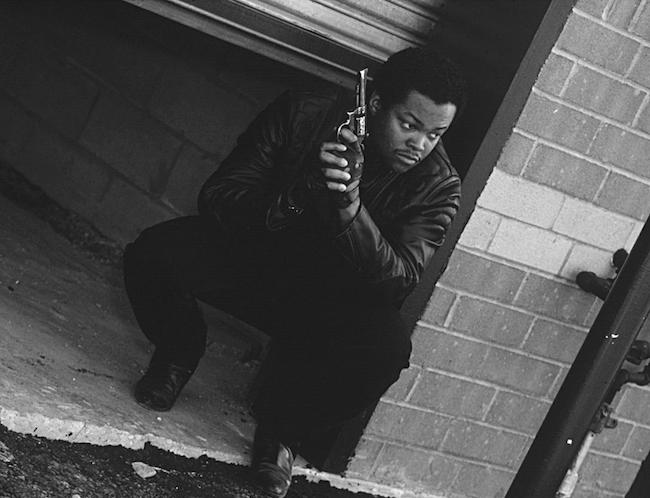
    Crackdown: Big City Blues follows community activists as they battle drug dealers for the soul of their neighborhood.

    Unseen for more than three decades, the New York-lensed independent crime drama Crackdown: Big City Blues has made its debut on Blu-ray from The Film Detective.

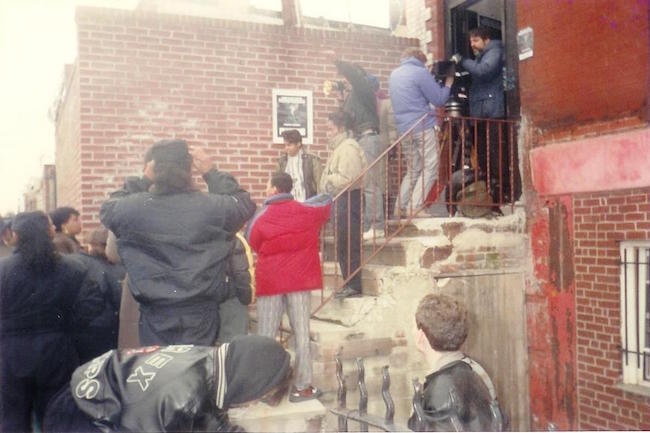
    The film, about community activists battling drug dealers for the soul of their neighborhood, was produced during the height of the crack epidemic in the early 1990s, which provided a documentary-style atmosphere of authenticity.

    Distribution problems prevented Crackdown from being seen by audiences in the United States, but the discovery of a rare 35mm print by producer Frazier Prince led to its restoration and home video release by The Film Detective. For Prince, the revival of Crackdown also provides him with a new opportunity to “get the message out and talk to people” about the perils of the drug trade.

    photo courtesy of Prince Henry Entertainment Group

    In a conversation with The Fix, Prince – a former actor and New York Police Department veteran who also served as a technical advisor for America’s Most Wanted – recalls that Crackdown began as a series of conversations with his former partner, writer/producer/director Paul DeSilva, while driving across the Brooklyn Bridge.

    “We would go back to his house, and we would sketch out ideas, and I would provide technical advice,” says Prince, who also served as the film’s producer.

    photo courtesy of Prince Henry Entertainment Group

    After crafting a script and raising a “shoestring” budget of approximately $200,000 from local investors, DeSilva and Prince cast the film with a mix of name and local talent, including Rhonda Ross Kendrick – daughter of Diana Ross and Motown founder Berry Gordy – and character actors Stu “Large” Riley (Gotham) and Apache Ramos (The Warriors) and “called in a lot of favors,” according to Prince, to complete the film.

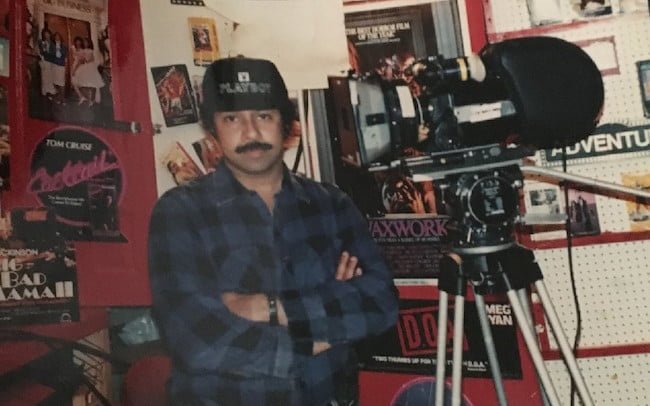
    Crackdown writer/producer/director Paul DeSilva photo courtesy of Prince Henry Entertainment Group

    Their hope for the finished product was a film that showed “how people were dealing with the drug issue in their neighborhood. [DeSilva] wanted to show what couldn’t work, like vigilantism, and what could work, which was community activism to drive the dealers out. And [in the film], the activists won.”

    DeSilva and Prince found a distributor to handle the film’s release but discovered that the company “worked in mainly foreign markets” and sold the picture to a few territories before essentially shelving it. DeSilva attempted to regain the rights to the film, but he died before the six-year lease had run out.

    Crackdown would enter a state of limbo for decades until DeSilva’s brother contacted Prince after discovering a 35mm print of Crackdown – one of only two in existence – in a closet. Film Detective founder Philip Hopkins expressed an interest in spearheading a restoration, which resulted in the new Blu-ray as well as several screenings across the country.

    A portion of ticket and home video sales benefit two non-profits – the Bronx chapter of the civil rights organization National Action Network and the drug and alcohol recovery network Phoenix House.

    For Prince, the renewed attention for Crackdown is a chance to give something back to the community, which, he says, “is what Paul would have liked.” He adds that the time is right for the film to reach a new audience, having been launched during a drug epidemic that parallels the current opioid crisis. “Each period has its own problems to deal with,” he notes. As for a solution, “education and public awareness – to let people know about the ill effects of drugs – that will make a big difference.”

    View the original article at thefix.com