Tag: DEA

  • FDA, DEA Partner For Probe Into Vaping Illnesses

    FDA, DEA Partner For Probe Into Vaping Illnesses

    The agencies are focusing on vaping manufacturers in order to “[follow] the supply chain to its source.”

    The Drug Enforcement Administration (DEA) will assist the Food and Drug Administration (FDA) in its investigation into the spate of vaping-related illnesses that have sickened more than 1,000 and claimed at least 18 lives.

    In testimony before a House Energy and Commerce subcommittee on September 25, acting FDA Commissioner Dr. Ned Sharpless said that the agencies will collaborate to determine “if someone is manufacturing or distributing illicit, adulterated products that caused illness or death for personal profit,” which would be considered a criminal act.

    FDA Waited Too Long To Review Vaping Products

    Sharpless acknowledged that the FDA should not have waited to review e-cigarette products, a decision which some lawmakers have said was a contributing factor in the rise of teen e-cigarette use.

    Sharpless’s testimony came on the heels of the FDA’s announcement of a criminal problem into the rash of vaping illnesses, which they announced on September 19. He mentioned that the decision to bring the DEA into the probe is due to the number of illnesses and deaths related to the use of vaping cartridges containing THC.

    As for the focus of the probe, Sharpless said that the agencies are focusing on vaping manufacturers in order to “[follow] the supply chain to its source.”

    Additionally, Sharpless said that the FDA plans to finalize a draft of new guidance for flavored vaping products. Warning letters will be sent to manufacturers that do not remove those products—save for those that are flavored like tobacco—from the market. Those that do not comply may be subjected to additional warning letters, as well as possible fines and injunctions.

    Why Did The FDA Take So Long to Act?

    But lawmakers on the subcommittee also wanted to know why the agency appeared to wait nearly three years in order to take action in regard to e-cigarettes.

    The FDA asked companies in 2016 to file applications to market products by August of 2018, but as STAT News noted, former FDA Commissioner Scott Gottlieb shifted the agency’s focus to curbing nicotine levels in traditional cigarettes, while also delaying the marketing applications to 2022 (the deadline has since been moved to May 2020).

    In response to the subcommittee’s inquiries, Sharpless said that the “FDA should’ve acted sooner,” but added that the probe, and the addition of the DEA to its efforts, should help them “catch up.”

    “We will not rest until we have answers to the questions in the investigation, and until we have dramatically reduced the access and appeal of e-cigarettes to kids,” he said.

    View the original article at thefix.com

  • How Do The Feds Find Pill Mills?

    How Do The Feds Find Pill Mills?

    Although regulations have clamped down some on over-prescribing, authorities are still finding pill mills in operation.

    Since late last year, federal authorities have charged 87 doctors with operating pill mills where they overprescribed opioids. Data collection has allowed the feds to make those arrests and has helped contribute to guilty pleas from nine of the doctors so far.

    Brian Benczkowski, head of the Justice Department’s Criminal Division, told CNN that while traditional tips are helpful, collecting and analyzing data on prescribing practices allow authorities to work efficiently at targeting the most egregious over-prescribers. 

    He said, “I think before we employed a data driven model it was a lot harder to find them in the first instance. You had to rely on local law enforcement providing tips. You had to rely on individuals in the community providing tips. The data tells us exactly where to go very quickly.”

    How They Locate Pill Mills

    The feds look at a few different pieces of information when analyzing prescription data: they see how far patients are traveling to a doctor, how many deaths are linked to that doctor, and the dosage strength that the doctor provides.

    Federal guidelines recommend that doctors not prescribe opioids that measure more than 90 morphine milligram equivalents, or MMEs, per day. However, doctors operating pill mills prescribe up to 500 MMEs per day to patients. When that is outlined in hard data, it’s easy to know who to investigate, because “usually nothing can justify” writing prescriptions for so many pills, authorities say. 

    Once law enforcement knows where to look, spotting a pill mill is easy. 

    “When you go and observe this doctor’s office and you see lines down the block, you see people shuffling around waiting to go into the doctor’s office, you see behavior that looks very much like behavior you see in traditional street corner hand-to-hand drug distribution, it’s stark. It’s readily apparent what’s going on,” Benczkowski said. 

    How Do Pill Mills Work?

    He explained how the pill mill operations work. 

    “They [the doctors] are taking cash and putting it in their pockets. [Patients] go into the doctor’s office, they leave $300 with the receptionist. They have a two-minute consultation with the doctor who writes them an opioid prescription and they walk out the door. And that line is processed like a conveyor belt all day every day. It doesn’t look like a normal doctor’s office.”

    A Drug Enforcement Administration official said that investigating pill mills is a unique operation. 

    “We’ll do surveillance or send a confidential source in, and we’re really looking at the type of prescriptions doctors are writing and then asking medical experts, are these within the norms? It’s more of a chess game in a way than a traditional narcotics investigation. We’re a cross between investigating white collar crime and narcotics.”

    Although regulations have clamped down on over-prescribing, authorities are still finding pill mills in operation, something that frustrates Father Brian O’Donnell of Catholic Charities West Virginia. 

    “I thought the fear of God had been put into doctors in the past few years,” he said. “I’m very disappointed to hear this is still going on.” 

    Patients Not Targeted in Opioid Prescription Crackdown

    Benczkowski emphasized that the feds are focused on charging the doctors, not people addicted to opioids.

    “We recognize that we can’t just prosecute our way out of this problem,” he said. “The individual patients are not criminal defendants, they’re victims. And we wanted to make sure that they had access to appropriate medical care and appropriate treatment resources.”

    View the original article at thefix.com

  • Meth 2.0: How Marijuana Legalization Set the Stage for a Newer, Stronger Methamphetamine

    Meth 2.0: How Marijuana Legalization Set the Stage for a Newer, Stronger Methamphetamine

    When people think of methamphetamine, they think of the old-fashioned meth lab and they’re not aware of the dangerous, highly addictive meth that we’re dealing with now.

    What’s known as methamphetamine, crystal meth, or meth has always been prevalent in America’s drug underworld, we just don’t hear about it as much in the mainstream media due to the opioid crisis being front and center on the nightly news. But in the 1990s, meth was public enemy number one. The rise of the Internet made recipes readily available for anyone who wanted to cook it up and reporters had a field day covering the resulting explosions in homes and mobile labs. Domestic production was especially prevalent in Missouri, which came to be known as the meth capital of the United States.

    Very Pure and Relatively Cheap

    But the meth scene that everyone had grown accustomed to slowly declined over the last 20 years, with explosions and arrests in Missouri dropping to almost none. At the same time, Mexican-based methamphetamine imports increased dramatically. Today, almost 90% of the methamphetamine in the United States comes from Mexican super labs and is primarily manufactured by the cartels. The biggest differences between domestic and foreign-made meth are the potency level, price point, and accessibility.

    “It’s a lot like Breaking Bad,” Tim Lohmar, the St. Charles County Prosecuting Attorney, tells The Fix. “And if you’re familiar with that show, you know that the purity of the methamphetamine and the ease of the mass production is what made it so addictive and relatively cheap. These Mexican labs are making a very pure methamphetamine. It’s almost night and day different than your old-fashioned basement meth lab sort of thing. They can mass produce the meth and distribute it at a reduced price, which consequently has led to a rise in local consumption.”

    William Callahan, Special Agent-in-Charge of the DEA St. Louis Division, says that according to the 2018 National Drug Threat Assessment, “Methamphetamine sampled through the DEA profiling program is almost 97% pure, while prices remain low and stable.” There are still some of the small shake-and-bake style labs across the state, but the vast majority of the methamphetamines coming into Missouri are from south of the border.

    Psychosis and Overdoses on the Rise

    The new improved drug contributed to almost 30 deaths last year, a jump from 7 the year before. Overdoses are on the rise.

    “It’s a lot stronger, so we’re seeing a lot more psychosis, but we’re also seeing it being tainted with fentanyl, which is leading to more deaths.” Brandon Costerison, project manager of the National Council on Alcoholism and Drug Abuse (NCADA) in St. Louis, tells The Fix. “They’re making speedballs, like people used to do with cocaine and heroin in the ‘80s.”

    Lohmar thinks that most of the overdoses, especially ones that result in death, occur when people combine meth with something else like fentanyl or heroin. “A lot of the local suppliers will try to break down the methamphetamine, the pure methamphetamine, and put a filler in there,” he says. “And the person who’s ingesting it doesn’t even know what they’re ingesting, and that’s how we get a lot of these overdose situations.”

    With opioids killing people at an unprecedented rate, meth has been viewed as less risky and lower priority… Until recently.

    “Methamphetamine takes years, typically, to kill someone, whereas opioids can kill you the first time.” Costerison says. “When we’re looking at death tolls, opioids by far are leading, but we do see a lot of people dying either directly from methamphetamines or from complications associated with methamphetamine use.”

    Lohmar says that while we still have an opioid crisis, he thinks “it’s starting to plateau a little bit. I don’t know that the overdoses are decreasing, but I don’t think they’re increasing at the same rate they have been over the last handful of years. Seven, eight years ago, very few people knew about the opioid crisis, and nowadays everybody knows about it. Meanwhile, I think, when people think of methamphetamine, they think of the old-fashioned meth lab and they’re not aware of the dangerous, highly addictive meth that we’re dealing with now.”

    Despite the opioid epidemic taking center stage, “Meth has never flown under the radar at DEA.” Callahan tells The Fix. “Our agents work relentlessly to identify those involved in meth distribution domestically and internationally. Meth may not kill as many people; however continuous meth use does result in significant health issues.”

    Obstacles in Treating Methamphetamine Addiction

    Adults are using more meth than young people. “Folks tend to get into [meth] after the age of 18, though some do start using earlier,” Costerison says. “The biggest struggle with methamphetamine is that there’s not really any medications that help with the treatment. With opioids, we have methadone, Suboxone, Vivitrol. But when it comes to treating methamphetamine addiction there’s really no medication to help with the withdrawals and cravings.” The lack of medication-assisted treatment is a major obstacle for Missouri health officials who try to get people into long-term recovery.

    “There’s a lot of different things that we see when somebody starts withdrawing.” Costerison says. “At first, there’s the itchiness, irritability, and cravings. [Then] there’s depression, hallucinations, paranoia, and anxiety. After that [initial] crash, the cravings really kick up. But in the third stage the cravings start to subside. That can last 30 weeks or longer, depending on how much somebody’s been using.”

    The meth market has also been impacted by the legalization of marijuana, which has meant less income for the cartels. “The cartels were the major suppliers and producers of marijuana, historically, over the last 30-40 years,” Lohmar says. “And now that a lot of states have legalized marijuana, whether it’s recreational or medicinal, that’s cut into their market. That’s when they turned to heroin first, and now they’re turning to crystal methamphetamine. They’re always trying to stay one step ahead of the game.”

    The cartels can get the precursor ingredients for meth easily in Mexico and set up big super labs, allowing them to make a very high-potency, pure methamphetamine à la Walter White. With meth flooding Missouri, local law enforcement has ramped up their efforts to stop the flow. But since the distributors typically reside out of state, a lot of local efforts to climb the food chain end up turning into federal investigations.

    “Identifying meth suppliers has always been a top priority for the Drug Enforcement Administration.” Callahan tells The Fix. “We work closely with local and state law enforcement to identify violators and interdict drugs before they hit the street for retail sales. [We conduct] a thorough investigation aimed at dismantling the entire organization, including everyone from the kingpin to the money launderers, transporters, and dealers. The DEA also investigates the diversion of chemicals intended for the use of producing meth.”

    At the state level, “the goal is to try and find a small-time user and get them to supply information to move up the food chain and get the big players in the distribution networks,” Lohmar says. “We’ve got our undercover drug task force. We’ve got our highway interdiction team to intercept the traffickers coming through the state via the interstate highways. We’ve got a really good working relationship not just with the DEA, but with the U.S. Attorney’s office. There’s been a much bigger emphasis on meth, just because there’s a lot more out there.”

    Treating Addiction as a Health Issue, Not a Crime

    But as the drug war has proved unwinnable, authorities are starting to look at the problems here in Missouri as more of a health issue instead of a criminal one, at least in the lower echelons of the drug trade. As methamphetamine has moved out of the trailer parks and into the suburbs and inner cities, there has been a substantial increase of meth users entering treatment facilities. Lohmar says that locally, most of St. Charles County’s attention is spent dealing with the consumers rather than the distributors.

    “Our position now, really, across the board, but especially with somebody who’s an addict, is that we want to give them every opportunity to stay out of jail,” Lohmar says. “And sometimes they don’t take advantage of those opportunities, but the ones who do, I think, those are some good success stories. I think that’s a positive breakthrough.”

    Lohman says that the drug war era of harsh mandatory sentences is being replaced with a more humane view of drug addiction.

    “I’ve been in office for seven years and ever since I’ve been here and probably even a little bit before that, we’re looking at it more as an addiction issue as opposed to a criminal problem. Now, obviously, it’s a crime, but we also know that a lot of these folks who are addicted wouldn’t be committing crimes had it not been for their addictions.

    “We’re trying to use things like the treatment courts as alternative sentences, or alternative programs,” he says. “We’re giving people the chance to complete the program, and if they do, in some cases their charges are dismissed, or in other cases they don’t spend a day in jail, or things like that. So, we try to incentivize the treatments to give them a chance to improve their lives, and it’s been pretty successful.”

    View the original article at thefix.com

  • Former DEA Official Now A Paid Consultant For Purdue Pharma

    Former DEA Official Now A Paid Consultant For Purdue Pharma

    Insiders wonder if the former DEA official anticipated becoming a paid consultant for Big Pharma when she was with the agency.

    Demetra Ashley, former acting assistant administrator and senior official for the U.S. Drug Enforcement Administration (DEA), is currently a paid consultant for one of the top opioid drug manufacturers in the country, according to NBC News sources.

    As acting assistant administrator, Ashley warned the Senate in 2017 that a “robust regulatory program” would be needed in order to prevent the misuse of controlled prescription drugs such as Purdue Pharma’s OxyContin and other opioid medications.

    She specifically called out the over-prescribing of these drugs as “inextricably linked with the threat the United States faces from the trafficking of heroin, illicit fentanyl and fentanyl analogues,” and by extension, the entire opioid epidemic.

    At the same Senate hearing, Ashley argued for a law that made it very difficult for the DEA to use immediate suspension orders against companies like Purdue Pharma to either be revised or repealed.

    The Ensuring Patient Access and Effective Drug Enforcement Act, passed in 2016, made it nearly impossible for the DEA to take urgent action against a drug company when it “represents an imminent danger to public health or safety,” she said.

    Now, she is being paid by Purdue to advise them via her new consulting firm, Dashley Consulting, LLC. Purdue is currently facing around 2,000 lawsuits for its alleged role in the opioid epidemic via deceptive marketing tactics and encouraging doctors to over-prescribe OxyContin and similar drugs.

    After decades of specializing in preventing the diversion of prescription drugs, some are questioning whether Ashley did all she could to combat the alleged role of Purdue Pharma and other companies in the opioid epidemic and whether her new consulting position is a violation of ethics.

    While there is nothing technically illegal about this, Washington University law professor and government ethics expert Kathleen Clark says that Ashley’s new role with Purdue raises questions about “whether the prospect of a payday after leaving government tainted the actions of the regulator while still in government.”

    “Did this person act differently in government because they anticipated or wanted to get the payday from these very powerful economic actors who have huge amounts at stake?” Clark asks.

    When contacted by NBC News, Ashley did not confirm or deny consulting for Purdue Pharma, but acknowledged that she has “been consulting for members of the industry” since June 2018, three months after she retired from the DEA.

    She also confirmed that she has been subpoenaed as part of a consolidated lawsuit against opioid companies because of her former role in the DEA.

    View the original article at thefix.com

  • DEA Plans To Burn Tons Of Marijuana This Summer

    DEA Plans To Burn Tons Of Marijuana This Summer

    Tons of seized marijuana will go up in smoke in the coming months.

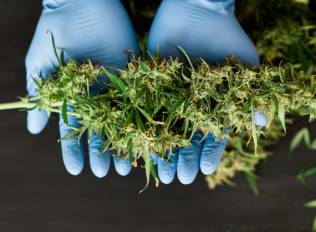
    The Drug Enforcement Administration (DEA) wants to burn tons of weed over the next six months, and is looking for the right contractor to help with the job. 

    According to a contracting notice, the agency wants to burn 1,000 pounds of marijuana an hour between March and September. The contract is for the “destruction by incineration of evidence located in the following cities in the state of Texas—McAllen, Brownsville, Corpus Christi, Laredo, and Eagle Pass.”

    Despite putting out the notice, the DEA already has a partner in mind for the epic pot burn: Tucson Iron & Metal in Tucson, Arizona. 

    “Research has shown there is only one vendor in close proximity to the district and resident offices of McAllen, Brownsville, Corpus Christi, Laredo, and Eagle Pass capable of providing the services necessary for this requirement,” the notice says. 

    That’s because the DEA has strict requirements for disposing of marijuana seized from the black market, according to Quartz

    “The integrity of the destruction process shall be such that the material to be destroyed cannot be redirected or retrieved once it is committed to destruction,” the notice reads. The cannabis must be destroyed “to a point where there are no detectable levels, as measured by standard analytical methods, of byproduct from the destruction process. DEA shall inspect the incinerator to ensure no drug residue remains.”

    In addition, there will be tight DEA regulation of the entire process, and a need to privacy. The DEA requires that the company that destroys the pot have a large fence on their premises, and drug test employees yearly. The DEA sends staff to oversee the burns, and also records them. 

    The agency “reserves the right to access the video feed as necessary to ensure the proper destruction of its drugs and safety of its representatives.”

    The Atlanta office of U.S. Customs and Border Protection is also looking for a contractor to help dispose of drug evidence, including marijuana, meth, cocaine and more. 

    Recently the DEA put out a different type of contracting notice, asking for help finding a product that could assist agents in differentiating between hemp (which is legal federally) and psychoactive marijuana as we know it (which is not). The different species of cannabis plant can confuse DEA agents.

    In addition to destroying drug evidence, the DEA is also responsible for approving applications to grow marijuana for research. The agency has promised to make more permits available, but the process has been slow, further delaying marijuana research. 

    “The DEA continues to review applications for registration and registers the number of bulk manufacturers of a controlled substance that is necessary to produce an adequate and uninterrupted supply,” the agency wrote last year. 

    View the original article at thefix.com

  • Top DEA Agent Accused Of Laundering Over $7 Million In Drug Money

    Top DEA Agent Accused Of Laundering Over $7 Million In Drug Money

    The former DEA agent allegedly kept $7 million of money laundered from drug sales in a business account.

    A former Drug Enforcement Administration (DEA) agent who oversaw a high-profile undercover operation has been linked to a $7 million money-laundering scheme involving Colombian drug cartels.

    Five current and former law enforcement officials told the AP that Jose Irizarry—who left the DEA in 2017—may be the co-conspirator in a recent federal case in which former DEA informant Gustavo Yabrudi pled guilty to laundering money for cartel members as part of an undercover contraband operation.

    Yabrudi claimed that he and the co-conspirator kept $7 million of money laundered from drug sales in a business account. Investigators are also investigating Irizarry’s second wife, who is related to a top money-laundering suspect in Colombia.

    The information about Irizarry came about as part of a plea agreement between the Venezuelan-born Yabrudi and federal prosecutors who were overseeing the case in Atlanta, Georgia.

    According to court records, Yabrudi—who worked as an informant for the DEA between 2010 and 2016—and Irizarry allegedly opened a bank account to direct deposits from a network of cartel contacts who sought to filter drug money through a contraband merchandise operation overseen by Irizarry for the DEA.

    Irizarry allegedly used a variety of means to launder the money, including shell companies and a variety of goods—including electronics and textiles—which were exported to Colombia for resale in pesos, which were then given to the cartel members. 

    According to Yabrudi’s plea agreement, the two men opened a secret account through which $7 million in drug cartel funds flowed over a period of six years. Yabrudi admitted that he withdrew money from the account to give to the co-conspirator, who according to the aforementioned officials, was Irizarry.

    “None of these deposits, nor the use of the funds that followed were officially sanctioned DEA operations,” wrote federal prosecutors in court filings.

    The AP noted that Irizarry, who was once a highly regarded agent, had come under scrutiny by DEA officials over a series of questionable decisions and connections. While conducting the undercover contraband operation, Irizarry reportedly bought an expensive home and vehicle, and hosted parties involving sex workers. 

    Irizarry’s marriage to his second wife, Nathalia Gomez, has also caught the attention of investigators due to her familial relationship with Diego Martin, whom the AP labeled as Colombia’s “contraband king.” Martin allegedly bought shipping containers filled with goods using drug money. Martin has remained out of the law’s grasp by serving as an informant for various U.S. law enforcement entities.

    The current whereabouts of Irizarry, who resigned from the DEA in 2017 after being recalled to Washington, D.C., are unknown. The AP noted that calls to a cell phone which officials said belonged to him went unreturned, as did calls to Gomez. It is also unknown if Irizarry has been charged in regard to the allegations.

    View the original article at thefix.com

  • Watch Out For Drugs Disguised As Halloween Candy, DEA Warns

    Watch Out For Drugs Disguised As Halloween Candy, DEA Warns

    According to the agency, methamphetamine and marijuana are the drugs most commonly disguised in edible form.

    It may sound like a storyline out of a low-budget comedy, but last year the Drug Enforcement Administration (DEA) found drugs disguised as off-brand Halloween candies including Munchy Way, 3 Rastateers, Twixed, Keef Kat and Rasta Reese’s.

    This year, the agency is telling parents to be on the lookout for anything suspicious.

    “These treats can look like traditional candies, but can have harmful effects if consumed by a child,” the DEA said in a news release. “The DEA and law enforcement agencies throughout the country have seen an increase of seizures of drug-laced edibles, including but not limited to chocolates, suckers and gummies.”

    According to the agency, methamphetamine and marijuana are the drugs most commonly disguised in edible form. Marijuana is often infused into brownies, candy bars and gummies, while meth is more likely to be mixed into hard candies and gummies, the agency said.  

    “The effects caused by those ingredients are now in the food,” the agency said. 

    While it might seem easy to spot, the agency cautioned that the drug-laced candies can be easy to overlook at first glance. 

    “Such items are often professionally packaged and can easily be mistaken for regular candy or baked goods,” the agency said. However, there are some signs to be on the lookout for, including unusual wrapping, appearance, or colors; an odd smell; misspelled candy labels; and candy or food that is unwrapped or unmarked.

    People who suspect that they have drug-laced candies should contact their local police departments and seek immediate medical attention if a child has ingested the candy. 

    Although the idea of drugs in Halloween candy might seem far-fetched, one Ohio police department had to issue a warning to residents this week after a 5-year-old boy tested positive for meth after trick-or-treating. 

    “Please check your children’s candy that was received today while trick or treating. Also, please check any non-candy items such as rings, bracelets, necklaces or fake teeth. If you suspect that anything has been tampered with, please contact our department by phone so that an officer can stop and collect the items,” the Galion Police Department wrote on Facebook

    The boy, Braylen Carwell, began experiencing odd symptoms after collecting candy. 

    “The left side of his face was just droopy and then he fell and then he couldn’t move his left arm. And he didn’t know where he was, he didn’t know what he was doing,” Braylen’s mother, Julia Pence, told ABC 6. 

    Braylen is expected to be fine, and the police department said that they had no other reports of incidents involving tainted candy. 

    View the original article at thefix.com

  • DEA's "Operation Goodfellas" Busts $19 Million Drug-Trafficking Ring

    DEA's "Operation Goodfellas" Busts $19 Million Drug-Trafficking Ring

    Federal prosecutors estimate that the group moved 11.5 kilos of crack, 436 kilos of coke, 54 kilos of heroin and more than 20 pounds of pot.

    More than 150 cops and federal agents teamed up to catch five Virginia men who allegedly masterminded a $19 million drug-trafficking plot. 

    Dubbed “Operation Goodfellas,” the sting netted four arrests last week, on top of two collars earlier this year at a Virginia hotel. One of the suspected drug slingers is still at large. 

    “For years, members of this organization have allegedly distributed significant quantities of narcotics throughout Hampton Roads,” the DEA’s Washington-based special agent in charge Scott W. Hoernke, said in a statement. “These indictments and arrests represent the dismantling of an allegedly prominent drug trafficking organization responsible for the smuggling, transportation and distribution of substantial quantities of narcotics from Los Angeles to Norfolk.”

    A “conservative estimate” by federal prosecutors suggested that the group had moved 11.5 kilos of crack, 436 kilos of cocaine, 54 kilos of heroin, an ounce of fentanyl and more than 20 pounds of pot. 

    The investigation kicked off in 2016, when undercover officers allegedly started buying cocaine, heroin and crack from 38-year-old Reginald Sam Beale, of Norfolk.

    The lawmen eventually started buying from Beale’s alleged co-conspirators, 36-year-old Maurice Antonio Barnes, 37-year-old Brandon Jaami Williams, 39-year-old Breon Lashawn Dixon and 34-year-old Johnell Deshawn Stepney. By the start of summer 2018, undercover officers had made nearly 30 controlled buys—and they’d also nailed down the source of the hard drugs. 

    Coming in from Los Angeles, the coke was being trucked to Virginia in 10- and 20-key hauls, then unloaded at a public storage facility in Virginia Beach, investigators said. In June, authorities arrested Williams with 13 kilograms of coke he was allegedly moving from one luxury Norfolk apartment to another. 

    The following month, feds arrested a pair of accused drug traffickers—one from Mexico and one from Los Angeles—after they flew to Virginia to try to get back some cocaine and pick up more than $500,000 in cash. 

    “These defendants allegedly distributed approximately $19 million of illegal narcotics in Hampton Roads,” said federal prosecutor G. Zachary Terwilliger. “The resources and collaborative efforts used to investigate this alleged drug trafficking organization is a prime example of the positive impact of federal, state, and local cooperation. My sincere thanks to our law enforcement partners for their outstanding efforts on this case.”

    View the original article at thefix.com

  • New York Times Op-Ed Slams "Incompetent" DEA Over Opioid Crisis

    New York Times Op-Ed Slams "Incompetent" DEA Over Opioid Crisis

    The writers of a scathing op-ed believe the federal agency “deserves much of the blame” for opioid-related deaths.

    A recent op-ed in the New York Times does not mince words in its critique of the U.S. Drug Enforcement Administration (DEA). “Because of its incompetence, the opioid crisis has gone from bad to worse. The solution: overhauling the agency, or even getting rid of it entirely,” write Leo Beletsky and Jeremiah Goulka in the Sept. 17 opinion piece.

    Rather than pointing to pharmaceutical drug makers or drug cartels, Beletsky and Goulka—of Northeastern University’s Health in Justice Action Lab—say the DEA “deserves much of the blame” for rising opioid-related deaths. This summer, the Centers for Disease Control and Prevention (CDC) estimated that more than 72,000 Americans died of a drug overdose in 2017—with opioids accounting for more than 49,000 of the deaths. 

    The federal agency’s response to rising opioid abuse in the United States did little to mitigate the growing epidemic, the authors write. While the DEA has the authority to establish “non-enforcement programs aimed at reducing the availability” of illicit drugs—e.g. expanding evidence-based treatment from a public health perspective—instead, in its decades-long existence, the agency has opted to ramp up the enforcement side of its mandate.

    “Instead the agency pushed for surveillance of prescription records and electronic communication, doubled down on prosecuting prescribers and helped to tighten the screws on patients seeking pain relief,” reads the op-ed.

    The agency’s enforcement-heavy response to painkiller abuse only pushed people to seek illicit substitutes like heroin and counterfeit pills, and to encourage drug traffickers to “create more compact, potent drugs” like fentanyl.

    This resulted in more deaths as well as the spread of HIV and hepatitis (from sharing needles), while access to evidence-based treatment for drug use disorder, like methadone, saw little improvement.

    Not only is the DEA accused of employing tactics that have “fueled the opioid crisis,” in the 40-plus years since it was established under the administration of former President Richard Nixon (the man who declared drugs “Public Enemy Number 1”) the agency’s approach has had a harmful effect on community policing, and it has earned a reputation for botched operations at home and abroad in its tireless campaign to hunt down illicit drug suppliers. (The agency has the largest foreign presence of any U.S. federal law enforcement agency, according to its 2018 Budget Request.)

    “It has eroded civil liberties through the expansion of warrantless surveillance, and overseen arbitrary seizures of billions of dollars of private property without any clear connection to drug-related crimes,” write Beletsky and Goulka.

    And in the DEA’s long history, “these actions have disproportionately targeted people of color, contributing to disparities in mass incarceration, confiscated property, and collective trauma.”

    By taking Nixon’s “War on Drugs” a bit too literally, the DEA’s focus on the law enforcement side of its mandate has done nothing to reduce the amount of drugs consumed by Americans. “The agency was supposed to curb problematic drug use, but failed to do so because its tactics were never informed by public health or addiction science,” write Beletsky and Goulka.

    The authors of the op-ed offer a solution: reinvent the DEA “from the bottom up.” One way to do this is to transfer regulatory authority over the pharmaceutical supply to the Food and Drug Administration.

    Currently the DEA is in charge of how controlled substances are classified, produced and distributed. (For example, under the DEA, marijuana is classified as a Schedule I drug, which are considered the most dangerous, alongside heroin and LSD.)

    Some of its law enforcement efforts can be transferred to the FBI or local authorities, or eliminated altogether, the authors suggest.

    And a “significant portion” of the DEA’s budget should go to life-saving measures like access to high-quality treatment. The agency requested a budget of $2.16 billion for fiscal year 2018, a $77 million increase from the year prior.

    According to the authors, the agency is an emblem of the failure of Nixon’s “War on Drugs” and the failure of the federal government to make significant progress in reducing drug abuse in the United States.

    Forty-seven years after Nixon declared a “War on Drugs,” the authors say it’s time to “urgently rethink how our nation regulates drugs.”

    View the original article at thefix.com

  • DEA Wants More Medical Marijuana, Fewer Opioids To Be Produced In 2019

    DEA Wants More Medical Marijuana, Fewer Opioids To Be Produced In 2019

    The new quotas are in line with the federal government’s goal of cutting opioid prescriptions by one-third in three years.

    When setting quotas for marijuana and opioid production for 2019, the Drug Enforcement Administration (DEA) did the unexpected.

    The DEA is raising the quota of cannabis that can be grown in the United States from 1,000 pounds (in 2018) to 5,400 pounds for 2019, Forbes reported.

    And in an attempt to push back on the opioid crisis, the agency lowered the production quota of opioids including oxycodone, hydrocodone, oxymorphone, hydromorphone, morphine and fentanyl.

    The quotas represent “the total amount of controlled substances necessary to meet the country’s medical, scientific, research, industrial, and export needs for the year and for the establishment and maintenance of reserve stocks,” the DEA said in a press release.

    The opioid quota reductions are in line with the federal government’s goal of cutting opioid prescriptions by one-third in three years.

    According to U.S. Attorney General Jeff Sessions, there’s already been “significant progress” in doing so in the last year.

    “Cutting opioid production quotas by an average of 10% next year will help us continue that progress and make it harder to divert these drugs for abuse,” said Sessions, according to High Times.

    The DEA’s decision to raise the quota for research cannabis grown in the U.S. is a welcome change for researchers and advocates alike.

    Strict regulations surrounding the cultivation and dispensation of research cannabis has made it difficult for the body of research to catch up to the increasing number of states that are “legalizing it” in some form.

    The current White House is blamed for stalling progress on this issue. As of July 2018, STAT News reported that the DEA still had not granted additional licenses to cannabis growers, despite a 2016 announcement by the agency that it would be open up the application process to new growers.

    It was reported that the directive to stop accepting and processing new applications came from the Department of Justice via Attorney General Sessions.

    Sessions had hinted in April that, “fairly soon I believe… we will add additional suppliers of marijuana under controlled circumstances.” But despite this cryptic promise, and calls for change from bipartisan lawmakers in Congress, there’s been little movement on the issue.

    Perhaps the updated quotas may fill in the demand for research cannabis, though pain patients will no doubt worry about how lower opioid production will affect them.

    View the original article at thefix.com