Tag: death

  • Why using fear to promote COVID-19 vaccination and mask wearing could backfire

    While the pandemic stakes might justify using hard-hitting strategies, the nation’s social and political context right now might cause fear tactics to backfire.

    You probably still remember public service ads that scared you: The cigarette smoker with throat cancer. The victims of a drunk driver. The guy who neglected his cholesterol lying in a morgue with a toe tag.

    With new, highly transmissible variants of SARS-CoV-2 now spreading, some health professionals have started calling for the use of similar fear-based strategies to persuade people to follow social distancing rules and get vaccinated.

    There is compelling evidence that fear can change behavior, and there have been ethical arguments that using fear can be justified, particularly when threats are severe. As public health professors with expertise in history and ethics, we have been open in some situations to using fear in ways that help individuals understand the gravity of a crisis without creating stigma.

    But while the pandemic stakes might justify using hard-hitting strategies, the nation’s social and political context right now might cause it to backfire.

    Fear as a strategy has waxed and waned

    Fear can be a powerful motivator, and it can create strong, lasting memories. Public health officials’ willingness to use it to help change behavior in public health campaigns has waxed and waned for more than a century.

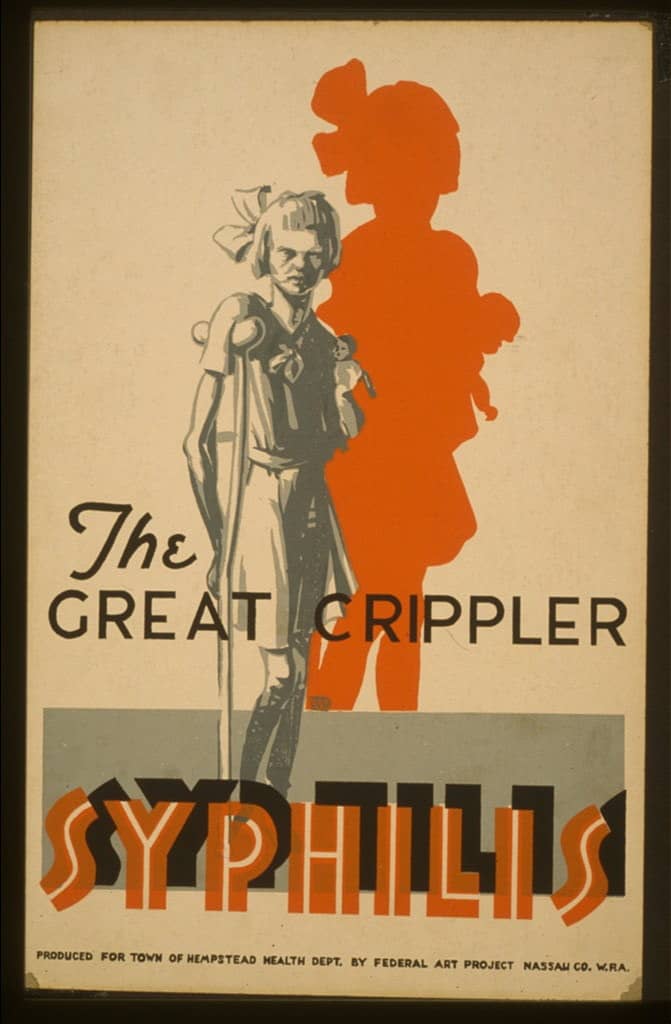
    From the late 19th century into the early 1920s, public health campaigns commonly sought to stir fear. Common tropes included flies menacing babies, immigrants represented as a microbial pestilence at the gates of the country, voluptuous female bodies with barely concealed skeletal faces who threatened to weaken a generation of troops with syphilis. The key theme was using fear to control harm from others.

    Why using fear to promote COVID-19 vaccination and mask wearing could backfire
    Library of Congress

    Following World War II, epidemiological data emerged as the foundation of public health, and use of fear fell out of favor. The primary focus at the time was the rise of chronic “lifestyle” diseases, such as heart disease. Early behavioral research concluded fear backfired. An early, influential study, for example, suggested that when people became anxious about behavior, they might tune out or even engage more in dangerous behaviors, like smoking or drinking, to cope with the anxiety stimulated by fear-based messaging.

    But by the 1960s, health officials were trying to change behaviors related to smoking, eating and exercise, and they grappled with the limits of data and logic as tools to help the public. They turned again to scare tactics to try to deliver a gut punch. It was not enough to know that some behaviors were deadly. We had to react emotionally.

    Although there were concerns about using fear to manipulate people, leading ethicists began to argue that it could help people understand what was in their self-interest. A bit of a scare could help cut through the noise created by industries that made fat, sugar and tobacco alluring. It could help make population-level statistics personal.

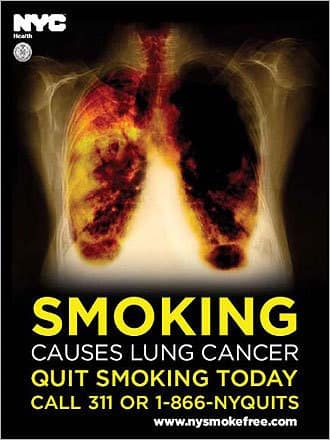
    Why using fear to promote COVID-19 vaccination and mask wearing could backfire
    NYC Health

    Anti-tobacco campaigns were the first to show the devastating toll of smoking. They used graphic images of diseased lungs, of smokers gasping for breath through tracheotomies and eating through tubes, of clogged arteries and failing hearts. Those campaigns worked.

    And then came AIDS. Fear of the disease was hard to untangle from fear of those who suffered the most: gay men, sex workers, drug users, and the black and brown communities. The challenge was to destigmatize, to promote the human rights of those who only stood to be further marginalized if shunned and shamed. When it came to public health campaigns, human rights advocates argued, fear stigmatized and undermined the effort.

    When obesity became a public health crisis, and youth smoking rates and vaping experimentation were sounding alarm bells, public health campaigns once again adopted fear to try to shatter complacency. Obesity campaigns sought to stir parental dread about youth obesity. Evidence of the effectiveness of this fear-based approach mounted.

    Evidence, ethics and politics

    So, why not use fear to drive up vaccination rates and the use of masks, lockdowns and distancing now, at this moment of national fatigue? Why not sear into the national imagination images of makeshift morgues or of people dying alone, intubated in overwhelmed hospitals?

    Before we can answer these questions, we must first ask two others: Would fear be ethically acceptable in the context of COVID-19, and would it work?

    For people in high-risk groups – those who are older or have underlying conditions that put them at high risk for severe illness or death – the evidence on fear-based appeals suggests that hard-hitting campaigns can work. The strongest case for the efficacy of fear-based appeals comes from smoking: Emotional PSAs put out by organizations like the American Cancer Society beginning in the 1960s proved to be a powerful antidote to tobacco sales ads. Anti-tobacco crusaders found in fear a way to appeal to individuals’ self-interests.

    At this political moment, however, there are other considerations.

    Health officials have faced armed protesters outside their offices and homes. Many people seem to have lost the capacity to distinguish truth from falsehood.

    By instilling fear that government will go too far and erode civil liberties, some groups developed an effective political tool for overriding rationality in the face of science, even the evidence-based recommendations supporting face masks as protection against the coronavirus.

    Reliance on fear for public health messaging now could further erode trust in public health officials and scientists at a critical juncture.

    The nation desperately needs a strategy that can help break through pandemic denialism and through the politically charged environment, with its threatening and at times hysterical rhetoric that has created opposition to sound public health measures.

    Even if ethically warranted, fear-based tactics may be dismissed as just one more example of political manipulation and could carry as much risk as benefit.

    Instead, public health officials should boldly urge and, as they have during other crisis periods in the past, emphasize what has been sorely lacking: consistent, credible communication of the science at the national level.

    Amy Lauren Fairchild, Dean and Professor, College of Public Health, The Ohio State University and Ronald Bayer, Professor Sociomedical Sciences, Columbia University

    This article is republished from The Conversation under a Creative Commons license. Read the original article.

  • The ‘Grief Pandemic’ Will Torment Americans for Years

    The optimism generated by vaccines and falling infection rates has blinded many Americans to the deep sorrow and depression of those around them.

    Cassandra Rollins’ daughter was still conscious when the ambulance took her away.

    Shalondra Rollins, 38, was struggling to breathe as covid overwhelmed her lungs. But before the doors closed, she asked for her cellphone, so she could call her family from the hospital.

    It was April 7, 2020 — the last time Rollins would see her daughter or hear her voice.

    The hospital rang an hour later to say she was gone. A chaplain later told Rollins that Shalondra had died on a gurney in the hallway. Rollins was left to break the news to Shalondra’s children, ages 13 and 15.

    More than a year later, Rollins said, the grief is unrelenting.

    Rollins has suffered panic attacks and depression that make it hard to get out of bed. She often startles when the phone rings, fearing that someone else is hurt or dead. If her other daughters don’t pick up when she calls, Rollins phones their neighbors to check on them.

    “You would think that as time passes it would get better,” said Rollins, 57, of Jackson, Mississippi. “Sometimes, it is even harder. … This wound right here, time don’t heal it.”

    With nearly 600,000 in the U.S. lost to covid-19 — now a leading cause of death — researchers estimate that more than 5 million Americans are in mourning, including more than 43,000 children who have lost a parent.

    The pandemic — and the political battles and economic devastation that have accompanied it — have inflicted unique forms of torment on mourners, making it harder to move ahead with their lives than with a typical loss, said sociologist Holly Prigerson, co-director of the Cornell Center for Research on End-of-Life Care.

    The scale and complexity of pandemic-related grief have created a public health burden that could deplete Americans’ physical and mental health for years, leading to more depression, substance misuse, suicidal thinking, sleep disturbances, heart disease, cancer, high blood pressure and impaired immune function.

    “Unequivocally, grief is a public health issue,” said Prigerson, who lost her mother to covid in January. “You could call it the grief pandemic.”

    Like many other mourners, Rollins has struggled with feelings of guilt, regret and helplessness — for the loss of her daughter as well as Rollins’ only son, Tyler, who died by suicide seven months earlier.

    “I was there to see my mom close her eyes and leave this world,” said Rollins, who was first interviewed by KHN a year ago in a story about covid’s disproportionate effects on communities of color. “The hardest part is that my kids died alone. If it weren’t for this covid, I could have been right there with her” in the ambulance and emergency room. “I could have held her hand.”

    The pandemic has prevented many families from gathering and holding funerals, even after deaths caused by conditions other than covid. Prigerson’s research shows that families of patients who die in hospital intensive care units are seven times more likely to develop post-traumatic stress disorder than loved ones of people who die in home hospice.

    The polarized political climate has even pitted some family members against one another, with some insisting that the pandemic is a hoax and that loved ones must have died from influenza, rather than covid. People in grief say they’re angry at relatives, neighbors and fellow Americans who failed to take the coronavirus seriously, or who still don’t appreciate how many people have suffered.

    “People holler about not being able to have a birthday party,” Rollins said. “We couldn’t even have a funeral.”

    Indeed, the optimism generated by vaccines and falling infection rates has blinded many Americans to the deep sorrow and depression of those around them. Some mourners say they will continue wearing their face masks — even in places where mandates have been removed — as a memorial to those lost.

    “People say, ‘I can’t wait until life gets back to normal,’” said Heidi Diaz Goff, 30, of the Los Angeles area, who lost her 72-year-old father to covid. “My life will never be normal again.”

    Many of those grieving say celebrating the end of the pandemic feels not just premature, but insulting to their loved ones’ memories.

    “Grief is invisible in many ways,” said Tashel Bordere, a University of Missouri assistant professor of human development and family science who studies bereavement, particularly in the Black community. “When a loss is invisible and people can’t see it, they may not say ‘I’m sorry for your loss,’ because they don’t know it’s occurred.”

    Communities of color, which have experienced disproportionately higher rates of death and job loss from covid, are now carrying a heavier burden.

    Black children are more likely than white children to lose a parent to covid. Even before the pandemic, the combination of higher infant and maternal mortality rates, a greater incidence of chronic disease and shorter life expectancies made Black people more likely than others to be grieving a close family member at any point in their lives.

    Rollins said everyone she knows has lost someone to covid.

    “You wake up every morning, and it’s another day they’re not here,” Rollins said. “You go to bed at night, and it’s the same thing.”

    A Lifetime of Loss

    Rollins has been battered by hardships and loss since childhood.

    She was the youngest of 11 children raised in the segregated South. Rollins was 5 years old when her older sister Cora, whom she called “Coral,” was stabbed to death at a nightclub, according to news reports. Although Cora’s husband was charged with murder, he was set free after a mistrial.

    Rollins gave birth to Shalondra at age 17, and the two were especially close. “We grew up together,” Rollins said.

    Just a few months after Shalondra was born, Rollins’ older sister Christine was fatally shot during an argument with another woman. Rollins and her mother helped raise two of the children Christine left behind.

    Heartbreak is all too common in the Black community, Bordere said. The accumulated trauma — from violence to chronic illness and racial discrimination — can have a weathering effect, making it harder for people to recover.

    “It’s hard to recover from any one experience, because every day there is another loss,” Bordere said. “Grief impacts our ability to think. It impacts our energy levels. Grief doesn’t just show up in tears. It shows up in fatigue, in working less.”

    Rollins hoped her children would overcome the obstacles of growing up Black in Mississippi. Shalondra earned an associate’s degree in early childhood education and loved her job as an assistant teacher to kids with special needs. Shalondra, who had been a second mother to her younger siblings, also adopted a cousin’s stepdaughter after the child’s mother died, raising the girl alongside her two children.

    Rollins’ son, Tyler, enlisted in the Army after high school, hoping to follow in the footsteps of other men in the family who had military careers.

    Yet the hardest losses of Rollins’ life were still to come. In 2019, Tyler killed himself at age 20, leaving behind a wife and unborn child.

    “When you see two Army men walking up to your door,” Rollins said, “that’s unexplainable.”

    Tyler’s daughter was born the day Shalondra died.

    “They called to tell me the baby was born, and I had to tell them about Shalondra,” Rollins said. “I don’t know how to celebrate.”

    Shalondra’s death from covid changed her daughters’ lives in multiple ways.

    The girls lost their mother, but also the routines that might help mourners adjust to a catastrophic loss. The girls moved in with their grandmother, who lives in their school district. But they have not set foot in a classroom for more than a year, spending their days in virtual school, rather than with friends.

    Shalondra’s death eroded their financial security as well, by taking away her income. Rollins, who worked as a substitute teacher before the pandemic, hasn’t had a job since local schools shut down. She owns her own home and receives unemployment insurance, she said, but money is tight.

    Makalin Odie, 14, said her mother, as a teacher, would have made online learning easier. “It would be very different with my mom here.”

    The girls especially miss their mom on holidays.

    “My mom always loved birthdays,” said Alana Odie, 16. “I know that if my mom were here my 16th birthday would have been really special.”

    Asked what she loved most about her mother, Alana replied, “I miss everything about her.”

    Grief Complicated by Illness

    The trauma also has taken a toll on Alana and Makalin’s health. Both teens have begun taking medications for high blood pressure. Alana has been on diabetes medication since before her mom died.

    Mental and physical health problems are common after a major loss. “The mental health consequences of the pandemic are real,” Prigerson said. “There are going to be all sorts of ripple effects.”

    The stress of losing a loved one to covid increases the risk for prolonged grief disorder, also known as complicated grief, which can lead to serious illness, increase the risk of domestic violence and steer marriages and relationships to fall apart, said Ashton Verdery, an associate professor of sociology and demography at Penn State.

    People who lose a spouse have a roughly 30% higher risk of death over the following year, a phenomenon known as the “the widowhood effect.” Similar risks are seen in people who lose a child or sibling, Verdery said.

    Grief can lead to “broken-heart syndrome,” a temporary condition in which the heart’s main pumping chamber changes shape, affecting its ability to pump blood effectively, Verdery said.

    From final farewells to funerals, the pandemic has robbed mourners of nearly everything that helps people cope with catastrophic loss, while piling on additional insults, said the Rev. Alicia Parker, minister of comfort at New Covenant Church of Philadelphia.

    “It may be harder for them for many years to come,” Parker said. “We don’t know the fallout yet, because we are still in the middle of it.”

    Rollins said she would have liked to arrange a big funeral for Shalondra. Because of restrictions on social gatherings, the family held a small graveside service instead.

    Funerals are important cultural traditions, allowing loved ones to give and receive support for a shared loss, Parker said.

    “When someone dies, people bring food for you, they talk about your loved one, the pastor may come to the house,” Parker said. “People come from out of town. What happens when people can’t come to your home and people can’t support you? Calling on the phone is not the same.”

    While many people are afraid to acknowledge depression, because of the stigma of mental illness, mourners know they can cry and wail at a funeral without being judged, Parker said.

    “What happens in the African American house stays in the house,” Parker said. “There’s a lot of things we don’t talk about or share about.”

    Funerals play an important psychological role in helping mourners process their loss, Bordere said. The ritual helps mourners move from denying that a loved one is gone to accepting “a new normal in which they will continue their life in the physical absence of the cared-about person.” In many cases, death from covid comes suddenly, depriving people of a chance to mentally prepare for loss. While some families were able to talk to loved ones through FaceTime or similar technologies, many others were unable to say goodbye.

    Funerals and burial rites are especially important in the Black community and others that have been marginalized, Bordere said.

    “You spare no expense at a Black funeral,” Bordere said. “The broader culture may have devalued this person, but the funeral validates this person’s worth in a society that constantly tries to dehumanize them.”

    In the early days of the pandemic, funeral directors afraid of spreading the coronavirus did not allow families to provide clothing for their loved ones’ burials, Parker said. So beloved parents and grandparents were buried in whatever they died in, such as undershirts or hospital gowns.

    “They bag them and double-bag them and put them in the ground,” Parker said. “It is an indignity.”

    Coping With Loss

    Every day, something reminds Rollins of her losses.

    April brought the first anniversary of Shalondra’s death. May brought Teacher Appreciation Week.

    Yet Rollins said the memory of her children keeps her going.

    When she begins to cry and thinks she will never stop, one thought pulls her from the darkness: “I know they would want me to be happy. I try to live on that.”

    Subscribe to KHN’s free Morning Briefing.

    View the original article at thefix.com

  • Please Don’t Tell Me How to Grieve

    Please Don’t Tell Me How to Grieve

    We are not taught how to grieve. Acknowledging that death is inevitable means that we have to come face-to-face with our own mortality and the mortality of everyone we love in this world. It’s incredibly scary.

    “Get over it.”
    “I’ve moved on. You need to move on too.”
    “Don’t talk about that.”
    “What’s wrong with you?”

    When it comes to grief, everyone seems to be an expert. We may not have life or death figured out, but life after death? People know how to do that. Or at least they think they do. According to them, there’s only one right way to grieve:

    Their way.

    Grief is universal. The way we experience it and process it, however, is not. To approach grief as if curing it were as easy as taking a pill is both irresponsible and insensitive.

    And yet, there are still people who take it upon themselves to try and tell you how, where, and when you should grieve. Now, in the age of social media, the shoulds and should nots have only gotten stricter. Grieving online is perhaps the biggest no-no. Experts have even coined the term “grief police” to describe the trend of policing just how people grieve — telling them they’re grieving too much or not enough.

    And in the last six months, we’ve even seen this grief-shaming play out in the headlines. First, people criticized The View co-host Meghan McCain for talking too much about her late father Senator John McCain following his death. Then, following actor Luke Perry’s sudden death, online trolls criticized his daughter Sophie for seemingly doing too well and not grieving enough.

    We get it: No matter how we grieve, people will have opinions about it. But it’s important to remember there is no “right” way to grieve, says Lauren Consul, a California-based licensed marriage and family therapist specializing in grief. Grief can be difficult to navigate because it’s not something our society is open about.

    “We are not taught how to grieve. Acknowledging that death is inevitable means that we have to come face-to-face with our own mortality and the mortality of everyone we love in this world. It’s incredibly scary,” said Consul. “Seeing someone who is grieving is a stark reminder that one day that will be us too. It’s painful to think about, so people tend to avoid and downplay other people’s grief. It can give a sense of control; if they can manage that person’s grief, they don’t have to think about their own.”

    This grief policing is especially true when the death is unexpected, as was the case when my father died from suicide in 2003. I learned pretty quickly that talking about death on places like Facebook makes some people uncomfortable. We may be a society that lives our life online, but for all the sharing we do on social media, there’s still this stigma associated with posting about our grief and the loved ones we’ve lost. It feels like an unspoken rule of sorts: grieve in silence. Don’t talk about it. And, if you do talk about it, make sure you find just the right balance – not too much and not too little.

    But here’s the thing about grieving: You’re never going to please everyone. You’re never going to grieve the “right” way because there is no right way to grieve. That’s something that took me a while to learn and understand. At first, I was afraid of what people would think or how they would view my grieving process, which included writing about my father’s suicide regularly on my blog. I even began to feel as though I needed to hold myself back and not talk about it, but you know what? That wasn’t good for me. In fact, it stalled my grieving process, and that wasn’t healthy.

    Maybe that’s why I’m always thinking of what I’d like to say to the “grief police.” If I had the chance to sit down with them and have an honest conversation about the realities of figuring out your life after losing a loved one, here are four things I’d tell them:

    My grief is not your grief. And your grief is not my grief.

    Grief is perhaps one of the most intense and most confusing emotions we’ll ever feel. And even though a plethora of grief books line the self-help sections of bookstores and libraries, how we actually go through our grief is a very personal journey. The strategies and coping skills that work for some may not work for others. Grief is as individual as the person going through it. For every loss, there are a hundred more ways to grieve. There is no right way, no one size fits all. Grief is an individual journey and no one can tell us how to do it. We must find the way that works for us and not judge others because they may grieve differently.

    Grieving is a journey – not a destination.

    That sounds cliché, but it’s true. Grief has no timetable, no script, and definitely no shortcuts. It’s not as easy as getting from Point A to Point B because the grieving road is far from linear. Elisabeth Kübler-Ross may have outlined the five stages of grief, but it’s not uncommon to vacillate back and forth sometimes. Even 16 years after my father’s death, I find myself returning to emotions like anger every so often. It doesn’t mean that I’m still in the throes of deep grief, though; it just reminds me that the work of grief is never really done.

    Sometimes, we just want people to listen.

    Grief demands that we feel, think, process, reflect – over and over. And there are times that we need to give voice to those feelings as we process. To put words to our emotions. To try and make sense of everything that’s happened to us. Maybe that’s why my writing has been such a healing part of my grief. I’ve been able to put the unimaginable into words, even at times when those words were hard to come by.

    Being there for someone during this time is a powerful thing. You don’t necessarily have to say anything. Trust me, your presence means more than you’ll ever know.

    Not everyone wants to be “cured” from their grief.

    People might be surprised to learn that I don’t want to “get over” my grief. There’s this misconception that you can easily move on, and that couldn’t be farther from the truth. As painful as some of these emotions are (hi, regret), I need to feel them. So while it’s tempting to listen and then try and offer advice to help us move on, I ask that you just listen. In the end, there are no magic words that will make everything better. We need to feel what we feel when we feel it — and feel it without judgment.

    I’m always going to talk about my father, my grief and my journey. It’s all part of my life and my story. We each have to move through grief at our own pace and in a way that is comfortable for us. But that doesn’t mean that we can’t be there for each other — in a way that is comforting without being condescending, sensitive without shaming, and helpful without being harmful. That just might be the greatest gift we can ever give someone: a safe space to grieve and begin the healing process.

    View the original article at thefix.com

  • Death Threat: The Unique Dangers of Grieving in Recovery

    Death Threat: The Unique Dangers of Grieving in Recovery

    Though I’ve developed tools for dealing with heartache and anguish in sobriety, this level of grief is a sadness on steroids against which I feel futile and frightened.

    My father’s older brother, Stephen Dale, died at age 69 in mid-August. He was more than the family’s patriarch; he was its ballast, its mooring. The home he made with my aunt Linda served as safehouse to a chaotic tribe on holidays, birthdays, and just-for-the-hell-of-it pop-ins.

    Uncle Steve and I enjoyed a relationship where calls and text messages about long-debated or joked about topics would rouse the other in real-time. “Hey Uncle Steve, guess what I just saw…” We lived our lives in each other’s pockets — an intimate, instant-access closeness that is simply irreplaceable.

    He died very suddenly. One day he was there; then the next morning, before I could even reach the hospital, he was gone. Massive heart attack. By the early afternoon, I was writing the obituary, a prelude to the eulogy I would deliver days later.

    But this is not an obituary, nor a eulogy. This is about what happens next — when a recovering alcoholic, like me, finds himself mired in grief and unable to anesthetize himself with drugs or alcohol. It’s about the specific attributes of grief that, I’m finding, are particularly dangerous to people in recovery. And it’s an attempt to identify with my peers who may have suffered similarly but, as often happens to me, couldn’t quite congeal their disjointed feelings into a cohesive narrative.

    Grieving has peculiarities and pitfalls for those of us in recovery. Let’s discuss why.

    Pain That Many Know, Reactions That Few Experience

    Everyone in recovery has heard the cliché: “Bad things don’t stop happening just because you got sober.” In my seven years of sobriety, my wife has miscarried and, during her next pregnancy, I had a small stroke a week before our son was born.

    And given the recovery forums in which we now find ourselves — AA meetings, SMART, sober networks, etc. – most of us see death. We witness fellows with a common disease relapse and die. A record 72,000 Americans died of drug overdoses in 2017. I personally knew three of them — people who, sadly, literally couldn’t get clean to save their own lives.

    But Uncle Steve is different. He knew more about my past, my present and my psyche than anyone save my wife. He was incredibly well-read and unyieldingly tolerant, a combination that made him my chief counsel and safest sounding board. He was flesh and blood that, given a world of other options, I would have chosen to be my flesh and blood.

    A lot of us have Uncle Steves, that most special of relatives. Upon losing that person, anyone — normie or alky — suffers a harsh blow. We feel like a piece of our foundation has been uprooted, part of our shared history deleted. There are secrets about us that die with our Uncle Steves. They leave an unfillable hole, forever, and we know it. 

    For those of us in recovery, though, grief of this depth has its own oddities and perils. Strangely, upon learning the terrible news, our initial reaction can be both validating and shame-inducing: When I learned that Uncle Steve had died, my very first thought was “Shit, I can’t drink over this.” And because I knew I couldn’t, I knew I wouldn’t; the work I’d done in sobriety was about to pay off again, big time.

    Though comforting, this survival-minded reassurance brought an unsettling guilt exclusive to recovering addicts: the self-congratulation of passing a tough test to sobriety. It was just the beginning of what has become an ongoing struggle to rectify grief with recovery.

    Disruption, Deserved.

    Many of us in recovery have struggled mightily with both temperament and resentments. As someone for whom anger has been a tremendously burdensome issue, one AA literature passage that has always resonated with me is from the Twelve Steps & Twelve Traditions. In the chapter discussing Step Ten, it cites justifiable anger as an emotion that “ought to be left to those better qualified to handle it.” Alcoholics are inherently tone deaf when it comes to the level of outrage a given situation warrants – usually, we overshoot it considerably.

    In sobriety, then, we work to temper most of our emotions — good and bad — to find a balance most of us never knew. My dramatically downplayed demeanor has been a crucial element to my recovery. In this space a few months ago, I discussed the importance of limiting the amount of people, places and things that can “anger, intimidate, or otherwise derail” us. In my opinion, this is as true a marker of sober progress — and maturity — as exists.

    Grief, however, sticks out from this everyday mantra like a sore thumb. Especially when we lose someone of Uncle Steve-caliber closeness, deep sadness is not only justified but altogether appropriate. In fact, lack of sadness could be considered insulting to the deceased… our dead loved one deserves our emotional disruption. We owe our Uncle Steves that.

    For those of us whose recovery includes maintaining healthy habits and routines, the combination of a broken stride and broken heart is uniquely troubling. The aversion we’ve built up to emotional disturbances can be a disservice to our sobriety in these instances.

    Since my uncle’s passing, I’ve found myself nipping around the edges of a turbulent sea of grief, afraid to do anything more than dip my toe in lest I drown. Though I’ve developed tools for dealing with heartache and anguish in sobriety, this level of grief is a sadness on steroids against which I feel futile and frightened.

    More than anything, I fear that wading into these waters may lead directly to diving into a bottle; as far-fetched as that may seem for those of us with longstanding recovery, this guarded approach to our most valuable asset — our sobriety — is entirely understandable. In grief, however, it can become a hindrance — a defense mechanism stranding us ashore, emotional landlubbers.

    At least a portion of this procrastination, I realize, is rooted in fear of a less drastic reversion. With seven solid years of recovery, I know the chance of a physical relapse from this is slim. For one, it would be the absolute last thing Uncle Steve wanted. Whether they were in recovery themselves (my uncle was not an alcoholic), our Uncle Steves are vital aspects of our sobriety, and drinking or drugging upon their deaths is undoing part of their legacy. For that reason, among others, getting drunk over this is a nonstarter.

    No, what many of us fear upon losing an Uncle Steve isn’t physical relapse, but rather regressing to a state of heightened emotional vulnerability. In addiction and fledgling recovery, we were often hypersensitive and underprepared to meet life on life’s terms. Now, atop solid sober ground, meeting death on death’s terms feels like a rare, even unique scenario capable of causing a catastrophic earthquake.

    Sure, I’ve been shaken in sobriety before — but not this violently. I’m afraid of the aftershocks of so seismic an event. In recovery, we have healthy fears not only of drinking and drugging, but of revisiting the level of emotional rawness that made us stuck in addiction in the first place.

    Gradually, in recovery we’ve pieced our lives back together, and we don’t want these blessings to unravel in one calamitous emotional nosedive. This may ring particularly true with the multitudes of addicts who, like me, also have struggled with depression. Regardless, everyone in recovery can recall a time when emotional fragility made us unable to adequately function. As a husband, father and career communicator, it’s that panicked, fuzzyheaded state that I most fear.

    Like hard truths in early recovery, though, I’m finding that Uncle Steve-level grief has a ready-or-not resonance. When we lose someone that close, there’s simply too many things in our day-to-day lives that remind us of the deceased. Almost daily, I find myself reaching for my phone to share something Uncle Steve would find equally interesting or humorous. The resulting double-edged sword leaves me both missing my uncle and mad at myself for forgetting, albeit momentarily, to miss him.

    And more frequently, during fleeting moments of calm in my crowded-with-blessings sober life, Uncle Steve is there, quietly commanding attention. Ever patient, his spirit seems to loom as large, or as little, as I can handle in that moment. I swallow manageable doses of sadness with limited side effects and reassurance that, like in recovery, more will be revealed.

    That last sentence would have made for an artful sign-off, but life — or death — seldom provides such tidiness. As much as a loss can be a learning experience it is still, on the whole, a loss. And, like some of our worst acts in full-blown addiction, sometimes the knowledge and growth bestowed in recovery aren’t enough to offset the bad with the good. Some transgressions can’t be wiped away with transcendence.

    Uncle Steve has been gone two months and I, a recovering addict whose present peak required a series of bottoms, still subconsciously — and egotistically —expects this is building toward something grander than the inglorious absorption of tragedy. Often, our post-relapse recoveries from addiction have been linear, accruing wisdom and utilizing lessons learned. I keep waiting for Uncle Steve’s death to ascribe to a similar, simpler healing process – an expectation that has proven persistently misguided.

    No such revelations exist. In the end, those of us who struggle with addiction, despite being affected by grief in ways that differ from others, must deal with it in the same fashion: imperfectly, inconsistently, and with ultra-personalized feelings toward the dearly departed that were endearing in life but alienating in death. Unlike recovery, there’s no program for losing our Uncle Steves.

    View the original article at thefix.com

  • Is Anxiety The Sixth Stage Of Grief?

    Is Anxiety The Sixth Stage Of Grief?

    One therapist provides compelling examples of the relationship between loss and anxiety. 

    Is anxiety the sixth stage of grief? Therapist and author Claire Bidwell Smith thinks so, and she shares why in a recent column in the Washington Post

    Bidwell Smith writes that a few years ago, she began seeing an increased number of patients reporting anxiety after the loss of a loved one. Some of the patients had dealt with anxiety before, but she says for the majority it was a new issue. 

    “Grief and anxiety are inextricably linked,” Bidwell Smith explains. “We experience anxiety after a loss because losing someone we love thrusts us into a vulnerable place. It changes our day-to-day lives. It forces us to confront our mortality, and facing these fundamental human truths about life’s unpredictability causes fear and anxiety to surface in profound ways.”

    When Bidwell Smith began experiencing the increase in patients dealing with anxiety and grief, she began to research. Though she says there was little information about the connection between the two, she was able to use her own experiences with anxiety and grief after losing her mother at age 18. 

    She says she soon came to realize that much of the anxiety in such situations stemmed from not having processed the loss thoroughly due to expectations from society to move on from a loss

    “Unfortunately, this is a common experience for many people who lose a loved one,” she writes. “Our culture is not very adept at making space for grief. That was true over 20 years ago when I was going through it, and is still largely true today.”

    Bidwell Smith references one case in particular where a patient in his 40s had lost his father and had come to see her about six months later, as he’d been dealing with panic attacks and bursts of anger. 

    Bidwell Smith worked with the patient to confront his loss, after which he began to feel relief from the anxiety and anger. Additionally, she says it is important to address how loss makes us “confront our mortality.”

    “When we lose someone significant, we are starkly reminded of how precarious life is, how the unexpected lurks at every turn and how wide-ranging the actual impact of loss can be,” she writes.

    According to Bidwell Smith, treating anxiety brought on by grief is doable through cognitive behavioral therapy, deep grief processing and meditation techniques. But it’s also important that the societal narrative around grief begins to change. 

    “Working through these components is vital to healing ­grief-related anxiety,” Bidwell Smith writes. “As a culture, we tend to push away our thoughts, fears and questions about death. Given how reluctant our society is to deeply explore this topic, it’s no wonder that we falter individually when faced with it. After all, at the root of most anxiety is fear. And what are most people afraid of more than death?”

    View the original article at thefix.com

  • Kicking Heroin Cold Turkey Changed My Life

    Kicking Heroin Cold Turkey Changed My Life

    Nobody ever tells you how it feels, especially for the first time.

    This was the most pain and anguish I had ever experienced in my life, and I had given it my best shot, but there was really no point in going on.

    There were three of us.

    Eric was dashing and handsome, with eyes that cut through you, even as a child. He’d walk into a room and own it, immediately, and he knew it. He had leading man features that greatly resemble Chris Pratt, after he got sexy.

    James was the athlete, gifted with a physique that a teenager shouldn’t have been allowed to have. He was also kind to a fault, and loved God in the way that a puppy loves anything. If being a charismatic, fun-loving priest didn’t work out, he would have settled for being the NFL’s hottest running back.

    And then me: two years younger, two heads shorter, with eyes twice as wide when I’d look at my cousins, whom I worshipped. I thought of myself as their sidekick, but to be honest, if they were both Superman then I was a bundle of kryptonite around their necks, weighing them down. They didn’t mind, though. It kept them human.

    Musketeers. That’s what our family called us, and we were inseparable. We came from a prototypical Irish-American Catholic family (which means lots of kids). If you’re at all familiar with that demographic, you know that such families are tightly knit. Since the three of us were so close in age, our parents made sure that we spent time together, every single day. “Protect each other!” They’d always say.

    Even though Eric and James were two years older than me, they always encouraged me to hang out with them and their friends after school, but only after all my work was done. Ironically, it was my cousins more than my parents who forced me to get my homework done, but that could have been because they needed me to help them with theirs. I could never have hoped to be as cool as my cousins, but book smarts came easily to me. Together, we were a perfect team.

    And then we lost Eric.

    Not immediately. Acute myeloid leukemia works quickly, but it still gives you plenty of time to wait for the inevitable. After chemo failed, the doctors gave him two months. Eric gave them four. He frequently joked that he was going to live forever, despite having leukemia, just out of spite. In fact, he probably put up the most convincing happy face during the whole ordeal. In a way, this helped a lot of us. If Eric wasn’t scared, then why should we be? But underneath, he had to be frightened to death.

    Eric died in his senior year of high school, a few weeks before Christmas. I can’t believe that we found enough tissues for his funeral. My family doesn’t pick favorites, but deep down, I think everybody knew that Eric was the most beloved of any of us. He was the all-American boy we loved to boast about. Despite the tears, though, something felt dignified about his funeral. I think my whole family was proud that he put up a fight, that he went down swinging. That’s the kind of people they are.

    James and I took it harder, though. Family mattered to us more than anything, but what we had with Eric was something else. It was like a family within a family. And Eric was always our fearless leader. I thought he was invincible. As for James, I think he felt like a knight with no prince to follow.

    “Always protect each other,” our family would say.

    How?

    ***

    A few months earlier, James hurt himself playing football; torn ACL, his senior season cut short. To be honest, I wasn’t surprised when he did. As I watched him play, I thought he seemed angry. This was during the waiting game with Eric. It was while treating this injury that James received his first prescription of painkillers.

    Even after Eric died, James and I were still inseparable. I think I was the first one to notice that he was particularly fond of his medication. Besides numbing the pain from his injury, I think it helped him feel numb to the situation, and made him seem stronger than he was. Despite this, he got even more active than he already was in the church. If his plan B of being an NFL superstar was out the window, he’d have to work extra hard to make sure that the priesthood worked out. We sang songs together at church. Even though I was angry that Eric had been taken from us, I loved God more than I ever had. I had to. Eric was somewhere better, and that’s all there was to it.

    Two years went by, and James was still taking his pills. He mainly avoided taking them around family, but we were together too much for him not to do it around me. I wasn’t stupid, I knew his prescription ran out a long time ago. Without a prescription, opioids can get expensive, and it was only a matter of time before James found a cheaper, stronger substitute.

    And that’s how we both started doing heroin.

    At this point, I was a fairly upstanding high school citizen. I attended school full-time and worked an after-school job. Schoolwork came easy to me, and grades and test scores followed. On top of that, I still sang in church with James and volunteered with the Catholic Services food bank. I was responsible to a T, and I hated it.

    There’s not a lot of glamor in being the responsible one in a family that tells stories of war and fights, and values adventure above all else. Sure, the whole family would throw a barbeque every time an acceptance letter came in the mail, and they never showed anything but pride and support. But I wanted experience. I was young and stupid and had a thirst for everything that I couldn’t have. So when James switched from the pills to the heroin, I took some and tried it on my own (you can learn anything on the internet).

    Nobody ever tells you how it feels, especially for the first time. To this day, I can promise you that the most euphoric moments in your life cannot compare to the rush that heroin will give you; not love, not sex, not pride, nothing! Literally, it’s chemically impossible. Heroin forces your receptors to overload, giving you an overwhelming feeling of pure pleasure.

    One time, and I was hooked.

    At first, James was furious with me, although I suspect he was more furious with himself. At that point, though, we both already knew what it felt like, and neither of us was going to stay away.

    For the next six months, we both used regularly whenever we could. James had a full-time job, and I had a part-time one with no expenses. On top of that, people always expected us to be around each other. There were no obstacles in the way of our continued drug-fueled lethargic shenanigans. During this time, I maintained my grades, my job, my church activities, and my relationship with my girlfriend, who was in the dark about my darkest habit. Somehow, I had convinced myself that I could maintain everything I had while still being a heroin addict. Anyone who couldn’t figure it out was just too foolish.

    There is a cost to such pleasure, though. Due to the amount of dopamine that is released in your brain when you do heroin, your brain starts to get complacent, and won’t produce any new dopamine without the stimulation of heroin. Over time, this meant that I couldn’t feel pleasure, or giddiness, or satisfaction, unless I had recently used heroin. Towards the end of school days, I would get irritable, getting restless for my next fix.

    James realized this before I did. He never excelled in school, but he always had much more emotional wisdom than me. It’s because of this that he told his parents about his addiction. I first found out from my parents that he had told them, and I selfishly was terrified that he had ratted me out. But James would never do that without my consent.

    “Always protect each other,” they’d say.

    James, with the help of family, started getting treatment. In the meantime, I continued to shoot up in his bedroom while he tried to convince me to do the same. Near the end, I was strongly considering it. Even at the point when heroin had the strongest hold over my life, I still loved and trusted James more than pretty much anything in this world. And truthfully, he was doing well. He hadn’t used for nearly a month.

    But then I made a mistake.

    One night, I took the bus home from James’ home and went to bed. Early in the morning, though, I shot awake with the realization that I had left my bag in his room, and in that bag was the thing that James most needed to stay away from. As I hurried to get back to his home, my stomach was already filling up with a sickness of certainty.

    James was already long dead when I walked into his room.

    I thought my heart was going to pound out of its chest. I’m ashamed to admit that my first thought was that I needed a fix, and then my second was how long it would take to bleed out if I cut my wrists. At that moment, I probably could have found the courage to cut my own throat. Somehow, I did neither of these things, and managed to call 911.

    And then there was one.

    If he had never have gotten help and stopped using, the dosage wouldn’t have killed him, but he didn’t lower it to compensate his reduced tolerance. This irony never escaped me, even when I first found him.

    This funeral was harder than Eric’s. It was harder to find the dignity, to justify the purpose of this loss. Eric’s death brought sadness to my family. James’ death ripped the rug out from under them.

    Everybody blamed themselves. His parents thought they didn’t try hard enough. His older siblings thought they weren’t good enough influences. My grandparents felt they didn’t talk to him enough after Eric died.

    But it was me. If there was a metaphorical trigger to pull, then I was the one who did it. Not only was it heroin that I bought that killed him, a fact my family was woefully ignorant of, but I was the one who continued to use in the environment that he needed to be a safe space. I was too proud to think that I needed help, and it cost the life of a far kinder person and gentler spirit than me.

    As I looked at his open casket, all I could think was that I was the worst fucking scum on the planet, and that I should follow him into the ground.

    But as everyone I love wept around me, I could practically hear their hearts cracking. And then I had a realization would define every molecule of my existence for the coming days: I would not be the next one to hurt my family. I couldn’t bring myself to tell them that I was also an addict, so I decided there was really only one option, something I had never done before, but had heard about from TV shows and online articles. I had to go cold turkey.

    Because of how close James and I were, it was easy to get a few days to myself that I would need to completely detox. My family would simply think I was grieving. They were right, but only half so. That thought at the funeral put me into a mode of complete obsession, and I was determined to follow through with my plot.

    ***

    I bought a couple cases of water, a few bags of salted jerky, and a rotisserie chicken, and then locked myself in a spare room at my grandparents’ home. There was a lot of family in town, so they would be busy for the next couple days. I felt ready for anything.

    But, just like nothing could prepare me for the pleasurable feeling that heroin washed over me, neither could reading about the cold turkey process ready me for how horrific it really was. Below is my attempt to be as straightforward about the process as I can be, and to tell it as factually as I can…

    Once I was 14 hours in from my last fix, I consider the withdrawals to have truly begun. First, it starts with intense cravings. You want heroin more than you’ve wanted anything in your entire life, or at least you think you do. I constantly reminded myself that this was a trick, but I’m not sure I believed it at the time. Remember, after you’ve become dependent on heroin, your brain is practically incapable of producing positive thoughts. I tried to remember happy memories of James, but they were fuzzy in my mind. Beyond this, my concept of time began to blur for the next several days.

    After I had neglected my strong desire to use, I began to get uncontrollably irritated. Every time I clattered my teeth or made a sound, I would frustrate myself to the point that I wanted to punch a wall. I started to scream into pillows to let off steam. However, this got harder once the nausea set in. I was prepared for this. I had read all about the physical effects that would happen to me. However, reading did little to mitigate the sickness and dizziness. Pretty soon, standing became a difficult task.

    I stayed in bed and attempted to control my breathing. For a little while, I was even almost able to relax. This was short lived, though. Again, I knew that the skin crawling sensations were coming, but I didn’t realize how sporadic it would be. Everywhere on my body felt like it was on fire. I tried to hold my breath and keep still, but pretty soon I was scratching everywhere I could reach. After a matter of minutes, my arms were bleeding. I wrapped my fingers in duct tape to prevent myself from doing further harm.

    I knew that I would eventually start vomiting and purging everything in my body. I had readied myself for all of the physical effects. However, the true hell of heroin withdrawals isn’t in the physical aspects, it’s the mental side effects that really get you. At this point, my irritability had climbed to a full-scale anger. I kept clenching my jaw so bad that my gums started to bleed. All I could do to let out the energy was to continue screaming into a pillow, but I was starting to get tired. Then, out of nowhere, the vomiting started.

    I vomited and dry gagged in a throbbing cycle that lasted about an hour, but would continuously rear up throughout the whole process. While the initial vomiting was quite painful, it actually provided me some relief from the thoughts in my head. Afterwards, I was so overcome with exhaustion, that I was actually able to sleep for several hours. To my memory, this was the only continuous sleep I would have for about two days.

    Although I very much needed these few hours of sleep, it almost wasn’t worth it because of the nightmares that started at the end and woke me up. Up to this point in my life, I wasn’t very prone to nightmares at all, and could probably have counted the number of nightmares I had had (or at least remembered) on one hand. However, the dopamine from my last hit was finally hitting the dregs, and my brain couldn’t produce anything to balance itself out, chemically.

    I woke up in a cold sweat and felt paralyzed with fear. For the next several days, every time I would start to fall asleep, nightmares and partial hallucinations (waking nightmares) would jolt me awake in terror. After a few times of trying to doze off, I began to question my own sanity. We tend to hear a lot about the physical aspects of heroin withdrawals, but one of the most dangerous threats to people going cold turkey is suicide.

    Somewhere at this point, although time was a bit of a blur, my mind hit rock bottom. My dopamine receptors were doing nothing at this point, and my brain began to fall apart, unable to produce a single happy thought. The world was a bleak pit, and I was just washing around at the bottom of it. I had felt small bouts of depression before, but this was soul-crushingly different. Out of instinct, I began to pray. I begged God to make the pain end. I begged for a light at the end of the tunnel. I begged for some sort of sign or to be saved from my own thoughts.

    Then, it occurred to me how easy it would be to simply end it all right there. It wasn’t hard to reason myself into it. I could be with Eric and James. We could be the three musketeers again! This was the most pain and anguish I had ever experienced in my life, and I had given it my best shot, but there was really no point in going on. I’m sure that God would understand. I knew that he would have mercy.

    It was then that I remembered the thought that saved my life. I didn’t need a happy memory. I needed the memory of feeling the worst I had ever felt. I needed to remember the self-loathing that washed over me at James’ funeral, as I heard the people I cared most about bawling uncontrollably in pain, because of me.

    And then it hit me as if the sky fell down: God wasn’t there.

    I don’t expect everyone to have this same revelation. It was an incredibly personal moment to me. Addiction recovery programs frequently talk about needing to surrender to a higher power, and this was my own special ‘higher power’ moment.

    It wasn’t that God didn’t care, or that he was cruel, or that I couldn’t understand his grand plan. He wasn’t there. There was nothing above me or below me that wasn’t a meaningless abyss. A void of space that stretched beyond what my brain could conceive for absolutely no reason. There was no cavalry coming to save me, and there was nothing waiting for me if I were to die now; just more pain for my family.

    I had gotten myself in this situation, and only I could get myself out. I was going to have to do this Eric’s way: survive, out of spite. I abandoned every notion of meaning I had ever put on the world, and replaced it with this one simple purpose. For the rest of this battle, that would be my single function. I may have wanted to die, but I had too much hate to give in. If you can’t find happiness, hate can be a powerful motivator.

    The only thing I knew was that I would not be the next reason my family grieved and hurt. I would survive. No cancer, or heroin, not even God himself would stop me. If I died and woke up in heaven, I would have killed every last angel to get back to Earth; to get back to my family.

    Dramatic? Yes. But the mind of an addict suffering from heroin withdrawals is hardly a place for subtlety.

    From this point on, I sat against the wall, and remained there for about a day, just staring and drinking water. I wouldn’t let myself fall asleep and be the victim of yet another night terror. Every craving and thought of suicide filled me with more and more spite, and I sat there, stewing in it, until finally, I could feel the physical effects wearing off.

    I had survived.

    The cravings continued to last for months. Even years later, I sometimes have a sharp, discernable memory of how good the pleasure of heroin felt. But I can say with certainty that I don’t have the temptation to use. If I sat in an empty room with an ounce of heroin, I wouldn’t even have the slightest desire.

    In that room, I burned down who I was as a person, and built something else with the pieces that I had. Truth be told, going cold turkey is a horrible idea, and isn’t safe to try under even the best of circumstances. Please, if you or a loved one find yourself struggling with heroin dependency, get professional help and stick with it. This is by no means a road map to fighting addiction. It doesn’t really feel like a feel-good story, either. Hell, I’m not even sure if this is a happy ending.

    But it’s my story.

    *Names have been changed for the sake of anonymity.

    View the original article at thefix.com
  • Don't Blame Ariana Grande for Mac Miller's Death

    Don't Blame Ariana Grande for Mac Miller's Death

    The idea that someone holds another person’s very life in their hands and has the power to determine whether that person lives or dies is a painful and damaging misconception.

    I’ll be the first to admit that I don’t know very much about Mac Miller. I’ve never listened to his music or attended one of his concerts. My knowledge of him has mostly been in the headlines I’ve seen about his relationship with Ariana Grande and their subsequent breakup earlier this year.

    And yet, the second that news broke of Miller’s death Friday, I instinctively knew what was coming. I knew that following the shock over his untimely death, the shame and blame would begin.

    I knew because I’ve been there. I’ve lived it. And I’m here to tell you that casting blame is just about the most unhelpful thing you can do for someone following the death of a loved one.

    Sadly, I was right. Just a few hours after it was reported that Miller died of a suspected overdose, people began hurling blame on social media. Their target: Grande, who first fended off trolls after their May split when fans blamed her for her ex’s DUI. She even took to Twitter to explain their relationship.

    Now, four months later, Grande is battling trolls yet again. Trolls who are blaming her for Miller’s death and leaving hateful comments on her Instagram like “His spirit will forever haunt you,” “There’s a special place in hell for people like u [sic],” “You could’ve done something,” and “You should have helped him.”

    Grande has since disabled comments on her Instagram and fans quickly came to her defense on Twitter, but unfortunately, what happened to her is nothing new. It’s reflective of a pattern we’ve seen before, most notably with Asia Argento following Anthony Bourdain’s suicide in June. Argento was cyberbullied and blamed for the celebrity chef’s death, which prompted those in Hollywood to rally around the actress in the form of an open letter published in the Los Angeles Times.

    When someone dies suddenly and traumatically, it’s typically their loved ones who are caught in the crosshairs of other people’s grief and the struggle to understand the death. But what about those who don’t have an army of support like Grande or Argento? How are they supposed to traverse the minefield of grief following a traumatic death when they have so many questions and those around them are saying things that are more harmful than healing?

    It’s human nature to want to make sense of death because a part of us will always resist the idea that death is natural. And when the death is unexpected, like Miller’s, we rail against death even more, looking for any explanation we can find that will help us make sense of everything. Even if it’s misguided, sometimes those explanations come in the form of lashing out and assigning blame to those closest to the deceased.

    However, trying to place all the blame in the world isn’t going to magically bring the person back to life. Death isn’t something that we can wrap up neatly like a half-hour sitcom where everything is solved by the end. Just like life, death doesn’t work like that.

    When I was 21, my father suddenly and unexpectedly died from suicide. Although the day he died was the most traumatic day of my life, I wrestled with feelings of guilt and shame for years. I was the last one to see my father alive, and the questions swirled around my head in a never-ending loop. What if I’d woken up just 15 minutes earlier? What if I’d seen the signs that he was struggling? What if he said something on the last day of his life, something significant that I just casually brushed aside?

    What it? What if? What if?

    Those are the questions that plagued me, and I’m sure those are the types of questions on Grande’s mind as she mourns the loss of Miller. The best thing we can do for her — and everyone grieving the loss of a loved one — is to let the grieving process take place. Let people mourn in peace without hurling vindictive words at them. Those words are incredibly hurtful, not to mention cruel and damaging. The idea that someone holds another person’s very life in their hands and has the power to determine whether that person lives or dies is a misconception that has no place in the journey following someone’s death.

    As much as we’d like to think otherwise, we’re not superheroes who can swoop in and rescue someone. We can do everything to help them, of course, but we don’t have the all-knowing power to save them. And maybe even more importantly, it’s not our job to cure them. We can offer love, hope and compassion, but in the end, everyone on this planet is responsible for their own life.

    I can only hope that those trolls who are blaming Grande have never lost a loved one to a traumatic death like Miller’s. Trust me, people who lose someone to an overdose or suicide struggle enough with self-blame. They don’t need the world shaming and blaming them too. What they need is love and compassion. And space to grieve without shame.

    View the original article at thefix.com
  • I'm Sorry Daddy, I Won't Be at Your Funeral

    I'm Sorry Daddy, I Won't Be at Your Funeral

    I used to think my relationship with my father was unique, different: complicated on its best day and toxic, disruptive, and unbearable on its worst. I know now it’s not unique.

    I have always known—well maybe not always, but for a very long time—that I would most likely not be attending my father’s funeral. I made that choice in my mind and in my heart a long time ago. Not due to lack of love, but for personal preservation. For my own health. For my own happiness. For my sanity. For my spirit. He didn’t need to be sick for me to envision the day that he would pass; after all if I have learned anything in my 49 years of this journey, it is that we are all dying. And we should not assume it is going to be when we are old.

    My dad was diagnosed with stage 4 cancer a few months back and it had spread to various parts of his body—the prognosis wasn’t good. I really don’t know all the details; most of my family members didn’t speak to me about it, and I take responsibility for not asking. For the ones who stayed silent to protect me and my heart, I am forever grateful. And for those who didn’t whisper a word because they thought I was a self-centered, disrespectful, heartless, unkind, unforgiving, uncaring, cold-hearted, and insensitive daughter, I understand those perceptions too; that is part of my internal struggle and at times exactly how I feel about myself.

    I used to think my relationship with my father was unique, different: complicated on its best day and toxic, disruptive, and unbearable on its worst. I know now it’s not unique. There are many people who for a variety of reasons have infrequent contact (or like me, no contact at all) with one or both of their parents.

    I am what is known as an ACOA: Adult Child of an Alcoholic.

    My parents divorced when I was nine years old, and the oddest thing is I have no memory whatsoever of anything happy or any special moment with my father before that time. None.

    The only memory I have of my daddy from my childhood before age nine is the drunken fighting. The chaos, the yelling, the screaming, the violence; my little brother and me not being picked up from the babysitter’s when it closed because he was out at the bar, and other memories of having to flee the house in the middle of the night. I have no recollection of any Christmas mornings opening gifts under the tree; a birthday party or vacation; a family dinner. No memory whatsoever, although we did all of those things. I know there were happy times, I have seen pictures of our family. My beautiful mom, my little brother, me, and our daddy in slightly cracked, old, seventies pictures looking like a perfect family.

    But after years of therapy, I have learned and continue to learn so much, not only about being the child of an alcoholic but about trauma. I believe that things that terrify you—make you feel unsafe, frightened, scared—far outweigh any good.

    My permanent estrangement from my dad came much later. I am filled with many happy memories after my parents’ divorce: weekend visits, camping, fishing, four-wheel driving in his big truck, snowmobiling, and mostly big family get togethers with all of my aunts, uncles, and cousins. Some would ask if I had forgiven my father for the past, and the honest answer is that I never looked at it in those terms. I didn’t need to forgive my father, I didn’t blame him or hate him; I felt nothing but love for him. Sure, the drinking continued throughout my teenage years, but I ignored the things that bothered me. It wasn’t that bad.

    As I grew into a young adult, got married, and had children of my own, the dynamic changed. Or maybe it was exactly the same, only I saw things through a different lens. I now had two little boys of my own who were witnessing, analyzing, and interpreting, just as I did when I was a little girl. There was no violence or anything of that nature, but wounds don’t always leave broken bones and bruises. The drama-filled drunken theatrics continued and so our relationship was off and on. Off. On.

    For me, the point of no contact with my father came when my younger brother became another alcoholic branch in our family tree. While I was trying to survive a war zone of 911 calls, hospital stays, psychiatrists, psychologists, seven rehab stays, several suicide attempts, denial, blame, and absolute destruction, the drunken late night calls from my father became too much. I never told him how they hurt me, like spraying gasoline on an inferno. I just simply hung up the phone. And eventually the calls stopped.

    That was more than 12 years ago. As in my early childhood, the bad eventually overpowered any good.

    Since I was a little girl, my perception was that alcohol was responsible for everything bad that happened in my life. And I did not come to this realization easily or lightly. Long before I was married, long before I had children of my own, there was my mom. My dad. My brother. And eventually a baby sister. The ones I loved more than anyone else in the whole world. I wish with all of my heart I could have changed some of these dynamics in my family and, God knows, I gave it my best shot. But I know now that task was not mine; it’s just my overdeveloped sense of responsibility coming from an alcoholic home.

    Sadly, my brother lost his battle with alcohol addiction and mental illness in March 2012 by taking his own life. My brother’s drinking affected all of our lives in a negative way. I would have welcomed the chance to sit face to face with my own father if he wanted to and tell him that I understood, and that he should hold no blame where my brother is concerned. We were all in way over our heads. And that I love him, and my brother did too. I wish I had done things differently back then, as I made many mistakes myself. 

    My father and I do not need to work out out differences, we are are out of time. But we could both say sorry for hurting each other, it wasn’t intentional. My brother’s death could have brought our family closer together; he would have wanted that. 

    Perhaps for my dad, the point of no return was when I did the unthinkable. I wrote a memoir of my journey with my brother in the hope of helping other families to see the effects of childhood trauma, to not make the same mistakes, to take a different path, and to change.

    But the truth is my father and I were estranged long before the mention of a book. So, it would not be fair to put our estrangement solely on my shoulders. I only take responsibility for my part.

    After a few months, Dad’s cancer had spread, and I heard that he was hospitalized. I knew he didn’t have much time so, to look after my own thoughts and feelings, I made an appointment with my therapist. I have worked very hard to be a better and healthier version of myself—I take my own recovery very seriously. And I do mean recovery; although I don’t drink, I too had to “recover.”

    As my therapist and I talked for that hour, I accepted what was to come, and what I was sure of: I wasn’t going to cry when he died. Not because there was a lack of love, but I had mourned the loss of my father a long time ago.

    Less than a week later, I woke up early on February 5th, put on my robe, poured myself a coffee, and turned on my iPhone. As I scrolled through Facebook I saw a post, something about heaven got another angel. My father had passed away.

    A whirlwind of pictures flashed though my mind.

    I had completely misjudged my reaction: my eyes instantly filled with tears. I was wrong. I did cry. And cried. And cried. I was overwhelmed with emotion: this is all so messed up; it is not how families are supposed to be. It is not what I would want and totally against who I am.

    I spent the next two evenings crying myself to sleep as I knew it was official—I wasn’t going to the funeral.

    I won’t stay away out of anger, spite, or stubbornness. Whether someone else thinks I am right or wrong, what is best for me is being steadfast and confident in my knowledge that I am the daughter, not the parent. If it had been my instinct to run to my father’s side when he was sick, I would have done that when he was healthy. In my life, I do not react anymore out of pity or guilt, misinterpreting those sentiments as love. I did that most of my life, and I lost my own identity in the process. 

    I will stay away from the funeral, not because I didn’t love my dad, but because I did. We all must live with the consequences of our choices and I am no different from him. I would never disrespect his wife, his other children, his friends, or even some of my own family by being there. I would never want to cause them pain with my presence and I am sorry for their loss.

    My father’s drinking affected my life in a negative way, but that doesn’t mean he wasn’t a good person. He was loved by many, had lots of friends, other children who accepted him for who he was, and he continued a relationship and was married to his third wife for almost 27 years. Most likely, the funeral home will be filled with a couple hundred people. All of this is true.

    My absence just means that on this journey of life, the relationship between him and me wasn’t good for me. It wasn’t healthy and what I needed. And I am allowed to decide.

    It’s days later. While still crying, I am imagining all of those people at the funeral tomorrow wondering why I’m not there; judging and whispering that I am self-centered, disrespectful, heartless, unkind, unforgiving, uncaring, and cold-hearted.

    I have been plagued with the haunting visions of my father leaving his little farmhouse for the last time, knowing he was going to the hospital to die. Looking to the right at the garden where the children had Easter egg hunts, to the left at the creek where we used to snowmobile together in the cold Alberta winters. Perhaps as he got closer to the car, he looked to the right and the garage where we all used to sit in front of the campfire as a family that included my brother, my sister and her daughter, and my husband and me with our sons. Happy. A simpler time, years before all of this fell apart. And then I realized, maybe that isn’t what my dad saw; maybe it’s what I see.

    As I crawled into bed, my feelings of guilt had begun to subside, no more visions of my frail father lying in a hospital room hoping his daughter would arrive. I would have no reason to believe he ever thought that—and I know that is just my heart playing with my head.

    I do wish things were different, and I am sorry that I won’t be at my father’s funeral.

    What anyone thinks of that really has nothing to do with me.

    Sometimes it is hard for the outside world to understand. But for your own survival you need to think of your own needs over and above someone else’s. That is not selfish or callous (I have learned this too). It’s necessary. 

    My tears will eventually subside; they always do. But for tonight, if you don’t mind, I am going to shed tears for the little girl whose Daddy didn’t call.


    Jodee Prouse is a mom, wife, sister, friend and author of the memoir, The Sun is Gone: A Sister Lost in Secrets, Shame, and Addiction, and How I Broke Free. She is an outspoken advocate to eliminate the shame and stigma surrounding addiction and mental illness and empowering women through their journey of life and family crisis. Visit jodeeprouse.com to learn more.

    View the original article at thefix.com

  • Dear Val Kilmer, Anthony Bourdain Did Love Us

    Dear Val Kilmer, Anthony Bourdain Did Love Us

    Suicide is not about someone wanting to leave their family. It is about them being in so much pain they felt they could not stay.

    Trigger warning: The following story discusses a the completed suicide of a celebrity and links to potentially triggering articles. Proceed with caution. If you feel you are at risk and need help, skip the story and get help now. Options include: Calling the U.S. National Suicide Prevention Hotline at 800-273-TALK (8255), calling 911, and calling a friend or family member to stay with you until emergency medical personnel arrive to help you. 

    The news of celebrity chef and best-selling author Anthony Bourdain’s death by suicide is tragic. He was relatable, he was witty, and he was raw. Bourdain, the host of CNN’s hit show, Anthony Boudain: Parts Unknown, never held back when it came to talking about his struggles with depressiondrugs, and staying sober, endearing himself even more to a fanbase that already spanned the globe. 

    Still, many were shocked to learn of Bourdain’s death on June 8, 2018, just three days after fashion icon Kate Spade’s completed suicide. Suicide rates have risen 30 percent in the United States in less than two decades, says data recently released by the Centers for Disease Control and Prevention (CDC). Depression reportedly played a part in both Spade‘s and Bourdain’s deaths.

    Mental health advocates have routinely cautioned against describing suicide as selfish because it may trigger a vulnerable individual to act. Hollywood actor Val Kilmer, however, seems to give more weight to what a spiritual guide once told him than the warnings of the CDC, the American Psychological Association (APA), and the National Alliance on Mental Illness (NAMI). Kilmer is now on the receiving end of fan disapproval after publishing a lengthy Facebook post in which he called Bourdain “selfish” for taking himself away from Kilmer and his fans.

    “From every corner of the world you were loved. So selfish,” Kilmer wrote. “You’ve given us cause to be so angry.”

    It was this spiritual guide, Kilmer says, who once told him a story to explain how “suicide is the most selfish act.”

    What Kilmer didn’t realize when he hit publish on this post is exactly how selfish he himself was being by prioritizing his need to publicly call Bourdain out over and above everyone else’s need to avoid triggering suicidal ideations. 

    Kilmer’s suicide shaming remarks, and those from others who share the same outdated view, are harmful to people who are depressed and vulnerable to suicide contagion.

    “Selfishness has nothing to do with it,” says Gigi Griffis, who remembers being so depressed that she wanted to die. When Griffis felt herself being lost to her depression, she remembers thinking the world would be better without her.

    “Suicide isn’t something people do to punish those around them…it’s a collection of lies – that you won’t be missed, that you don’t matter, that the world would be a better place without you – that has nothing to do with anyone around you – and everything to do with the depression itself,” Griffis says.

    When the brother of bestselling author Rene Denfeld died by suicide in 2005, he left notes for his family members.

    “He said he was sorry, he just couldn’t bear life any more,” Denfeld said on twitter. “That’s a tragedy. That’s our collective failure. The pain that killed him is no different than a cancer or illness.” 

    When the time came to submit the obituary to the local paper, Denfeld was asked to “change his cause of death” due to the paper’s policy of not printing the word “suicide.” Denfeld, determined to honor her brother’s memory with truth, stood her ground. 

    Denfeld’s focus right now is to remind people who are participating in the online discussions about Spade and Bourdain that insinuating the deceased did not love their survivors is shaming and hurtful. But Kilmer’s comments won’t be on her radar for too long. He’s just one voice. Denfeld would much rather celebrate the progress made in the 13 years since her brother died. 

    “I come from a family of suicides. Please don’t shame survivors by acting like our loved ones didn’t love us. Suicide is not about someone wanting to leave their family. It is about them being in so much pain they felt they could not stay,” says Denfeld. “A lot has changed, and it’s for the better. We are finally talking about this incredibly common, heart-breaking form of loss. I am thankful for that, because now we can finally sorrow together.”

    If you or someone you know may be at risk for suicide, immediately seek help. You are not alone.

    Options include:

    • Calling the U.S. National Suicide Prevention Hotline at 800-273-TALK (8255)
    • Calling 911
    • Calling a friend or family member to stay with you until emergency medical personnel arrive to help you.

    View the original article at thefix.com