Tag: drug dealers

  • USPS Workers Convicted For Delivering Drugs

    USPS Workers Convicted For Delivering Drugs

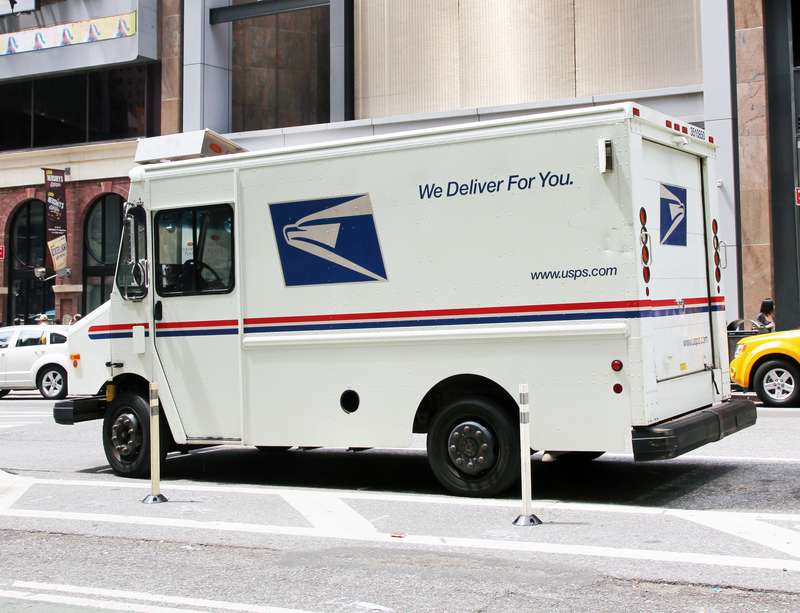
    US Postal Service employees were caught for hustling on their route last week.

    Two United States Postal Service workers were convicted last week for delivering drugs on their postal routes.

    One employee, Unterria Rogers of Mobile, Alabama, was given five years for his involvement in a marijuana delivery ring along the city’s postal routes. Rogers would receive packages from California and deliver them, receiving $250 per pound he got into buyers’ hands. In all, Rogers delivered around 133 pounds before being caught. 

    Ultimately, it may have been his prolific delivery volume that did him in, as authorities were alerted following a spike of suspected drug packages in the city. Rogers was charged with using a firearm in his drug trafficking.

    Interception

    The second employee convicted last week was Fred Rivers of New Jersey. He would receive packages with false names and flag them as deliveries for a local drug dealer. He got $100 for every package he intercepted.

    These two are far from the only USPS employees to deliver more than postage. In 2017, the U.S. Attorney’s Office in the Eastern District of Pennsylvania indicted nine people, including two USPS workers, Steven C. Williams and Felicia Charleston, for their involvement in a marijuana-trafficking organization. They faced life in prison and multimillion-dollar fines for helping divert packages to distribute almost 100 kilograms of marijuana. In 2018, Williams and Charleston were sentenced to 15 months and 10 months in prison, respectively.

    Exploitation

    Delivery systems like the USPS and FedEx are easy to exploit for drug delivery, even without employees getting involved. These parcel delivery services remain among the easiest ways to ship fentanyl, opioids, and other drugs into the United States. This was made especially apparent during a federal court case involving 43 members of a methamphetamine distribution ring that had ties to the Sinaloa Cartel.

    “The sheer logistical nature of trying to pick out which packages contain opioids makes it much more challenging,” said Robert E. Perez, an acting executive assistant commissioner for U.S. Customs and Border Protection (CBP). “It’s unlike anything we’ve encountered.”

    The major issue is that drug rings have people on the inside.

    “Don’t think that these cartels don’t have their own ‘intelligence services,’” warned Perez. “Friends, family members working on the inside. So they’re going to know how many agents or officers are assigned to which FedEx facility, when they’re working, and when they’re not.”

    View the original article at thefix.com

  • Charging Heroin Dealers With Homicide A Common Practice In Pennsylvania

    Charging Heroin Dealers With Homicide A Common Practice In Pennsylvania

    Pennsylvania leads the nation with more than 500 drug-induced homicide charges filed.

    In Lancaster County, deep in the heart of Amish country, authorities have gone after more drug-induced homicide charges than any other place in the nation, according to figures from Mission LISA, a data aggregation project.

    Last year alone, prosecutors in the southeast Pennsylvania county filed roughly 60 such charges, more than the 37 in nearby Bucks County or the 35 in York County. Four of the most prosecution-prone counties were in the Keystone State, which led the nation with more than 500 drug-induced homicide charges filed.

    It’s a controversial practice, often condemned by harm reduction advocates. But Lancaster County District Attorney Craig Stedman swears the charge—levied against dealers who sell fatal doses of the drug—is working. 

    “I don’t think this is a magic bullet that’s going to end the opioid crisis, but is it part of the solution?” he told WITF. “I’m absolutely convinced it is, and there’s just something about being held accountable.”

    By way of example, Stedman highlighted an interaction with one man accused of selling drugs. “One guy in particular, they arrest him, he’s a long-time heroin dealer, and he was arrested for cocaine. They said, what are you doing? You’re a long-time heroin dealer. And he said, look, message received. I’m not catching a body in Lancaster County.” 

    But advocates decry the practice, as Drug Policy Alliance attorney Lindsay LaSalle explained to the PA Post in 2018.

    “We see this kind of flip,” she said, “where you have the compassion for the person who used but you want to throw the hammer at the person who sold. And this is an absolutely false dichotomy. The distinction between user and seller is often patently false.”

    The high numbers in Lancaster County come amid a long-term increase in drug-related homicide charges, according to the Mission LISA data.

    Going all the way back to 1975, the organization’s data set accounts for 2,741 drug-induced homicide charges—but the figures show a sharp uptick starting around 2010. In that year, there were 67 such charges filed across the nation; by 2015 that figure rose to 300.

    In 2016, it peaked at just over 660, though since then has fallen to under 400.

    View the original article at thefix.com

  • Top Ten Countries with the Strictest Drug Laws

    Top Ten Countries with the Strictest Drug Laws


    ARTICLE OVERVIEW: Some countries with strict drug laws also have the worst drug problems in the world. In this article, we look at these laws, their purpose, and how a country’s political motivations affect people. 

    ESTIMATED READING TIME: 7 minutes.

    Table of Contents:

    What Defines a “Strict” Drug Law?

    To define “strict”, we’ve had to form an answer based upon opinion. As we’ve observed in the U.S., public sentiment has varied about laws regarding marijuana use and possession. Some people do not see value in marijuana as medicine. Others felt that recreational use is completely justified. A counterculture fought back and, eventually, laws began to change.
    So, when are drug laws helping and when do they hurt? Are drug laws fair? Is sentencing for drug possession justified or unjustified? For example, in South Korea, you can be charged with a heavy fine as well as a long jail sentence for having a personal amount of cannabis on you [1].
    Though it’s agreed that even “softer drugs” come with their own dangers, we do need to examine punitive measures that governments take to try to regulate use or trafficking. These “strict drug laws” can include sentences such as:
    • Hard labor
    • Large fines
    • Long amount of time in jail
    • Sometimes the death penalty

    It should be noted, when it comes to fixing a drug problem, stricter laws may not necessarily curb use. What we need to do is work together to provide people with education as prevention. For those already struggling with a drug addiction, we not only need to provide them with this education but offer them to opportunity for treatment.

    With that in mind, let’s dive into our list of the countries with the strictest drug laws in the world.

    People struggling with addiction need treatment to get well.

    #10 – Japan

    To begin, over-the-counter medications have much stricter guidelines when compared to the United States [2]. Common necessities such as inhalers or certain allergy medications are illegal to carry in large supply, especially if any of the carry stimulants such as pseudoephedrine. If you’re planning to visit Japan, be aware that their law allows up to a two month’s supply of allowable over-the-counter medication and vitamins.

    When it comes to illicit drugs (anything from marijuana to heroin), Japan doesn’t mess around. If you’re are caught with any of these drugs, even if they were obtained legally elsewhere, you will be detained by customs officials and questioned. This, likewise, will happen for certain prescription medications when you enter Japan. Particularly, stimulants such as Adderall. Many American prescription medications are banned in Japan and, therefore, cannot be brought into the country by an American. However, if your prescription meets the Japanese laws, you will be allowed to possess up to one month of your medication.

    For those who do get caught within the country, you can expect harsher penalties for even just a minor offense [3]. For holding a small amount of drugs, you can be imprisoned anywhere from one to ten years with a fine of up to 5,000,000 yen (close to $45,000 USD). If you end up deported due to these breaks of the law, you won’t be allowed in the country for five to ten years.

    #9 – Vietnam

    When you’re caught with drugs in Vietnam, most of the time, you’re sent to a rehabilitation center. The Vietnamese government has a goal of cleaning up its citizens rather than punishing them. Especially due to the fact that drug use is on the rise in the country [4].

    However, there is a catch to these rehabilitation centers. Unlike those in Western countries which promote psychotherapies after detox, in Vietnam, you’re put into forced free labor. The biggest issue with this is prior addicts usually aren’t given any idea of a release date and can be held for long periods of time. Those who have gone against the rehabilitation centers, have reported that they’re often severely beaten by guards.

    #8 – China

    If you’re a drug dealer in China and caught by law enforcement, there’s a chance you’ll face the death sentence [5]. The roots of this conflict come from China’s cultural attitudes towards drug addiction. It’s considered to be a personal failure rather than a disease and, therefore, drug use is highly condemned.

    An issue China’s attempting to handle is the rising problem of illicit drug use. Like Vietnam, certain cities such as Beijing have incorporated punitive rehabilitation centers. However, in China, these facilities contain even harsher forced labor and consequences to those who don’t follow rules. The biggest issue with this is the state decides whether or not somebody is an addict. So, if you’re caught with a drug and it’s your first time using it, even though your body hasn’t adjusted to an addiction, you may still be considered an addict under Chinese law.

    This harsh punishment can also be witnessed in Chine detox centers. Standardly, it takes anywhere between a week to a few weeks for your body to completely detox from a drug. But in a Chinese detoxification center, you can expect to be in a forced detox for upwards of three years. This is followed by another three years within a rehabilitation center which normally should last less than a year.

    #7 – Singapore

    Strict laws are an aspect of life in Singapore which tend to take tourists by surprise. For example, according to Business Insider, you can receive up to a $1,000 fine if you’re caught littering. When it comes to drugs, these laws become even more consequential.

    Typically, drug dealers are executed if they are caught [6]. Yet, what Singapore considers a trafficker is very loose. People who are holding half an ounce of marijuana are considered dealers even if they’ve never shared their stash with anyone else. It’s due to these notions of drug users that make drug use in Singapore incredibly risky.

    In another example, if drugs are found on your property, you’re automatically assumed to be the possessor of them, unless you can provide reason otherwise. Even if you avoid the penalty of death, chances are you’re going to spend a large amount of time in jail for being in possession of drugs.

    If you’re planning to visit the country, it helps to understand which prescription medications are allowed and how to inform the authorities of your possession of them. You can find information on this here.

    #6 – Dubai

     As with many of the countries on this list, Dubai isn’t afraid to give you some long years in jail for possession. There’s a minimum of a 4-year jail sentence for having an illicit substance on you. Additionally, if you have traces of a drug within your bloodstream or urine, it’s automatically classified as a possession charge. Similar laws apply to those who actually get caught with drugs in their hands.

    These laws go as far as to charge you if you have poppy seeds on your clothing from eating something containing the ingredient. The biggest complication arises when considering how powerful the technology and security of airports located in Dubai are. It’s so strong that even residual amount of a drug will be found and cause complications with Dubai customs officials.

    #5 – North Korea

     It comes to no surprise that it’s rare for drugs to enter the North Korean territory. As can also be expected, little is known when it comes to North Korea and drugs as so little information can be obtained from the country. What we do know is possession of drugs can lead to the death penalty [7]. Furthermore, due to investigations within Taiwan and Japan, North Korea has been associated with large illicit drug shipments of methamphetamine and heroin [8].

    #4 – Indonesia

     Drug laws in Indonesia are similar to Dubai in the sense that they prosecute you for having drugs in your bloodstream. However, it’s their form of prosecution that really takes things to a new level – the death penalty.

    There is a zero tolerance policy for drugs within Indonesia. In 2009, a law was enacted which gave consequence to people who didn’t even take drugs. If your child is taking an illicit substance and you’re aware of it, you must report it to local authorities. If you don’t, brutal consequences will be carried out for the entire family.

    These harsh penalties aren’t kept from tourists either. There have been numerous accounts of foreigners being executed for being in possession of drugs.

    #3 – Iran

     Iran is one of the world’s largest opium producers (the main ingredient for heroin) and also has one of the largest drug problems in the world. Yet, their laws on drug use are extremely strict. So much so, it’s resulted in more than half of the country’s convictions to be that of drug charges. Yet, at the same time, there are efforts being made to curtail these force laws and, instead, help people struggling with addiction through treatment facilities.

    The biggest reason Iran is so high on our list is due to the fact that the country struggles economically and, therefore, some citizens produce large fields of poppy in order to make a living. With that in mind, it comes to no surprise many have fell victim to a heroin addiction. And prior to recent efforts, the penalties for drug possession have often resulted in death.

    When we consider these two factors – mass production of drugs with high drug use and very strict laws – an understanding develops as to why Iran is a dangerous place for a drug abuser to find themselves in.

    #2 – Islamic State (ISIS)

     The stakes are high in the territory captured by the terror group ISIS primarily because there are no official laws endated. Rumors have spread and leaders have spoken, but ultimately, there’s no true way to identify what you can and can’t do in the Islamic State. What we do know is public lashings are common for those caught in possession of drugs. Though this may not be as bad a consequence as the death penalties mentioned above, the real horror is nobody within the territory truly knows what they can and can’t get away with.

    Again, there are currently no written laws enacted for the people caught within the area. To top it off, it’s speculated ISIS is in control of various illicit trafficking in and around the mid-east. Therefore, they could be persecuting individuals committing crimes at a degree much less than their own.

    At the end of the day, the Islamic State is high on this list due to its harsh consequences and unpredictability involved around drug use and possession charges.

    #1 – Saudi Arabia

     What brings Saudi Arabia to the top of our list is, like some other countries listed above, execution is common for simple drug possession. However, the country isn’t afraid to publically execute criminals only to leave their bodies on display as a warning sign.

    The biggest issue within Saudi Arabia isn’t necessarily their drug issue, but rather their over corruption. Police aren’t afraid to prosecute even the innocent or torture them as a means of admitting to a false confession. In the first half of 2015, 100 criminals were publically executed. Half of them were non-violent drug offenders.

    Your Questions

    If you have any further questions pertaining to strict drug laws in other countries, we invite you to ask them in the comments section below. If you have any advice to give to our readers about these drug laws, we’d also love to hear from you. We try to respond to every comment in a prompt and personal manner.
    Reference Sources: [1] GOV.UK: Foreign Travel advice for South Korea
    https://www.gov.uk/foreign-travel-advice/south-korea/local-laws-and-customs
    [2] U.S. Embassy and Consulates in Japan: Traveling with Personal Medication
    https://jp.usembassy.gov/u-s-citizen-services/doctors/importing-medication/
    [3] Student Handbook: Drug Laws in Japan
    https://www.kansaigaidai.ac.jp/asp/pdf/current_students/01_student_handbook/Drug_Laws_In_Japan.pdf
    [4] Foreign Policy at Brookings: A Slow March from Social Evil to Harm Reduction: Drugs and Drug Policy in Vietnam
    https://www.brookings.edu/wp-content/uploads/2016/07/WindleVietnam-final.pdf
    [5] Foreign Policy at Brookings: A People’s War: China’s Struggle to Contain its Illicit Drug Problem
    https://www.brookings.edu/wp-content/uploads/2016/07/A-Peoples-War-final.pdf
    [6] Today Online: Significant support for death penalty
    https://www.gov.sg/news/content/today-online—significant-support-for-death-penalty
    [7] U.S. Department of State: U.S. Relations with North Korea
    https://www.state.gov/r/pa/ei/bgn/2792.htm
    [8] CIA World Factbook on Korea
    https://www.cia.gov/library/publications/the-world-factbook/geos/print_kn.html
    Chronic Diseases and Translational Medicine: Integrated medical rehabilitation delivery in China
    https://www.ncbi.nlm.nih.gov/pmc/articles/PMC5627700/
    Human Rights Watch: 100 Executions in 2017
    https://www.hrw.org/news/2015/06/16/saudi-arabia-100-executions-january-1#

    View the original article at addictionblog.org
  • Despite Legalization, Canada’s Pot Black Market Continues To Thrive

    Despite Legalization, Canada’s Pot Black Market Continues To Thrive

    Officials are hoping that dealers on the illegal market will be priced out.

    Last week Canada became only the second country in the world to legalize recreational marijuana, but the black market for pot is continuing to thrive as customers seek out products that they can’t buy legally, including edibles, and sellers push back on government intervention in their industry. 

    “We’ll keep selling what we are selling,” Don Briere, the owner of an illegal Vancouver pot shop, told The New York Times. Briere sells edibles and other products that are currently illegal under the national law, which only allows for the sale of fresh or dried cannabis, seeds, plants and oil. 

    Canada—especially Vancouver—has long had a thriving illicit marijuana industry, worth an estimated 5.3 billion Canadian dollars each year.

    One of the aims of legalization was to close the illegal shops that are common in cities like Vancouver. 

    However, Briere and other industry insiders object on principle. “The government taking over the cannabis trade is like asking a farmer to build airplanes,” he said. He’s not alone. In Vancouver, hundreds of illegal shops remain open.

    At a lower level, street dealers try to entice customers by offering services like delivery and selling joints at a two-for-one price. Some customers who were frustrated that legal stores ran out of product went back to their illicit contacts. 

    “Definitely going to use my dealer from now on his business is going way up because of your crappy service,” one frustrated customer wrote on Twitter.

    Despite the disregard for the law, Canadian law enforcement isn’t likely to step up consequences for people who are selling illegally. They have their hands full dealing with more pressing issues, including fentanyl overdoses, said Chief Constable Del Manak, police chief of Victoria and president of the British Columbia Association of Chiefs of Police.

    However, this doesn’t mean that authorities are oblivious to the fact that the illegal market still exists. “It is naïve to think that just because cannabis is legalized, the criminal will walk away from a highly lucrative industry,” said Del Manak. 

    Mike Farnworth, British Columbia’s minister of public safety, said that the government is hoping that over time the legal market will undermine the demand for illegal sales. “It’s a very Canadian way of doing things,” he said. “It won’t happen overnight.”

    Farnworth added that there won’t be any police raids with “guns and head-bashing.”

    However, in Toronto, police raided five illegal pot shops after the legalization law was passed. Others have voluntarily closed, showing that the government’s approach might be working. Even Briere has shuttered some of his stores across the country and is applying for licenses for the remaining stores. 

    Officials are also hoping that dealers on the illegal market will be priced out. Today, marijuana on the street costs about one-third of what it did five years ago, making it less lucrative for dealers.

    View the original article at thefix.com

  • "Drug Llama" Allegedly Sold 50,000 Fentanyl Pills On Dark Web

    "Drug Llama" Allegedly Sold 50,000 Fentanyl Pills On Dark Web

    Investigators say the woman who reportedly calls herself “The Drug Llama” also sold Oxy, Percs and amphetamines through a dark web marketplace.

    A California woman known on the dark web as “The Drug Llama” is accused of shipping more than 50,000 fentanyl pills to consumers across the United States since 2016. 

    Melissa Scanlan, 31, is facing federal charges in Illinois and is also being investigated for two deaths in San Diego, where she lives, according to The San Diego Union Tribune.

    In those cases, investigators allege that she sold fentanyl that led to the deaths of a 10-month-old boy and a 41-year-old woman. The baby died after his father bought fentanyl—allegedly from Scanlan—and left it within reach of the child. The boy was found unresponsive in his parents’ bed.  

    These might be two of many deaths allegedly caused by Scanlan’s drugs. Assistant U.S. Attorney Sherri Hobson told a federal judge that Scanlan has trafficked more than 50,000 fentanyl pills, although the indictment against her only covers 400 grams of fentanyl. 

    Scanlan was the subject of a Drug Enforcement Administration (DEA) undercover operation in both San Diego and St. Louis. As the scope of the investigation expanded, the Food and Drug Administration, U.S. Postal Inspection Service and Department of Homeland Security also became involved. 

    Investigators say that Scanlan was selling drugs on the dark web marketplace called Dream Market, where she was known as “The Drug Llama.”

    In addition to selling fentanyl, she also offered oxycodone, amphetamines, morphine, Percocet, temazepam, flexeril, and an “opiate powder pack,” according to federal documents. Her fentanyl was pressed into blue pills that were disguised as oxycodone. The drugs arrived in leather pouches much like those sold by a company Scanlan owns. 

    Federal investigators ordered drugs from the “Llama” in July and were able to track Scanlan using the return address on the packages. The address listed was associated with an old business of Scanlan’s, and the name listed—Samantha Cooper—was later found to be the names of her two dogs. A Paypal account also linked Scanlan processed thousands of drug-related transactions. 

    In August, Scanlan was arrested on state drug charges after a search of her home. However, shortly after she was released she traveled to Mexico to arrange the shipment of more fentanyl to her house, and redirected her customers to another dark web marketplace where they could purchase the drugs. 

    She was arrested again on September 4 and admitted to buying fentanyl from a Mexican cartel. This time, federal prosecutors are arguing that she is a flight risk and a danger, noting that Scanlan is five months pregnant but continuing to engage in criminal activity. 

    View the original article at thefix.com

  • Dealers Remain An Issue On Instagram Despite Crackdown Efforts

    Dealers Remain An Issue On Instagram Despite Crackdown Efforts

    The company is now working to make treatment options more readily visible as well with their new “Can we help?” pop-up.

    After repeatedly fielding allegations that their platforms helped fuel the opioid crisis, Facebook and Instagram are now taking extra steps to combat social media drug-selling and help divert users into treatment. 

    Last month Facebook announced plans to redirect drug-seeking social media users to a help box offering support suggestions and, months after blocking targeted hashtags, Instagram recently decided to take a similar approach. 

    “As part of Instagram’s commitment to be the kindest, safest social network, we’re launching a new pop-up within the app that offers to connect people with information about free and confidential treatment options, as well as information about substance use, prevention and recovery,” a spokesperson for the photo-sharing platform told TechCrunch in a statement.

    Social media community guidelines generally ban selling drugs online, but dealers have brazenly skirted those guidelines and the law, listing their goods online with relevant hashtags to attract would-be buyers.

    The growing trend sparked condemnation from Food and Drug Administration commissioner Scott Gottlieb earlier this year. 

    “Internet firms simply aren’t taking practical steps to find and remove these illegal opioid listings,” Gottlieb said in a speech at the National Rx Drug Abuse and Heroin Summit in April, according to Engadget. “There’s ample evidence of narcotics being advertised and sold online. I know that internet firms are reluctant to cross a threshold, where they could find themselves taking on a broader policing role. But these are insidious threats being propagated on these web platforms.”

    Instagram initially responded by shutting down potentially problematic search phrases like #fentanyl and #oxycontin—but dealers just shifted to unblocked hashtags instead.

    Then in August, Facebook took action by adding a “Can we help?” pop-up offering links for treatment referrals to anyone searching certain drug-related phrases like “buy OxyContin” or “buy Xanax.” At the same time, the company blocked words like “OxyContin” and “Xanax” from turning up any search results for Pages and Groups. (However, it’s still possible to find profile accounts with drugs included in the user name—such as the many users who simply list “Oxy Contin” as their names.) 

    Then in recent weeks, Instagram reevaluated its blocking-only approach.

    “Blocking hashtags has its drawbacks,” Instagram told TechCrunch. “In some cases, we are removing the communities of support that help people struggling with opioid or substance misuse.” 

    Although those blocked hashtags will stay blocked, now the company is working to make treatment options more readily visible as well with their new “Can we help?” pop-up.

    View the original article at thefix.com

  • Couple Accused Of Running Mobile Home Drug Drive-Through

    Couple Accused Of Running Mobile Home Drug Drive-Through

    A string of overdose cases led authorities back to a mobile home with a makeshift drug-dealing drive through.

    Authorities busted a drug-dealing couple in Florida who were found running a drive-through service for illicit drugs out of the kitchen window of their mobile home. The drive-through experience was complete with signs directing traffic flow and open/closed signs.

    William Parrish Jr., 32, and McKenzee Dobbs, 20, reportedly put together the whole system, according to Ocala Police, to prevent their business from drawing unwanted attention from customers constantly entering and exiting their abode. But several overdoses in the area, presumably by their products, were what finally brought the long arm of the law to their door.

    “We were seeing some overdose incidents that were happening in this particular area, specifically at this particular location,” said Capt. Steven Cuppy of the Ocala Police. “There [were] some heroin sales that were going on there. Subsequently, through the investigation, we were able to determine that product was laced with fentanyl.”

    Parrish has been charged with driving under the influence, keeping a dwelling used to sell drugs, possession of drugs with intent to sell and resisting arrest without violence. Dobbs was slapped with keeping a dwelling used to sell drugs, possession of drugs with intent to sell, possession of fentanyl and possession of fentanyl with intent to sell.

    Parrish’s father, William Parrish Sr., claimed his son was trying to get his life back on track and was visiting a methadone clinic. “He’s been trying to get himself straightened out,” Parrish Sr. said.

    Parrish Sr. maintains that the reports of the overdoses are “a lie.”

    This isn’t the first time dealers have tried to use the convenience of a drive-through to do business. Last year, a pair of Burger King employees were caught using the fast food chain’s drive-through to deal cannabis.

    Customers in the know would speak to the drive-through in code, asking if “nasty boy” was working and, if so, if they could have their “fries extra crispy.”

    This was the cue for Garrett Norris, 20, and Meagan Dearborn, 19, to slip a little bit of marijuana in with the order and collect the payment at the second window. The pair were caught in a police sting, though Dearborn later claimed that she simply handed over the food and never knew what was stashed inside.

    View the original article at thefix.com